What to Do If You Catch an Invasive Fish Species
There's nothing quite like the excitement of a tug on your line, especially in the beautiful waters of South Dakota. But sometimes, that tug brings up something unfamiliar, something that sparks a flicker of concern rather than joy: an invasive fish species. It's a moment that can leave any angler scratching their head, wondering, "What do I do now?" You don't want to make things worse, but you also don't want to violate any regulations. This guide is here to walk you through exactly what invasive fish species you might encounter in South Dakota, how to identify them, and most importantly, the crucial steps to take if you find one on your hook, ensuring you protect our precious waterways.
Understanding Invasive Fish Species in South Dakota
South Dakota is blessed with incredible fishing opportunities, from the massive Missouri River reservoirs to the serene Black Hills streams and the bountiful glacial lakes. This rich biodiversity is a delicate balance, however, and when non-native species are introduced, either intentionally or accidentally, they can throw everything out of whack. These unwanted newcomers are what we call invasive species, and they pose a serious threat to the native fish populations and the overall health of our aquatic ecosystems.
Why Invasive Species Are a Problem for Our Fisheries
Imagine a small town where everyone has a job, a home, and enough food. Now imagine a whole new family moves in, and they eat a lot, take up extra space, and bring a new illness that no one has encountered before. That's a simplified way to think about how invasive fish species impact our waters. They become fierce competitors for limited resources like food and habitat, often outcompeting native fish that have evolved over millennia to thrive in these specific conditions. For example, some invasive carp species are voracious filter feeders, devouring the plankton that forms the base of the food chain, leaving less for native baitfish and, consequently, less for our prized walleye or salmon.
Beyond direct competition, invasive species can introduce diseases and parasites that native fish have no natural immunity to, leading to widespread population declines. They can also physically alter habitats, stirring up bottom sediments which reduces water clarity, or destroying aquatic vegetation essential for spawning and cover. This disruption doesn't just hurt the fish; it affects the entire ecosystem, from the smallest insects to the eagles soaring overhead. It’s a cascading effect that can unravel the intricate web of life we cherish. Understanding How Invasive Species Affect Walleye Fishing really drives home the point for many anglers.
Common Invasive Fish Species You Might Encounter
While there are many aquatic invasive species (AIS) that pose a threat, when we talk about fish specifically in South Dakota, a few stand out as the primary culprits. One of the most widespread and recognizable is the Common Carp. While they've been here for a long time and some folks even enjoy fishing for them, their bottom-feeding habits can stir up sediment, reduce water quality, and destroy habitat for more desirable native species.
More recently, and of greater concern, are the various species of Asian Carp, specifically Bighead Carp and Silver Carp. These fish are notorious for their rapid reproduction and ability to consume vast quantities of plankton, directly competing with native species for food. Silver Carp are particularly famous, or infamous, for their tendency to leap out of the water when startled by boat motors, creating a physical hazard for boaters. Additionally, species like White Perch have been found in certain South Dakota waters, posing another threat through competition and hybridization with native fish. Always be vigilant for something new or unusual, and refer to resources like the South Dakota GFP Fishing Handbook Guide if you're unsure.
Identifying Your Catch: Is It Invasive?
The first and most critical step when you catch an unusual fish is proper identification. It's easy to jump to conclusions, especially with so much information out there about invasive species, but misidentification can lead to incorrect actions. You certainly don't want to accidentally remove a native fish that might be rare or protected, or worse, release a truly invasive one because you thought it was something else. Take a moment, observe your catch carefully, and if possible, snap a few clear photos.
Key Characteristics to Look For
When you've got a fish on your line that looks a bit out of place, there are some key features to observe that can help you determine if it's an invasive species. For Common Carp, look for large, metallic scales, a long dorsal fin, and two prominent barbels (whisker-like projections) on either side of its mouth. They tend to have a thick, deep body.
For Bighead Carp, note their disproportionately large head (hence the name) and a mouth that points slightly upwards. They have tiny scales compared to their body size, and a prominent keel (a sharp ridge) on their belly that extends only from the anal fin to the tail. Silver Carp are similar, but their keel runs from their anal fin all the way to their throat. Their eyes are also set low on their head, below the midline of their body. Both Bighead and Silver Carp lack the barbels that Common Carp have.
| Feature | Common Carp | Bighead Carp | Silver Carp | White Perch |
|---|---|---|---|---|
| Barbels | Two pairs of prominent barbels | None | None | None |
| Head Size | Proportionate to body | Disproportionately large | Proportionate, eyes set low | Small, pointed |
| Keeled Belly | None | From anal fin to tail | From anal fin to throat | None |
| Scales | Large, metallic | Very small, almost "scaleless" look | Very small, almost "scaleless" look | Distinct, medium-sized |
| Mouth | Protrusible, downward-pointing | Large, upward-pointing | Large, upward-pointing | Small, terminal |
| Body Shape | Deep, thick-bodied | Moderately deep, compressed | Deep, compressed, silvery | Silvery, compressed, dark stripes |
For White Perch, look for a silvery-white body, often with faint horizontal stripes, and a deep, somewhat compressed body shape. They resemble white bass but typically lack the distinct broken lateral lines of a white bass. Having a good field guide, perhaps one you ordered from Amazon, can be incredibly helpful for on-the-spot identification.
The Importance of Positive Identification
Getting the identification right isn't just about following rules; it's about protecting the future of fishing in South Dakota. Releasing an invasive species, even if by accident, allows it to continue its detrimental impact on our waters. Conversely, mistakenly identifying and killing a native species that should have been released can harm local populations and ecosystem health. If you are unsure, it is always best to photograph the fish from multiple angles, especially showing its head, mouth, scales, and any unique fin characteristics. Then, keep the fish contained (e.g., in a cooler or livewell) until you can get a positive ID from a local expert, such as the South Dakota Game, Fish and Parks (GFP) office, or until you are certain of its invasive status. Remember, the South Dakota Fishing Regulations Explained can also help clarify what's legal to keep or release.
What to Do When You Catch an Invasive Fish
Okay, you've landed something that, after careful inspection, you're pretty sure is an invasive fish. Now what? This is the critical moment where your actions can make a real difference. The general rule of thumb for most identified invasive species is "do not release." But there's a right way and a wrong way to handle the situation, and knowing the specifics can prevent further problems and ensure you comply with regulations.
The "Do Not Release" Rule and Proper Disposal
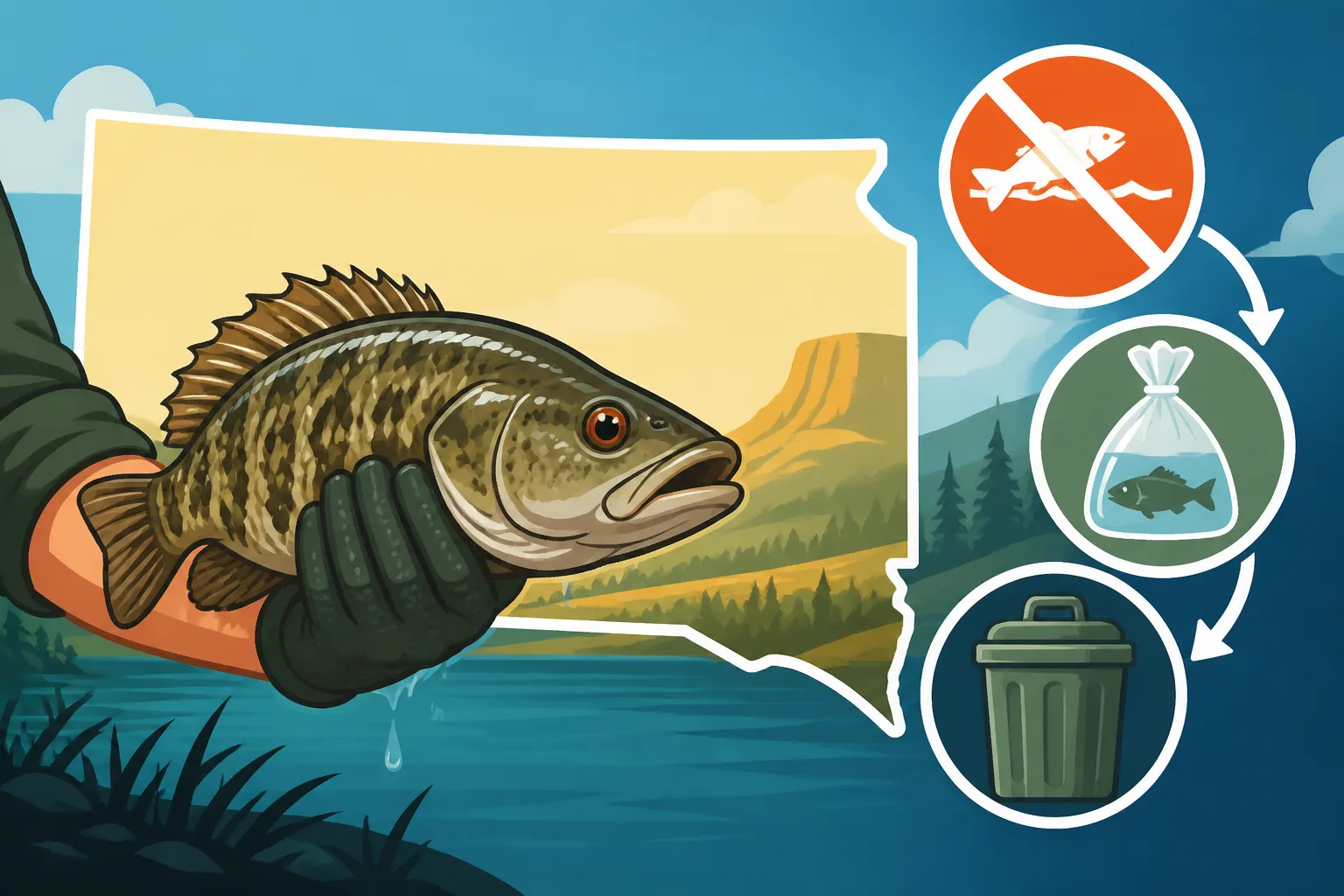
For highly invasive species like the Asian Carps (Bighead and Silver), the instruction is clear: do not release them back into the water. This is a non-negotiable step to prevent their further spread and impact on our native ecosystems. Once you've positively identified the fish as an invasive species, the most responsible action is to humanely dispatch it. A swift blow to the head or quickly severing the spine behind the head are common humane methods.
After dispatching, you need to dispose of the fish properly. This means not throwing it back on the shore to rot, which can attract wildlife and create unsanitary conditions. The best practice is to bag the fish and dispose of it in a trash receptacle that will go to a landfill. If you're out on the water, having a designated trash bag on your boat is essential. For larger fish, this might mean a sturdy cooler or a large heavy-duty garbage bag you might pick up from Amazon to transport it off the water. Some anglers choose to keep Common Carp for consumption, but always check current South Dakota Fish Consumption Advisories Explained for any species you intend to eat.
How and Where to Report Your Catch
Beyond simply removing the fish from the ecosystem, reporting your catch is an invaluable contribution to conservation efforts. This information helps the South Dakota Game, Fish and Parks (GFP) track the presence and spread of invasive species, informing their management strategies and early detection programs. Your report could be the first indication that a new invasive species has entered a particular waterway, allowing for quicker intervention.
To report an invasive fish, gather as much information as you can:
- Species: Your best guess at the identification.
- Location: Be as precise as possible. GPS coordinates are ideal, but a detailed description of landmarks, nearest towns, or specific bodies of water will also work.
- Date and Time: When you caught the fish.
- Photos: Clear, well-lit photos of the fish, especially showing distinguishing features, are incredibly helpful for confirmation.
- Your Contact Information: So GFP can follow up if they have questions.
You can typically report your catch directly to the South Dakota GFP. Their website will have specific contact information, often including an email address or a phone number for their fisheries division or an AIS coordinator. Don't hesitate to reach out; they appreciate anglers being their eyes and ears on the water.
Preventing the Spread: Your Role as an Angler
Catching and properly handling an invasive fish is a crucial step, but proactive prevention is arguably even more important. As anglers, we are often the first line of defense in protecting our waters from the spread of these harmful species. Every time you move your boat or gear from one body of water to another, you have the potential to inadvertently transport tiny hitchhikers – from microscopic larvae to plant fragments or even small baitfish – that could become a new invasive population.
Clean, Drain, Dry Your Gear
This mantra is the cornerstone of preventing the spread of aquatic invasive species, and it applies to everything that touches the water. Before leaving any boat ramp or access point, take a few minutes to perform these vital steps:
- Clean: Inspect your boat, trailer, fishing gear, waders, and any other equipment. Remove all visible mud, weeds, and aquatic organisms. This includes checking propeller, anchor, and fishing lines. If you're using waders, give them a good scrub with a brush, perhaps even a stiff-bristled one you bought from Amazon, to dislodge any plant matter or tiny organisms.
- Drain: Pull your drain plug and drain all water from your boat (livewells, bilge, motor, bait buckets) before leaving the access area. This means ensuring your livewell is completely empty and dry. Don't forget any residual water in the bottom of your boat. For those fishing kayaks, ensure every compartment is drained.
- Dry: Allow all equipment to thoroughly dry for at least five days before using it in a different body of water. If drying isn't possible (e.g., between back-to-back fishing trips), a high-pressure hot water wash (at least 140°F) can be an effective alternative for your boat and trailer. The goal is to kill or remove any lingering organisms. These practices are strongly emphasized in South Dakota Boat and Water Access Rules.
Responsible Bait Use and Disposal
Bait is often an overlooked vector for invasive species. While convenient, bringing bait from one lake to another, or simply dumping unused bait into the water, can introduce non-native species, diseases, or parasites. Imagine you bought a bucket of minnows from a bait shop near Lake Oahe, used half of them, and then decided to fish a small Black Hills trout stream the next day. If those minnows (or any tiny organisms in their water) aren't native to the stream, you could be introducing a whole new problem.
The best practice is to never transport live bait from one body of water to another. If you have unused live bait, dispose of it in a trash receptacle, not back into the water. Purchase bait from a reputable local dealer and, if possible, only buy what you need for the day's fishing. If you collect your own bait, only do so from the water you intend to fish, and make sure you understand the regulations regarding bait collection outlined in South Dakota Fishing Regulations Explained. Being mindful of where your bait comes from and how you dispose of it is a simple yet powerful way to protect our native fish populations.
Disclaimer
This article is for general informational purposes only and does not constitute professional advice. Laws, prices and regulations vary by location and change over time. Consult a qualified professional for guidance on your specific situation.