What a Saugeye Is
It's incredibly frustrating when you're out on the water, you reel in a beautiful fish, and then you're left scratching your head, wondering exactly what you've just caught. This confusion often happens with walleye and sauger, and to make things even more interesting, there's a third player in the mix: the saugeye. This guide is here to clear up that mystery, detailing what a saugeye is, how to identify it, and its place (or lack thereof) in South Dakota's diverse fishing scene.
The Curious Case of the Saugeye: What Exactly Are They?
Picture this: you have two distinct, popular fish species, each with its own strengths. One thrives in clear, open waters, growing large and strong. The other prefers murkier, more turbulent environments, often easier to catch but typically smaller. What if you could combine their best traits? That's essentially the story of the saugeye – a fascinating hybrid that brings together the robust size and fighting spirit of a walleye with the hardiness and catchability of a sauger.
A Hybrid Tale: Walleye Meets Sauger
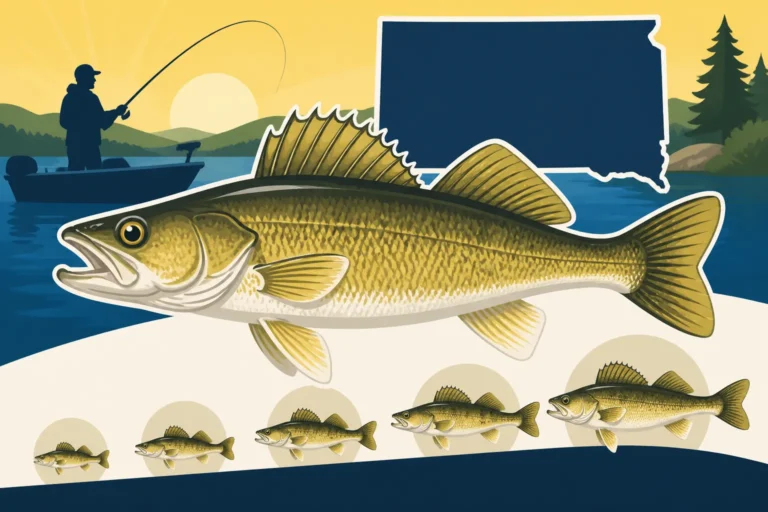
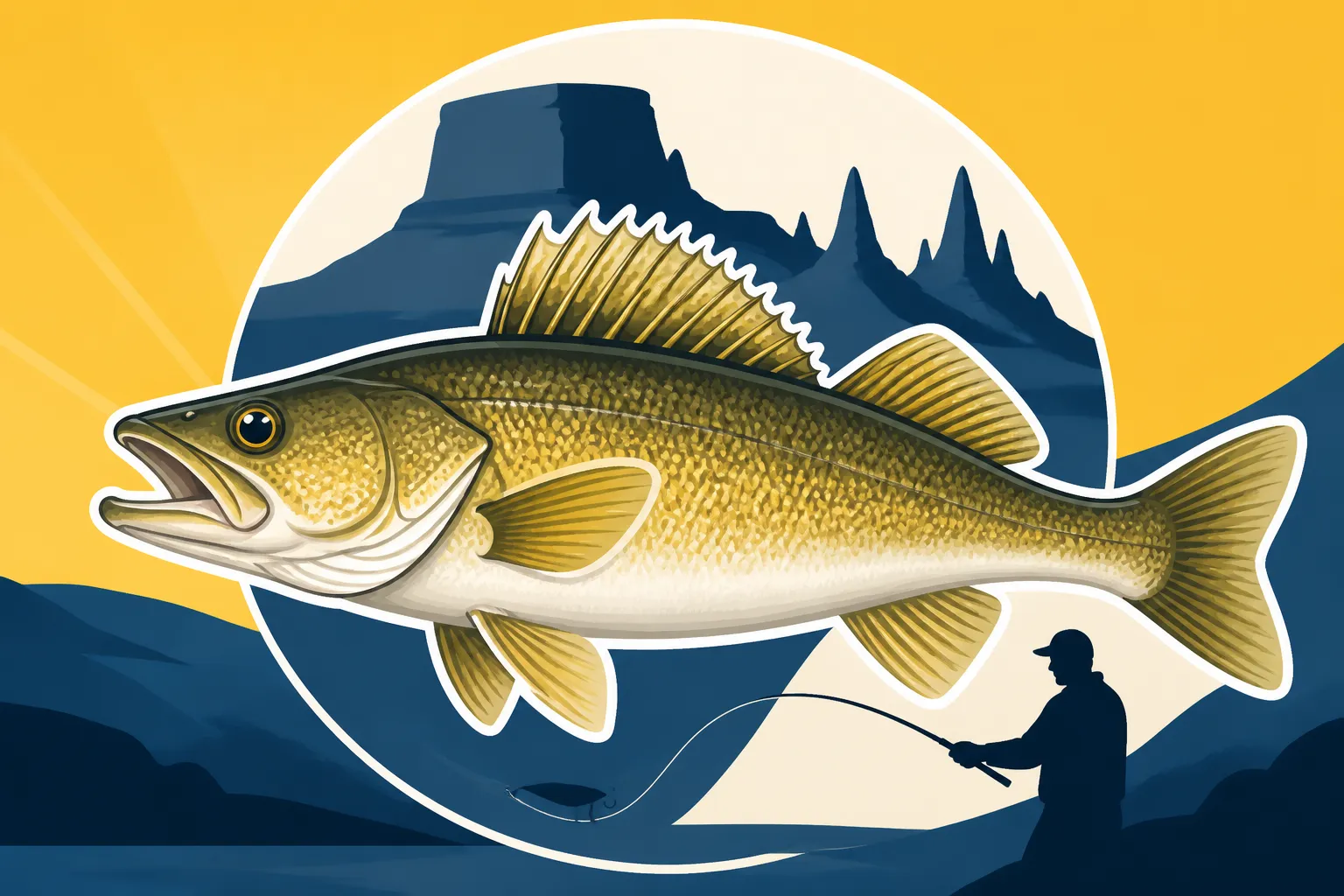
A saugeye isn't a naturally occurring species in the wild in most places; it's typically the result of human intervention, specifically through hatchery cross-breeding programs. Biologists, looking for a fish that could thrive in waters that weren't quite ideal for pure walleye, or to offer a different angling experience, decided to play matchmaker. They successfully cross-bred a female walleye with a male sauger. The offspring of this union are called saugeye, a portmanteau that perfectly describes their mixed heritage.
The primary goal of creating saugeye is to produce a fish that inherits the best characteristics from both parents. From the walleye side, they often get that potential for larger size and faster growth rates. From the sauger side, they tend to inherit a greater tolerance for turbid (murky) water, warmer temperatures, and stronger currents, making them more adaptable to a wider range of habitats, especially reservoirs and rivers that might be too muddy or too warm for their pure walleye cousins. This genetic blend makes them a unique and often highly sought-after sport fish in regions where they are stocked. They're like that perfect blend coffee – getting the best notes from two distinct beans.
The "Why" Behind the Hybrid: Benefits for Anglers and Ecosystems
So, why go to all the trouble of creating a hybrid fish? It's not just about curiosity; there are very practical reasons behind saugeye stocking programs in various states. For fisheries managers, saugeye offer a valuable tool for enhancing angling opportunities in specific types of water bodies.
For instance, if a lake or reservoir has consistently high turbidity due to sediment runoff, or if it experiences significant fluctuations in water levels and temperatures, pure walleye might struggle to establish self-sustaining populations. Sauger, while tolerant of these conditions, often don't grow to the trophy sizes that anglers desire. Enter the saugeye: they can survive and even thrive in these challenging environments, grow faster and larger than sauger, and still provide excellent table fare and a spirited fight. This means more fish for anglers to catch in waters that might otherwise be underutilized for sport fishing. It's a strategic move to create a more resilient fishery, filling a niche where neither parent species excels completely on its own. It's all about balancing ecological needs with angler desires, ensuring there's something biting even in less-than-pristine conditions.
Spotting the Differences: How to Identify a Saugeye in Your Catch
Identifying fish accurately is more than just a fun challenge; it's crucial for complying with South Dakota Fish Limits and Size Restrictions and understanding the health of our fisheries. When you're dealing with walleye, sauger, and the elusive saugeye, things can get a little tricky. They all belong to the perch family and share many similarities, but there are distinct features that, once you know them, make identification much easier.
Decoding the Fins: Key Identifying Marks
The most reliable way to differentiate between a walleye, a sauger, and a saugeye often comes down to examining their fins, particularly the dorsal fin.
- Walleye: A pure walleye will typically have a large, distinct black spot on the lower rear portion of its spiny dorsal fin. This spot is a pretty definitive marker. Their bodies are usually more olive-green to gold, with a white belly, and often have a white tip on the lower lobe of their tail fin. You can learn more about their characteristics in our South Dakota Walleye Fishing Guide.
- Sauger: Sauger, on the other hand, lack that prominent black spot on the dorsal fin. Instead, their spiny dorsal fin is usually covered with several rows of distinct, dark spots that form bars or streaks. Their bodies tend to be more bronze or brown, with distinct dark blotches or saddle-like markings along their sides. They also lack the white tip on the tail. For a deeper dive, check out our South Dakota Sauger Identification article.
- Saugeye: This is where it gets interesting! A saugeye will show a blend of these features. You might see some faint black spots or blotches on the spiny dorsal fin, but they won't typically form the clear, distinct rows of spots seen on a sauger. Critically, they also won't have the single, large, prominent black spot that defines a walleye. Sometimes, they might have a slight, faint white tip on the lower tail fin, but it's usually not as bright or pronounced as a pure walleye's. It's a beautiful mix, truly showing their hybrid nature.
Examining these fin patterns, alongside overall coloration and body shape, is your best bet. It’s like looking at family photos – you can see traits from both parents in the kids. If you're really stumped, many state fish and wildlife agencies, including the South Dakota Game, Fish and Parks (GFP), provide detailed identification guides, often available through their website or in the South Dakota GFP Fishing Handbook Guide.
Here's a quick comparison table to help you out on the water:
| Feature | Walleye | Sauger | Saugeye (Hybrid) |
|---|---|---|---|
| Dorsal Fin | Single prominent black spot (rear) | Distinct rows of dark spots/bars | Irregular spots/blotches, no distinct spot or bars |
| Tail Fin (Caudal) | White tip on lower lobe (often) | No white tip | Faint or absent white tip |
| Body Coloration | Olive-green to golden, white belly | Bronze to brown, dark blotches/saddles | Intermediate blend, often mottled |
| Cheeks/Gill Cover | Smooth, few scales | Rough, fully scaled | Variable, often partially scaled |
| Preferred Habitat | Clearer, cooler water | Turbid, warmer, faster current | Tolerant of both, often in turbid water |
| Average Size | Larger, often trophy potential | Smaller, generally under 20 inches | Intermediate, often larger than sauger |
Body Shape, Coloration, and Other Clues
Beyond the fins, there are other subtle indicators that can help you distinguish a saugeye. Their body shape tends to be a compromise between the more cylindrical, somewhat slender sauger and the deeper-bodied walleye. They often have a slightly deeper body than a pure sauger but might not be as robust as a large walleye.
Coloration can also be a hint. While a walleye is typically more uniform in its golden-green hue, and a sauger has those distinct mottled brown and dark markings, a saugeye often presents a blend. You might see a hint of the sauger's blotchy pattern, but it's usually less pronounced and more subtly integrated into a walleye-like overall color. It's not uncommon for them to have a somewhat mottled appearance that isn't quite one or the other.
Another less obvious but useful trait is the amount of scaling on the cheek and gill cover. Walleye generally have very few or no scales on their cheeks, giving them a smoother appearance. Sauger, conversely, tend to have fully scaled, rougher cheeks. Saugeye can vary, but often they'll have some scaling, perhaps a patch of scales on their cheeks, but not always as complete as a sauger. This particular feature can be really telling when comparing Walleye vs Sauger Identification.
Keep in mind that factors like water clarity, diet, and even individual genetics can cause variations within any species, so relying on a combination of these identification marks is always the best approach. When you're in doubt, taking a photo can be helpful for later identification, especially if you're trying to figure out if it's a keeper under local regulations.
Saugeye in South Dakota: Are They Part of Our Fishing Landscape?
Now for the big question, especially for those of us who love chasing fish in the prairies and Black Hills: are saugeye a common catch in South Dakota? Understanding the stocking priorities of our state's fisheries management is key to answering this.
Understanding South Dakota's Stocking Programs
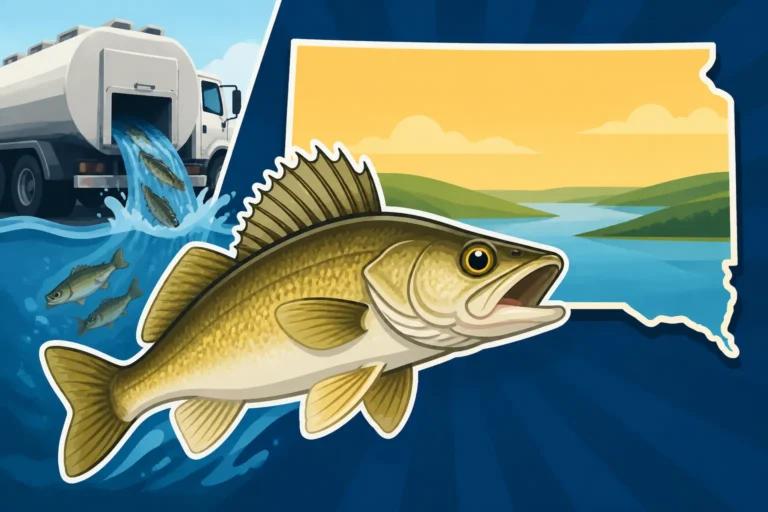
When it comes to game fish, South Dakota's aquatic resources are renowned, particularly for their exceptional walleye fisheries on the Missouri River reservoirs like Lake Oahe, Lake Sharpe, Lake Francis Case, and Lewis and Clark Lake. The focus of the South Dakota Game, Fish and Parks (GFP) has historically been, and largely remains, on maintaining robust natural populations and supplementing them with extensive stocking programs of pure walleye. Our state is a walleye powerhouse, and the management reflects that.
While some other states in the Midwest and elsewhere regularly stock saugeye due to their specific environmental advantages, South Dakota has not typically engaged in widespread saugeye stocking. The primary reason for this is that our major fisheries are generally well-suited for pure walleye, and sauger populations also exist, particularly in the Missouri River system. The existing conditions usually allow for strong walleye growth and survival, negating the need for a hardier hybrid in most public waters. The GFP aims to enhance the natural potential of our waters, and for most of our significant impoundments and rivers, that means walleye and other native or established species.
Therefore, if you catch a saugeye in South Dakota, it's generally considered a rare occurrence. It's highly unlikely to be the result of an official state stocking program. Anglers often keep a close eye on the South Dakota Fish Stocking Report Basics to see what's being introduced into our waters, and saugeye typically won't be on that list. This doesn't mean it's impossible, but it does mean they are not a targeted or regularly managed species here.
Accidental Catches and Identification Challenges
Despite not being widely stocked, the possibility of encountering a saugeye, however remote, can't be entirely ruled out. These could be accidental occurrences, perhaps an escape from a private pond that may have been stocked with saugeye from out of state, or an extremely rare natural hybridization event. However, the latter is exceedingly uncommon.
If you happen to reel in a fish that makes you second-guess whether it's a walleye or a sauger, and it just doesn't quite fit the bill for either, you might just have a saugeye on your hands. This is where those keen identification skills become crucial. Not only for your own curiosity but also because misidentifying a fish could potentially lead to issues with adhering to local regulations. While saugeye aren't specifically listed in the South Dakota Fishing Regulations Explained, it's generally understood that they would fall under the broader walleye/sauger regulations. If in doubt about a strange catch, the best practice is always to release it carefully, or if you plan to keep it, be absolutely certain of its identity relative to the most stringent limits.
For anglers keen on learning more about fish identification or confirming a suspicious catch, reaching out to the South Dakota Game, Fish and Parks office or local conservation officers is always a good idea. They are the experts and can provide definitive answers, ensuring you stay compliant and contribute to responsible angling practices. It’s better to ask than to assume, especially when bag limits and species identification are involved!
Gear Up: Fishing for Walleye and Sauger (and What Would Work for Saugeye)
Even if saugeye aren't actively stocked in South Dakota, the knowledge of how to catch their parent species—walleye and sauger—is directly applicable. After all, a hybrid often responds to the same presentations that attract its genetic ancestors. Preparing your tackle for walleye and sauger will put you in an excellent position to catch anything that swims like them, including a rare saugeye, should one cross your path.
Tackle and Techniques for Hybrid Success
The beauty of fishing for walleye and sauger is that many techniques overlap, making your gear versatile. Since saugeye are a blend, they'll often respond to the same presentations that their parents favor, typically leaning towards the sauger's preference for slightly more turbid conditions and the walleye's love for structure and baitfish.
- Jigging: This is a classic and highly effective method. Whether you're vertical jigging over structure, casting and retrieving, or even ice fishing, jigs tipped with minnows, nightcrawlers, or soft plastics are deadly. For areas with current, a heavier jig might be necessary to maintain bottom contact. Look for jigs in natural colors like chartreuse, white, or orange. Check out our guide on How to Fish a Jig and Minnow Combo for some excellent tips.
- Trolling: Covering water with crankbaits is another top-tier technique, especially on larger reservoirs like Lake Oahe or Lake Sharpe. Different crankbaits run at various depths, allowing you to target fish holding at specific levels. Match your lure colors to the forage base and water clarity – natural patterns for clear water, brighter or fluorescent colors for murky conditions. Trolling with planer boards can help spread out your lines and cover even more ground. For more insights, our Trolling for Walleye on Lake Oahe article offers detailed advice.
- Live Bait Rigs: A simple live bait rig, like a slip bobber or a bottom bouncer with a spinner and a crawler or minnow, is always a fantastic option. This is especially effective when fish are less active, as the natural movement of live bait can entice even finicky eaters. Using a leader with fluorocarbon can also increase your hook-up ratio, as it's nearly invisible underwater. These methods are productive whether you're anchored in a current seam or slowly drifting a flat.
Remember, saugeye often inherit the sauger's resilience in off-color water. Don't be afraid to fish areas with slightly reduced visibility or stronger currents that pure walleye might shy away from. Adapting your retrieve speed and lure size based on the conditions and the fish's mood is key to consistent success.
Essential Gear for a Successful Outing
To maximize your chances and make your South Dakota fishing trip enjoyable, having the right gear is paramount. You don't need to break the bank, but investing in quality essentials will pay off.
- Rods and Reels: A versatile medium-light to medium power spinning rod, around 6'6" to 7' feet long, paired with a reliable spinning reel, will handle most walleye and sauger techniques. For trolling, a dedicated trolling rod with a baitcasting reel often offers better control and durability. If you are starting your fishing adventure, many reputable brands offer excellent rod and reel combos that you can easily find on Amazon.
- Line: A good quality monofilament or fluorocarbon line in 8-10 lb test is a great all-around choice. Many anglers also use braided line for its sensitivity and strength, often adding a fluorocarbon leader for stealth.
- Lures and Bait: Stock up on a variety of jigs (1/8 oz to 1/2 oz), crankbaits that dive to different depths, and spinner rigs. Having a selection of plastic trailers for your jigs can also be very effective. Live bait, particularly minnows, leeches, and nightcrawlers, are often irresistible. You can find a fantastic array of tackle organizers on Amazon to keep all these essentials neat and ready. For specific recommendations, our Best Lures for South Dakota Walleye article is a treasure trove of information.
- Electronics: A good fish finder is invaluable for locating structure, identifying baitfish, and marking individual fish. Many anglers rely on portable fish finders, with numerous options available on Amazon, which can be easily mounted on small boats or used for ice fishing. Side imaging or down imaging can give you an even clearer picture of what's beneath the surface.
- Comfort and Safety: Don't forget the practical items! A comfortable life jacket (mandated safety gear, especially for kids), a good pair of polarized sunglasses (easily found on Amazon) to cut glare and spot structure, rain gear, and a reliable cooler to keep your catch fresh are all vital. A strong net with rubberized mesh will help you land fish safely and minimize harm if you plan to release them. For a complete overview, be sure to consult our South Dakota Fishing Gear Checklist.
Equipping yourself thoughtfully not only enhances your fishing experience but also ensures you're ready for whatever the waters of South Dakota – or even a surprise saugeye – throw your way!
Disclaimer
This article is for general informational purposes only and does not constitute professional advice. Laws, prices and regulations vary by location and change over time. Consult a qualified professional for guidance on your specific situation.