Walleye vs Sauger Identification
There's nothing quite like the thrill of feeling a strong tug on your line in a South Dakota lake or river. You set the hook, fight the fish, and finally, it breaks the surface. But then comes the moment of truth: is it a walleye or a sauger? It’s a common dilemma for anglers, and honestly, it can be tougher than you think to tell these two magnificent fish apart, especially when they're fresh out of the water and you're caught up in the excitement. This guide is here to walk you through the subtle, yet crucial, differences so you can confidently identify your catch, every single time.
Why Telling Them Apart Matters More Than You Think!
When you’re out on the water, rod in hand, the last thing you want to worry about is whether you’re breaking a rule. But with walleye and sauger, distinguishing between them isn't just about showing off your fish identification skills; it has real implications for both your fishing trip and the health of South Dakota's aquatic ecosystems. Trust me, it’s a detail worth getting right!
Legal and Regulation Compliance
South Dakota's Game, Fish and Parks (GFP) sets specific regulations for different fish species, and walleye and sauger often have distinct daily limits, possession limits, and sometimes even size restrictions. Imagine reeling in a beautiful fish, only to realize later that you kept a sauger that was too big or too many when you thought you were targeting walleye. That can lead to a hefty fine and a lot of unnecessary stress. You can find detailed breakdowns of these rules in guides like South Dakota Fishing Regulations Explained and South Dakota Fish Limits and Size Restrictions. Knowing the difference protects you from unknowingly violating these laws and ensures you're playing by the rules that help maintain healthy fish populations.
It’s not just about avoiding trouble; it’s about respecting the resource. These regulations are designed to manage fish stocks effectively. Walleye, for instance, might have more stringent rules in certain bodies of water due to their popularity and the pressure they face from anglers. Sauger, while also popular, might have different ecological roles or population dynamics that require separate management strategies. Being able to correctly identify your catch is a direct contribution to responsible angling and ensures you're helping, not hurting, the future of fishing in our state.
Understanding Fish Behavior and Habitat
Walleye and sauger, while cousins, often prefer slightly different environments and exhibit distinct behaviors. Knowing which species you’re catching helps you understand the habitat you’re fishing and refine your techniques for future success. If you're consistently catching sauger, it might tell you something about the water clarity, depth, or current you're in, as sauger tend to favor murkier, more turbulent waters, especially in river systems like the Missouri. Conversely, if you're pulling up a lot of walleye, it might indicate you're in clearer, often deeper, water or over specific structures they prefer.
This knowledge is gold for any angler looking to improve their game. For example, if you’re fishing a deep hole on the Missouri River and primarily catching sauger, you might adjust your jigging presentation to stay closer to the bottom, knowing that sauger are typically bottom-oriented feeders. Or, if you’re trying to specifically target walleye, and find yourself in a sauger hotspot, you might consider moving to a different spot with clearer water or more subtle current. Understanding these subtle habitat preferences helps you dial in your approach, whether you're using live bait or the best lures for South Dakota walleye.
Conservation Efforts
Every angler has a role to play in conservation. Accurate species identification is a fundamental part of that role, directly impacting how biologists manage fish populations. When anglers correctly report their catches, or when creel surveys are conducted and species are properly identified, the data collected is more precise. This precision allows the GFP to make informed decisions about stocking programs, regulation changes, and habitat improvement projects. If walleye and sauger are consistently misidentified, it can skew population estimates and lead to less effective management strategies.
Consider the ongoing efforts to manage the highly sought-after walleye populations in our glacial lakes or the Missouri River reservoirs like Lake Oahe and Lake Sharpe. If sauger are mistakenly counted as walleye in catch reports, it could lead to an overestimation of the walleye population, potentially resulting in more liberal regulations that could harm their numbers in the long run. Conversely, underestimating a sauger population due to misidentification could mean missed opportunities for targeted conservation or recreational fishing initiatives. By knowing the difference, you become a valuable partner in ensuring that South Dakota's incredible fishing opportunities remain vibrant for generations to come. It’s a small effort with a big impact on the overall health of our waters and the species within them.
The Classic Walleye Profile: Your Trophy Catch
The walleye, with its iconic golden-green hue and reputation as a superb table fish, is often the holy grail for anglers in South Dakota. While it’s prized, many might not realize just how distinct its features are when compared to its sauger cousin. Getting to know these characteristics intimately will make you an expert identifier in no time.
Dorsal Fin and Body Markings
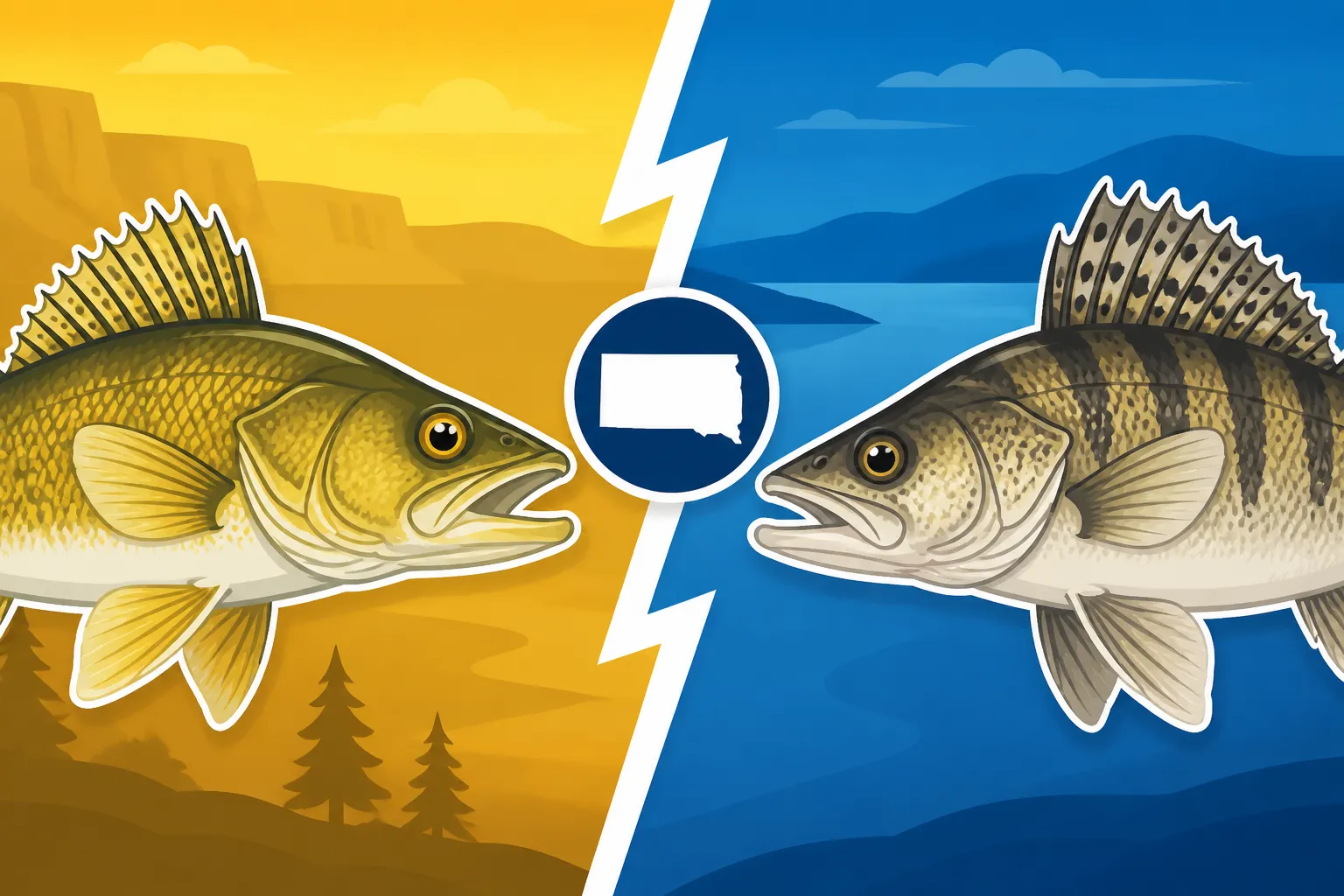
One of the most immediate giveaways for a walleye is its first dorsal fin. If you look closely at the spiny dorsal fin (the one closer to the head), you’ll notice a distinct, dark spot on the very last ray. It's usually quite prominent and acts like a signature mark. While there might be some faint bars or mottling on the body, especially in younger fish, it's generally not as pronounced or regular as what you'd see on a sauger. The walleye's body usually has a more uniform, olive-green to golden-yellow coloration, often fading to white on the belly, which gives it that classic "golden" appearance.
The second dorsal fin, which is soft-rayed, will also lack any strong spotting patterns, appearing largely clear or only subtly clouded. When you’re examining a fish, tilt it to catch the light and confirm that dark spot on the spiny dorsal. This is often the quickest and most reliable field identification marker. It's almost like a secret handshake among anglers who know their stuff.
Jaw and Teeth Characteristics
Now, let's get up close and personal with the walleye's mouth. These fish are predators, and their teeth reflect that. They have a mouthful of sharp, canine-like teeth, especially noticeable on the front of both their upper and lower jaws. These teeth are quite prominent and can give you a nasty poke if you're not careful when unhooking your catch! This is a good reminder to always have a good pair of pliers or a hook remover on your South Dakota Fishing Gear Checklist. Run a finger (carefully!) along the roof of its mouth. You’ll feel a rough patch of teeth on the vomer bone, which is common to both species, but the overall tooth structure is a key differentiator.
Beyond the teeth, pay attention to the overall shape of the mouth. A walleye’s mouth tends to be more terminal, meaning it’s positioned right at the front of the head, rather than underslung. When the mouth is closed, the upper and lower jaws meet fairly evenly, or the upper jaw might protrude just slightly. The large eye of the walleye, adapted for low-light feeding, is also a characteristic feature, giving it that distinct "glassy" or "marble" eye look.
Overall Body Shape and Coloration
When you hold a walleye, you’ll generally notice a more streamlined, elongated body shape. While they can vary in girth depending on their diet and age, they typically have a torpedo-like form, built for swift pursuit of prey in open water. Their coloration, as mentioned, usually leans towards those beautiful olive-green and golden-yellow tones, often with a hint of brassiness. The belly is almost always a clean white or creamy color.
Think about a classic walleye you've seen in pictures or caught yourself – that sleek, powerful profile. This overall impression, combined with the other features, helps solidify your identification. Sometimes, the coloration can be influenced by the clarity of the water they inhabit; fish from clearer lakes might appear lighter, while those from murkier waters might have a deeper, more pronounced coloring. But the underlying golden-green base remains consistent. Understanding the overall look helps when quickly trying to discern a walleye from another similar fish, perhaps even a young South Dakota Northern Pike Limits, though the latter has a much different body structure.
The Sauger's Subtle Distinctions: A River Gem
While the walleye might steal the spotlight, the sauger is a fantastic fish in its own right, offering a challenging and rewarding catch, particularly in South Dakota’s river systems. Don't let its similar appearance fool you; the sauger has its own unique charm and identifying marks that distinguish it from its flashier cousin.
Dorsal Fin and Body Markings
Here’s where the sauger really sets itself apart from the walleye. Instead of a single dark spot on its spiny dorsal fin, a sauger will have distinct, irregular rows of dark spots or blotches running across both its spiny and soft dorsal fins. Think of it like a speckled pattern, rather than a solid spot. This spotted pattern is consistent and usually quite visible. Furthermore, the sauger's body is typically adorned with distinct dark blotches or saddle markings that extend down its sides, giving it a somewhat mottled or camouflaged appearance. These markings are much more pronounced and less uniform than any faint bars you might see on a walleye.
The coloration of a sauger also tends to be browner or grayer, often with a bronze or brassy undertone, which helps it blend in with the murkier, rockier bottoms it often favors. There’s a distinct lack of that crisp, golden-green you often see on a walleye. When you're fishing a river system, these visual cues become incredibly important for identification. Take a moment to really look at the fins; those spots are your primary indicator.
Jaw and Teeth Characteristics
Like the walleye, the sauger is a predatory fish with plenty of sharp teeth, but there are subtle differences in its jaw and tooth structure. While it still possesses those formidable canine teeth, they might appear slightly smaller or less pronounced than those of a walleye. However, a more definitive feature lies elsewhere in its mouth. Carefully open the sauger's mouth and feel the roof, particularly the vomer bone (that bony ridge near the front). A sauger will typically have fewer or no teeth on its vomer bone compared to a walleye, which usually has a well-defined patch.
The overall head shape can also offer a clue. Sauger often have a slightly more pointed snout than walleye, and their eyes, while still large and adapted for low light, don't always have the same pronounced "glassy" appearance. The mouth is often slightly subterminal, meaning it's positioned a little more underneath the snout, ideal for grubbing along the bottom for prey. These are finer details, but when combined with the fin and body markings, they create a clear picture of a sauger.
Overall Body Shape and Coloration
The sauger generally has a more slender body profile than a walleye, often appearing almost cylindrical, especially when compared to a walleye of similar length. They don't have the same robust, broad-shouldered look that many trophy walleye possess. Their average size also tends to be smaller than that of walleye, though a big sauger is certainly a powerful fish. Their coloration, as mentioned earlier, is typically a drabber brown or gray, often with a greenish or bronze tint, and the belly might be white or yellowish but not as strikingly clean as a walleye’s.
The mottled appearance from the dark blotches and saddle markings really defines the sauger's camouflage, allowing it to blend seamlessly with rocky or silty river bottoms. This coloration is a key adaptation for their preferred habitat, which often includes turbid waters and areas with strong current. When you encounter a fish that is more slender, has those distinctive blotches and spotted fins, and lacks the prominent dark spot on the dorsal, you can be confident you've got yourself a sauger. Knowing these differences can help you refine your fishing approach for specific species, as detailed in our South Dakota Missouri River Fishing Techniques guide.
| Feature | Walleye | Sauger |
|---|---|---|
| First Dorsal Fin | Single, prominent dark spot on last ray. | Distinct rows of dark spots/blotches. |
| Second Dorsal Fin | Largely clear, no strong spotting. | Distinct rows of dark spots/blotches. |
| Body Markings | Mostly uniform golden-green/olive; faint bars or mottling possible. | Pronounced dark blotches/saddle markings. |
| Overall Color | Golden-green to olive, white belly. | Brown/gray with bronze/brassy tint, mottled. |
| Vomerine Teeth | Well-defined patch of teeth. | Fewer or no teeth on vomer bone. |
| Body Shape | More robust, streamlined, torpedo-like. | More slender, cylindrical. |
| Average Size | Generally larger. | Generally smaller. |
| Preferred Habitat | Clearer, deeper lakes/reservoirs, structure. | Murkier, turbulent rivers, rocky/silty bottoms. |
Spotting the Hybrids: The Elusive Saugeye
Just when you think you've got walleye and sauger identification down pat, nature throws a curveball: the saugeye. These fascinating fish are a hybrid, a cross between a female walleye and a male sauger, and they often exhibit a mix of characteristics from both parents. They add an extra layer of challenge to identification, but they also offer unique fishing opportunities.
How Saugeye Come to Be
Saugeye are most often created in hatcheries by fisheries managers, rather than occurring widely in nature. This is done to produce a fish that combines the best traits of both species. Walleye are known for their fast growth and large size, while sauger are lauded for their hardiness in turbid waters and willingness to bite in a wider range of conditions. By cross-breeding them, biologists aim to create a hybrid that grows well, is robust, and can thrive in waters that might be marginal for pure walleye. While they are stocked in some South Dakota waters, they are not as common as pure walleye or sauger. You might ask, Are Saugeye Stocked in South Dakota Waters?, and the answer is yes, in certain management situations.
The stocking of saugeye is a deliberate management tool used to enhance fishing opportunities in specific lakes and reservoirs, particularly those that may experience higher turbidity or fluctuating water levels where pure walleye might struggle. These hybrids are usually sterile, meaning they cannot reproduce, so their populations must be maintained through continuous stocking efforts. This controlled introduction allows fisheries agencies to fine-tune fish populations to specific environmental conditions and angler demands.
Identifying Saugeye Characteristics
Identifying a saugeye can be tricky because they often display a mosaic of traits from both walleye and sauger. You might see some features leaning one way, and others the other. Here’s what to look for:
- Dorsal Fin: This is often the best place to start. A saugeye will usually have some spotting on its spiny dorsal fin, reminiscent of a sauger, but it will also typically retain the prominent dark spot on the last ray, just like a walleye. It's like having the best of both worlds – spots and the dark blotch.
- Body Markings: Saugeye will often have more distinct dark blotches or saddle markings than a pure walleye, but usually less defined and extensive than a pure sauger. They’re often more mottled than a walleye, but not quite as patterned as a sauger. The body color can also be intermediate, perhaps a brownish-gold.
- Overall Shape: Saugeye tend to be more robust than sauger, approaching the walleye’s more stocky build, and they often grow quite large, combining the growth potential of a walleye with the hardiness of a sauger.
When in doubt, think "intermediate." If it has some spots on its dorsal and a dark blotch, or if its body is mottled but not heavily barred, it’s likely a saugeye. Knowing What a Saugeye Is can significantly aid in correctly identifying these unique fish.
Fishing for Saugeye in South Dakota
While not as widespread as walleye, saugeye do provide exciting fishing opportunities in the waters where they are stocked. Because they are a hybrid, they tend to be more adaptable and can tolerate a wider range of water conditions, including slightly warmer or more turbid environments that might deter pure walleye. This can mean more consistent action for anglers, especially during times or in places where walleye might be less active. They often feed aggressively and can be caught using many of the same techniques and lures employed for walleye, such as jigging, trolling, or casting crankbaits.
Look for saugeye in areas with transitional habitats – where deeper, clearer water meets murkier, shallower sections, or near submerged structure and drop-offs. Their hybrid nature allows them to exploit a broader range of feeding opportunities. If you're fishing a lake known for saugeye stocking, keep an eye out for fish that exhibit those mixed characteristics, and be prepared for a strong fight! They grow quickly and can be quite powerful.
Practical Tips for Field Identification
Being able to quickly and confidently identify your catch while out on the water is a skill that comes with practice. It saves you headaches, ensures compliance with regulations, and deepens your understanding of the fish you pursue. Here are some practical tips to hone your field identification abilities for walleye, sauger, and even those elusive saugeye.
Quick Visual Checkpoints
When you land a fish, before anything else, perform a rapid visual inspection. Your eyes are your first and best tool.
- Dorsal Fin Spotting: This is almost always the easiest and quickest differentiator. Does the spiny dorsal fin have a single, prominent dark spot on the last ray (walleye)? Or does it have distinct, irregular rows of spots or blotches throughout (sauger)? If it has both the rows of spots and a dark spot on the last ray, you’re likely looking at a saugeye.
- Body Pattern: Is the fish generally golden-green and sleek with minimal patterning (walleye)? Or does it have distinct dark blotches or saddle markings down its sides, giving it a mottled, camouflaged look (sauger)? Saugeye will be in between, often mottled but not as boldly patterned as a pure sauger.
- Overall Coloration: Walleye tend to be brighter, more golden. Sauger are typically browner, grayer, or bronze. These quick mental checks, especially the dorsal fin, will often give you the answer within seconds.
Remember, fish coloration can vary with water clarity and depth, so don't rely solely on color. The patterns on the fins and body are usually more consistent. Practice identifying fish quickly and gently, especially if you intend to release them, ensuring they have the best chance of survival.
Handling Fish Safely for Identification
Proper fish handling is paramount, whether you plan to keep your catch or release it. This becomes even more critical when you need to take a moment for identification, possibly examining fins or feeling for teeth.
- Wet Hands: Always wet your hands thoroughly before touching a fish. Dry hands can remove the protective slime coat, leaving the fish vulnerable to disease and infection.
- Support the Body: Support the fish horizontally, especially larger ones. Never hold a fish vertically by the jaw if it’s heavy, as this can dislocate its jaw or damage its spine. A firm, two-handed grip, supporting the belly, is ideal.
- Minimize Out-of-Water Time: The less time a fish spends out of water, the better. Try to make your identification quickly and efficiently. If you're struggling, consider placing the fish back in the water for a few seconds to let it recover, then try again.
- Tools: Use appropriate tools like a fish gripper to manage a lively fish and protect your hands from sharp teeth. Pliers or a hook remover are essential for a quick and clean hook extraction, reducing stress on the fish. Check out Amazon for a variety of fish handling tools that can make this process safer for both you and the fish.
By handling fish with care, you contribute to their survival and the overall health of the fishery, regardless of whether you’re keeping a legal walleye for dinner or releasing an undersized sauger.
Using Resources and Apps
Even seasoned anglers sometimes need a little help confirming an identification. Thankfully, there are many excellent resources available right at your fingertips.
- South Dakota GFP Website & Handbook: The South Dakota Game, Fish and Parks website is an invaluable resource. They often have detailed identification guides, pictures, and the most up-to-date regulations. Always refer to their official fishing handbook for current rules. This resource is often available as a physical copy and digital download.
- Fishing Apps: Many smartphone apps are designed to help with fish identification. Some even use AI to analyze photos of your catch, though always double-check with official guides. These apps can be particularly helpful for quickly comparing visual features on the spot. Just search "fish identification app" on your phone's app store.
- Knowledgeable Anglers: Don't hesitate to ask fellow anglers, especially those who frequent the same waters. Most experienced fishermen are happy to share their knowledge and help new anglers learn the ropes. Just remember that local knowledge, while valuable, should always be cross-referenced with official regulations, as even the most experienced angler can sometimes be mistaken about a rule.
- Photos for Later Review: If you're unsure and don't want to keep the fish out of water for too long, take clear photos of its fins, body, and overall profile. You can then review these photos later with a guide or a friend to confirm the species. This approach allows for a quick release while still enabling you to learn.
By combining quick visual checks with safe handling practices and leveraging available resources, you'll become a confident fish identifier, enhancing your fishing experience and contributing to responsible angling in South Dakota.
Common Misconceptions and Fun Facts
Fishing for walleye and sauger can be incredibly rewarding, but like with many things in the angling world, there are often misunderstandings or old wives' tales floating around. Let's clear up a few of those common misconceptions and sprinkle in some interesting facts about these two fantastic fish species.
"Small Walleye are Sauger" Myth
One of the most persistent myths you'll hear on the water is that "all small walleye are actually sauger" or "sauger are just baby walleye." This is simply not true! While sauger generally don't grow as large as walleye, they are two entirely distinct species, each with their own unique characteristics, habitats, and life cycles. A 12-inch sauger is an adult sauger, not a juvenile walleye. Similarly, a small walleye, even if it's only 8 or 10 inches, is still a walleye, identifiable by the features we've discussed.
This misconception likely arises because of their similar overall appearance and the fact that sauger do not typically reach the trophy sizes of walleye. However, as we've detailed, their differences are clear once you know what to look for, particularly on their dorsal fins and body markings. Don't let someone convince you that the fish you just landed isn't what you think it is, especially if you've done your homework on identification. A great resource for dispelling such myths and understanding growth rates is our South Dakota Walleye Growth Rates on Lake Oahe article.
Habitat Overlap and Distribution
While we've highlighted their preferred habitats, it's important to understand that walleye and sauger can, and often do, coexist in the same bodies of water, particularly in large river systems like the Missouri River in South Dakota. You might catch a walleye and a sauger from the same fishing spot, or even within a few casts of each other! This overlap is why accurate identification is so crucial.
However, there are general tendencies. Walleye typically prefer clearer, deeper water over hard bottoms or structural elements like humps, points, and rock piles. They are often found in the main bodies of large reservoirs like Lake Oahe and Lake Francis Case. Sauger, on the other hand, tend to thrive in more turbid or stained waters, with a preference for areas with current and softer, silty bottoms. This makes them more prevalent in the riverine sections of the Missouri River or in the tailwaters below dams. Understanding these general preferences can help you target one species over the other, even if they share the same stretch of water.
Culinary Differences
When it comes to putting fish on the table, both walleye and sauger are highly prized for their delicious, flaky white meat. However, there are subtle differences in their culinary qualities that some anglers appreciate. Walleye, being typically larger, offer thicker fillets, which are often described as firm, sweet, and mild. They are exceptionally versatile and can be prepared in countless ways, from pan-frying to baking.
Sauger, while generally smaller, also boast excellent eating qualities. Their meat is often considered to be even flakier and perhaps a touch sweeter than walleye by some connoisseurs. Because they tend to inhabit more turbid waters, their flesh can sometimes have a slightly richer flavor, but it remains very mild and desirable. Both species are fantastic for a fish fry after a successful day on the water, and you truly can't go wrong with either. Just ensure you're within the South Dakota Walleye Daily Limit or sauger regulations before you head to the cleaning station. Ultimately, the best way to determine your favorite is to try both!
Disclaimer
This article is for general informational purposes only and does not constitute professional advice. Laws, prices and regulations vary by location and change over time. Consult a qualified professional for guidance on your specific situation.