Average Age of a 20-Inch Walleye
There's a special kind of thrill that comes with reeling in a walleye that feels substantial, weighty in your hands. Often, when we land a beautiful fish, especially one reaching that coveted 20-inch mark, our minds naturally wander beyond just the catch itself. We start to wonder: just how old is this magnificent creature? Understanding the average age of a 20-inch walleye in South Dakota isn't just a matter of curiosity; it offers a fascinating glimpse into the health of our fisheries, the effectiveness of conservation efforts, and the unique conditions of our amazing lakes and rivers. This guide will dive deep into what makes our South Dakota walleye grow, what you can generally expect in terms of age for that 20-inch benchmark, and how different waters across our state contribute to these variations.
The Quest for the 20-Inch Walleye: Why Size Matters (and Age Too!)
For many anglers hitting the waters of South Dakota, the walleye is the ultimate prize. It's not just about the fight or the fantastic table fare; there's a certain prestige that comes with catching a "keeper," and often, that magic number starts around 20 inches. But why do we get so hung up on this particular size, and what does its age truly tell us?
More Than Just a Number: Why Anglers Care About Length and Age
Catching a 20-inch walleye often signifies a mature, healthy fish, one that has navigated the challenges of its environment for several seasons. For the recreational angler, it’s a personal achievement, a testament to skill, patience, and perhaps a little bit of luck. There's a story behind every substantial fish, and knowing its approximate age adds another layer to that narrative. Did it grow quickly in a fertile lake, or did it survive many lean years in tougher conditions?
Beyond personal satisfaction, understanding the relationship between length and age is crucial for conservation. A fishery with many older, larger fish indicates a robust ecosystem where walleye can thrive and reproduce successfully. Conversely, a lack of older, larger fish might signal environmental stress or overharvesting. It helps us, as stewards of the water, appreciate the delicate balance of nature and the importance of adhering to South Dakota Fish Limits and Size Restrictions. We want to ensure that future generations can experience the same joy of catching these remarkable fish.
The Factors Influencing Walleye Growth in South Dakota
South Dakota is renowned for its incredible walleye fishing, largely due to the diverse and productive waters we have, particularly the Missouri River reservoirs like Lake Oahe, Lake Sharpe, and Lake Francis Case. However, not all walleye grow at the same rate, even within the same state. Several key factors play a massive role in how quickly a walleye can reach that 20-inch milestone.
Firstly, food availability is paramount. A walleye is an opportunistic predator, and if there's an abundance of easily accessible, nutritious forage fish – think rainbow smelt, cisco, gizzard shad, or even young perch – they'll pack on the pounds (and inches) much faster. Lakes with a rich and stable baitfish population will consistently produce faster-growing walleye. For instance, Lake Oahe's legendary walleye growth is often attributed to its thriving population of rainbow smelt.
Secondly, water temperature and the length of the growing season significantly impact growth. Walleye are cold-water fish, but their metabolism is still tied to temperature. Warmer waters (within their preferred range) generally mean a more active metabolism and thus faster growth, as long as food is plentiful. South Dakota's long, warm summers provide ample time for walleye to feed and grow, especially in the shallower, more fertile glacial lakes, though these can also experience colder, longer winters. The Missouri River reservoirs, with their vastness, offer a variety of thermal niches that can influence growth depending on where a walleye primarily resides.
Finally, genetics and population density also play a crucial role. Some strains of walleye might simply have the genetic predisposition to grow larger or faster. More importantly, if a lake is overpopulated with walleye, or if there's too much competition for food, growth rates can slow down dramatically, leading to a higher proportion of smaller, "stunted" fish. Conversely, a well-managed lake with a balanced population and adequate forage will often yield larger, healthier fish. This is why understanding South Dakota Walleye Growth Rates on Lake Oahe is so valuable; it provides specific insights into how these factors play out in one of our premier fisheries.
Unpacking the "Average Age" of a 20-Inch Walleye in South Dakota
So, what's the magic number? When you pull in that gorgeous 20-inch walleye, how many candles should it theoretically have on its birthday cake? It's a question many of us ponder, and the answer, while not an exact science for every single fish, does have a general range here in South Dakota.
The General South Dakota Range: What to Expect
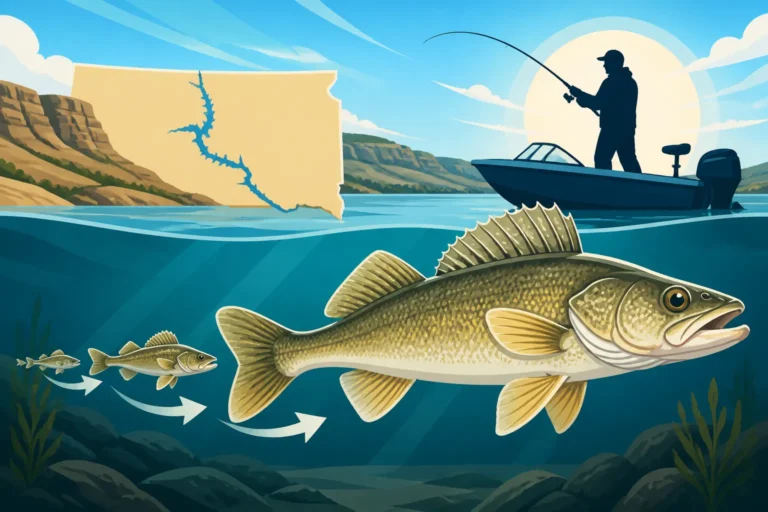
In most productive South Dakota waters, a walleye reaching 20 inches in length will typically be anywhere from 3 to 7 years old. Now, before you start scrutinizing every catch with a magnifying glass, remember that this is a broad average. A fish growing in exceptionally rich conditions with minimal competition might hit 20 inches closer to the 3-year mark, while one in a more challenging environment could take up to 7 years, or even longer in some rare cases, to reach that same size.
Biologists determine the precise age of a fish by examining its otoliths, or "ear bones." These small, calcium carbonate structures have annual growth rings, much like tree rings, that can be counted under a microscope. It’s a pretty neat process, but obviously not something we're doing on the boat! For us anglers, length is the most practical, albeit less precise, indicator of age. Understanding this general range helps us appreciate the journey each fish has taken to get to our nets.
Here's a simplified look at typical length-to-age ranges, keeping in mind these are averages and highly variable:
| Walleye Length (Inches) | Average Age Range (Years) | Typical Growth Factors |
|---|---|---|
| 10-12 | 1-2 | Rapid initial growth, abundant small forage |
| 13-16 | 2-3 | Consistent feeding, entering maturity |
| 17-19 | 3-5 | Strong growth, key spawning size |
| 20-22 | 3-7 | Mature, prime breeding age, excellent forage access |
| 23+ | 6-10+ | Trophy size, long-term survival in prime habitat |
Note: This table represents general averages for South Dakota walleye. Actual growth rates can vary significantly by specific body of water, forage base, and environmental conditions.
Case Studies: Growth Rates in Different South Dakota Waters
South Dakota offers a fantastic natural laboratory for walleye growth. Our major impoundments on the Missouri River and our numerous glacial lakes each present unique conditions that influence how quickly a walleye grows.
-
Lake Oahe: Often hailed as a trophy walleye factory, Lake Oahe is famous for its robust walleye population and fast growth rates. The vastness of the lake, coupled with its excellent rainbow smelt forage base, allows many walleye to grow quickly. A 20-inch walleye from Lake Oahe might skew towards the younger end of the 3-5 year range, though older fish are certainly present, especially those that have continued to thrive into true trophy sizes. This is a prime example of where conditions align perfectly for walleye to reach impressive sizes efficiently. If you're targeting this lake, knowing these patterns can help you anticipate the size and age of your potential catches when consulting a Lake Oahe Fishing Guide.
-
Lake Sharpe and Lake Francis Case: These lower Missouri River reservoirs tend to have slightly warmer water temperatures than Oahe and an often equally abundant, though sometimes different, forage base (including gizzard shad in some areas). This can lead to very good, and sometimes even faster, growth rates. It's not uncommon for walleye here to hit 20 inches in 3-4 years, especially if they are benefiting from consistent food sources and optimal water temperatures during the growing season. These lakes are incredibly productive and regularly yield high numbers of quality walleye.
-
Glacial Lakes (Eastern South Dakota): The myriad of natural glacial lakes in eastern South Dakota present a more varied picture. Some, with rich nutrients and healthy forage like perch and minnows, can produce excellent growth, rivaling the Missouri River system. Others, smaller or less fertile, might see slower growth rates, where a 20-inch walleye could be 5-7 years old. These lakes are often more susceptible to variations in winter kill or changes in the forage base, which can directly impact how quickly walleye grow. Anglers exploring these waters often appreciate the challenge and the diversity of fishing experiences they offer.
The Impact of Slot Limits and Management on Walleye Age and Size
South Dakota's Game, Fish and Parks (GFP) plays an incredibly important role in managing our walleye fisheries, and strategies like slot limits directly influence the age and size structure of the population. A slot limit, for example, might require anglers to release all walleye between 15 and 20 inches. The idea behind this is to protect a significant portion of the breeding stock, allowing those fish to grow older, larger, and reproduce multiple times.
When slot limits are effective, they protect those middle-aged, rapidly growing fish, giving them a chance to surpass the 20-inch mark and contribute more to the spawning population. This can lead to a greater proportion of older, trophy-sized walleye in the system over time. It's a careful balancing act designed to ensure sustainability while still providing excellent fishing opportunities. The GFP constantly monitors fish populations and adjusts regulations to maintain healthy ecosystems, which is why reviewing the South Dakota GFP Fishing Handbook Guide each year is essential for all anglers.
Beyond the Average: When Walleye Grow Faster or Slower
While understanding the average age of a 20-inch walleye gives us a good baseline, the reality on the water is that fish are living, breathing creatures influenced by a multitude of factors. Sometimes, you'll hear tales of a walleye that hit that 20-inch mark in record time, and other times, you might wonder why a particular lake's fish seem to take forever to get there.
Speedy Growers: Conditions for Rapid Walleye Development
Imagine a perfect storm for a walleye: a lake teeming with an endless buffet of their favorite meals, water temperatures that are just right for optimal digestion and growth, and not too many other walleye competing for the same grub. These are the conditions that lead to "speedy growers."
- Abundant, High-Quality Forage: This is arguably the biggest driver. Lakes with huge populations of protein-rich baitfish, such as rainbow smelt in Lake Oahe or abundant shiners and perch in other systems, allow walleye to feed constantly and efficiently. They don't have to expend much energy to find food, meaning more energy can be put into growth. When you look at What Walleye Eat in Summer, you realize how critical these forage fish are to their rapid development.
- Optimal Water Temperatures: Walleye thrive in cool to moderately warm water. During long, consistent periods of these ideal temperatures throughout the summer, their metabolism works efficiently. They can digest food quickly and grow steadily. Conversely, excessively hot or cold conditions can slow down their growth, even if food is available, because their metabolic processes are less efficient.
- Lower Population Density: While South Dakota generally boasts healthy walleye numbers, a situation where there are fewer walleye competing for the same food resources can result in faster individual growth rates. Each fish gets a larger share of the available forage, leading to quicker attainment of larger sizes. This is a delicate balance, as managers don't want too few fish either!
The Slow Lane: What Hinders Walleye Growth
Just as there are conditions for rapid growth, there are also factors that can put the brakes on a walleye's development, causing them to take longer to reach that 20-inch benchmark.
- Poor Forage Base: This is the most common culprit for slow growth. If a lake's baitfish population crashes due to environmental factors, over-predation, or disease, the walleye will simply not have enough to eat. They'll expend more energy searching for food than they gain from it, leading to stunted growth. Imagine trying to grow if your grocery store was always empty!
- Overpopulation: It might sound counterintuitive, but too many walleye in a lake can actually lead to smaller, slower-growing fish. When there's intense competition for a limited food supply, no single fish gets enough to thrive. This is a classic challenge in fisheries management, and sometimes measures like increased harvest limits or stocking of additional forage fish are considered.
- Harsh Winters and Shorter Growing Seasons: In parts of South Dakota, particularly in some shallower glacial lakes, prolonged harsh winters can limit the feeding window. If the ice stays on longer and the water takes more time to warm up in spring, the effective growing season is shortened. This directly impacts the total growth a walleye can achieve in a year.
- Disease or Parasites: While less common on a widespread scale, individual fish or localized populations can be affected by disease or heavy parasite loads, which divert energy away from growth and towards fighting off illness.
How Anglers Can Contribute to Healthy Walleye Populations
As anglers, we have a vital role to play in ensuring the health and longevity of South Dakota's walleye fisheries. Our actions on the water directly impact the ability of these fish to grow, reproduce, and provide enjoyment for years to come.
One of the most impactful things we can do is practice responsible catch-and-release, especially for those larger, older breeding fish. While a big walleye is a tempting trophy for the dinner table, these older females are the backbone of the spawning population, producing many more eggs than younger fish. Releasing them, particularly during the critical South Dakota Walleye Season Opening Date in spring, ensures they can continue to contribute to the next generation. Consider using a quality fishing net designed to cradle fish gently, a measuring board to quickly check size, and a pair of pliers for easy hook removal – many excellent options for these tools are available from retailers like Amazon.
Beyond releasing fish, it's absolutely crucial to understand and adhere to all South Dakota Fishing Regulations Explained, particularly regarding limits and size restrictions. These rules aren't arbitrary; they are scientifically determined to protect our fish populations. Using proper handling techniques for released fish, such as minimizing air exposure, supporting the fish horizontally, and reviving it gently before release, significantly increases its survival rate. Every fish we send back healthy is a contribution to future angling success.
Identifying Walleye Age in the Field (or at Home)
While we can't perform an otolith analysis on the boat, we can still develop a better intuition for a walleye's age based on its size and other characteristics. It's a fun part of the angling experience, adding another layer to the story of each fish we encounter.
Estimating Age by Length: A Rough Guide
As discussed, length is our primary indicator in the field. When you catch a 20-inch walleye, you can generally assume it's a fish that has seen at least a few springs and summers, likely between 3 and 7 years old in South Dakota. A 15-inch "eater" might be 2-3 years old, while a true leviathan over 25 inches could easily be 8-10 years old, or even more, representing a long history of survival and successful feeding.
It's helpful to mentally calibrate your expectations based on the specific water you're fishing. For instance, if you're on a famously productive lake known for fast growth, a 20-inch walleye might indeed be on the younger side of that average. Conversely, in a lake with slower growth, that same 20-inch fish might be surprisingly old. Developing this "eye" for fish age comes with experience and paying attention to local reports and regulations. Always have a reliable measuring device on hand to confirm your catch's length, which can be easily sourced from outdoor retailers or online platforms like Amazon.
The Science of Otoliths: How Biologists Get Exact Ages
While we rely on length, state fisheries biologists use a much more precise method: examining otoliths, or "ear stones." These tiny, disc-like structures are found in the inner ear of bony fish. As a fish grows, layers of calcium carbonate are deposited around the otolith, creating distinct rings similar to those in a tree trunk. By carefully slicing through an otolith and examining it under a microscope, biologists can count these rings to determine the exact age of the fish.
This scientific data is invaluable for fisheries management. It allows them to understand growth rates, monitor population health, and make informed decisions about stocking, harvest limits, and habitat improvements. It's a fascinating look into the life history of each fish and helps ensure the sustainability of our beloved walleye populations.
Resources for Further Understanding South Dakota Fish Biology
If you're truly fascinated by the science behind fish growth and age, there are fantastic resources available. The South Dakota Game, Fish and Parks website is a treasure trove of information, offering detailed reports on fish populations, stocking efforts, and research findings. Their annual fishing handbooks and publications like the South Dakota GFP Fishing Handbook Guide are also full of valuable insights into the biology and management of various species.
Additionally, many excellent books on fish biology, species identification, and aquatic ecosystems are available. A quick search on Amazon for "fish biology" or "walleye facts" can lead you to a wealth of knowledge that will deepen your appreciation for every fish you encounter on the water. The more we understand about these incredible creatures, the better equipped we are to be responsible anglers and advocates for conservation.
Disclaimer
This article is for general informational purposes only and does not constitute professional advice. Laws, prices and regulations vary by location and change over time. Consult a qualified professional for guidance on your specific situation.