Lake Oahe Walleye Size and Growth Rate
If you've ever cast a line into the vast waters of Lake Oahe hoping to land a nice walleye, you've probably wondered about how big these fish truly get and what makes them grow so well (or not so well!). It can be frustrating to put in the time and effort, only to wonder if the lake even holds the kind of fish you're dreaming of. This guide aims to shed some light on the typical size and growth rates of walleye in Lake Oahe, giving you a clearer picture of what to expect and what factors influence these impressive fish.
The Environmental Orchestra: Factors Influencing Walleye Size and Growth in Lake Oahe
Walleye growth isn't just about genetics; it's a complex dance influenced by a whole host of environmental factors. Think of Lake Oahe as a massive, intricate ecosystem, and every element plays a role in how big and healthy its walleye population becomes. Understanding these factors can help you appreciate the lake's dynamics and even inform your fishing strategies.
Forage Availability: The All-Important Food Source
Ask any experienced angler or biologist, and they'll tell you that the availability of food is arguably the single most crucial factor in determining how fast walleye grow. Lake Oahe is renowned for its diverse forage base, which directly impacts the walleye's ability to pack on pounds. When baitfish populations are booming, walleye have a smorgasbord to choose from, leading to faster growth rates and healthier fish.
The primary forage species in Lake Oahe include abundant populations of rainbow smelt and various species of shad. These fat-rich, protein-packed morsels are like rocket fuel for walleye. If there's a dip in these populations due to environmental changes, disease, or even over-predation, you'll often see a corresponding slowdown in walleye growth. Conversely, years with exceptional baitfish hatches often translate to "trophy years" for walleye a few seasons down the line. It's a delicate balance, and maintaining a healthy forage base is key to sustained, robust walleye growth. You can learn more about Forage Fish South Dakota Walleye Rely On to understand the diet of these fish better.
Water Temperature and Oxygen Levels
Like all cold-blooded creatures, walleye metabolism is heavily influenced by water temperature. They thrive in cooler water, generally preferring temperatures between 60-70 degrees Fahrenheit (15-21 Celsius). Within this optimal range, they are more active, feed more aggressively, and digest food more efficiently, all contributing to faster growth.
Lake Oahe is a large, deep reservoir, which helps it maintain cooler water temperatures in its depths even during the scorching South Dakota summers. However, extreme heatwaves can push surface temperatures higher, driving walleye deeper where conditions are more favorable. Adequate dissolved oxygen levels, especially in deeper water during the warmer months, are also critical. If oxygen becomes scarce in the thermocline (the layer of water where temperature changes rapidly), walleye might be forced into less ideal feeding zones, impacting their overall growth potential. The lake's vastness generally provides plenty of suitable habitat, but localized conditions can vary.
Walleye Genetics and Population Density
While environmental factors are huge, the genetic makeup of the walleye themselves plays a role. Some walleye strains simply have the genetic potential to grow larger and faster than others. South Dakota Game, Fish and Parks (GFP) works hard to maintain healthy, genetically diverse walleye populations through careful management and stocking programs.
Population density also matters a great deal. If there are too many walleye in a given area, they compete more intensely for the available food. This increased competition can lead to "stunted" growth, where fish are abundant but generally smaller, simply because there isn't enough food to go around for everyone to reach their full potential. Conversely, a healthy, balanced population allows individual fish more access to resources, resulting in larger average sizes. This is why careful management and regulations, such as South Dakota Walleye Daily Limit and South Dakota Walleye Possession Limit, are so important for maintaining a thriving fishery.
What to Expect: Typical Walleye Size and Age in Lake Oahe
So, what does all this mean for the angler? When you're out on Lake Oahe, what kind of walleye can you realistically expect to encounter in terms of size and age? While every fish is different, and every year has its unique conditions, there are general patterns that hold true for this fantastic fishery.
Average Lengths and Weights for Lake Oahe Walleye
Lake Oahe is widely considered a premier walleye fishery, known for producing both numbers of fish and trophy-sized specimens. A "keeper" walleye for many anglers often starts around 15 inches, which typically represents a fish that is 2-3 years old. These are the workhorse fish that make up the bulk of the catch for many.
However, Lake Oahe truly shines when it comes to larger fish. Walleye in the 18-22 inch range are common, and these are often 4-6 year-old fish that have had a few good years of feeding on the abundant smelt. It's not uncommon to land walleye exceeding 25 inches, and fish over 28-30 inches are the true giants, often 7 years or older, which are the stuff of dreams for many anglers. These larger fish are typically strong, healthy, and have benefited from consistent forage.
| Walleye Age (Years) | Typical Length (Inches) | Typical Weight (Pounds) | Notes |
|---|---|---|---|
| 1 | 8-12 | 0.5-1 | Too small to keep, focus on eating smaller forage |
| 2 | 12-15 | 1-1.5 | Approaching keeper size, growing rapidly |
| 3 | 15-18 | 1.5-2.5 | Common keeper size, good eating fish |
| 4 | 18-21 | 2.5-3.5 | Excellent table fare, reaching maturity |
| 5 | 21-24 | 3.5-5 | Consistently good size, a solid catch |
| 6 | 24-26 | 5-7 | Approaching trophy size, strong fighters |
| 7+ | 26+ | 7+ | Trophy class fish, often 28-30+ inches and double-digit weights |
Note: These figures are general averages for Lake Oahe and can vary significantly based on individual fish, specific year class, and environmental conditions.
Factors Affecting Individual Fish Size
Even within the same year class and the same lake, individual walleye can vary greatly in size. Just like people, some walleye are simply more efficient feeders or happen to find better feeding grounds. A walleye that spends its life near a particularly strong current seam with a constant supply of baitfish will likely outgrow its counterparts in a less productive area.
Seasonal patterns also play a role. Walleye will gorge themselves in preparation for winter or spawning, packing on weight, while they might appear leaner during the post-spawn period. Female walleye, especially mature ones, often grow larger than males because they need to produce eggs, requiring more energy and food intake. If you're targeting a trophy, understanding these nuances can certainly help your chances. For details on how long it takes for walleye to reach certain sizes, check out Average Age of a 20-Inch Walleye.
Diving Deeper: Understanding Walleye Growth Rates and Patterns
Knowing the average size is one thing, but understanding how walleye grow throughout their life cycle on Lake Oahe can give you an even deeper appreciation for these fish and the fishery itself. This knowledge can also subtly influence your expectations and conservation mindset.
Fast Growth in Early Years
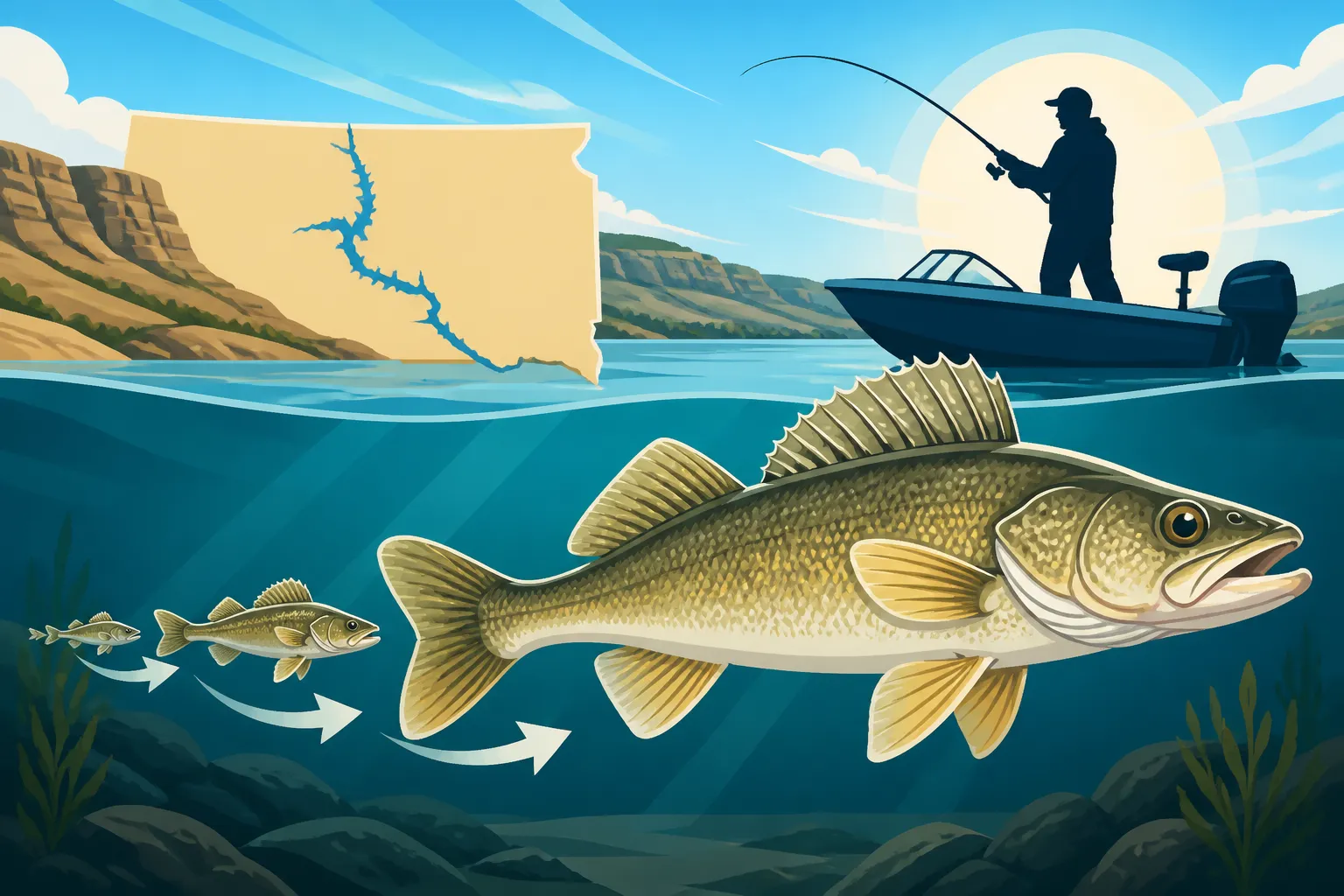
Walleye typically exhibit their most rapid growth during their first few years of life, assuming conditions are favorable. Once they hatch and transition from a microscopic larval stage to feeding on zooplankton and then small insects, their growth can be quite explosive. As they graduate to consuming baitfish, that growth trajectory continues upwards. A 1-year-old walleye might be 8-12 inches, while by age 2 or 3, it could be well into the keeper range of 15 inches or more. This initial rapid growth is crucial for survival, allowing them to quickly outgrow many potential predators.
This period of fast growth is directly tied to the abundance of easily accessible, high-energy forage. If a year class experiences a particularly strong baitfish boom in its juvenile years, those fish will carry that advantage throughout their lives, often resulting in a noticeable year class of larger fish several seasons later. If you're looking for gear to help locate these fast-growing fish, consider browsing fish finders on Amazon.
Growth Slows with Age and Maturity
As walleye get older and reach maturity, their growth rate tends to slow down. While they continue to grow, the increments become smaller year after year. A 7-year-old walleye might only add an inch or two in a season, whereas a 2-year-old might add 3-5 inches. This is a natural biological process; much of their energy is redirected towards reproduction rather than pure somatic growth.
This is particularly true for mature females, who invest significant energy into egg production. While they might achieve larger overall sizes, their annual growth in length can taper off. The oldest walleye in Lake Oahe can live well over a decade, but these truly ancient fish might be more defined by their girth and battle scars than by continuous, rapid increases in length. Learning about How Biologists Track Walleye Growth on Lake Oahe can give you insight into the science behind these observations.
Annual Variations and "Boom-and-Bust" Cycles
It's vital to remember that walleye growth rates aren't static from one year to the next. Lake Oahe, like all large ecosystems, experiences natural fluctuations. A mild winter followed by a strong spring hatch of baitfish can lead to an excellent year for walleye growth. Conversely, a harsh winter, a late spring, or a dip in forage populations can mean a slower growth year.
These "boom-and-bust" cycles in forage or specific year classes of walleye are common in large reservoir systems. One year might be exceptional for catching numbers of 15-inch fish, while another might see fewer fish but a higher proportion of larger, older walleye. Anglers often discuss how the fishing changes from season to season and year to year in Lake Oahe, and much of that conversation revolves around these growth rate variations. Staying informed about the South Dakota Fishing Seasons Explained can help you understand these annual shifts.
Supporting the Fishery: How Anglers Can Help Healthy Walleye Populations in Lake Oahe
As anglers, we all have a role to play in ensuring that Lake Oahe continues to be a world-class walleye fishery, producing healthy fish with good growth rates for generations to come. It’s not just about catching fish; it’s about responsible stewardship.
Practice Selective Harvest
One of the most impactful things you can do is practice selective harvest. While it's great to bring home some delicious walleye for the frying pan, consider releasing the very largest and the very smallest fish. The biggest walleye, particularly the large females, are often the most productive spawners, contributing the most genetically robust eggs to the next generation. Removing too many of these trophy breeders can negatively impact the future of the fishery.
Similarly, releasing the smallest fish allows them to grow into larger, more productive adults. Many anglers adhere to a "slot limit" mindset even when there isn't a strict regulation in place, keeping mid-sized fish for dinner (say, 16-20 inches) and releasing the small ones to grow and the giants to spawn. This simple practice can go a long way in supporting strong growth rates across the population. If you need some ideas for gear, Amazon offers a wide selection of fishing nets designed for safe catch and release.
Adhere to Regulations and Stay Informed
South Dakota Game, Fish and Parks sets regulations like daily limits, possession limits, and size restrictions for a reason: to manage the walleye population for optimal health and growth. Abiding by these rules is non-negotiable for the long-term sustainability of the fishery. Ignorance of the law is never an excuse, and violating regulations directly harms the resource we all enjoy.
It’s also important to stay informed about any changes to regulations or special advisories for Lake Oahe. Conditions can change, and management strategies may evolve based on scientific surveys and population assessments. The South Dakota GFP Fishing Handbook Guide is an invaluable resource that every angler should consult regularly.
Use Proper Catch and Release Techniques
When you do choose to release a walleye, especially those larger breeding fish or undersized juveniles, doing so correctly is crucial for its survival. Minimize the time the fish is out of the water. Handle it gently, supporting its body horizontally rather than vertically by the mouth. Use needle-nose pliers or a hook-remover to quickly extract hooks, and avoid touching the gills.
If a fish is deeply hooked and bleeding heavily, it's often more humane to keep it, provided it's within legal limits. However, with proper care and attention, most released walleye will swim away healthy and continue to grow. Consider carrying an accurate scale and measuring tape to quickly assess your catch before making the decision to keep or release. For great tips on how to catch these fish, refer to the South Dakota Walleye Fishing Guide or specific techniques like Trolling for Walleye on Lake Oahe and How to Fish for Walleye in South Dakota. Finding the right Best Lures for South Dakota Walleye can also improve your success while minimizing harm.
Disclaimer
This article is for general informational purposes only and does not constitute professional advice. Laws, prices and regulations vary by location and change over time. Consult a qualified professional for guidance on your specific situation.