How Fish Survive Winter Under South Dakota Ice
For those of us who love South Dakota fishing, the sight of a completely frozen lake or river can be a bit disheartening, making you wonder how on earth any fish could possibly make it through such a harsh winter. It's easy to picture a desolate underwater world, but the reality is that fish have an incredible suite of adaptations that allow them to not just survive, but often thrive, beneath that seemingly impenetrable layer of ice. This guide will dive deep into the fascinating biology and behaviors that enable South Dakota's aquatic inhabitants to endure the long, frigid months and be ready for spring's thaw.
The Harsh Reality of Winter in South Dakota: Why Survival is a Challenge
Imagine being submerged in near-freezing water for months on end, with your food sources scarce and the very air you breathe becoming harder to find. That's essentially the challenge fish face every winter in South Dakota. It's not a walk in the park, and many factors can push fish populations to their limits. Understanding these challenges helps us appreciate the amazing resilience of these creatures.
The Ice Cap: A Barrier to Oxygen and Light
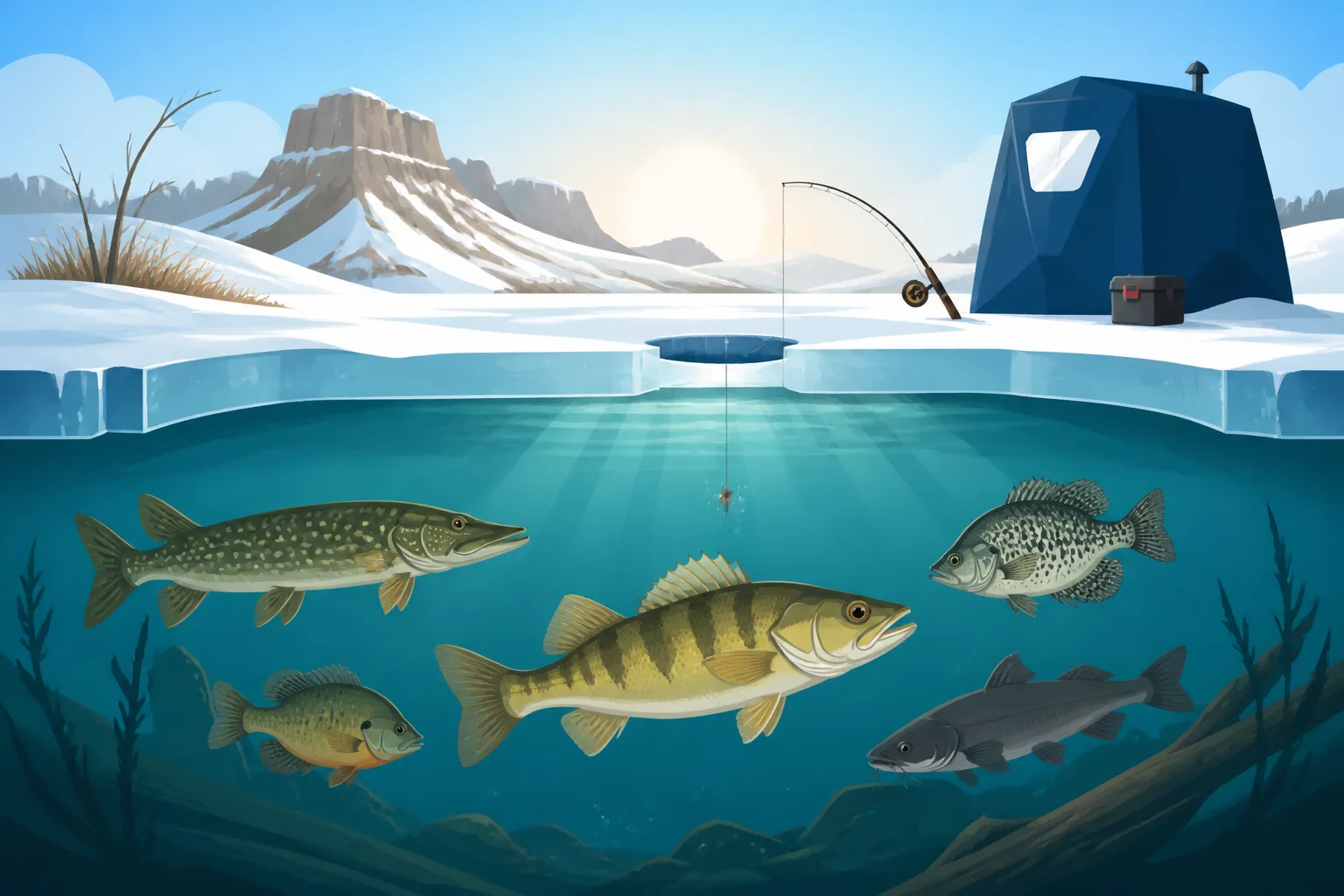
The most obvious change when winter hits is the formation of a thick layer of ice on our lakes and rivers. This ice sheet isn't just a surface; it's a profound environmental shift for the fish below. For one, it cuts off the water from atmospheric oxygen. Normally, wind and waves constantly mix oxygen from the air into the water, a process vital for all aquatic life, including fish. Once the ice forms, that exchange stops almost completely.
Compounding this, snow often piles up on top of the ice. While beautiful, this snow blocks out sunlight. Sunlight is crucial for aquatic plants and algae, which produce oxygen through photosynthesis. With reduced sunlight, this primary source of oxygen diminishes, or even ceases entirely, further contributing to a potential oxygen deficit under the ice. This can lead to what's known as winterkill, a serious concern for fisheries management, especially in shallower lakes.
Extreme Cold: A Threat to Metabolism
While fish are cold-blooded, meaning their body temperature mirrors their surroundings, there's still a limit to how much cold they can tolerate. When water temperatures drop to near freezing, their internal systems slow dramatically. For humans, extreme cold can lead to hypothermia and organ failure. For fish, it means a significant reduction in metabolic rate, impacting everything from digestion to swimming ability. They're not just a little chilly; their very physiological processes are operating at the bare minimum. It's a delicate balance; too cold, and even their adapted systems can shut down. The persistent, deep cold under a thick layer of ice, particularly in lakes where How Cold It Gets Ice Fishing in South Dakota is a common concern, presents a continuous stressor.
Biological Adaptations: How Fish Are Built for Winter
It’s truly incredible what nature has equipped these fish with. They aren't just tolerating the cold; they are biologically programmed to handle it. These adaptations are their secret weapons against the harsh South Dakota winter.
Cold-Blooded Nature and Lowered Metabolism
The fundamental reason fish can survive such low temperatures is their poikilothermic nature – they're cold-blooded. Unlike mammals, they don't expend energy to maintain a constant internal body temperature. As the water cools, so does their body, and their metabolic rate automatically slows down. This is akin to a car idling instead of racing down the highway; it burns far less fuel. This drastically reduced metabolism means they need significantly less food and oxygen to survive, a critical advantage when both resources become scarce under the ice.
Think of it like an extended, natural hibernation. Their heart rate, respiration, and digestive processes all slow to a crawl. They might move sluggishly, if at all, conserving every ounce of energy. This lowered metabolic state is key to understanding South Dakota Fish Species Diet by Season and why fish aren't actively hunting and gorging themselves like they would in warmer months.
Blood Chemistry: Antifreeze Proteins and Oxygen Retention
Some fish species, particularly those in extremely cold environments, can produce "antifreeze proteins" in their blood. These proteins bind to ice crystals and prevent them from growing larger, essentially stopping ice from forming within their cells and tissues. While less critical for fish in temperate zones like South Dakota where water rarely freezes solid inside the fish, it highlights the remarkable evolutionary toolkit fish possess.
More universally important for South Dakota fish is their ability to cope with low oxygen. Many species can extract oxygen more efficiently from cold water, which holds more dissolved oxygen than warm water initially. However, under ice, oxygen can become depleted. Fish have evolved specialized hemoglobin in their blood that can bind oxygen more effectively at lower temperatures, and some can even switch to anaerobic respiration for short periods, burning energy without oxygen. This is a last-ditch effort, but it can buy them precious time when oxygen levels plummet.
Energy Stores: Fat Reserves for the Long Haul
Just like a bear preparing for winter, fish spend the warmer months building up their fat reserves. They actively feed and put on weight throughout spring, summer, and fall, creating a biological fuel tank for the lean winter months. This is particularly true for larger game fish like walleye, northern pike, and bass. These fat deposits are crucial because, with their slowed metabolism, they rely almost entirely on these stored energies to keep their vital organs functioning when food is scarce.
A fish's condition going into winter can significantly impact its chances of survival. A lean fish might struggle, while a plump, healthy one has a much better shot. This is why late fall fishing can be so productive; fish are aggressively feeding to bulk up. You might even find tips on Best Bait for Walleye in Cold Water for anglers looking to take advantage of this pre-winter feeding frenzy. These fat reserves are the ultimate winter survival kit.
Behavioral Strategies: Where Fish Go and What They Do
Beyond their physiological adaptations, fish also employ clever behavioral strategies to increase their chances of surviving the brutal South Dakota winter. It's not just about what their bodies can do, but what they choose to do.
Seeking Deeper, More Stable Waters
As surface waters cool and eventually freeze, most fish will migrate to deeper sections of lakes and rivers. Why deeper? Because water has a unique property: it's densest at about 39 degrees Fahrenheit (4 degrees Celsius). This means that even if the surface is frozen solid at 32 degrees, the water at the bottom will often be slightly warmer and more stable. This deeper water also provides insulation from rapid temperature fluctuations that might occur closer to the surface.
In these deeper zones, fish find a more consistent environment, often with less current and more protection from predators. This is a common pattern, and understanding Where Walleye Go in Winter is crucial for ice anglers. They seek out thermal refuge, often congregating near structures like drop-offs, submerged points, or deep weed edges that provide both cover and that slight thermal advantage.
Reduced Activity and Feeding
During winter, fish enter a state of reduced activity, sometimes referred to as torpor. Their movements become minimal, and they spend a significant amount of time suspending motionless or resting on the bottom. This isn't laziness; it's a vital energy-saving mechanism directly linked to their lowered metabolism. They're trying to burn as few calories as possible to make their fat reserves last.
Consequently, their feeding activity also drops dramatically. While they still need to eat something occasionally, especially if winter stretches on, it's far less frequent and intense than in warmer months. They'll often take smaller, more opportunistic meals. This is why ice fishing often requires different tactics and presentations – fish aren't chasing down prey with the same vigor. If you're going out on the hard water, you'll find that tips from a South Dakota Ice Fishing Guide emphasize subtle approaches.
Schooling for Survival and Energy Conservation
Many fish species, particularly panfish like perch and crappie, but also walleye and even some bass, will form large schools during winter. There are several reasons for this behavior:
- Predator Avoidance: A large group provides safety in numbers. While slowed down, fish are still vulnerable to predators like northern pike that might remain somewhat active.
- Energy Conservation: Swimming in a school can be more energy-efficient, as individual fish might benefit from the slipstream created by others.
- Locating Food: Even though feeding is reduced, a larger group has more eyes to spot a potential food source, however sparse.
- Reproductive Readiness: For some species, schooling helps them stay together in preparation for spring spawning, though this is a secondary benefit to the immediate survival needs.
Imagine a tightly packed school of yellow perch on your fish finder – it's a bustling apartment complex under the ice, and a sign of their communal survival strategy. This behavior often makes for exciting ice fishing opportunities, as catching one fish can often mean there are many more right below your hole. Learning Best Ice Fishing Techniques for Lake Oahe often involves understanding how to locate and target these winter schools.
The Role of the Environment: How Lakes and Rivers Play a Part
While fish have incredible adaptations, the specific characteristics of their watery homes in South Dakota also play a huge role in their winter survival. Not all bodies of water are created equal when the temperatures plunge.
Oxygen Depletion: The Silent Killer
The biggest environmental threat to fish under the ice, especially in shallower waters, is oxygen depletion. As mentioned earlier, ice prevents atmospheric oxygen from entering the water, and snow blocks sunlight, halting photosynthetic oxygen production. Meanwhile, bacteria continue to decompose organic matter on the lake bottom, a process that consumes oxygen. If the ice cover is prolonged, and especially if there's heavy snow, oxygen levels can drop to critical levels, leading to what's known as "winterkill."
Winterkill events are devastating, often resulting in large numbers of dead fish come spring thaw. Shallow lakes with abundant vegetation and soft, mucky bottoms are most susceptible because they have more organic matter to decompose and less water volume to hold dissolved oxygen. Biologists conduct How Fish Population Survey Measures to monitor oxygen levels and fish health, sometimes even taking measures like aerating certain lakes to prevent catastrophic die-offs.
Water Depth and Structure: Natural Refuges
The depth of a lake or river, along with its underwater structure, provides critical refuge for fish. Deeper waters offer more stable temperatures and a larger volume of water to dilute potential oxygen depletion. They also provide space for fish to spread out and find comfortable depths. Structures like deep channels, rock piles, submerged timber, and steep drop-offs offer crucial cover.
These features aren't just good for hiding from predators; they also create microclimates and current breaks where fish can expend less energy. A big walleye might tuck into a deep current break on the Missouri River, for instance, conserving energy while waiting for an opportunistic meal. This is why anglers spend so much time studying bathymetric maps, even in winter, trying to find those sweet spots where fish are hunkering down. You can find many useful items like marine maps on Amazon to help you scout these areas.
Snow Cover: Friend or Foe?
Snow on the ice is a bit of a double-edged sword for fish. On one hand, a thick layer of snow acts as an insulator, helping to stabilize the water temperature below the ice. This can be beneficial, preventing the water from getting even colder. However, and this is the "foe" part, snow dramatically reduces light penetration. As we discussed, less light means less photosynthesis by aquatic plants and algae, leading to reduced oxygen production.
So, while a light dusting of snow might help maintain stable temperatures, a heavy, prolonged snow cover can significantly contribute to oxygen depletion and increase the risk of winterkill. It's a delicate balance that highlights the complex environmental factors at play in Do South Dakota Lakes Freeze Solid in Winter? and how fish adapt to their changing world.
Fish are truly marvels of adaptation, equipped with a remarkable ability to navigate the challenges of a South Dakota winter. From their lowered metabolism and efficient oxygen use to their strategic movements to deeper, more stable waters, every aspect of their biology and behavior is finely tuned for survival. Understanding these mechanisms not only fosters a deeper appreciation for our aquatic friends but also helps us, as anglers, to better predict their movements and adjust our techniques for successful winter fishing. Don't forget to grab some extra layers and your favorite thermos of coffee on Amazon before heading out!
Disclaimer
This article is for general informational purposes only and does not constitute professional advice. Laws, prices and regulations vary by location and change over time. Consult a qualified professional for guidance on your specific situation.