South Dakota State Record Brown Trout Weight
There's a special kind of thrill that comes with chasing a truly magnificent fish, a fish so big it might just rewrite the record books. For many anglers in South Dakota, that dream often revolves around the elusive and powerful brown trout. This guide is dedicated to exploring the incredible feat of catching a state-record brown trout, diving into what makes these fish legendary, and how you might just land one of your own.
The South Dakota State Record Brown Trout: A Look at the Legendary Catch
The quest for a state record is a journey steeped in dedication, skill, and often, a good deal of pure luck. When it comes to brown trout in South Dakota, the bar has been set incredibly high by an angler whose persistence paid off in a truly monumental way. This isn't just about catching a big fish; it's about connecting with a living legend, a testament to the incredible ecosystems we have right here in our state.
What it Takes to Set a State Record
Setting a state record isn't a casual affair; it's a rigorous process designed to ensure the integrity of the record books. First and foremost, it takes catching an exceptionally large fish, one that surpasses any previously recorded catch for its species in the state. This means going above and beyond what most anglers consider a "trophy" fish. Imagine the moment: you're fighting a fish, and it just feels… different. Heavier, stronger, with a tenacity that speaks of years spent surviving and growing. The initial rush of landing it is quickly followed by a realization: "Could this be the one?"
Beyond the sheer size, there are specific protocols that must be followed to certify a state record. This typically involves getting the fish officially weighed on a certified scale, usually at a grocery store or bait shop that has one calibrated for commercial use. You'll need witnesses, clear photographs, and a detailed account of the catch, including the location, date, and gear used. It's a moment of immense excitement, but also one that requires calm, precise action to ensure everything is documented correctly. The South Dakota Game, Fish and Parks (GFP) will then review the submission.
The Official Numbers and the Story Behind the Fish
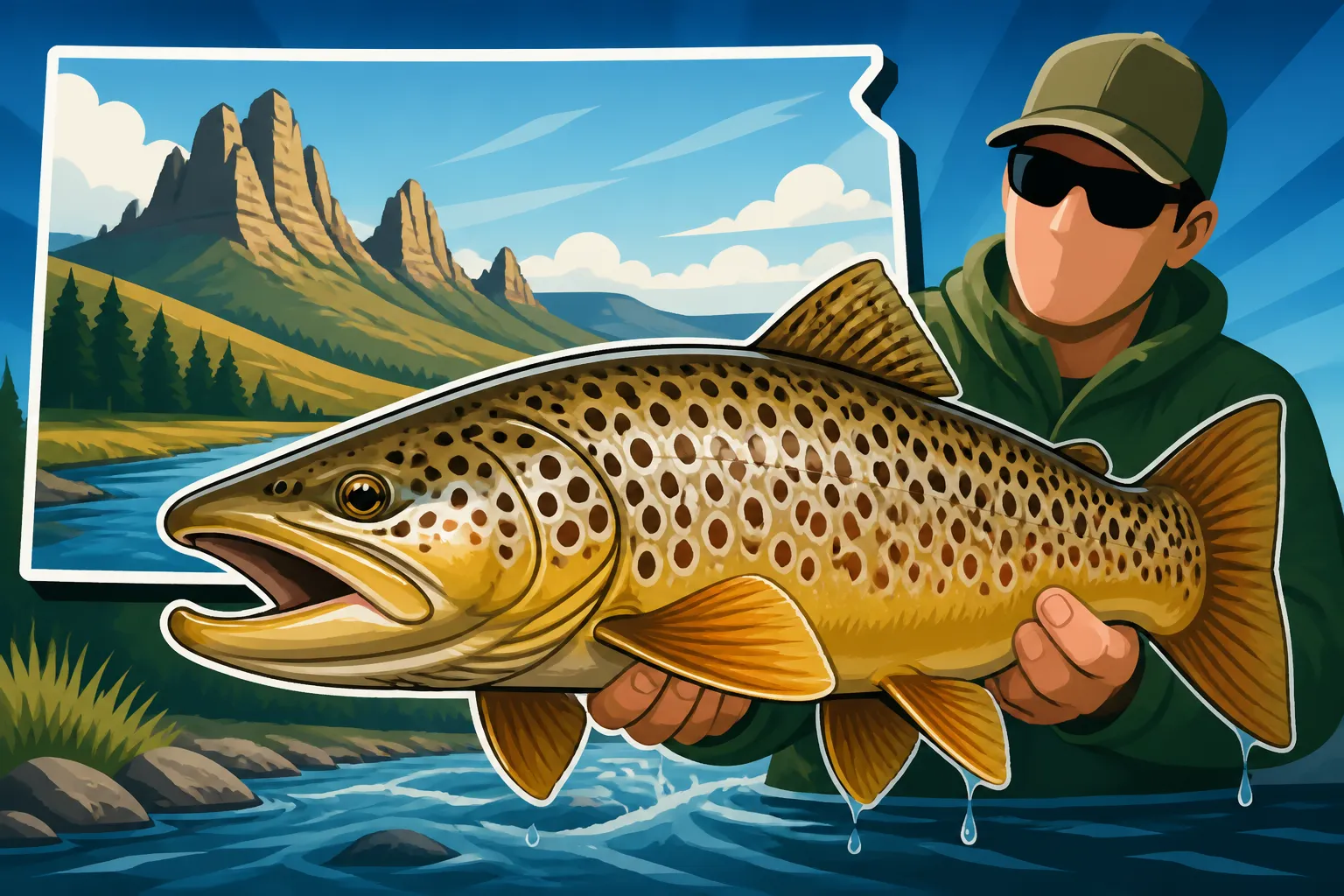
The current South Dakota state record brown trout stands at a truly impressive 28 pounds, 6 ounces. This behemoth was pulled from waters that epitomize the potential for trophy trout in our state. While the specific details of every record catch can sometimes fade into angling lore, the impact of such a fish certainly doesn't. This particular brown trout didn't just break a record; it reset expectations for what's possible in South Dakota's trout fisheries.
Think about that weight for a moment: almost 30 pounds of muscle and aggression, a fish that has likely lived for many years, evading countless lures and natural predators. Such a fish typically comes from waters with an abundant food supply, stable temperatures, and plenty of cover to allow it to grow to such immense proportions. These are often the cold, clear waters of the Black Hills, either in larger streams or the deeper sections of our reservoirs where brown trout can find both sustenance and sanctuary. It's a testament to the health and vitality of our trout programs and the wild populations that thrive in these environments. Knowing this record inspires many of us to dream bigger and explore the potential of every cast.
Where Do Record Brown Trout Come From in South Dakota?
When we talk about brown trout in South Dakota, our minds invariably turn to the pristine, cold waters of the Black Hills. This region, with its unique geology and ample water resources, provides the perfect nursery for these magnificent fish, allowing some to grow to truly astounding sizes that become the stuff of legend. Understanding these prime habitats is key to even dreaming about a record catch.
Prime Habitats for Trophy Brown Trout
The Black Hills region is undoubtedly the heart of South Dakota's trout fishing, and it's here that you'll find the conditions necessary for brown trout to not just survive, but thrive and reach record-breaking dimensions. We're talking about a network of cold, oxygen-rich streams like Rapid Creek, Spearfish Creek, and Castle Creek, as well as the deeper, cooler reservoirs such as Pactola Reservoir and Sheridan Lake. These waters offer a perfect cocktail of factors that contribute to exceptional fish growth.
First, the water itself is paramount. Brown trout demand cold, clean water with consistent flows. The Black Hills' spring-fed streams provide this naturally, maintaining stable temperatures even during the warmest summer months. Secondly, these environments are rich in diverse structure: deep pools, undercut banks, submerged logs, and large rocks. These features provide crucial ambush points for predatory brown trout, offering cover from both predators and strong currents, and allowing them to conserve energy. Finally, the food sources are abundant, from insect hatches to sculpins, crayfish, and smaller baitfish. The combination of these elements creates an ideal ecosystem for a brown trout to grow old and enormous. If you're looking for guidance, our Black Hills Trout Stream Fishing Guide is an excellent resource to start with.
The Role of Forage and Environment in Growth
A brown trout doesn't get to 28 pounds on a diet of good intentions. These fish are opportunistic predators, and their growth rates are directly tied to the availability of high-calorie forage. In the Black Hills, a rich invertebrate population provides a steady food supply for juvenile trout, helping them establish a strong foundation. As they grow, their diet shifts, incorporating larger prey items. This could be anything from smaller rainbow trout and brook trout to various minnow species, or even terrestrial creatures that fall into the water.
The environment plays an equally critical role. A stable environment with minimal drastic temperature swings and good water quality means less stress on the fish, allowing them to allocate more energy to growth rather than survival. Waters with diverse ecosystems, where multiple species of forage fish coexist, offer a consistent smorgasbord for a growing brown trout. Furthermore, areas with limited fishing pressure, or where strict catch-and-release practices are widely adopted, give these fish the chance to mature for many years, reaching weights that are truly extraordinary. For example, some of the special regulations found in our Black Hills Stream Trout Regulations help protect these older, larger fish, fostering a trophy fishery.
| Factor | Impact on Brown Trout Growth |
|---|---|
| Cold, Clean Water | Optimal metabolism, high oxygen levels, less stress. |
| Abundant Forage | Consistent high-calorie diet for rapid growth. |
| Diverse Structure | Safe ambush points, protection from predators and elements. |
| Low Fishing Pressure | Allows fish to grow older and larger without being harvested. |
| Stable Environment | Reduces energy expenditure on survival, directs to growth. |
| Water Quality | Healthy ecosystem, rich food chain, disease resistance. |
Strategies for Targeting Your Own Trophy Brown Trout
Chasing a trophy brown trout, let alone a potential state record, is a demanding endeavor that requires patience, skill, and the right approach. It's not about blind luck, though luck certainly helps; it's about understanding the fish, their habitat, and employing techniques that put the odds in your favor.
Essential Gear and Techniques for Big Browns
When you're after a brown trout that could potentially weigh over 20 pounds, you need to step up your gear. Forget the ultralight setups typically used for smaller stream trout. For serious trophy hunting, especially if you're targeting larger rivers or reservoirs, a medium-heavy spinning rod or a 6-8 weight fly rod is a much better choice. These provide the backbone needed to cast larger lures and to handle the powerful runs of a truly big fish. Pair that with a reliable reel spooled with strong line, perhaps 8-12 pound test monofilament or fluorocarbon, or braided line with a fluorocarbon leader for spinning setups. For fly fishing, heavy tippet is non-negotiable.
Lure selection is crucial. Big brown trout are predatory and often prefer larger meals. Think big streamers, articulated flies, minnow-imitating crankbaits (both diving and suspending models), large spoons, and even swimbaits that mimic smaller trout or baitfish. Where legal, live bait like large minnows or sculpins can also be incredibly effective. When shopping for these specialized items, you'll often find a great selection of brands and types on platforms like Amazon, allowing you to compare options and read reviews to pick what's right for your needs. Always check local regulations regarding bait use, especially in sensitive trout waters. For those keen on fly fishing, our South Dakota Fly Fishing for Black Hills Trout guide offers more specialized insights.
Understanding Brown Trout Behavior
Success in targeting trophy brown trout hinges on understanding their behavior. These are intelligent, often solitary fish that prefer to hide and ambush their prey. They are most active during low-light conditions – dawn, dusk, and even into the night, especially during the warmer months. During the day, they'll typically be tucked away in deep pools, under undercut banks, beneath log jams, or near large boulders, anywhere that provides cover and a current break.
Their feeding habits are also influenced by the season. In spring, after ice-out, they'll often be found in shallower areas, feeding on emerging insects and baitfish. Summer sees them retreat to cooler, deeper water or shade during the day, becoming more active in the evenings. Fall is a prime time for big browns as they become aggressive feeders, bulking up for winter and the spawning run. During this time, they'll often be more willing to chase larger baits. Understanding these patterns, combined with knowledge of specific locations, greatly increases your chances. Patience is key; you might make many casts to a prime spot before a monster decides to strike. Knowing how to read the water, identify current seams, and predict where a big fish might be holding is a skill developed over many hours on the water.
The "Catch and Release" Ethic for Trophy Fish
When you're pursuing a fish of potentially record-breaking size, the ethic of "catch and release" becomes incredibly important. These large brown trout are often the biggest spawners, contributing significantly to the genetic health and future populations of the fishery. Releasing them ensures they can continue to breed and provide sport for other anglers. It’s a conservation mindset that allows future generations to also have a shot at a trophy.
If you are fortunate enough to hook into a genuinely large brown trout, handle it with the utmost care. Minimize its time out of the water, keep your hands wet, and support its body fully, especially when weighing or photographing. Avoid dragging it on rocks or gravel. If taking photos, do so quickly and efficiently. Then, gently release the fish, holding it in the water until it regains its strength and swims away on its own power. Tools like a large, knotless rubber net can significantly reduce stress on the fish during landing. Many anglers choose to use barbless hooks for easier release, a practice we heartily recommend. Our South Dakota Trout Fishing Guide also emphasizes the importance of responsible angling practices.
Documenting Your Potential Record Catch
The moment you realize you might have a state-record fish on your line is exhilarating, but the work isn't over once you land it. Proper documentation is absolutely critical to ensure your catch can be officially recognized by the South Dakota Game, Fish and Parks. Without following the correct steps, even the biggest fish won't make it into the record books.
The Crucial Steps for Record Certification
Let's say you've just landed a brown trout that feels like a cinder block. Your heart is pounding, but you need to act methodically. The very first step, after ensuring the fish is safely subdued (and ideally kept alive in a livewell or similar if you intend to release it after weighing), is to locate a certified scale. This is not just any kitchen scale; it needs to be a commercial scale that is regularly calibrated and certified, often found at post offices, butcher shops, or some bait and tackle stores. It's wise to research certified scale locations in your typical fishing areas beforehand, so you know exactly where to go if the moment arises.
Once at the scale, ensure the fish is weighed accurately. Take multiple photos from different angles: a clear shot of the entire fish, a close-up of the head and tail, and a picture with a tape measure showing its length. Having a witness, ideally someone unrelated to you, present during the weighing and measuring process adds significant credibility. Immediately after, contact the South Dakota Game, Fish and Parks (GFP) office. They will provide the official record application and guide you through the specific requirements. Remember, minimizing the fish's stress during this process is also vital, especially if you plan to release it. Many seasoned anglers keep a waterproof notebook and pen, along with a certified measuring tape, in their boat or pack for just such an occasion. You can find quality certified scales and measuring tapes on Amazon if you want to be fully prepared.
Beyond the Record: Enjoying the Experience
While setting a state record is an incredible achievement, it's important to remember that every large fish caught is a triumph in itself. Even if your brown trout doesn't quite tip the scales to a new record, catching a personal best, or simply a magnificent fish, is an experience to cherish. The story behind the catch – the weather, the technique, the fight, the company – often becomes far more important than the exact weight or length.
Sharing these experiences with friends, family, or fellow anglers is part of the joy of fishing. These are the moments that build lifelong memories and fuel our passion for the outdoors. Whether it's a record or just a truly memorable day on a Black Hills stream, the pursuit of these majestic creatures connects us to nature in a profound way. The thrill of the chase, the patience required, and the respect for the fish are all part of the journey. Ultimately, it’s about the adventure and the stories you’ll tell for years to come. Don't forget, the South Dakota Trophy Fish Award Program exists to recognize those exceptional catches, even if they don't break a state record!
Disclaimer
This article is for general informational purposes only and does not constitute professional advice. Laws, prices and regulations vary by location and change over time. Consult a qualified professional for guidance on your specific situation.