South Dakota Catfish Species Identification
It's happened to all of us: you reel in a powerful, whiskered fighter from a South Dakota lake or river, and while you know it's a catfish, you might not be entirely sure which kind. This can lead to nagging questions about size limits, what bait you should have been using, or simply a missed opportunity to truly appreciate the catch. This guide is here to clear up that confusion, helping you confidently identify the diverse catfish species that swim in our beautiful waters.
The Main Catfish Contenders in South Dakota
South Dakota is home to a few prominent catfish species that capture the hearts (and sometimes the frustrated grumbles) of anglers across the state. While they all share that unmistakable whiskered face and scaleless body, each species has unique traits that make them distinct. Understanding these primary differences is the first step in becoming a true catfish identification expert.
Channel Catfish: The Everywhere Angler's Friend
The Channel Catfish (Ictalurus punctatus) is, without a doubt, the most widespread and commonly caught catfish species in South Dakota. These adaptable fish are found in nearly every corner of our state, from the sprawling Missouri River reservoirs to smaller glacial lakes and countless stock ponds. They're a staple for anglers seeking a fun fight and excellent table fare.
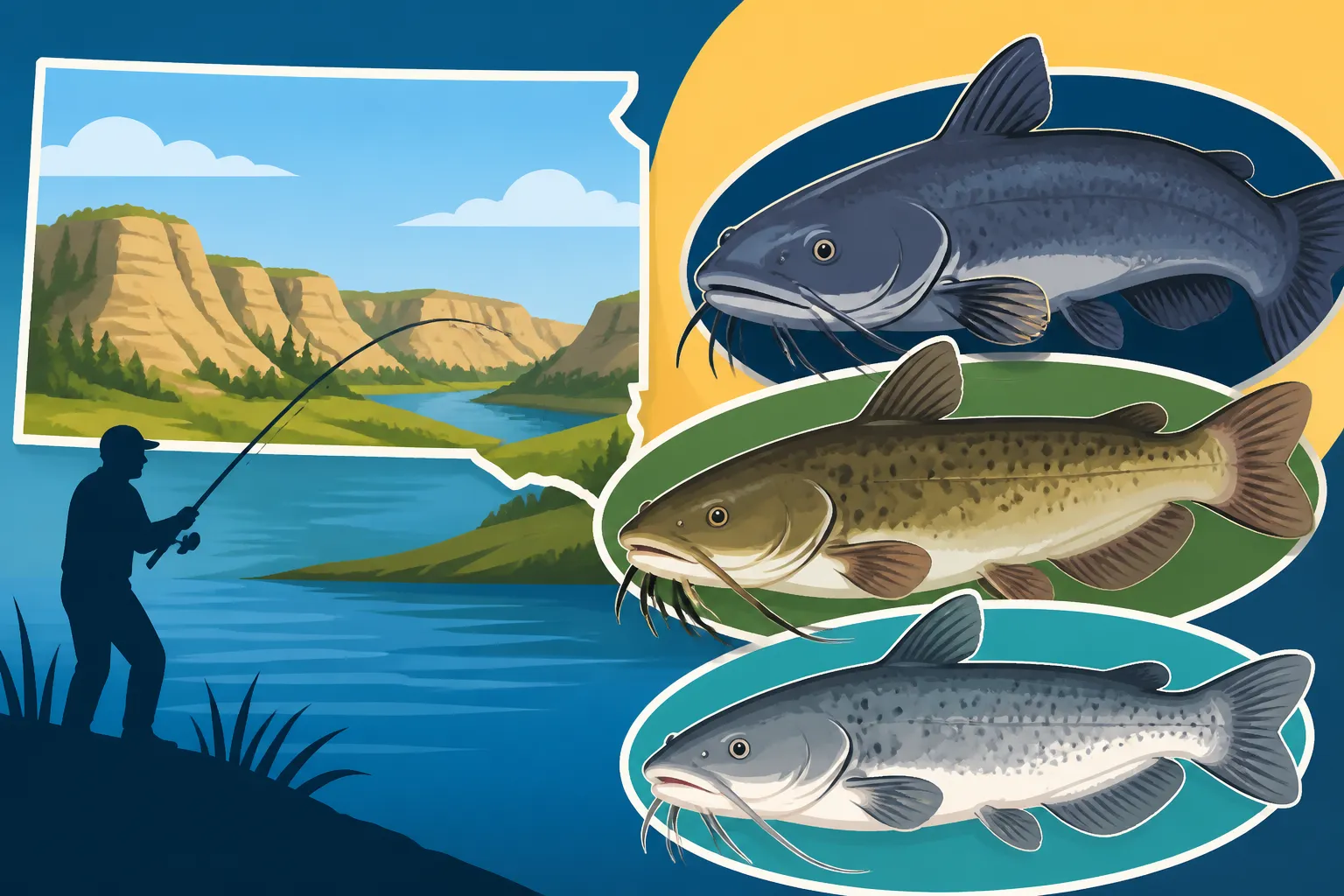
When you pull in a Channel Cat, you'll generally notice a sleek, streamlined body. Their color can vary quite a bit depending on their environment, but they often have an olive-green to brownish back, fading to silvery sides and a white belly. Younger Channel Cats, and sometimes even larger ones from clear water, will often have distinct dark spots along their sides, which tend to fade as the fish ages. The most defining feature of a Channel Catfish, however, is its deeply forked tail, almost like that of a trout or salmon. Their head is relatively small and rounded compared to their body, and they possess eight prominent barbels (whiskers) around their mouth.
Channel Catfish are omnivorous opportunistic feeders, meaning they'll eat just about anything they can find. Their keen sense of smell, enhanced by those barbels, makes them incredible scavengers. They'll readily take dead bait, prepared stink baits, worms, or even some artificial lures. You'll find them in a variety of habitats, from slow-moving river channels to the open water of lakes, often preferring areas with some current or structure. If you're looking for a good fight and a delicious meal, you'll be hard-pressed to go wrong targeting Channel Cats in South Dakota. You can learn more about finding them in our South Dakota Catfish Fishing Guide.
Flathead Catfish: The Big River Brawler
If the Channel Catfish is the amiable generalist, the Flathead Catfish (Pylodictis olivaris) is the solitary, predatory titan of the river. These fish are less common than Channel Cats and typically inhabit specific environments, but when you hook into one, you'll know it! They are renowned for their immense power and their preference for live bait.
True to their name, Flathead Catfish possess a distinctly wide, flattened head with a lower jaw that protrudes beyond the upper jaw, giving them a bit of an underbite. Their eyes are also notably smaller than those of a Channel Cat. Their body is robust and stocky, with a mottled brown and yellow coloration, providing excellent camouflage against rocky or woody river bottoms. Unlike the Channel Cat's deeply forked tail, the Flathead's tail is either square or only very slightly notched, another key identifying characteristic. They also have eight barbels, but they tend to be shorter and thicker than those of a Channel Cat.
Flatheads are primarily piscivorous, meaning they prefer to eat other fish. They are ambush predators that love to hide in deep holes, under submerged logs, or within dense brush piles, waiting for an unsuspecting meal to swim by. This makes them a challenging but incredibly rewarding target for anglers who prefer to use live offerings like sunfish, suckers, or creek chubs. You'll primarily find these giants in the lower stretches of the Missouri River and its larger, slower-moving tributaries, especially where there's plenty of heavy cover. Landing one of these river monsters requires stout tackle and a strong will! For more specific spots, check out Missouri River Catfish Fishing Spots.
Blue Catfish: A Rare But Growing Presence
The Blue Catfish (Ictalurus furcatus) is an exciting, albeit less common, species in South Dakota. While historically more prevalent further south, their presence in the lower stretches of the Missouri River in our state has been noted, and they represent the potential for truly enormous catches. They are the largest North American catfish species, capable of reaching incredible sizes.
Visually, the Blue Catfish shares some similarities with the Channel Catfish but with some crucial distinctions. They typically have a uniform bluish-gray coloration on their back and sides, fading to a white belly, without the distinct spots often seen on Channel Cats. Their body is stout and robust, and they also possess a deeply forked tail, similar to the Channel Cat. However, their head is noticeably broader and more flattened than a Channel Cat's, though not as wide and flattened as a Flathead's. Their mouth is typically smaller and more centrally located on the head compared to the Flathead. Like the others, they have eight barbels.
In South Dakota, Blue Catfish are largely found in the deep, powerful currents of the lower Missouri River system. They are often associated with navigation channels, deep scour holes, and areas with strong current. Their diet consists of a mix of fish, mussels, and other aquatic organisms. While they can be caught on cut bait, prepared baits, or live bait, their sheer size potential means you need exceptionally heavy tackle if you hope to land one. Catching a Blue Cat in South Dakota is truly a trophy endeavor, and while their numbers aren't as high as Channel Cats, they offer an incredible angling experience for those lucky enough to encounter them.
Key Visual Differences: Channel vs. Flathead vs. Blue Catfish
Trying to tell these whiskered beauties apart can sometimes feel like a puzzle, especially if you're new to catfish angling in South Dakota. However, there are a few tell-tale signs that, once you learn them, will make identification a breeze. Forget the guesswork and learn to look for these distinguishing characteristics.
Tail Shape: The Easiest Clue
When you've got a catfish in hand, the very first place you should look for a positive identification is the tail fin. This feature is often the most distinct and provides an immediate clue as to which species you're dealing with. It’s like their personal signature!
For Channel Catfish and Blue Catfish, you'll observe a deeply forked tail. Imagine a "V" shape cut out of the tail fin – that's what you're looking for. The two lobes of the tail are clearly separated, giving it a swift, hydrodynamic look. Both species rely on this forked tail for speed and maneuverability in various water conditions. This feature is consistent across all sizes of Channel and Blue Cats, making it a reliable identifier from juveniles to large adults.
In stark contrast, the Flathead Catfish has a tail that is either square or only very slightly notched, sometimes described as fan-shaped. It almost looks like a paddle. There isn't that deep indentation that you see in the other two species. This less-forked, more rounded tail is a crucial differentiator and one that, once seen, is hard to mistake. This tail shape is often indicative of their bottom-dwelling, ambush predator lifestyle, where powerful, short bursts of propulsion are more critical than sustained speed. Remembering this tail difference will instantly narrow down your identification options to just one. When in doubt, always check the tail! This particular distinction is so important that we even have a guide on How to Tell a Channel Catfish From a Flathead Catfish.
Head and Mouth: Another Dead Giveaway
While the tail is often the quickest identifier, taking a closer look at the head and mouth area provides further confirmation and helps to solidify your identification. The unique structures here reflect each species' feeding habits and preferred habitats. It's truly fascinating how nature adapts each fish for its specific niche.
The Channel Catfish typically has a smaller, more streamlined head that tapers smoothly into its body. Their mouth is terminal (meaning it's at the very end of their snout) and somewhat upturned, indicating their diverse feeding habits which include scavenging from the surface or mid-water column. Their eight barbels are relatively long and slender, acting like sensitive feelers to locate food in murky waters. These features collectively contribute to their ability to feed on a wide variety of prey in different water conditions.
The Flathead Catfish, as its name implies, has a distinctively wide and flattened head. This broad, almost shovel-like head is unmistakable. Furthermore, their lower jaw protrudes beyond the upper jaw, creating an underbite. This unique mouth structure is perfectly adapted for their predatory lifestyle, allowing them to engulf live prey with surprising efficiency. Their eyes are also notably smaller and set higher on their head, another adaptation for their ambush tactics in dark, deep river holes. Their barbels are generally shorter and thicker than those of a Channel Cat, better suited for sensing close-range prey in dense cover.
The Blue Catfish presents a head and mouth that are somewhat intermediate between the Channel and Flathead, but with their own distinct characteristics. Their head is broader and more flattened than a Channel Cat's, but not as exaggeratedly wide and flat as a Flathead's. Their mouth is also somewhat upturned, similar to a Channel Cat, but generally broader. Their eyes are proportionally larger than a Flathead's but smaller than a Channel Cat's. Their barbels are typically shorter than a Channel Cat's but longer and more slender than a Flathead's. Essentially, they possess a robust head built for power, yet still retain some of the scavenger traits seen in Channel Cats.
Body Coloration and Markings
While coloration can sometimes be deceptive due to environmental factors like water clarity and diet, it still offers valuable clues, especially when combined with tail and head characteristics. It's not always black and white (or in this case, olive and blue!), but generally, there are patterns to look for.
Channel Catfish often display a range of olive-green to brownish hues on their back, transitioning to silvery sides and a whitish belly. The most iconic marking, particularly on younger fish, is the presence of distinct dark spots along their sides. These spots can be quite prominent, almost like freckles, but they tend to fade significantly or disappear entirely as the fish grows larger, especially in older, larger specimens or those from turbid waters. Fish from clearer lakes might retain some spotting even at larger sizes.
Flathead Catfish are typically mottled in appearance, with irregular blotches of yellow, brown, and sometimes even a dark olive or black. This irregular patterning serves as superb camouflage, allowing them to blend seamlessly with the woody debris, rock piles, and muddy bottoms where they often reside. Their belly is usually a cream or yellowish color. The overall impression is a somewhat "dirty" or "camouflaged" look, distinct from the more uniform or spotted appearance of the other species.
Blue Catfish are characterized by a more uniform, often unspotted, bluish-gray coloration on their back and sides, which gives them their name. This blue-gray fades to a lighter, often white or silvery, belly. The color is generally consistent and lacks the distinct spots of a Channel Cat or the mottled pattern of a Flathead. This sleek, cool-toned appearance can be quite striking, especially on a large specimen pulled from the deep Missouri River current.
Here's a quick comparison table to help you identify the primary South Dakota catfish species:
| Feature | Channel Catfish | Flathead Catfish | Blue Catfish |
|---|---|---|---|
| Tail Shape | Deeply forked | Square or very slightly notched | Deeply forked |
| Head Shape | Small, rounded, streamlined | Wide, flattened, shovel-like | Broad, somewhat flattened |
| Lower Jaw | Even with upper or slightly recessed | Protrudes beyond upper jaw (underbite) | Even with upper or slightly protruding |
| Body Color | Olive-brown to silvery, often spotted (young) | Mottled yellow, brown, and olive | Uniform bluish-gray, unspotted |
| Eyes | Moderately sized | Small, set high on head | Moderately sized, but often smaller than Channel's |
| Typical Size | Common up to 10 lbs, but can reach larger | Can reach 50+ lbs, often 10-30 lbs | Can reach 100+ lbs, rare but huge |
| Primary Diet | Omnivorous (scavengers, fish, insects) | Piscivorous (live fish) | Omnivorous (fish, mussels, insects) |
Where Each Species Calls Home in South Dakota
Knowing what to look for visually is one thing, but understanding where you're likely to find each species in South Dakota is another key piece of the identification puzzle. Different species have different preferences for habitat, and knowing these can significantly improve your chances of catching the species you're targeting or correctly identifying one you've just landed. South Dakota's diverse waterways offer a unique home for each.
Channel Catfish: Ubiquitous and Abundant
The Channel Catfish is truly the everyman's catfish in South Dakota. You'd be hard-pressed to find a significant body of water in the state where they don't thrive. Their incredible adaptability to various water conditions, from clear lakes to muddy rivers, is what makes them so pervasive. This means that if you're fishing almost anywhere in South Dakota, there's a good chance you'll encounter a Channel Cat.
They are incredibly abundant throughout the entire Missouri River system within South Dakota, including the vast reservoirs of Lake Oahe, Lake Sharpe, Lake Francis Case, and Lewis and Clark Lake. Here, they utilize everything from the main river channels to flooded timber and tributary mouths. But their presence isn't limited to these major arteries; you'll also find healthy populations in many of the Glacial Lakes in eastern South Dakota, like Lake Thompson or Lake Kampeska, as well as countless smaller rivers, creeks, and even farm ponds across the state. They're often stocked in smaller impoundments to provide fishing opportunities, making them a fantastic target for beginners and seasoned anglers alike. If you're looking to catch a Channel Cat, finding a spot with a bit of current or structure – think submerged trees, rock piles, or bridge pilings – is often a good bet.
Flathead Catfish: The Missouri River's Bottom Dweller
Flathead Catfish, in contrast to their Channel Cat cousins, are far more particular about where they set up shop. In South Dakota, their domain is almost exclusively the larger, deeper stretches of the Missouri River and its most substantial tributaries, particularly in the southern portions of the state. They are creatures of powerful currents and robust cover, preferring areas where they can truly be the apex predator of their immediate environment.
You'll find the most consistent Flathead action in the lower Missouri River, especially below major dams like Gavins Point Dam near Yankton and Fort Randall Dam. These areas offer the deep scour holes, rocky drop-offs, and significant amounts of woody debris that Flatheads crave. They are ambush predators that love to tuck themselves into these dark, protected spots, waiting for unsuspecting fish to swim by. They're less common in the more lake-like upper reservoirs of the Missouri such as Lake Oahe, though they can certainly be found there in specific riverine sections or deep tributary mouths. Targeting Flatheads means focusing on these deeper, heavily structured areas where current provides a constant supply of their live prey. Patience and heavy tackle are a must when pursuing these formidable bottom dwellers.
Blue Catfish: Limited Range, Big Potential
While the potential for catching a trophy Blue Catfish in South Dakota is exhilarating, it's important to understand that their documented range in the state is currently quite limited. They are not nearly as widespread as Channel Cats, nor as consistently found as Flatheads. Their presence often signals spillover from more established populations in states further downstream on the Missouri River system.
The vast majority of Blue Catfish encounters in South Dakota occur in the extreme southern reaches of the Missouri River, particularly near the border with Nebraska, below Gavins Point Dam and extending downstream. These are the powerful, deep-channeled sections of the river that most closely mimic their preferred habitat. Anglers might occasionally encounter them further upstream, but it's generally a rare event. Fisheries biologists continually monitor these populations, and while they may not be numerous, the sheer size potential of a South Dakota Blue Cat is enough to draw dedicated anglers. If you're fishing these southernmost stretches of the Missouri River, always be prepared for the possibility of hooking into one of these massive fish – they will test your gear and your resolve!
Beyond the Big Three: Other Catfish in South Dakota
While Channel, Flathead, and Blue Catfish are the primary species that attract serious anglers in South Dakota, our waters are also home to a couple of other interesting, albeit smaller, catfish cousins. These species might not get the same headlines, but they play important roles in the ecosystem and can still provide a fun angling experience, especially for younger or less experienced fishermen.
Bullheads: The Smaller, Stubborn Cousins
Bullheads are the smaller, often overlooked members of the catfish family in South Dakota, but they are incredibly common and offer a fantastic opportunity for casual fishing, especially with kids. There are three main species of bullheads found in South Dakota: the Black Bullhead (Ameiurus melas), Brown Bullhead (Ameiurus nebulosus), and Yellow Bullhead (Ameiurus natalis). While they differ slightly in color and markings, they all share common characteristics that set them apart from their larger catfish relatives.
The most distinguishing feature of a bullhead is its tail. Unlike the deeply forked tails of Channel and Blue Cats, or the square tail of a Flathead, bullheads have a rounded or slightly emarginate (notched) tail fin. Their bodies are stout and somewhat stout, with a larger head relative to their body size compared to Channel Cats. Their barbels are generally shorter and thicker than those of Channel Cats. Coloration varies by species – Black Bullheads are typically dark olive to black, Brown Bullheads are mottled brown, and Yellow Bullheads are lighter, often olive-yellow. These fish rarely grow beyond a few pounds, making them a perfect catch for light tackle.
Bullheads are incredibly hardy and tolerant of poor water quality, allowing them to thrive in environments where other fish struggle. You'll find them in abundance in muddy-bottomed ponds, slow-moving creeks, shallow lake margins, and backwaters of larger rivers throughout South Dakota. They're opportunistic feeders, readily taking worms, corn, or small pieces of cut bait. They may not be trophy fish, but their willingness to bite and their widespread availability make them a beloved target for many anglers seeking a relaxing day on the water, proving that even the smaller catches can bring big smiles. They're definitely a great introduction to fishing for kids.
Madtom Species: Tiny, Elusive, and Often Unseen
Beyond the bullheads, South Dakota's aquatic ecosystems are also home to several species of Madtoms. These are truly the miniature members of the catfish family, rarely growing more than a few inches long. They are typically overlooked by anglers due to their size and secretive nature, but they are an important part of the aquatic food web.
Madtoms share the general catfish characteristics of having barbels and scaleless skin, but their diminutive size immediately sets them apart. They often have mottled patterns that provide excellent camouflage against the streambed. One unique feature of Madtoms, particularly for those who might handle them, is that some species possess venomous spines in their dorsal and pectoral fins, which can deliver a mild but painful sting if mishandled. However, due to their small size and cryptic habits, most anglers will never encounter one unless they are specifically looking for them or accidentally scoop one up in a seine net.
These tiny catfish prefer clear, shallow streams and rivers with rocky or gravelly bottoms. They are often found hiding under rocks or within dense aquatic vegetation. Their diet consists primarily of small insects and invertebrates. While not a sport fish, Madtoms are crucial ecological indicators and serve as a food source for larger predatory fish. So, while you're unlikely to target them with a rod and reel, know that these little whiskered wonders are silently thriving in many of South Dakota's smaller waterways, contributing to the rich biodiversity beneath the surface.
Why Accurate Identification Matters
Beyond satisfying your angler's curiosity, knowing exactly which catfish species you've caught in South Dakota carries significant practical implications. It's not just about bragging rights; it's about fishing responsibly, maximizing your success, and showing respect for our precious natural resources.
Understanding Regulations and Limits
Perhaps the most critical reason for accurate identification is to ensure you are complying with South Dakota's fishing regulations. The rules governing daily limits and size restrictions can vary significantly between different species, even within the same fish family. For instance, while Channel Catfish limits are often quite generous, specific restrictions might apply to Flathead Catfish in certain areas or for fish of a particular size. Misidentifying your catch could inadvertently lead to exceeding a legal limit or keeping an undersized fish, which can result in penalties or fines.
By confidently distinguishing between a Channel Cat and a Flathead, you're better equipped to make informed decisions about what to keep and what to release. This adherence to regulations is not merely about avoiding legal trouble; it's a fundamental aspect of conservation. These rules are put in place by the South Dakota Game, Fish and Parks (GFP) to ensure sustainable fish populations for future generations of anglers. Always double-check the current South Dakota Fishing Regulations Explained and specifically review the Catfish Limits and Size Rules for the waters you intend to fish. A good field guide, easily available on Amazon, can be an invaluable tool to have on hand for quick reference while on the water.
Tailoring Your Fishing Approach
Knowing which species you're after before you even cast a line can dramatically increase your chances of success. Each catfish species has distinct feeding habits, preferred baits, and habitat preferences that dictate the most effective fishing techniques and gear. Understanding these nuances allows you to tailor your approach for maximum results.
For example, if you're targeting the ubiquitous Channel Catfish, you might opt for prepared "stink baits," cut bait, or even nightcrawlers fished on a simple bottom rig. These fish are highly opportunistic and have an incredible sense of smell. You might use lighter to medium action rods and reels, perhaps spooled with 10-20 lb test line. However, if your sights are set on a monster Flathead Catfish, your strategy needs a complete overhaul. Flatheads are primarily predatory and prefer live bait, such as sunfish or suckers, presented on heavy-duty tackle with stout hooks and strong line, perhaps 30-50 lb test, because these fish are notorious for their powerful runs into heavy cover. You'd also focus your efforts on deep river holes with woody debris. Similarly, for the elusive Blue Cat, even heavier gear might be needed. Being able to adapt your Best Bait for South Dakota Catfish and Best Line Weight for South Dakota Catfish is key to a productive day.
Respecting the Resource
Beyond regulations and fishing techniques, accurate species identification fosters a deeper appreciation and respect for the natural resources of South Dakota. When you can name the fish you're catching, you begin to understand its role in the ecosystem, its unique life cycle, and the specific challenges it might face. This knowledge encourages more responsible angling practices.
For instance, knowing that Flatheads are often slow-growing and can live for many years might influence your decision to release a particularly large one, ensuring it can continue to contribute to the population's genetics. Conversely, knowing that Channel Cats are abundant and often stocked might make you more comfortable keeping a few for a delicious fish fry. This kind of ecological awareness transforms fishing from a simple pursuit of a catch into an engaging interaction with nature. It empowers you to be a better steward of South Dakota's waters, ensuring that the thrill of hooking a powerful catfish remains a vibrant part of our state's outdoor heritage for generations to come. Having a good South Dakota Fishing License Guide also plays into this overall respect for the resource by ensuring you are legally allowed to participate in the sport.
Disclaimer
This article is for general informational purposes only and does not constitute professional advice. Laws, prices and regulations vary by location and change over time. Consult a qualified professional for guidance on your specific situation.