Do Walleye and Sauger Hybridize in South Dakota?
It’s a question that has crossed the mind of many an angler, especially after a particularly good day on the water where you might have pulled in fish that looked just a little bit different. You’re holding up your catch, looking at it closely, and thinking, "Is this a walleye, a sauger, or something else entirely?" The truth is, distinguishing between these closely related species can be tricky, and the possibility of a hybrid only adds to the mystery. This guide aims to clear up that confusion, specifically addressing whether walleye and sauger hybridize in South Dakota, what these fascinating hybrids are like, and how you can identify them out on the water.
The Curious Case of Hybridization: Walleye and Sauger
For those of us who love spending time on South Dakota's rivers and lakes, understanding the fish beneath the surface is part of the challenge and the charm. The idea of two distinct species interbreeding might sound like something out of a science fiction novel, but in the natural world, it's more common than you might think, especially when similar species share the same habitat.
A Natural Phenomenon in Shared Waters
Yes, walleye ( Sander vitreus ) and sauger ( Sander canadensis ) absolutely do hybridize in South Dakota. This isn't just a theoretical possibility; it’s a documented occurrence, both naturally and sometimes even through deliberate stocking efforts by fisheries management in various regions. These two species belong to the same genus, Sander, which means they are very closely related. Think of them like lions and tigers; they’re different species, but genetically similar enough that they can produce offspring.
In South Dakota, particularly in the vast Missouri River system and its reservoirs like Lake Oahe, Lake Sharpe, and Lake Francis Case, walleye and sauger often occupy similar habitats and even spawn at roughly the same times and locations. When their spawning grounds and timing overlap, there's a natural opportunity for cross-breeding. This natural hybridization leads to a fish that exhibits characteristics from both parent species, making identification a fun puzzle for even seasoned anglers. It's truly a testament to the adaptability of nature and the interconnectedness of our aquatic ecosystems.
What is a Saugeye? A Deeper Look
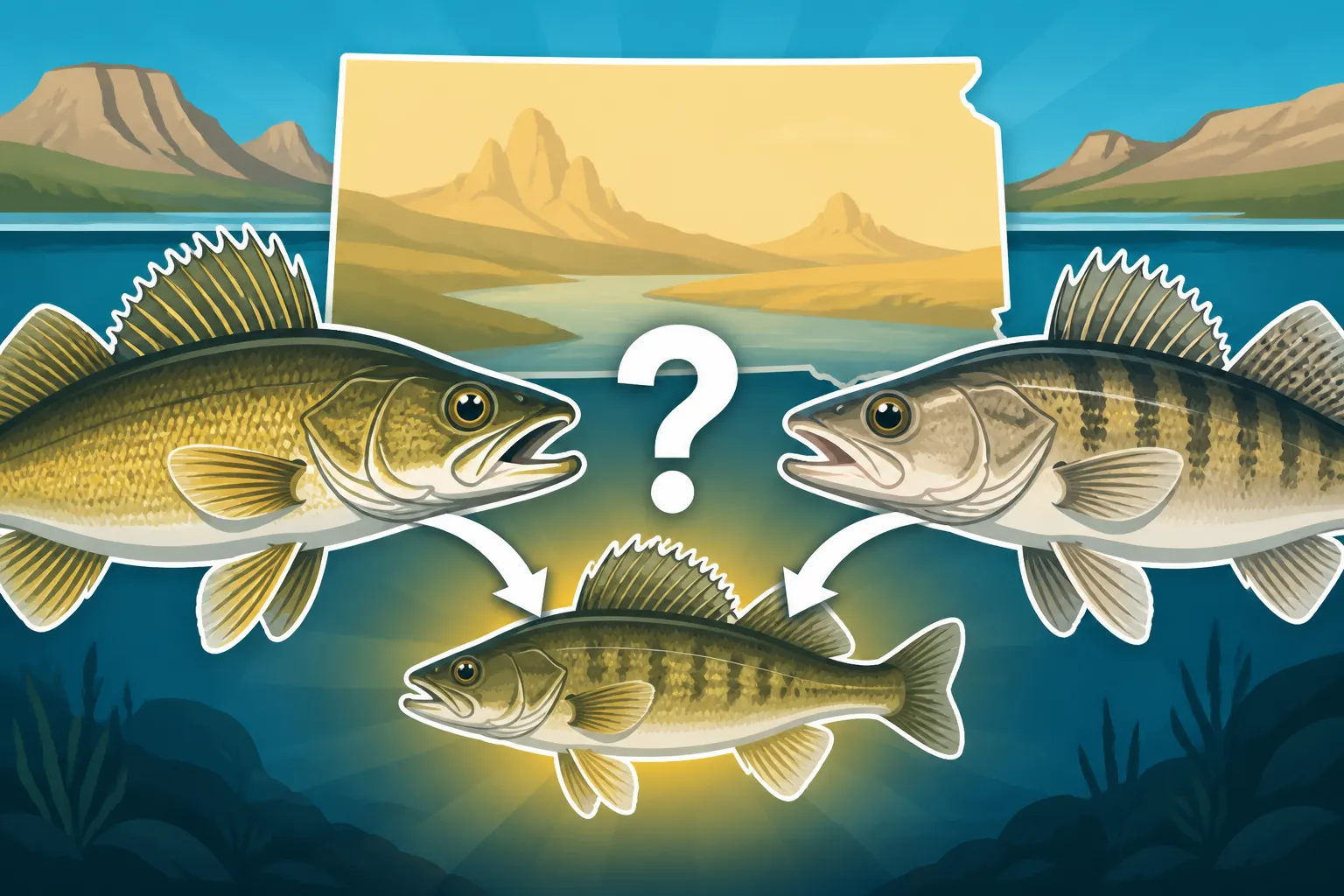
When a walleye and a sauger successfully interbreed, their offspring is known as a "saugeye." The term "saugeye" is a portmanteau, cleverly combining "sauger" and "walleye," and it perfectly describes what you’re looking at: a fish that’s a genetic blend of the two. These hybrids typically inherit a mix of traits, often displaying a growth rate and size potential greater than a sauger, but sometimes falling just short of the largest walleye. This phenomenon, where the hybrid offspring are often more robust or grow faster than either parent species, is sometimes referred to as "hybrid vigor."
From a management perspective, What a Saugeye Is becomes crucial, as fisheries might consider stocking saugeye in certain waters. This is often done to introduce a fish that can thrive in conditions that might not be ideal for pure walleye (which prefer clearer water) or sauger (which often prefer more turbid, riverine environments). Saugeye tend to be more tolerant of varying water conditions than either of their parent species, making them excellent candidates for certain stocking programs. Anglers appreciate them because they fight hard, grow to a respectable size, and are excellent table fare, just like their parents.
Identifying the Elusive Saugeye: A Guide for Anglers
One of the biggest challenges, and arguably one of the most exciting parts, of catching a saugeye is knowing you’ve caught one! While both walleye and sauger have distinct features, the saugeye blends them, creating a real head-scratcher. Accurate identification is not just for bragging rights; it’s often vital for adhering to fishing regulations, as limits can differ between species.
Key Distinguishing Features of Walleye
Let's start with the walleye, South Dakota's most iconic game fish. If you've spent any time on our waters, you're likely familiar with its look.
Walleye typically have:
- A distinct white tip on the lower lobe of their caudal (tail) fin. This is often the most reliable "telltale" sign.
- Large, glassy eyes. Their common name comes from these eyes, which are adapted for low-light conditions.
- A generally dark, mottled body color that can range from olive green to golden brown, often with brassy sides, but usually without distinct dark blotches or bars on the body itself (though some faint barring can occur).
- A spiny dorsal fin that is mostly clear or translucent, sometimes with a dark spot at the rear base, but generally lacking obvious spots or bars across the fin webbing.
- No scales on the cheek area or very few. You can often feel this distinction.
- A more elongated, cylindrical body shape than a sauger.
When you're out there chasing these beauties, especially on places like Lake Oahe Walleye Hotspots Near Mobridge, these features are usually quite clear.
Key Distinguishing Features of Sauger
Sauger are often mistaken for smaller walleye, but they have their own unique characteristics that set them apart. They tend to prefer the more turbid, current-driven environments of the main river channels.
Sauger generally have:
- No white tip on their caudal (tail) fin. The tail fin will be mottled or spotted but lack that definitive white tip.
- Prominent dark, roundish spots or bars covering their entire spiny dorsal fin, creating a very distinct pattern.
- Clear, almost iridescent eyes that are not as opaque or "glassy" as a walleye's.
- Dark, distinct blotches or saddle markings along their sides, often appearing like tiger stripes, which help them camouflage in murky water.
- Rough, fully scaled cheek area. You can feel the scales if you run your finger over their cheek.
- A more slender, almost "cigar-shaped" body compared to a walleye, often appearing smaller overall.
For a deeper dive, check out South Dakota Sauger Identification. Getting to know these individual traits makes spotting a hybrid much easier.
Pinpointing the Saugeye's Hybrid Traits
Now for the main event: how do you spot a saugeye? Since they're a mix, they'll often display a combination of the features described above. It’s like looking for clues from both parents.
Here's what to look for when trying to identify a saugeye:
- Caudal Fin: This is often your first clue. A saugeye will usually have a faint or incomplete white tip on the lower caudal fin. It won't be as bold and bright as a walleye's, but it will be there to some degree, distinguishing it from a sauger.
- Dorsal Fin: The spiny dorsal fin on a saugeye will typically have distinct dark spots or bars, similar to a sauger, but these spots might not be as numerous or as sharply defined, and the fin background might be slightly clearer than a pure sauger. It's a blend – not entirely clear like a walleye, nor fully mottled like a sauger.
- Body Markings: Saugeye often display mottled or blotchy side markings, similar to a sauger, but these can be less defined or more subdued. They'll generally have more distinct markings than a pure walleye.
- Cheek Scales: This can be a reliable indicator. Saugeye will typically have some scales on their cheeks, but they won't be fully scaled like a sauger, nor completely scale-free like a walleye. It's a partial covering.
- Overall Appearance: They often have a body shape that is intermediate between the two, perhaps slightly thicker than a sauger but not as robust as a large walleye.
It takes a keen eye and often a side-by-side comparison to be truly sure. When in doubt, consulting a reliable field guide or an app on your phone (you can find some great ones on Amazon) can be a big help. Ultimately, the presence of a faint white tail tip combined with distinct dorsal fin spotting and some cheek scales are the strongest indicators of a saugeye.
To make it easier, here's a quick comparison table:
| Feature | Walleye | Sauger | Saugeye |
|---|---|---|---|
| Tail Fin (Caudal) | Prominent white tip on lower lobe | No white tip, mottled | Faint or incomplete white tip on lower lobe |
| Dorsal Fin | Mostly clear, sometimes dark spot rear base | Distinct dark spots/bars over entire fin | Visible spots/bars, but often less defined |
| Body Markings | Generally uniform, mottled; no distinct blotches | Distinct dark blotches/saddle markings | Faint to moderate blotches/markings |
| Cheek Scales | Largely scale-free or very few | Fully scaled, rough to touch | Partially scaled, intermediate roughness |
| Eye Clarity | Opaque, glassy | Clear, iridescent | Intermediate clarity |
| Body Shape | More robust, cylindrical | More slender, cigar-shaped | Intermediate, often robust like walleye |
Remember, these are general guidelines for Walleye vs Sauger Identification. There can always be variations, so look for a combination of traits rather than relying on just one.
Where Saugeye Roam in South Dakota
Knowing that walleye and sauger hybridize is one thing, but knowing where to actually catch a saugeye in South Dakota is another! Their distribution is tied to the presence and overlapping habitats of their parent species.
Stocking Efforts and Natural Occurrences
While some states actively stock saugeye, South Dakota primarily sees natural hybridization occur where walleye and sauger populations coexist. This means the big Missouri River reservoirs are prime real estate for these hybrids. Are Saugeye Stocked in South Dakota Waters? is a good question for current fisheries management plans, but historically, natural reproduction accounts for a significant portion of the saugeye population.
When nature takes its course, it means you're more likely to encounter saugeye in areas where the habitats of walleye and sauger merge. This often includes transition zones within large reservoirs, where riverine conditions meet more lake-like environments. These areas provide the perfect blend for both species to spawn and live, increasing the chances of their genetic paths crossing.
Preferred Habitats and Waterways
Given their parentage, saugeye tend to be quite adaptable. They inherit a love for structure and current from both sides of their family tree. You'll often find them:
- In the Missouri River Reservoirs: Lake Oahe, Lake Sharpe, Lake Francis Case, and Lewis and Clark Lake are prime spots. The main channel areas, especially those with some current, rocky points, submerged humps, and old riverbed features, are excellent places to target them. These environments offer a good mix of the sauger’s preferred turbid, current-heavy spots and the walleye’s preference for deeper, clearer structure.
- Below Dams and Other Current Breaks: The tailwaters below dams, such as Oahe Dam or Big Bend Dam, create strong currents and offer abundant forage. Both walleye and sauger congregate here, and therefore, saugeye will too.
- Around Inflow and Outflow Areas: Any creek or river mouth flowing into a larger body of water can concentrate fish, including hybrids, especially during seasonal migrations or feeding frenzies.
- Areas with Mixed Bottoms: Saugeye aren't as particular as pure sauger for muddy bottoms or pure walleye for clean rock. They will often be found over gravel, sand, or even softer mud bottoms, particularly if there is some nearby structure or current.
Essentially, if you're fishing for walleye or sauger in South Dakota's major river systems, you're always in with a shot at landing a saugeye. Their presence adds an exciting element of surprise to any fishing trip.
Angling for Saugeye: Tactics and Considerations
So, you've identified a saugeye, or at least you suspect you have! Now, how do you intentionally target these hybrids, and what should you keep in mind regarding regulations?
Fishing Techniques That Work
The great news about saugeye is that they share many of the same feeding habits and preferences as their walleye and sauger parents. This means you don't need a completely different tackle box or an entirely new set of skills. If you're proficient at walleye or sauger fishing, you're already well-equipped to catch saugeye.
Here are some techniques that are highly effective:
- Jigging: This is a classic for both walleye and sauger and works wonders for saugeye. Whether you're vertical jigging with a lead-head jig tipped with a minnow, nightcrawler, or soft plastic, or casting and retrieving, jigs are irresistible. Look for them on ledges, humps, or in current seams. Many anglers swear by brightly colored jigs, which you can easily find on Amazon.
- Trolling Crankbaits: Covering water with crankbaits is another highly productive method, particularly in the large reservoirs. Saugeye, like walleye, will readily strike crankbaits mimicking baitfish. Experiment with different depths and colors until you find what they're hitting. Trolling for Walleye on Lake Oahe principles apply directly to saugeye.
- Live Bait Rigs: A simple slip bobber rig with a live minnow or a bottom bouncer with a spinner and a nightcrawler are deadly for saugeye. They're opportunistic feeders and won't pass up a juicy live offering.
- Current Seams and Eddies: Focus your efforts where moving water meets slack water. These current breaks create ideal ambush points for saugeye waiting for baitfish to be swept by. Below dams, around bridge pilings, or behind submerged islands are prime areas.
- Low Light Conditions: Just like walleye, saugeye are often most active during dawn, dusk, and even after dark, using their superior vision to hunt. Night fishing can be incredibly productive, especially during the warmer months.
Experimentation is key. Sometimes they'll prefer a slow, subtle presentation, while other times a fast, aggressive retrieve will trigger a bite. Pay attention to what the fish are telling you!
Regulatory Nuances for Hybrid Species
This is where accurate identification becomes more than just a fun challenge; it can be crucial for staying compliant with fishing laws. South Dakota fishing regulations, while generally grouping walleye and sauger together for certain limits, may sometimes have specific rules regarding hybrids or different slot limits for certain bodies of water.
It's absolutely essential to consult the latest South Dakota Fishing Regulations Explained or the current fishing handbook provided by the South Dakota Game, Fish and Parks (GFP) before you head out. These guides will clearly outline:
- Daily Bag Limits: How many fish of each species you can keep in a single day.
- Possession Limits: How many fish you can have in your possession at any given time (often twice the daily limit).
- Size Restrictions (Slot Limits): Specific length restrictions for keeping fish, which are designed to protect breeding populations or allow trophy fish to grow. Some lakes might have unique regulations that treat saugeye differently, or lump them into a "walleye/sauger" category.
- Specific Waterbody Rules: Certain lakes or river sections may have unique rules that differ from general state regulations. For instance, Belle Fourche Reservoir Special Walleye Rules exist, and similar specific guidelines could potentially apply to hybrids in other areas.
Always, always double-check the current regulations. Ignorance of the law is never an excuse, and a simple misidentification could lead to a fine. If you're ever truly unsure about a fish you've caught, the safest bet is to release it carefully.
Catching a saugeye in South Dakota is a unique angling experience, offering a blend of the fighting spirit and culinary delight of both its walleye and sauger parents. Knowing they exist, how to spot them, and where to find them adds another layer of excitement to your South Dakota fishing adventures.
Disclaimer
This article is for general informational purposes only and does not constitute professional advice. Laws, prices and regulations vary by location and change over time. Consult a qualified professional for guidance on your specific situation.