South Dakota Crappie Daily Limit
It can be incredibly frustrating to head out to your favorite South Dakota fishing spot, have a fantastic day reeling in crappie, and then suddenly feel that knot of anxiety about whether you’re within the legal limits. Nobody wants to unintentionally break the rules, especially when you’re just trying to enjoy the peace of the water and bring home some tasty fillets. This comprehensive guide is here to clear up all the confusion surrounding South Dakota's crappie daily limits, helping you fish confidently and responsibly every time.
Understanding South Dakota's Crappie Daily Limits
Navigating fishing regulations can feel like deciphering a cryptic puzzle, but when it comes to crappie in South Dakota, understanding the basics is relatively straightforward. These limits aren't just arbitrary numbers; they're carefully set by the South Dakota Game, Fish and Parks (GFP) to ensure our incredible crappie populations remain healthy and abundant for generations to come. It’s all about sustainable angling, so we can keep enjoying those fantastic days out on the water.
The Statewide Crappie Daily Limit
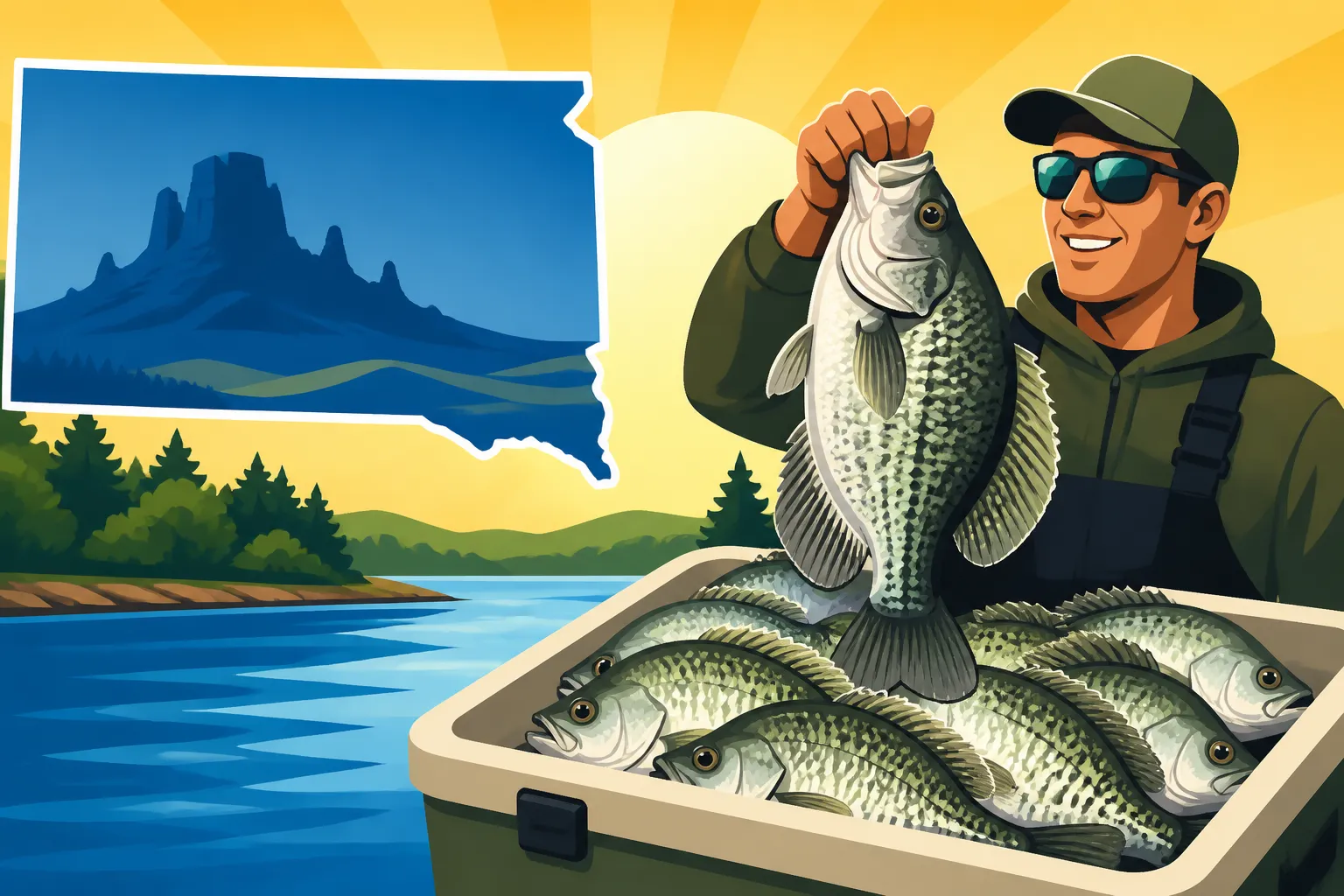
For most waters across South Dakota, crappie fall under the general "panfish" category when it comes to daily limits. This means that the statewide daily limit for panfish, which includes not just crappie but also bluegill, sunfish, perch, and rock bass, is a combined total of 15 fish. It’s crucial to understand that this isn't 15 crappie and 15 bluegill; it's 15 total fish from any combination of those species. So, if you catch 10 crappie, you can only keep 5 more panfish of any other species that day. This comprehensive approach helps manage the overall pressure on these popular species, ensuring that no single panfish population gets overfished.
Imagine you're out on Lake Poinsett, and the crappie are biting like crazy. You've brought home a stringer of 15 beautiful crappie, and you're feeling pretty good about your day. That's your daily limit met for all panfish. If you then decide to try for some bluegill and catch five more, you'd actually be exceeding your daily limit because the 15 crappie already filled your quota for the day. It’s a common misconception that catches each species can be counted separately. The intent behind this combined limit is to create a balanced approach to harvest across the entire panfish ecosystem in most lakes and reservoirs. This ensures that even when one species is particularly active, the overall take remains sustainable.
Possession Limits Versus Daily Limits
Here’s where things often get a little murky for anglers, especially if you're on a multi-day fishing trip or you’ve got a big freezer at home. The "daily limit" is the maximum number of fish you can legally harvest and keep in a single calendar day. The "possession limit," however, refers to the maximum number of fish you can have in your possession at any given time, regardless of when or where they were caught. For crappie, which, again, are part of the panfish category in South Dakota, the statewide possession limit is typically 30 fish.
Let's say you're spending a long weekend camping and fishing on Lake Sharpe. On Friday, you catch and keep 15 crappie, which is your daily limit. You clean them, pack them on ice, and head back out Saturday morning. On Saturday, you have another banner day and catch 15 more crappie. You can keep these, bringing your total possession to 30 fish. However, if you were to go out again on Sunday and catch even one more crappie, you would be exceeding your possession limit of 30, even though you would technically be within your daily limit for Sunday. This is why it's so important to track not just what you catch today, but also what you've got in your cooler, livewell, or back at the cabin. The possession limit is designed to prevent anglers from stockpiling large quantities of fish over multiple days, further aiding in the long-term conservation of the species. It applies to all fish you have, whether they’re fresh, frozen, or even filleted, as long as they are identifiable. For detailed information on specific rules, always consult the official South Dakota Fishing Regulations Explained.
Age Exemptions and Special Considerations
Many states have special rules for younger or older anglers, and South Dakota is no exception, though the panfish limits usually remain consistent across all licensed anglers. Generally, anyone 16 years of age or older needs a valid South Dakota fishing license to fish, and they must adhere to all daily and possession limits. However, there are some nuances when it comes to age and specific situations. For instance, children under the age of 16 do not need a fishing license to fish in South Dakota, but they are still expected to follow the same daily and possession limits as licensed adults. This ensures fairness and consistent management of the fish populations, regardless of age. If you're planning a trip with kids, it's worth brushing up on the specifics of South Dakota Youth Fishing License Rules.
Similarly, while the daily crappie limit doesn't change for seniors, understanding other regulations can be beneficial. South Dakota does offer a South Dakota Senior Fishing License Discount, which can make enjoying your passion a little easier on the wallet. For those who have honorably served our country, specific provisions exist; be sure to check into the South Dakota Disabled Veteran Fishing License options, which may include reduced fees or exemptions for certain licenses. It's important to remember that while license requirements might vary, the actual fishing limits for crappie and other panfish generally apply universally to all anglers harvesting fish, to maintain the health of our fisheries. Additionally, if you plan to fish on tribal lands, always verify South Dakota Tribal Land Fishing Permits as their regulations can differ from state rules.
Local Variations and Specific Lake Rules for Crappie
While the statewide regulations provide a foundational understanding, South Dakota is a vast state with diverse water bodies, and sometimes, specific lakes or reservoirs will have their own unique rules. These localized regulations are put in place by the GFP after careful study of particular fish populations, habitat conditions, and angling pressure in a specific area. It’s not uncommon for a lake known for producing trophy crappie or experiencing high fishing pressure to have more restrictive limits to protect that valuable resource.
Key Lakes with Unique Crappie Regulations
While many of South Dakota's waters adhere to the general statewide panfish limit of 15 daily and 30 in possession, specific lakes or areas might have special regulations for crappie, or panfish in general. It's absolutely critical to check the current South Dakota Game, Fish and Parks (GFP) fishing handbook or their official website before heading out to any specific body of water. For example, some lakes might implement a reduced daily limit for panfish, or even a minimum size restriction, to help certain populations grow larger or recover. This is less common for crappie specifically compared to species like walleye, but it's always a possibility for panfish.
Think about a smaller, heavily fished lake near a populated area. The GFP might reduce the panfish daily limit to 10 or even 5 to ensure that the lake isn't overharvested, allowing the crappie and other panfish to thrive. Conversely, a large, remote reservoir with an extremely healthy and abundant population might have slightly more liberal rules, though this is rare. The key takeaway here is that while the statewide rule is your baseline, always do your homework for your chosen fishing destination. The South Dakota GFP Fishing Handbook Guide is your best friend here, as it contains all the up-to-date information you'll need. Ignoring these localized rules, even unintentionally, can lead to serious consequences. You can find comprehensive details about these broader regulations in the South Dakota Fishing Regulations Explained.
Identifying White Crappie Versus Black Crappie
In South Dakota, both white crappie and black crappie inhabit many of our waters, and for regulation purposes, they are almost always grouped together under the general "panfish" category. This means that whether you catch a white crappie or a black crappie, it counts towards your combined panfish limit. However, knowing the difference between the two can still be interesting for anglers, especially if you're keen on species identification. While both are fantastic fish to catch and eat, they do have some distinct characteristics.
White crappie typically have a more elongated body shape and usually have 5 or 6 dorsal spines. Their coloration is often silvery with faint vertical bars or stripes along their sides, which can sometimes be hard to see. Black crappie, on the other hand, tend to have a more rounded, deeper body and usually sport 7 or 8 dorsal spines. Their color is generally darker, ranging from silvery-gray to olive green, and they are adorned with irregular dark spots or blotches all over their body, giving them a "peppered" appearance. These spots are usually more pronounced than any markings on a white crappie. While regulations don't typically differentiate between them for limits, knowing which species you're catching adds another layer of appreciation for the diverse fish populations in South Dakota. You can learn more about differentiating these two popular panfish in our guide on White Crappie vs Black Crappie.
Understanding Panfish Group Limits
As we've touched on, the concept of a "panfish group limit" is paramount when fishing for crappie in South Dakota. This isn't just a guideline; it's a hard and fast rule. The statewide daily limit of 15 and possession limit of 30 applies to the aggregate of all panfish species. This means every crappie, bluegill, yellow perch, rock bass, or sunfish you catch and keep contributes to that single limit. This can be a bit of a mental juggle when you're having a great day with multiple species biting.
Consider a scenario where you're targeting crappie on a beautiful South Dakota lake, but the yellow perch are also incredibly active. You manage to land 8 beautiful crappie. Feeling good about your day, you then switch tactics and start catching perch. If you keep 7 perch, you have now reached your combined panfish daily limit of 15 (8 crappie + 7 perch = 15). From that point, you must stop harvesting any panfish for the day, regardless of whether they are crappie, perch, or any other species in that group. It requires active management of your catch throughout the day to ensure you don't accidentally exceed the limit. It's a system designed to protect the overall panfish population rather than just individual species, fostering a healthier ecosystem. For a general overview of panfish limits, check out Crappie and Panfish Possession Limits.
Practical Advice for Adhering to Crappie Limits
Staying within the legal limits isn't just about avoiding a fine; it's about being a responsible angler and contributing to the health of South Dakota's fisheries. It requires a bit of diligence and preparation, but it quickly becomes second nature. There are simple steps you can take to make sure you're always on the right side of the regulations, ensuring your fishing trips remain enjoyable and stress-free.
Counting Your Catch and Measuring Fish
When the crappie are biting, it's easy to lose track. A hot bite can be exhilarating, but it's also when you're most likely to inadvertently go over your limit. The best practice is to count every fish you put in your livewell or cooler. Some anglers use a simple clicker counter, or even just move a small token from one pocket to another for each fish kept. This provides a tangible way to track your progress towards the daily limit of 15 panfish. It’s a small effort that prevents a big headache later on.
While there aren't typically minimum size restrictions for crappie in South Dakota’s general statewide regulations, knowing how to properly measure a fish is still a valuable skill. If a specific lake does have a length restriction, you’ll need to measure the fish from the tip of its nose (with its mouth closed) to the tip of its tail (with the tail compressed). Having a reliable measuring board on your boat or in your tackle box is essential. Many anglers find durable, waterproof measuring boards that float to be incredibly convenient, and they're easily found online on platforms like Amazon. Once you've reached your daily limit for panfish, the most ethical and responsible action is to switch to catch-and-release fishing or simply pack up for the day. Releasing fish carefully ensures they have the best chance of survival.
Consequences of Exceeding Crappie Limits
Fishing without adherence to regulations carries real consequences, and exceeding crappie limits is no exception. South Dakota Game, Fish and Parks (GFP) officers are dedicated professionals who enforce these rules to protect our natural resources. Getting caught with more than the legal daily or possession limit can result in significant penalties. These can include substantial fines, confiscation of your catch, and potentially even the suspension of your fishing privileges for a period.
For example, a first offense for exceeding limits might result in a fine of several hundred dollars, plus court costs. Repeated offenses can lead to much harsher penalties, including a longer suspension of your fishing license, meaning you might not be able to fish in South Dakota for an entire season or more. It’s not a pleasant experience to face a GFP officer when you’ve inadvertently (or intentionally) broken the rules. They take their job of protecting the resource very seriously, and so should every angler. The cost of a few extra fish is simply not worth the legal and financial ramifications. Our article on South Dakota Fishing Without a License Penalties gives you an idea of the gravity of fishing violations in the state, and limits violations are treated with similar seriousness.
Staying Informed About Regulation Changes
Fishing regulations are not set in stone; they can and do change from year to year based on biological surveys, environmental factors, and public input. What was legal last year might not be this year, or a new special regulation might be introduced for a specific body of water. Relying on old information or hearsay is a risky game. The absolute best way to stay informed is to consult the official sources.
The South Dakota Game, Fish and Parks (GFP) website is the most up-to-date resource for all fishing regulations. Each year, they publish a comprehensive fishing handbook, often available both online as a PDF and in print at GFP offices, license vendors, and many sporting goods stores. Before every fishing season, and especially before heading to a new lake or river, make it a habit to check these resources. It’s a good idea to keep a digital copy on your phone or even a printed one in a waterproof bag in your tackle box (easily found on Amazon) as a quick reference. This proactive approach ensures you’re always compliant and helps you avoid any unpleasant surprises. Staying current isn't just about avoiding trouble; it’s about making sure you’re fishing intelligently and respectfully. For a general overview of all fishing rules, our South Dakota Fishing License Guide is a great starting point, and for specific costs, refer to South Dakota Fishing License Costs. Don't forget to check out the South Dakota Fishing Season Dates and Limits too!
Here’s a quick reference table for statewide crappie/panfish limits in South Dakota:
| Regulation Type | Limit (Statewide) | Notes |
|---|---|---|
| Daily Limit | 15 Panfish (combined species) | Applies to crappie, bluegill, sunfish, perch, rock bass, etc. |
| Possession Limit | 30 Panfish (combined species) | Total fish you can have, regardless of when caught. |
| Size Restrictions | Generally None Statewide | Check specific waters for potential exceptions. |
| Age Requirement | 16+ for License | Limits apply to all anglers, regardless of license requirement age. |
Remember, this table summarizes statewide rules. Always confirm for your specific fishing location.
Disclaimer
Please note that fishing regulations are subject to change. While every effort has been made to provide accurate and up-to-date information, it is the angler's responsibility to consult the current South Dakota Game, Fish and Parks (GFP) regulations before fishing. This guide is for informational purposes only and should not be considered a substitute for official legal documentation.