How to Print a South Dakota Fishing License
There's nothing quite like the excitement of gearing up for a fishing trip in South Dakota, whether it's for big walleyes on the Missouri River or peaceful trout in the Black Hills. But that pre-trip excitement can quickly turn into a minor headache when you realize you need to actually produce your fishing license. While digital versions are certainly convenient, many anglers find themselves wondering how to get a physical copy they can stash in their tackle box, just in case. This guide is here to walk you through the simple steps of printing your South Dakota fishing license, ensuring you're fully prepared for whatever the water throws your way.
Why a Physical Fishing License Still Matters
In our increasingly digital world, it might seem old-fashioned to even consider printing a document you can easily pull up on your phone. However, when you're out on the water, far from civilization, or simply battling a dead phone battery, a physical copy of your South Dakota fishing license can be an absolute lifesaver. It’s not just about preference; there are some very practical reasons to have that paper in hand.
On-the-Water Checks and Verification
Picture this: you're enjoying a fantastic day reeling in fish, and suddenly, a South Dakota Game, Fish and Parks (GFP) conservation officer pulls up to check licenses. While many officers are equipped to handle digital licenses, there are still situations where a physical copy can smooth things over considerably. If you're in an area with spotty cell service, or if your phone decides to act up, trying to load a digital license can be frustrating for both you and the officer.
A crisp, clear printout eliminates any doubt about your compliance. It’s quick, easy to hand over, and immediately verifiable. This isn't to say digital isn't accepted, but having a tangible document often makes the interaction faster and less prone to technical hiccups, especially when you're focusing on proving you've done everything by the book, including understanding the nuances of the latest South Dakota Fishing Regulations Explained.
Backup for Technology Glitches
Let's be real, technology can be finicky, especially in the unpredictable environment of a fishing trip. Your phone battery might die, it could slip out of your pocket and end up in the lake, or the GFP app might decide it's not going to cooperate that day. These aren't just hypothetical scenarios; they happen to anglers more often than you'd think. What then? You're potentially left without proof of your license, which could lead to an unfortunate interaction with law enforcement, and nobody wants to be in a situation where they're facing questions about What Happens If You Fish Without a License in South Dakota?.
Having a physical license is your ultimate fail-safe. It doesn't run out of battery, it's not susceptible to water damage (especially if you take some protective measures we'll discuss later), and it doesn't need a signal. It's simply there, a reliable and undeniable proof that you're legally permitted to cast a line. Think of it as an insurance policy for your peace of mind and your fishing day.
Personal Preference and Convenience
Beyond the practicalities, many anglers simply prefer the tangible feel of a physical license. There’s something comforting about clipping it to your fishing vest, tucking it into your tackle box, or having it readily available in a waterproof wallet. It means less fumbling with a phone, less screen time, and more focus on the beautiful South Dakota outdoors.
For those who enjoy a more traditional approach to their outdoor pursuits, a physical license is just part of the ritual. It’s easy to retrieve, doesn't require unlocking a device, and serves as a constant, visible reminder of your compliance. Plus, it’s a great place to jot down a quick note about a successful day or a particular spot, should you be so inclined.
Step-by-Step Guide to Printing Your South Dakota Fishing License
Ready to get that license in hand? The process is quite straightforward, thanks to the user-friendly system set up by the South Dakota Game, Fish and Parks department.
Accessing Your License Online
The first thing you’ll need to do is head to the official South Dakota GFP website. They have a dedicated portal for license holders to manage their permits, which includes the option to reprint.
- Navigate to the GFP Licensing Page: Open your web browser and go to the South Dakota GFP website. Look for a section related to "Licenses & Permits" or specifically "Fishing Licenses."
- Locate Your License: Once on the licensing portal, you'll typically find an option like "Reprint License" or "Manage My Licenses." You'll usually be prompted to enter some identifying information. This commonly includes your GFP ID number (if you have one from previous licenses), your driver's license number, and your date of birth. This is how the system confirms your identity and pulls up your specific license. If you're new to this, don't worry, the system is designed to guide you.
- Find the Correct License: After entering your details, the system will display your current and sometimes past licenses. Make sure you select the active fishing license you intend to print. This could be your South Dakota Annual Fishing License, or a shorter-term option like a South Dakota One-Day Fishing License if you're a visitor. Double-check the dates to ensure it's the correct, active license. You might also see details about your South Dakota Habitat Stamp Requirements if you needed one.
The Printing Process Itself
Once you've successfully located and selected your license on the GFP portal, the actual printing part is usually just a couple of clicks away.
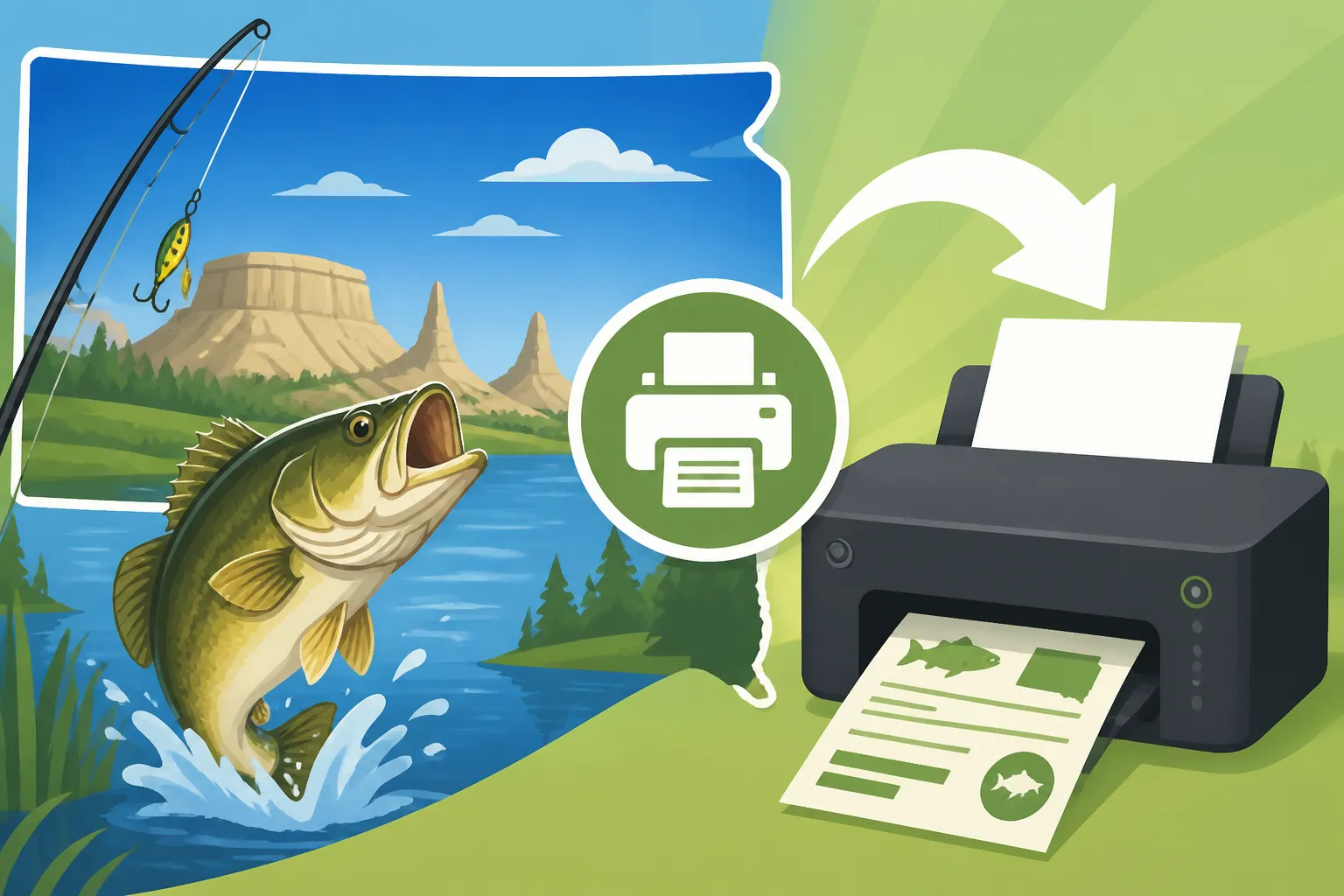
- Look for the Print/Download Option: Most online license systems will present your license as a PDF document or have a clear "Print" button. If it's a PDF, click to download it first. This is usually the most reliable way to ensure all information is rendered correctly.
- Verify Printer Settings: Before you hit print, take a quick moment to check your printer settings.
- Paper Size: Ensure it's set to standard letter size (8.5×11 inches).
- Orientation: Most licenses are designed to be printed in portrait mode, but a quick glance at the preview will confirm this.
- Quality: A standard print quality is usually sufficient, but if you're concerned about clarity, select a higher quality setting.
- Color vs. Black & White: While color isn't strictly necessary, it can make certain features (like the GFP logo) stand out. However, black and white is perfectly acceptable for official purposes.
- Print Your License: Once settings are confirmed, click the "Print" button. You'll want a reliable home printer for this, perhaps one you picked up from Amazon, and some standard letter-sized paper. Ensure your printer has enough ink! After printing, take a moment to review the physical copy. Check that all the critical information is clearly visible: your name, address, license number, the type of license, and the valid dates. This is particularly important for things like your South Dakota Nonresident Fishing License Rules or specific endorsements.
What if You Don't Have a Printer?
Not everyone has a printer at home, and that's perfectly okay. There are still plenty of ways to get a physical copy of your South Dakota fishing license.
- Visit a South Dakota GFP Office: The most direct route is often to stop by a local South Dakota Game, Fish and Parks office. They can usually access your license in their system and print it for you directly. It's a good idea to call ahead to confirm their operating hours and services, especially if you're traveling a long distance.
- Go to a Licensed Vendor: Many sporting goods stores, bait shops, and even retailers like Walmart are licensed vendors for South Dakota fishing licenses. If you bought your license there initially, they can often print a duplicate for a small fee. Even if you purchased your license How to Buy a South Dakota Fishing License Online, they can often look up your information with a valid ID and reprint it.
- Public Libraries or Office Supply Stores: Your local public library often provides printing services for a nominal fee. Similarly, larger office supply stores like Staples or FedEx Office offer self-service printing or can print documents from a USB drive or email. You can simply download your license PDF to a thumb drive or email it to yourself, then use their services.
- Ask a Friend or Family Member: Don't underestimate the power of a friendly favor! If a neighbor or relative has a printer, they might be happy to help you out. It's a quick task for them and a huge help for you.
- Consider an Affordable Home Printer: If you find yourself frequently needing to print documents for outdoor activities, and often struggle with access, it might be worth investing in a compact and affordable home printer. Many reliable models can be found on Amazon for a reasonable price, providing long-term convenience.
| Printing Method | Cost | Convenience | Notes |
|---|---|---|---|
| Home Printer | Ink/Paper cost | High (anytime access) | Requires owning a printer; quality depends on equipment. |
| GFP Office | Often free, or minimal fee | Moderate (during business hours) | Staff can help with issues; limited locations. |
| Licensed Vendor | Small fee (e.g., $1-3) | High (often extended hours) | Many locations; quick service. |
| Public Library | Small fee (e.g., $0.10-$0.25/page) | Moderate (during library hours) | Public computer access; privacy considerations. |
| Office Supply Store | Moderate fee (e.g., $0.20-$0.50/page) | High (extended hours, self-service options) | Professional printing quality; good for multiple copies. |
Important Considerations for Your Printed License
Once you've got that fresh printout in hand, you're almost ready to hit the water. However, there are a few extra steps and considerations to ensure your physical license serves you well throughout the season.
Proper Storage and Lamination
A paper license, while convenient, is susceptible to the elements. Water, humidity, and constant handling can quickly turn your crisp printout into a soggy, illegible mess. To protect your investment in your fishing season, consider these tips:
- Waterproof Holder: The simplest solution is to place your license in a clear, waterproof pouch or a Ziploc bag. Many fishing vests and tackle boxes have dedicated pockets for licenses.
- Lamination: For ultimate durability, laminate your license. You can buy small, inexpensive home laminators (many available on Amazon) or take it to an office supply store to have it professionally laminated for a few dollars. This makes it completely waterproof and tear-resistant. Just make sure to laminate a copy, not an original you might need to sign or alter later, though typically, South Dakota licenses are ready to go once printed.
- Keep it Flat: Avoid folding your license too many times, as creases can lead to tears over time.
Carrying Your Photo ID
This is a critical point that sometimes gets overlooked. A printed South Dakota fishing license is almost always required to be presented along with a valid form of photo identification. This is how conservation officers verify that the person holding the license is indeed the rightful owner.
Don't assume your printed license alone will suffice. Always carry your driver's license or another government-issued photo ID when you're fishing. This is part of general compliance with South Dakota Fishing License Age Requirements and other regulations, ensuring you can quickly and easily prove who you are if asked. Without matching ID, your printed license might not be considered valid proof of licensure.
Understanding License Validity and Renewals
Printing your license simply creates a physical copy of an existing, valid permit. It doesn't change its expiration date or renew it automatically. Always be mindful of when your license expires. South Dakota fishing licenses typically run for a calendar year, but this can vary depending on the type you purchased, such as a South Dakota Nonresident Fishing License Options versus a resident option.
Make a note of the expiration date on your newly printed license. When it's nearing time to renew, you'll need to go through the renewal process again, which might involve purchasing a new license for the upcoming season. You can find more details on that process in our guide to Fishing License Renewal Steps. Planning ahead ensures you never accidentally fish without a valid license, keeping your outdoor adventures stress-free and compliant. Keep an eye out for information on when the new season's licenses become available, typically around December or January, so you can purchase and print your new one well in advance. For all the comprehensive details, refer to the official South Dakota GFP Fishing Handbook Guide.
Disclaimer
The information provided in this guide is for general informational purposes only and does not constitute legal advice. Fishing regulations and licensing requirements can change. Always consult the official South Dakota Game, Fish and Parks (GFP) website or contact GFP directly for the most current and accurate information before engaging in any fishing activities. Compliance with all state and local laws is the angler's responsibility.