South Dakota Chinook Salmon Daily Limit
Hitting the waters of Lake Oahe to chase those magnificent Chinook salmon is an exhilarating experience, but let's be honest, deciphering all the fishing regulations can sometimes feel more complicated than actually landing a trophy fish. Many anglers find themselves scratching their heads over specific rules, especially when it comes to daily catch limits. This comprehensive guide is here to untangle the specifics of the South Dakota Chinook salmon daily limit, ensuring you have all the information you need to fish legally and responsibly.
Understanding the Chinook Salmon Daily Limit in South Dakota
South Dakota's fishing regulations are designed to sustain healthy fish populations while providing ample angling opportunities. For Chinook salmon, these regulations are particularly focused on Lake Oahe and its associated tributaries, which are the primary habitat for these impressive fish in the state. Knowing the exact limits is crucial before you even cast your first line.
The Current Daily and Possession Limits for Chinook Salmon
When we talk about fishing limits, it's essential to understand the difference between a "daily limit" and a "possession limit." The daily limit refers to the maximum number of fish of a specific species that an individual angler can legally keep in a single calendar day. For Chinook salmon in South Dakota, specifically within Lake Oahe and its tributaries, the daily limit is 3 fish. This means that once you've harvested three Chinook salmon, you must stop fishing for that species for the remainder of that day.
The possession limit, on the other hand, refers to the maximum number of fish you can have in your possession at any given time, whether that's in your cooler, at your campsite, in your vehicle, or stored at home. For Chinook salmon in the designated South Dakota waters, the possession limit is 9 fish. This regulation is particularly important for anglers on multi-day trips. For example, if you catch three salmon on Monday, you can catch another three on Tuesday, and a final three on Wednesday, bringing your total possession to nine. However, if you already have nine salmon in your possession, you cannot legally harvest any more until some are consumed, given away, or otherwise disposed of, bringing your possession count below the limit. It's about how many you have total with you, not just what you caught that day.
Specific Regulations for Lake Oahe and Its Tributaries
It's important to note that these Chinook salmon limits are specifically tied to Lake Oahe and its vast network of tributaries. These are the waters where South Dakota's impressive salmon fishery thrives. The official regulations extend to specific arms and rivers connected to Lake Oahe, including:
- The entire main body of Lake Oahe.
- Its tributaries, including the Cheyenne River arm up to the Highway 212 bridge.
- The Bad River up to Fort Pierre’s west city limits.
- The Moreau River up to its confluence with the Grand River.
Fishing outside of these specific areas would generally not yield Chinook salmon anyway, as they are not stocked or found naturally in other South Dakota waters in significant numbers. Always consult the latest South Dakota Fishing Regulations Explained for any updates or nuanced rules specific to certain areas or times of year. Understanding the boundaries of where these rules apply can save you a lot of headaches and ensure you're compliant wherever you choose to cast your line on the lake.
Identifying Chinook Salmon Versus Other Species
Accurately identifying your catch is fundamental to adhering to daily limits, especially when multiple salmonid species might be present or when you're targeting other fish. Chinook salmon have distinct characteristics that help differentiate them from other fish you might encounter, such as trout or even other types of salmon if they were present.
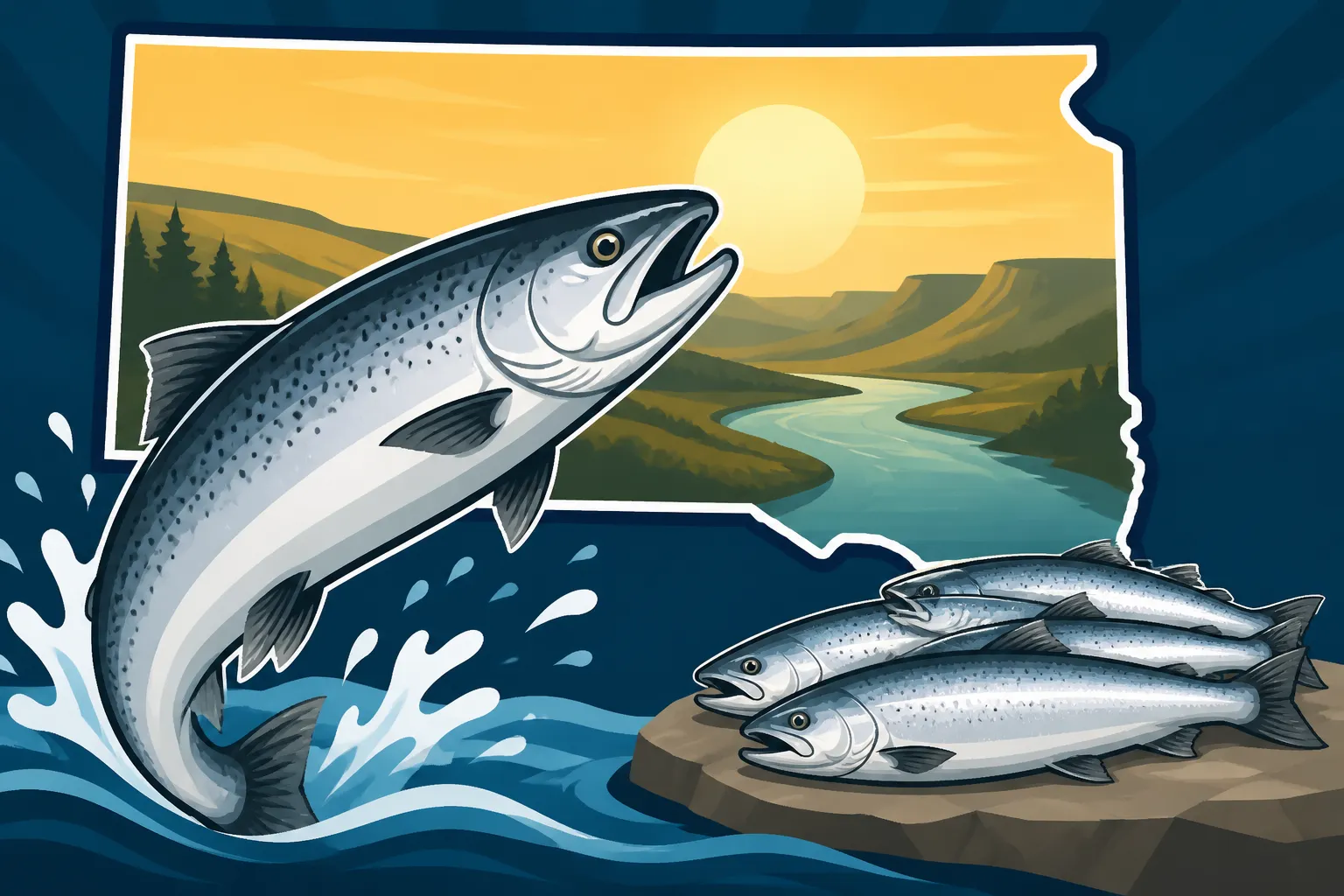
Key identification features of a Chinook salmon include:
- Black Gums: Perhaps the most telling feature, Chinook salmon have black pigment along their gum line where their teeth are. You can easily check this by lifting the lip.
- Spotting: They typically have irregular black spots on both lobes of their caudal fin (tail) and on their back and dorsal fin.
- Tail Shape: Their tail is generally broad and slightly forked, not deeply forked like some trout.
- Coloration: While body color can vary, they often have a greenish-blue back fading to silvery sides and a white belly.
It's vital to be confident in your identification skills. Many anglers find a portable, waterproof copy of the South Dakota Game, Fish and Parks fishing handbook, or even a detailed fish identification guide from Amazon, to be an invaluable resource. Misidentifying a fish and inadvertently keeping a species that's out of season or exceeds another species' limit can lead to penalties. When in doubt, it’s always best to release the fish.
Why These Limits Exist: Conservation and Management
The daily and possession limits for Chinook salmon aren't arbitrary; they are carefully determined by fisheries biologists and management teams. These limits are part of a broader strategy by the South Dakota Game, Fish and Parks (GFP) to ensure the long-term health and sustainability of this popular fishery. It’s all about finding that delicate balance between angler enjoyment and environmental responsibility.
Protecting South Dakota's Chinook Salmon Population
Chinook salmon are not native to South Dakota. They are a cold-water species that thrive in the deep, cold waters of Lake Oahe, thanks to successful stocking programs initiated decades ago. Because they are not naturally reproducing in large enough numbers in Lake Oahe, their population is entirely dependent on continuous stocking efforts. This makes them particularly vulnerable to overharvest. Without strict limits, a popular fishing season could quickly deplete the stocked fish, leading to a significant decline in future fishing opportunities. The limits act as a safeguard, spreading the harvest among more anglers and ensuring a sufficient number of fish remain in the lake to grow to trophy sizes and provide an exciting challenge for years to come.
These regulations also consider the size and age structure of the fish. While there isn't a specific length limit for Chinook salmon on Lake Oahe, the daily and possession limits implicitly protect younger, smaller fish by limiting the total number an angler can take, thus allowing more fish to survive and reach larger sizes.
Balancing Angler Opportunity and Ecological Health
The South Dakota GFP works tirelessly to strike a balance between providing excellent fishing opportunities for anglers and maintaining the overall ecological health of Lake Oahe. This balance involves managing not just the salmon themselves, but also their forage base (primarily smelt), water quality, and habitat. If too many salmon are harvested, it could affect the predator-prey dynamics within the lake. Conversely, if the salmon population grew too large without sufficient forage, it could lead to smaller, less healthy fish.
The limits reflect a scientific understanding of how many fish the system can support and how many can be harvested sustainably. By adhering to these limits, anglers directly contribute to the ongoing success of the fishery. It’s a partnership between the anglers and the resource managers to keep the South Dakota Chinook Salmon Fishing Guide a vibrant experience for everyone.
The Role of Stocking Programs and Research
The entire Chinook salmon fishery in Lake Oahe is sustained through an intensive stocking program. Each year, millions of fingerling salmon are raised in hatcheries and released into the lake. These stocking efforts are meticulously planned based on ongoing research, population surveys, and analysis of past years' harvests. The daily and possession limits are directly informed by how many fish are stocked, the expected survival rates, and the projected fishing pressure.
Scientists continuously monitor the health, growth rates, and survival of these salmon, as well as the abundance of their primary food source, rainbow smelt. Changes in these factors might lead to adjustments in the limits over time. For example, if a year shows lower-than-average survival for stocked fish, the GFP might consider tightening limits to protect the remaining population. Conversely, a particularly strong year might allow for slightly more liberal limits. Keeping up with South Dakota Fishing Season Dates and Limits helps anglers stay informed about any potential changes. It’s a dynamic system, and the regulations are a direct reflection of these biological and ecological realities.
Practical Tips for Adhering to Salmon Limits
Understanding the rules is one thing, but practically applying them on the water can sometimes present its own set of challenges. Whether you're a seasoned pro or just getting into salmon fishing, a few simple practices can help ensure you always stay within the legal limits and contribute to responsible angling.
Counting Your Catch: Best Practices on the Water
It's easy to lose track, especially when the bite is hot and the adrenaline is pumping. The best way to avoid accidental overharvesting is to have a clear system for counting your catch from the moment you start fishing.
- Designated Cooler: Use a specific cooler or section of a cooler for your legal catch. Once a fish goes in, it's counted. This visual cue helps prevent confusion.
- Clicker Counter: Many anglers use a simple handheld clicker counter (often found at sporting goods stores or easily ordered from Amazon) to keep a running tally. Each time a fish is kept, click it.
- Buddy System: If you're fishing with others, make sure everyone in the boat knows the current count for both individual and boat limits (if applicable, though for daily individual limits, it's each angler's responsibility). Open communication is key to avoiding combined errors.
- Review Before Moving: Before you move to a new spot or at regular intervals, take a quick moment to review your count. A quick check of your fish cooler or clicker can prevent an honest mistake from becoming a violation.
Remember, the daily limit resets at midnight. If you're on a multi-day trip, carefully separate your catches by date or ensure that your total possession doesn't exceed the overall possession limit.
What to Do with Extra Fish: Release Strategies
Inevitably, you might catch more Chinook salmon than your daily limit, or you might catch smaller fish you prefer to release in hopes of a bigger one later. Knowing how to properly release fish is just as important as knowing how to catch them.
- Minimize Handling: The less you handle a fish, especially out of water, the better its chances of survival. Use wet hands if you must touch the fish.
- Use the Right Tools: A de-hooker or long-nosed pliers can quickly remove hooks without deep handling. Barbless hooks can also make releases much easier and less stressful for the fish.
- Time Out of Water: Keep the fish out of the water for the absolute minimum time possible. A quick photo is fine, but prioritize getting it back into the water swiftly.
- Revive the Fish: If a fish seems sluggish, hold it gently in the water, facing into the current, until it regains its strength and can swim away on its own. Never just toss a tired fish back; give it a chance.
- Consider "High-Grading": Be aware of "high-grading" (the practice of keeping smaller fish early in the day and then releasing them to replace them with larger fish caught later). While not always explicitly illegal for Chinook salmon in South Dakota if you remain within your daily limit, it can be frowned upon due to increased mortality of released fish. Make your keeping decisions thoughtfully.
Ensuring Your Catch Meets Regulations
Beyond the numerical limit, there are other aspects of regulations to consider. While South Dakota typically doesn't have length limits for Chinook salmon on Lake Oahe, it’s always wise to double-check the current regulations in the South Dakota GFP Fishing Handbook Guide to ensure no new rules have been introduced. For other species, length limits are very common, and accidentally keeping an undersized or oversized fish can also lead to citations.
- Measuring Tools: Keep a reliable measuring board on your boat. Even if there's no length limit for salmon, it's good practice and essential for other species you might target. A robust measuring board, also available through retailers like Amazon, is indispensable.
- Understanding Slot Limits: Some species have "slot limits," where fish within a certain size range must be released. While not currently applicable to Chinook salmon in South Dakota, it's a common regulation in other fisheries and good to be aware of.
- Species Identification: Reiterate the importance of clear species identification. You don't want to accidentally keep a protected species or exceed the limit for a different type of fish.
Common Misconceptions and FAQs About Chinook Salmon Limits
Despite the clarity of regulations, some common questions and misunderstandings still pop up among anglers. Addressing these can help clear up confusion and ensure everyone is on the same page when it comes to South Dakota's Chinook salmon limits.
Does the Limit Change Based on the Season or Location?
For Chinook salmon in South Dakota, the daily limit of 3 fish and possession limit of 9 fish generally remains consistent throughout the year and across the designated waters of Lake Oahe and its tributaries. Unlike some other species that might have seasonal closures or varying limits in different parts of the state (like specific trout streams in the Black Hills), the salmon rules are relatively stable.
However, it's always, always best practice to consult the most current South Dakota Fishing Regulations Explained or the GFP website before each fishing season. Regulations can change due to biological data, environmental factors, or management decisions. While the trend for Chinook salmon limits has been consistent, being informed is your best defense against unexpected rule changes. Keep an eye out for any specific notices, especially around the Chinook Salmon Spawning Run Dates on Lake Oahe, though these dates typically influence fishing techniques more than the daily limits themselves.
What Happens If You Exceed the Limit?
Exceeding the daily or possession limit for any fish species in South Dakota is a violation of state law and can lead to significant penalties. These aren't just minor infractions; they are taken seriously to protect the resource.
- Fines: You can expect to face monetary fines, which can vary depending on the severity of the offense and the number of fish over the limit. These fines can be substantial.
- Confiscation: Your illegally caught fish will be confiscated.
- Loss of License: In more severe or repeat cases, you could face suspension or revocation of your South Dakota Fishing License Guide, meaning you wouldn't be able to legally fish in the state for a period of time.
- Equipment Confiscation: In extreme cases, particularly involving gross over-limits or other violations, fishing equipment like rods, reels, and even boats, could potentially be confiscated.
The consequences of South Dakota Fishing Without a License Penalties or exceeding limits serve as a strong deterrent, emphasizing the importance of responsible angling. Conservation officers regularly patrol Lake Oahe and its access points, and they are well-versed in the regulations. It's simply not worth the risk.
Are There Special Rules for Guided Trips?
Many anglers choose to hire a professional guide for their South Dakota salmon fishing adventure, especially on a vast body of water like Lake Oahe. This is a fantastic way to learn the ropes and increase your chances of success. However, the presence of a guide does not alter the individual daily and possession limits for each angler on board.
Each licensed angler on a guided trip is still subject to the 3-fish daily limit and 9-fish possession limit for Chinook salmon. A guide cannot pool catches or allow clients to exceed their individual limits, even if the boat collectively catches many fish. The guide's role is to facilitate the fishing experience, not to circumvent regulations. In fact, a good guide will be an excellent resource for understanding and adhering to all regulations, including the proper use of your South Dakota Boat Safety Requirements. They will often have systems in place to ensure all clients remain compliant. If you are ever unsure about a rule while on a guided trip, don't hesitate to ask your guide for clarification. They are there to help ensure a fun and legal day on the water.
| Regulation Type | Chinook Salmon Limit (Lake Oahe & Tributaries) | Definition |
|---|---|---|
| Daily Limit | 3 fish | Maximum number of fish of this species an individual can keep in one day. |
| Possession Limit | 9 fish | Maximum number of fish of this species an individual can possess at any given time. |
This table provides a quick reference, but remember to always consult the official South Dakota Game, Fish and Parks regulations for the most current information.
Disclaimer
The information provided in this guide is intended for general informational purposes only and is subject to change. While we strive to offer accurate and up-to-date details, fishing regulations can be modified by the South Dakota Game, Fish and Parks (GFP) at any time. It is the responsibility of every angler to consult the official South Dakota GFP Fishing Handbook or their website for the most current and complete regulations before engaging in any fishing activity. Always ensure you have the appropriate licenses and stamps, and adhere to all local, state, and federal laws.