Fish Species Found in Black Hills Streams
Many anglers dream of pristine trout streams, and South Dakota's Black Hills certainly deliver on that front. But if you're like me, you might have wondered exactly what finned beauties are lurking beneath those clear waters, or perhaps you've pulled in a fish and thought, "Now, what exactly is this?" It can be confusing trying to identify the different species you'll encounter. This guide aims to clear up that mystery, giving you a comprehensive look at the fish species that call the Black Hills streams home, from the iconic trout to their often-overlooked aquatic neighbors, so you know exactly what to expect on your next angling adventure.
The Unique Ecosystem of Black Hills Streams
Fishing in the Black Hills isn't just about catching fish; it's about immersing yourself in a truly special environment. These streams are a stark contrast to the vast, open waters of the Missouri River reservoirs or the expansive glacial lakes to the east. Here, you'll find winding, often intimate waterways, nestled among pine forests and dramatic rock formations. This unique setting creates an ideal, yet delicate, habitat for certain fish species, primarily trout.
A Coldwater Oasis in the Plains
What makes the Black Hills streams such a remarkable fishing destination is their consistent supply of cold, clean water. This isn't your typical South Dakota fishing experience where you might be battling the heat and murky waters of a slough. We're talking about winding streams, often shaded by dense stands of ponderosa pine and aspen, where the water stays remarkably cool even on the hottest summer days. These streams are a testament to the Black Hills' unique geology, with numerous spring-fed sources providing a constant flow of fresh, oxygen-rich water. This creates an almost perfect habitat for coldwater fish species, particularly trout, which thrive in these specific conditions. It’s a complete departure from the warmer, often slower-moving waters found in much of the surrounding plains.
Anglers who visit these streams quickly learn that understanding and respecting this environment is absolutely key to success. The water is often crystal clear, demanding a stealthy approach. You’ll need to think about your shadow, your footsteps, and how your presence might spook a wary fish. The currents, while generally not as powerful as some larger rivers, still dictate how fish hold and feed, often seeking out seams and eddies for respite. This pristine environment is also home to a complex web of aquatic life, from tiny insects to various minnow species, all contributing to the food chain that sustains the trout. For those new to these waters, delving into a Black Hills Trout Stream Fishing Guide can provide an invaluable foundation before you even cast a line.
Water Quality and Habitat Factors
The health of a Black Hills stream is intrinsically linked to its water quality and the physical structure of its habitat. For trout, and indeed for all aquatic life here, the requirements are quite specific. They need high levels of dissolved oxygen, which cold, flowing water naturally provides, and stable, cool temperatures throughout the year. Any significant fluctuations in these factors, perhaps from excessive runoff or prolonged drought, can stress the fish population and impact their ability to thrive. This sensitivity is why streams in the Black Hills are often considered bellwethers for environmental health.
Beyond just the chemistry of the water, the physical structure of the stream bed and banks plays an enormous role. Trout rely on clean, gravelly bottoms for spawning, where they lay their eggs in depressions called "redds." Larger rocks, submerged logs, and undercut banks provide essential cover from predators and strong currents. These hiding spots are not just for safety; they're also prime ambush points for hungry trout. The surrounding vegetation, known as the riparian zone, is equally vital. Trees and shrubs along the banks offer crucial shade, which helps regulate water temperatures. Their extensive root systems stabilize the banks, preventing erosion that could otherwise dump sediment into the stream, suffocating those precious spawning beds and invertebrate habitats. Furthermore, insects and other food sources falling from this vegetation are a critical part of the trout's diet. If you’re thinking about getting more into the nitty-gritty of stream ecology or fish identification, there are many excellent field guides available on Amazon that can deepen your appreciation for these intricate connections.
Native and Stocked Trout Species
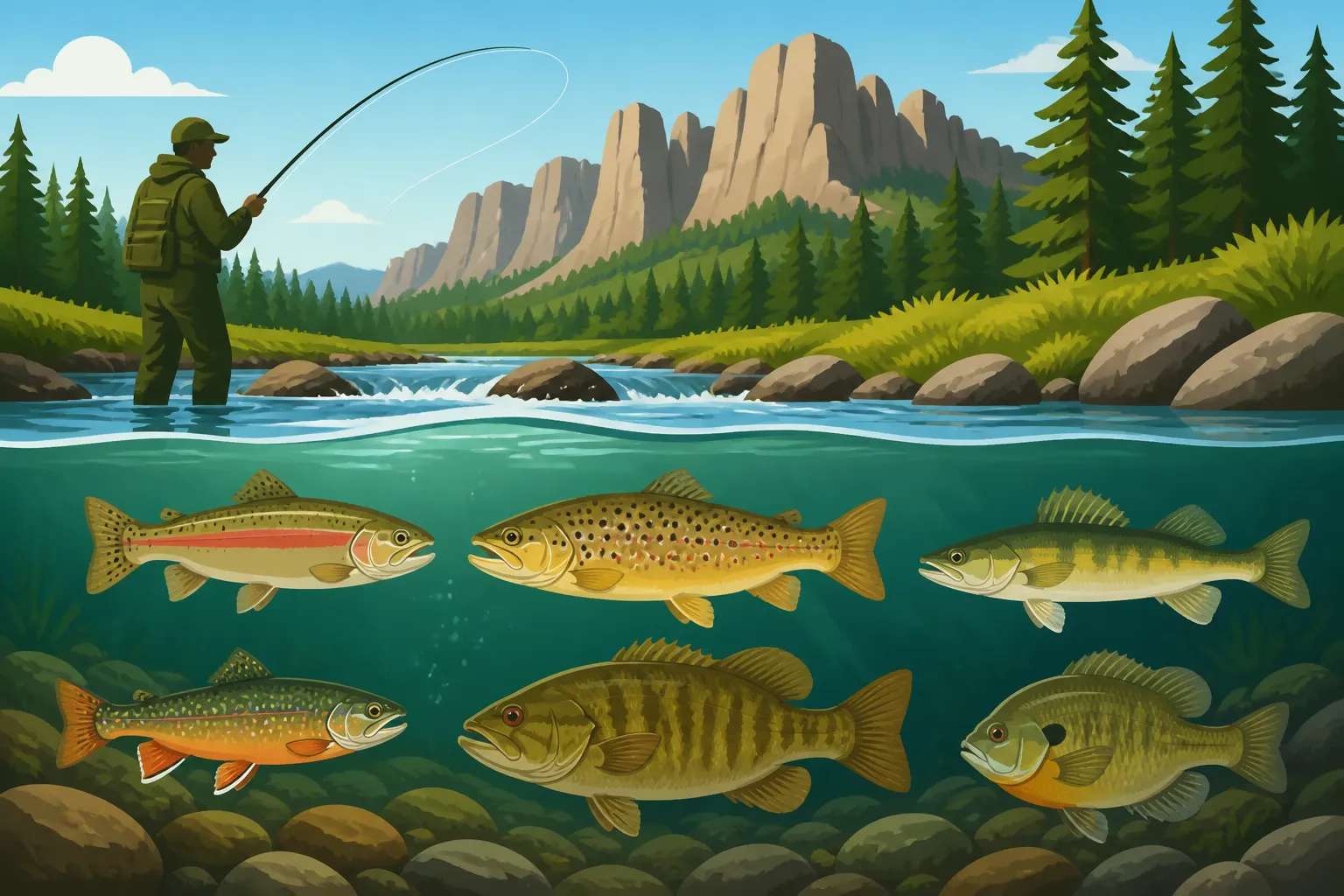
When you dip a line into a Black Hills stream, your main targets will almost certainly be trout. These coldwater beauties are the superstars here, and you’ll encounter a mix of species, each with its own charm, habits, and preferred haunts. Understanding the differences between them can significantly improve your fishing success and your overall enjoyment of the experience. The Black Hills are home to three primary trout species: brown trout, brook trout, and rainbow trout.
Brown Trout: The Wary Resident
The brown trout is often considered the quintessential Black Hills resident, a true icon of these clear, flowing waters. These magnificent fish are immediately recognizable by their striking appearance: typically a golden-brown or olive hue, adorned with distinctive red and black spots, many of which are encircled by a pale "halo." What truly sets them apart, however, is their reputation for wariness and their often large size. Catching a substantial brown trout in a Black Hills stream is a genuine accomplishment, one that often demands a high level of skill, patience, and a stealthy approach. They’re simply not as easily fooled as some other trout species.
Brown trout are masters of their environment, preferring the deeper pools, complex structures, and ample cover that these streams provide. You'll often find them lurking under undercut banks, behind large boulders, or near submerged logs, ready to ambush unsuspecting prey. They are incredibly opportunistic feeders, dining on a diverse menu that includes aquatic insects like mayflies, caddisflies, and stoneflies, as well as smaller baitfish, sculpins, and even terrestrial creatures that fall into the water, such as grasshoppers or mice. They also tend to be more tolerant of slightly warmer water temperatures than brook trout, which means you might find them in the lower, broader stretches of many streams. If you’re targeting these elusive beauties, a good tip is to focus on precise presentation and minimizing your disturbance, especially on days with bright sun and clear water. For more dedicated insights into these formidable fish, be sure to check out South Dakota Brown Trout in the Black Hills.
Brook Trout: The Stream's Jewel
For many anglers, the brook trout holds a special place in their heart, and it's easy to see why when you encounter one in the Black Hills. These truly stunning fish are arguably the most vibrantly colored of the region’s trout species, boasting an array of red and orange fins, often tipped with white leading edges, and striking, worm-like markings (known as vermiculations) across their dark green or olive backs. Their sides are dotted with vivid red spots, often encircled by brilliant blue halos. They are, quite simply, jewels of the stream, and their beauty is truly captivating.
Brook trout typically prefer the coldest, most pristine headwaters and higher-elevation stretches of the streams. These are often the smaller, brushier creeks where the water remains exceptionally chilly and oxygenated year-round. While generally smaller in size than their brown or rainbow trout cousins, usually ranging from 6 to 12 inches, their brilliant coloration and the wild, remote settings in which they thrive make them a highly sought-after catch for those who appreciate unspoiled wilderness. Many brook trout populations in the Black Hills are not truly native to South Dakota, but they have established healthy, self-sustaining populations in many areas, providing fantastic wild fishing opportunities. These fish are incredibly sensitive to water quality and serve as excellent indicators of a healthy, unspoiled stream ecosystem. If you're looking to target these delicate beauties, you’ll likely need to hike into more remote areas and use lighter tackle, embracing the challenge of fishing in tight quarters and often dense riparian vegetation. Dive deeper into their world with South Dakota Brook Trout Streams.
Rainbow Trout: The Popular Stocked Fish
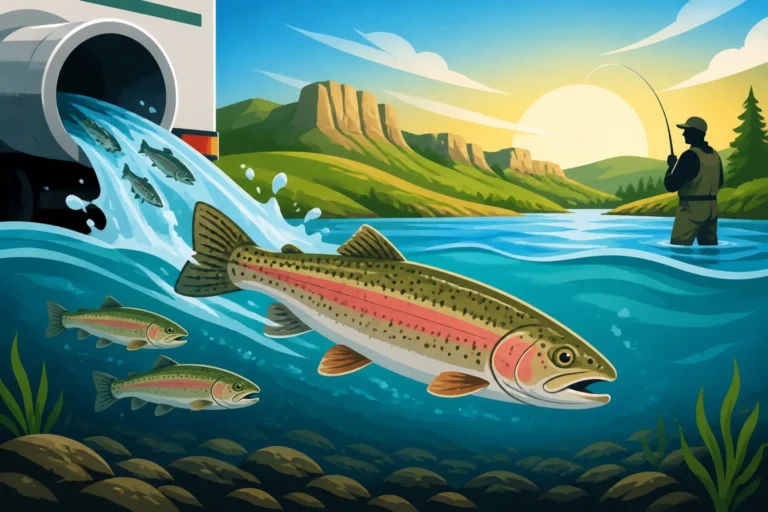
Rainbow trout are perhaps the most widely recognized and frequently encountered trout species in the Black Hills, largely thanks to the extensive and successful stocking programs carried out by the South Dakota Game, Fish and Parks (GFP). They are easily identifiable by the distinct reddish-pink band that runs horizontally along their sides, a stripe that becomes particularly vibrant during spawning periods. Their bodies are typically silvery, often covered in small black spots that extend into their dorsal and caudal fins. These fish are generally less wary than brown trout and often more eager to take a fly or lure, making them a perennial favorite for both novice and experienced anglers alike. They adapt well to a variety of stream conditions, from small, intimate creeks to larger rivers, and even some of the lakes found within the Hills.
The active management of rainbow trout populations by the GFP ensures consistent fishing opportunities. They are regularly stocked in accessible streams and urban fisheries, such as Rapid Creek as it flows through Rapid City, providing fantastic fishing literally right in town. This means that while some wild or naturally reproducing populations of rainbows do exist, many of the fish you encounter will either be freshly stocked or "holdover" fish that have been in the stream for a while. Their generally aggressive nature and willingness to bite make them an absolute blast to catch, whether you prefer the delicate art of fly fishing or the versatility of spin tackle. For those interested in the logistics and locations, the South Dakota Rainbow Trout Stocking Program provides more detailed information on where and when these fish are introduced. Whether you’re casting spinners, drifting bait, or presenting dry flies, rainbows offer a consistently exciting angling experience across much of the Black Hills.
Here’s a quick overview of the characteristics of these three popular trout species you'll find in Black Hills streams:
| Species | Appearance | Preferred Habitat | Average Size | Key Characteristics |
|---|---|---|---|---|
| Brown Trout | Golden-brown, red/black spots with light halos | Deeper pools, undercut banks, complex cover | 10-20 inches, can be larger | Wary, opportunistic feeder, adaptable |
| Brook Trout | Dark green/brown, red/orange fins, worm-like markings, blue spots | Cold, pristine headwaters, smaller creeks | 6-12 inches | Highly sensitive, strikingly colored, aggressive feeders |
| Rainbow Trout | Silvery body, reddish-pink band along side, small black spots | Wide range of streams, often stocked | 8-16 inches, can be larger | Less wary, eager to bite, widely available due to stocking |
Other Aquatic Life and What They Mean for Anglers
While trout are undoubtedly the main attraction in Black Hills streams, it's important to remember that they are part of a much larger, intricate ecosystem. The presence of other fish species and, crucially, a vibrant insect life, forms the very foundation of the food chain that sustains these prized game fish. Understanding these other aquatic inhabitants can provide invaluable clues for anglers, helping you "read" the water and select the most effective lures or flies.
Forage Fish and Insect Life
Trout, like all predators, don't live on air and good vibes alone! Their survival, growth, and overall health depend heavily on a robust and diverse food chain, which begins with smaller forage fish and an incredible abundance of aquatic insects. You might not always see them, but species like various dace and sculpins are crucial protein sources, especially for the larger trout. These small, bottom-dwelling fish often hide under rocks, within gravel, and in the crevices of the stream bed, making them excellent targets for trout mimicking streamer patterns. Understanding when and where these baitfish are present can significantly influence your lure or fly selection, as a trout that is keyed in on sculpins won't be as interested in a tiny dry fly.
Equally, if not more, vital are the countless aquatic insects that hatch and reside in these cold, clear waters. Mayflies, caddisflies, and stoneflies dominate the insect life cycles in Black Hills streams. These insects go through various stages—nymph, larva, pupa, and adult—each offering a different meal opportunity for trout. Knowing their emergence patterns—when they hatch from the water and become available on the surface—is the cornerstone of effective fly fishing, a technique explored in detail in South Dakota Fly Fishing for Black Hills Trout. A knowledgeable angler strives to "match the hatch," carefully selecting flies that imitate the size, color, and profile of the prevalent insects. Even if you're spin fishing, lures that mimic a struggling minnow or a large nymph can be incredibly effective. Sometimes, simply sitting quietly by the stream and observing what’s hatching or swimming can give you a huge advantage, providing critical insights into what the trout are feeding on at that exact moment. For those looking to refine their fly fishing, especially for trout, studying Nymph Fishing Techniques for Trout Streams can be incredibly beneficial.
Native Species and Ecological Balance
While the various trout species rightfully steal the spotlight for most anglers, Black Hills streams are also home to a broader array of aquatic life that plays critical, albeit often unsung, roles in the overall ecosystem. You're unlikely to specifically target them with your rod and reel, but various species of native minnows, shiners, and suckers exist here. These often-overlooked native fish contribute significantly to the biodiversity and overall health and stability of the stream. They serve as foundational food sources for larger predators, including the brown and rainbow trout, and they also play a vital role in processing organic matter and algae, which helps to keep the stream clean and its ecological balance intact.
These native species are often more resilient to minor environmental changes than trout, and their sustained presence can be a strong indicator of a healthy, functioning stream, even if it's not renowned as a prime trout fishing spot. Observing these smaller fish can also offer valuable clues about the stream's overall health and the type of forage available for the game fish you are after. For instance, a stream teeming with minnows often indicates a good food supply for trout. Respecting all forms of aquatic life, not just the trophy fish, is an essential part of being a responsible and ethical angler. It’s this holistic appreciation that helps to maintain the delicate balance and ensure the continued vibrancy of these beautiful, productive Black Hills ecosystems. For an even deeper dive into the specific characteristics of these other creatures, reference books available on Amazon can be an excellent resource.
Conservation and Responsible Angling in the Black Hills
The sheer beauty and remarkable productivity of the Black Hills streams are not a happy accident; they are the result of unique natural conditions combined with ongoing, diligent conservation efforts. As anglers, we are privileged to enjoy these waters, and with that privilege comes a profound responsibility to protect these delicate ecosystems for current and future generations. Every action we take on or near the water has an impact, and understanding how to minimize that impact is crucial for sustainable fishing.
Protecting the Delicate Ecosystem
Practicing responsible angling is paramount to preserving the health of Black Hills streams and their fish populations. This fundamentally means practicing catch-and-release, especially for the larger, wilder brown and brook trout that are crucial for natural reproduction. Allowing these fish to survive and spawn ensures a robust population for years to come. When handling fish you intend to release, do so quickly, gently, and with wet hands to protect their delicate slime coat. Minimizing your physical impact on the stream bank is also vital; avoid trampling vegetation, wade carefully to prevent disturbing redds (fish spawning beds), and always, always pack out everything you pack in, and perhaps even a little extra litter you find.
Adhering strictly to South Dakota Fishing Regulations Explained is not just about avoiding fines or legal trouble; it’s about respecting the scientific management strategies designed by wildlife biologists to sustain these precious fisheries. Some areas in the Black Hills have specific, often stricter regulations, such as artificial lures only or designated catch-and-release sections. For example, specific regulations are in place for Black Hills Catch-and-Release Trout Streams and for waters like those found near Pactola Dam Catch-and-Release Water Rules. These rules are implemented for very good reasons, often to protect vulnerable or threatened populations, enhance the potential for trophy fishing, or maintain the genetic integrity of wild trout strains. Ignoring these regulations can have serious, long-term detrimental effects on these fragile ecosystems.
How Anglers Can Contribute to Conservation
Beyond simply following the rules, anglers have many opportunities to actively contribute to the ongoing conservation of the Black Hills' aquatic resources. A simple but incredibly crucial step is to "clean, drain, and dry" all your fishing gear – boats, waders, nets, and even boots – between different water bodies. This practice is essential for preventing the introduction and spread of aquatic invasive species, which can devastate native fish populations and their habitats. If you happen to spot pollution, observe unusual changes in a stream, or encounter sick or dead fish, reporting it to the South Dakota Game, Fish and Parks (GFP) can make a real difference, allowing professionals to investigate and intervene.
Supporting local conservation groups, whether through membership, donations, or even participating in organized stream clean-up efforts or habitat improvement projects, are other tangible ways to give back to the resources we enjoy. By being informed, responsible, and proactive ambassadors for ethical angling, we can all help ensure that the magic of fishing in the pristine Black Hills streams endures for many generations to come. Education is key, and many excellent resources, including educational materials on fish identification, conservation practices, and regional ecology, can be found online or in specialty fishing books, many of which are readily available on Amazon. Every little bit of effort truly helps keep these waters vibrant, healthy, and full of life. It’s also important to understand concepts like What High-Grading Means for Trout Anglers to ensure you're fishing ethically and responsibly.
Disclaimer
This article is for general informational purposes only and does not constitute professional advice. Laws, prices and regulations vary by location and change over time. Consult a qualified professional for guidance on your specific situation.