What Water Temperature Walleye Prefer?
If you've ever spent a frustrating day on the water in South Dakota, casting endlessly without a single bite, you might have walked away wondering what you did wrong. Often, it's not your lure choice or your technique that's the primary culprit; it's the water temperature. Walleye are notoriously sensitive to temperature fluctuations, and knowing their preferred range can be the single most important factor in locating and catching them. This guide will dive deep into the specific water temperatures walleye prefer and how that knowledge can transform your fishing success.
Understanding Walleye and Their Thermal Preferences
Walleye are cold-water fish, but like Goldilocks, they don't like it too hot or too cold—they want it just right. Their metabolism, feeding activity, and even their spawning rituals are all deeply intertwined with the water temperature around them. Understanding these thermal preferences isn't just a fancy bit of trivia; it's essential knowledge for any angler serious about targeting these elusive fish.
Why Water Temperature Matters So Much for Walleye
Think of water temperature as the thermostat for a walleye's entire world. Their bodies are ectothermic, meaning their internal temperature is largely dictated by their external environment. This has profound implications for their behavior:
- Metabolism and Energy: Colder water slows down a walleye's metabolism, making them less active and reducing their need to feed frequently. Conversely, water that's too warm can also stress them, leading to lethargy as they try to conserve energy. There's a sweet spot where their metabolism is optimal for active hunting and digestion, but not so high that they burn through energy reserves too quickly.
- Oxygen Levels: Warmer water holds less dissolved oxygen than colder water. In the summer, when surface waters heat up significantly, walleye often retreat to deeper, cooler areas where oxygen levels are more stable and abundant. If the water gets too warm and oxygen-depleted, they can become stressed and less likely to bite.
- Baitfish Movement: The walleye's prey—perch, shad, ciscoes—also have their own thermal preferences. Walleye will naturally follow these baitfish schools as they move throughout the water column in search of their own ideal conditions. If you can find the bait, you'll often find the walleye.
- Spawning Cues: Water temperature is the primary trigger for walleye spawning. When the water reaches a certain temperature in the spring, it signals to the walleye that it's time to move to their spawning grounds, drastically altering their behavior and location. Understanding these cues is crucial for spring fishing. You can learn more about specific walleye behaviors in our comprehensive South Dakota Walleye Fishing Guide.
The Ideal Temperature Range for Active Walleye
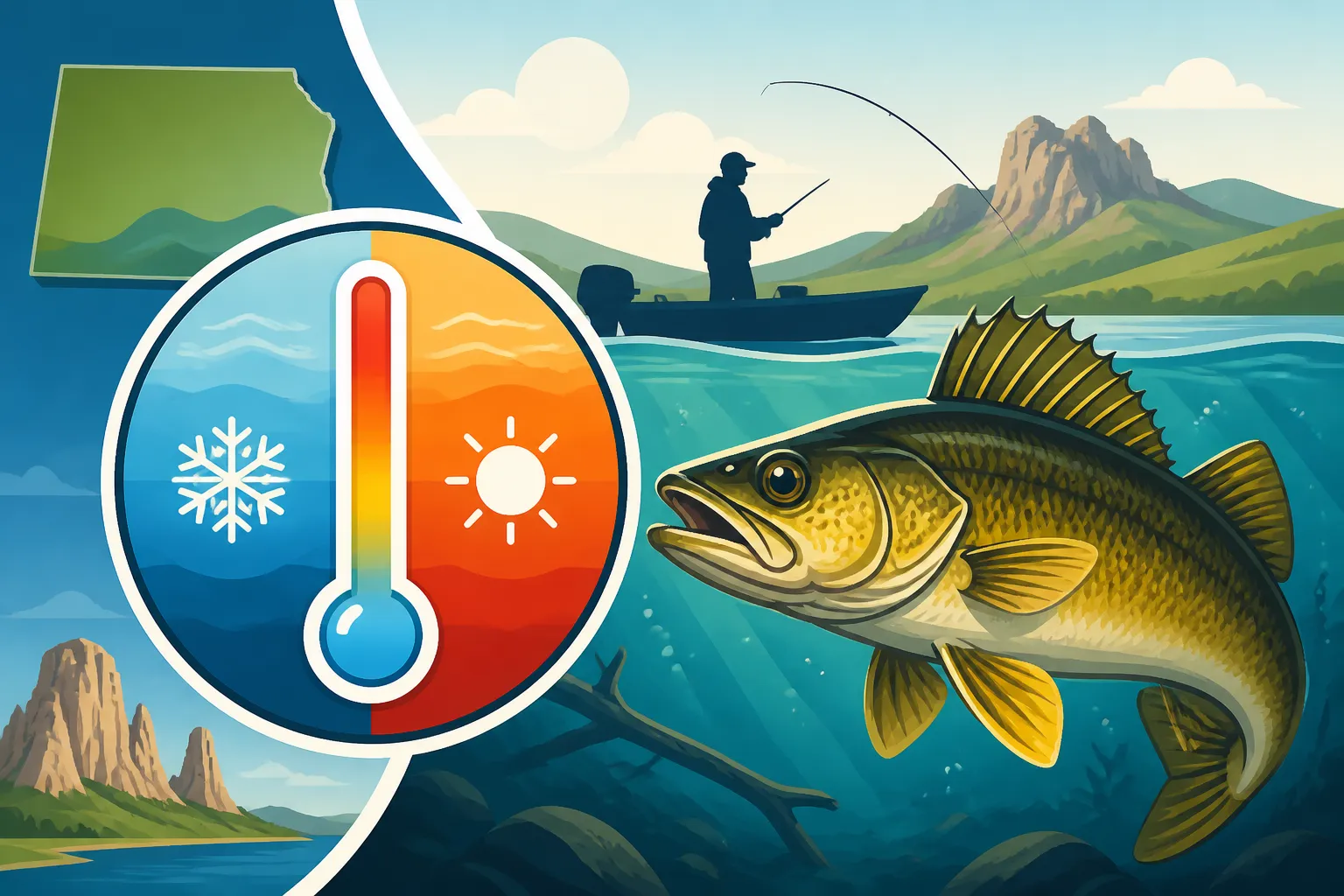
Generally speaking, walleye are most active and comfortable within a relatively narrow band of water temperatures. This is their "comfort zone" where their metabolism is humming, they're feeding aggressively, and they feel secure.
- The Prime Zone: 55-70°F (13-21°C): This is widely considered the sweet spot for actively feeding walleye. In this range, their digestive systems work efficiently, they have ample energy to chase down prey, and oxygen levels are usually sufficient. You'll find them actively roaming flats, points, and structural elements during these conditions. During spring, as waters warm towards this range, they transition from post-spawn recovery into aggressive feeding. In the fall, as waters cool back into this range, they engage in intense feeding binges to build up fat reserves for winter.
- The Cooler Edge: 45-55°F (7-13°C): As temperatures drop into this range, walleye become a bit more sluggish. Their metabolism slows, and they might not chase lures as far or as aggressively. However, they still need to eat. This is often a good range for slower presentations like jigging or using live bait, especially in deeper water. This range is typical for late spring and early fall in many South Dakota waters, including the big Missouri River reservoirs like Lake Oahe and Lake Sharpe.
- The Warmer Edge: 70-78°F (21-26°C): When temperatures climb above 70°F, walleye can start to feel the heat. They'll often move to deeper, cooler water, seeking out thermal refuges like the thermocline (more on that later). While they still feed, they might do so during lower light conditions (dawn, dusk, night) or in deeper, cooler currents. Their activity levels can decrease, and they might become more selective about what they bite. Fishing in these conditions often requires targeting these specific cooler sanctuaries.
Seasonal Water Temperature Changes and Walleye Behavior
The South Dakota landscape experiences dramatic seasonal changes, and with those come significant shifts in water temperature, dictating where walleye are and how they behave. Knowing these patterns is key to adjusting your fishing strategy throughout the year.
Spring: Warming Waters and Spawning Season
Spring in South Dakota is a time of transition and excitement for walleye anglers. As the ice melts and the sun begins to warm the vast bodies of water, walleye activity picks up dramatically.
- Pre-Spawn (38-45°F / 3-7°C): Immediately after ice-out, walleye are still relatively lethargic, holding in deeper main lake basins or river channels near potential spawning areas. They aren't actively feeding heavily, but they will bite slow-moving presentations. As the water warms slightly, they begin to stage.
- Spawning (42-52°F / 5-11°C): This is the magic window for reproduction. Walleye will migrate to shallow, rocky areas, often river mouths, wind-swept points, or gravel bars in tributaries like those feeding the Missouri River reservoirs. Males typically move in first, followed by females. During the actual spawn, feeding often slows down considerably as their focus is entirely on reproduction. The prime time to fish is usually just before and immediately after this period. Understanding South Dakota Fishing Season Dates and Limits is crucial during this sensitive time.
- Post-Spawn (50-60°F / 10-16°C): After the rigorous spawning process, walleye are exhausted and hungry. Females, especially, need to recover and replenish their energy stores. They'll often move to nearby deeper structure like submerged points or weed lines to recuperate before moving back to shallower feeding flats. This can be a fantastic time for aggressive feeding as they shake off the spawn. Anglers often find success using jigs and minnows or slow-trolling crankbaits near these recovery zones. Many anglers target walleye during this period on the upper reaches of Lake Sharpe, where fish migrate from Lake Oahe.
Summer: Stratification and Finding the Thermocline
South Dakota summers can get hot, and this warmth significantly impacts lake and reservoir dynamics. Understanding thermal stratification is paramount for summer walleye success.
- Thermal Stratification (70°F+ surface / 50-60°F deeper): In deeper lakes and reservoirs, sunlight heats the surface water, creating distinct layers. The warmest layer on top is the epilimnion, the cooler, oxygen-rich bottom layer is the hypolimnion, and in between is the thermocline—a band where the temperature drops rapidly. Walleye will often suspend or hold just above, within, or just below this thermocline, seeking cooler water and stable oxygen levels. This is especially true for large bodies of water like Lake Francis Case.
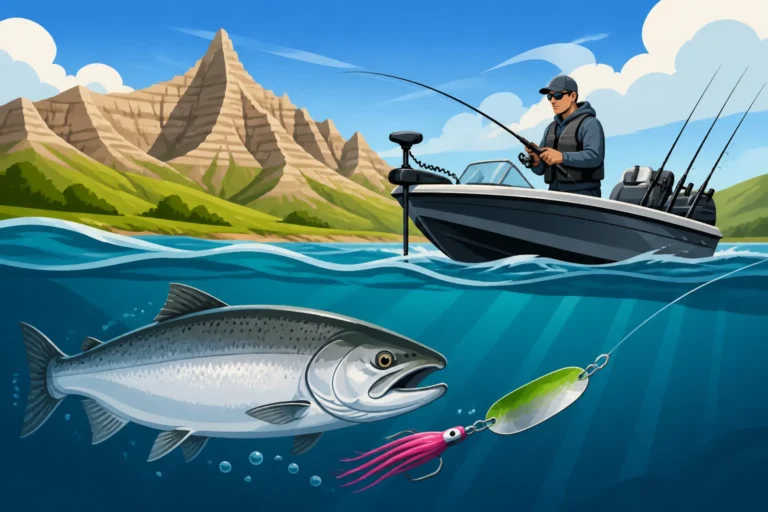
- Deep Water Retreat: When surface temperatures soar, walleye will generally move to deeper waters where the temperature is more stable and cooler. This might be deep points, submerged humps, channel edges, or the aforementioned thermocline. They'll still feed, but often during low-light periods (dawn, dusk, night) or when schools of baitfish also move into these cooler zones. Techniques like deep-water jigging, bottom bouncing, or trolling with planer boards to present lures at specific depths become very effective. You can find more specific advice on Deep Water Summer Fishing Techniques.
- River Systems and Current: In the Missouri River system, which has constant current, stratification is less pronounced. Instead, walleye will often seek out cooler current breaks, eddies, or deeper holes where water temperatures are more consistent and favorable.
Fall: Cooling Trends and Feeding Frenzies
As the long, hot days of summer give way to crisp autumn air, water temperatures begin to drop, signaling another prime feeding period for walleye.
- Turnover (60-50°F / 16-10°C): In many lakes, as the surface water cools, it becomes denser and sinks, leading to "turnover" where the water column mixes. This can temporarily disperse fish and make fishing challenging due to unstable conditions. However, once turnover settles, fishing can rebound strongly.
- Pre-Winter Fattening (55-45°F / 13-7°C): Walleye sense the approaching winter and engage in aggressive feeding to build up fat reserves. They'll often move back to shallower flats, expansive humps, and points, chasing schools of baitfish that are also actively feeding before the cold sets in. This is often considered one of the best times of year to catch trophy walleye in South Dakota. Large crankbaits, swimbaits, and aggressive jigging presentations can be highly effective. Our article on the Best Time of Year to Fish in South Dakota delves deeper into these seasonal opportunities.
- Migrations: On large systems like Lake Oahe, walleye will begin to migrate towards traditional wintering areas or congregating near baitfish schools. This can lead to incredible fishing as large groups of fish are concentrated in specific areas.
Winter: Ice Fishing and Cold Water Tactics
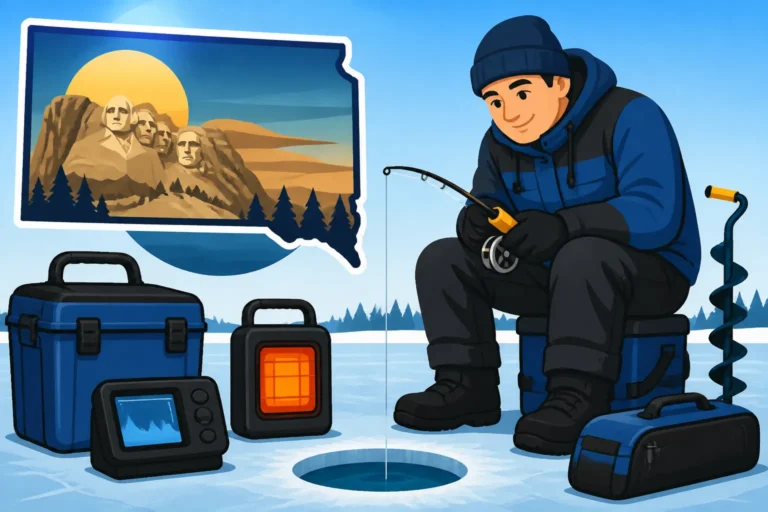
When South Dakota's lakes freeze over, the fishing doesn't stop; it simply shifts beneath the ice. Ice fishing for walleye is a popular pursuit, but it requires understanding their cold-water behavior.
- Low Metabolism (32-38°F / 0-3°C): Under the ice, water temperatures are at their coldest, and walleye's metabolism slows significantly. They still need to eat, but their feeding windows are shorter, and their movements are less energetic. They'll often hold tight to structure or in predictable areas, waiting for prey to come to them.
- Predictable Locations: Walleye under the ice are often found on deep breaks, humps, points, and along the edges of weed lines if they exist. They'll move up onto shallower flats to feed during low-light periods, particularly dawn and dusk.
- Slow and Subtle Presentations: Because of their reduced metabolism, subtle presentations are key. Small jigs tipped with live minnows, wax worms, or plastics are very effective. Jigging techniques need to be slower, with longer pauses between lifts. Learning about South Dakota Ice Fishing Guide provides a wealth of information for winter angling.
- Concentration: While individual fish might be less active, they often concentrate in large schools in specific areas, making them easier to locate with electronics. Once you find a school, you can often catch multiple fish from the same hole.
Practical Tips for Measuring Water Temperature and Finding Walleye
Knowing the preferred temperature range is only half the battle; the other half is accurately measuring the water temperature and using that information to locate fish.
Tools for Accurate Temperature Readings
Gone are the days of guessing the water temperature by dipping your hand in. Modern technology offers precise tools that can give you the edge.
- Handheld Water Thermometers: These are affordable and portable, perfect for checking surface temperatures or quickly getting a reading at different depths by tying them to a weighted line. Many reputable brands offer these, and you can easily find a good quality one on Amazon. They are invaluable for confirming the surface temperature before you even launch your boat.
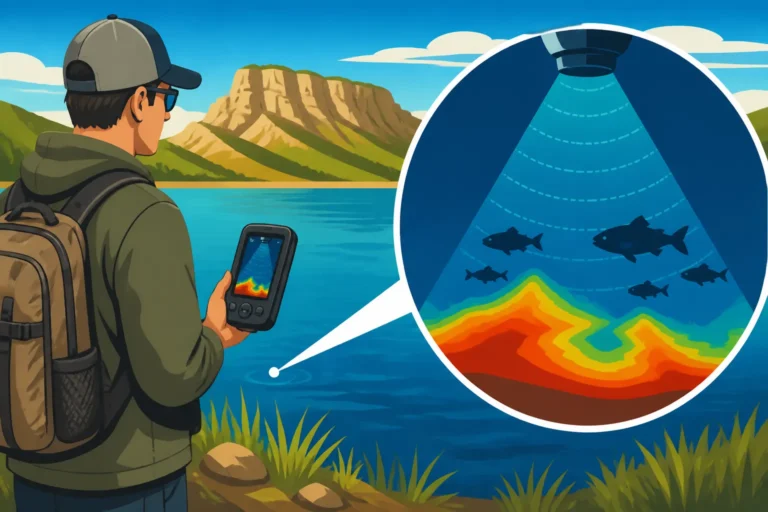
- Integrated Fish Finder Thermometers: Most modern fish finders, especially those with advanced sonar capabilities, include a water temperature sensor in the transducer. This provides real-time surface temperature readings and, on some advanced units with mapping and charting, can even help you identify thermoclines or areas where cooler water might be seeping into a lake. Brands like Lowrance, Garmin, and Humminbird offer excellent units that integrate this feature seamlessly. When considering a new fish finder, check out options on Amazon to compare features and prices. These devices also help you map contours and structure, which, combined with temperature, gives a full picture. Our guide to the Best Fish Finders for South Dakota Lakes offers more detailed recommendations.
- Boat-Mounted Sensors: Some boats have dedicated temperature gauges integrated into their dashboards, providing continuous surface readings. These are often standard on larger fishing boats designed for trolling.
Interpreting Temperature and Locating Productive Zones
Once you have your temperature readings, the real work begins: interpreting what they mean for walleye location.
- Target the "Right" Temperature: If you know walleye prefer 55-70°F, and your surface water is 75°F, you know they're not likely to be in the shallows. You'll need to look deeper until you find that preferred temperature band. If the whole lake is uniform at 40°F, you'll need to slow down your presentation and focus on structure where they might be staging.
- Identify Thermal Breaks: Walleye often congregate around "thermal breaks" or areas where there's a significant change in water temperature. This could be where a cool current enters a warmer lake, the edge of a thermocline, or where spring-fed creeks bring in colder water. These subtle differences can act like magnets for walleye seeking comfort or prey.
- Combine Temperature with Structure and Forage: Temperature isn't the only factor, but it's a critical one. Always overlay your temperature data with other known walleye attractors:
- Structure: Points, humps, ledges, submerged roadbeds, rock piles. Walleye love to relate to structure, and if that structure is in their preferred temperature zone, it's a double win.
- Forage: Walleye follow their food. If you find schools of baitfish (often visible on your fish finder) in the preferred temperature range, walleye are likely not far behind.
Adjusting Your Techniques Based on Temperature
The water temperature should directly influence your fishing approach.
- Cold Water (Below 45°F): Think slow. Very slow. Walleye are lethargic. Jigs tipped with live minnows, slow-trolled bottom bouncers with crawler harnesses, or vertical jigging are often best. Present your bait right in front of their nose and give them plenty of time to react. You might need to experiment with different jigging techniques for Missouri River walleye.
- Ideal Range (55-70°F): This is when walleye are most active and aggressive. You can often use faster presentations. Trolling crankbaits, casting jigs, snap-jigging, or using spinner rigs can all be highly effective. Don't be afraid to cover water to find actively feeding schools. Our guide on How to Fish for Walleye in South Dakota offers detailed techniques.
- Warm Water (Above 70°F): Focus on deeper water or low-light conditions. You might need to use heavier jigs to get down to the thermocline or troll deeper diving crankbaits. Night fishing can be incredibly productive during these periods as walleye move shallower under the cover of darkness. Keep an eye on South Dakota Walleye Limits as warmer waters can stress fish, making careful handling even more important.
Here's a quick summary table to help you visualize walleye behavior across different temperatures:
| Water Temperature Range | Walleye Behavior | Ideal Locations | General Fishing Tips |
|---|---|---|---|
| Below 40°F | Very slow metabolism, lethargic | Deep basins, main lake channels, wintering holes | Slow vertical jigging (small jigs, minnows), deadsticking, subtle movements. Patience is key. |
| 40-50°F | Pre-spawn staging, slower feeding | Near spawning grounds (rocky areas), deep breaks, humps | Slow jigging with live bait (minnows, nightcrawlers), slow-trolling stickbaits, bottom bouncing. Focus on bottom contact. |
| 50-55°F | Spawning/Post-spawn recovery, increasing hunger | Spawning flats, nearby deeper structure, weed edges | Post-spawn aggression kicks in. Jigs with plastics/minnows, spinner rigs, smaller crankbaits. Fish can be found shallower. |
| 55-70°F | Prime Feeding, Highly Active Metabolism | Flats, points, humps, weed lines, structure transitions | Most versatile range. Trolling crankbaits, aggressive jigging, slip bobbers, spinner rigs. Cover water, experiment with retrieves. This is the optimal window. |
| 70-75°F | Seeking cooler water, active in low light | Thermocline, deep structure, current breaks, river channels | Deep-water jigging, bottom bouncing, deep-diving crankbaits. Focus on dawn/dusk/night. Look for areas with cooler water influx. |
| Above 75°F | Stressed, seeking deepest, coolest water | Deepest available holes, strong current areas, shade | Slow presentations in very deep water or strictly night fishing. Handle fish quickly and carefully, as they are easily stressed. Often not the most productive time. |
By paying close attention to water temperature and understanding how it influences walleye, you'll be able to predict their movements and behaviors with much greater accuracy. This scientific approach, combined with local knowledge of South Dakota's fantastic fisheries, will undoubtedly lead to more successful and enjoyable days on the water.
Disclaimer
Fishing regulations, license requirements, and fish consumption advisories can change. Always consult the latest South Dakota Game, Fish and Parks (GFP) regulations handbook or their official website before heading out on the water. This guide is for informational purposes only and should not be considered a substitute for official regulations.