How to Fish Cut Bait for Catfish
Many anglers find themselves frustrated when targeting catfish, often missing out on the powerful fights and generous hauls these incredible fish offer. If you've ever felt like your bait isn't quite hitting the mark, or that catfish are simply too elusive, you're not alone. This guide aims to demystify the art of fishing with cut bait, providing a comprehensive look at how to effectively attract, hook, and land South Dakota's fantastic catfish population.
Understanding South Dakota Catfish and Their Appetite
South Dakota is home to some truly impressive catfish, particularly the Channel Catfish, which are abundant in our major rivers and many of our lakes. These aren't just bottom-feeders; they're opportunistic predators with an incredible sense of smell, making them a fantastic target for anglers who understand their habits. They can grow to significant sizes, providing a thrilling challenge and a delicious reward. For a deeper dive into these whiskered wonders, check out our South Dakota Catfish Fishing Guide.
The Allure of Catfish and Their Diet
Catfish are primarily scavengers and predators, meaning they aren't picky eaters when it comes to a strong scent trail. Their diet consists of anything from smaller fish, insects, crustaceans, and even decaying organic matter. This broad palette is precisely why cut bait is so effective; it mimics a wounded or dead prey item, releasing a potent scent that catfish simply can't resist. Unlike some finicky game fish, catfish are often driven by hunger and a keen sense of smell, making them relatively straightforward to entice once you understand their preferences.
Think about it: a catfish lurking in murky water or beneath a log isn't relying on sight to find its next meal. Its barbels, those prominent whiskers, are packed with taste buds, and its lateral line system detects vibrations, while its olfactory system is incredibly sensitive to chemical cues in the water. A fresh piece of cut bait broadcasts a powerful message directly to these sensory organs, screaming "easy meal!" from a distance.
Why Cut Bait is a Catfish Magnet
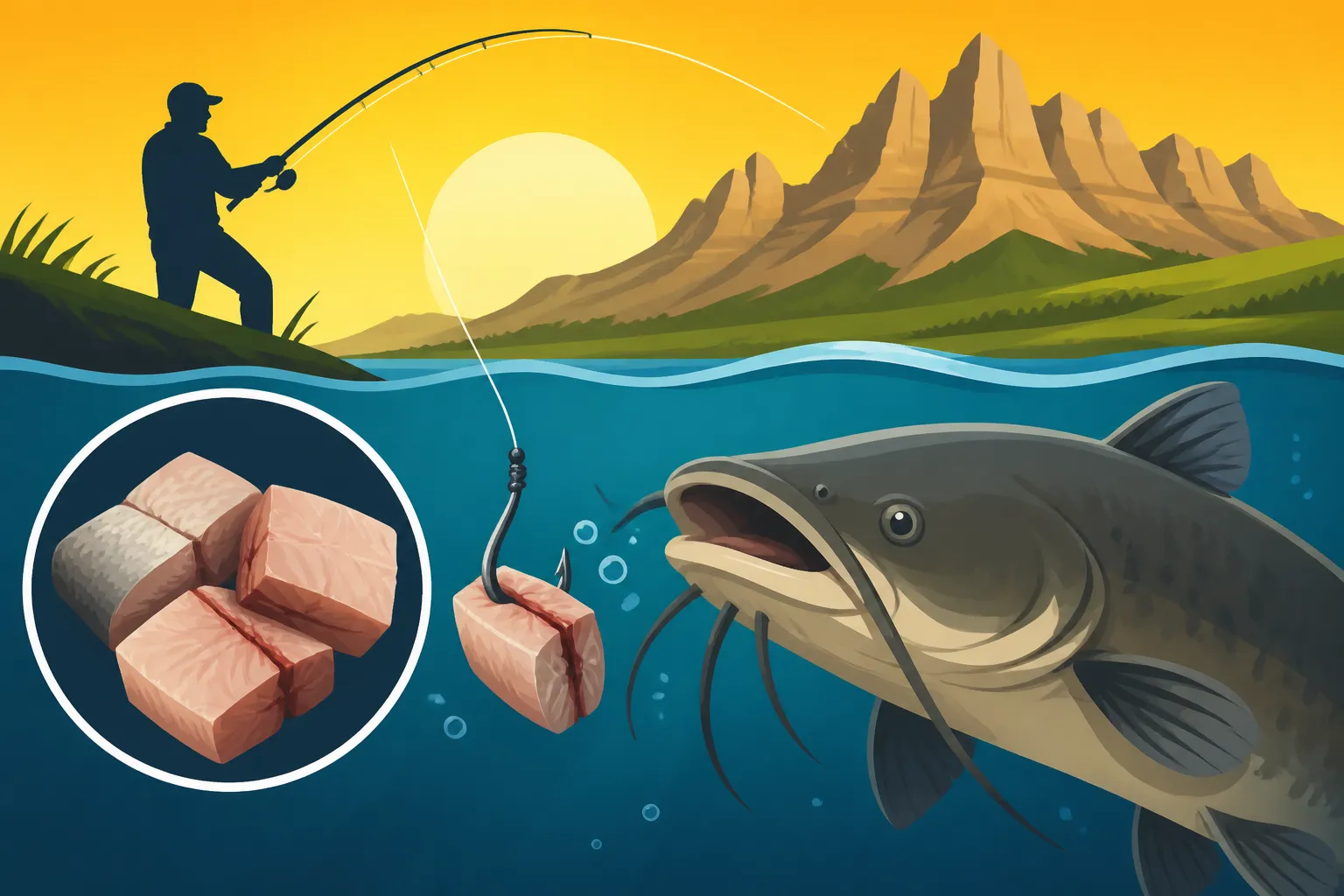
Cut bait reigns supreme for catfish because it leverages their unparalleled sense of smell. When you slice open a baitfish, you expose its flesh, blood, and internal organs, creating a potent scent slick that disperses in the water. This scent trail acts like a beacon, drawing in catfish from considerable distances, especially in areas with current where the scent can travel. The more pungent and oily the bait, the better.
Moreover, cut bait is versatile. It can be fished on the bottom, suspended under a bobber, or even drifted. It appeals to a wide range of catfish sizes, from smaller "eaters" to giant trophy cats that might ignore artificial lures. The natural texture and appearance, even when cut, are more appealing to cautious large catfish than something artificial. It’s truly one of the most reliable baits in an angler's arsenal when chasing these powerful fish.
Choosing and Preparing Your Cut Bait for Success
The success of your cut bait fishing often begins long before you cast your line. The type of bait you choose, how you prepare it, and how you store it can significantly impact your catch rate. It’s not just about any old fish chunk; it’s about strategic selection and meticulous preparation.
Best Fish Species for Cut Bait
When it comes to selecting the best fish for cut bait, you want something oily, relatively tough, and ideally, something locally available. Shad, common carp, suckers, and even panfish like bluegill or perch are excellent choices. Each has its merits: shad and carp are particularly oily, creating a fantastic scent trail, while suckers and panfish offer a tougher flesh that stays on the hook longer, resisting nibbles from smaller fish or strong currents. Sometimes, what's readily available and legal to use as bait in South Dakota is your best bet.
Avoid using game fish as cut bait if regulations prohibit it or if it feels wasteful. Always check current South Dakota Fishing Regulations Explained before collecting or using baitfish, as rules can vary by water body. If you can’t catch your own bait, many bait shops sell frozen shad or sucker fillets, or you might find suitable options on retailers like Amazon.
The Art of Cutting and Storing Bait
Preparing your cut bait correctly is crucial for maximizing scent and hook retention. For most catfish species, a chunk about 1-2 inches square, or a strip roughly 1×3 inches, works well. The key is to expose as much flesh as possible. I often recommend cutting chunks with the skin on one side to help keep it on the hook. For larger flathead catfish, you might opt for bigger pieces or even whole small baitfish if legal and appropriate for your target size.
Storing your bait properly ensures it stays fresh and potent. Keep it chilled in a cooler with ice, ideally in a separate sealed container to prevent cross-contamination and keep your cooler clean. Some anglers even let their bait "sour" slightly in a sealed container for a day or two in the fridge (not freezer!) to amplify the scent, a tactic particularly favored by some channel cat enthusiasts. However, for general use, fresh is best.
Enhancing Your Cut Bait
While cut bait is potent on its own, there are ways to make it even more irresistible. Some anglers swear by commercially available "dips" or "scents" that add extra aroma to the bait. These often come in gel or liquid form and can be applied directly to your cut bait. Garlic oil, an old classic, is another popular additive. You can find many scent options designed specifically for catfish, readily available at sporting goods stores or through online platforms like Amazon.
Another technique is to make your own "bait marinade." A simple mixture of water, a little salt, and some powdered garlic can infuse your cut bait with additional flavor and scent. Some experienced anglers will even add a touch of anise oil or a secret spice blend. The goal is always to create a stronger, longer-lasting scent trail that calls to those hungry catfish from afar.
Mastering the Rig and Presentation for Catfish
Having the best cut bait in the world won't matter if your rig isn't right or your presentation is off. Catfish fishing, while often simple, still benefits immensely from proper rigging and thoughtful deployment.
Essential Catfish Rigs for South Dakota Waters
The most common and effective rig for fishing cut bait for catfish is a simple bottom rig. This typically involves a sinker, a swivel, and a leader with a hook.
Here’s a breakdown of popular rigs:
- Carolina Rig: This is a go-to for many. Thread a bullet or egg sinker onto your main line, followed by a bead (to protect the knot), and then tie on a barrel swivel. To the other end of the swivel, attach a fluorocarbon or monofilament leader (12-24 inches) and then your hook. This rig allows the catfish to pick up the bait and move with it without immediately feeling the weight of the sinker, often leading to more solid hookups.
- Slip Sinker Rig: Very similar to the Carolina, but often uses a heavier lead sinker that slides freely on the main line. The principle is the same: let the fish run with the bait without feeling resistance.
- Three-Way Swivel Rig: Excellent for fishing in current or when you want to present your bait slightly off the bottom. Tie your main line to one eye of the three-way swivel, a leader to your hook to a second eye, and a shorter leader to a sinker to the third eye. This keeps your bait suspended just above snags.
For hooks, opt for sturdy circle hooks or octopus hooks in sizes appropriate for your bait and target species, usually between 4/0 and 8/0. Circle hooks are particularly effective as they often hook the fish in the corner of the mouth, making for easier release and less harm to the fish. When fishing with cut bait for catfish, especially on the Missouri River Catfish Fishing Spots, consider using a heavier Best Line Weight for South Dakota Catfish to handle powerful runs.
Strategic Casting and Placement
Catfish often hug the bottom, especially in deeper holes, near submerged timber, or along drop-offs. When casting your cut bait, aim for these areas. In rivers, look for current breaks behind rocks or logs, or the deeper side of bends. On lakes and reservoirs like Lake Sharpe or Lake Francis Case, target channel edges, old riverbeds, or the base of prominent points. How to Catch Catfish on the Missouri River involves understanding these current and structure dynamics.
If you’re fishing from shore, fan-cast to cover a wider area, letting your bait settle on different contours of the bottom. From a boat, you can anchor upstream of a promising spot and let your bait drift back into the strike zone, or slowly drift with the current, dragging your bait along. Remember, catfish rely on scent, so getting your bait into the "scent highway" where current can carry its aroma is key.
Reading the Bite and Setting the Hook
Catfish bites can range from subtle taps to aggressive, rod-bending tugs. Often, you'll see a slow, deliberate pull on your rod tip as the catfish mouths the bait before fully committing. With a circle hook, you don't need to "set" the hook with a dramatic sweep. Instead, when you feel a steady pull, simply reel down until your line is taut and lift the rod smoothly. The circle hook is designed to rotate and catch in the corner of the fish's mouth as it pulls away.
If using a J-hook, a more traditional hookset is required once the fish takes the bait firmly. Patience is a virtue here; let the fish take the bait for a few seconds before setting, ensuring it's properly ingested. Watching your rod tip carefully for any unusual movement is essential. A good rod holder, available on Amazon, can help stabilize your rod and make these subtle bites more noticeable.
Prime Locations and Times to Deploy Cut Bait
Knowing what to use and how to rig it is only half the battle. Understanding where and when to present your cut bait will dramatically increase your chances of success in South Dakota.
Identifying Catfish Hotspots in South Dakota
South Dakota offers a wealth of fantastic catfish waters. The Missouri River system (Lakes Oahe, Sharpe, Francis Case, and Lewis and Clark) is legendary for its Channel Catfish. These vast reservoirs provide ample habitat, with channel edges, old creek beds, and submerged timber being prime targets. Beyond the main stem, many of the smaller rivers and tributaries feeding into the Missouri, as well as some of the Glacial Lakes in eastern South Dakota, hold thriving populations.
For instance, the tailwaters below the dams on the Missouri River system are particularly productive, as the churning water disorients baitfish and concentrates forage, attracting hungry catfish. Look for areas with slower current adjacent to faster flow, or deeper holes where catfish can rest while waiting for food to drift by. Public access points and boat ramps often provide good starting points, but exploring a bit off the beaten path can yield incredible results. Always be aware of Catfish Limits and Size Rules for any specific body of water you're fishing.
The Best Times for Catfish Action
Catfish are often most active during low light conditions – dawn, dusk, and throughout the night, especially during the warmer months. While you can certainly catch them during the day, their nocturnal nature means that fishing into the evening can be incredibly rewarding. On hot summer days, they might retreat to deeper, cooler water during the brightest parts of the day, becoming more active as the sun sets and the water surface cools.
During the spring, as water temperatures rise, catfish become very active and move into shallower areas to feed and eventually spawn. This can be a fantastic time for consistent action. In the fall, they feed heavily in preparation for winter, making them aggressive biters. Even in winter, dedicated anglers can find success through the ice in deeper holes, though this requires specialized Winter Walleye Fishing Techniques and gear, adapted for catfish. Regardless of the season, a consistent scent trail from well-prepared cut bait, presented in the right spot, will often be the key to success. Don't forget to review the South Dakota Catfish Daily Limit before heading out on your trip.
Table: Popular Cut Bait Options for South Dakota Catfish
| Baitfish Type | Scent/Oil Content | Flesh Firmness | Typical Use Case | Notes |
|---|---|---|---|---|
| Shad | High | Medium | Channel Catfish, Flathead Catfish | Very oily, strong scent. Can be fragile if not fresh. |
| Common Carp | Medium-High | Firm | Channel Catfish, Flathead Catfish | Abundant, tough skin helps retention. Good all-around bait. |
| Suckers | Medium | Firm | Channel Catfish, Flathead Catfish (especially larger) | Less oily than shad, but firm flesh makes it durable. |
| Bluegill/Perch | Low-Medium | Medium | Channel Catfish | Readily available, legal in many areas. Good for panfish-eaters. |
| Drum (Sheepshead) | Medium | Firm | Channel Catfish, Flathead Catfish | Often found in the Missouri River system, excellent tough bait. |
Knowing the difference between Channel Catfish vs Flathead Catfish can also help in selecting and preparing your bait, as flatheads often prefer larger, fresher pieces, sometimes even live bait if legal. For anglers new to the game, learning Fish Identification for Beginners is a great start to understand what fish you're catching and what might make good bait.
Fishing with cut bait for catfish is a time-honored tradition for a reason: it works! By understanding the biology of these incredible fish, carefully selecting and preparing your bait, using appropriate rigs, and targeting the right locations at the right times, you'll dramatically improve your success. So next time you're heading out to the waters of South Dakota, consider giving cut bait a try. You might just find yourself battling a trophy catfish and making some incredible fishing memories.
Disclaimer
This article is for general informational purposes only and does not constitute professional advice. Laws, prices and regulations vary by location and change over time. Consult a qualified professional for guidance on your specific situation.