Whitlock Bay Salmon Spawning Station Fishing
The annual Chinook salmon run at Whitlock Bay on Lake Oahe is a truly spectacular event, but it can also be a little overwhelming if you're not prepared. The sheer number of anglers, the specific techniques needed, and the fast-paced nature of the fishing can lead to a lot of frustration. This comprehensive guide will cut through the noise, offering clear, actionable advice to help you experience the thrill of landing a beautiful Chinook at this iconic South Dakota destination.
Understanding Whitlock Bay and the Chinook Salmon Run
Whitlock Bay, nestled on the eastern shore of Lake Oahe near Gettysburg, South Dakota, isn't just another fishing spot; it's the heart of the state's Chinook salmon program. This deep, clear bay is home to the Whitlock Bay Spawning Station, a crucial facility managed by the South Dakota Game, Fish and Parks (GFP) that plays an instrumental role in maintaining the health and viability of the salmon population in Lake Oahe. For anglers, it means one thing: during the fall spawning run, this area becomes the place to target these powerful, acrobatic fish. The anticipation builds for weeks as the water cools, drawing these magnificent salmon from the vast depths of Lake Oahe into the bay, preparing for their final, epic journey upstream. It's a place where the grandeur of nature meets the passion of dedicated anglers.
The Unique Allure of Whitlock Bay
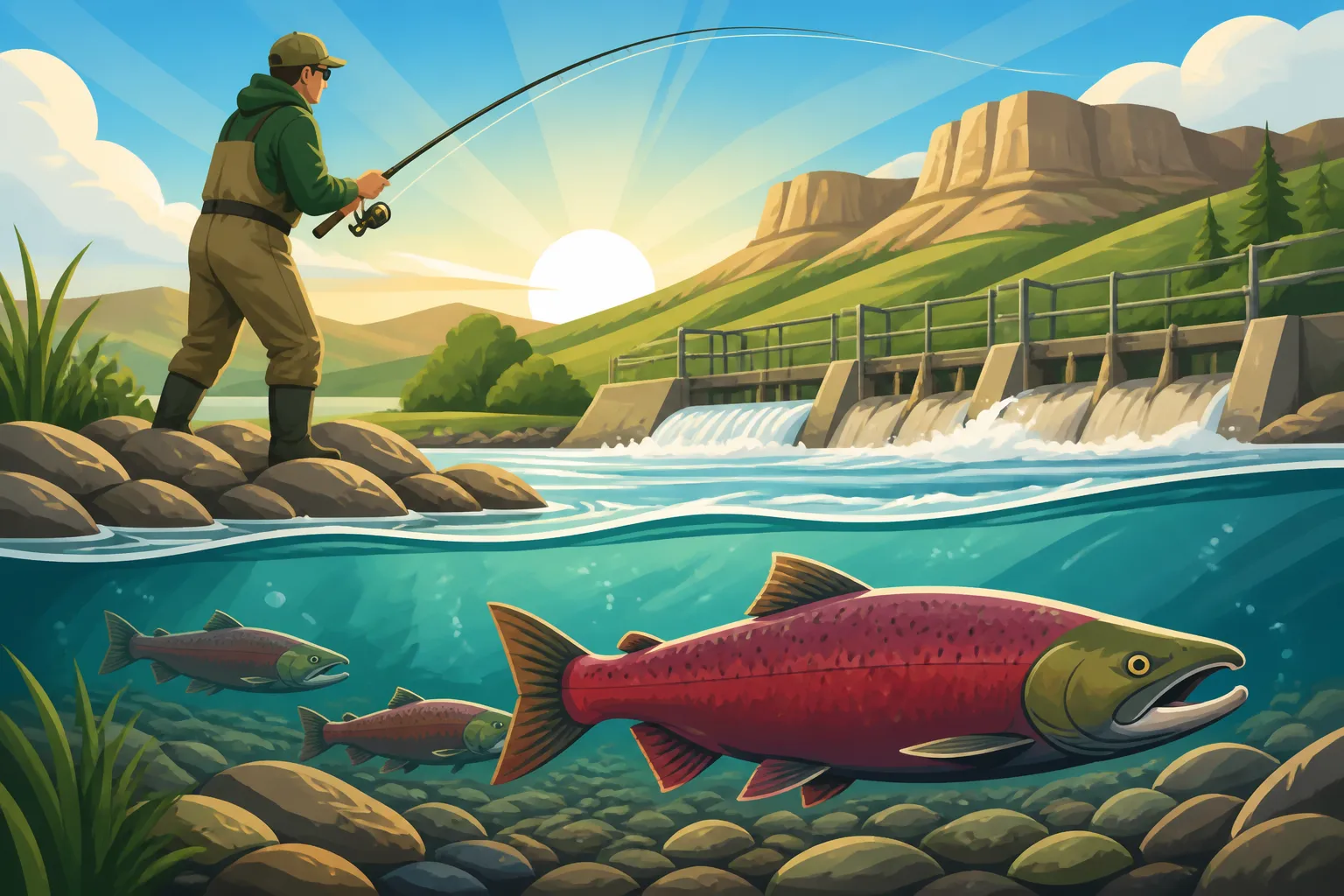
What truly sets Whitlock Bay apart from other fishing destinations in South Dakota is its role as the primary spawning and egg-collection site for Chinook salmon in the entire state. Every fall, as the water temperatures begin to drop, mature salmon respond to instinct, migrating towards the bay and the spawning station. This congregation creates a unique fishing opportunity that draws anglers from across the Midwest. The bay itself is characterized by its deep channels, submerged structure, and proximity to the open waters of Lake Oahe, providing an ideal staging area for the incoming salmon. The clear, cold water makes the battle with a hooked salmon even more exhilarating, as these fish are known for their powerful runs and aerial displays. It's a place steeped in tradition, where generations of anglers have chased the silver king, making memories against the stunning backdrop of the prairie landscape.
The Chinook Salmon Spawning Cycle in South Dakota
The Chinook salmon spawning cycle in South Dakota is a remarkable natural event, intricately tied to the rhythms of Lake Oahe and the operations at Whitlock Bay. These anadromous fish, though landlocked, mimic their ocean-dwelling cousins, migrating from the open lake to tributary areas to reproduce. The run typically kicks into high gear from late September through October, though it can start earlier or extend later depending on the specific weather patterns and water temperatures of a given year. What really drives them is a combination of decreasing daylight hours and, crucially, cooling water temperatures. When Chinook salmon spawn on Lake Oahe, they are responding to an instinctual call, pushing them closer to the spawning station where their journey will culminate.
As the lake water approaches the critical temperature range, often hovering in the low 50s Fahrenheit, the salmon begin to stage in the deeper parts of Whitlock Bay. This is when the fishing can become incredibly intense. Anglers often wonder what water temperature triggers the salmon spawn, and while it's not a single magic number, that cooling trend is the undeniable catalyst. These fish are driven by a singular purpose, making them both challenging and rewarding targets. Understanding this cycle is paramount to successful fishing, as their behavior shifts dramatically as they move closer to their final destination. The spawning station itself is a spectacle, allowing visitors to witness the incredible effort involved in collecting eggs and ensuring the future of South Dakota's Chinook population.
Essential Gear and Tackle for Whitlock Bay Salmon
Tackling the powerful Chinook salmon at Whitlock Bay demands more than just your everyday walleye setup. These fish are notoriously strong, capable of long, drag-screaming runs and spectacular acrobatic jumps that can test even the most experienced angler's equipment. Walking into this fishery with gear that's too light or poorly maintained is a recipe for broken lines, bent hooks, and a whole lot of frustration. You need to be prepared for a heavyweight fight, which means investing in specific rods, reels, line, and lures designed to withstand the immense pressure these fish exert. Don't skimp on quality here; your gear is your lifeline to landing a trophy.
Rods, Reels, and Line Selection
When it comes to rods for Whitlock Bay Chinook, you'll want something with a robust backbone and a moderate-fast to fast action. For shore casting, a medium-heavy to heavy power spinning rod, typically 8 to 10 feet in length, will give you the casting distance needed to reach deeper water and the leverage to fight a large fish. If you're trolling from a boat, stout, medium-heavy to heavy action trolling rods, often 7 to 9 feet long, are essential. These rods need to absorb the shock of a strike while still providing the power to battle a surging salmon.
Matching your rod with a high-quality reel is equally important. For spinning setups, look for a durable reel in the 4000 to 6000 size range with a smooth, reliable drag system and ample line capacity. For trolling, a sturdy baitcasting reel or a line counter reel is often preferred, allowing for precise depth control. Line selection is critical: a main line of 20-30 lb braided line is popular for its strength and sensitivity, often paired with a 15-20 lb fluorocarbon leader. The stretch-free nature of braid helps detect subtle bites, while the fluorocarbon leader provides invisibility and abrasion resistance against the salmon's rough mouths.
Lures, Baits, and Scent Strategies
The aggressive nature of spawning Chinook means they can be enticed by a variety of artificial presentations, but some lures consistently outperform others at Whitlock Bay. Spoons are absolute staples. Popular choices include the classic Daredevle, Little Cleo, or Magnum Spoon in bright, flashy colors like silver, chartreuse, orange, and blue/silver. The best lures for Lake Oahe salmon in October often lean towards these highly reflective or vibrantly colored options that mimic injured baitfish. Casting these spoons from shore or slow-trolling them from a boat can be incredibly effective.
Plugs and crankbaits that dive to various depths are also key, especially for boat anglers. Brands like Rapala, Kwikfish, or Wiggle Warts in metallic or bright patterns can draw vicious strikes. Jigs, tipped with a minnow or a piece of cured salmon roe, can also be deadly when vertically jigged near staging fish. Don't underestimate the power of scent – adding a salmon-specific scent to your lures or using cured roe can significantly increase your strike rate. Many anglers will prepare their own cured eggs, but commercial options are readily available and often effective. Always be prepared with a variety of lure types and colors, as salmon can be finicky, and what worked yesterday might not work today.
Effective Fishing Techniques at Whitlock Bay
Fishing at Whitlock Bay during the salmon run is an exhilarating experience, but it also requires a nuanced approach. Whether you're casting from the bank, elbow-to-elbow with fellow anglers, or strategically trolling from a boat, understanding the most effective techniques for these powerful fish is paramount. The salmon are there for one purpose, and while they may not be actively feeding, they can be triggered to strike out of aggression or instinct. Adapting your presentation to their mood and the crowded conditions is key to success.
Shore Fishing and Casting Tactics
Shore fishing at Whitlock Bay, particularly near the spawning station, can be incredibly productive, but it's also a high-traffic affair. When learning how to catch Chinook salmon from shore on Lake Oahe, patience and proper etiquette are as important as your casting arm. Anglers often line the banks, especially during peak times, so be prepared for close quarters. The best approach is to arrive early, before dawn, or stay late into the evening, as these low-light conditions often see increased salmon activity near the banks.
Focus your casting efforts on reaching deeper channels, current seams, or any visible structure where salmon might be staging. Heavy spoons, casting plugs, or large jigs are excellent choices for covering water and achieving distance. Your retrieve should vary – sometimes a steady, fast retrieve triggers a chase, other times a slow, erratic twitch-and-pause is what they're looking for. Many successful anglers use a technique often called casting for salmon from shore, involving a powerful cast followed by a slow, controlled retrieve with occasional jerks to impart an erratic action. Remember to communicate with other anglers to avoid tangles and ensure everyone has a fair shot at the fish.
Boat Fishing and Trolling Strategies
For those with a boat, the opportunities for Chinook salmon fishing at Whitlock Bay expand considerably, allowing you to cover more water and target fish in deeper, less accessible areas. Trolling is a predominant technique for boat anglers here, offering a systematic way to present lures to actively moving fish. Utilizing South Dakota Chinook salmon trolling techniques involves a careful balance of speed, depth, and lure selection.
Downriggers are indispensable tools for getting your lures down to the precise depths where salmon are holding, often 30-60 feet or even deeper. Experiment with different depths until you find where the fish are concentrated, often indicated by your fish finder. Planer boards can be used to spread out multiple lines, covering a wider swath of water and increasing your chances of a strike. Trolling speeds typically range from 1.5 to 3 mph, depending on the lure type and desired action. The best downriggers for salmon trolling will have accurate depth counters and release mechanisms that reliably trip when a fish strikes. Pay close attention to your sonar for baitfish schools and salmon arches, as these indicate prime trolling lanes. Navigation can be tricky with heavy boat traffic, so always prioritize safety, maintain vigilance, and communicate with other boaters.
Navigating Regulations and Ethical Practices
Fishing for Chinook salmon at Whitlock Bay is a privilege, and with that privilege comes the responsibility to understand and adhere to all South Dakota fishing regulations and to practice ethical angling. The rules are in place not to frustrate you, but to protect the fishery and ensure that future generations can enjoy the same incredible opportunities. Ignoring them not only risks hefty fines and penalties but also harms the very resource we all cherish. Taking a moment to familiarize yourself with the specifics before you cast a line will save you a lot of potential headaches and contribute to a healthier ecosystem.
Key South Dakota Salmon Regulations
Before heading out, it is absolutely essential to review the current South Dakota fishing regulations. These rules can change from year to year, so relying on outdated information is a big mistake. For Chinook salmon, you'll need to pay close attention to daily limits, which dictate how many fish you can keep in a 24-hour period, and possession limits, which define the total number of fish you can have on hand, including those at your camp or home. There might also be specific size restrictions in place, such as minimum or maximum length limits, or even slot limits that require certain size fish to be released.
Specifically, anglers should consult the South Dakota Chinook Salmon Regulations detailed by the Game, Fish and Parks department. These regulations often include special provisions for Lake Oahe and its tributaries, reflecting the unique management challenges of this fishery. It's also critical to understand the broader South Dakota Fish Limits and Size Restrictions that apply statewide, ensuring you're compliant no matter what you hook into. Always carry a copy of the most recent South Dakota GFP Fishing Handbook Guide, or have it accessible on your phone, to clarify any uncertainties. Remember, enforcement officers are routinely present, especially during popular runs like Whitlock Bay.
Respecting the Resource and Fellow Anglers
Ethical angling goes beyond simply following the rules; it's about stewardship and courtesy. When targeting Chinook salmon, particularly during the spawning run, proper fish handling is paramount. If you catch a fish that is undersized or one you intend to release, handle it gently and release it quickly. Minimize its time out of the water, support its body horizontally, and use wet hands to avoid removing its protective slime coat. Always use a proper net to safely land fish, rather than trying to hoist them by the line.
Furthermore, fishing at Whitlock Bay during the salmon run can be a crowded affair, especially on weekends. Courtesy towards fellow anglers is non-negotiable. Maintain reasonable spacing, avoid casting over other lines, and keep noise to a minimum. Pack out everything you pack in – absolutely no litter should be left behind. This includes discarded fishing line, which can be lethal to wildlife. And, of course, ensure you possess a valid South Dakota Fishing License Guide for the current year. By practicing respectful and responsible angling, you contribute to a positive experience for everyone and help preserve the incredible fishing opportunities that Whitlock Bay offers.
Planning Your Whitlock Bay Salmon Fishing Trip
A successful Chinook salmon fishing trip to Whitlock Bay isn't just about the gear or the technique; it's also about meticulous planning. The salmon run is a dynamic event, influenced by environmental factors and attracting considerable attention, which means things like timing, accommodations, and local knowledge can make or break your experience. Don't leave your trip to chance; a little forethought can transform a potentially stressful outing into a memorable adventure.
Best Times to Visit and What to Expect
Timing is everything when it comes to the Whitlock Bay salmon run. While the run typically spans from late September through October, pinpointing the absolute best time to catch salmon at Whitlock Bay can be a moving target, varying slightly year to year based on weather patterns, lake conditions, and the salmon's biological clock. Generally, the last two weeks of September and the first two weeks of October tend to be prime, but checking local fishing reports and the South Dakota GFP website for updates is always recommended. This is often when you'll find the fish concentrated and active near the spawning station.
When planning for how long the Chinook salmon run lasts on Lake Oahe, understand that the peak might only be a couple of weeks, though opportunities exist before and after. Expect crowds, especially on weekends. Lodging in nearby Gettysburg can book up fast, so make reservations well in advance. Consider visiting on weekdays if possible to avoid some of the heaviest traffic. The atmosphere is generally friendly and enthusiastic, but patience will be your best friend when navigating crowded boat ramps and shorelines. Embrace the energy, but be prepared for a competitive environment.
Local Resources and Guides
Even if you're an experienced angler, leveraging local resources can provide an invaluable edge at Whitlock Bay. Local bait and tackle shops, especially in Gettysburg, are treasure troves of up-to-the-minute information. They can tell you what lures are currently hot, where the fish are biting, and what conditions to expect. Don't be shy about asking for advice – many shop owners and employees are passionate anglers themselves. Additionally, the South Dakota Game, Fish and Parks website and social media channels are excellent sources for official updates on the spawning station activities and fish movements.
For those new to the area or salmon fishing, hiring a reputable local fishing guide can significantly enhance your chances of success. Guides know the nuances of the bay, the latest patterns, and how to navigate the conditions efficiently. They often provide all the necessary gear and can teach you the specific techniques needed to tackle these powerful fish. Platforms like FishingBooker can be an excellent resource for finding experienced local guides who specialize in Lake Oahe Chinook salmon, allowing you to compare options and book a trip that suits your needs. These guides can quickly get you up to speed on the South Dakota Fishing Seasons Explained and help you interpret the South Dakota GFP Fishing Handbook Guide effectively, ensuring a productive and enjoyable outing.
Here's a quick comparison to help you weigh your options:
| Feature | Shore Fishing at Whitlock Bay | Boat Fishing at Whitlock Bay |
|---|---|---|
| Accessibility | Highly accessible, no boat required | Requires a boat (personal or guided) |
| Cost | Lower initial cost (license, tackle) | Higher initial cost (boat, fuel, maintenance, or guide fees) |
| Crowds | Can be very crowded, especially near the spawning station | Crowded on the water, but more room to maneuver than shore |
| Coverage | Limited to casting distance from shore | Ability to cover vast areas of the bay and main lake |
| Depth Control | Challenging to precisely target deep fish | Excellent control over lure depth with downriggers/line counters |
| Techniques | Primarily casting spoons, jigs, plugs | Trolling with spoons, plugs; vertical jigging |
| Flexibility | Less flexible, harder to move to new spots | Highly flexible, easy to change locations and presentations |
| Learning Curve | Moderate; learning casting distance and retrieve | Higher; requires boat handling, electronics, trolling skills |
| Best For | Anglers on a budget, those without boats, social experiences | Serious anglers, targeting specific depths, covering more water |
Disclaimer
The information provided in this guide is for general informational purposes only and is subject to change. Fishing regulations, seasons, and local conditions can vary. Always consult the official South Dakota Game, Fish and Parks (GFP) website or their most current printed regulations handbook before engaging in any fishing activities. Adherence to all local, state, and federal laws is the responsibility of the angler.