South Dakota Fall Walleye Fishing Techniques
As the crisp air of autumn sweeps across South Dakota, many anglers feel that familiar pang of excitement mixed with a little frustration. Walleye, those elusive golden ghosts, are definitely on the move, but pinning down their exact location and preferred presentation can feel like solving a constantly shifting puzzle. What worked yesterday might not work today, and those glorious summer patterns have vanished, leaving many of us scratching our heads. Don't worry, you're not alone! This comprehensive guide is dedicated to demystifying South Dakota fall walleye fishing techniques, helping you understand their seasonal shifts and adapt your approach for consistent success.
Understanding the Fall Walleye Transition
The shift from summer's warmth to autumn's chill brings about profound changes in the aquatic environment, and consequently, in walleye behavior. For us anglers, it's crucial to grasp these underlying ecological shifts to predict where the fish will be and what they'll be willing to bite. Ignoring these changes is a surefire way to come home with an empty livewell.
The Autumnal Turnover and Its Impact
One of the most significant events in many lakes and reservoirs during the fall is the "turnover." As surface waters cool, they become denser and sink, mixing with the deeper, often oxygen-depleted and cooler water below. This process essentially equalizes the water temperature and oxygen levels throughout the water column. For walleye, this means they are no longer confined to specific thermocline depths, which they often sought during the warmer months. Their world suddenly opens up, offering them more options, which in turn can make them harder for us to locate initially.
This turnover period can be a tricky time, often making fishing tough for a week or two. The fish are dispersed, adjusting to their new environment, and can seem to vanish altogether. However, once the mixing is complete, typically by mid to late September depending on the specific body of water and weather patterns, the walleye start to stabilize and feed aggressively. They know winter is coming, and they need to pack on the calories. This post-turnover feeding frenzy is what fall walleye fishing dreams are made of, but you have to be patient through the initial disruption.
Walleye Behavior Changes in Fall
As the water cools, walleye's metabolism begins to slow down, but their instinct to feed heavily overrides this initial slowdown. They transition from the widespread foraging of summer to more concentrated feeding on baitfish schools. Shad, perch, ciscoes, and shiners become their primary focus, and finding these baitfish concentrations is paramount to finding walleye. They become ambush predators, often relating to structure that offers them a strategic advantage for surprising their prey. This means points, humps, sharp breaks, and channel edges become prime real estate.
Unlike summer, where they might be spread out over vast flats, fall walleye tend to gang up in larger schools. Once you find one, you're likely to find many. Their movements become more predictable in terms of depth and location relative to bait, but their exact "spot on the spot" can still vary by the hour. Understanding these seasonal tendencies is key to unlocking the puzzle of How to Fish for Walleye in South Dakota. They're looking for efficiency in their feeding, so presenting a bait that mimics their natural forage in their preferred ambush zones is critical.
Identifying Key Fall Walleye Depths
Determining the ideal depth for fall walleye largely depends on the stage of autumn and the specific body of water. Early fall, right after turnover, can see walleye still fairly shallow, even in 10-20 feet, especially if there's ample forage. As the water continues to cool into mid-fall, they tend to migrate deeper, often holding in 25-40 feet or even deeper on major reservoirs like Lake Oahe and Lake Sharpe. The key indicator is always the baitfish. If the bait is suspended at 30 feet over a 60-foot basin, that's where you should start looking.
However, don't dismiss shallower water entirely, especially during low light conditions or on overcast days. Walleye will often push baitfish into shallower bays or onto main lake points during these times. A good rule of thumb is to start your search at the depth where the main schools of bait are holding, then systematically work shallower and deeper until you make contact. Your electronics, as we'll discuss later, will be your absolute best friend in this depth-finding mission. Paying attention to water temperature is also vital, as walleye tend to prefer certain ranges, a concept explored further in What Water Temperature Walleye Prefer?.
Essential Fall Walleye Techniques for South Dakota
Once you understand the general movements and motivations of fall walleye, it's time to put that knowledge into action with specific techniques. South Dakota offers a diverse range of walleye waters, from the vast Missouri River reservoirs to the multitude of glacial lakes, each demanding a slightly different approach. The good news is that many core techniques are highly effective across the state.
Trolling for Deep Water Walleye
Trolling is arguably one of the most productive methods for covering water and locating scattered schools of fall walleye, especially on large bodies of water like Lake Oahe and Lake Francis Case. As walleye move deeper and often suspend or hug tight to sharp breaklines, trolling allows you to present crankbaits or spinner rigs at precise depths for extended periods. The key here is depth control – knowing exactly how deep your lure is running is non-negotiable. Using line counter reels, specific diving crankbaits, or even planer boards can help immensely.
For deep trolling, crankbaits that dive into the 20-30 foot range are often excellent choices. Brands like Rapala, Berkley Flicker Shad, or Walleye Nation Creations Shiver Minnows are popular and effective. Experiment with colors, but natural baitfish patterns like perch, shad, or white/chrome are consistent producers. Trolling speeds will typically be slower in cooler fall water, often between 1.5 to 2.5 mph, though you'll need to let the fish tell you their preference. Pay close attention to your graph; if you mark fish at 28 feet, you need your lures running at that depth or slightly above. This technique is often discussed in detail in guides like Trolling for Walleye on Lake Oahe.
Jigging and Live Bait Rigs for Structure
While trolling excels at covering open water, jigging and live bait rigs become the heroes when walleye are tightly associated with specific structures or schooled up in distinct areas. This is particularly effective around submerged humps, rocky points, channel edges, and bridge pilings on the Missouri River reservoirs, or rock reefs in glacial lakes. The ability to precisely present a bait vertically or subtly drift a live offering can be the difference between a tough day and a great one.
Vertical jigging with heavier jigs (1/2 oz to 1 oz, sometimes more in current) tipped with a minnow, plastic, or a combination, is a classic fall technique. The key is to keep your jig close to the bottom, mimicking a struggling baitfish. For those finicky walleye, a simple live bait rig, often called a "slip bobber" or "bottom bouncer," can be deadly. A plain hook with a shiner, fathead, or a lively nightcrawler drifted slowly along contours or anchored over a specific spot can often tempt even the most reluctant biters. The subtle presentation of live bait can be a game-changer when walleye are less aggressive. If you're fishing areas with current, you'll definitely want to check out Jigging Techniques for Missouri River Walleye. Many of these specialized baits and rigs are readily available through retailers like Amazon, making it easy to stock up for your next trip.
Casting and Pitching Shallow Bays
Even in fall, don't overlook shallow water, especially during those magical low-light hours or on warm, overcast days. Walleye will often move into shallower bays, flats, or rocky shorelines to ambush baitfish, particularly in the early morning, late evening, or even at night. This is where casting and pitching techniques truly shine. While deeper water might hold the majority of the fish, a trophy walleye might be lurking in just a few feet of water.
Casting crankbaits, lipless crankbaits, or even swimbaits into these shallower areas can be incredibly effective. Look for areas with a mix of rock, gravel, and remaining weeds that provide cover for both baitfish and walleye. Work your lures slowly, paying attention to sudden drops or changes in bottom composition. Sometimes, a slow retrieve with a suspending jerkbait can trigger violent strikes from larger, territorial walleye. This method requires a bit more stealth than deep trolling, but the rewards can be substantial. For a general overview of seasonal strategies, consider our South Dakota Fishing Seasons Explained article.
| Fall Walleye Technique | Best Application | Preferred Baits/Lures | Optimal Depth Range (Feet) | Pros | Cons |
|---|---|---|---|---|---|
| Deep Trolling | Large reservoirs, covering water, suspended fish | Deep-diving crankbaits (e.g., Rapala Deep Husky Jerk, Berkley Flicker Shad), spinner rigs with crawler harnesses | 20-45+ | Covers vast areas, consistent depth control, effective for scattered fish | Requires boat, can be fuel-intensive, less "hands-on" feel |
| Vertical Jigging | Structure (humps, points, channels), schooled fish, current | Jigs (1/2 – 1 oz) with minnows, plastics (paddle tails, curly tails) | 15-40 | Highly precise, good for targeting specific marks, active technique | Can be slow, limited coverage, requires boat control |
| Live Bait Rigs | Finicky fish, subtle presentation, current breaks | Bottom bouncers, slip bobbers with live minnows, shiners, nightcrawlers | 10-35 | Natural presentation, often triggers light bites, good for slow drifts | Less active, slower presentation, more susceptible to snags |
| Shallow Casting | Low light, overcast days, rocky shorelines, weed edges | Shallow crankbaits, lipless cranks, jerkbaits, swimbaits | 5-15 | Exciting strikes, good for big fish, accessible from shore | Limited to specific conditions/times, less fish overall |
Gear and Bait Considerations for Autumn Angling
As the fishing environment shifts with the seasons, so too should your gear. While many staple items remain the same, tweaking your rod setups, lure selections, and understanding your electronics can significantly boost your success rate for fall walleye in South Dakota. Don't let your summer tackle box dictate your fall strategy.
Rod, Reel, and Line for Fall Walleye
For fall walleye, versatility and sensitivity are key. A medium-light to medium power spinning rod, around 6'6" to 7' in length, with a fast action tip is ideal for jigging, casting, and even light live bait rigging. The fast tip provides the sensitivity to detect subtle fall bites, while the backbone allows for solid hooksets and fighting larger fish. Pair this with a reliable spinning reel in the 2000-3000 size range, spooled with 8-10 lb braided line and a 6-8 lb fluorocarbon leader. The braid offers excellent sensitivity and casting distance, while the nearly invisible fluorocarbon leader is crucial in clearer fall waters.
For trolling, dedicated trolling rods are often preferred. Look for medium power, moderate action rods in the 7-9 foot range, designed to handle the pull of crankbaits and absorb the shock of a big walleye strike. Line counter reels are almost a necessity for precise depth control when trolling, allowing you to replicate successful presentations exactly. Spool these with 10-12 lb monofilament or braid, depending on your preference for stretch versus sensitivity. Having a variety of setups ready for different techniques means you're prepared for whatever the walleye throw at you. You can find excellent options for specialized walleye rods and reels on platforms like Amazon.
Top Lures and Baits for Cooler Waters
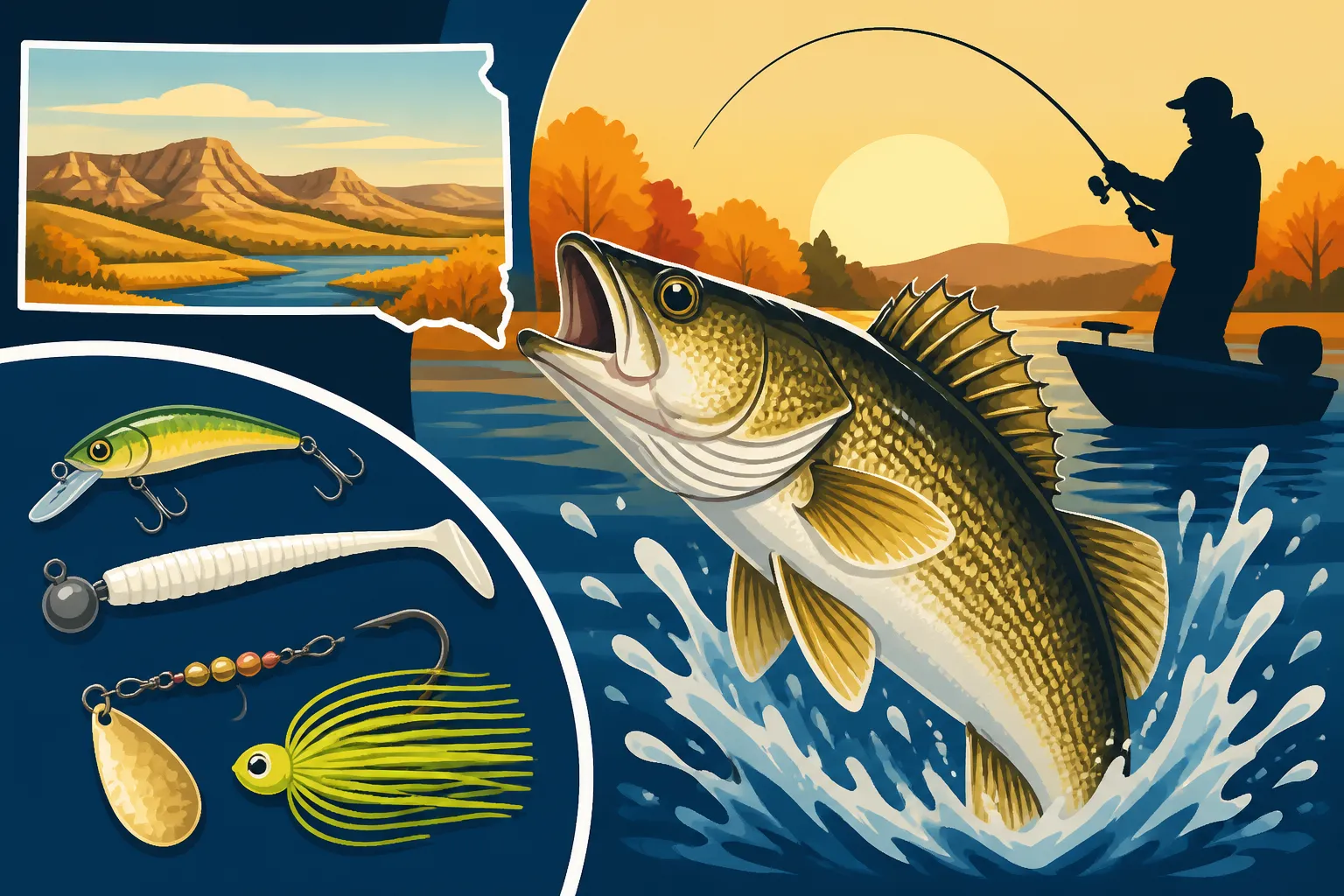
The baitfish migration is the driving force behind fall walleye feeding, so your lure selection should reflect this. Shad, perch, and smelt patterns are consistently effective in cooler waters. For crankbaits, deep-diving models in natural colors (silver, perch, firetiger, blue/chrome) are staples. Think about the profile and action of the baitfish in the specific lake you're fishing. Smaller, more subtle actions often work better in cold water than aggressive wobbles.
When it comes to jigs, a variety of weights from 1/4 oz to 3/4 oz is essential, especially when fishing various depths or current. Tip these with soft plastic paddle tails, curly tails, or traditional bucktail jigs in white, chartreuse, or dark patterns. However, live bait truly shines in fall. Large shiner minnows, fatheads, or even suckers are often irresistible to hungry walleye, especially when presented slowly on a jig or a slip bobber. Don't underestimate the power of a lively redtail chub on a simple plain hook during this time. To learn more about common lures, check out Best Lures for South Dakota Walleye.
Electronics and Navigation for Fall Fishing
Modern marine electronics are indispensable for fall walleye fishing. A good fish finder with side imaging and down imaging capabilities can literally show you entire schools of walleye relating to structure or suspended over open water. Learning How to Read a Fish Finder for Walleye is a skill that will pay dividends all year, but especially in fall when fish are often concentrated and relating tightly to subtle features. Pay attention to bait balls, as walleye will never be far from their food source.
GPS capabilities are equally vital. Use your GPS to mark waypoints on productive spots, follow precise contours, and navigate safely in unfamiliar waters, especially as shorter days mean more fishing in low light. Mapping cards that show detailed contours of lakes and reservoirs are incredibly helpful for identifying potential walleye holding areas before you even launch your boat. Many anglers invest in high-quality units from brands like Humminbird or Lowrance, often available through retailers such as Amazon, to gain a competitive edge in finding those elusive fall schools.
Seasonal Adjustments and Weather Factors
Fall isn't just one static period; it progresses, bringing different challenges and opportunities. Understanding the nuances of early, mid, and late fall, coupled with how weather impacts walleye behavior, will empower you to make smarter decisions on the water.
Early Fall (September) Strategies
As September arrives, often marking the initial stages of turnover, walleye can be a bit scattered. Waters are cooling, but still relatively warm compared to later in the season. Focus your efforts on main lake points, major humps, and the edges of remaining green weed beds, especially where they meet deeper water. Walleye might still be found at transitional depths, from 15-30 feet, following the last vestiges of summer baitfish patterns. Trolling crankbaits that mimic shad or perch is a great way to cover water and locate these fish.
This is a good time to experiment with both subtle and aggressive presentations. Some days, they might be willing to chase a fast-moving crankbait; other days, a slow-drifting live minnow on a bottom bouncer will be the ticket. Pay close attention to surface activity, as baitfish can sometimes be pushed to the surface by predatory walleye. Keep an eye on the barometer, too. Stable high pressure often means fish will be deeper and less aggressive, while falling pressure before a cold front can ignite a feeding frenzy.
Mid-Fall (October) Patterns
By October, the waters have significantly cooled, and the turnover is typically complete on most South Dakota lakes. This is often considered the peak of fall walleye fishing. Walleye will be concentrated in large schools, actively feeding and bulking up for winter. Their primary focus shifts almost entirely to dense schools of baitfish, often found in deeper main lake basins, channel swings, and large submerged points. Depths of 25-40 feet become common, though don't rule out shallower pushes during low light.
Trolling deep-diving crankbaits or large spinner rigs with substantial bait (like a large shiner or smelt) remains incredibly effective. Vertical jigging over deep structure where schools are marked on electronics is another killer technique. The bites can be subtle in the cooler water, so sharp hooks and sensitive rods are crucial. This is also the time when fishing the tailwaters below the Missouri River dams can be exceptional, as many baitfish and walleye congregate in the current. These are prime conditions for pursuing a South Dakota Walleye Fishing Guide or simply applying yourself with consistent techniques.
Late Fall (November) Cold Water Tactics
As November brings frosty mornings and water temperatures dip into the 40s (Fahrenheit) and even high 30s, walleye behavior becomes even more deliberate. They are still feeding, but their movements are slower, and they expend less energy. They often relocate to the deepest available structure near wintering holes, such as steep breaklines, deep humps, and major channel edges. Depths of 35-50+ feet are not uncommon. Finding the baitfish in these deep sanctuaries is paramount.
Jigging with large, soft plastics or blade baits, often tipped with a minnow head or a full minnow, becomes highly effective. A slow, methodical lift-drop presentation with long pauses is often the key. Trolling with extremely slow speeds and large, deep-diving crankbaits can also produce, especially if you can get them to tick the bottom. Live bait presented on a dead stick or a very slowly retrieved bottom bouncer is often irresistible. Don't be afraid to fish after dark in late fall; many of the biggest walleyes become more active under the cover of darkness. This time of year truly tests your patience and skill.
Targeting Specific South Dakota Waters in Fall
South Dakota's diverse waterways each present unique opportunities and challenges for fall walleye anglers. Knowing the general characteristics of these different environments can help you tailor your approach for maximum success.
Missouri River System Fall Walleye
The Missouri River System reservoirs (Lake Oahe, Lake Sharpe, Lake Francis Case, and Lewis and Clark Lake) are legendary for their walleye fishing, and fall is no exception. On these massive impoundments, the fall pattern is heavily influenced by baitfish (often smelt and shad) and current. Walleye will follow vast schools of baitfish, which tend to congregate in the main river channel, on large main lake points, and around significant submerged structure.
For Lake Oahe and Lake Sharpe, anglers often find success trolling deep-diving crankbaits along major contours and main lake points in 25-45 feet. Look for the last standing timber or rocky humps. Vertical jigging around current seams and bottom structure, especially below the dams, can be incredibly productive. Lake Francis Case and Lewis and Clark Lake offer similar opportunities, with an emphasis on structure in the main river channel and around prominent points. Guides like the Lake Oahe Fishing Guide, Lake Sharpe Fishing Guide, and Lake Francis Case Smallmouth Bass Fishing (which also covers walleye patterns) are essential reading for anglers targeting these specific waters. Remember that the walleye limits, like the South Dakota Walleye Daily Limit, apply here, so always be mindful of regulations.
Glacial Lakes Fall Walleye Action
Eastern South Dakota's glacial lakes, like Lake Thompson, Lake Poinsett, Lake Kampeska, and Bitter Lake, offer a different, but equally exciting, fall walleye experience. These shallower, often stained lakes have distinct fall patterns driven by dying weed beds and migrating baitfish (often perch and shiners). As the weeds die off, walleye often pull out to deeper edges of former weed lines, rock piles, or hard bottom transitions.
Trolling shallow- to medium-diving crankbaits or spinner rigs along these defined edges can be very effective. Jigging spoons or lipless crankbaits over rock reefs or gravel humps in 10-25 feet can also produce. Don't be afraid to try some aggressive snap-jigging if you're marking fish on structure. Live bait on a slip bobber over these same areas, or slowly drifted on a bottom bouncer, can often tempt lethargic fish. The action can be fast and furious once you locate a school. Our South Dakota Glacial Lakes Walleye Fishing article offers more insights into these specific bodies of water.
Black Hills Area Lakes and Reservoirs
While the Black Hills are often synonymous with trout fishing, several lakes and reservoirs in the region offer surprising fall walleye opportunities, especially Belle Fourche Reservoir and Angostura Reservoir. These waters often have clearer conditions and different forage bases compared to the Missouri River or glacial lakes. Walleye in these clear waters can be even more sensitive to light and boat pressure.
For these reservoirs, early morning and late evening bites are often best. Trolling deep-diving crankbaits along steep breaks and main lake points in 20-40 feet is a solid strategy. However, live bait presentations, such as a shiner on a bottom bouncer or a slip bobber, can be incredibly effective in clear water, allowing for a more subtle approach. Stealth and quiet boat control are paramount. Look for areas where baitfish are congregating near structure. Anglers often find success focusing on the deeper parts of the reservoir where temperatures remain more stable.
Disclaimer
Fishing regulations in South Dakota can change, so always consult the latest South Dakota Game, Fish and Parks (GFP) fishing handbook or their official website before heading out. This guide is for informational purposes only and does not replace official regulations.