How to Fish Deep Water Structure in Summer
There's nothing quite like a hot South Dakota summer day, is there? The sun is high, the lakes are sparkling, and you're out on the water, hopeful for that tell-tale tug on your line. But then it happens: nothing. Or just a few small bites. It's frustrating when the fish seem to have vanished, especially when you know they were biting like crazy just a few weeks ago. The truth is, they haven't disappeared; they've simply moved. As water temperatures rise, fish, especially species like walleye and smallmouth bass, seek refuge in deeper, cooler, and more oxygen-rich waters. This guide is all about cracking that summer code, showing you exactly how to find and effectively fish deep water structure in South Dakota, transforming those slow summer days into memorable catches.
Decoding Deep Water Structure in South Dakota Summer
Summer in South Dakota can be a tale of two fisheries: the bustling shallow bite of spring and early summer, and the often-elusive deep bite that follows. Understanding why fish move deep and where they set up shop is the first step to consistent success.
Why Fish Go Deep in Summer
When the sun beats down relentlessly, the surface waters of our vast reservoirs and glacial lakes heat up significantly. This warmth, while great for swimmers, makes fish uncomfortable. More importantly, it impacts oxygen levels. Warm water holds less dissolved oxygen than cold water. Fish are always looking for their "comfort zone," which is a combination of ideal temperature and sufficient oxygen.
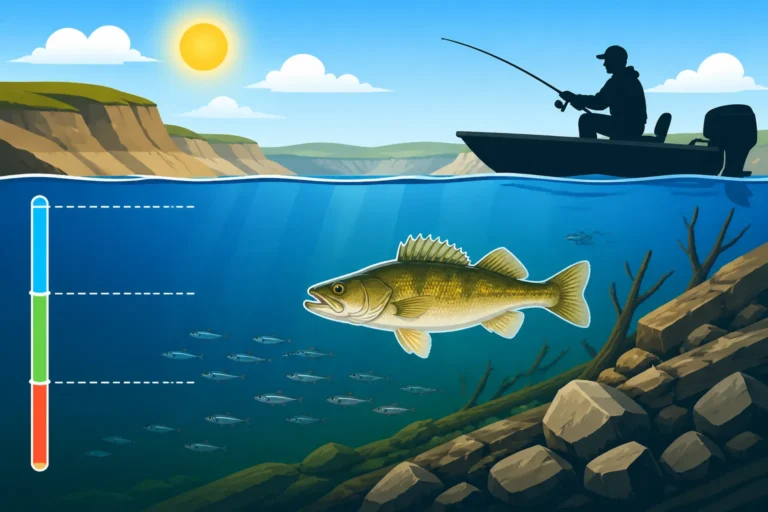
This leads to the formation of a thermocline – a distinct layer in the water column where the temperature changes rapidly. Above the thermocline, the water is warm and often lower in oxygen, especially deeper into that layer. Below it, the water is cooler and typically has adequate oxygen. Fish will often suspend right in or just above the thermocline, especially walleye, as this layer also often holds abundant baitfish. Understanding this invisible boundary is crucial. On a lake like Lake Sharpe or Lake Francis Case, you might find the thermocline setting up anywhere from 15 to 30 feet, depending on the year and the specific body of water. Fishing above or below this key depth could mean the difference between a loaded livewell and an empty one.
Identifying Productive Deep Water Structures
Fish don't just randomly roam in deep water; they relate to structure, just like they do in shallower areas. The difference is, these structures are now submerged and require different tools to find. Think of these deep-water haunts as their underwater cities, complete with highways, feeding grounds, and resting areas.
Key structures to look for include:
- Points and Humps: These are extensions of land that drop off into deeper water or underwater hills that rise from the bottom. Walleye love to ambush baitfish that travel over and around these features. On massive reservoirs like Lake Oahe, identifying main lake points that extend far into the depths can be a goldmine.
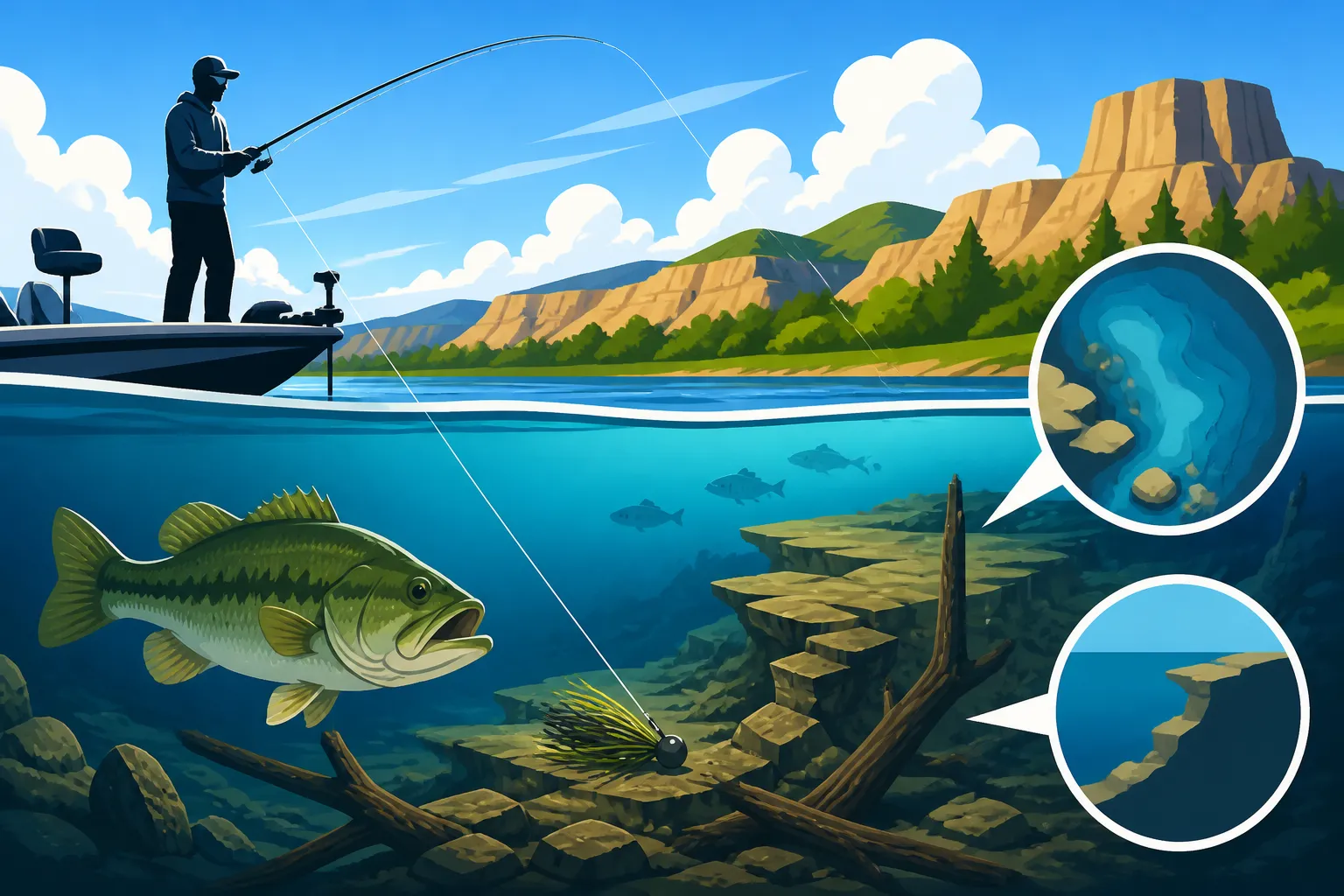
- Ledges and Breaks: A sudden change in depth, from a flat to a sharp drop-off, creates a ledge or break. Fish will often sit right on the edge, moving up onto the shallower flat to feed during low light or retreating to the deep edge during bright conditions.
- Submerged Islands and Reefs: These are like underwater mountains, offering prime habitat. They provide cover, ambush points, and often hold baitfish. Look for these on your contour maps and then use your sonar to identify specific rock piles or changes in bottom composition.
- Old Creek Beds and River Channels: In many of South Dakota's impoundments, the old river or creek channels wind through the lake bed. These depressions offer distinct travel routes and deeper water access, especially where they intersect other structures.
- Standing Timber and Brush Piles: If a lake was impounded over a forested area, there might still be standing timber, especially in deeper sections. This offers excellent cover for baitfish and predators alike.
- Roadbeds: Sometimes, old roads that were present before the impoundment can be found. These offer a consistent, harder bottom structure that fish will utilize.
Modern electronics are your absolute best friend here. Don't even think about fishing deep water structure without a quality fish finder and detailed mapping. We'll dive into that next!
Essential Gear and Electronics for Deep Water Fishing
Trying to fish deep water effectively without the right tools is like trying to find a needle in a haystack blindfolded. The technology available today isn't just a luxury; it's a necessity for targeting those elusive summer deep-water fish.
The Importance of High-Quality Sonar and GPS
Gone are the days of guessing where fish might be in 30+ feet of water. Today's fish finders are incredibly powerful, giving you a detailed look at what's below your boat. For deep water structure fishing, you'll want a unit that offers a few key features:
- 2D Sonar: This is your traditional fish finder view. Look for a unit with good target separation and a powerful transducer that can cut through the water column clearly. This will help you see individual fish, bait balls, and the contours of the bottom.
- Down Imaging: This technology provides a picture-like view directly beneath your boat. It excels at showing you the exact shape of submerged trees, rock piles, and other bottom features, helping you distinguish between a scattered rock bottom and a concentrated pile.
- Side Imaging (or SideScan): This is arguably the most critical tool for finding deep water structure quickly. Side imaging sends sonar beams out to the sides of your boat, allowing you to scan a wide swath of water with each pass. You can literally "see" humps, ledges, and even isolated rock piles off to the side, covering vast areas much faster than just using 2D sonar. Many anglers find great deals on these advanced units on platforms like Amazon, offering a variety of brands such as Humminbird and Lowrance.
- GPS and Detailed Mapping: Once you find a promising piece of structure, you absolutely must mark it as a waypoint on your GPS. This allows you to return to the exact spot repeatedly, and to approach it from different angles. Look for units with pre-loaded high-definition mapping, like those from Navionics or Lakemaster, which offer detailed contours for many South Dakota lakes. Knowing how to read a fish finder for walleye is a skill that will greatly enhance your deep water success. The combination of seeing the structure and marking it precisely is what allows you to dissect these underwater sanctuaries.
Rods, Reels, and Line for Deep Presentation
Your tackle needs to be tuned for sensitivity and power when fishing deep. The nuances of a subtle bite in 30 feet of water are very different from feeling a tap in 10 feet.
- Rods: Opt for longer rods, typically 7 to 8 feet, with a medium-light to medium power and a fast or extra-fast action. The extra length helps with line pickup, setting the hook over a lot of line, and providing better leverage. A fast tip allows you to feel those delicate bites, while the stronger backbone is crucial for driving hooks home and fighting fish from the depths. Brands like St. Croix or Fenwick offer excellent options for this type of fishing.
- Reels: Spinning reels in the 2500-3000 size range are generally preferred for their smooth drag and ease of use. If you're using heavier bottom bouncers or specific trolling setups, a baitcasting reel might be more appropriate.
- Line: This is where things get critical.
- Braided Line: For your main line, braided line (10-15 lb test) is almost a non-negotiable for deep water. Its zero stretch means incredible sensitivity, allowing you to feel every bump, tick, and subtle bite even with significant line out. It also helps with more efficient hooksets.
- Fluorocarbon Leader: Since braid is highly visible, you'll want to tie on a fluorocarbon leader (8-12 lb test). Fluorocarbon is nearly invisible underwater, extremely abrasion-resistant (great for rocky deep structure), and provides a bit of stretch that can be beneficial. A 4-6 foot leader is a good starting point. You can find high-quality braided and fluorocarbon lines readily on Amazon. When selecting your setup, consider what works best for walleye, as explored in our guide on the Best Fishing Rods and Reels for Walleye.
Lures and Bait for Deep Water Success
The tactics we use for deep water are designed to get our offerings down quickly and keep them in the strike zone for as long as possible.
- Heavy Jigs: Jigs ranging from 3/8 oz to 1 oz are perfect for vertical jigging. Tipped with a soft plastic swimbait, a paddle tail, or live bait (like a minnow or piece of crawler), they allow for precise control over deep structure.
- Drop-Shot Rigs: This rig keeps your bait suspended above a weight, offering a very natural presentation right in front of the fish's face, especially when they are suspended slightly off the bottom or hugging a particular depth.
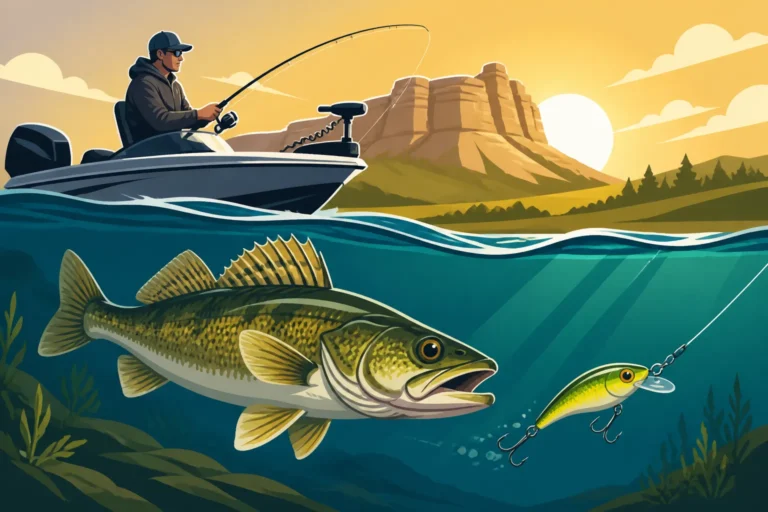
- Deep-Diving Crankbaits: When trolling, these lures are designed to reach impressive depths. Look for crankbaits that can dive to 20, 30, or even 40+ feet. Colors should match local forage, but bright, erratic colors can also trigger reaction strikes.
- Bottom Bouncers with Crawler Harnesses: A classic South Dakota technique, especially effective for walleye. Bottom bouncers allow you to keep your bait (usually a nightcrawler harness) right along the bottom, navigating rocks and other snags.
- Live Bait: Minnows (especially shiners or fatheads), nightcrawlers, and leeches remain kings for many deep-water presentations. Whether on a jig, a drop-shot, or a spinner harness, the natural scent and action are often irresistible. For a more detailed look at lure choices, check out our guide on the Best Lures for South Dakota Walleye.
Mastering Techniques for Deep Water Structure Fishing
Once you've located the fish and armed yourself with the right gear, it's time to put those skills to the test. Fishing deep water isn't just about dropping a line; it requires precision and a keen understanding of presentation.
Vertical Jigging and Drop-Shotting
These techniques are all about pinpoint accuracy and enticing bites from lethargic summer fish. When you see fish tightly grouped on a specific piece of structure or suspended at a particular depth on your sonar, vertical presentations shine.
- Vertical Jigging: This is a classic for a reason. Position your boat directly over the fish or structure you've identified. Drop your jig straight down, letting it hit the bottom, then lift it a few inches or a foot, letting it fall back. The goal is to mimic a struggling baitfish. The beauty of braided line here is you'll feel every subtle "thump" or "tick" as a fish inhales your offering. Don't be afraid to experiment with jigging cadence – sometimes a sharp snap, sometimes a slow lift and fall, sometimes just holding it still, waiting for that tell-tale tap. Jig weights will vary based on depth and current; a 3/8 oz might be fine in 20 feet with no current, but you might need 3/4 oz or even 1 oz in deeper water or strong currents, like those found on the Missouri River system below the dams. Our article on Jigging Techniques for Missouri River Walleye can provide even more specialized insights.
- Drop-Shotting: The drop-shot rig is fantastic for suspending a bait right in the strike zone, especially when fish are tight to structure but not actively chasing. Tie your hook directly to the main line (or leader) with a Palomar knot, leaving a long tag end. To this tag end, tie your weight (often a pencil-style or round sinker). This setup allows your bait to hover tantalizingly, often just above the bottom, where the fish are looking up. Give it subtle twitches, barely moving the weight, to impart action to your bait. This is a subtle game, and patience is key.
Slow Trolling and Bottom Bouncing
When fish are more scattered along a deep break or hump, covering water becomes important. Slow trolling and bottom bouncing allow you to present baits over a wider area.
- Bottom Bouncing: This is a quintessential South Dakota technique, especially for walleye. A bottom bouncer is a lead weight with a wire arm that keeps your line and bait just above snags. Pair it with a crawler harness (a series of hooks and beads often with a spinner blade) and slowly troll or drift it along contours. The key is to maintain bottom contact without getting snagged. Use just enough weight (1-3 oz are common, depending on depth and speed) to tick the bottom occasionally. Adjust your speed to keep the spinner blades rotating and the bait enticing. This technique is highly effective on the Missouri River reservoirs.
- Slow Trolling with Crankbaits: For a more active presentation, especially when searching for aggressive fish, slow trolling deep-diving crankbaits can be deadly. Using a good trolling motor with GPS capabilities, set your speed to around 1.5 to 2.5 mph. Use your depth finder to ensure your crankbaits are running at the desired depth, often just above the thermocline or slightly ticking the tops of submerged structures. Long, sensitive trolling rods will help you detect subtle bites and monitor the lure's action. For more in-depth knowledge on this, consult our guide on Trolling for Walleye on Lake Oahe.
Crankbaiting Deep Transitions
While trolling covers broad areas, "crankbaiting" or casting deep-diving crankbaits at specific deep transitions can be incredibly effective when fish are concentrated. This is often done by positioning your boat in deeper water and casting towards shallower points or ledges, then cranking the lure down as it passes over the structure into the deeper water where your boat sits.
The trick is selecting a crankbait that dives to the depth you need and has an action that appeals to the fish. Brands like Rapala or Berkley offer excellent deep divers. Pay attention to how the lure feels as it works its way down; you want to feel it "grind" into the bottom occasionally, stirring up some commotion, but not constantly snagging. Vary your retrieve speed and add pauses to trigger strikes. This technique is particularly good for active walleye and smallmouth bass holding on distinct deep edges.
South Dakota Specific Considerations for Summer Deep Water
Fishing in South Dakota offers unique challenges and opportunities. Knowing the local species, how they react to conditions, and respecting regulations are all part of being a successful and responsible angler.
Targeting Key Species in Deep Water
While many species will use deep water in summer, a few are prime targets for deep structure fishing in South Dakota.
- Walleye: These are the undisputed kings of South Dakota fishing, and they are masters of deep structure in summer. Look for them on main lake points, submerged humps, channel edges, and deep ledges on reservoirs like Lake Oahe, Lake Sharpe, Lake Francis Case, and Lewis and Clark Lake. They often relate to schools of baitfish, so if you see clouds of bait on your sonar, walleye are usually not far behind. A comprehensive South Dakota Walleye Fishing Guide will give you even more species-specific tactics.
- Smallmouth Bass: Known for their fighting spirit, smallmouth bass will also move deep in summer, especially in clearer lakes and reservoirs with rocky bottom. Target them on rocky ledges, submerged rock piles, and points where they can ambush baitfish. Lake Francis Case is a prime example of a South Dakota fishery where smallmouth bass thrive on deep, rocky structure. Check out our South Dakota Smallmouth Bass Fishing Guide for more on these feisty fighters.
- Catfish: Channel catfish and flathead catfish are often found in deeper river channels, especially where there's current and access to deep holes. While they might not be on the precise "structure" like walleye, deep sections of the Missouri River are excellent places to target them with cut bait or stink bait. Our South Dakota Catfish Fishing Guide provides more specific information.
Adapting to Weather and Water Conditions
Summer conditions are dynamic, and fish behavior can change rapidly. Being able to adapt is crucial.
- Wind Effects: Wind can be your friend or foe. A gentle breeze creates a surface chop that breaks up the sunlight, making fish more comfortable and often more active. It can also create current that pushes baitfish, concentrating predators. However, strong winds can make boat control difficult, especially when trying to stay on a small piece of deep structure. When the wind is howling, consider drifting bottom bouncers with the wind over large flats or along lengthy breaks. Our Wind and Weather Fishing Tips can help you strategize.
- Current: On the Missouri River reservoirs, current is a major factor. Fish will orient themselves to current breaks, using them as ambush points. Jigging or bottom bouncing upstream of a hump or point, letting your bait drift into the "sweet spot," can be very effective.
- Post-Cold Front: A strong cold front in summer can shut down the bite fast. Fish become lethargic and often move even deeper. Slow down your presentation dramatically, use smaller baits, and focus on vertical presentations right in their faces.
- Reading Water Temperature at Depth: Understanding the thermocline is key, but water temperature sensors on your fish finder can tell you precisely where this layer is. Fish will often hold in a very specific temperature range within or just above the thermocline. Pay attention to this detail, as discussed further in Reading Water Temperature for Walleye.
Importance of Conservation and Responsible Angling
Fishing deep water comes with an added responsibility, particularly when it comes to fish health.
- Managing Barotrauma: When fish are brought up rapidly from deep water (especially from depths greater than 25-30 feet), they can suffer from barotrauma. The rapid change in pressure causes their swim bladder to expand, often pushing out their stomach or eyes. If you plan to release fish caught from deep water, have a descending device or a venting tool on hand. A descending device allows you to re-pressurize the fish by sending it back down to depth, where it can release its air and swim away. This is crucial for ensuring the survival of released fish.
- Proper Release Techniques: Handle fish as little as possible. Use wet hands to avoid removing their protective slime coat. Support their body weight horizontally, and return them to the water gently.
- Know the Regulations: Always be aware of the current South Dakota Fishing Regulations Explained, including specific length limits and daily possession limits. For example, understanding South Dakota Walleye Limits is crucial for compliance and conservation, ensuring future generations can enjoy the same fantastic fishing opportunities.
Fishing deep water structure in South Dakota during the summer can be incredibly rewarding. It demands patience, the right tools, and a willingness to learn, but once you unlock its secrets, those frustrating slow days will become a distant memory. Tight lines, and happy fishing!
Deep Water Fishing Techniques Comparison
| Technique | Primary Target Species | Ideal Depth Range (SD Summer) | Best Lure/Bait Options | Pros | Cons |
|---|---|---|---|---|---|
| Vertical Jigging | Walleye, Smallmouth Bass | 15-40 feet | Jigs (3/8-1 oz) with plastic or live bait (minnows, crawlers) | Pinpoint accuracy, excellent for precise structure, high sensitivity | Covers less water, requires good boat control |
| Drop-Shotting | Walleye, Smallmouth Bass | 15-35 feet | Soft plastics, live bait (minnows, leeches) | Natural presentation, bait suspended at fish eye level, good for subtle bites | Slower presentation, can be frustrating in heavy current |
| Bottom Bouncing | Walleye, Catfish | 10-30 feet | Crawler harnesses, plastic worms | Covers water efficiently, maintains bottom contact, very effective for walleye | Can snag in heavy cover, requires attention to weight |
| Deep Trolling | Walleye, Chinook Salmon | 15-40+ feet | Deep-diving crankbaits, spoons (for salmon) | Covers large areas, triggers reaction strikes, good for searching | Less precise, requires specific gear (planer boards, downriggers for salmon) |
| Casting Deep Crankbaits | Walleye, Smallmouth Bass | 10-25 feet (casting towards) | Deep-diving crankbaits | Active presentation, good for aggressive fish, can trigger bites on edges | Can be tiring, not suitable for all types of deep structure |
Disclaimer
Fishing regulations, license requirements, and fish consumption advisories can change. Always consult the latest South Dakota Game, Fish and Parks (GFP) official regulations before heading out on the water. This information is for general guidance and educational purposes only.