How to Troll Spoons for Salmon
Catching Chinook salmon in the vast waters of South Dakota can feel like searching for a needle in a haystack, especially when you're trying to figure out the best techniques to entice these powerful fish. If you've been dreaming of the thrill of a screaming reel and the fight of a beautiful salmon, but aren't quite sure how to make spoons work for you, you're in the right place. This guide will walk you through the precise art of trolling spoons for salmon in South Dakota, covering everything from gear to technique, so you can increase your chances of landing that trophy fish.
Understanding South Dakota's Chinook Salmon
Before you even think about dropping a line, it's vital to understand the magnificent fish you're targeting: the Chinook salmon. In South Dakota, these impressive anadromous fish, often called "Kings," are primarily found in the immense expanse of Lake Oahe, a reservoir on the Missouri River system. They thrive in the deeper, colder waters here, thanks to successful stocking programs by the South Dakota Game, Fish and Parks. Knowing their habitat and habits is the first step to success.
Where to Find Salmon in South Dakota
Lake Oahe is the undisputed champion for Chinook salmon fishing in South Dakota. This massive body of water, stretching over 200 miles, offers vast expanses of deep, cool water that salmon adore. Key areas for salmon anglers often include the main lake basin, particularly near the deeper channels and submerged structure. Places like Whitlock Bay, near Gettysburg, and the areas around the Oahe Dam, are popular spots where salmon tend to congregate, especially during the fall spawning run. Understanding the unique characteristics of this fishery, including where and when salmon are likely to be, is critical. For more in-depth knowledge on their haunts, you might want to check out our Lake Oahe Chinook Salmon Fishing at Whitlock Bay guide.
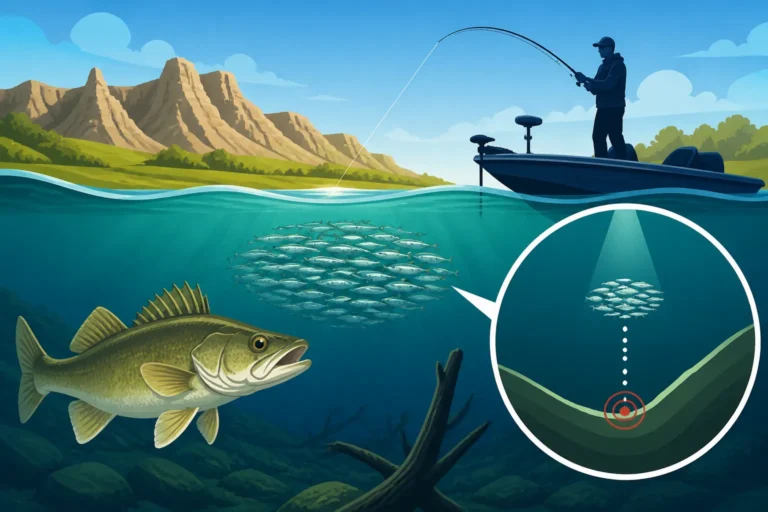
Chinook salmon are pelagic, meaning they often suspend in the water column, frequently chasing schools of baitfish like smelt. Your fish finder will be your best friend in locating these baitfish schools and the salmon that are undoubtedly lurking nearby. They don't typically stick to the bottom or structure like walleye often do, so you'll be looking for arches in open water, often over deep troughs or along subtle breaks.
Salmon Behavior and Feeding Habits
Chinook salmon are predatory powerhouses, constantly on the hunt for protein-rich baitfish. Their diet in Lake Oahe largely consists of rainbow smelt, which provides the fat and energy they need to grow to impressive sizes. This reliance on smelt heavily influences their location and feeding patterns. They'll often follow these baitfish schools throughout the water column, making them nomadic and a challenge to pinpoint without good electronics.
Their behavior changes throughout the year. In early summer, they might be found deeper as surface waters warm, but by late summer and especially into fall, they start to stage for their spawning run, moving towards specific areas. During this time, they might become more aggressive, striking at anything that resembles a distressed baitfish. Understanding their seasonal movements and how it impacts their feeding is crucial for anglers. For a comprehensive overview of how their feeding habits dictate fishing strategies, our article on How to Fish for Chinook Salmon in South Dakota offers invaluable insights.
Key Seasons for Chinook Salmon Fishing
While you can technically target salmon throughout the open water season, certain times of the year offer better opportunities for success.
- Summer (June – August): Early summer can be fantastic, as salmon are actively feeding and often spread out across the deeper parts of the lake. They'll be chasing baitfish at various depths, requiring a flexible approach to your trolling spread. As summer progresses and water temperatures rise, they tend to move deeper, seeking cooler thermoclines.
- Fall (September – October): This is often considered prime time, particularly for larger fish. Salmon begin their spawning run, congregating in specific areas, especially around Whitlock Bay, as they prepare to move into the spawning station. Their aggressive nature during this period makes them strong candidates for spoons, though regulations might change closer to the actual spawning dates. Keep an eye on Chinook Salmon Spawning Run Dates on Lake Oahe for specific timing.
| Season | Typical Depth Range (Approx.) | Salmon Behavior | Ideal Spoon Characteristics |
|---|---|---|---|
| Early Summer | 30-70 feet | Actively feeding, widely dispersed, following smelt schools. | Bright, reflective, medium-sized, erratic action. |
| Mid-Summer | 50-90+ feet | Deeper due to warm surface temps, less aggressive, seeking cooler water. | Glow or UV spoons for low light, subtle action, larger profiles. |
| Late Summer | 40-80 feet | Staging for spawn, becoming more aggressive. | Larger, more vibrant spoons, mimicking stressed baitfish. |
| Fall (Spawn) | 20-60 feet | Highly aggressive, congregating, actively striking. | Aggressive flash, bright colors, larger sizes. |
Note: These depths are approximate and depend heavily on baitfish location, weather, and specific lake conditions. Always use your fish finder!
Essential Gear for Successful Spoon Trolling
Trolling for Chinook salmon is not your average panfish trip; it requires specialized gear that can handle the power of these fish and present your lures effectively at depth. Don't skimp on quality here; a lost trophy fish because of cheap equipment is a heartbreak nobody wants.
Rods, Reels, and Line Selection
The right rod and reel combination is paramount for handling heavy trolling setups and battling strong salmon.
- Rods: Look for trolling rods that are 8 to 10.5 feet long with a moderate to fast action. They need enough backbone to handle the drag of downriggers or heavy divers, yet enough tip sensitivity to detect subtle bites from a fish hitting a spoon hundreds of feet back. Fiberglass or composite rods are popular for their durability and shock absorption. Brands like Daiwa, Shimano, and Okuma offer excellent salmon trolling rods that you can often find readily available on platforms like Amazon.
- Reels: Levelwind baitcasting reels are the standard for salmon trolling. They should have a high line capacity (at least 200-300 yards of 20-30 lb test) and a smooth, reliable drag system. A line counter feature is incredibly useful for replicating successful depths and patterns. The drag is your best friend when a King salmon decides to make a blistering run, so ensure it's well-maintained and buttery smooth.
- Line: Monofilament line in 20-30 lb test is a common choice for its stretch, which helps absorb the shock of a strike and allows for a forgiving fight. However, many experienced anglers are moving towards braided line (30-50 lb test) for its no-stretch sensitivity, allowing them to detect even the lightest bites and get a better feel for the lure's action. If you use braid, always add a fluorocarbon or monofilament leader (15-25 lb test, 10-20 feet long) to provide some stretch and make the setup less visible to wary salmon.
The Role of Downriggers and Planer Boards
To get spoons down to the depths where salmon reside, you'll need specialized equipment.
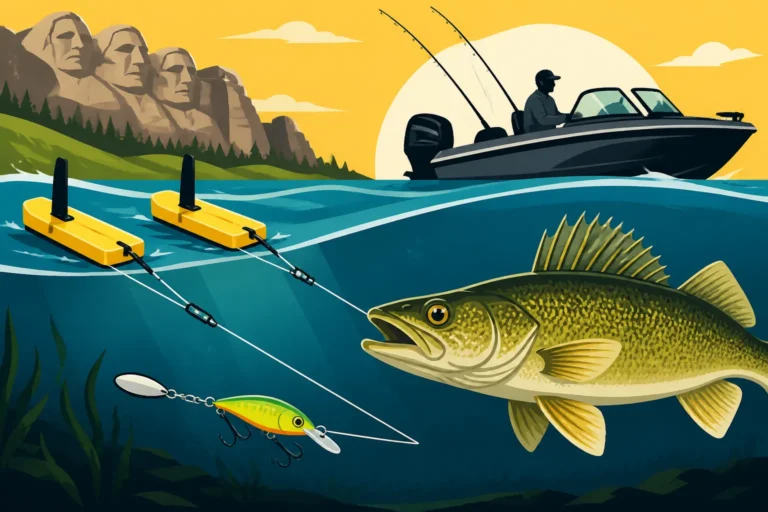
- Downriggers: These are absolutely essential for precise depth control when targeting suspended salmon. A downrigger uses a heavy ball (typically 8-12 lbs) to take your line, attached by a release clip, down to a specific depth. When a fish strikes, the line pops free from the clip, allowing you to fight the fish directly on your rod. Most serious salmon anglers run multiple downriggers off their boat to create a wide trolling spread at different depths. For advice on these crucial tools, check out our guide on Best Downriggers for Salmon Trolling.
- Planer Boards: While downriggers get your lures down, planer boards get them out to the side of the boat. This widens your trolling spread, allowing you to cover more water and avoid spooking fish directly under the boat. They are particularly useful for running shallow-diving spoons or surface presentations, though less critical for the deep-water spoon trolling salmon often require. Still, they can be excellent for covering the upper water column while your downriggers target the deep.
Choosing the Right Trolling Spoons
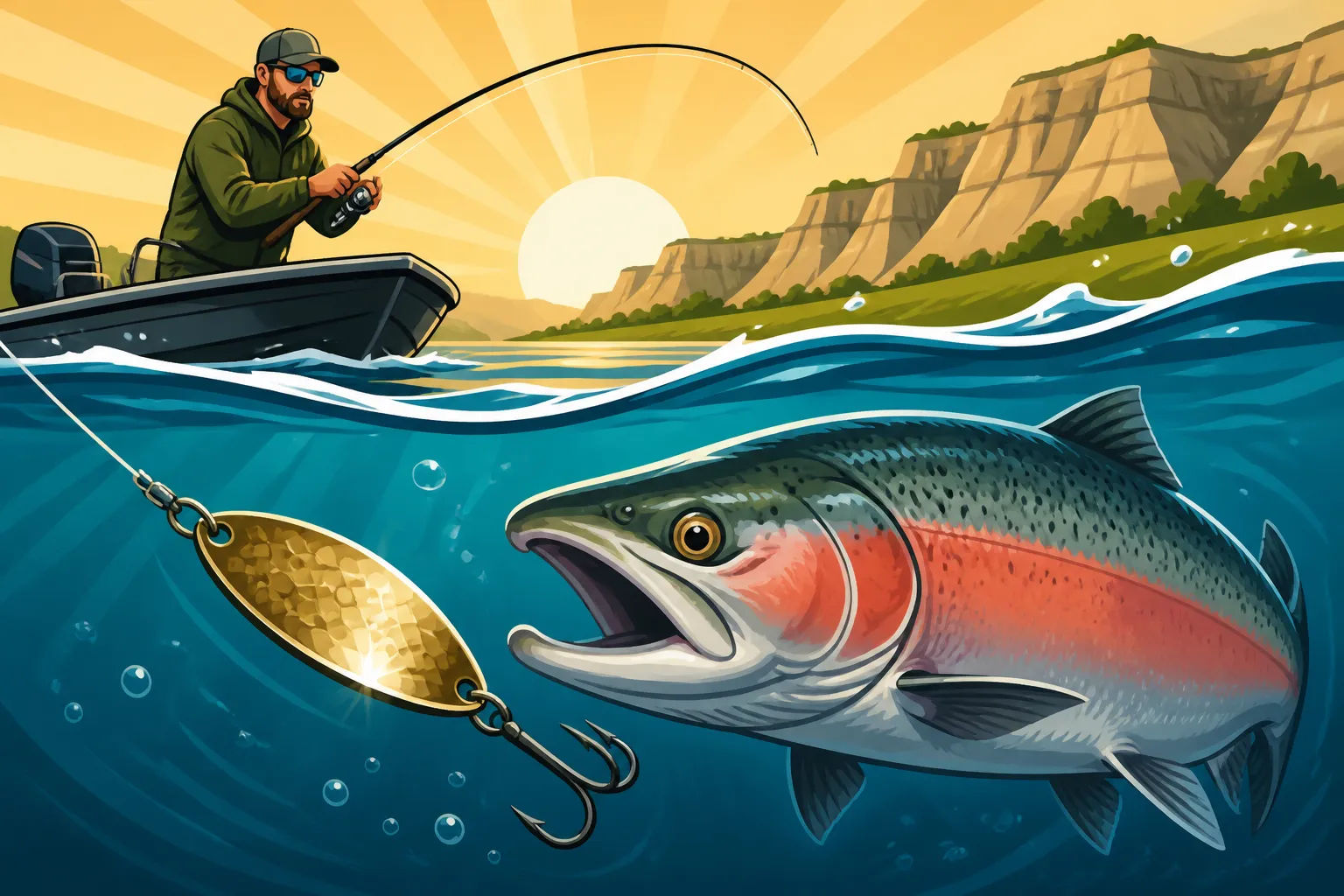
This is where the artistry comes in! Trolling spoons are designed to mimic baitfish, and their flash, wobble, and color can be the difference between a slow day and a hot bite.
- Size: Salmon spoons typically range from 3 to 6 inches. Smaller spoons often imitate juvenile smelt, while larger ones can draw the attention of bigger, more aggressive salmon. It's wise to carry a variety of sizes.
- Color Patterns: This is highly dependent on water clarity, light conditions, and the salmon's mood.
- Bright, Metallic Spoons: Chrome, silver, gold, and brass are fantastic for sunny days and clear water, mimicking the flash of fleeing baitfish. Think classic silver/blue or silver/green.
- Vibrant, UV Spoons: Chartreuse, orange, pink, and bright green are excellent for overcast days, stained water, or early morning/late evening, as UV reflectivity penetrates deeper. Many spoons now incorporate UV finishes to enhance visibility.
- Glow-in-the-Dark Spoons: Crucial for low-light conditions, deep water, or very cloudy days. Charge them with a flashlight before deploying.
- Natural Patterns: Spoons with realistic baitfish patterns (like a smelt or shad imitation) can be very effective, especially when salmon are being picky.
- Action: Different spoons have different actions. Some have a wide, erratic wobble (like a Dodger or a large spoon), while others have a tighter, more subtle flutter. Experimentation is key, as salmon can show a preference on any given day. Popular South Dakota salmon spoons include models from Luhr-Jensen and Dreamweaver, which are often found on Amazon. Don't be afraid to try various styles until you find what the fish are hitting. For deeper insights into selecting the most effective lures, our article on Best Lures for Lake Oahe Salmon in October can provide specific recommendations.
Mastering the Art of Spoon Trolling for Salmon
Once you have your gear, the real fun begins: learning how to effectively present those spoons to hungry Chinook. Trolling isn't just about dragging a lure; it's a dynamic dance between boat speed, lure depth, and presentation.
Dialing in Trolling Speed and Depth
These two factors are paramount to successful spoon trolling for salmon. The right combination will make your spoons dance enticingly, while the wrong one will leave them lifeless.
- Trolling Speed: Salmon typically prefer faster trolling speeds than many other freshwater species. A common range for spoons is 2.0 to 3.5 mph, but this can vary. Faster speeds often impart more action to the spoon, making it flash and wobble more aggressively. However, too fast, and the spoon might blow out or simply appear unnatural. Too slow, and it might not have enough action to attract attention. The key is to watch your rod tips and fish finder. Your rod tip should have a consistent, rhythmic bounce, indicating the spoon is working correctly. Use a GPS-enabled speed reading for accuracy, not just your boat's speedometer. Our guide on Best Trolling Speed for Salmon delves deeper into this crucial aspect.
- Depth Control: This is where downriggers shine. Once you've marked salmon or baitfish on your sonar, you can precisely set your downrigger balls to that depth. Remember that salmon might be slightly above or below the main bait ball, so staggering your depths (e.g., one spoon at 60 ft, another at 65 ft, another at 70 ft) can help you find their preferred feeding zone. The depth a spoon runs behind the downrigger ball (lead length) also affects its action and depth. A longer lead might run slightly higher than the ball, while a shorter one will hug closer.
When you're first starting, experiment with different speeds and depths. Make S-turns with your boat; the spoons on the inside of the turn will slow down and drop, while those on the outside will speed up and rise. Often, fish will strike during these speed changes.
Setting Up Your Spread and Presentation
A "spread" refers to the arrangement of your lines and lures behind the boat. A well-organized spread maximizes your coverage and minimizes tangles.
- Staggering Depths: As mentioned, use multiple downriggers to cover various depths in the water column. If you're running two downriggers, one at 50 feet and another at 65 feet is a good starting point. If you have a third, perhaps try 40 feet.
- Staggering Distances: Vary the distance your spoons are deployed behind the downrigger ball. One might be 20 feet back, another 40 feet, and another 60 feet. This creates a wider "profile" for your presentation and helps prevent lines from tangling.
- Flashers/Dodgers: Sometimes, salmon need a little extra attraction. Incorporating a flasher or dodger ahead of your spoon can create a powerful visual and vibrational attractor. Flashers have a rotating action, while dodgers have a wide, side-to-side wobble. Both draw fish in, and the spoon (often called a "trailer") then gets the strike. Attach your spoon with a short leader (18-36 inches) behind the flasher or dodger. This setup is particularly effective when salmon are sluggish or water clarity is low.
Remember to keep your lines clean and your spread organized. Tangles are frustrating and cost you valuable fishing time. Practice makes perfect when it comes to deploying and retrieving multiple lines simultaneously.
Identifying Bites and Fighting Salmon
A Chinook salmon bite on a trolled spoon is often unmistakable, but sometimes it can be subtle, especially when using downriggers.
- The Strike: When a salmon hits a spoon attached to a downrigger, the line "pops" out of the release clip, causing your rod tip to snap upright or violently bend over. It's an exhilarating moment that gets the adrenaline pumping! Sometimes, a smaller fish might simply put a slight bend in the rod without the line releasing; in these cases, give it a quick jerk to see if the fish is still there or if the line releases.
- Fighting the Fish: Once the line releases, immediately grab the rod and start reeling. Salmon are powerful fighters, known for their strong runs and head shakes. Keep the rod tip up to maintain tension and let the drag do its job. Don't try to muscle the fish in; let it run when it wants to, and gain line when you can. Pump the rod up and reel down, steadily bringing the fish closer.
- Netting: When the salmon is boat-side, have a large, sturdy landing net ready. Do not try to scoop the fish until it's tired and on its side. A green salmon can easily throw the hook or break the line with a last-minute surge. Once it's in the net, hoist it aboard swiftly and carefully unhook it. For guidelines on possession limits, refer to the South Dakota Chinook Salmon Regulations to ensure you're fishing legally.
Advanced Tips and Troubleshooting for Salmon Anglers
Even with the best gear and basic techniques, salmon fishing can be challenging. These advanced tips and troubleshooting strategies can help you adapt to changing conditions and maximize your success.
Reading Water Conditions and Sonar
Your fish finder is not just a depth sounder; it's a window into the underwater world. Learning to interpret what it tells you is crucial.
- Understanding Thermoclines: Salmon prefer specific water temperatures. In summer, they'll often be found in or just above the thermocline – the layer where water temperature changes rapidly. Your sonar might show a distinct line or hazy layer at this depth. Target your spoons around this zone.
- Identifying Baitfish Schools: Look for dense clouds or "blobs" on your sonar screen. These are baitfish schools. Salmon will be nearby, often just below or on the edges of these schools, ambushing their prey. If you're marking bait but no fish, try different depths around the bait, or even above it.
- Interpreting Arches: Large, distinct arches are likely individual salmon. Multiple arches in close proximity often indicate a pod of fish. Note the depth at which you see these arches and adjust your downriggers accordingly. Don't just troll aimlessly; let your electronics guide your decisions.
Pay attention to surface water temperature as well. While salmon prefer cooler deep water, the surface temp can give you clues about how deep they might be retreating. Wind and current also play a role, influencing baitfish movement and potentially concentrating salmon in certain areas.
Adapting to Changing Salmon Patterns
Salmon can be finicky. What worked yesterday might not work today. Be prepared to adapt.
- Color Changes: If the bite slows, don't hesitate to change spoon colors. Go from bright to subtle, natural to glow, or vice versa. Sometimes, a subtle change can trigger a strike. It's helpful to have a variety of spoons, perhaps organized in a tackle box (many great options are available on Amazon) for quick changes.
- Speed Adjustments: Experiment with your trolling speed. A slight increase or decrease might be enough to give your spoon a different action that salmon find more appealing.
- Depth Adjustments: If you're marking fish but not getting bites, try adjusting your depths by 5-10 feet in either direction. Sometimes, salmon are just a little higher or lower than where your lure is running. Don't be afraid to pull up a downrigger and reset it.
- Lead Length: Change the distance your spoon runs behind the downrigger ball. A longer lead might give the spoon a more natural, unencumbered action, while a shorter lead keeps it closer to the main attraction.
Keep a mental log, or even a written one, of what worked (and didn't work) on particular days, including water temperature, depth, speed, and spoon choice. This historical data will prove invaluable over time.
Common Trolling Mistakes and How to Avoid Them
Even seasoned anglers make mistakes. Being aware of these common pitfalls can save you frustration.
- Ignoring Electronics: Not using your fish finder to locate bait and fish is like fishing blindfolded. Trust your sonar and let it dictate your plan.
- Sticking to One Setup: Being unwilling to change depths, colors, or speeds when the bite is slow. Be flexible and experimental!
- Too Much Clutter: An overly complex trolling spread with too many lines or lures too close together can lead to tangles and inefficiency. Keep it clean and manageable.
- Dull Hooks: Salmon have tough mouths. Check your hook points frequently and sharpen them or replace hooks as needed. A sharp hook is crucial for a solid hookset.
- Improper Drag Setting: A drag that's too tight will break your line on a strong run; one that's too loose will make it impossible to gain line and tire the fish. Set your drag so that line can be pulled off with moderate effort, and then adjust during the fight.
- Neglecting Boat Maintenance: Ensure your boat, particularly your engine and downriggers, are in top working order. Nothing ruins a salmon trip faster than mechanical issues far from shore.
- Not Checking Regulations: Laws regarding South Dakota Fish Limits and Size Restrictions or specific seasonal rules can change. Always consult the most current South Dakota GFP Fishing Handbook before you head out. Fishing without a proper South Dakota Fishing License Guide or violating regulations can lead to serious penalties.
By understanding salmon behavior, preparing with the right gear, mastering your trolling techniques, and adapting to conditions, you'll be well on your way to experiencing the thrill of South Dakota Chinook salmon fishing. It's a challenging but incredibly rewarding pursuit that will create lasting memories on the water.
Disclaimer
This article is for general informational purposes only and does not constitute professional advice. Laws, prices and regulations vary by location and change over time. Consult a qualified professional for guidance on your specific situation.