How Often South Dakota Surveys Its Fish Populations
It’s a common frustration for us anglers: one year the fishing is incredible, the next it feels like the fish have packed up and moved to another state! You stand there, rod in hand, wondering what’s really going on beneath the surface. Is the population down? Are they just in a different spot? This guide aims to demystify the crucial work done by the South Dakota Game, Fish and Parks (GFP) to survey our fish populations, helping you understand how they keep tabs on our beloved finned friends and what it means for your next outing.
The Dynamic Nature of Fish Surveys in South Dakota
South Dakota is blessed with an incredible variety of waters, from the vast stretches of the Missouri River reservoirs to the countless glacial lakes in the east and the pristine trout streams of the Black Hills. Each of these unique ecosystems supports different fish species, and naturally, each requires a tailored approach when it comes to understanding what's going on with its aquatic residents. It's not a one-size-fits-all situation, and the GFP biologists are constantly adapting their strategies.
The goal isn't just to count fish; it's about understanding the entire health of a fishery. Are the fish reproducing well? Are they growing to a healthy size? Is there enough food? Are there any diseases or invasive species threatening the balance? These are complex questions that require ongoing investigation, and the answers directly influence the fishing opportunities we all enjoy. Without this diligent work, we'd be truly fishing in the dark, with no idea if our favorite spots are thriving or struggling.
Why Regular Surveys are Absolutely Essential
Think of fish surveys as regular health check-ups for our lakes and rivers. Just like you visit the doctor for a physical, these water bodies need consistent monitoring to ensure they're in good shape. Without these periodic assessments, biologists wouldn't be able to detect issues like declining populations, poor growth rates, or the presence of invasive species until they became critical problems. Imagine if you didn't know your favorite walleye lake was experiencing a massive die-off until it was too late to intervene. That's the scenario surveys help us avoid.
These surveys provide the foundational data that underpins almost every management decision the GFP makes. This includes critical choices about South Dakota Fish Limits and Size Restrictions, determining appropriate stocking levels, and even deciding whether to implement special regulations for certain bodies of water. It’s an ongoing process of observation, data collection, and analysis that ensures sustainable fishing for future generations. For instance, data showing an abundance of small walleye might lead to different regulations than data showing a lack of larger, older fish.
Factors Influencing Survey Frequency and Type
The frequency and specific methods of fish surveys in South Dakota are not arbitrary; they are carefully determined by a multitude of factors. The sheer size and biological complexity of a water body play a huge role. For example, a massive system like Lake Oahe, a primary component of the South Dakota Missouri River Fishing Guide, requires more extensive and frequent sampling than a small, isolated pond. The target species also dictates the approach. Walleye surveys might use different netting techniques than trout surveys in a fast-flowing Black Hills stream.
Furthermore, management objectives are a key driver. Is the GFP trying to maintain a trophy fishery? Is it a put-and-take trout stream? Or is it a lake primarily managed for panfish? Each objective influences how often and how intensely a water body is sampled. If there’s a suspected problem, such as a sudden decline in catches or an outbreak of disease, survey efforts will naturally increase. Also, the availability of funding and personnel can influence the scope and regularity of these vital biological investigations.
Common Methods South Dakota GFP Uses for Fish Population Surveys
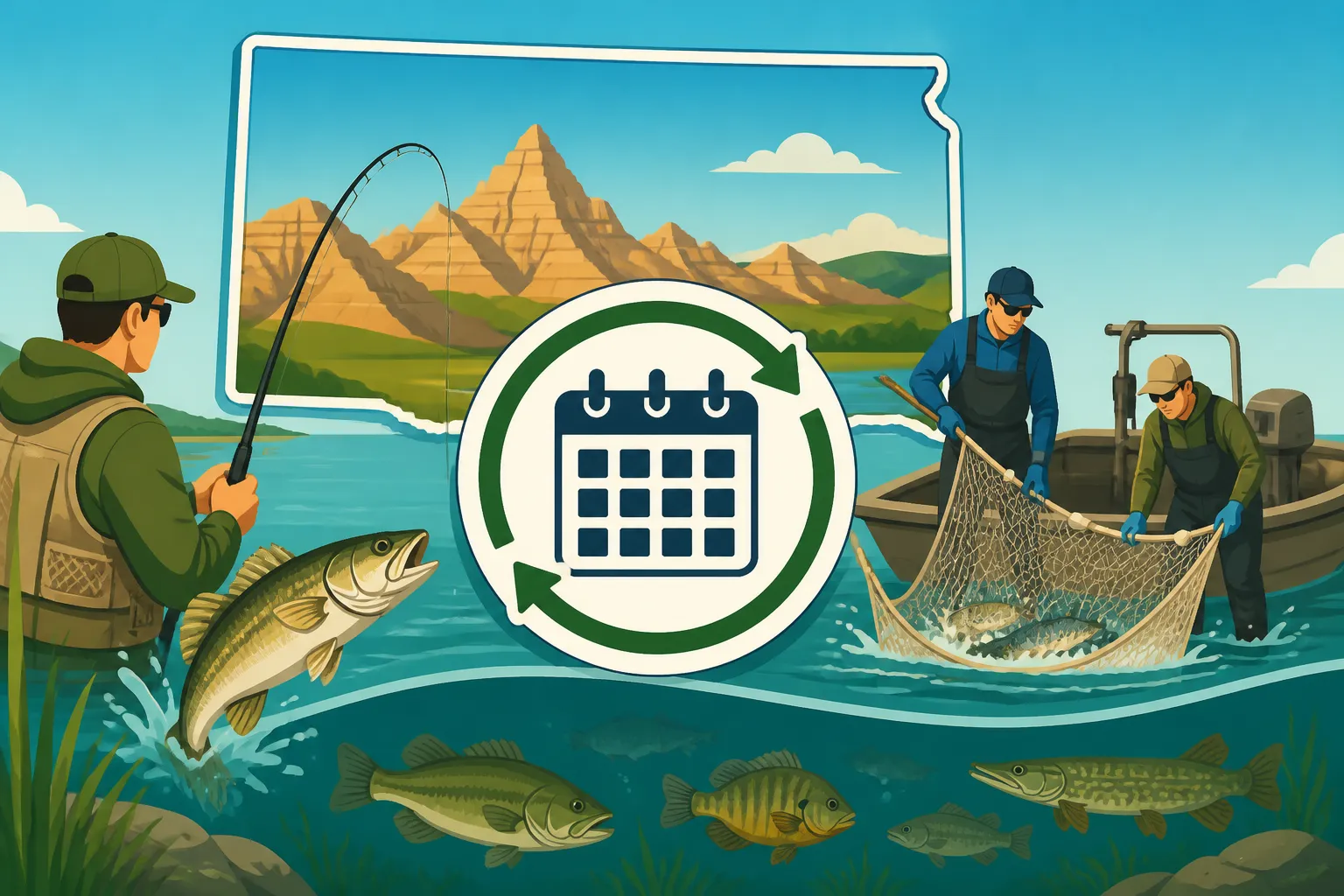
When you see a GFP boat out on the water, or a crew working along a stream bank, chances are they're conducting a fish survey. They employ a variety of scientific techniques, each designed to collect specific types of data about the fish present. These aren't just random acts; they are carefully planned operations utilizing specialized equipment to ensure accurate and reliable results that can be compared over time. It’s a bit like a detective gathering clues to understand the whole story of a fishery.
These methods are often used in combination to get the most complete picture possible. For instance, while electrofishing might give excellent data on fish density in shallow areas, gill nets might be better for sampling deeper, open water. The goal is always to be as thorough and minimally impactful to the fish as possible, ensuring the long-term health of the populations they're studying.
Electrofishing for Comprehensive Data
One of the most effective and widely used methods for surveying fish populations, especially in shallower waters, is electrofishing. It might sound intense, but it's a highly controlled and safe technique for both the fish and the survey crew. Specialized boats or backpack units are equipped to generate an electric current in the water, temporarily stunning the fish. This causes them to float to the surface, where they can be quickly netted, identified, measured, weighed, and sometimes even tagged before being safely released back into the water.
Electrofishing is fantastic because it provides a snapshot of the fish community in a particular area, including species that might be harder to catch with traditional netting. It’s particularly useful for assessing bass, panfish, and even some walleye in areas like weed beds or along shorelines. Biologists can determine fish health, growth rates, and reproductive success from the collected specimens. This method is often employed for South Dakota Smallmouth Bass Fishing Guide surveys, as bass tend to inhabit areas accessible by electrofishing boats.
Netting Surveys: Gill Nets, Trap Nets, and Seines
Beyond electrofishing, various netting techniques are indispensable for collecting data from different aquatic environments and targeting specific fish species. Gill nets are long, thin nets set to passively catch fish by their gills as they swim through. These are often deployed for species like walleye and northern pike in deeper, open water on the larger Missouri River reservoirs or glacial lakes. The size of the mesh can be varied to target different sizes of fish, providing insights into the size distribution of a population.
Trap nets, on the other hand, are designed with a series of funnels that guide fish into a large holding pen, making them excellent for catching panfish like crappie and perch, as well as some larger species in shallower, vegetated areas. Seines are large, weighted nets that are pulled through shallow water to encircle and capture fish, often used in smaller ponds or for juvenile fish surveys. Each netting type offers unique data, helping biologists understand things like Crappie and Panfish Possession Limits and the relative abundance of different species. These methods allow biologists to assess fish condition and age, crucial for determining Average Age of a 20-Inch Walleye for example.
Creel Surveys and Angler Reports: The Human Element
While electrofishing and netting provide direct biological data, the human element, specifically anglers, plays a crucial role too! Creel surveys involve GFP staff interviewing anglers at boat ramps and popular fishing spots. These surveys gather information on angler effort (how long they fished), catch rates (how many fish they caught per hour), species caught, and the fate of those fish (kept or released). This information is invaluable because it reflects the actual fishing experience and complements the biological data. It provides real-world feedback on what anglers are seeing on the water.
Think about it: if biologists find a healthy population of walleye in their nets, but anglers report consistently poor catch rates, that tells a different story. These angler reports, sometimes submitted informally or through programs like the South Dakota Trophy Fish Award Program, provide context and can sometimes even be the first indicator of a change in a fishery. It helps the GFP understand fishing pressure and success rates, which are vital for setting effective South Dakota Fishing Regulations Explained.
General Frequency of Fish Surveys Across Different Water Bodies
The question of "how often" is a bit like asking "how often should you check your car?" It depends on the car, how much you drive it, and if you hear any strange noises. Similarly, for South Dakota's diverse waters, there isn't one single answer. However, the GFP operates on a systematic schedule, adjusted as needed for specific situations or pressing management concerns. It's a balance of routine monitoring and responsive investigation.
Understanding this general frequency can help you appreciate the depth of work that goes into managing our fisheries. It’s not just an annual check-in everywhere; some waters get more attention due to their importance, species composition, or known challenges.
Major Missouri River Reservoirs
The Missouri River reservoirs—Lake Oahe, Lake Sharpe, Lake Francis Case, and Lewis and Clark Lake—are the crown jewels of South Dakota fishing, particularly for walleye. Given their immense size, economic importance, and dynamic ecosystems, these reservoirs are typically surveyed with high frequency. Standardized netting surveys (like gill netting for walleye) are often conducted annually or biennially (every two years) at key locations across these massive water bodies.
This consistent monitoring allows biologists to track long-term trends in populations like walleye, northern pike, and Chinook salmon. For example, Lake Oahe Chinook Salmon Fishing at Whitlock Bay will be closely monitored, especially during the spawning run, to assess the health of that unique fishery. Electrofishing may also be conducted in specific bays or shallower areas to assess smallmouth bass and panfish populations. These large systems demand continuous attention to manage their complex fish communities effectively.
Glacial Lakes and Smaller Impoundments
The eastern half of South Dakota is dotted with hundreds of glacial lakes and smaller man-made impoundments. While not as vast as the Missouri River reservoirs, many of these lakes are highly productive and popular fishing destinations for walleye, perch, and crappie. The survey frequency for these waters can vary a bit more but generally falls into a rotation.
Many of the more popular or intensively managed glacial lakes will be surveyed every two to three years. Smaller, less-pressured lakes might be on a longer rotation, perhaps every three to five years, unless there's a specific management concern or a new stocking initiative underway. South Dakota Glacial Lakes Walleye Fishing is a significant draw, and these lakes receive consistent attention. The goal is to collect enough data over time to understand population trends, assess stocking success (see South Dakota Fish Stocking Report Basics), and adapt regulations accordingly without over-sampling or stretching resources too thin.
Black Hills Streams and Trout Waters
The Black Hills streams offer a completely different type of fishery, dominated by trout species like rainbow, brown, and brook trout. The survey methods here are tailored to these smaller, flowing waters. Electrofishing, often using backpack units, is the primary method, allowing biologists to walk sections of stream and count, measure, and release trout. The survey frequency for these prized waters, detailed in the Black Hills Trout Stream Fishing Guide, is quite regular.
Many of the popular trout streams are surveyed annually or every other year, especially those that receive regular stocking or have special regulations, such as Pactola Dam Catch-and-Release Water Rules. This frequent monitoring is crucial for evaluating trout survival, growth, and the effectiveness of habitat management efforts. Biologists also need to assess natural reproduction in wild trout streams to ensure the populations are self-sustaining. This is also where you might learn How Often Black Hills Streams Are Stocked With Trout.
What Happens with All That Data? How it Impacts Your Fishing
So, what's the point of all this hard work—the shocking, the netting, the angler interviews? It’s not just for science's sake; it’s directly for the benefit of you, the angler. The data collected from these extensive surveys is meticulously analyzed and forms the backbone of South Dakota's fisheries management strategy. It’s how the GFP makes informed decisions that ultimately enhance your fishing experience and ensure healthy fish populations for years to come.
Without this scientific foundation, management would be guesswork, leading to potentially depleted fish stocks or missed opportunities to improve fishing. Every regulation change, every stocking decision, and every advisory issued stems from the insights gained through this ongoing research. It’s a powerful cycle of data informing action, which then informs future data collection.
Informing Fishing Regulations and Stocking Programs
Perhaps the most direct impact of fish population surveys on anglers is how the data informs South Dakota Fishing Regulations Explained and annual stocking programs. If surveys reveal a high number of small walleye, but few large ones, the GFP might implement a slot limit to protect medium-sized fish and allow them to grow into trophies. Conversely, if a population is struggling to reproduce naturally, survey data will guide decisions on supplemental stocking programs.
For example, if surveys on Lake Oahe show a strong year class of young walleye, it might indicate that generous limits are sustainable. If the surveys suggest a decline in South Dakota Chinook Salmon Average Size, it could trigger a reevaluation of stocking levels for that species. This data-driven approach is critical for maintaining balance and ensuring that fishing opportunities are both enjoyable and sustainable. The South Dakota GFP Fishing Handbook Guide is updated annually based on these survey findings.
Identifying Trends and Managing Invasive Species
Beyond immediate regulation changes, continuous surveys allow biologists to identify long-term trends in fish populations and ecosystem health. Are certain species thriving or declining over a decade? Is a lake becoming more or less fertile? These trends can indicate broader environmental changes that need addressing. For instance, a decline in perch populations might signal a shift in the food web that affects walleye.
Crucially, surveys are also the first line of defense against invasive species. When biologists conduct their routine surveys, they are constantly on the lookout for new or expanding invasive plants or animals, such as zebra mussels or various carp species. Early detection is absolutely critical for managing these threats. If an invasive species is found, surveys might become more frequent in that specific water body to track its spread and assess its impact on native fish, which could include How Invasive Species Affect Walleye Fishing.
Where Anglers Can Find Survey Information
Many anglers love to dive into the data themselves, and thankfully, the GFP makes much of this information accessible! While not every single raw data point is immediately public, summaries and reports are often published. Anglers can usually find these reports on the official South Dakota Game, Fish and Parks website, typically under sections related to fisheries management or specific lake and river information.
These reports often include details on What a Fish Population Survey Measures, outlining the methods used, the number of fish caught, their sizes, and conclusions drawn by the biologists. Looking at these reports can be incredibly insightful for planning your next trip, understanding why certain regulations are in place, or simply gaining a deeper appreciation for the work that goes into managing our fantastic South Dakota fisheries. Sometimes, local tackle shops or sport show presentations will also provide accessible summaries of recent findings.
| Survey Method | Primary Purpose | Pros | Cons |
|---|---|---|---|
| Electrofishing | Assess shallow-water fish communities (bass, panfish) | Efficient, covers diverse habitats, good for density estimates | Less effective in deep water or areas with high conductivity |
| Gill Nets | Target open-water species (walleye, pike, salmon) | Effective for larger, pelagic fish; good for population structure | Can be size-selective, fish mortality possible if not checked often |
| Trap Nets | Sample panfish and some larger fish in vegetation | Minimizes stress to fish, good for species-rich shallow areas | Less effective for fast-moving or open-water species |
| Seines | Survey juvenile fish, minnows, shallow-water species | Captures a wide range of small fish, good for species diversity | Limited to very shallow, unobstructed areas |
| Creel Surveys | Gather angler effort, catch rates, harvest data | Provides real-world fishing experience, economic impact data | Dependent on angler cooperation, subjective reports possible |
Disclaimer
This article is for general informational purposes only and does not constitute professional advice. Laws, prices and regulations vary by location and change over time. Consult a qualified professional for guidance on your specific situation.