How to Fish Muddy Water After Rain
There's nothing quite like the excitement of hitting your favorite South Dakota fishing hole after a refreshing rain. But often, that excitement quickly turns into a groan when you see the water looking less like a clear lake and more like a coffee with too much cream. It’s a common and frustrating scenario, making many anglers wonder if it's even worth casting a line. Good news, though: muddy water doesn't mean you have to pack up and go home! This comprehensive guide will equip you with proven strategies to turn those murky post-rain conditions into a successful day on the water.
Understanding How Rain Affects South Dakota Waters
When a significant rain event hits, especially after a dry spell, it can dramatically change the aquatic environment. Understanding these changes is the first step to successfully fishing in the aftermath. It's not just about the color of the water; it's about what that color signifies.
Runoff and Sedimentation
Heavy rains cause runoff, which is essentially water flowing over land surfaces, picking up everything in its path. In South Dakota, this often means agricultural fields, construction sites, and even suburban lawns contribute to the sediment load. This runoff carries silt, clay, decaying organic matter, and even pollutants into our rivers and lakes. When this happens, the clear waters you're used to fishing quickly become a murky mess. The increased turbidity reduces light penetration, making it harder for fish to see. This sudden influx of suspended particles can also irritate fish gills and affect their normal feeding patterns.
Beyond the visible murkiness, runoff also brings a flush of nutrients and can alter water chemistry. While sometimes beneficial in the long term, the immediate impact can be a temporary disruption of the delicate ecosystem. Areas with heavy clay soils, common in parts of South Dakota, tend to stay muddy longer, making patience a virtue when waiting for conditions to stabilize.
Changes in Water Temperature and Oxygen Levels
Rain, particularly cold rain, can cause a rapid drop in surface water temperatures. This might not seem like a big deal, but fish are cold-blooded creatures, and sudden temperature shifts can make them lethargic or push them to seek more stable thermal zones. Conversely, warm rains during cooler periods can actually stimulate fish activity.
More importantly, heavy runoff can sometimes affect dissolved oxygen levels, especially in smaller, shallower bodies of water. Decomposing organic matter brought in by the rain consumes oxygen, and if oxygen levels drop too low, fish will move to areas with higher concentrations, often closer to inflowing fresh water or areas with more current. Knowing the typical South Dakota Fishing Seasons Explained can help you anticipate how these temperature changes might align with different fish behaviors throughout the year.
Fish Behavior in Murky Conditions
Fish, especially sight-feeding predators like walleye, rely heavily on their vision to hunt. When the water turns muddy, their primary sense is compromised. This doesn't mean they stop feeding entirely, but they certainly adapt. They become less reliant on sight and more on their other senses: lateral line (to detect vibrations), smell, and taste.
Many species, particularly those that prefer clearer water, might retreat to deeper, less turbid areas, or seek out calmer pockets where the sediment has begun to settle. Others, like catfish, which are opportunistic feeders and rely heavily on scent, can become more active and easier to catch. Even walleye, while challenged, will adjust. They might move shallower, near cover, or use structure to ambush prey in the reduced visibility. The key is to understand these behavioral shifts and adjust your approach accordingly.
Strategic Lure and Bait Choices for Murky Conditions
When the water's murky, your usual go-to lures might not cut it. It’s time to switch strategies and focus on attracting fish through senses other than sight. This means prioritizing vibration, sound, and scent.
Vibrating and Noisy Lures
Since fish can't see as well, you need to make them feel and hear your lure. Lures that displace a lot of water or create distinct noises are your best friends in muddy conditions.
- Spinnerbaits and Chatterbaits: These are fantastic. The blades on spinnerbaits create a ton of flash and vibration, while chatterbaits literally "chatter" through the water, sending out strong sonic pulses. Fish pick up these vibrations with their lateral lines from a good distance.
- Crankbaits (Rattling): Look for crankbaits with internal rattles. The louder, the better. Deeper diving crankbaits can also be effective as they dig into the bottom, stirring up sediment and mimicking a fleeing baitfish, adding to the commotion.
- Bladed Jigs: Similar to chatterbaits, these jigs have a blade that creates strong vibrations. Pairing them with a soft plastic trailer that adds bulk and wiggles can increase their appeal. Brands like Z-Man's ChatterBait line are incredibly popular for their effectiveness in these conditions, and you can often find a wide selection of these versatile lures on Amazon.
Bright Colors and Contrast
While vision is impaired, fish can still perceive contrast and certain bright colors, especially in stained water. Forget your natural, translucent baits for a while. It's time to go bold.
- Fluorescent Colors: Chartreuse, firetiger, neon orange, and hot pink stand out incredibly well in murky water. These colors absorb and reflect different light wavelengths, making them more visible even when light penetration is low.
- Black and Blue: This combination creates a strong silhouette and contrast against the lighter sky, even through dark water. It's a classic choice for bass fishing in stained water but can be effective for other species too.
- Glow-in-the-Dark: Some lures or soft plastics have glow properties. While perhaps not effective in broad daylight, they can offer an edge in extremely dark water conditions or during low-light hours.
Experimentation is key, but generally, the rule of thumb is: the murkier the water, the brighter the color or stronger the contrast.
Scented Baits and Live Bait
When fish can't see, they rely on their nose. Scented baits and live bait become incredibly potent weapons in muddy water.
- Scented Soft Plastics: Many soft plastic lures come pre-infused with fish attractants. Brands like Berkley Gulp! or PowerBait are designed to mimic natural scents and can entice bites from fish that might not otherwise strike. You can also add scent gels or sprays to any of your lures.
- Live Bait: There's no substitute for the real thing. Live minnows, nightcrawlers, and leeches give off natural scent and subtle vibrations that are irresistible to many fish. For walleye, a lively minnow on a How to Rig a Slip Bobber for Walleye rig can be deadly. Catfish, in particular, will seek out strong-smelling baits like cut bait or stink baits, making a South Dakota Catfish Fishing Guide even more relevant in these conditions.
- Natural Bait: If targeting species like walleye, consider using a Live Bait vs Artificial Lures for Walleye approach. A plain hook with a juicy nightcrawler, or a lively minnow on a plain hook, can often outperform artificials when fish are relying purely on scent.
Adapting Your Presentation and Technique
Just changing your lures isn't enough; you need to adjust how you fish them. Muddy water calls for slower, more deliberate presentations that allow fish time to locate your offering.
Slow and Deliberate Retrieval
In clear water, a fast retrieve can trigger reaction strikes. In muddy water, it often means the fish simply won't see or feel your lure in time.
- Slow Down: This is the golden rule. Fish need more time to home in on your bait using their lateral line and sense of smell. Whatever technique you're using, significantly reduce your retrieval speed.
- Pauses and Twitches: Incorporate frequent pauses and subtle twitches. This allows your lure to "hang" in the strike zone longer, giving curious fish more opportunity to investigate. A soft plastic jig slowly dragged along the bottom with pauses can be incredibly effective.
- Bottom Bouncing: Fish often hug the bottom in muddy water to avoid the heaviest currents and to find any clearer pockets. Presenting your bait right on the bottom or just above it can be key. A Trolling for Walleye on Lake Oahe technique might need to be adjusted to a slower speed and heavier weights to maintain bottom contact.
Focusing on Sound and Vibration
Maximize the effectiveness of your noisy lures by consciously thinking about the vibrations they create.
- Jigging: When jigging, consider a slightly heavier jig than usual. This creates a stronger thump when it hits the bottom and a more pronounced drop. The sound and vibration of the jig hitting structure or the bottom can act as an additional attractant.
- Spinnerbait Thump: Retrieve spinnerbaits just fast enough to get the blades turning and thumping. You should be able to feel the vibration through your rod. If you're not feeling that distinct throb, slow down or speed up until you do.
- Rattling Crankbaits: Cast rattling crankbaits and reel them in with a steady, but not overly fast, retrieve. Let the rattles do their job. Occasionally deflecting them off submerged logs or rocks can create an erratic action and extra noise that can trigger a strike.
Shortening Leader Length and Stronger Line
With reduced visibility, fish are less likely to be "line shy." This means you can often get away with heavier line and shorter leaders.
- Heavier Line: Using a slightly heavier main line (e.g., 10-12 lb test mono or fluorocarbon for walleye) can be beneficial. It's more abrasion-resistant if you're fishing around debris and gives you more confidence when fighting a fish in limited visibility.
- Shorter Leaders: If you're using a fluorocarbon leader, you can often shorten it significantly in muddy water. The purpose of a long leader is primarily for stealth, which is less critical here. A shorter leader reduces the chance of tangles and can improve your bait's action slightly.
- Braided Line Benefits: Braided line offers superior sensitivity, which is a huge advantage when fishing muddy water. You might not see the bite, but you'll definitely feel the lightest tap. This can be especially useful when How to Fish a Jig and Minnow Combo in current.
Locating Fish When Visibility is Low
Finding fish in a vast, murky expanse can feel like searching for a needle in a haystack. But fish don't just randomly scatter; they seek out specific conditions that offer comfort, safety, and feeding opportunities.
Targeting Current Breaks and Seams
Muddy water often goes hand-in-hand with increased current, especially in rivers or after heavy flow through reservoirs. Fish will naturally seek refuge from strong currents while still being close enough to ambush prey.
- Eddies and Backwaters: Look for areas where the current slows down, like eddies behind points, islands, or bridge pilings. These calmer spots allow sediment to settle faster and provide fish a place to rest without fighting the main current.
- Confluence Points: Where a muddy tributary meets a clearer main river, or vice versa, can be a hotspot. The contrasting water types create a "seam" that fish will patrol, as it often concentrates baitfish and offers varied conditions.
- Obstructions: Any large obstruction – fallen trees, large rocks, bridge abutments – creates a current break. Fish will sit on the downstream side, out of the direct flow, waiting for food to drift by. These are prime locations for South Dakota Missouri River Fishing Techniques.
Fishing Shallow and Near Shore
While deeper water might seem like a refuge, sometimes fish will move surprisingly shallow in muddy water.
- Warmer Shallower Water: After a cold rain, shallower areas might warm up faster than deeper sections once the sun comes out. Fish will seek this thermal advantage.
- Baitfish Concentration: Baitfish often move shallower to find food that's been washed in or to seek slightly clearer water. Where the baitfish are, the predators will follow.
- Ambush Points: Muddy water provides excellent cover. Walleye and bass can move into very shallow water, even just a few feet deep, using the reduced visibility to ambush unsuspecting prey from cover like weed lines, fallen timber, or dock pilings.
Utilizing Structure and Cover
Structure and cover are always important, but even more so in muddy water. They offer fish a sense of security and a place to hide.
- Submerged Trees and Brush Piles: These provide excellent ambush points. Cast your vibrating or scented lures tight to the cover, working them slowly through the branches.
- Rock Piles and Riprap: Rocks absorb and radiate heat, offering a stable thermal zone. They also attract baitfish and provide excellent hiding spots for predators. Work jigs or crankbaits slowly over and around these rocky areas.
- Docks and Piers: In developed areas, docks and piers offer shade, cover, and often accumulate debris that attracts bait. Fish will often hold tight to the pilings in the reduced visibility.
Remember, fish will often orient themselves towards the darkest part of the cover in muddy water, feeling safer there. Sometimes, just a slight adjustment in your casting angle to get your lure deeper into the cover can make all the difference.
Essential Gear Considerations for Muddy Water Fishing
Having the right gear makes a difference in any fishing scenario, but particularly when dealing with the challenges of muddy water. Your rod, reel, and even your electronic aids play a crucial role.
Rod and Reel Selection
While you don't necessarily need specialized muddy water gear, making smart choices about your existing equipment can enhance your success.
- Sensitive Rods: Even though you're relying on vibration, a sensitive rod is still crucial. A medium-heavy or heavy power rod with a fast or extra-fast action will help you feel those subtle taps or the distinct "thump" of a vibrating lure even in murky conditions. Graphite rods generally offer more sensitivity than fiberglass. Look for something that gives you good feedback on your line, as sight bites will be rare. For targeting bigger fish in these conditions, a good quality rod is paramount; consider brands like St. Croix or Fenwick, often found through retailers on Amazon or at local tackle shops.
- Smooth Drags: When fishing around heavy cover in muddy water, you're often getting bites at close range, requiring quick reactions. A reel with a smooth, reliable drag system is essential to prevent break-offs when a fish makes a sudden run into cover.
- Larger Spool Size: If you plan on casting larger, heavier baits, a reel with a slightly larger spool can help with casting distance and line capacity. This allows you to cover more water efficiently, which is beneficial when fish might be more scattered. When looking for the Best Fishing Rods and Reels for Walleye in challenging conditions, always prioritize sensitivity and a robust drag system.
Line Selection and Maintenance
Your fishing line is your direct connection to the fish, and its properties are critical in murky conditions.
- Braided Line: As mentioned, braided line's lack of stretch provides unparalleled sensitivity. You'll feel every bump, every weed, and every subtle bite. In muddy water, where visual cues are nonexistent, this sensitivity is a game-changer. It also has excellent knot strength and abrasion resistance, which is valuable when fishing around submerged debris.
- Fluorocarbon Leader: While not as critical for stealth, a fluorocarbon leader can still be beneficial for abrasion resistance, especially if you're fishing rocky bottoms or around woody cover. Its low visibility is a bonus, but the primary reason here is protection.
- Line Color: Don't stress too much about line color in muddy water. Fish aren't seeing it anyway. Focus on line strength and material properties. Some anglers prefer high-visibility braid colors to help detect line movement, but this is largely a personal preference.
Always check your line regularly for nicks and abrasions, especially after fishing around rough structure.
Electronics and Navigation
While visual fishing is out, your boat's electronics can be more valuable than ever in muddy water.
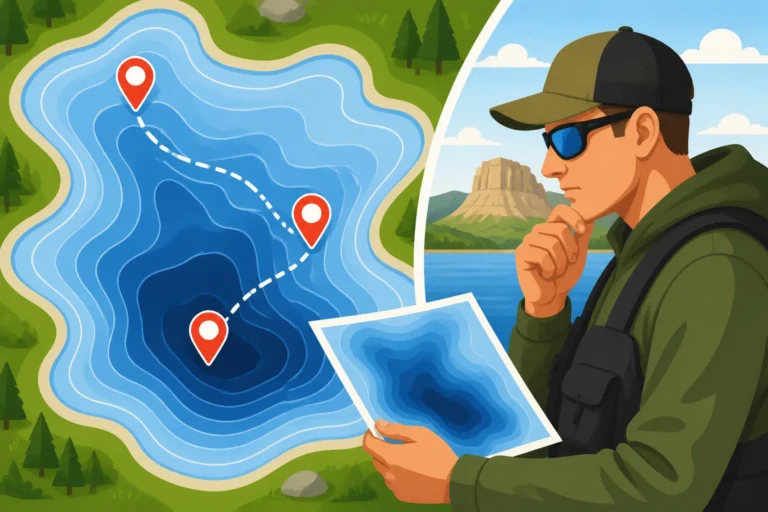
- GPS and Mapping: Use your GPS to mark waypoints of productive spots, current breaks, or submerged structure. It's much harder to visually identify these areas when the water is murky, so precise navigation is key. A good mapping chip can show you underwater contours, points, and drop-offs that are invisible to the naked eye.
- Fish Finder (Sonar): Your fish finder becomes crucial for identifying baitfish schools and potential fish arches, even if they're difficult to identify by species. Look for sudden changes in bottom contour, submerged structure, or dense bait balls. While Reading Water Temperature for Walleye can be done with a thermometer, your fish finder will usually give you a real-time surface temperature reading, which can indicate if fish are seeking warmer or colder zones.
- Side Imaging/Down Imaging: If your unit has these features, they can be incredibly helpful for identifying submerged timber, rock piles, or channel swings that are obscured by the muddy water. They paint a detailed picture of the bottom structure that conventional 2D sonar might miss.
| Factor | Clear Water Fishing | Muddy Water Fishing |
|---|---|---|
| Lure Color | Natural, translucent | Bright, fluorescent, high-contrast |
| Lure Action | Subtle, realistic | Strong vibration, noise-making (rattles) |
| Bait Choice | Visual cues, subtle scent | Strong scent-based, live bait, cut bait |
| Retrieval Speed | Varied, natural | Slower, deliberate, with pauses |
| Presentation | Visual target, finesse | Bumping bottom, creating commotion, scent trail |
| Line Sensitivity | Important, but less critical than in murky water | Extremely critical (braid preferred) |
| Target Depths | Often deeper, open water | Often shallower, near current breaks, structure |
Fishing muddy water after rain can be a fantastic challenge, and with the right approach, it can lead to some incredibly rewarding catches. Don't let the murky conditions deter you – adapt your strategy, and you might just find your new favorite way to fish. For a complete overview of what to bring on any trip, consult our South Dakota Fishing Gear Checklist.
Disclaimer
Fishing regulations and conditions can change. Always check the latest South Dakota Game, Fish and Parks regulations before heading out. This guide is for informational purposes only and does not guarantee fishing success. Practice safe boating and fishing at all times.