Do You Need Side Imaging for Walleye Fishing?
It’s easy to feel overwhelmed when you look at all the incredible technology available to anglers these days. From advanced trolling motors to super-sensitive rods, the gear list seems endless. And then there's the question of fish finders, specifically, "Do I really need side imaging to catch walleye in South Dakota?" This guide is here to cut through the noise, explaining exactly what side imaging is, how it helps (or doesn't help) in your walleye pursuit, and whether it’s a necessary addition to your boat.
Understanding Side Imaging Technology for Walleye Hunters
Let's be honest, modern fish finders can look like something out of a sci-fi movie with all their fancy screens and modes. Side imaging is one of those features that gets a lot of hype, and for good reason, but understanding what it actually does is the first step to deciding if it's for you.
What is Side Imaging, Exactly?
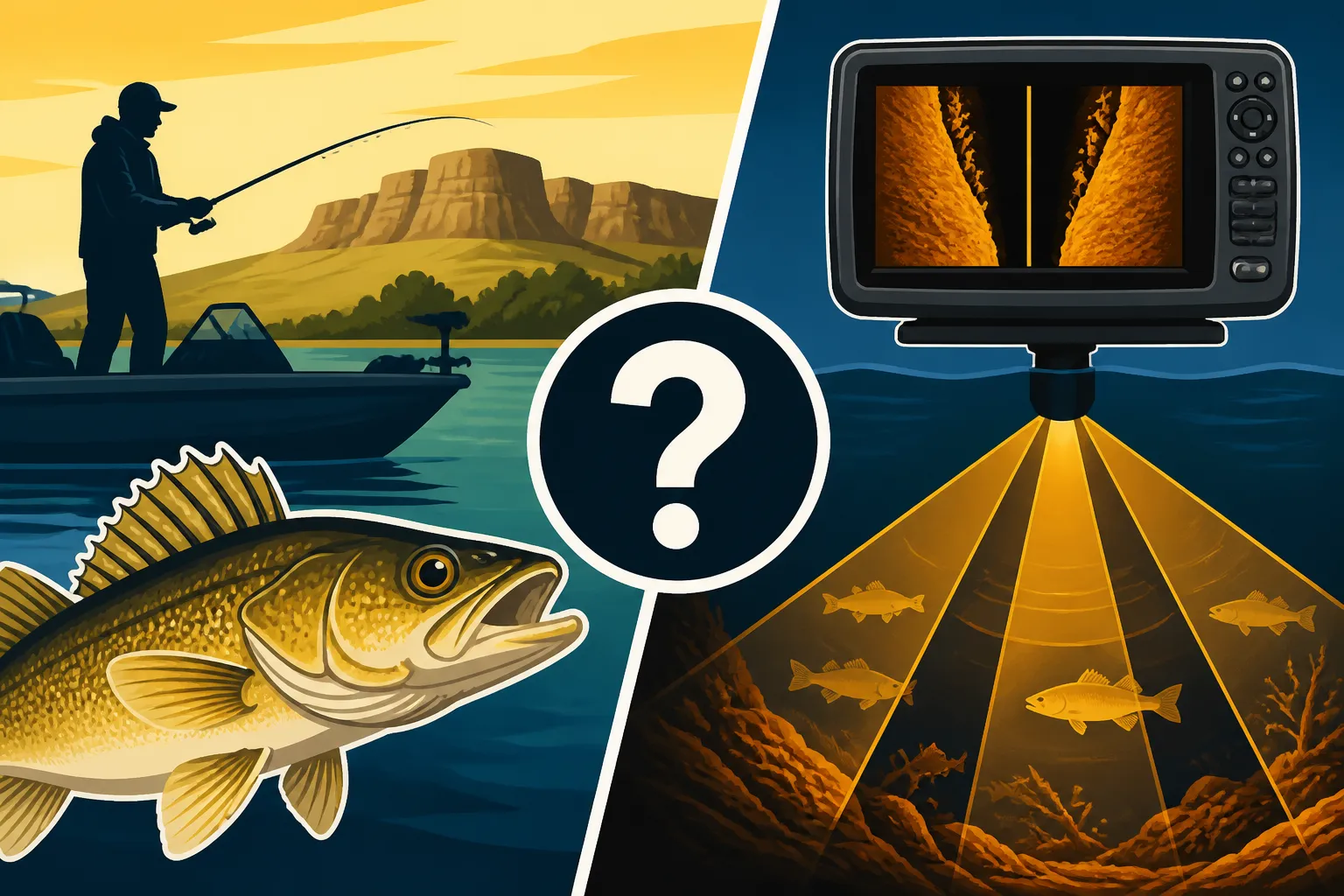
Imagine you're driving a boat across a lake, and you want to see what's lurking on either side of your path, not just directly underneath. That's essentially what side imaging allows you to do. Unlike traditional sonar that sends a cone-shaped beam straight down, or even down imaging which gives you a high-resolution, photographic view directly below your boat, side imaging transducers emit thin, high-frequency beams of sound out to the sides, often up to several hundred feet on each side, depending on the unit and water depth.
These sound waves bounce off objects in the water—like submerged trees, rock piles, drop-offs, even fish—and return to the transducer. Your fish finder then stitches all this data together to create a remarkably detailed, almost photographic image of the bottom and water column to the sides of your boat. It's like having super-powered underwater binoculars that let you peek into vast areas you'd never see with traditional sonar alone. This "sideways" view is incredibly helpful for covering a lot of water quickly and seeing structure that walleye might be relating to, even if you don't drive directly over it.
How Side Imaging Differs from Traditional Sonar and Down Imaging
To really grasp the power of side imaging, it helps to understand its relatives: traditional 2D sonar and down imaging. Think of it like this:
- Traditional 2D Sonar: This is your classic fish finder view. It sends out a cone-shaped pulse of sound straight down, showing you fish arches and basic bottom contours. It's great for seeing what's directly beneath your boat and identifying fish in the water column, but its cone narrows significantly in deeper water, giving you a limited view of the bottom. It's like looking through a narrow spotlight.
- Down Imaging: This technology provides a much clearer, picture-like view of what's directly underneath your boat. It uses a very thin, high-frequency beam to create crisp images of structure and fish, making it easier to distinguish a submerged tree from a rock pile. It’s like looking straight down through a high-resolution camera.
- Side Imaging: Now, combine the clarity of down imaging with the ability to look out to the sides. Side imaging casts those thin, high-frequency beams horizontally, giving you a panoramic view. You see not just what's below, but the whole underwater landscape to your left and right. This allows you to identify structure, cover, and even schools of baitfish and game fish that are well outside your boat's path. If you're trying to break down a new area on Lake Oahe Fishing Guide or Lake Sharpe Fishing Guide, side imaging can be a massive shortcut.
Here's a quick comparison of what each sonar type primarily shows you:
| Sonar Type | Primary View Direction | Image Detail | Best For |
|---|---|---|---|
| Traditional 2D | Directly Below (Cone) | Basic Fish Arches | General depth, suspended fish, bottom hardness |
| Down Imaging | Directly Below (Slice) | High-Resolution | Detailed structure, fish directly underneath |
| Side Imaging | Sides of Boat (Fan) | High-Resolution | Scanning wide areas, off-boat structure, fish relating to cover |
Understanding these differences is key because while each has its place, side imaging offers a unique advantage for covering water and identifying overlooked spots, which can be crucial when you're trying to figure out How to Fish for Walleye in South Dakota on vast bodies of water.
The Practical Advantages of Side Imaging for Walleye Fishing in South Dakota
For many walleye anglers in South Dakota, side imaging isn't just a gadget; it's a valuable tool that has changed the way they approach fishing, especially on our big Missouri River reservoirs and glacial lakes. It genuinely offers some distinct benefits that can make your time on the water more productive.
Locating Walleye Structure and Cover
Walleye are notorious for relating to structure and cover. They love ambush points, places where they can hide from current, or areas that hold baitfish. Finding these subtle nuances can be like finding a needle in a haystack on a vast lake. This is where side imaging shines. Instead of slowly driving over every potential spot, hoping your traditional 2D sonar cone passes directly over it, side imaging allows you to scan wide swaths of water.
Imagine you're looking for an old submerged roadbed or a hidden rock pile that isn't on any map. With side imaging, you can run parallel to a shoreline or a contour line and "see" these features extending out from your boat. You might spot a cluster of old timber off to your right, 50 feet away, that would have been completely missed by conventional sonar. Or perhaps a subtle breakline with scattered boulders, exactly the kind of spot where walleye will set up. This becomes especially useful in finding new honey holes on the Missouri River system, where depths and currents create complex bottom features. You can literally see fish holding next to cover, not just on top of it, helping you understand their positioning.
Scanning Large Areas Efficiently
One of the biggest frustrations for anglers is spending hours trolling or casting "blindly" in areas that just aren't holding fish. South Dakota's fishing lakes, particularly the Missouri River reservoirs like Lake Oahe and Lake Francis Case, are huge. Covering them thoroughly with traditional methods takes an immense amount of time and fuel. Side imaging dramatically increases your search efficiency.
Instead of meticulously crisscrossing an area, you can make wider passes, often covering a 100-200 foot wide path with each pass (depending on your depth and unit settings). This means you can scout a potential walleye flat, a long point, or a section of river channel much faster. If you don't see any promising structure or baitfish on your first few passes, you can quickly move on to the next spot, saving precious fishing time. This is invaluable during tournaments or when you're visiting a new body of water, allowing you to narrow down productive areas quickly. It's almost like being able to "see" underwater for hundreds of feet in every direction as you drive, which makes finding those elusive South Dakota Walleye Limits a much more achievable goal.
Identifying Baitfish Schools and Walleye Behavior
Walleye follow their food. Finding schools of baitfish—whether it's shad, smelt, or minnows—is often the first step to finding hungry walleye. Side imaging excels at painting a clear picture of these bait balls. Not only can you see them, but you can also observe how they are relating to structure or open water. More importantly, you can sometimes identify larger fish, like walleye, positioned around or underneath these bait schools, waiting to ambush.
Beyond just finding them, side imaging helps you understand their behavior. Are they scattered? Are they tightly packed against a drop-off? Are they suspended in open water, perhaps signaling a different feeding pattern? Observing how fish are oriented around structure on your side imaging screen can give you critical clues on how to present your lure. If you see walleye tucked tight to a submerged brush pile, you know you need to fish right in that cover. If they're off to the side of a rock reef, perhaps casting parallel to it will be more effective than driving directly over it. This insight into fish behavior is a powerful advantage when you're deciding on South Dakota Spring Walleye Fishing Techniques or even Winter Walleye Fishing Techniques.
The Argument Against "Needing" Side Imaging for Walleye
Now, before you rush out to Bass Pro Shops or jump on Amazon to buy the latest high-tech unit, let's take a deep breath. While side imaging is undeniably a powerful tool, it's absolutely crucial to remember that "need" is a strong word. Many, many successful walleye anglers in South Dakota and beyond have filled their livewells for decades without this advanced technology.
Traditional Techniques Still Work Wonders
This might sound like a broken record to some, but it bears repeating: fundamental fishing skills and traditional techniques are the bedrock of walleye fishing. Anglers have been mastering Jigging Techniques for Missouri River Walleye and Trolling for Walleye on Lake Oahe long before side imaging was even a concept. Knowledge of walleye habits, understanding seasonal patterns, reading lake maps, and interpreting 2D sonar still puts fish in the boat consistently.
Think about the experienced old-timers who still out-fish many with all the latest gear. They understand contours, current breaks, wind-blown points, and subtle depth changes because they’ve spent countless hours on the water honing those skills. They know that sometimes, a simple jig and minnow presented correctly in a known walleye haunt will outperform any high-tech gadget. Relying solely on technology can sometimes detract from developing that crucial "fish sense" that comes from observation and experience. You certainly don't need side imaging to find a South Dakota Walleye Season Opening Date hotspot if you've done your homework and learned the fish patterns over the years.
Cost and Complexity Considerations
Let's talk about the elephant in the room: the price tag. High-end fish finders with side imaging capabilities represent a significant investment. For many casual anglers or those on a tighter budget, that money might be better spent on other essential gear, fuel for more trips, or even hiring a guide for a day to learn local patterns. South Dakota Fishing Gear Checklist will show you there are plenty of important items that need to come first.
Beyond the initial cost, there's the complexity. These units aren't always plug-and-play. They require careful installation, understanding various settings, and often a fair bit of trial and error to get the best performance. You'll need to learn How to Read a Fish Finder for Walleye in a whole new dimension. For some, the joy of fishing is in the simplicity and the escape from screens, not in staring at a complex sonar display all day. If you find yourself spending more time fiddling with settings than actually fishing, you might be over-complicating things.
Learning Curve and Screen Time vs. Fishing Time
As mentioned, there's a definite learning curve with side imaging. It's not just about turning it on; it's about understanding what you're seeing, distinguishing fish from structure, and interpreting shadows and returns. This takes time, practice, and often watching countless YouTube videos or reading guides.
For some anglers, especially those with limited time on the water, the time spent mastering side imaging might cut into actual fishing time. If you only get out a few weekends a year, do you really want to spend a significant portion of that staring at a screen trying to decipher complex images? For many, the reward of a caught walleye comes from the act of fishing itself, not from having the most advanced gadget. There's a balance to strike between leveraging technology and simply enjoying the experience of being out on the water, soaking in the South Dakota scenery.
When Side Imaging Becomes a Game-Changer (and When It's Optional)
So, is it a need or a nice-to-have? The truth is, it depends entirely on your specific fishing goals, the type of water you fish most often, and your personal approach to angling. There are definitely scenarios where side imaging earns its stripes and becomes an incredibly powerful asset, and others where it's perfectly fine to go without it.
High-Pressure Lakes and Rivers
If you frequently fish heavily pressured waters, or if you participate in tournaments where every advantage counts, then side imaging can absolutely be a game-changer. On lakes like Lake Sharpe or sections of the South Dakota Missouri River Fishing Guide that see a lot of angler traffic, walleye can become very "spooky" and difficult to locate. They often hold tight to subtle, overlooked pieces of structure or roam just outside the main thoroughfares.
In these situations, being able to quickly scan wide areas and pinpoint those isolated boulders, small brush piles, or tiny depth changes that other anglers miss can be the difference between a good day and a tough one. When fish are finicky, understanding their exact location and orientation to cover, which side imaging provides, allows for much more precise bait presentation. It helps you find those fish that aren't sitting on top of the structure, but rather slightly off to the side, in a perfect ambush position.
New Waters and Scout Missions
If you're an adventurous angler who loves exploring new lakes or segments of rivers in South Dakota, side imaging will quickly become your best friend. Breaking down unfamiliar water can be incredibly time-consuming. Without any prior knowledge or maps, you're essentially fishing blind.
Side imaging dramatically accelerates the scouting process. You can spend a day simply driving and mapping, using your side imaging to build a comprehensive picture of the underwater landscape. Identifying contours, humps, points, weed lines, and structural elements like bridge pilings or riprap becomes fast and efficient. This information can then be saved as waypoints, allowing you to return later and fish those specific, promising areas with confidence. It's like getting an instant cheat sheet for a new lake, transforming hours of guesswork into targeted fishing. This is particularly useful for finding new spots away from the well-known areas detailed in guides like Best Fishing Spots in South Dakota.
Personal Fishing Style and Budget
Ultimately, whether you "need" side imaging for walleye fishing comes down to personal preference and your budget.
You probably don't need it if:
- You primarily fish familiar waters where you already know the productive spots and patterns.
- You prefer a simpler approach to fishing, focusing on traditional methods and enjoying the quiet of the outdoors.
- Your budget is tight, and you'd rather invest in other essential gear, baits like Best Lures for South Dakota Walleye, or simply more fishing trips.
- You find too much screen time detracts from your overall enjoyment of fishing.
You'll find it incredibly useful (maybe even a "need") if:
- You're a tournament angler looking for every competitive edge.
- You love exploring new, unfamiliar waters and want to break them down quickly.
- You enjoy leveraging technology to maximize your efficiency and success.
- You frequently fish large, complex reservoirs or rivers where structure is subtle and spread out.
- Your budget allows for the investment, and you're willing to put in the time to learn the technology.
Side imaging is a phenomenal piece of technology that offers distinct advantages for walleye fishing, particularly in South Dakota's expansive and diverse waters. It can help you find more fish, understand their behavior, and save valuable time on the water. However, it's not a magic bullet, nor is it a strict requirement for success. Many anglers have incredible days without it, relying on honed skills and traditional wisdom. Consider your own fishing style, the waters you frequent, and your budget. If you're looking to elevate your game and embrace cutting-edge technology, it's a worthwhile investment. If you prefer to keep things simple, rest assured that the tried-and-true methods will continue to put plenty of delicious South Dakota walleye on your stringer.
Disclaimer
This article is for general informational purposes only and does not constitute professional advice. Laws, prices and regulations vary by location and change over time. Consult a qualified professional for guidance on your specific situation.