How to Catch Smallmouth Bass Near Riprap
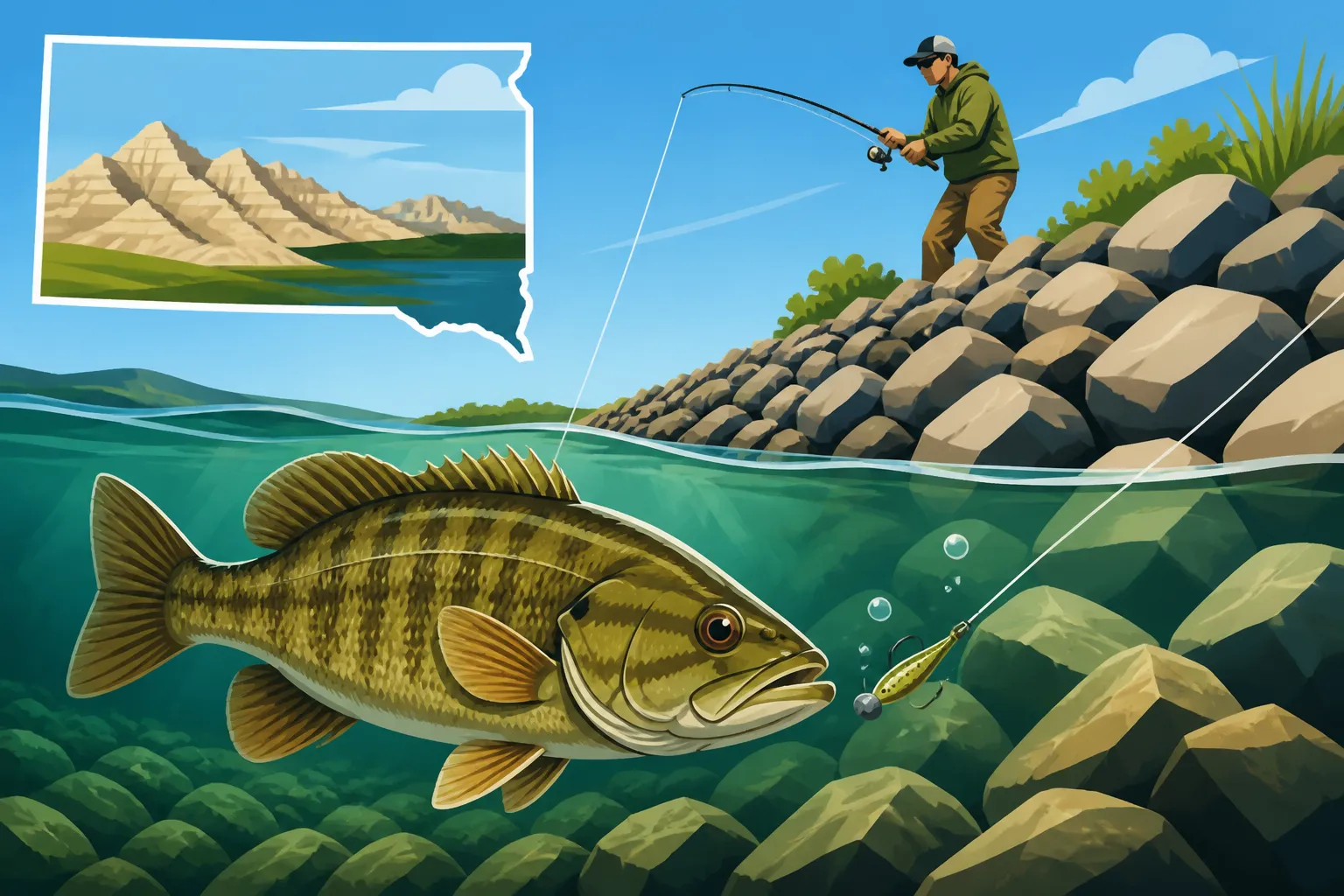
Smallmouth bass are feisty, hard-fighting fish that offer an incredible challenge and thrill to any angler, but finding them can sometimes feel like chasing ghosts. When you do locate them, particularly around riprap, the action can be fast and furious. This guide is all about demystifying how to effectively target and catch smallmouth bass hiding out in those rocky, man-made shorelines and structures across South Dakota.
Understanding Smallmouth Bass Behavior Around Riprap
Riprap isn't just a random pile of rocks; for a smallmouth bass, it's a prime piece of real estate, a veritable buffet, and a fortress all rolled into one. If you want to consistently catch these bronze beauties, you first need to understand why they love these rocky structures so much.
Why Riprap Attracts Smallmouth
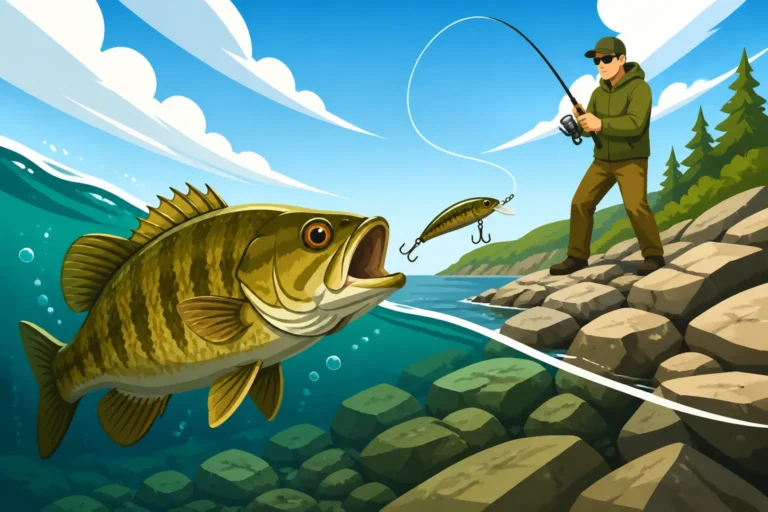
Think about riprap from a smallmouth's perspective. It's not just a collection of big, jagged stones used to prevent erosion along shorelines, causeways, and bridge abutments. These rocks create an incredibly complex and dynamic underwater ecosystem that perfectly caters to the smallmouth's needs. Firstly, riprap is a magnet for forage. Crayfish, a primary food source for smallmouth, absolutely thrive in the nooks and crannies of riprap. They hide from predators, molt in safety, and forage on algae and detritus that also collect there. Beyond crayfish, countless baitfish species like shad, shiners, and juvenile panfish use riprap for cover from larger predators and as feeding grounds for aquatic insects. For a smallmouth, it’s like living right next to a grocery store with a constantly replenished stock.
Secondly, riprap provides phenomenal cover and ambush points. The irregular sizes and shapes of the rocks create countless pockets, ledges, and crevices where a smallmouth can hide, conserving energy while waiting for an unsuspecting meal to swim by. This allows them to ambush prey efficiently, which is a hallmark of their predatory behavior. They can dart out from behind a boulder, grab a passing baitfish, and quickly retreat. This protection also extends to avoiding larger predators themselves, giving them a sense of security that makes them more willing to inhabit these areas.
Finally, riprap plays a crucial role in thermal regulation and current breaks. Rocks absorb and radiate heat, meaning riprap can offer slightly warmer water in colder conditions (like spring and fall) or cooler, oxygenated water if there's sufficient depth and current during hot summer months. In areas with current, such as sections of the Missouri River reservoirs like Lake Sharpe or Lake Francis Case, riprap creates vital current breaks. Smallmouth can tuck in behind larger rocks, expending minimal energy while still having access to food brought by the moving water. This combination of abundant food, excellent cover, and favorable environmental conditions makes riprap an irresistible habitat for smallmouth bass year-round.
Key Seasonal Movements in Riprap
Smallmouth bass use riprap differently throughout the year, adapting their presence to water temperature, spawning cycles, and forage availability. Understanding these seasonal shifts is crucial for timing your approach and finding them where they're most active.
In spring, as water temperatures begin to climb, smallmouth move shallower, often holding tight to riprap that gets good sun exposure. These rocks warm up faster than the surrounding water, drawing in baitfish and crayfish, and signaling the approaching spawn. Before they move to actual spawning beds, smallmouth will stage along these riprap banks, gorging themselves to build energy. This pre-spawn period is an excellent time to target them, as they are aggressive and actively feeding. They might be found in just a few feet of water, making them accessible to both boat and shore anglers. For more on their reproductive cycles, you might want to read our guide on When Smallmouth Bass Spawn in South Dakota.
During summer, when water temperatures are at their highest, smallmouth bass often seek out deeper sections of riprap, especially those with access to cooler water or current breaks. This could mean the base of a riprap dam, a rocky point extending into deeper water, or the shaded side of a causeway. They’ll still be actively feeding, but perhaps during low-light conditions like early mornings, late evenings, or even at night. The key here is to look for riprap that offers more than just shallow cover; think about how it provides relief from the heat or offers an advantage in current.
Fall is arguably one of the best times to fish riprap for smallmouth. As water temperatures begin to drop, smallmouth enter a major feeding frenzy, trying to pack on weight for the upcoming winter. They'll often school up and actively chase baitfish, frequently pushing them against riprap banks. You'll find them shallower again, often in the same areas they were in during the spring, but they'll be much more aggressive. This is a time when they are less picky, and fast-moving baits can be incredibly effective. Pay attention to those transition areas where riprap meets a channel or drop-off.
Finally, in winter, smallmouth become much less active. While most anglers focus on ice fishing for walleye or perch, smallmouth will still be present in specific riprap locations. They'll generally move to the deepest parts of the riprap, seeking stable water temperatures and minimal current. This might be the base of a dam or a very deep, rocky point. They will feed sporadically, and a slow, methodical approach with subtle baits is usually necessary. Fishing during the winter months, especially in unfrozen tailwater areas, can yield surprisingly large fish, but it requires patience and precision.
Essential Gear and Tackle for Riprap Smallmouth
Fishing riprap for smallmouth bass is incredibly exciting, but it also comes with its challenges – mainly snags! Having the right gear isn't just about comfort; it's about minimizing frustration and maximizing your chances of landing that trophy fish.
Rod and Reel Setup
When it comes to smallmouth fishing around riprap, versatility and sensitivity are your best friends. You'll want a setup that can handle powerful strikes and sharp runs, yet still provide the feel needed to detect subtle bites in rocky terrain.
A medium-heavy power, fast-action spinning rod (6'6" to 7'2") is a fantastic all-around choice. The medium-heavy power gives you the backbone to wrestle a big smallmouth away from cover and cast heavier lures, while the fast action provides the sensitivity for detecting light bites and the quick hook-sets needed when fishing jigs and soft plastics. Pair this with a reliable 2500 or 3000 series spinning reel. Brands like Shimano, Daiwa, and Lew's offer excellent options for smooth drag and durable performance. For those who prefer baitcasting, a medium-heavy power, fast-action baitcasting rod (6'8" to 7'4") coupled with a high-quality baitcasting reel is equally effective, especially for throwing heavier crankbaits or spinnerbaits with more precision.
Line choice is critical around riprap. Fluorocarbon line in 10-15 lb test is often preferred as a main line or as a leader for its low visibility and excellent abrasion resistance – a huge plus when your line is constantly rubbing against sharp rocks. If you're using braided line (15-20 lb test) as your main line for its sensitivity and casting distance, always tie on a 6-10 foot fluorocarbon leader with an FG knot or a double uni-knot. The braid will give you phenomenal feel, but the fluorocarbon leader will protect against break-offs. If you're looking to upgrade your setup, you can find a wide range of options on Amazon to suit any budget or fishing style. Remember, a balanced setup means you won't fatigue quickly, and you'll have more control over both your casts and your catches. For a broader look at rods and reels, our guide on Best Fishing Rods and Reels for Walleye can offer some transferable insights.
Lures and Baits That Excel on Riprap
The smallmouth bass in South Dakota's riprap-lined waters, particularly on the Missouri River reservoirs, have a varied diet, making a diverse lure selection key. You want baits that either mimic their natural forage or trigger an aggressive reaction strike.
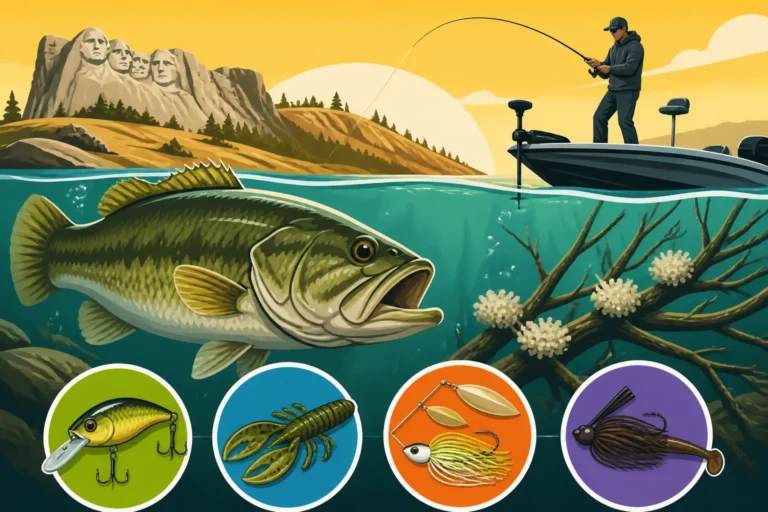
Crankbaits are absolutely essential. Shallow-diving crankbaits (like the Rapala Shad Rap or Strike King KVD 1.5) that run 3-6 feet deep are perfect for fishing the shallow edges of riprap. These baits deflect off rocks, creating an erratic action that often triggers violent strikes. Lipless crankbaits (e.g., Bill Lewis Rat-L-Trap or a Lucky Craft LV series) are also fantastic, especially when fish are chasing baitfish. You can retrieve them quickly, rip them off the bottom, or even yo-yo them through deeper sections of riprap. Medium-diving crankbaits are great for probing the mid-depths. When choosing colors, focus on natural patterns like crayfish (browns, reds, oranges) or baitfish (shad, perch, silver/blue) as a starting point.
Jigs are incredibly effective for working the intricacies of riprap. Football jigs (1/4 oz to 1/2 oz) with a wide head design are designed to crawl over rocks without snagging as easily as traditional round-head jigs. Tip them with a soft plastic craw or creature bait trailer to bulk them up and add action. Swim jigs are another great option, especially when smallmouth are slightly more active. Use a paddle-tail swimbait as a trailer and retrieve it like a swimming baitfish along the riprap edges. For a more subtle approach, a simple tube jig (e.g., a Gitzit or Strike King Coffee Tube) in green pumpkin or dark brown, rigged on an internal jig head, is deadly. Tubes perfectly imitate crayfish and small baitfish, and their spiral fall is irresistible.
Soft plastics offer versatility for working riprap. Creature baits (like a Zoom Brush Hog or a Strike King Rodent) rigged Texas-style with a 3/0 or 4/0 EWG (Extra Wide Gap) hook and a small bullet weight are great for pitching into tight spots or dragging slowly along the bottom. The Texas rig makes them relatively weedless (or rather, "rockless"). Paddle-tail swimbaits (3-4 inches) on a weighted swimbait hook or a simple jig head can be incredibly effective when fish are chasing baitfish; simply cast them parallel to the riprap and retrieve. Don't forget grubs or small worms for highly pressured fish or in clear water conditions.
Finally, spinnerbaits can be excellent for covering water quickly along riprap, especially on overcast days or in stained water. The flash and vibration can draw fish out of cover. Stick to 3/8 oz to 1/2 oz sizes with willow leaf or Colorado blades. Again, many of these lures are readily available on Amazon if you're looking to stock up before your next South Dakota trip.
Mastering Techniques for Fishing Riprap
Fishing riprap isn't just about throwing your line out; it's about making precise presentations and understanding how to retrieve your lure to entice a strike. The rugged nature of riprap demands specific techniques to be successful.
Fan Casting and Covering Water
When you first approach a section of riprap, you can't assume where the smallmouth will be. They could be hugging the bank, sitting a few feet off, or holding deeper at the base of the rock structure. That's where fan casting comes in – it's a systematic approach to cover a wide area and locate active fish.
Start by making casts parallel to the riprap shoreline. This allows your lure to stay in the strike zone for the longest period, imitating a baitfish swimming along the bank. Then, gradually work your way outwards, making casts at different angles, like spokes on a wheel. Cast at a 45-degree angle to the bank, then 90 degrees, and so on. Pay close attention to your retrieve. For crankbaits, you want them bumping and deflecting off the rocks. For jigs and soft plastics, a slow, methodical retrieve where you feel the bait making contact with the bottom rocks is often key. You're looking for subtle changes in bottom composition, depth, or current, which often indicate a smallmouth ambush point.
Having a good trolling motor is invaluable here. It allows you to maintain boat position as you fan cast, battling wind or current while keeping your focus on presentation. Whether you're using a Minn Kota or a Motorguide, using your trolling motor to slowly cruise along the riprap, making short, accurate casts, is far more effective than constantly repositioning with your main engine. Don't be afraid to make multiple passes over a productive section, varying your retrieve speed or lure color. Sometimes, a subtle change is all it takes to trigger a bite.
Targeting Specific Structure and Depth
While fan casting helps locate active fish, truly mastering riprap fishing means recognizing and targeting the subtle nuances within the structure itself. Not all riprap is created equal, and some spots are inherently better than others.
Look for areas where the riprap changes. This could be a point extending out into the lake, a sudden change in rock size, or where the riprap transitions into a different bottom type like sand or gravel. These transition zones are often hotspots because they concentrate forage and provide varied habitat for the bass. Current breaks, especially common on the Missouri River reservoirs below the dams (think Lake Oahe or Lake Sharpe), are prime targets. Smallmouth will sit just out of the main current, waiting for food to be swept past them. Cast your lure upstream of these breaks and let the current carry it naturally into the strike zone.
Don't overlook deeper ledges or pockets at the base of the riprap. While smallmouth often feed shallow, larger fish or those seeking refuge from bright sun will hold deeper. Use your fish finder to identify these depth changes. Sometimes casting directly to the bank and retrieving your lure down the slope of the riprap will get you into fish. Other times, casting parallel but further out and letting your lure sink to the bottom before starting your retrieve will be more effective. For deeper water strategies, our guide on How to Fish Deep Water Structure in Summer can offer additional tips. The goal is to present your lure at the depth where the fish are holding and in a way that mimics their natural prey.
Dealing with Snags and Break-offs
Let's be realistic: if you're fishing riprap, you're going to get snagged. It's part of the game. But there are ways to minimize the frustration and save some of your precious lures.
Firstly, your line choice plays a big role. As mentioned earlier, fluorocarbon or a fluorocarbon leader with braided mainline offers superior abrasion resistance compared to monofilament. This extra toughness can prevent immediate break-offs when your line scrapes against a sharp rock. Secondly, consider your lure choices and rigging. When using soft plastics, always Texas-rig them with the hook point barely embedded in the plastic (skin-hooked) to make them weedless. This dramatically reduces snags. For jigs, football jigs are designed to roll over rocks.
When you feel a snag, don't just yank hard. Often, a slow, steady pull can free the lure. If that doesn't work, try letting your line go completely slack for a few seconds; sometimes the lure will float free. Another trick is to gently twitch your rod tip, trying to dislodge the lure from a different angle. If all else fails, a "lure knocker" or "snag retriever" is a small, heavy device that slides down your line to physically push or pull your lure free. You can find these on Amazon and they can save you a lot of money in lost tackle over time.
Finally, think about your retrieve angle. Casting parallel to the bank and reeling your lure away from the rocks can reduce snags compared to casting directly into the riprap and pulling straight out. Experiment with different angles and retrieve speeds to find the sweet spot that triggers bites without constantly getting hung up.
South Dakota Specific Riprap Hotspots and Considerations
South Dakota offers some fantastic smallmouth bass fishing, with many of its best waters featuring extensive riprap. Understanding where these areas are and what unique conditions they present can dramatically improve your success.
Prime South Dakota Lakes with Riprap
When it comes to smallmouth bass and riprap in South Dakota, the Missouri River reservoirs are undeniably the prime destination. These massive bodies of water, which are essentially dammed sections of the Missouri River, offer miles upon miles of riprap shoreline, bridge abutments, and causeways.
Lake Francis Case is a perennial favorite for smallmouth anglers. Its rocky banks, particularly in the lower sections, are absolute magnets for smallmouth. You'll find great riprap action around the Fort Randall Dam area, along the main lake shoreline, and around causeways. The deeper, clearer water in some parts of Francis Case provides ideal smallmouth habitat, and the fish here can grow to impressive sizes. For more detailed information, check out our guide on Lake Francis Case Smallmouth Bass Fishing.
Further upstream, Lake Sharpe also boasts excellent riprap opportunities. The stretches near the Big Bend Dam are particularly renowned, offering strong current breaks and plenty of rocky cover. The causeways and bridge crossings in and around Pierre, the state capital, also feature extensive riprap that consistently holds smallmouth. The current here keeps the water oxygenated and brings a steady supply of forage, making these areas highly productive. Our article on Lake Sharpe Smallmouth Bass Near Big Bend Dam dives deeper into these specific areas.
And let's not forget Lewis and Clark Lake down near Yankton. While perhaps best known for walleye, its rocky points, bluffs, and extensive riprap shorelines also harbor a healthy population of smallmouth. The main lake points and steeper banks with good rock cover are always worth exploring. You can find up-to-date information on fishing conditions in the Lewis and Clark Lake Smallmouth Bass Fishing Report.
Beyond the Missouri River, some of the larger glacial lakes in eastern South Dakota might also offer limited riprap, typically around boat ramps or public access points, though these are less common as primary smallmouth destinations.
Water Conditions and Current
Fishing riprap in South Dakota, especially on the Missouri River system, means you'll almost always be dealing with some level of current. Understanding how current affects smallmouth behavior is paramount to success.
Current concentrates fish. Smallmouth will typically position themselves just out of the main current, in "slack water" or "current seams," waiting for baitfish or crayfish to be swept past them. This allows them to ambush prey with minimal energy expenditure. Look for boulders, submerged logs, or irregularities in the riprap that create these current breaks. Below the dams (Oahe, Big Bend, Fort Randall, Gavins Point), the tailwater areas are classic examples of strong current. Learning to fish these current seams effectively is a critical skill for any angler on the Missouri River. Our guide on Missouri River Tailwater Fishing Techniques offers some excellent tips that are transferable to smallmouth.
Water clarity also plays a significant role. Smallmouth are primarily sight feeders, so clearer water often makes them more aggressive and easier to tempt with visual baits like crankbaits and jigs. In stained or muddy water conditions, you might need to switch to lures that create more vibration and flash, like spinnerbaits or lipless crankbaits, or use natural baits if permitted. Also, consider brighter or contrasting lure colors to increase visibility. Wind can also create localized current and stir up baitfish along riprap, often making these windy banks highly productive. However, too much wind can make boat control and lure presentation difficult, so it's a balancing act. Always check local fishing reports and current conditions before heading out, as reservoir levels and dam discharges can significantly impact the current and clarity.
Disclaimer
Fishing regulations, including license requirements, seasons, and limits, can change. Always consult the official South Dakota Game, Fish and Parks (GFP) regulations handbook or their website before heading out on the water to ensure you are compliant with all current rules. The information provided here is for general guidance and educational purposes only.