Best Ice Augers for South Dakota Ice Fishing
The biting cold of a South Dakota winter often brings with it the incredible opportunity for ice fishing, but there's nothing quite as frustrating as struggling to cut through thick ice when you're bundled up and eager to drop a line. A reliable ice auger isn't just a convenience; it's an absolute necessity for turning that frozen obstacle into a portal to your next big catch. This guide is all about helping you understand the different types of ice augers available and how to choose the best one to make your South Dakota ice fishing adventures as smooth and enjoyable as possible.
Understanding the Different Types of Ice Augers
Before you can pick the best auger for your needs, it's crucial to understand the distinct types available on the market. Each has its own set of advantages and disadvantages, making certain models better suited for specific fishing styles and ice conditions you might encounter across the vast frozen landscapes of South Dakota, from the glacial lakes to the massive Missouri River reservoirs.
Manual Augers: The Old Faithful and Fitness Test
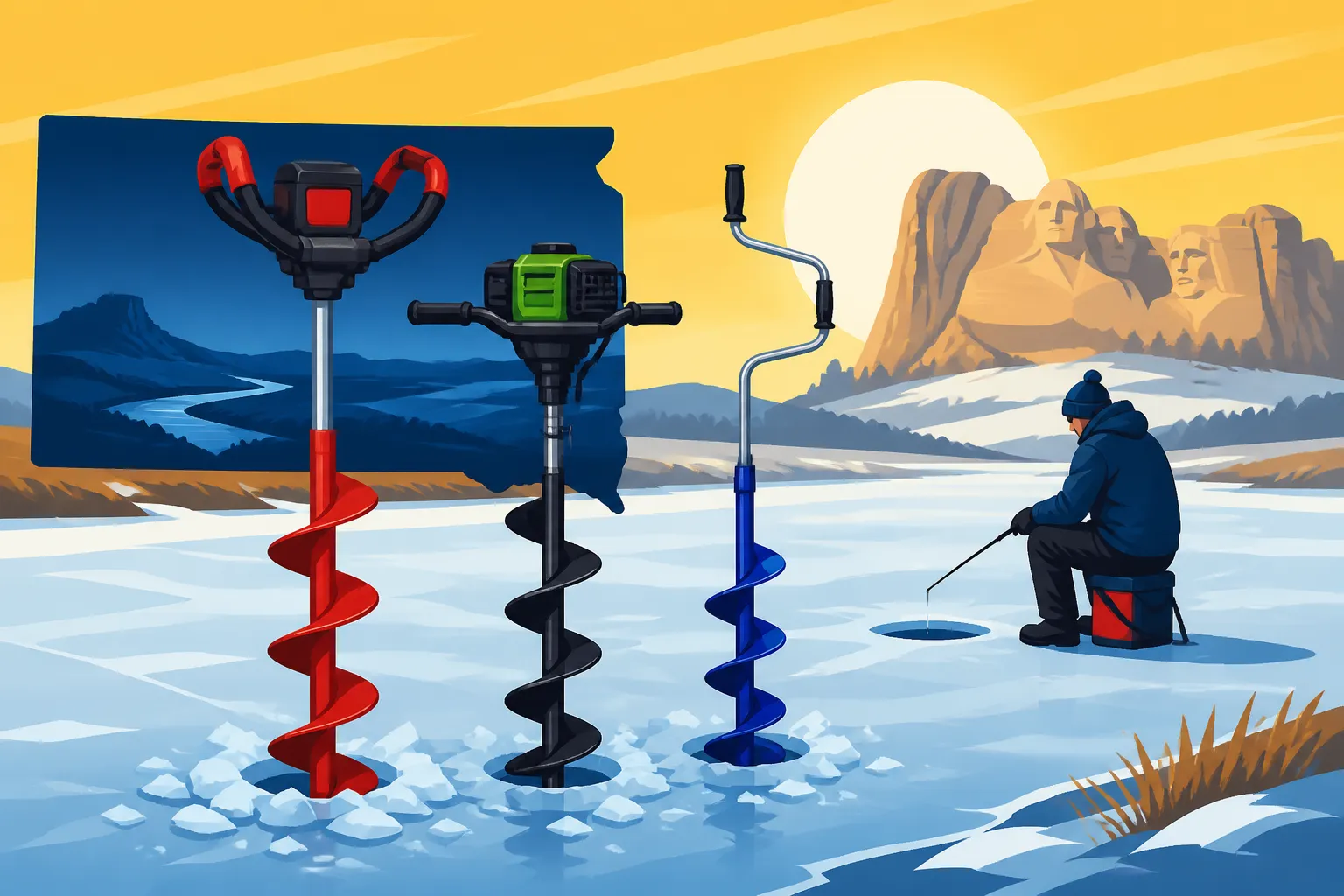
Manual ice augers are the simplest and most traditional form of ice cutting. They consist of a handle, a shaft, and sharp blades at the bottom, all powered by good old-fashioned human muscle. You twist the handle, push down, and let the sharp blades shave away the ice. For many anglers, this is where it all began.
They are incredibly lightweight, often folding down for easy transport, and they require no fuel or batteries, making them reliable in even the most extreme cold. If you’re a "run-and-gun" angler who likes to move frequently and drill a few holes in thinner ice, or if you prefer a quiet, low-maintenance approach for panfish on smaller lakes, a manual auger can be a fantastic, cost-effective choice. However, anyone who has tried to cut through two feet of stubborn ice on a blustery day near Lake Kampeska with a manual auger knows the sheer effort involved. They’re best for ice depths up to about 12-18 inches and for anglers who aren't planning to drill dozens of holes. Essential Gear Checklist for a South Dakota Ice Fishing Trip
Gas-Powered Augers: The Workhorses of the Ice
For serious anglers who tackle thick, late-season ice on major bodies of water like Lake Oahe or Lake Sharpe, gas-powered augers have long been the gold standard. These machines feature a small two-stroke or four-stroke engine that rapidly spins the auger blades, allowing you to slice through impressive amounts of ice with minimal physical effort.
Their raw power means you can drill countless holes, even through multiple feet of ice, in mere seconds. This is a huge advantage when you're trying to locate roving schools of walleye or need to clear out a large area for tip-ups. The downsides? They are heavier, noisier, and require gasoline and oil mixture, which can be messy and generate exhaust fumes. Starting them in frigid South Dakota temperatures can sometimes be a challenge, too, and they require more maintenance than their manual counterparts.
Propane Augers: Clean Power and Convenience
Propane augers emerged as a popular alternative to gasoline models, aiming to offer the power of an engine without many of the drawbacks. They run on standard 1-pound propane cylinders, which are widely available and much cleaner to handle than gasoline. There’s no mixing oil, no stale fuel issues, and significantly fewer fumes.
Anglers appreciate the consistent starting performance of propane augers, even in bitter cold, and the quieter operation compared to many gas models. They provide ample power for drilling through thick ice, making them suitable for most South Dakota conditions. While they might be slightly less powerful than the most robust gas augers, their convenience and cleaner operation often outweigh this for many. The main considerations are the cost of propane cylinders and carrying spares, as well as their slightly heavier build compared to manual or some electric options.
Electric Augers: Modern Efficiency and Stealth
Electric augers have truly revolutionized ice fishing in recent years, quickly becoming a favorite among many South Dakota anglers. Powered by rechargeable lithium-ion batteries, these augers offer quiet, fume-free operation and impressive drilling speed.
The instant-on convenience, lack of maintenance beyond charging, and stealthy operation are huge selling points. Imagine slipping quietly into your spot on a calm morning on Lake Poinsett without the roar of a gas engine disturbing the peace or spooking nearby fish. They're also generally lighter than gas or propane models. The primary concern, especially in South Dakota’s extreme cold, is battery life. You need to manage your battery usage, carry spares, and keep them warm to maximize performance. However, with advancements in battery technology, many modern electric augers can drill dozens of holes on a single charge, making them a formidable choice for many scenarios. Best Ice Fishing Rods and Reels
Key Factors to Consider for South Dakota Ice Fishing
Choosing the right ice auger isn't a one-size-fits-all decision, especially when you consider the diverse fishing opportunities and challenging conditions found across South Dakota. From the relatively thin ice of early season panfish hotspots to the multi-foot slabs on the big Missouri River impoundments in late winter, your auger needs to be up to the task.
Ice Thickness and Diameter Needs
This is perhaps the most critical factor. South Dakota winters can be unpredictable, but when the ice sets in, it can get seriously thick. Are you typically fishing early-season perch on smaller glacial lakes where 6-10 inches of ice is common? A manual auger or a compact electric model might be perfectly fine. However, if your sights are set on the sprawling, often 2-3 feet (or more!) thick ice of Lake Oahe in February, you'll want the power of a gas, propane, or robust electric auger. Trying to manually drill through that much ice is not just exhausting, it's often nearly impossible. How Thick Ice Should Be Before Fishing in South Dakota
Then there's the hole diameter. A 6-inch auger is perfect for panfish and smaller walleyes, drilling quickly and effortlessly. But if you're targeting big northern pike on bitter lakes or trophy walleye on Lake Sharpe, an 8-inch or even a 10-inch hole gives you more room to land your catch without losing it at the hole. Consider your target species and typical ice thickness before settling on a size.
Weight and Portability on the Ice
How you fish makes a huge difference in how important weight and portability are. Are you a "run-and-gun" angler who covers a lot of ground, drilling a few holes, checking the fish finder, and moving on? Then a lightweight electric or even a manual auger will be your best friend. Lugging a heavy gas auger across a half-mile of snow-covered ice in the wind can quickly zap your energy.
Conversely, if you primarily fish from a permanent ice shanty, or pull a portable shelter with a snowmobile or ATV, the weight of the auger becomes less of a concern. You might be willing to trade a little extra heft for more power or battery capacity. Think about your typical travel methods and how much gear you’re already hauling. Best Ice Fishing Shelters for South Dakota Winters
Noise Levels and Environmental Impact
The impact of noise might seem minor, but it can play a significant role in your fishing experience. The loud roar of a gas auger can definitely disturb the tranquility of a frozen lake, and some anglers believe it can even spook fish, especially in shallower waters. Electric and propane augers offer a much quieter alternative, allowing you to maintain a more peaceful fishing environment.
Furthermore, environmental concerns are increasingly on anglers' minds. Gas augers produce exhaust fumes, and there's always the risk of fuel spills. Propane augers burn much cleaner, and electric augers are completely emission-free at the point of use. If you're someone who values a pristine environment and wants to minimize your footprint, electric or propane models offer a clear advantage.
Budget and Long-Term Value
The upfront cost of an ice auger can vary dramatically, from relatively inexpensive manual models to premium electric or gas units. It's easy to get sticker shock when looking at some of the high-end options, but it’s important to think about the long-term value.
Consider not just the purchase price, but also ongoing costs like fuel, oil, propane cylinders, and replacement blades. A cheaper manual auger might save you money initially, but if you quickly outgrow it and need to upgrade, you haven’t saved much. A quality electric or gas auger, while a larger initial investment, can last for many seasons with proper care, providing reliable performance year after year. Factor in how often you plan to go, the conditions you expect, and how much you value convenience and power. Sometimes, spending a bit more upfront saves you frustration and money down the road.
Specific Auger Recommendations for South Dakota Anglers
Given the diverse fishing landscape and varying ice conditions throughout South Dakota, different types of augers will appeal to different anglers. From the casual weekend warrior hitting a local pond to the hardcore tournament angler on the Missouri River system, there's an ideal auger out there.
For the Budget-Conscious and Light-Duty Angler
If you're just starting out, only go ice fishing a few times a season, or primarily target panfish and smaller game on relatively thin ice (under 18 inches), a manual auger is tough to beat for value. Brands like Eskimo and Strikemaster make excellent manual augers that are sharp, lightweight, and surprisingly efficient for their size. They are perfect for small local lakes or reservoir bays in early winter when the ice is just getting good.
You'll be able to grab one for a fraction of the cost of a powered unit, leaving more money for bait, tackle, or that new Best Fish Finders for Ice Fishing. They're also incredibly reliable since there are no engines or batteries to fail in the cold. Just make sure you keep the blades sharp and protected, and you'll be set for many seasons of quiet, arm-powered hole drilling.
For the Run-and-Gun and Mobile Angler
For those who embrace the "find the fish, move the hole" philosophy common for walleye and perch, especially on vast frozen expanses like Lake Oahe or Lake Sharpe, portability and speed are paramount. This is where modern electric augers truly shine. They offer the quick, clean drilling you need without the bulk and noise of gas. You can zip from spot to spot, drill a quick test hole, and move on if the fish aren't there, all without breaking a sweat or disturbing the peace.
Look for models with powerful lithium-ion batteries and lightweight designs. Many come with reverse functions to flush slush out of the hole, a real time-saver. Brands like ION and Rapala have excellent electric auger options that are highly regarded for their performance in cold conditions. Just remember to pack extra batteries, especially if you plan an all-day trip when How Cold It Gets Ice Fishing in South Dakota can truly test battery performance.
For the Permanent Shelter and Heavy-Duty Angler
If your ice fishing involves setting up a larger, permanent ice shanty, or you regularly fish thick, late-season ice for larger species like northern pike, then the sheer power and endurance of a gas or propane auger might still be your best bet. These machines are built to chew through anything South Dakota ice can throw at them, providing consistent performance for hours on end. You're not moving as much, so the extra weight isn't as much of a burden, and the ability to drill dozens of holes quickly to set up a camp is invaluable.
Gas augers from brands like Jiffy and Eskimo have a long-standing reputation for robust performance. Propane models, such as those from Eskimo or Jiffy, offer a cleaner and often quieter alternative, which is a nice bonus when you're spending hours in an enclosed space. The ability to swap out propane cylinders quickly means you’re never truly out of fuel as long as you have spares. Can You Ice Fish on Lake Oahe? will definitely test these heavy-duty machines.
Here’s a quick overview of the different auger types and their ideal use cases:
| Auger Type | Power Source | Key Advantages | Key Disadvantages | Ideal South Dakota Scenario |
|---|---|---|---|---|
| Manual | Human Power | Lightweight, quiet, no fuel/battery needed, affordable. | Requires physical effort, slow on thick ice, limited holes. | Early ice panfishing, quick scouting, small lake hopping. |
| Gas | Gasoline | Most powerful, fastest drilling, unlimited holes with fuel. | Loud, heavy, fumes, maintenance, cold starts can be tricky. | Late-season walleye on big lakes, permanent shelters, many holes. |
| Propane | Propane Cyl. | Powerful, cleaner than gas, reliable cold starts, less noise. | Slightly less power than gas, propane cylinder cost/storage. | Consistent power for thick ice, less mess for portable shelters. |
| Electric | Battery | Quiet, no fumes, instant start, lighter than gas/propane. | Battery life in extreme cold, cost of extra batteries, recharge time. | Run-and-gun, sensitive spots, anywhere stealth and convenience are key. |
Maintenance and Safety Tips for Your Ice Auger
No matter which type of ice auger you choose, proper maintenance and safe operation are crucial. Not only will this extend the life of your valuable equipment, but it will also ensure your safety and that of those around you on the ice. South Dakota winters are no joke, and a well-maintained auger is a safer auger.
Blade Care and Sharpening
Your auger blades are the heart of its ice-cutting ability. Dull or damaged blades will make even the most powerful auger perform like a manual one on three feet of ice. Always protect your blades with a cover when not in use or during transport. Bumping them against concrete, gravel, or even other gear can chip or dull them instantly.
Regularly check your blades for nicks, rust, or damage. For slight dullness, you might be able to sharpen them yourself with a specialized sharpener, but for significant damage or proper honing, it's often best to take them to a professional. Some anglers prefer to simply replace blades when they get dull, especially if they are frequently fishing. Having a spare set of sharp blades with you on the ice is a smart move, particularly on multi-day trips or in remote areas.
Engine and Battery Maintenance
For gas and propane augers, routine engine maintenance is key to reliable starting and performance. This includes checking spark plugs, air filters, and fuel lines. For gas models, always use fresh, stabilized fuel, and consider running the carburetor dry at the end of the season to prevent gumming. For propane, ensure connections are tight and store cylinders safely. Refer to your auger's owner's manual for specific guidelines – it's your best friend for troubleshooting and preventative care.
Electric augers require less traditional engine maintenance, but battery care is paramount. Always store batteries indoors in a cool, dry place, not in the extreme cold of your garage or shed, especially during the off-season. Charge them fully before each trip and avoid completely draining them, which can reduce their lifespan. Keep battery terminals clean and dry. In the field, keeping spare batteries warm in your jacket pocket or a Best Portable Heater for an Ice Shanty can significantly extend their runtime in sub-zero temperatures. How to Winterize Fishing Gear Over Winter often includes specific steps for power equipment.
Safe Operation and Transport Practices
Safety on the ice should always be your number one priority. Never operate an auger without the blade guard in place until you are ready to drill a hole. Always start power augers on clear ice, away from your feet and other anglers. Wear appropriate safety gear, including gloves and eye protection. Make sure you have a firm stance and a good grip on the handles. Be especially cautious when drilling through ice that has varying thickness or is near structures.
When transporting your auger, secure it properly in your vehicle, ATV, or sled. Use blade guards and ensure power augers are off and cooled down. Gas and propane augers should be transported upright to prevent fuel leaks. Never leave a running auger unattended, and be mindful of children and pets on the ice. Following these simple safety rules will help ensure your South Dakota ice fishing trips are memorable for the right reasons.
Where to Buy Your Next Ice Auger
Once you've got a handle on the different types of augers and what to look for, the next step is actually making that purchase. In South Dakota, you have several excellent options, whether you prefer the convenience of online shopping or the hands-on experience of a physical store.
Online Retailers and Convenience
For sheer selection and the ability to compare specifications and prices at your leisure, online retailers are hard to beat. Websites like Amazon offer an enormous variety of ice augers, from basic manual models to high-tech electric units. You can spend time reading customer reviews, comparing features side-by-side, and often finding competitive deals.
The convenience of having your new auger shipped directly to your door, especially if you live in a more rural part of South Dakota, is a definite plus. However, buying online means you can't physically hold the auger, feel its weight, or test its balance before you buy. Always double-check return policies and warranty information when purchasing large items online. Best Boats for South Dakota Reservoir Fishing also applies to researching online.
Specialty Stores and Expert Advice
For many anglers, there’s no substitute for visiting a dedicated outdoor or sporting goods store. Retailers such as Bass Pro Shops, or even smaller, local bait and tackle shops throughout South Dakota, can offer invaluable personalized advice. The staff often consists of experienced anglers who can share their insights on what works best for specific South Dakota lakes and conditions.
In a physical store, you can pick up different augers, get a feel for their weight and ergonomics, and even ask for a demonstration. This hands-on experience can be crucial, especially when deciding between a gas, propane, or electric model, or choosing the right diameter. You might also find accessories, spare parts, and blade sharpening services all in one place, making it a convenient one-stop shop for your ice fishing needs. They can also help you with other gear like Best Boots for Ice Fishing or Best Ice Fishing Shelters for South Dakota Winters.
Ultimately, the best ice auger for you is one that fits your fishing style, the conditions you typically encounter in South Dakota, and your budget. With a little research and careful consideration, you'll be drilling holes with ease and enjoying the thrill of hardwater fishing for years to come.
Disclaimer
This article is for general informational purposes only and does not constitute professional advice. Laws, prices and regulations vary by location and change over time. Consult a qualified professional for guidance on your specific situation.