Best Planer Boards for Walleye Trolling
Oh, the quest for those elusive walleye! We've all been there, staring at a vast expanse of water on Lake Oahe or Lake Sharpe, knowing the fish are somewhere out there, but struggling to cover enough ground or present our baits effectively without turning our lines into a spaghetti tangle. It's a classic trolling conundrum, especially when you're trying to emulate those pros who always seem to pull in fish from wide-open water. This guide is all about demystifying planer boards – those clever devices that can dramatically increase your walleye catch rates by spreading your lines far and wide, helping you become a more efficient and successful troller on South Dakota's fantastic waters.
What Are Planer Boards and Why Do Walleye Anglers Love Them?
Trolling for walleye is a time-honored tradition in South Dakota, particularly on our expansive Missouri River reservoirs where these tasty fish thrive. But the biggest challenge, especially when trying to imitate schools of baitfish across open water, is getting your lures away from the boat's disturbance and covering a wide swath of water. That's precisely where planer boards come into their own.
The Trolling Challenge: Getting Away from the Boat
Think about it: when you're trolling, your boat casts a shadow, creates prop wash, and makes noise. While some fish might not mind, many wary walleye, especially those in clear water or under heavy fishing pressure, will shy away from anything too close to your hull. If all your lines are running directly behind your boat, you're essentially limiting your presentation to a narrow strip directly in its wake. This can be effective in some situations, like when fish are aggressive or hugging structure, but for open-water patterns or when trying to locate scattered schools, it's far from optimal. The boat itself becomes a deterrent rather than an aid. Anglers often get frustrated watching their fish finder light up with marks, only for their lines to pass directly over them with no bites because the boat scared them off.
The Planer Board Solution: Spreading Your Presentation
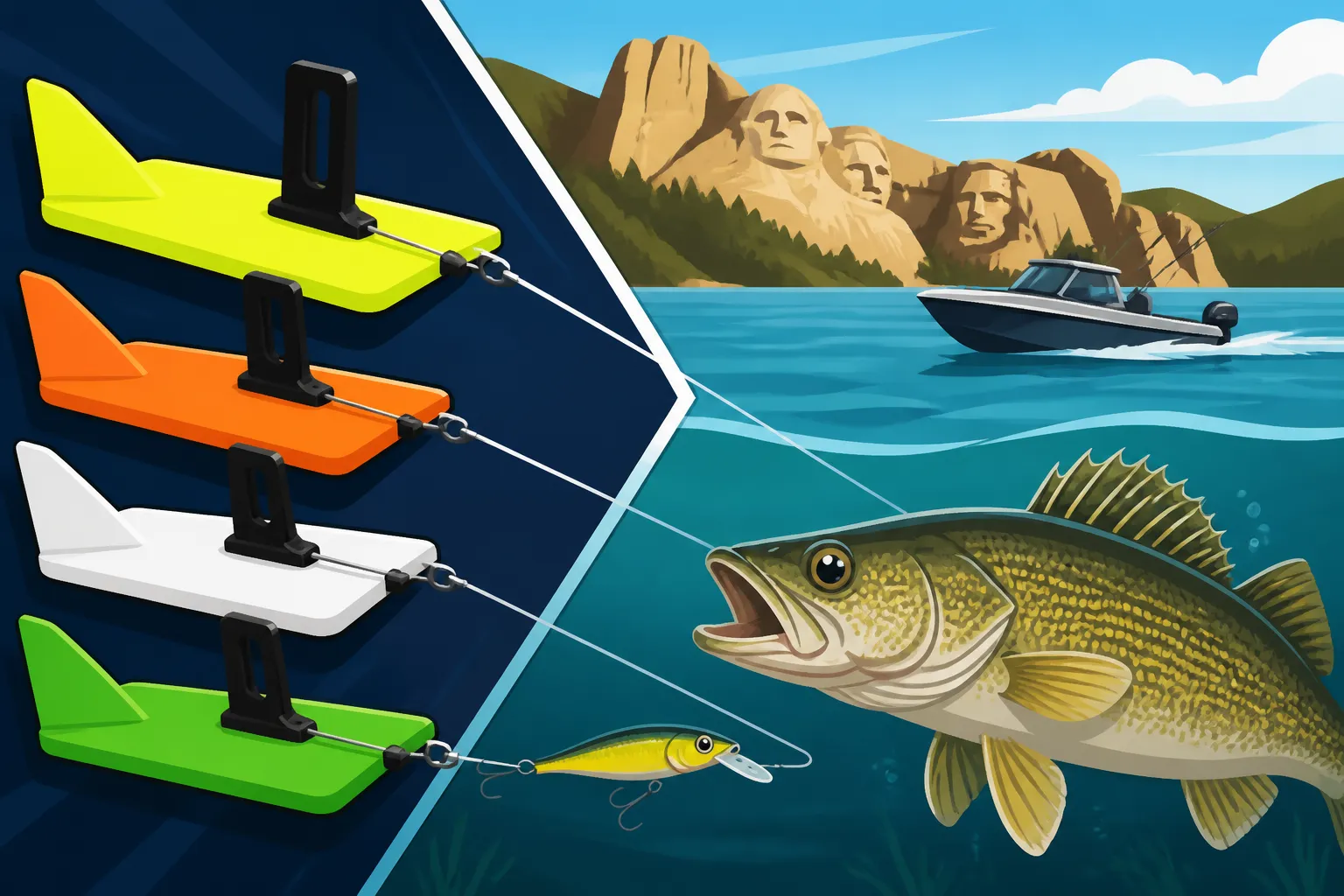
Enter the planer board, a simple yet revolutionary piece of equipment. These devices are designed to "plane" out to the side of your boat, pulling your fishing line with them. By attaching your line to a planer board, you can send your lure dozens of feet, sometimes even over a hundred feet, away from the boat's path. This allows you to present your baits in undisturbed water, often surprising walleye who haven't been spooked by your approaching vessel. More importantly, planer boards enable you to run multiple lines simultaneously without them tangling. Imagine running three lines on one side and three on the other, each at a different distance and depth. Suddenly, your trolling spread goes from a narrow trail to a massive, fish-attracting net, dramatically increasing your chances of finding and catching active walleye. This wide coverage is especially critical on large bodies of water, like when you're targeting walleye on Lake Oahe Fishing Guide or Lake Sharpe Fishing Guide.
Types of Planer Boards: Choosing the Right Style for Your Trolling Setup
Just like there are different boats for different fishing styles, there are various types of planer boards, each with its own advantages and ideal applications. Understanding these differences will help you select the best boards for your South Dakota walleye adventures.
In-Line Planer Boards
In-line planer boards are probably what most anglers envision when they hear "planer board." These are self-contained units that attach directly to your fishing line, hence the "in-line" name. You deploy them by attaching them to your main line, letting out your desired amount of line for your lure, and then sending the board out to the side. They have a release mechanism that allows the line to pop free when a fish strikes, leaving you to fight the fish directly without the board interfering, or sometimes the board will simply slide down the line to a stop at your swivel.
They are incredibly popular for a reason:
- Simplicity: Easy to use and set up, even for solo anglers.
- Portability: They don't require any fixed mounts on your boat, making them great for smaller boats, kayaks, or if you frequently change your setup.
- Affordability: Generally less expensive than mast systems, making them an accessible entry point into planer board trolling.
- Direct Feel: Since the board is on your line, you get a direct feel for what your lure is doing, though this can be slightly muffled by the board itself compared to a mast system.
Many anglers start with in-line boards, and you'll find excellent options from reputable brands like Off Shore Tackle and Church Tackle. You can often find a wide selection at a place like Bass Pro Shops or conveniently order them online through retailers like Amazon. They're perfect for running two to four lines out the side of smaller to medium-sized boats on a lake like Lake Francis Case.
Mast Systems and Dual Boards
Mast systems are a step up in complexity and are typically preferred by serious tournament anglers or those who consistently run a large spread of lines. These systems consist of a fixed mast mounted to the front or side of your boat, from which a main planer line extends to a large, buoyant "dual" planer board (often two boards connected together for maximum planing power). Your individual fishing lines are then attached to this main planer line using specialized releases or clips. When a fish strikes, the clip releases your fishing line from the main planer line, allowing you to reel in the fish without having to bring in the main planer board first.
The benefits of a mast system are clear:
- Maximum Spread: Can handle a greater number of lines (6-12 or more) and pull boards further out, covering an enormous amount of water.
- Consistent Pull: The large boards provide a very stable and consistent pull, even in choppy water, keeping your lures running true.
- Clearer Line Feel: Since your fishing line is only attached by a clip, you often get a more direct feel for your lure's action and fish strikes.
- Efficiency: Once deployed, adding or removing individual fishing lines is very fast and efficient.
While requiring a more significant initial investment and permanent boat mounting, a mast system is unrivaled for anglers who demand ultimate control over a vast trolling spread on our biggest waters like Lake Oahe.
Hybrid Options and Specialized Boards
Beyond the two main categories, you'll also encounter some hybrid designs and specialized planer boards. Some companies offer larger, more robust in-line boards that can handle heavier currents or larger lures. There are also smaller, more subtle in-line boards designed for ultralight setups or very clear water conditions. Some even incorporate lights for night fishing.
Consider factors like:
- Directional Boards: Some boards are designed to dive or track in a specific way, though these are less common for general walleye trolling.
- Lighted Boards: For anglers extending their fishing into the evening, lighted in-line boards can be a game-changer for visibility, allowing you to track your spread long after sunset when walleye often become more active.
Choosing the right type often comes down to your boat size, how many lines you want to run, and your budget. For most casual to moderately serious walleye anglers in South Dakota, a good set of in-line planer boards will be an excellent starting point.
Key Features to Look for in Walleye Planer Boards
Not all planer boards are created equal. When you're ready to invest, understanding the critical features will help you pick boards that perform reliably and enhance your fishing experience, rather than adding frustration.
Buoyancy and Stability
This is perhaps the most crucial feature. A good planer board needs to float high and run true in a variety of water conditions.
- Buoyancy: The board needs enough flotation to stay on the surface and pull your line without dipping or submarining, especially when pulling heavier lures, lead core, or in choppy water. Boards made from durable, lightweight plastic or foam cores are common. A common frustration is boards that constantly dive or list to one side, completely defeating their purpose. You want a board that handles the chop of a windy day on the Missouri River without constantly flipping.
- Stability: A well-designed board will have a hydrodynamic shape that allows it to "plane" consistently and predictably. It shouldn't veer erratically or struggle to hold its position. Look for designs that have a good balance and often a keeled bottom or weighted side for stability.
When comparing options, consider reviews and descriptions that specifically mention performance in rough water or with heavier setups. A board that struggles in mild chop on a calm day on Lake Poinsett will be utterly useless on a blustery day on Lake Oahe.
Release Mechanisms: Keeping Your Fish On
The release mechanism is critical for both strike detection and successfully landing your fish. There are several common types, each with pros and cons:
- Spring-Loaded Clamp Releases: These are very common on in-line boards. They use a spring-loaded clamp to hold your line. When a fish strikes, the tension pulls the line free from the clamp, allowing the board to either slide down to a swivel or detach completely. Look for clamps that offer adjustable tension, so you can set them light enough for small walleye bites but firm enough to hold your line in heavy waves or current.
- Pin-Style Releases: Some older or simpler designs use a pin that holds the line. When a fish hits, the line pulls free from the pin. These can be less reliable than clamp-style releases and may not offer adjustable tension.
- Rubber Band or O-Ring Releases: Often used with mast systems, these involve attaching your fishing line to the main planer line with a rubber band or O-ring, which is then held by a specialized clip. When a fish hits, the rubber band/O-ring breaks or pulls free from the clip. This provides a very clean release, ensuring minimal interference with the fight.
The ideal release should hold your line securely during trolling, release easily with a fish strike, and not damage your line in the process. Many anglers carry extra release clips, especially if they are fishing heavily or frequently getting strikes, as wear and tear can happen.
Flag Systems and Visibility
Imagine having a dozen lines out, and a walleye hits the far-out board. How do you know? A good flag system is your answer.
- High-Visibility Flags: Most planer boards come with a flag, but the quality varies. Look for bright, easily visible colors like fluorescent orange or yellow that stand out against the water, sky, and shoreline.
- Indicator Flags: Many modern boards incorporate a spring-loaded flag that either stands upright when trolling normally and drops when a fish hits (due to the line tension change) or rises when a fish hits. This visual cue is indispensable for early strike detection, especially when boards are far out. Without a reliable flag system, you might be dragging a fish for minutes before realizing, which is bad for the fish and can lead to lost lures.
Good visibility is paramount for safety too, allowing other boaters to easily spot your spread. You can even find lighted flags for dawn, dusk, or night fishing, significantly enhancing your ability to track your boards when the light starts to fade, which can be crucial for extending your bite windows during Night Fishing Techniques for Summer Walleye.
Setting Up and Using Planer Boards for South Dakota Walleye
Once you've chosen your planer boards, the next step is to get them rigged correctly and learn how to deploy and retrieve them smoothly. This might seem intimidating at first, but with a little practice, it becomes second nature.
Rigging Your Boards: Attachments and Line Management
Proper rigging is essential for your planer boards to function effectively.
- Attaching the Board to Your Line: For in-line boards, you'll typically have two points of attachment: a front clip or mechanism that locks the board onto your line, and a rear release that allows the line to slip free when a fish strikes. Ensure your line is correctly threaded through both points as per the manufacturer's instructions. Incorrect attachment can lead to the board not planing properly or not releasing when a fish hits.
- Leader and Lure Connection: Once the board is attached, you'll let out line for your lure or bait. Consider using a fluorocarbon leader between your main line and your lure for added stealth, especially in clear South Dakota waters. The length of this leader can vary depending on the lure and water clarity. For example, when How to Troll Crankbaits for Walleye, a shorter leader might be fine, but for subtle presentations, a longer one could be beneficial.
- Rod Selection: Use trolling rods that are long enough (typically 7 to 10 feet) with a moderate action to absorb shocks and keep fish pinned. A good trolling rod has enough backbone to handle the pull of the board and a fish, but a soft enough tip to indicate subtle bites. You can find excellent options suitable for this at Bass Pro Shops.
Always double-check your knots and connections. The last thing you want is to lose a trophy walleye and an expensive board due to a faulty rigging.
Deployment and Retrieval: A Smooth Operation
Getting your boards in and out of the water efficiently is a skill that improves with practice.
- Deployment: Start by letting out your lure to the desired distance behind the boat. Then, attach your planer board to the line, clip it into its front attachment point, and engage the rear release. Gently toss the board into the water, ensuring your line doesn't get tangled. As your boat moves forward, the board will pull out to the side. Let out more line from your reel to send the board further away. A smooth, controlled release prevents tangles and ensures the board sets correctly.
- Retrieval: When a fish hits, the rear release will pop, and you'll fight the fish. Once the fish is close to the boat, you'll need to retrieve the board. If the board slides down to a swivel, simply reel the fish in with the board on the line. If it detaches, you'll need to reel it in manually or use a specific technique to bring it back. For mast systems, you fight the fish directly, and the main planer board stays deployed until you're ready to bring in all lines. For in-line boards that slide down the line, some anglers use a dedicated "board retriever" tool to slide down the line and grab the board, making it easier to pull in.
Practicing deployment and retrieval in calm conditions will save you a lot of headaches when the fish are biting, or the wind picks up. It's often helpful to have a partner to assist, especially when first learning.
Line Management and Spacing: The Art of the Spread
The whole point of planer boards is to spread out your lines, but there's an art to doing it effectively.
- Staggering Your Boards: Don't send all your boards out to the same distance immediately. Stagger them, with the closest board deployed first, then the next board further out, and so on. This creates a "ladder" effect, preventing tangles and allowing you to cover multiple zones. For example, you might have one board 20 feet out, another 40 feet, and a third 60 feet from the boat.
- Varying Line Lengths: Beyond staggering the boards themselves, vary the amount of line you let out behind each board to present lures at different depths and distances from the board. This allows you to experiment with depths and presentations without constant adjustments to your main trolling speed.
- Color-Coding Lines/Reels: If you're running many lines, using different colored lines or reels for each setup can help you quickly identify which line is which, especially helpful when a fish hits or when you need to make adjustments.
Effective line management prevents frustrating tangles, which can quickly ruin a hot bite. A well-organized cockpit and clear understanding of which line is where will make your trolling much more enjoyable. Remember to keep an eye on your boat speed; Best Trolling Speed for Walleye can vary depending on the time of year and water temperature.
Common Planer Board Challenges and Troubleshooting
Even with the best gear and intentions, using planer boards can present a few challenges. Knowing how to troubleshoot these common issues will keep your fishing trip running smoothly.
Dealing with Fouled Lines: The Tangle Troubleshoot
It's inevitable: sometimes lines get tangled. Whether it's a bird's nest around your reel, a lure catching another line, or the worst – two planer boards crossing paths.
- Immediate Action: If you see two boards getting too close, or a line acting erratically, act fast. Slow down your boat (but don't stop completely, as this can worsen tangles) and begin reeling in the innermost line first, then the next, working your way out. This minimizes the risk of a domino effect of tangles.
- Wind and Current: Strong winds or currents, especially on a vast reservoir like Lake Oahe, can push boards together or create unpredictable drifts. Try to troll with or against the main current whenever possible to maintain a more consistent spread. If crossing wind/current, be extra vigilant.
- Too Many Lines: Sometimes, the simplest solution is to reduce the number of lines you're running. While it's tempting to put out as many as possible, if you're constantly fighting tangles, you're better off with fewer, well-managed lines.
- Practice, Practice, Practice: The more you use planer boards, the better you'll become at anticipating and preventing tangles. Don't get discouraged if your first few outings involve some frustration – it's part of the learning curve!
Having sharp line cutters and a good pair of pliers easily accessible will also save you time and frustration when dealing with unexpected snarls.
Snags and Bottom Contact: Avoiding Lost Lures
Trolling often means running lures close to the bottom, which is where those big walleye hang out. But it also means a higher risk of snags.
- Depth Control: This is paramount. Use your fish finder and GPS to monitor depths and contour lines carefully. If you see the bottom rising rapidly, either speed up slightly (which will lift your lures), reel in some line, or adjust your boat's path. Tools like bottom tracking on your fish finder can be a lifesaver.
- Lure Selection: Choose lures appropriate for the depth you're fishing. For instance, if you're fishing shallow flats, a shallow-diving crankbait is better than a deep-diving one that will constantly dig into the bottom. When fishing deeper, using lead core line or snap weights can help you achieve precise depths without overly heavy lures.
- Feeling the Bottom: Learn to "feel" your lure ticking the bottom. This subtle contact is often a good sign you're in the strike zone, but too much contact means you're about to snag. If you feel a constant drag, you're likely running too deep.
If you do snag, stop the boat immediately and try to reverse course gently. Sometimes backing up over the snagged spot will free the lure. If not, it might be time to break out the fishing license and prepare to retie your setup, maybe after checking out South Dakota Fishing License Guide if you haven't already.
Wind and Wave Management: Keeping a True Course
South Dakota's lakes can get windy, and waves can wreak havoc on a perfectly laid-out trolling spread.
- Trolling Motor Control: A good bow-mounted electric trolling motor with GPS-controlled "spot lock" or "jog" features is invaluable for maintaining a consistent course and speed in windy conditions. Brands like Minn Kota and MotorGuide offer excellent options. Best Trolling Motors for Walleye Fishing can make a huge difference here.
- Heavy Boards: In exceptionally rough water, lighter, less buoyant in-line boards might struggle to stay upright. Consider upgrading to larger, more stable models or even a mast system if you frequently fish in challenging conditions.
- Adjusting Speed and Angle: Sometimes, you'll need to adjust your trolling speed or even your angle relative to the waves to keep your boards running true. Quartering into or with the waves can sometimes be more stable than taking them directly on the beam.
- Using Wave Action: While waves can be a challenge, they can also be an advantage. The rise and fall of the boat can impart an enticing jigging action to your lures, especially on crankbaits. Experiment with how your lures react to the waves and adjust your speed accordingly.
Learning to work with, rather than against, the wind and waves is a skill that comes with experience. Don't let a little chop deter you; some of the best walleye bites happen on windy days.
Maximizing Your Trolling Spread with Planer Boards
Planer boards are more than just a way to spread out lines; they're a tool for precise presentation and pattern recognition. Mastering their use can unlock new levels of walleye fishing success.
Varying Depths and Lures: Finding the Walleye's Preference
One of the greatest advantages of a wide planer board spread is the ability to experiment with multiple presentations simultaneously. Walleye can be incredibly particular about depth and lure choice.
- Depth Staggering: Don't just run all your lures at the same depth. Use different amounts of line, different sized crankbaits, or add snap weights to run lures at varying depths within your spread. For instance, on a sunny day, you might run some lures deeper for light-sensitive fish and others shallower for active feeders. You might find walleye at 15 feet while others are hugging the 25-foot contour.
- Lure Variety: Deploy different types and colors of lures across your spread. Run a flicker shad on one line, a deep-diving Rapala on another, and perhaps a crawler harness on a third. Pay attention to which lure gets hit. If one lure consistently out-produces the others, you've found a "pattern" – then you can switch more of your lines to that successful presentation. This is where having a good selection of Best Lures for South Dakota Walleye comes in handy.
- Speed and Action: Different lures perform best at different speeds. While you can't run individual lines at truly different boat speeds, you can choose lures that have their optimal action at your chosen trolling speed. Sometimes, slightly adjusting your boat speed up or down by 0.1 mph can make a huge difference in how your lures are presented.
The goal is to present a "smorgasbord" of options to the walleye, allowing them to tell you what they prefer on any given day.
Adjusting for Boat Speed and Current: Precision Presentation
Maintaining precise boat speed and understanding the effect of current are crucial for effective trolling, especially with planer boards.
- GPS Speed vs. Water Speed: Always rely on your GPS for accurate boat speed over ground. However, remember that your lure's speed through the water will be affected by current. If you're trolling against a strong current, your boat speed might be slow, but your lure speed through the water will be faster. Conversely, with the current, your boat speed might be faster, but your lure speed through the water could be very slow.
- Current Seams: Pay attention to current breaks and seams, especially on the Missouri River reservoirs. Walleye often stack up in these areas, waiting to ambush baitfish. Position your planer board spread to run parallel to these seams, or even across them if you're trying to locate fish.
- Reading Your Electronics: Your fish finder is your best friend. Use it to identify baitfish schools, structure, and individual walleye. Observe how your lures are running relative to these features and adjust your depths and distances accordingly. Best Fish Finders for South Dakota Lakes can give you a significant edge.
Minor adjustments to boat speed can dramatically change a lure's depth and action. Even a slight increase or decrease can transform a retrieve from ineffective to irresistible for a finicky walleye.
Advanced Strategies for Tough Bites: Thinking Outside the Box
When the bite gets tough, planer boards allow for some advanced techniques that can coax reluctant walleye into striking.
- Long-Lining Away from the Boat: Sometimes, fish are so boat-shy that even boards 50 feet out aren't enough. With planer boards, you can effectively "long-line" lures hundreds of feet behind the boards, presenting them in water that's been undisturbed for a long time. This is particularly effective in extremely clear water or highly pressured lakes.
- "Snap" Trolling: This involves periodically increasing and decreasing your trolling speed in short bursts. The sudden surge and then slowdown can make your crankbaits dart and hesitate, often triggering reactionary strikes from hesitant walleye. Your planer boards will follow this action, spreading the effect across a wide area.
- "S-Turns" and Directional Changes: Instead of trolling in a straight line, make gradual "S-turns." As your boat turns, the inside lines will slow down and drop, while the outside lines will speed up and rise. This constantly changes the action and depth of your lures, mimicking baitfish trying to escape or an injured meal, and can be incredibly effective when fish are inactive. The wide sweep of your planer board spread during these turns ensures you're covering a massive amount of water with varied lure actions.
- Mixing Live Bait and Artificials: Don't be afraid to run live bait (like a nightcrawler harness) on some lines and artificial lures (crankbaits or stickbaits) on others. This allows you to appeal to different walleye moods and preferences. You can even find specialized planer board releases designed to be extra sensitive for subtle live bait bites.
Using planer boards effectively transforms your boat into a highly efficient fish-finding machine. By spreading your lines, varying your presentations, and making precise adjustments, you'll be well on your way to consistent walleye success in South Dakota.
Planer Board Maintenance and Storage
Just like any other piece of fishing gear, proper care and maintenance will extend the life of your planer boards and ensure they perform when you need them most. Neglecting them can lead to costly replacements or, worse, a ruined fishing day.
Cleaning and Inspection After Each Trip
It might seem tedious, but a quick post-trip check can prevent big problems down the line.
- Rinse Thoroughly: If you've been fishing in muddy or silty water, or if your boards have gotten wet with lake water that might contain algae or debris, give them a good rinse with fresh water. This is especially important for the release mechanisms, as grit can cause them to malfunction.
- Inspect Releases: Carefully examine the release clips or pins. Look for any signs of wear, cracks, or corrosion. If they feel stiff or aren't snapping properly, they might need a bit of lubrication (a silicone spray can work wonders) or replacement. Worn-out releases are a common reason for lost fish or boards not performing.
- Check Flags: Ensure the flags are still securely attached and not torn or faded beyond visibility. A flapping flag is useless if you can't see it from the boat. Check the flag's spring mechanism, if applicable, to ensure it's still responsive.
Taking a few minutes after each outing can prevent a lot of headaches on your next one. It's much easier to spot a small issue at home than when you're out on Lake Sharpe with a hot walleye bite going on.
Proper Storage for Longevity
How you store your planer boards between trips and during the off-season matters.
- Away from Direct Sunlight: Prolonged exposure to UV rays can degrade the plastic components of your boards, making them brittle and faded. Store them in a shaded area, a garage, or a tackle shed.
- Organized and Protected: Don't just toss them into a storage compartment where they can get crushed or tangled with other gear. Many anglers use dedicated storage bags or racks for their planer boards. Some even hang them neatly on garage walls. This prevents damage and keeps them ready for quick deployment.
- Remove Batteries (if applicable): If your lighted planer boards use batteries, remove them during long storage periods to prevent corrosion.
Troubleshooting Common Wear and Tear
Even with the best care, components will eventually wear out. Knowing what to look for can help.
- Worn Clips: Release clips are often the first thing to show wear, especially the pads that grip the line. Keep spare sets on hand. Many retailers like Amazon sell replacement pads and clips for popular brands.
- Flag Stems: Flags can get bent or the springs can lose their tension. Replacement flags are usually available.
- Cracks or Dents: While modern boards are durable, impacts can cause cracks. Small cracks might be repairable with marine-grade epoxy, but significant damage might warrant replacement to ensure optimal performance.
- Faded Colors: Over time, even high-visibility colors can fade. If your boards are becoming hard to see, consider replacing them or using high-visibility tape to enhance their visibility.
Treating your planer boards as valuable tools, rather than just plastic floats, will ensure they serve you well for many seasons of South Dakota walleye fishing.
Planer Board Comparison: In-Line vs. Mast System
To help you decide which planer board system is right for your walleye trolling needs, here's a quick comparison of the two main types:
| Feature | In-Line Planer Boards | Mast Planer Board System |
|---|---|---|
| Number of Lines | Typically 1-3 lines per side (2-6 total) | Up to 6-12+ lines per side (12-24+ total) |
| Setup & Complexity | Simple, attaches directly to fishing line | More complex, requires boat-mounted mast and main line |
| Boat Size Suitability | Excellent for small to medium boats | Best for medium to large boats, dedicated trolling boats |
| Visibility | Flags directly on each board, can be lower profile | Large main boards are highly visible, individual flags |
| Fish Fighting | Board slides down line or detaches | Line releases from main planer line, direct fight |
| Initial Cost | Generally lower per board | Higher initial investment for mast and large boards |
| Space Required | Minimal on boat, easy to store | Mast requires dedicated mounting space |
| Ease of Deployment | Easy for single angler | Efficient for multiple lines with a crew |
| Best For | Casual to serious anglers, varying boat use, smaller water | Dedicated trollers, large water, tournament fishing |
This table should give you a good starting point for evaluating which system aligns best with your personal fishing style and the kind of waters you typically fish in South Dakota. For example, if you often fish the smaller glacial lakes, in-line boards might be perfect, while the expansive Missouri River reservoirs could justify a mast system.
Conclusion: Expanding Your Walleye Reach
There's no doubt that mastering planer boards can be a game-changer for your South Dakota walleye fishing. They solve the fundamental trolling challenge of presenting lures effectively over a wide area, away from your boat's disturbance, and they allow you to experiment with a diverse spread of baits and depths. Whether you opt for the simplicity and versatility of in-line boards or the expansive coverage of a mast system, the principle remains the same: more lines in the strike zone equals more opportunities to put those delicious walleye in the boat.
Don't let the initial learning curve intimidate you. Start with a couple of good quality in-line boards, practice your deployment, and pay attention to how your spread behaves. Soon, you'll be confidently running a wide array of lures, covering more water, and discovering patterns that might have been out of reach before. So go ahead, rig up those boards, hit the water, and get ready to expand your walleye reach across South Dakota's incredible fisheries!
Disclaimer
This article is for general informational purposes only and does not constitute professional advice. Laws, prices and regulations vary by location and change over time. Consult a qualified professional for guidance on your specific situation.