Species That Qualify for the South Dakota Trophy Fish Award
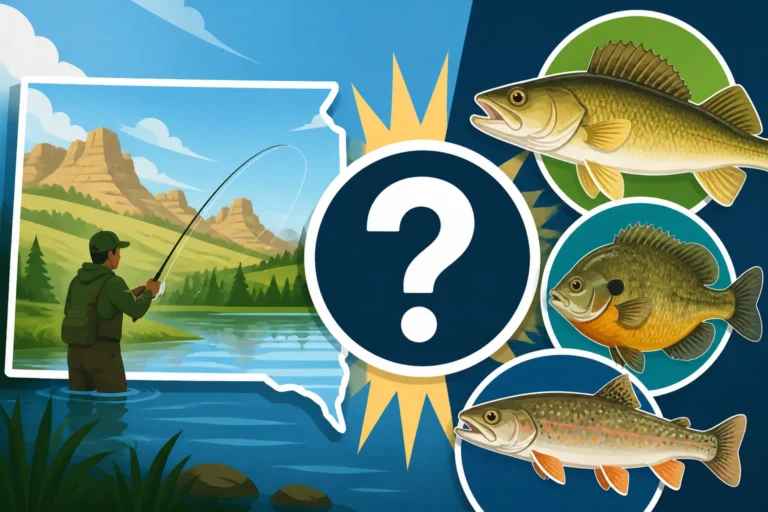
There’s nothing quite like the thrill of feeling a truly substantial fish on the end of your line. You fight it, land it, and when you finally get it into the boat or onto the bank, your jaw drops. You know you’ve just caught something special, something worth remembering! But how do you officially celebrate that monumental catch in South Dakota? This guide will walk you through the South Dakota Game, Fish and Parks (GFP) Trophy Fish Award program, detailing which species qualify and the minimum measurements needed to earn that well-deserved recognition.
Understanding the South Dakota Trophy Fish Award Program
Catching a genuinely large fish is a milestone for any angler. It's not just about the fight; it's about the culmination of skill, patience, and often, a little bit of luck. The South Dakota GFP recognizes this achievement with its Trophy Fish Award program, designed to celebrate those memorable catches that might not break a state record but are certainly exceptional for their species. It’s a fantastic way to get official recognition for your angling prowess and contribute to the state’s understanding of its fisheries.
What is the Trophy Fish Award?
The Trophy Fish Award is essentially a certificate of accomplishment, a way for the state to acknowledge anglers who land unusually large fish. It's a personal trophy, separate from the South Dakota State Record List, which tracks the absolute largest fish ever caught in the state. Think of it this way: you might not catch the biggest walleye ever caught in South Dakota, but if you land one that meets the program's minimum length or weight, you've still caught a trophy walleye, and that's something to be incredibly proud of! The program aims to encourage responsible angling and showcase the incredible fishing opportunities available across South Dakota's diverse waters, from the vast Missouri River reservoirs to the tranquil Black Hills streams.
Why Knowing the Criteria Matters
Imagine this scenario: you're out on Lake Oahe, the drag is screaming, and after a grueling battle, you hoist a magnificent northern pike into your boat. It's a true beast, easily the biggest you've ever seen. You snap a few photos, maybe even measure it roughly, and then release it, feeling on top of the world. Later, you hear about the Trophy Fish Award and wonder if your pike would have qualified. The frustration of not knowing, or realizing you didn't get a proper measurement, can be a real bummer. Knowing the specific criteria before you head out means you're prepared. You'll have the right measuring tape and camera ready, ensuring that if that monster fish bites, you can properly document your catch and apply for the award. It takes the guesswork out of the equation and lets you fully appreciate the moment without future regrets. This preparation is a part of the overall South Dakota Fishing Gear Checklist that experienced anglers often review before hitting the water.
Key Fish Species and Their Trophy Minimums
South Dakota boasts an incredible diversity of fish species, each with its own set of challenges and rewards. The Trophy Fish Award program covers a wide array of these species, recognizing exceptional catches across the board. From the mighty walleye that dominates the Missouri River system to the elusive trout of the Black Hills, there's a trophy waiting for many different types of anglers.
Walleye and Sauger: The Missouri River Giants
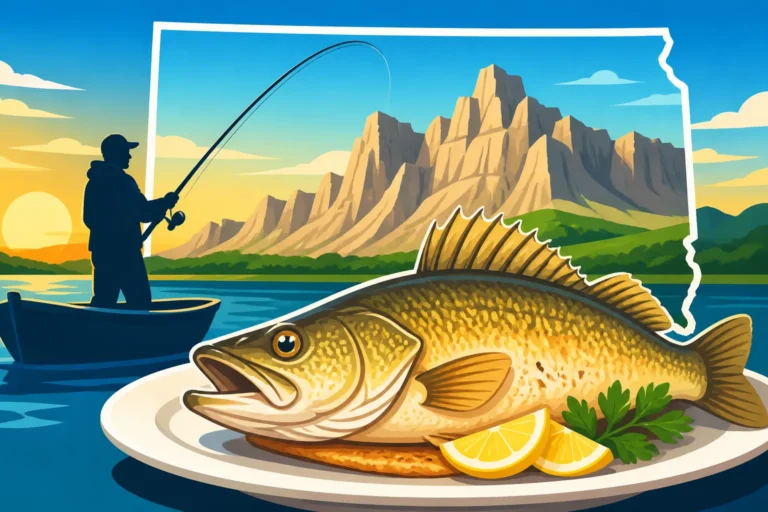
For many South Dakota anglers, the walleye is king. These prized game fish are abundant in the Missouri River reservoirs like Lake Oahe, Lake Sharpe, Lake Francis Case, and Lewis and Clark Lake. Catching a walleye that truly stands out is a monumental achievement. The Trophy Fish Award program recognizes this by setting specific minimums.
When you hook into a big walleye, your heart really starts to thump. You can almost feel the weight of it through the rod, even before you see it. Once you get it in the boat, that's when the real work begins. You need to quickly and accurately measure it. For the Trophy Fish Award, both walleye and sauger have specific length requirements. For a walleye, you're looking for a fish that hits a certain minimum length, and for a sauger, it's a slightly different, though still impressive, minimum length. These measurements are typically fork length, meaning from the tip of the jaw to the fork in the tail. Having a good, waterproof measuring tape is crucial here; many anglers find reliable options on platforms like Amazon. Remember, even if you’re planning on releasing the fish, a quick, accurate measurement is vital for your application. If you're interested in pursuing these species, our South Dakota Walleye Fishing Guide can provide you with more in-depth strategies.
Northern Pike and Muskie: Freshwater Predators
The sheer power of a northern pike or the legendary status of a muskie makes them bucket-list fish for many. These toothy predators are found in various South Dakota waters, with some of the glacial lakes and larger reservoirs holding truly enormous specimens. Landing one of these giants is an unforgettable experience, often involving explosive strikes and powerful runs.
For the Trophy Fish Award, northern pike have a minimum length requirement. Muskie, while less common, are also eligible and have their own impressive length minimum. Imagine reeling in a pike that seems to stretch across the entire bottom of your boat – that's the kind of fish we're talking about! Their long, slender bodies and razor-sharp teeth command respect. When you catch one, be extra cautious with handling to ensure both your safety and the fish's well-being for a quick release after measurement. Many anglers carry a sturdy, non-stretch measuring tape to get an accurate length from the tip of the snout to the tip of the tail. If you're targeting these apex predators, check out our South Dakota Northern Pike Fishing Guide for techniques and locations.
Bass Species: Largemouth and Smallmouth Excellence
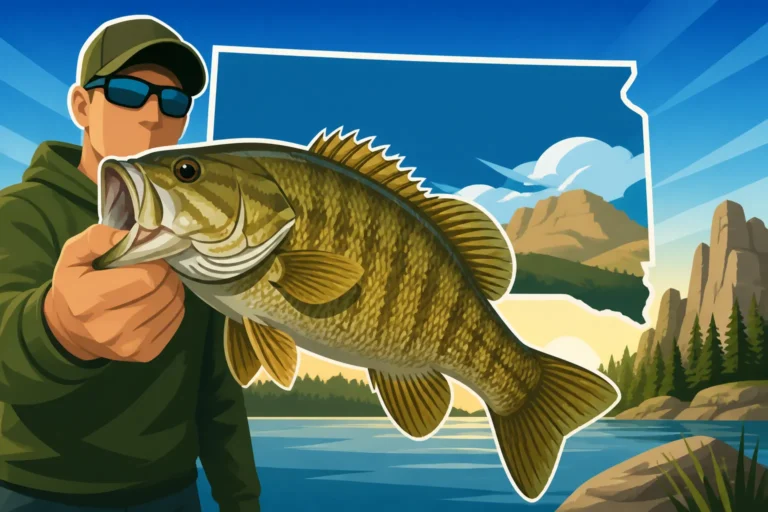
South Dakota offers excellent opportunities for both largemouth and smallmouth bass. While largemouth bass are often found in warmer, weedy lakes and ponds, smallmouth bass thrive in the clearer, rocky habitats of the Missouri River reservoirs and some Black Hills waters. Both species are known for their aggressive strikes and acrobatic fights, making them favorites among sport anglers.
The Trophy Fish Award has separate length minimums for largemouth bass and smallmouth bass. A trophy largemouth might be a chunky, heavy fish pulled from a lily pad field, while a trophy smallmouth could be a lean, muscular fighter from a deep, rocky point on Lake Sharpe. When you land a big bass, take a moment to admire its colors and robust build. For proper documentation, lay the fish flat on your measuring board, making sure its mouth is closed and its tail is compressed for the most accurate length reading. Our South Dakota Smallmouth Bass Fishing Guide has tips that can help you target those bigger smallies.
Trout Species: Black Hills Gems
The cold, clear waters of the Black Hills are a paradise for trout anglers. Rainbow, brown, and brook trout inhabit these picturesque streams and lakes, offering a completely different fishing experience. While they might not reach the massive sizes of some other species, catching a truly large trout in these pristine environments is a testament to delicate presentation and stealth.
The Trophy Fish Award includes minimum length requirements for rainbow trout, brown trout, and brook trout. A trophy rainbow might come from Sheridan Lake, while a stunning brown trout could be pulled from a hidden eddy in Rapid Creek. Brook trout, often smaller, have a very respectable length minimum to qualify for the award, reflecting the challenge of finding larger specimens. For these beautiful fish, a photograph demonstrating the length on a visible measuring device is paramount. It’s a wonderful way to commemorate a successful day in the serene beauty of the Black Hills. Learn more about these fish in our South Dakota Trout Fishing Guide.
Catfish: Channel, Flathead, and Blue Beasts
For those who enjoy a strong fight and excellent table fare, South Dakota's catfish population is a true gem. Channel catfish are widespread, while flathead and blue catfish grow to immense sizes in the Missouri River system. These powerful bottom dwellers offer some of the most intense battles an angler can experience.
The Trophy Fish Award has distinct minimums for channel catfish and flathead catfish, usually based on weight due to their dense bodies. A trophy channel catfish might be a hefty specimen from the James River, but true monsters come in the form of flatheads and blues from the mainstem Missouri. Imagine wrestling a catfish that weighs as much as a small child – that's a trophy-class fish! For these, a certified scale is your best friend. Many serious catfishermen invest in a good digital scale, easily found on Amazon, to ensure accurate weight measurements. It’s essential to zero out the scale with your weigh sling or net before placing the fish on it to get a precise reading. Our South Dakota Catfish Fishing Guide delves into techniques for landing these river giants.
Panfish and Other Notable Species
Don't let the "panfish" name fool you; catching a truly jumbo crappie or yellow perch can be just as exciting as landing a larger game fish, especially on lighter tackle. These fish are often targeted for their delicious fillets and their abundance, but finding a trophy-sized one takes skill.
The Trophy Fish Award also includes length minimums for black crappie, white crappie, and yellow perch. A massive crappie from Lake Sharpe, or a plump yellow perch from Bitter Lake, are definite candidates. Additionally, other species like chinook salmon (especially from Lake Oahe), white bass, and even some non-game species might qualify based on weight or length. For instance, the South Dakota Chinook Salmon Fishing Guide will tell you that a trophy salmon from Lake Oahe, especially during the fall run, can be a truly spectacular catch. Knowing the specific minimums for each species is key. A small, accurate measuring tape is perfect for panfish, ensuring you don’t miss out on recognizing that exceptional catch.
Here’s a quick overview of some common species and their general minimum requirements for the South Dakota Trophy Fish Award. Please note that these are typical ranges, and the official GFP website will always have the most current and precise figures for all species.
| Species | Measurement Type | Typical Minimum | Notes |
|---|---|---|---|
| Walleye | Length (inches) | 28 | From tip of snout to fork of tail |
| Sauger | Length (inches) | 22 | From tip of snout to fork of tail |
| Northern Pike | Length (inches) | 40 | From tip of snout to tip of tail |
| Muskie | Length (inches) | 40 | From tip of snout to tip of tail |
| Largemouth Bass | Length (inches) | 20 | From tip of snout to tip of tail |
| Smallmouth Bass | Length (inches) | 18 | From tip of snout to tip of tail |
| Rainbow Trout | Length (inches) | 20 | From tip of snout to tip of tail |
| Brown Trout | Length (inches) | 24 | From tip of snout to tip of tail |
| Brook Trout | Length (inches) | 16 | From tip of snout to tip of tail |
| Channel Catfish | Weight (pounds) | 20 | Must be weighed on certified scale |
| Flathead Catfish | Weight (pounds) | 30 | Must be weighed on certified scale |
| Black/White Crappie | Length (inches) | 15 | From tip of snout to tip of tail |
| Yellow Perch | Length (inches) | 13 | From tip of snout to tip of tail |
| Chinook Salmon | Weight (pounds) | 20 | From Lake Oahe only, must be weighed on certified scale |
Always refer to the official South Dakota GFP regulations or website for the most up-to-date and complete list of qualifying species and their exact minimum requirements.
How to Document and Apply for Your Trophy Fish
So you've caught a truly impressive fish that you believe qualifies for the Trophy Fish Award. Fantastic! But the job isn't quite done. Proper documentation is absolutely critical for your application to be successful. Without accurate measurements and clear photos, even the biggest fish might not earn you that official recognition.
Essential Measurement and Photo Tips
This is where preparation really pays off. When that trophy hits the deck, the clock starts ticking, especially if you plan to release it.
First, for length measurements, you need a reliable, non-stretch measuring tape or bump board. Lay the fish flat on a wet surface or measuring board. Ensure its mouth is closed against the bump if using a board, and gently pinch its tail to get the maximum possible length. For species measured by length, it’s usually from the tip of the jaw to the fork of the tail (fork length) or to the tip of the tail (total length), so know the specific requirement for your species. Take a clear, well-lit photo of the fish on the measuring device, with the measurements clearly visible. This photo is your undeniable proof. Many anglers buy durable, waterproof measuring tapes specifically for this purpose; you can find excellent options on Amazon.
For weight measurements, particularly for heavier species like catfish or salmon, a certified scale is often required. This means a scale that has been inspected for accuracy, often by a commercial entity like a tackle shop or processing facility. If you’re weighing it yourself, a good quality digital scale can give you a provisional weight, but it’s best to get it certified. Take a photo of the fish hanging from the scale with the weight clearly visible on the display. It’s also wise to get a photo of yourself with the fish, but remember, the measurement photo is the most important for the application itself. Handle the fish gently and quickly to minimize stress, especially if you intend to release it.
The Application Process: What You Need to Submit
Once you have your measurements and photos, it's time to put together your application. The South Dakota GFP typically has an online application form or a printable version you can mail in. You'll need to provide details about your catch, including:
- Your Personal Information: Name, address, contact details.
- Species of Fish: Be specific (e.g., Largemouth Bass, Channel Catfish).
- Date and Location of Catch: Specify the lake, river, or even a general area like "Lake Oahe near Mobridge."
- Measurement: The recorded length or weight, adhering to the specific measurement type for that species.
- Method of Catch: What kind of bait, lure, or technique did you use? (e.g., jigging with a minnow, trolling a crankbait).
- Witness Information (Optional but helpful): If someone was with you, their name and contact can add credibility.
- Photos: Upload or include the clear photos showing the fish and its measurement.
Many anglers find it helpful to review the South Dakota Master Angler Program Requirements beforehand, as the documentation steps are very similar. The more detail and clear evidence you provide, the smoother the application process will be. Always double-check that your photos are not blurry and that the measurements are legible.
Avoiding Common Pitfalls
Applying for a Trophy Fish Award should be exciting, not frustrating! By avoiding a few common mistakes, you can ensure your application sails through:
- Inaccurate Measurements: This is the biggest pitfall. A fish that's "close enough" often isn't. Make sure your measurement is precise and clearly visible in your photo. Don't eyeball it! Use a rigid ruler or a good measuring tape that won't stretch or distort.
- Poor Photo Quality: Blurry, dark, or obscured photos won't cut it. Ensure your measuring device is fully visible, and the numbers are legible. Avoid glare, shadows, or holding the fish in a way that makes measurement difficult to ascertain.
- Missing Information: Rushing the application and leaving out details can cause delays or even rejection. Take your time to fill out every required field accurately.
- Not Knowing the Rules: The minimum sizes can change, or specific measurement types might be required for certain species. Always consult the most current South Dakota GFP regulations to ensure your fish qualifies. What might be a trophy one year could be slightly under the minimum the next. Being informed is your best defense against disappointment. Our guide on How to Qualify for a South Dakota Master Angler Award provides additional tips on documentation that are relevant here.
By being prepared and diligent, you can confidently apply for your South Dakota Trophy Fish Award and proudly display that certificate, a lasting memory of your incredible catch!
Disclaimer
This article is for general informational purposes only and does not constitute professional advice. Laws, prices and regulations vary by location and change over time. Consult a qualified professional for guidance on your specific situation.