Slip Bobber vs Jig for Walleye Fishing
For many South Dakota walleye anglers, the choice between a slip bobber and a jig can feel like a genuine dilemma. Both are incredibly effective techniques for tempting those elusive fish, but knowing when and where to employ each one makes all the difference between a slow day and a cooler full of fillets. This guide is here to help you navigate that decision, delving into the nuances of each method so you can fish smarter, not just harder, on your next walleye quest.
The Art of Jigging for Walleye: A Direct Approach
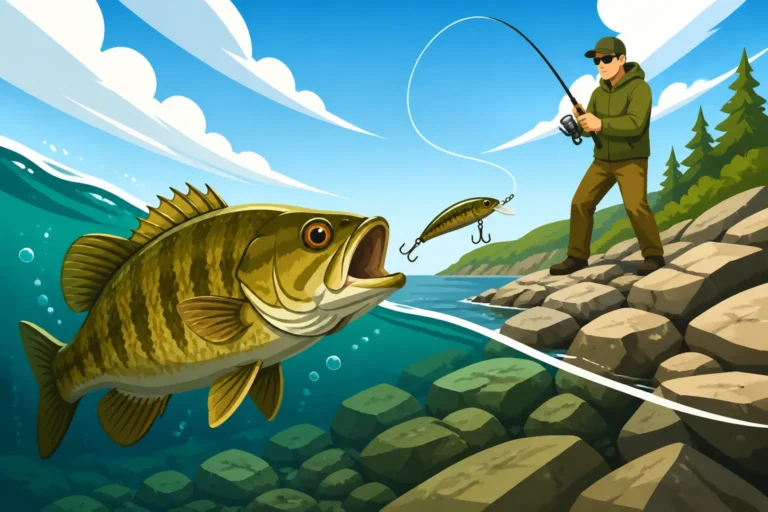
Jigging is often seen as a more active, hands-on style of fishing, demanding your constant attention and feel. It’s a technique that allows for direct control over your presentation, which can be absolutely deadly when walleye are holding tight to structure or aren't willing to chase.
When Jigging Shines Brightest
There are specific scenarios where a jig truly outshines other presentations. One of the most common is when you're dealing with current. Think of the powerful flows below the Missouri River dams, like Oahe Dam or Big Bend Dam. Here, the current allows your jig to perform a natural-looking drift, mimicking an injured baitfish struggling against the flow. Walleye in these areas often tuck into current seams or behind structure, waiting to ambush. A well-placed jig allows you to get right into their strike zone and stay there.
Jigging is also paramount in colder water conditions, especially during early spring or late fall, and certainly through the ice. When walleye are lethargic and less inclined to move far for a meal, a vertical presentation directly in front of their nose is often the only thing that will trigger a strike. They might be hugging the bottom in deeper holes, or suspended just off the break line. A jig can be precisely dropped to these depths, giving the fish a compact, irresistible offering without requiring them to expend much energy to chase. It's about putting the meal on a platter for them. This directness is a key factor in Winter Walleye Fishing Techniques too, making jigs indispensable.
Essential Jigging Gear and Techniques
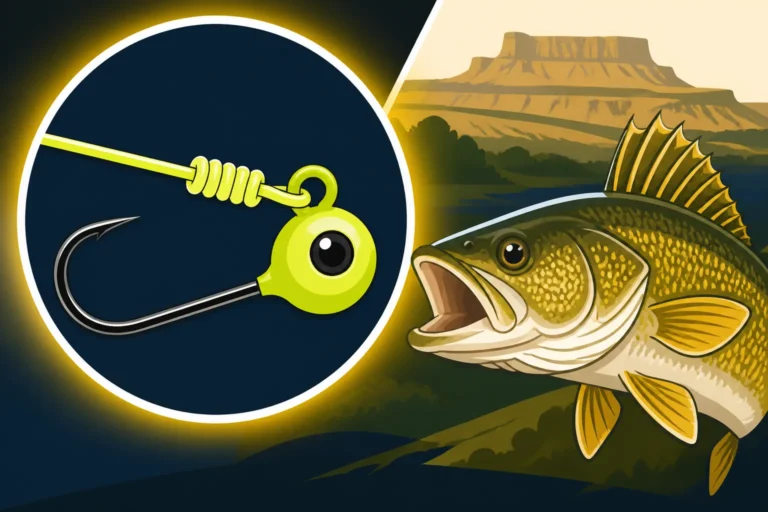
To jig effectively for walleye, your gear choice is critical. You'll want a sensitive fishing rod, typically 6 to 7 feet long, with a fast or extra-fast action. This sensitivity is paramount for feeling those subtle "thunks" or unexpected weights that signal a walleye bite, especially in deeper water or current. Paired with a lightweight spinning reel spooled with braided line and a fluorocarbon leader, you get the best of both worlds: extreme sensitivity and low visibility. For more specific details on line choices and knots, you might want to look into Best Knot for Tying On a Walleye Jig. Many anglers find a good selection of braided lines and fluorocarbon leaders on Amazon.
When it comes to the jigs themselves, the variety is endless. Lead head jigs, often tipped with live bait like minnows or pieces of nightcrawler, are a classic. However, soft plastic paddle tails, grubs, or minnow imitations, either alone or sweetened with a piece of crawler, can be incredibly effective. The weight of your jig needs to match the depth and current conditions; too light and you won't feel the bottom, too heavy and it won't have a natural fall.
The retrieve styles for jigging are varied and often depend on the fish's mood. A "snap jig" involves lifting the rod tip sharply a foot or two, then letting the jig fall back on a semi-slack line, allowing it to dart and then flutter. A "drag jig" involves slowly pulling the jig along the bottom, pausing frequently, which is great for cold, lethargic fish. The simple "lift-drop" is another staple, offering a rhythmic presentation that can entice hesitant bites. Experimentation is key, as one day a subtle drag might be hot, and the next, an aggressive snap jig is what they want. For a deeper dive into current-specific jigging, check out Jigging Techniques for Missouri River Walleye.
Embracing the Slip Bobber for Walleye Success
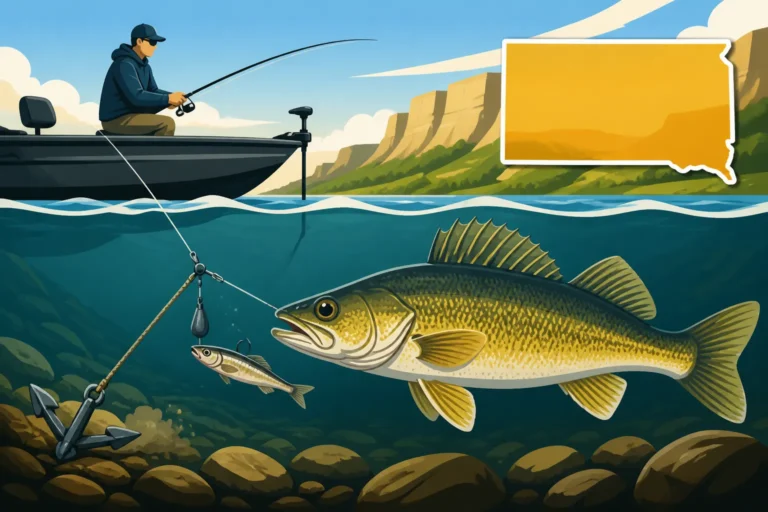
While jigging is about active engagement, slip bobber fishing allows for a more subtle, natural presentation, letting your bait drift freely and enticing wary walleye. It's a method that provides precise depth control without the constant reeling and dropping, perfect for when walleye are spread out or holding at a specific depth off the bottom.
Ideal Scenarios for Slip Bobbers
Slip bobbers truly shine in scenarios where walleye are suspended, cruising, or holding in areas with a lot of cover like weed lines. Imagine you're fishing a calm bay on Lake Kampeska or Lake Poinsett, where walleye might be lurking just above dense aquatic vegetation. Trying to jig through that could lead to endless snags and frustration. A slip bobber allows you to set your bait precisely above the weeds, keeping it in the strike zone without getting hung up. It's an ideal approach for targeting fish that are actively hunting in specific depth bands or cruising shallow flats.
Another prime time for slip bobbers is when walleye are spread out over a larger area, or when they're particularly finicky. The natural, unencumbered movement of live bait under a bobber can often tempt bites from fish that would ignore a jig. When fish are holding off the bottom, perhaps suspended over a deeper thermocline in summer, or just above a break line during a low-pressure system, a slip bobber gives your bait ample time to dangle enticingly right where the fish are. It allows for a more passive, observational fishing experience, yet it can be incredibly effective when fish aren't aggressive. Many anglers find quality slip bobbers and related tackle for these situations readily available on Amazon.
Slip Bobber Setup and Presentation
Setting up a slip bobber rig is straightforward but requires attention to detail. You'll typically use a medium-light to medium-action spinning rod, around 6.5 to 7.5 feet, with a softer tip to cast lighter baits and absorb sudden strikes. Monofilament line is often preferred for slip bobber fishing due to its buoyancy, which helps the bobber float, though fluorocarbon or braided lines can also be used, especially if you need less stretch.
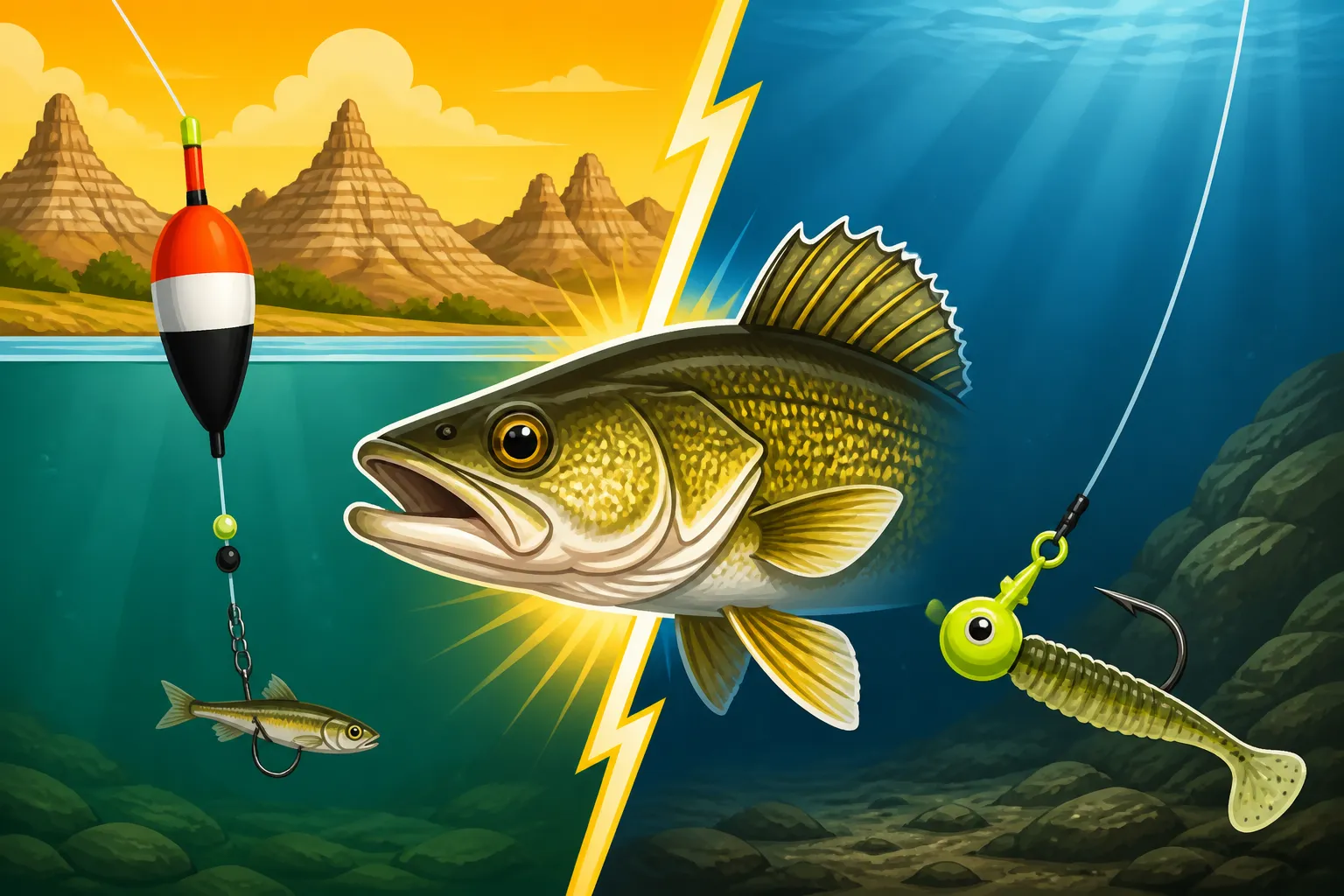
The core components of a slip bobber rig include the bobber stop (usually a small piece of string or plastic that slides on your line), a small bead to protect the knot from the bobber, the slip bobber itself, a weight (split shot or a small sinker) to get your bait down, and a hook appropriate for your bait size. The beauty of the slip bobber is its adjustable depth: you simply slide the bobber stop up or down your line to position your bait at any desired depth, from inches below the surface to many feet deep. This is fantastic for targeting suspended fish or precisely placing your bait right on the edge of a drop-off. For a more visual guide to setting this up, check out How to Rig a Slip Bobber for Walleye.
Live bait is king with slip bobbers. Minnows, leeches, and nightcrawlers are all phenomenal walleye baits. The natural movement and scent of live bait under a bobber can be irresistible. The key is to use enough weight to get your bait down but not so much that it restricts the bait's natural movement. A balanced rig allows your bait to swim freely, presenting an easy meal to cruising walleye.
Direct Comparison: Slip Bobber vs. Jig
Deciding between a slip bobber and a jig often comes down to understanding the specific conditions you're facing and the behavior of the walleye you're targeting. Both are tools in your angler's toolbox, and a truly skilled South Dakota angler knows when to pick up which one.
Pros and Cons of Each Approach
Let's break down the distinct advantages and disadvantages of each method:
| Feature/Factor | Jigging | Slip Bobber Fishing |
|---|---|---|
| Depth Control | Relies on jig weight & retrieve; less precise over wide range | Highly precise, adjustable to any depth |
| Active vs. Passive | Very active, constant rod movement & feel | Can be passive (drift fishing) or semi-active (casting) |
| Current Suitability | Excellent for strong currents | Challenging in strong currents; better in calm water |
| Stealth/Naturalness | Can be subtle, but movement is angler-induced | Very natural, bait moves freely with current or wind |
| Bait Presentation | Versatile (live bait, plastics, hair jigs) | Primarily live bait; natural movement is key |
| Snag Potential | Higher, especially in heavy cover or rocky bottoms | Lower, bait can be suspended above snags |
| Strike Indication | Felt directly through the rod | Visual (bobber dips or moves) |
| Portability | Simple, minimal gear | Slightly more gear (bobber stops, beads) |
| Versatility | Good for vertical presentations, searching | Great for targeted depth, picky fish, weed lines |
Jigging offers direct contact with your lure and the ability to impart specific actions, which is fantastic for eliciting reaction strikes. However, if the walleye are spread out or in thick cover, you might be limited by how much area you can effectively cover, and snags can be a real issue. On the other hand, slip bobbers allow for an incredibly natural presentation, which can be irresistible to wary fish. They excel at holding bait at a very specific depth for extended periods, making them ideal for targeting suspended fish or fishing over complex bottom structures. However, they can be less effective in strong winds or currents that make drifting uncontrollable.
It's also worth noting that sometimes these techniques can blend. For instance, using a very light jig head instead of a bare hook under a slip bobber can add just enough weight to keep your live bait down in a subtle fashion, while still benefiting from the bobber's depth control. This hybrid approach allows you to experiment with different Best Lures for South Dakota Walleye even under a bobber.
When to Switch Tactics
The most successful walleye anglers in South Dakota are adaptable. They don't stick rigidly to one method if it's not producing. Understanding when to switch from a jig to a slip bobber, or vice versa, is a crucial skill.
Consider the weather: a strong, steady wind might make slip bobber fishing difficult, as your bobber gets blown around, making it hard to maintain a consistent drift or position. In such conditions, a heavier jig might be the better choice to maintain bottom contact. Conversely, on a dead-calm day, a jig might seem too aggressive or artificial, while a delicate minnow suspended under a slip bobber could be the perfect answer.
Water conditions play a huge role too. If the walleye have moved off structure and are suspended in open water due to high boat traffic or changing Water Temperature That Triggers Walleye Spawning, a slip bobber becomes invaluable for presenting your bait at their eye level. But if a cold front has moved through, making the fish lethargic and hugging the bottom in deeper holes, a subtle jigging presentation might be the only way to get a bite.
Always pay attention to what the fish are telling you. If you're jigging and not getting bites, but you're seeing fish on your electronics holding steady at a certain depth, it might be time to deploy a slip bobber rig. If you're slip bobber fishing and the action is slow, but you notice baitfish actively darting near the bottom, trying a faster jigging retrieve could ignite a bite. Having both options ready in your South Dakota Fishing Gear Checklist means you're prepared for whatever the day throws at you.
Mastering Both for South Dakota Walleye
Becoming proficient in both jigging and slip bobber fishing will undeniably elevate your walleye game in South Dakota. It's about building a comprehensive toolkit and knowing which tool to pull out for the job at hand.
Reading the Water to Make Your Choice
Developing the ability to "read the water" is perhaps the most important skill in deciding which technique to employ. This means observing the obvious – current, depth, presence of structure like rock piles or weed beds – but also trying to infer the less obvious, like baitfish location and walleye behavior.
On the mighty Missouri River reservoirs like Lake Sharpe or Lake Francis Case, you'll often encounter current, especially near dams and constrictions. Here, the directness and bottom-hugging nature of a jig are hard to beat. But in the vast open water of Lake Oahe, where walleye might be following baitfish schools in the middle of the water column, a slip bobber can effectively present live bait at their cruising depth without needing constant adjustments.
Consider the clarity of the water too. In clear water, a subtle, natural presentation from a slip bobber might be crucial. In murkier water, the vibration and profile of a jigged plastic might be more effective at attracting attention. Learning to interpret these environmental cues, perhaps with the help of a fish finder to gauge depths and fish presence, is key to making an informed decision on the fly. For further insight into locating fish, you might want to delve into How to Read a Fish Finder for Walleye.
Practice Makes Perfect and Adaptability
The best way to become proficient in both jigging and slip bobber techniques is simply to get out on the water and practice. Don't be afraid to dedicate a few hours specifically to honing each skill. Try different jig weights, vary your retrieve speeds, experiment with different bait under your bobber, and adjust your bobber depth often. Each body of water in South Dakota, from the glacial lakes to the Black Hills streams, presents its own unique challenges and opportunities for walleye.
Being adaptable is the hallmark of a successful angler. If the fish aren't biting on one technique, switch it up! Sometimes, it's a minor change – a different jig color or a shallower bobber setting – that makes all the difference. Other times, it's a complete shift in strategy. Always be willing to learn and adjust. Talk to other anglers, watch what's working (or not working) for them, and keep an eye on local fishing reports. A comprehensive resource like the South Dakota GFP Fishing Handbook Guide can also provide valuable insights into specific regulations and recommended techniques for different areas and species.
Remember, there's no single "best" method. The ideal approach is the one that puts fish in your boat on that particular day. By mastering both the active pursuit of jigging and the subtle presentation of slip bobber fishing, you'll be well-equipped to tackle whatever challenges South Dakota's fantastic walleye fisheries throw your way. Don't forget to grab your essential tackle, whether it's Best Lures for South Dakota Walleye or an assortment of slip bobbers, all of which you can conveniently find on Amazon.
Disclaimer
This article is for general informational purposes only and does not constitute professional advice. Laws, prices and regulations vary by location and change over time. Consult a qualified professional for guidance on your specific situation.