How to Jig for Walleye in Current
Fishing for walleye in South Dakota's strong river currents, especially on the mighty Missouri River reservoirs like Lake Oahe or Lake Sharpe, can feel like a real challenge. It's easy to get frustrated when your jig isn't hitting the bottom, or you can't feel those subtle bites over the pull of the water. But don't worry, mastering the art of jigging for walleye in current is totally achievable, and this guide is here to walk you through everything you need to know to turn those frustrating outings into successful ones.
Understanding Walleye in Current and Their Habitat
Walleye are masters of efficiency. They don't want to fight the current any more than they have to, but they also know that current brings food right to their doorstep. Understanding this fundamental behavior is the first step to figuring out where they'll be hiding.
Why Current Attracts Walleye
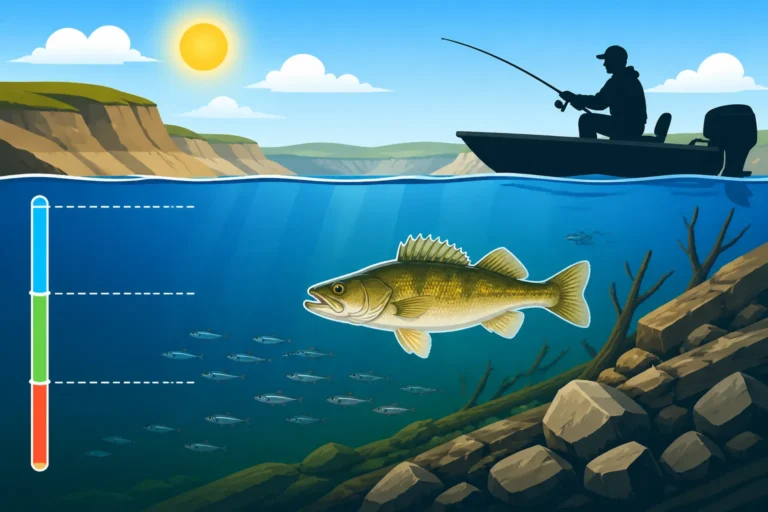
Think of current as a conveyor belt for food. Small baitfish, insects, and other forage are constantly being swept along, and walleye position themselves in strategic ambush points to conserve energy while waiting for an easy meal. This means they're often found near structure that breaks the current, creating a calm zone where they can rest, yet still dart out into the faster water to snatch prey. These current breaks also tend to concentrate baitfish, making them prime hunting grounds. The moving water also provides higher oxygen levels, which is especially attractive to fish during warmer months.
On a big system like the Missouri River, the current can vary dramatically. Below the dams, like the tailwaters of Oahe Dam or Big Bend Dam, the current can be incredibly strong. This makes fish relate even more tightly to structure and current seams. Further downstream in the wider reservoir sections, the current might be less pronounced but still present, often influenced by wind or power generation schedules. Learning to read these variations is key to finding those feeding walleye.
Key Structures to Target
Walleye in current are almost always associated with some kind of structure. This could be natural or man-made. Look for anything that interrupts the steady flow of water and creates a "slack water" area behind or beside it.
River channels are classic current structures, particularly the edges where the deep channel meets a shallower flat. Walleye will often sit right on these breaks, facing upstream, ready to intercept anything drifting by. Humps, submerged islands, and points extending into the current are also magnets for walleye. The upstream side of a hump, or the "nose," can be excellent as it creates a subtle current break. The downstream side, or the "tail," can also hold fish as they sit in the eddy created by the hump. Drop-offs, especially those with some rock or rubble, are another prime target. The walleye will sit just over the lip of the drop, out of the main force of the current, but still close enough to feed.
Man-made structures like bridge pilings, riprap shorelines, wing dams, and old roadbeds are also goldmines. The current eddies around these structures, providing calm pockets for walleye. Even a single large boulder or a cluster of submerged timber can create enough of a current break to hold a school of walleye. Remember that walleye will often hug these structures tightly, sometimes so close you feel like you're practically scraping your jig against them.
Essential Gear for Jigging in Current
Having the right gear makes a world of difference when you're trying to feel those subtle walleye bites in moving water. It's not about having the most expensive stuff, but rather the right combination of sensitivity and power.
Rods and Reels for Current Fishing
For jigging in current, sensitivity is paramount. You need to feel every little tap, every slight change in bottom composition, and most importantly, when your jig is actually on the bottom. A medium-light to medium power spinning rod, typically 6'6" to 7'6" in length, with a fast or extra-fast action, is generally ideal. The fast action tip allows you to feel those delicate bites, while the backbone of the rod provides the power to set the hook and fight a strong walleye in current. Some anglers even prefer longer rods up to 8 feet for better line control and longer casts, especially when trying to maintain a consistent drift.
Match your rod with a lightweight, smooth spinning reel in the 2000-3000 size range. A good drag system is crucial, as a big walleye in current can put a serious strain on your equipment. You want a reel that can handle the sudden surges without binding. Brands like Shimano, Daiwa, and Abu Garcia offer excellent options that balance performance and durability. You can often find great deals on these reputable brands through online retailers like Amazon, making it easier to equip yourself without breaking the bank. For more detailed guidance on choosing your setup, check out our guide on Best Fishing Rods and Reels for Walleye.
Jigs, Line, and Bait Selection
This is where things get really specific for current fishing. The most critical factor is jig weight. You absolutely must maintain bottom contact. If your jig is being swept away by the current, you're not going to catch fish. The general rule of thumb is to use the lightest jig possible that still allows you to consistently feel the bottom. This might mean going heavier than you're used to in still water. For strong currents, 3/8 oz, 1/2 oz, or even 3/4 oz jigs are not uncommon.
Jig Head Styles: Round head jigs are versatile, but specific designs can help in current. Stand-up jigs are great for keeping your bait off the bottom, while flat-bottomed jigs might resist current a bit better in some scenarios. Lead-head jigs are standard, but tungsten jigs, being denser, allow you to use a smaller profile jig for the same weight, which can be advantageous in clear water or when fish are finicky.
Line Choice: Braided line is almost a non-negotiable for current jigging due to its zero-stretch and superior sensitivity. A 6-10 lb test braided line will transmit every bump and bite directly to your hand. Pair this with a 6-10 lb test fluorocarbon leader, 2-4 feet long, for abrasion resistance against rocks and invisibility to the fish. The connection between your braid and fluoro is critical, so practice your Albright or FG knot until it's flawless.
Bait and Trailers:
- Live Bait: A juicy shiner, fathead minnow, or a lively nightcrawler threaded onto the jig is often irresistible. Hook your minnow lightly through the lips or dorsal fin.
- Soft Plastics: Paddle tails, curly tails, or grub bodies in 3-5 inch lengths can imitate baitfish effectively. Colors like chartreuse, white, perch, or natural baitfish patterns are great starting points. You can also tip these with a small piece of nightcrawler for added scent.
- Combination: Don't hesitate to use a combination! A soft plastic grub tipped with a minnow can be deadly.
Here's a quick reference for jig weight considerations:
| Current Speed/Depth | Recommended Jig Weight | Notes |
|---|---|---|
| Light Current (5-15 ft) | 1/8 – 1/4 oz | Use lighter weight for maximum sensitivity. |
| Moderate Current (10-25 ft) | 1/4 – 3/8 oz | Good starting point for most river situations. |
| Strong Current (15-35+ ft) | 1/2 – 3/4 oz | Essential for maintaining bottom contact in heavy flow. |
| Very Strong (30+ ft, Dam Tailwaters) | 3/4 – 1 oz+ | Go heavier if you still can't feel bottom. |
Remember, these are starting points. Always adjust based on how well you're feeling the bottom.
Mastering Jigging Techniques in Current
Feeling the bottom is one thing; presenting your jig effectively and detecting bites in current is a whole other level. It requires focus, precise boat control (if you're in a boat), and a good understanding of how the current affects your presentation.
Vertical Jigging and Boat Control
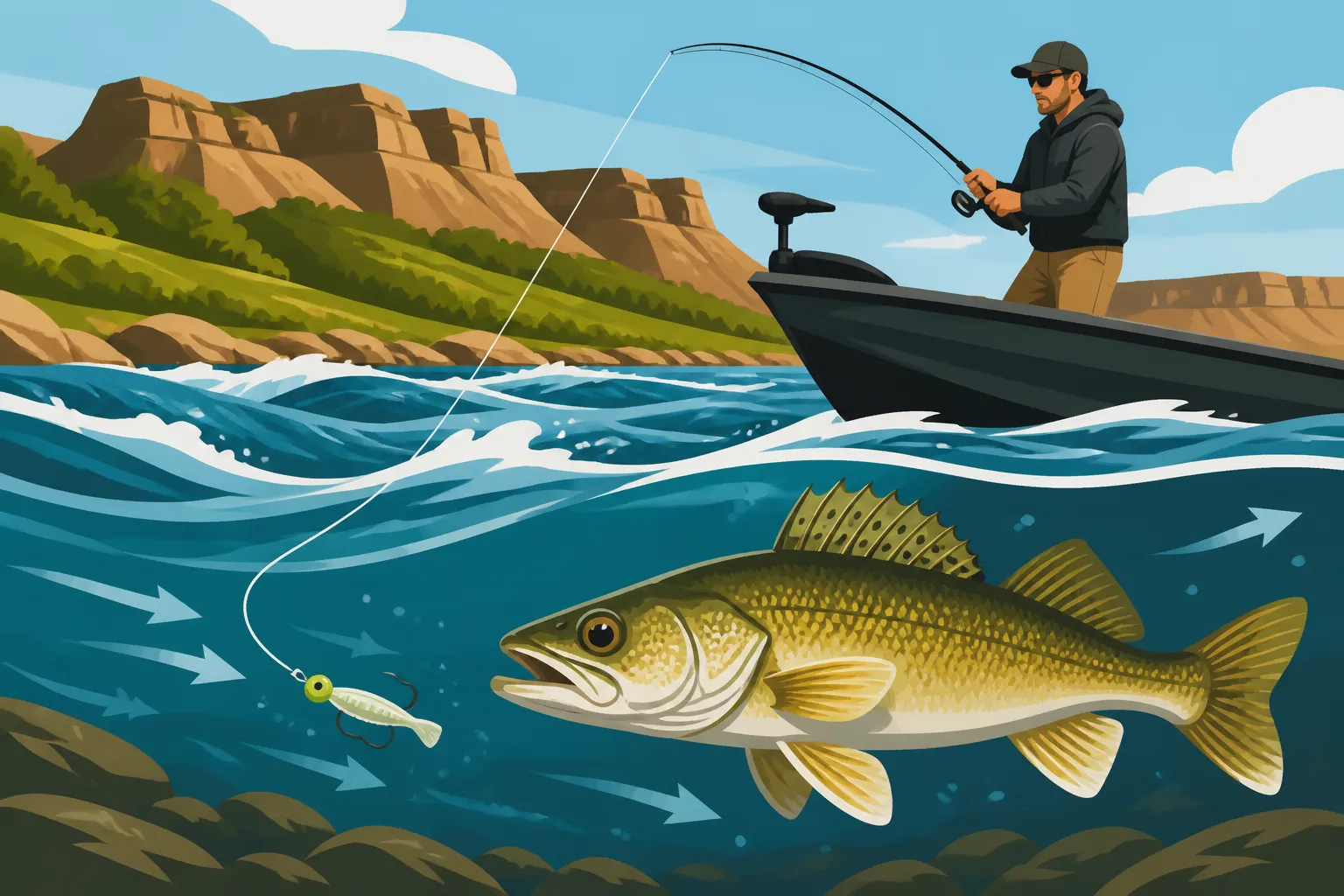
When walleye are holding tight to structure in strong current, vertical jigging directly over them is often the most effective method. This requires exceptional boat control. Whether you're using a bow-mount trolling motor or a main engine to subtly hold position, the goal is to keep your boat moving at the same speed as the current, or slightly slower, to maintain a near-vertical line from your rod tip to your jig. This is often called "hovering" or "spot-locking" if your trolling motor has GPS capabilities. Many anglers invest in powerful electric trolling motors, available on platforms like Amazon, specifically for this purpose on big rivers.
Once you're positioned, drop your jig to the bottom. Once it hits, lift your rod tip sharply, maybe 6-12 inches, then immediately drop it back down, allowing the jig to fall back to the bottom on a semi-slack line. The bite often occurs on the fall or just as the jig hits the bottom. Repeat this lifting and dropping motion, slowly "walking" your jig downstream with the current, or holding it in a prime spot. The key is to keep tension in your line just enough to feel the weight of the jig, but not so much that you're pulling it off the bottom too quickly. It's a delicate dance between maintaining contact and allowing a natural presentation. For more advanced boat positioning and current techniques, explore our guide on Jigging Techniques for Missouri River Walleye.
Casting and Drifting Techniques
Sometimes, walleye might be a little more scattered, or the current is too strong to hold a vertical presentation effectively. This is where casting and drifting come in. If you're fishing from shore or trying to cover a wider area from a boat, casting your jig upstream and letting it drift naturally downstream with the current can be incredibly effective.
Cast your jig slightly upstream and across the current, letting it sink to the bottom. As it drifts, keep your rod tip pointed towards the line and slowly reel in any slack, maintaining just enough tension to feel the jig "tick" the bottom every few seconds. You might feel a tap-tap as it bounces over rocks, or a dull thud as it hits mud. Every few seconds, give your rod a slight snap or hop to lift the jig and let it fall again. This gives the jig an enticing action as it moves downstream. Pay close attention as the jig reaches the end of its drift, closer to your position, as this is often when a following walleye will commit to the strike. This technique is particularly useful when targeting areas like the subtle current breaks along the edges of the main river channel.
Detecting Those Subtle Bites
This is often the trickiest part of jigging in current. Walleye bites in moving water are rarely aggressive thumps. They're often incredibly subtle:
- A "mushy" feeling: Your jig feels heavier than usual, like it's snagged on a wet sponge.
- A sudden lack of resistance: The jig stops "ticking" the bottom, indicating a fish has picked it up and is moving with the current.
- A slight twitch or tap: A very faint feeling, almost imperceptible, different from a bottom tick.
- Line movement: Your line might stop flowing freely, or it might twitch sideways, even if you don't feel anything on the rod.
When you feel anything out of the ordinary, set the hook immediately! A quick, sharp snap of the wrist is usually all it takes. Don't be afraid of false hook sets; it's better to set the hook on a rock than to miss a walleye. With braided line, the connection is so direct that even the faintest change should prompt a reaction. Practice, practice, practice – the more you fish in current, the better you'll become at distinguishing a rock from a walleye.
Reading the River: Locating Walleye in Current
You can have the best gear and the finest technique, but if you're not putting your jig where the fish are, it's all for naught. Learning to read the river, whether visually or with electronics, is the ultimate skill for a successful current angler.
Identifying Current Breaks and Ambush Points
The river itself will often show you where the current breaks are. Look for seams where faster water meets slower water. You might see a distinct line on the surface, or an area where floating debris gathers. These are prime indicators of underwater structure creating a current break. Eddies, those swirling pockets of water, are also excellent spots. Walleye will often sit right at the mouth of an eddy, or within the slower water itself.
Topographic maps (or "topo" maps) and bathymetric charts are invaluable tools. They reveal underwater contours, humps, old river channels, and drop-offs that you can't see from the surface. Many GPS units and fish finders have these built-in or available for download. Study these maps before you even launch your boat. Identify potential current breaks and ambush points, mark them as waypoints, and then plan your approach. For example, if you're fishing a popular walleye spot like Lake Sharpe near Big Bend Dam, understanding these current breaks below the dam is crucial. Our Missouri River Tailwater Fishing Techniques guide offers more insights into these specific areas.
Using Electronics for Structure and Fish
Modern fish finders are incredibly sophisticated and can give you a huge advantage when jigging in current.
- 2D Sonar: This is your bread and butter. It shows you the bottom contour, depth, and any fish arches (or "bananas") below your boat. Look for abrupt changes in depth, rocks, and baitfish schools. In current, fish often appear as streaks or thicker lines rather than perfect arches due to boat movement and fish orientation.
- Down Imaging/Side Imaging: These technologies provide photographic-like views of the bottom. Down Imaging shows you what's directly below, giving incredible detail of structure like rock piles or submerged timber. Side Imaging scans out to the sides of your boat, helping you locate structure and fish that you might be drifting past, allowing you to reposition. Brands like Humminbird and Lowrance offer excellent fish finders with these capabilities, often available through retailers such as Amazon.
- GPS and Mapping: Use your GPS to mark waypoints on productive spots. If you catch a fish, mark it. If you find a promising hump, mark it. This allows you to return to these specific locations easily, even in strong current or on a large body of water. Good mapping also helps you understand how the river bends and flows, which is critical for anticipating where current breaks will form. Understanding how to interpret these signals from your fish finder can greatly improve your success; you can learn more in our article on How to Read a Fish Finder for Walleye.
Always remember that fish move. What worked yesterday might not work today. Pay attention to how the current is flowing, how your jig is behaving, and what your electronics are telling you. Adapt your approach, try different weights, and don't be afraid to experiment with your presentation until you crack the code.
Disclaimer
Please note that fishing regulations, license requirements, and local rules can change. Always check the latest South Dakota Game, Fish and Parks regulations before heading out on the water. This guide is for informational purposes only and does not supersede official government guidelines.