How to Cast From Shore for Salmon
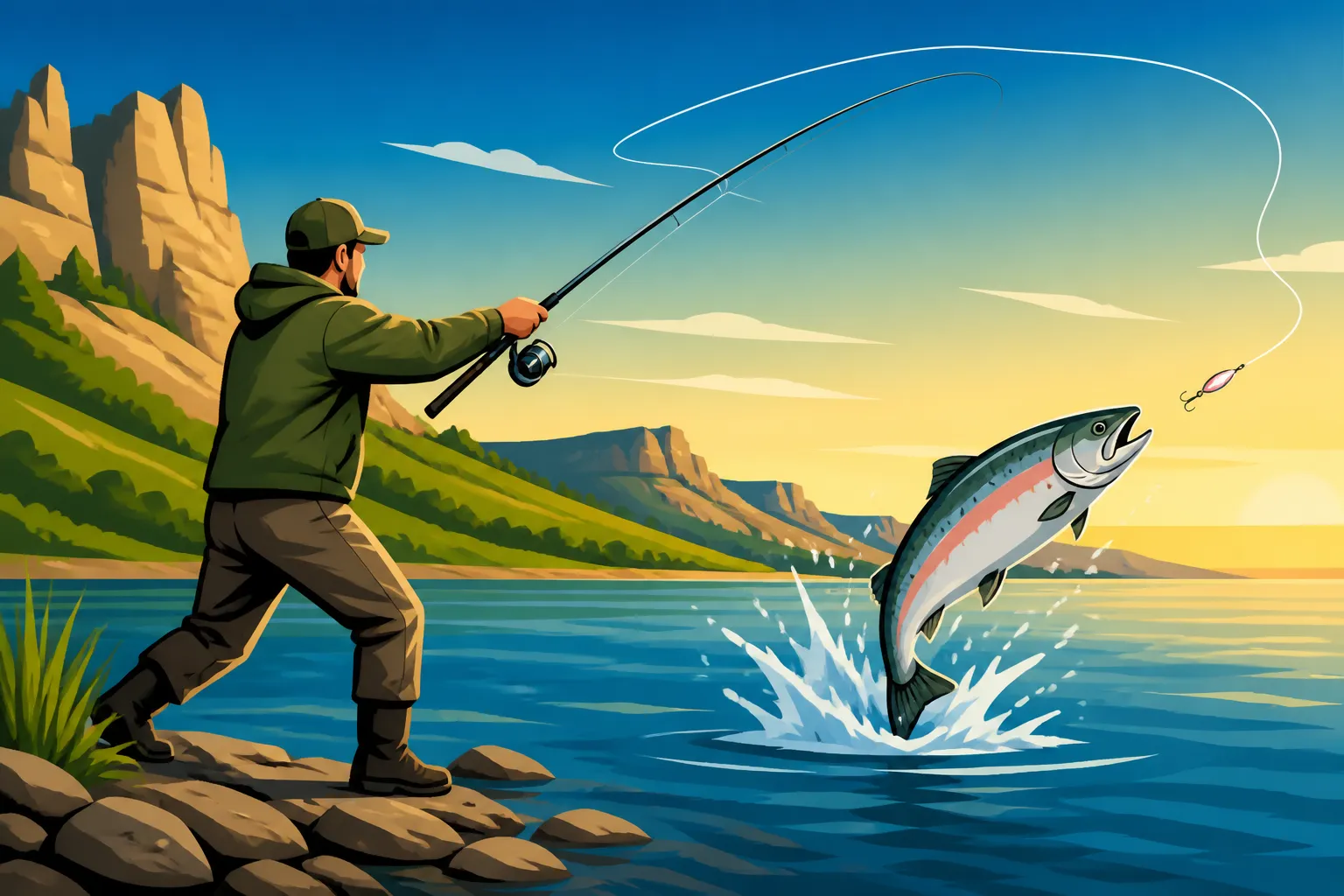
Trying to land a powerful Chinook salmon from shore in South Dakota can feel like an impossible feat, especially when you see boats out on Lake Oahe with all their fancy gear. It's easy to get discouraged, thinking you need a fully rigged boat to even stand a chance. But let me tell you, with the right knowledge, gear, and a bit of patience, you absolutely can find success casting for these magnificent fish right from the bank. This guide is all about equipping you with the confidence and practical steps to make that a reality.
Understanding South Dakota Salmon and Their Habits
South Dakota might not be the first place that comes to mind when you think of salmon fishing, but thanks to dedicated stocking programs, Lake Oahe offers a unique and thrilling opportunity, particularly for Chinook salmon. Understanding these fish and their seasonal movements is the first step to successful shore fishing.
Chinook Salmon in South Dakota Waters
Chinook salmon, often called King salmon, are an introduced species in Lake Oahe, a massive reservoir on the Missouri River system. The South Dakota Game, Fish and Parks (GFP) began stocking these magnificent fish decades ago to create a unique cold-water fishery, and it's been a roaring success. These salmon thrive in the deeper, cooler waters of Oahe, feeding primarily on rainbow smelt, which are also stocked. They grow large quickly, offering incredible fights that will test any angler's mettle. For a broader overview of this exciting fishery, check out our South Dakota Chinook Salmon Fishing Guide.
During most of the year, Chinook salmon inhabit the colder, deeper parts of Lake Oahe, making them tough to reach from shore. They follow schools of baitfish, often suspending in the water column or relating to submerged structures in depths far beyond a typical cast. However, there's a specific window when these powerful fish move into more accessible, shallower waters, bringing them within reach of shore anglers. This annual migration is what we'll be focusing on.
Where Salmon Hold Near Shore
When salmon do come close to shore, it's typically for one main reason: spawning. As they prepare to spawn, usually in the late summer and fall, they begin to stage in areas closer to tributaries or artificial spawning beds, like those found at Whitlock Bay. These areas often feature deeper water access close to the bank, with some current or structure. Look for points, creek mouths, or areas where the shoreline drops off sharply.
Rocky points and riprap banks can also be productive, as they offer some cover and deeper water access. The salmon aren't actively feeding in the same way they would be in open water, but they can still be enticed to strike out of aggression or instinct. These near-shore staging areas are prime locations for shore anglers because the fish are concentrated and moving through predictable pathways. Identifying these bottlenecks and transition zones will drastically increase your chances.
When Salmon Are Accessible From Shore
The golden window for shore casting for Chinook salmon in South Dakota is undoubtedly the late summer and fall, typically from late August through October. This is when the annual spawning run commences, drawing these ocean-like fish towards the shallower bays and spawning grounds. While a few stragglers might be caught earlier or later, the peak of the action aligns with their biological drive to reproduce. Our article on Chinook Salmon Spawning Time on Lake Oahe offers more details on the exact timing.
During this period, water temperatures begin to drop, signaling to the salmon that it's time to migrate. They'll move from the main lake basin into areas like Whitlock Bay, where the South Dakota Game, Fish and Parks operates a salmon spawning station. This station concentrates a large number of fish, making it a hotspot for both boat and shore anglers. Knowing Where to Watch the Salmon Run at Whitlock Bay can give you an edge in finding these active areas. Outside of this specific spawning run, shore fishing for Chinook salmon in South Dakota is significantly more challenging, bordering on impossible for consistent success. Focus your efforts on this fall window for the best results.
Essential Gear for Shore Casting Salmon
You don't need a boat, but you do need the right tools for the job. Shore casting for salmon means you're often trying to cast a good distance and then fight a strong, often large fish without the maneuverability a boat provides. This demands specific gear choices that prioritize power, casting distance, and durability. For a general overview of what to pack, consult our South Dakota Fishing Gear Checklist.
Rod and Reel Selection
When it comes to shore casting for salmon, you want a setup that can handle heavy lures and the powerful runs of a King salmon. A long, medium-heavy to heavy-action spinning rod is ideal, typically in the 9 to 11-foot range. This extra length helps immensely with casting distance, allowing you to reach those deeper pockets where salmon might be holding. It also provides better leverage when fighting a large fish and keeps your line clear of any shoreline obstructions. Brands like Ugly Stik, St. Croix, or Daiwa offer excellent options that are robust and sensitive enough.
Pair your rod with a durable spinning reel in the 4000 to 6000 size range. This size offers sufficient line capacity for long runs and a strong drag system that can withstand the incredible power of a fighting Chinook. Look for reels with a smooth, reliable drag and a high retrieve rate. Many reliable options are available on Amazon, including models from Penn, Shimano, or Daiwa that are built for saltwater applications but perform wonderfully for big freshwater fish like salmon. While our guide on Best Fishing Rods and Reels for Walleye focuses on a different species, the principles of rod power and reel drag still apply when selecting a robust setup for salmon.
Line Choices and Leader Setup
Your line is the crucial connection to the fish, and it needs to be strong and abrasion-resistant. For your main line, 20 to 30-pound braided line is an excellent choice. Braid offers superior casting distance due to its thin diameter, has virtually no stretch for solid hooksets, and is incredibly strong. Its lack of stretch also transmits every bump and subtle bite directly to your hands, which can be crucial when salmon are hitting aggressively but not mouthing the lure.
To this braided mainline, you'll want to attach a fluorocarbon leader. A leader of 15 to 25-pound test, about 2-4 feet long, is recommended. Fluorocarbon is nearly invisible underwater, which can be an advantage in the clear waters of Lake Oahe, and it's much more abrasion-resistant than mono, protecting your main line from sharp rocks and the salmon's rough mouth. You can tie your leader to the braid using a strong knot like an FG knot or an Albright knot, both of which pass smoothly through rod guides. Ensure your leader is fresh; nicks and scrapes can quickly lead to heartbreak.
Lures and Bait for Shore Anglers
Salmon, even when in spawning mode, can be enticed to strike. The key is to present something that either mimics their forage or provokes an aggressive reaction. Spoons are incredibly effective, especially those with a strong wobbling action that imitate fleeing baitfish. Favorites include Little Cleos, Dardevles, or even larger Kastmasters in sizes from 3/4 to 1.5 ounces. Colors like silver, blue/silver, chartreuse, or even bright orange and red can be highly productive.
Crankbaits and stickbaits that dive to moderate depths (5-15 feet) can also work, particularly those with a vibrant flash or rattles. Rapala Husky Jerks or Berkley Flicker Shads in sizes suitable for large game fish are good starting points. Sometimes, a simple jig-and-soft-plastic combination, especially a paddle-tail swimbait, can trigger strikes when retrieved steadily or bounced along the bottom near drop-offs. While live bait isn't typically the primary method for salmon, some anglers have success with chunks of cut bait or even large shrimp, especially in areas where current might disperse scent. Always check the South Dakota Fishing Regulations Explained for any bait restrictions in your chosen fishing spot. Finding a good selection of these can be easily done on Amazon, with many popular brands readily available.
Mastering Shore Casting Techniques for Salmon
Now that you're geared up, let's talk about the art and science of actually catching these powerful fish from the bank. It's not just about throwing a lure out there; it's about strategy, precision, and persistence.
Locating Productive Shoreline Spots
The biggest challenge for shore anglers is reaching the fish. This means you need to prioritize locations that naturally offer deeper water close to the bank. As mentioned, the areas around the Whitlock Bay salmon spawning station are a major draw, particularly during the run. Look for sudden drop-offs, points that extend into the main channel, or current seams near tributary mouths. These features provide salmon with deeper, cooler water and an easier path to their spawning grounds.
Observing other anglers can also be helpful; often, where there's a crowd, there's a reason. However, don't be afraid to explore. Walk the shoreline, looking for visible structure like submerged rocks, fallen trees (if present), or changes in bottom composition that might indicate a drop-off. A pair of polarized sunglasses will help you spot these underwater features. Pay attention to any signs of baitfish activity—nervous baitfish often indicate predators are nearby. Remember, finding the fish is half the battle, and these powerful South Dakota Chinook Salmon Average Size fish require careful consideration of their habitat.
Effective Casting and Retrieval Methods
Casting distance is crucial for shore salmon fishing. Practice your long casts, aiming for accuracy to reach those offshore seams and drop-offs. A surf-casting style overhead cast can maximize your distance. Once your lure hits the water, the retrieval method is key. A common and effective strategy for spoons and crankbaits is a steady, moderate retrieve. This allows the lure to work naturally, mimicking a swimming baitfish. Vary your retrieve speed periodically, adding a twitch or a pause to make the lure appear wounded or erratic.
For jigs, a lift-and-drop retrieve, allowing the jig to fall back to the bottom or near it, can be deadly. Pay close attention during the fall, as many strikes occur as the lure descends. If you're fishing in an area with some current, cast slightly upstream and let the current sweep your lure naturally past suspected holding areas. Experimentation is vital; salmon can be finicky. Sometimes they want a fast retrieve, other times a slow, deliberate presentation. Don't be afraid to switch up your lures and retrieve patterns until you find what's working that day. Many anglers find quality fishing lines and terminal tackle from companies on Amazon.
Fighting and Landing a Salmon from Shore
Hooking a Chinook salmon from shore is an exhilarating experience, but landing one is where the real test begins. These fish are incredibly powerful, known for their drag-peeling runs and acrobatic jumps. When you get a strike, set the hook firmly. Then, be prepared for an immediate, strong run. Let your rod and reel's drag do the work. Do not try to muscle the fish in; you'll snap your line or pull the hook. Keep your rod tip up, maintaining a steady bend in the rod to absorb the shock of their runs.
Patience is paramount. Work the fish steadily, regaining line when you can, but always be ready for another burst of speed. As the fish gets closer to shore, it may make frantic, last-ditch runs. Try to keep its head up and away from any sharp rocks or snags. A long-handled landing net is indispensable for shore fishing. Do not try to beach a large salmon; you risk damaging the fish and losing it. Once the fish is tired and close enough, use the net to scoop it headfirst, securing your prize. Remember, the How Long the Chinook Salmon Run Lasts on Lake Oahe means there's a limited window for this action, so make every fight count!
Seasonal Strategies and Best Practices
While the fall run is the prime time, there are nuances within that season, and general best practices apply to any successful shore fishing endeavor for salmon. Thinking strategically about timing and safety will enhance your experience.
Fall Run Specifics
As autumn progresses, the salmon become increasingly focused on their spawning instincts. This means they might be less interested in feeding on typical baitfish patterns and more prone to striking out of aggression or territoriality. Brightly colored lures, especially those with reds, oranges, and chartreuse, can be highly effective during this period. Think about the color of salmon eggs or aggressive, flashy presentations. The fish will be concentrated in specific areas, so once you find a productive spot, stick with it.
Early mornings and late evenings often offer the best opportunities, as salmon can be more active in lower light conditions and near-shore areas might have less fishing pressure. Pay attention to weather patterns, too. Overcast days or periods of light rain can sometimes trigger more aggressive bites. The colder the water gets, the more concentrated the fish will become in their staging areas, making them slightly easier targets for those willing to brave the chill. Keep an eye on local fishing reports and the South Dakota GFP's updates, as they often provide valuable insights into the salmon run's progression. Understanding What Chinook Salmon Eat in South Dakota might seem less critical during the spawn, but it still provides valuable context for their behavior.
Safety Considerations for Shore Fishing
Shore fishing for salmon, especially in the rugged terrain around Lake Oahe, comes with its own set of safety concerns. The banks can be steep, rocky, and slippery, particularly if wet from rain or dew. Always wear sturdy, non-slip footwear. Waders can be helpful for getting out to slightly deeper water or maneuvering around obstacles, but be extremely cautious when wading, especially in unfamiliar territory. The bottom can be uneven, and drop-offs can be sudden.
Bring a fishing buddy if possible, or at least let someone know where you're going and when you expect to return. Pack essentials like water, snacks, a first-aid kit, and a fully charged phone. Dress in layers, as fall weather in South Dakota can change rapidly. Wind can also be a significant factor, making casting difficult and creating choppy conditions on the water. Be mindful of your surroundings, especially if you're fishing in areas with wildlife or other anglers. And of course, always ensure you have your South Dakota Fishing License Guide in order before you even wet a line.
| Lure Type | Typical Size (Weight) | Key Characteristics | When to Use |
|---|---|---|---|
| Casting Spoons | 3/4 oz – 1.5 oz | Wobbling action, flash, imitates injured baitfish | All conditions, especially when fish are aggressive |
| Crankbaits | 4-6 inches (diving lip) | Erratic swimming action, rattles, dives to depth | When fish are actively feeding or suspended deeper |
| Jigs (w/ soft plastic) | 1/2 oz – 1 oz | Versatile, can mimic baitfish or bottom dwellers | When fish are near bottom structure, variable retrieve |
| Stickbaits | 5-7 inches | Subsurface, wounded baitfish imitation | Twitching retrieve, near surface or shallow structure |
| Cut Bait | Varies | Natural scent, stationary presentation | Slow bite, deadsticking, when fish are sluggish or scent-feeding |
Disclaimer
Please note that fishing regulations, conditions, and fish behavior can change. Always consult the latest South Dakota Game, Fish and Parks regulations before heading out. This guide is for informational purposes only and does not constitute official advice. Fish at your own risk and always prioritize safety.