Belle Fourche Reservoir Walleye Fishing Tips
Trying to dial in on walleye at Belle Fourche Reservoir can feel like solving a complex puzzle. Its unique structure, ever-changing conditions, and special regulations can leave even seasoned anglers scratching their heads, wondering where the fish are hiding and what they're biting on. This comprehensive guide is here to untangle that complexity, offering practical, on-the-water strategies and deep insights to help you consistently find and catch walleye on this fantastic South Dakota fishery.
Understanding Belle Fourche Reservoir's Unique Walleye Fishery
Belle Fourche Reservoir isn't just another lake; it's a distinctive body of water with characteristics that heavily influence where and how walleye behave. To truly master walleye fishing here, you need to first understand the environment they call home.
The Reservoir's Characteristics and Habitat
Nestled in the rolling prairie of Butte County, Belle Fourche Reservoir spans over 8,000 acres, offering a vast expanse for anglers. Unlike some of the deeper, clearer glacial lakes to the east, Belle Fourche tends to be shallower overall, with a maximum depth that typically hovers around 60-70 feet, but with large areas of much shallower water. The water clarity can vary significantly, often influenced by wind and runoff, sometimes presenting a stained or turbid appearance, which walleye generally favor.
The bottom structure is a fascinating mix of rocky points, gravel beds, submerged old creek channels, and areas of softer mud. This diverse habitat is a walleye angler's dream, providing countless ambush points and feeding grounds. You'll find walleye relating to these features differently depending on the season, weather, and available forage. For instance, those prominent rocky points and wind-swept shorelines often hold actively feeding fish, especially during periods of low light or when there's a good "walleye chop" on the water. Submerged humps, often invisible without good electronics, become prime targets for deep-water presentations, acting like underwater islands where schools of baitfish, and consequently walleye, congregate. Understanding how to interpret your electronics to pinpoint these subtle depth changes and hard-bottom areas is crucial here.
Belle Fourche's Special Walleye Regulations
One of the most critical aspects of fishing Belle Fourche Reservoir, and one that often causes confusion for new visitors, are its specific walleye regulations. These aren't just standard statewide rules; they're tailored to manage this particular fishery for optimal health and trophy potential. It's essential to consult the official South Dakota GFP Fishing Handbook Guide before every trip, but generally, Belle Fourche Reservoir has unique stipulations.
For the 2024 season, anglers at Belle Fourche Reservoir are typically subject to a 15-inch minimum length limit for walleye. This means any walleye caught under 15 inches must be immediately released unharmed. Furthermore, the daily limit is typically 4 walleye, but with an important caveat: no more than 1 of those 4 can be over 20 inches in length. This "slot limit" isn't designed to make your life harder; it's a strategic management tool. The goal is to protect the larger, mature spawning walleye, allowing them to reproduce and contribute to the fishery, while encouraging the harvest of smaller, more numerous fish. This helps maintain a balanced population and fosters the growth of those truly trophy-sized walleye that South Dakota is famous for. For a deeper dive into these specific rules, be sure to check out our article on Belle Fourche Reservoir Special Walleye Rules.
This regulation means your fishing strategy needs to adapt. You might find yourself catching several fish between 15 and 20 inches, which are perfect for the dinner table. However, if you land a true giant over 20 inches early in the day, you'll know that's your one for the slot, and any subsequent larger fish must be released. It's a great problem to have, but definitely something to be aware of! These rules are in place to ensure excellent fishing for generations, helping protect the larger breeders while still providing plenty of opportunities for anglers to fill their coolers.
Top Walleye Fishing Techniques for Belle Fourche Reservoir
Walleye in Belle Fourche can be caught using a variety of methods, but some techniques consistently outperform others, especially when adapted to the reservoir's specific conditions. It's about having a diverse toolkit and knowing when to use each one.
Trolling for Belle Fourche Walleye
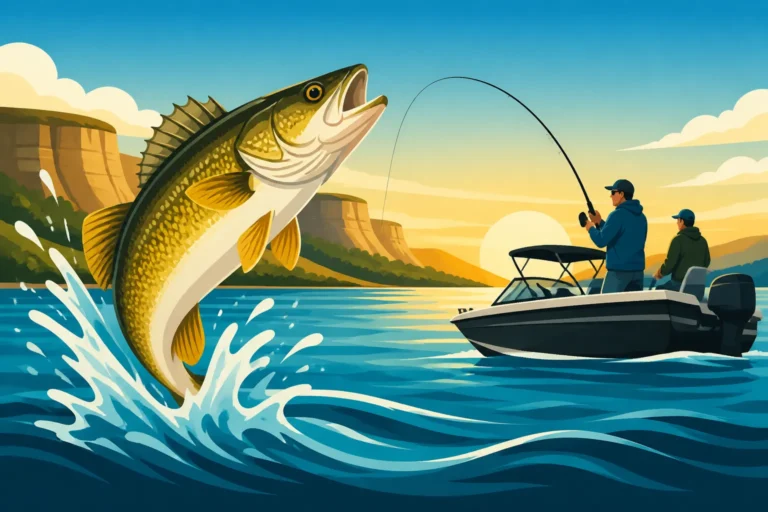
Trolling is a cornerstone technique for covering water and locating active walleye on Belle Fourche. Whether you're pulling crankbaits, spinner rigs, or bottom bouncers, the key is to match your presentation to the depth and mood of the fish.
When it comes to crankbaits, different styles shine in different conditions. Shallow-diving cranks are excellent for probing breaklines and rocky points in spring and fall, especially during low light. Medium and deep-diving crankbaits become indispensable as walleye move to deeper main lake structure during the summer. Experiment with colors, but natural baitfish patterns, firetiger, and brighter chartreuse or orange hues often trigger strikes in Belle Fourche's stained waters. Pay close attention to your speed; a slight variation can often be the difference between a sluggish bite and a hot streak. Trolling speeds typically range from 1.5 to 2.5 MPH, but sometimes a slower crawl or a faster burst can be the ticket. For more details on this, our South Dakota Trolling Techniques for Walleye guide offers additional insights.
Spinner rigs, often paired with live bait like nightcrawlers or minnows, are incredibly effective, particularly when walleye are scattered or finicky. These rigs are frequently run behind bottom bouncers, which help keep your bait near the bottom structure where walleye feed. The weight of your bottom bouncer should be chosen based on your trolling speed and depth; generally, 1 oz per 10 feet of depth is a good starting point, but you'll adjust based on current and desired line angle. The flash and vibration of the spinner blade, combined with the scent and natural action of live bait, can be irresistible. Common blade colors include chartreuse, orange, and silver, but don't be afraid to mix and match. These rigs are fantastic for targeting contours, humps, and old roadbeds that crisscross the reservoir bottom.
Jigging and Live Bait Strategies
While trolling covers water, jigging and focused live bait presentations are superb for targeting specific structure or schools of fish once you've found them. This is where precision pays off.
Vertical jigging is deadly when walleye are concentrated on humps, sharp drop-offs, or around submerged timber. A 1/4 to 1/2 ounce jig, tipped with a lively minnow, a piece of nightcrawler, or even a soft plastic swimbait, can be lowered directly to the fish you see on your sonar. The key is a sharp, distinct jigging motion, followed by a pause that allows the bait to flutter. Many bites occur on the fall or during that pause, so a sensitive rod is crucial to detect those subtle takes. This technique is particularly potent in cooler water periods and when fish are less active but still relate tightly to structure.
Pitching jigs towards shorelines, rocky points, or over shallow weed edges can be highly effective, especially during spring and fall. A lighter jig, maybe 1/8 to 3/8 ounce, allows for a slower, more natural fall. Cast it out, let it sink, and retrieve with short hops or a slow drag. Tipping your jig with a plastic minnow imitation, a grub, or a scented soft plastic adds appeal. Remember, walleye in stained water often rely more on scent and vibration, so choose your plastics accordingly.
When using live bait, don't underestimate the power of a simple slip bobber rig or a plain hook and weight. A lively minnow, particularly in spring and fall, or a nightcrawler, especially in summer, can be fished near structure or suspended off the bottom. Slip bobbers are fantastic for presenting bait at a precise depth over submerged weeds or rock piles without snagging. Just be sure your bait is lively and presented naturally; walleye can be picky eaters. Finding the right South Dakota Fishing License Guide is the first step before you even rig up your first minnow.
Adapting to Wind and Weather Conditions
Belle Fourche, like much of South Dakota, is often windy. Learning to adapt to, and even embrace, the wind is a non-negotiable skill for walleye success here.
The term "walleye chop" exists for a reason: a moderate wind creating a ripple on the water surface often triggers walleye into feeding. This chop breaks up light penetration, makes baitfish less visible to predators, and generally seems to put walleye at ease, encouraging them to move shallower and become more aggressive. On these days, target wind-blown points and shorelines with crankbaits or spinner rigs. The waves pushing baitfish onto these structures create a prime feeding scenario.
However, strong winds can make boat control challenging and fishing difficult. On truly windy days, consider using a drift sock (or two!) to slow your drift, allowing your baits to stay in the strike zone longer. Alternatively, seek out more sheltered bays or the lee side of prominent points where the water is calmer, and walleye might be seeking refuge from the turbulence. Even a slight reprieve from the wind can make a massive difference in your ability to present baits effectively.
Beyond wind, keep an eye on water temperature and barometric pressure. Walleye are sensitive to these changes. A stable, rising barometer often coincides with active feeding, while a sharp drop can shut them down. Similarly, gradual warming or cooling trends move fish to different depths and structures. For instance, in spring, a few warm, sunny days will quickly bring walleye into the shallows for pre-spawn activities. The article Best Time of Year to Fish in South Dakota provides broader seasonal insights useful for planning.
Essential Gear and Seasonal Insights for Success
Having the right equipment and understanding seasonal fish movements are paramount for consistent success on Belle Fourche. A well-prepared angler is a successful angler.
Recommended Tackle and Electronics
Your rod and reel setup should be versatile enough to handle both trolling and jigging. For general walleye fishing on Belle Fourche, a medium-light to medium power spinning rod, 6'6" to 7' in length, with a fast action tip, is ideal. Pair this with a 2000-3000 series spinning reel spooled with 8-10 lb braided line, and a 6-10 lb fluorocarbon leader. The braid offers sensitivity and strength, while the fluorocarbon leader provides stealth in Belle Fourche's often clearer-than-expected water and abrasion resistance against rocks. When fishing with live bait, a slightly longer, more forgiving rod might be preferred to allow walleye to mouth the bait without feeling too much resistance.
Fish finders are not just helpful; they are essential on Belle Fourche. A good unit with side imaging and down imaging capabilities can quickly reveal contours, submerged structures, and baitfish schools that are otherwise invisible. Use your fish finder to locate those subtle humps, old creek beds, and isolated rock piles. Mark waypoints religiously. Understanding How to Read a Fish Finder for Walleye can dramatically improve your ability to locate productive spots. Popular units from brands like Humminbird and Lowrance offer excellent functionality for this purpose.
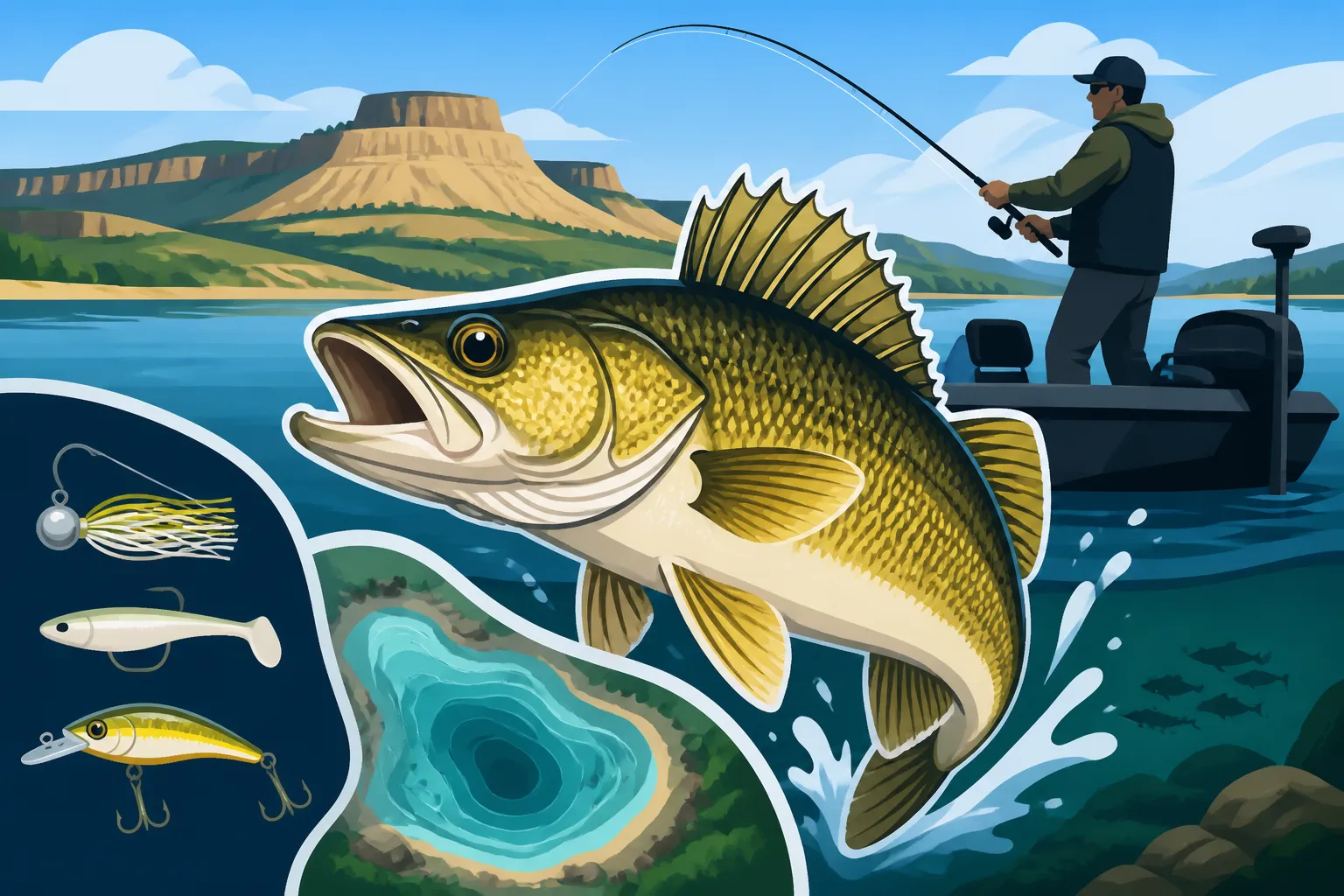
As for must-have lures, you'll want a selection of:
- Crankbaits: Jointed shad-style baits, slender minnow imitations, and deeper diving models. Brands like Berkley Flicker Shad, Rapala Shad Raps, and Salmo Hornets are often popular choices.
- Jigs: Both lead-head jigs (1/4 – 1/2 oz) for vertical jigging and lighter jigs for pitching. Assorted colors like chartreuse, white, black, and orange are good to have.
- Spinner Rigs: Pre-tied rigs or components to make your own with various blade sizes (e.g., #3 to #5 Colorado or Indiana blades) and colors.
- Soft Plastics: Paddle-tail swimbaits (3-4 inch), grub tails, and soft plastic minnow imitations for tipping jigs.
- Live Bait: Always have a good supply of lively minnows and nightcrawlers.
- Bottom Bouncers: Various weights (1/2 oz to 2 oz) to effectively present spinner rigs at different depths and speeds.
Seasonal Walleye Patterns on Belle Fourche
Walleye behavior on Belle Fourche changes dramatically throughout the year, so your tactics must evolve with the seasons.
Spring: As the ice recedes (often mid to late March, or early April), walleye move to shallower, warmer waters for their pre-spawn and spawn rituals. Target rocky points, riprap shorelines, and shallow bays with jigs and minnows, or slow-troll shallow-diving crankbaits. Water temperatures in the high 30s to low 40s will see fish staging, then moving into even shallower areas when temperatures reach the mid-40s to low 50s for spawning. After the spawn, the fish will move into classic post-spawn areas, often slightly deeper breaks near spawning grounds, feeding aggressively to recover. This is often the best time for South Dakota Spring Walleye Fishing Techniques.
Summer: Once water temperatures consistently hit the high 60s and 70s, walleye generally move to deeper, cooler waters on the main lake. Look for them concentrated around submerged humps, deep breaklines, and the mouths of old creek channels. Trolling deep-diving crankbaits or bottom bouncers with spinner rigs is highly effective. Night fishing can also be incredibly productive during the summer, as walleye move shallower under the cover of darkness to feed. The dog days of summer might require precise deep-water presentations.
Fall: As water temperatures begin to drop in late August and September, walleye become incredibly active, feeding heavily to build up fat reserves for winter. They'll often move back to shallower rocky areas and points, similar to spring patterns, but with more aggression. Trolling crankbaits at various depths, casting jigs, or using slip bobbers with live bait can all be very productive. This is often when you catch some of the largest walleye of the year.
Winter (Ice Fishing): Belle Fourche Reservoir offers fantastic ice fishing opportunities once the ice is safe. Target traditional walleye ice fishing spots like humps, points, and breaklines. Jigging spoons, aggressive rattling baits, and deadsticking live minnows are popular techniques. Be prepared for cold South Dakota winters and ensure you have proper gear. Our South Dakota Ice Fishing Guide provides an in-depth look at this exciting season.
Planning Your Belle Fourche Walleye Trip
A successful fishing trip starts long before you launch your boat. Consider these practical aspects for your Belle Fourche adventure.
Access and Amenities: Belle Fourche Reservoir has several public access points, including excellent boat ramps. State recreation areas nearby often offer camping, making it easy to turn your fishing trip into a multi-day excursion. Check with the South Dakota Game, Fish and Parks website for current conditions and access information.
Local Knowledge: Before heading out, check current local fishing reports. Local bait shops are invaluable sources of information on what's biting, where, and on what. The staff usually has their finger on the pulse of the fishery and can offer real-time advice. Don't be shy about stopping in and asking questions.
Hiring a Guide: If you're new to Belle Fourche, or just want to quickly learn the ropes and maximize your chances of success, consider hiring a local fishing guide. A guide knows the nuances of the reservoir, current hot spots, and effective techniques. Services like FishingBooker can help you find and book experienced local walleye guides who specialize in Belle Fourche Reservoir, saving you valuable time and greatly increasing your learning curve. This can be especially beneficial if you're targeting specific species like the coveted walleye.
Licenses and Regulations: Ensure you have your valid South Dakota Annual Fishing License and any required stamps (like the habitat stamp). Always review the latest South Dakota Fishing Regulations Explained before your trip, as rules can change annually. Being prepared and compliant means a stress-free day on the water.
Summary of Belle Fourche Walleye Seasonal Tactics
| Season | Primary Location | Best Techniques | Recommended Baits/Lures | Notes |
|---|---|---|---|---|
| Spring | Rocky points, shallow bays, riprap | Jigging, slow trolling, slip bobbers | Jigs (minnow-tipped), shallow crankbaits, live minnows | Pre-spawn staging, spawning, post-spawn recovery. Water temp 40s-50s. |
| Summer | Deep humps, main lake breaklines, creek channels | Trolling deep crankbaits, bottom bouncers, vertical jigging | Deep crankbaits, spinner rigs with nightcrawlers, plastics | Fish deeper during day, shallower at night. Warmer water. |
| Fall | Rocky points, breaklines, main lake contours | Trolling, casting jigs, slip bobbers | Crankbaits, jigs (minnow/plastic tipped), live minnows | Aggressive feeding for winter. Often best for trophy fish. |
| Winter (Ice) | Humps, points, breaklines (classic structure) | Jigging spoons, deadsticking, aggressive rattling baits | Jigging spoons, live minnows, plastics (vertical) | Safe ice is paramount. Focus on primary structures. |
Disclaimer
The information provided in this guide is for general informational purposes only and is subject to change. Fishing regulations, conditions, and fish behavior can vary. Always consult the official South Dakota Game, Fish and Parks regulations and local authorities before engaging in any fishing activities. Adherence to all local, state, and federal laws is the responsibility of the angler.