How to Anchor Fish a Tailwater for Walleye
Fishing the swift currents of a South Dakota tailwater can be incredibly rewarding, especially when you're targeting those elusive walleye, but it also presents a unique set of challenges. The constant flow can make boat control a nightmare, leaving you feeling like you're just drifting aimlessly past prime fishing spots. This comprehensive guide is here to help you master the art of anchor fishing in these dynamic environments, ensuring you can hold your position, present your baits effectively, and ultimately increase your chances of landing that trophy walleye.
Understanding South Dakota Tailwaters and Walleye Behavior
Tailwaters, the stretches of river directly below dams, are unique ecosystems that offer some of South Dakota's most productive walleye fishing. The constant release of water creates a rich, oxygenated environment that attracts baitfish, which in turn draws in hungry walleye. Understanding these environments is the first step to successful anchor fishing.
What Makes Tailwaters Unique for Walleye?
The Missouri River tailwaters below dams like Oahe Dam, Big Bend Dam, Fort Randall Dam, and Gavins Point Dam are prime examples of these special fisheries. What sets them apart is the consistent current, which acts like a conveyor belt for food. This means walleye don't have to expend a lot of energy hunting; they can simply position themselves in current breaks or ambush points and wait for food to come to them. The water temperature is also often more stable than in upstream reservoirs, providing consistent conditions that walleye prefer. This constant flow keeps the water churned and oxygenated, creating an ideal habitat, especially during warmer months when other parts of the system might be less favorable. These areas are also often stocked, ensuring a healthy population.
Moreover, the depth and structure in tailwaters can change dramatically. Scouring from the current creates deep holes, riffles, and gravel beds that become perfect hiding spots. Walleye, being opportunistic predators, will use these features to their advantage, conserving energy while waiting for an easy meal. The confluence of these factors – abundant food, stable temperatures, high oxygen levels, and varied structure – creates a perfect storm for concentrated walleye populations, making them incredibly attractive to anglers willing to learn the techniques needed to fish them effectively.
Reading the Water: Identifying Prime Walleye Holding Spots
Successfully anchor fishing a tailwater isn't just about dropping your anchor anywhere; it's about strategically positioning your boat where walleye are most likely to be holding. Learning to "read the water" is a skill developed over time, but there are clear signs to look for. Walleye generally prefer areas where they can escape the full force of the current while still having easy access to passing food. This means looking for current seams, which are visible lines where fast-moving water meets slower water. These seams often form behind obstructions like bridge pilings, submerged rocks, or points of land.
Eddies, which are swirling pockets of calm water behind obstacles, are also prime locations. Walleye will sit in these calm zones, darting out into the current to snatch baitfish. Pay attention to changes in water color or texture, as these can indicate depth changes or submerged structure like rock piles or sudden drop-offs. Using your fish finder, which you can find a wide selection of on Amazon, is crucial here to identify these underwater features. A good fish finder will show you depth contours, bottom composition, and even schools of baitfish or individual walleye holding near the bottom. Observing other anglers can also give you clues – where are they catching fish? What areas seem to be consistently productive? Remember, walleye are often found near the bottom, so understanding the contours and structure beneath you is paramount.
Essential Gear for Anchor Fishing Success
Having the right equipment is non-negotiable when you're battling strong currents and aiming to hold your boat precisely over a productive walleye spot. It's not just about the fishing gear itself, but the anchoring system that allows you to present your bait effectively.
The Right Anchor and Anchoring System
For tailwater fishing, your anchoring system is your most important tool. A flimsy anchor or insufficient rope can lead to frustration, lost spots, and even safety concerns. You need an anchor designed to dig in and hold firm in rocky or gravelly bottoms and strong currents. A river anchor, often a "fluke" or "grapnel" style, is usually ideal, but a heavy claw or slip-ring anchor can also work. The weight of the anchor itself is critical – don't skimp here. A heavier anchor, proportionate to your boat size and the current strength, will hold much better.
Equally important is having enough anchor rope and chain. The general rule of thumb for anchoring is a 7:1 scope, meaning for every 1 foot of water depth, you need 7 feet of rope. In a strong current, you might even need more. A few feet of heavy chain between your anchor and rope is also essential. The chain helps the anchor dig in, keeps the rope from chafing on the bottom, and provides extra weight to keep the anchor angle low. Many anglers also use an anchor buoy system or a sliding anchor trolley, especially in smaller boats, which allows you to adjust your boat's position without re-anchoring. This lets you swing your boat around to cover a wider area or position yourself perfectly over a structure. Consider robust options that are readily available from retailers like Amazon.
| Anchor Type | Ideal Bottom Type | Current Holding Power | Pros | Cons |
|---|---|---|---|---|
| River Anchor | Rock, gravel, mud | Excellent | Designed to dig into varying bottoms | Can be cumbersome to retrieve in snags |
| Claw Anchor | Rock, gravel, sand | Very Good | Holds well in rough conditions, easy to set | Requires substantial weight for strong current |
| Fluke Anchor | Mud, sand, light gravel | Good | Lightweight, stores flat | Less effective in heavy rock or extremely strong current |
| Mushroom Anchor | Soft mud, weeds (lighter boats) | Fair | Best for calm water or as a secondary anchor | Not suitable for strong currents or hard bottoms |
Rods, Reels, and Terminal Tackle
Once your boat is securely anchored, you need the right tools to present your bait effectively. For walleye in current, sensitivity is key. You want to feel every subtle bite. A medium-light to medium-heavy spinning or baitcasting rod, typically 6'6" to 7'6" in length, with a fast action tip, is perfect. This allows for precise jigging and excellent bite detection. Pair this with a reliable spinning reel spooled with 8-10 pound braided line, which offers superior sensitivity and minimal stretch. A fluorocarbon leader of 10-15 pounds test, roughly 2-3 feet long, is essential for its abrasion resistance against rocks and its near-invisibility in clear water.
When it comes to terminal tackle, jigs are king in tailwaters. You'll need a variety of jig head weights, ranging from 1/4 ounce in lighter currents to 3/4 ounce or even heavier in really strong flows, to ensure your bait gets to the bottom and stays there. Tying a Best Knot for Tying On a Walleye Jig will ensure your presentation is secure. Popular jig styles include traditional round heads, stand-up jigs, or even specialty jigs like the Wyandotte. Dress your jigs with soft plastics like paddletails, grubs, or minnow-imitating baits. Live bait, such as minnows or shiners, fished on a jig or a live bait rig (like a Lindy Rig or bottom bouncer), is often irresistible to walleye. Make sure to have a good selection of hooks, swivels, and split shots to adapt to different presentations and depths. For an in-depth look at optimal gear, consider exploring a Best Fishing Rods and Reels for Walleye guide.
Step-by-Step Guide to Anchor Fishing a Tailwater
Now that you understand the environment and have your gear ready, let's walk through the process of anchor fishing for walleye in a South Dakota tailwater. It’s all about precision and patience.
Approaching Your Spot and Setting the Anchor
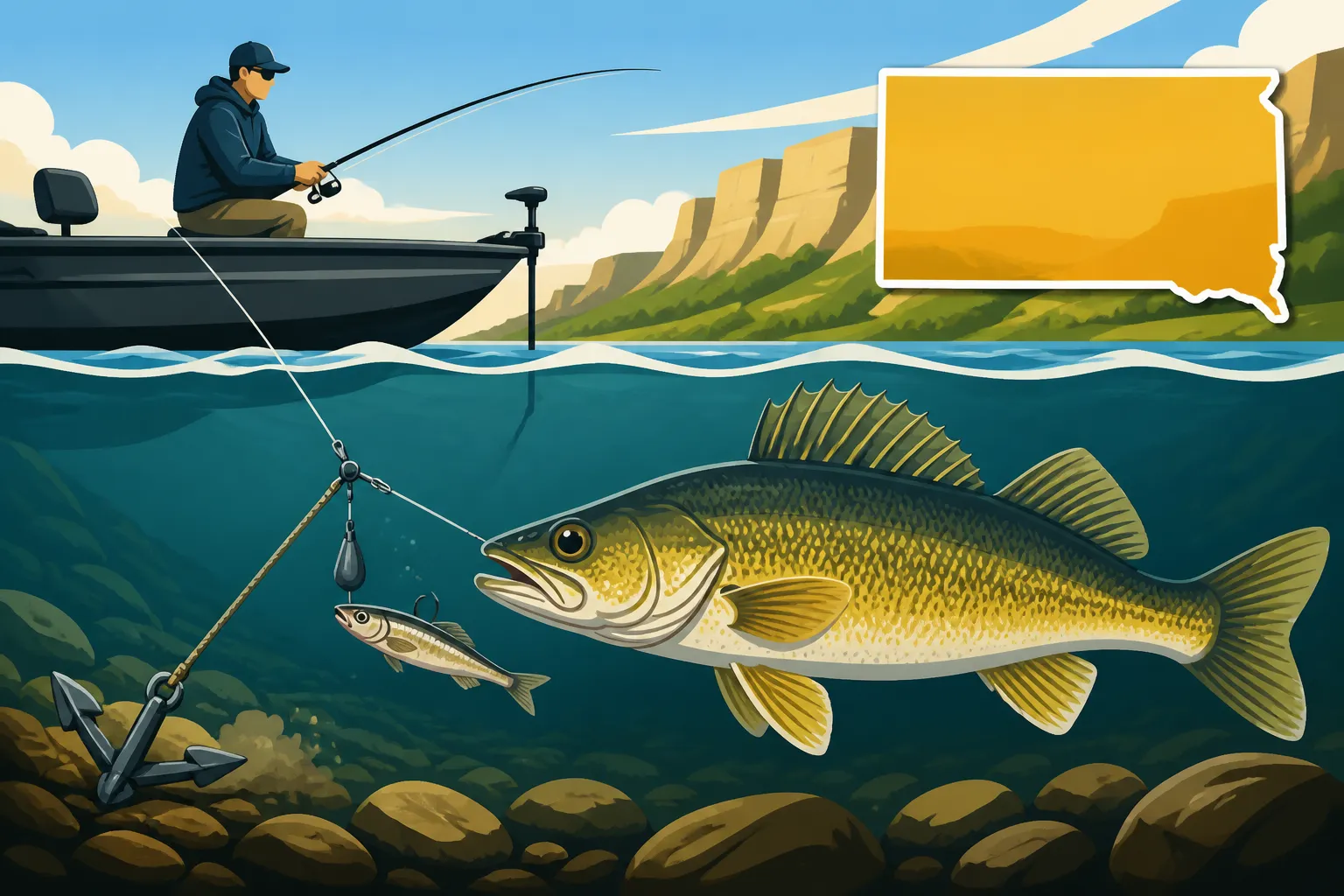
The key to successful anchor fishing is to approach your desired spot from upstream. This allows you to drift naturally into position and set your anchor without spooking fish or fighting the current unnecessarily. As you approach, pay close attention to your fish finder to confirm the structure and depth you're targeting. Once you're slightly upstream from where you want to fish, slowly deploy your anchor. Don't just heave it overboard; let it sink naturally while feeding out rope. This prevents the anchor from fouling and allows it to settle properly on the bottom.
As the current carries your boat downstream, continue to let out anchor rope until you feel the anchor dig in and hold. This is where the concept of "scope" becomes crucial. You'll likely need a significant amount of rope – remember that 7:1 ratio, and sometimes more in powerful currents. Once you're holding steady, observe your surroundings. Are you positioned correctly over the desired structure? Is your boat swinging too much? If not, you might need to retrieve some rope or let out more, or even reposition slightly. Some anglers use two anchors (one off the bow, one off the stern) in extremely strong currents or to minimize boat swing, providing an even more stable platform. Remember to maintain situational awareness, especially in popular areas where South Dakota Boat and Water Access Rules are important to follow.
Presenting Your Baits Effectively in Current
Once anchored, your focus shifts to bait presentation. The current is now your friend, carrying scents and natural movements to the walleye. The primary goal is to get your bait to the bottom and keep it in the strike zone. If you're jigging, let your jig sink until it hits the bottom, then lift it a few inches and let it fall again, mimicking a struggling baitfish or insect. The key is to maintain bottom contact without constantly dragging. Vary your jigging retrieve – some days walleye prefer an aggressive snap, other days a subtle lift and drop.
When using live bait rigs, cast upstream and let the current carry your bait naturally downstream, along the bottom. The weight of your sinker or bottom bouncer should be just enough to maintain bottom contact without getting swept away. This "controlled drift" allows your bait to cover ground naturally. Experiment with different weights and leader lengths until you find the sweet spot where your bait looks most natural. Pay close attention to your line; current will create a bow, but any sudden twitch or stop could indicate a bite. Setting your rod in a rod holder (you can find various types on Amazon) can also be effective, letting the current impart action to your bait while you monitor the rod tip for the tell-tale tap of a walleye. Understanding How to Jig for Walleye in Current is vital for maximizing your success.
Tips for Maximizing Your Catch and Staying Safe
Anchor fishing in South Dakota's tailwaters can be incredibly productive, but it also requires adaptability and a strong focus on safety. These tips will help you make the most of your time on the water.
Adapting to Changing Conditions
Tailwaters are constantly changing environments. Water release from the dam can fluctuate significantly throughout the day, altering current speed and water levels. A spot that was hot in a moderate current might become unfishable in a raging torrent, or vice-versa. Pay close attention to current changes and be prepared to adjust your tackle. This might mean switching to heavier jigs or bottom bouncers, or even relocating to an area with less intense current. Water clarity can also change, especially after heavy rains, impacting your lure color choices. For example, Best Crankbait Colors for Stained Water often differ from those for clear water.
Weather conditions, particularly wind, can also play a huge role. Strong winds can make boat control difficult even when anchored, causing your boat to swing and making it hard to feel bites. On windy days, try to position your boat so it's facing into the wind as much as possible, or seek out more sheltered areas. Don't be afraid to move if a spot isn't producing, or if conditions make it too challenging to fish effectively. Walleye behavior also changes with the seasons; a good South Dakota Fishing Seasons Explained resource can help you understand these shifts and adapt your techniques accordingly. Always be ready to experiment with different depths, presentations, and baits until you crack the code for that particular day.
Safety First: Navigating Strong Currents and Boat Traffic
Fishing in tailwaters, especially below large dams, comes with inherent risks due to strong currents and often heavy boat traffic. Your safety, and the safety of everyone on board, must always be your top priority. Always wear a U.S. Coast Guard-approved personal flotation device (PFD) or have one readily accessible for everyone in the boat. Make sure you understand South Dakota Boat Safety Equipment Requirements before heading out. The current can be deceptively powerful, and falling overboard in a tailwater can quickly become a life-threatening situation.
Be acutely aware of your surroundings. Other boats, often moving at high speeds or also anchored, can create hazards. Maintain proper lookout and be mindful of your anchor line, ensuring it doesn't pose a tripping hazard or get fouled by other vessels. If you're anchoring in a heavily trafficked area, consider flying a diver-down flag or other signaling device to indicate your position, though this is not a substitute for active awareness. Also, know the water. Understand where submerged hazards like rock piles or wing dams might be located. If you're new to a particular tailwater, consider going with an experienced angler or guide first. Have a communication device (cell phone, marine radio) readily available in case of an emergency. Finally, always let someone know where you're going and when you expect to return.
Disclaimer
This article is for general informational purposes only and does not constitute professional advice. Laws, prices and regulations vary by location and change over time. Consult a qualified professional for guidance on your specific situation.