Best Walleye Trolling Rods
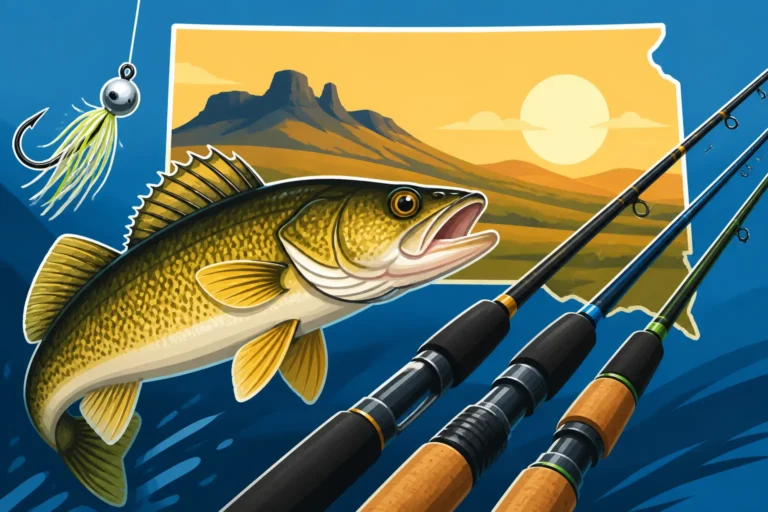
It’s a tale as old as time on the water: you're out on the vast expanses of Lake Oahe, the sun is just kissing the horizon, and you've got your boat dialed in, crankbaits swimming perfectly behind you. Then, bam – a walleye hits, and your all-purpose bass rod just can't handle the long fight, the deep dive, or the sheer power needed to keep that fish buttoned up all the way to the net. It's frustrating to lose a fish you've worked so hard for, all because your gear wasn't quite up to the task. This guide is here to unravel the mystery of choosing the best walleye trolling rods, ensuring your next South Dakota fishing adventure ends with more fish in the cooler and fewer "the one that got away" stories.
Why a Dedicated Trolling Rod Makes All the Difference for Walleye
When you're serious about chasing walleye, especially in the big waters of South Dakota, you quickly realize that not all fishing rods are created equal. Many anglers start out using whatever rod they have on hand for trolling, only to discover that it's a recipe for frustration. A specialized trolling rod isn't a luxury; it's a necessity that genuinely elevates your success and enjoyment on the water.
The Limitations of Multi-Purpose Rods
Think about that bass rod or a general-purpose spinning rod you might have lying around. It probably has a fast action, meaning it bends mostly at the tip, designed for casting lures accurately and feeling subtle bites when jigging or working plastics. While fantastic for those applications, these characteristics can be a real hindrance when trolling for walleye.
The problem starts with hooksets and lure presentation. When a walleye hits a trolled crankbait, especially one running far behind the boat or on a planer board, you need a rod that can absorb that initial shock without immediately pulling the hooks free or jerking the lure out of the fish's mouth. A fast-action rod can often be too stiff in the tip for this. Instead of a smooth, consistent load, you get a sharp, jarring response that can tear the hooks out of a walleye's relatively soft mouth, especially during those unexpected surges. Moreover, these rods might not have the continuous, parabolic bend needed to keep constant pressure on the fish throughout the fight, leading to more lost fish at the boat. You’ll also find that trying to read the subtle vibrations of a crankbait or the tell-tale bump of a weed with a rod not designed for trolling can be incredibly difficult, often leaving you guessing about what’s happening at the business end of your line.
Enhancing Lure Presentation and Sensitivity
A dedicated walleye trolling rod, on the other hand, is engineered specifically to excel in these demanding conditions. Its design prioritizes consistent lure action, superior shock absorption, and enhanced sensitivity to what's happening hundreds of feet behind your boat. These rods typically feature a moderate or moderate-fast action, which means they bend more deeply into the blank, distributing the stress evenly along the rod.
This forgiving action allows the rod to "load up" smoothly when a fish strikes, acting like a spring to cushion the initial impact and maintain a constant, steady pressure. This dramatically reduces the chance of hooks tearing out, especially when that walleye makes a sudden dash or head shake right at the boat. The continuous bend also helps keep your lure running true, absorbing the boat's motion and any small variations in speed or current without causing erratic lure behavior. Furthermore, the blank of a good trolling rod is designed to transmit subtle vibrations directly to your hand. You can feel the distinct throb of your crankbait, differentiating it from a weed snag or, crucially, the often-subtle tap of a walleye taking the bait. This heightened sensory feedback is invaluable, allowing you to react quicker and more effectively, ultimately leading to more successful hookups and fish landed, even when targeting elusive giants on waters like Lake Oahe Walleye Hotspots Near Mobridge.
Decoding the Specs: Key Characteristics of a Top Walleye Trolling Rod
Choosing the right trolling rod isn't just about grabbing the longest one on the rack. There's a science to it, rooted in understanding the specific characteristics that make a rod perform optimally for walleye. Length, action, power, and material all play critical roles in how effectively your rod presents lures, handles strikes, and fights fish.
Rod Length and Its Impact on Spread and Action
The length of your walleye trolling rod is one of the most critical factors, directly influencing your ability to spread out lines, manage multiple baits, and present lures effectively. Trolling rods for walleye often range from 7 feet all the way up to 10.5 feet or even longer.
- Longer rods (8.5 to 10.5+ feet) are phenomenal for achieving a wider spread, especially when running multiple lines off the sides of your boat using planer boards. This broad spread prevents lines from tangling, reduces spooking fish by keeping lures away from the boat, and allows you to cover a much larger swath of water. Imagine working a long weed line or a sprawling flat on Lake Sharpe; a wider spread means you can present more baits across more prime territory. The extra length also acts as a shock absorber, giving a greater cushion when a walleye strikes, and makes it easier to keep a fighting fish away from the boat's motor or other lines in a multi-angler setup. However, they can be cumbersome to store and handle in smaller boats or tight spaces.
- Shorter rods (7 to 8.5 feet) are often preferred for specific applications like downriggers, dipsy divers, or when flat-lining closer to the boat. Their compact size makes them easier to manage in the boat, especially when reeling in fish that are clipped into a downrigger. They also provide a more direct feel for the lure's action and the fish's fight, which can be advantageous in certain situations where pinpoint control is more important than a wide spread. When targeting walleye in tighter channels or navigating busy areas of the Missouri River, shorter rods can offer better maneuverability.
Understanding Rod Action and Power for Walleye Trolling
Rod action refers to where the rod bends when pressure is applied, while power describes the rod's overall lifting strength. Getting these two aspects right is paramount for successful walleye trolling.
- Action: For walleye trolling, a moderate to moderate-fast action is generally preferred.
- A moderate action rod bends uniformly through the top half or even two-thirds of the blank. This deep, parabolic bend is excellent for absorbing the shock of a strike, ensuring constant pressure on the fish, and preventing hooks from tearing out. It acts like a giant spring, cushioning every head shake and run a walleye makes. This is particularly beneficial when using treble-hooked crankbaits, where a violent jerk can easily rip free.
- A moderate-fast action rod bends primarily in the top third to half, offering a slightly quicker recovery than a true moderate action. This can provide a bit more sensitivity to feel subtle bites or changes in lure action while still offering ample shock absorption.
- Avoid fast or extra-fast actions for most trolling, as they can be too stiff and unforgiving, leading to missed strikes and pulled hooks.
- Power: Rod power dictates how much force is required to bend the rod. For walleye trolling, medium to medium-heavy power is typically the sweet spot.
- A medium power rod is robust enough to handle the drag of larger crankbaits, heavy snap weights, or smaller planer boards, while still providing enough flex to be forgiving during the fight. It's great for average-sized walleye (18-24 inches).
- A medium-heavy power rod provides more backbone, making it ideal for bigger baits, larger planer boards, deep-diving crankbaits, or when targeting trophy walleye that might exceed 25 inches. It gives you the leverage to steer larger fish away from snags or boat components and manage heavy current found in parts of the Missouri River. You'll appreciate this power when you hook into a truly big one while Trolling for Walleye on Lake Oahe.
Material Matters: Graphite, Fiberglass, and Composites
The materials used in a rod's construction significantly impact its weight, sensitivity, durability, and overall feel. Each has distinct advantages for walleye trolling.
- Fiberglass rods are renowned for their incredible durability and a deep, parabolic bend. They are virtually indestructible and excel at absorbing shock, making them very forgiving during a fight. This deep flex ensures a consistent load, minimizing the chance of hooks pulling out. Fiberglass rods are generally heavier and less sensitive than graphite, but their resilience makes them a fantastic choice for heavy-duty trolling applications, especially with heavy lines and large baits where sensitivity isn't the primary concern. They're a workhorse material, reliable day in and day out, particularly for running multiple lines where rods can take a beating.
- Graphite rods are celebrated for their lightweight nature and exceptional sensitivity. They transmit vibrations incredibly well, allowing you to feel the subtle action of your lure and even the slightest tap from a fish. While more sensitive, graphite can be more brittle than fiberglass and less forgiving under sudden, immense stress. For trolling, where rods are often subjected to constant pressure and sharp strikes, pure graphite rods might be considered by some anglers to be a bit too delicate if not handled carefully, especially the more high-modulus (and thus more brittle) varieties.
- Composite rods offer a fantastic middle ground, blending the best attributes of both fiberglass and graphite. They typically combine the durability and shock-absorbing qualities of fiberglass with some of the lighter weight and enhanced sensitivity of graphite. Many top-tier walleye trolling rods today are made from composite materials, providing a versatile and robust blank that can withstand the rigors of trolling while still offering good feedback and fighting power. This hybrid construction often gives you the best of both worlds – a rod that's tough enough for the long haul, but still responsive enough to keep you connected to your lure and the fish.
Navigating the Options: Different Walleye Trolling Rod Setups
Just as different fish call for different baits, different trolling methods demand different rod characteristics. Whether you're running planer boards, employing downriggers, or using lead core, there's a specific rod design that will maximize your effectiveness for each technique.
Rods for Planer Board Domination
Planer boards are a staple for serious walleye anglers, allowing you to spread out multiple lines and present baits to undisturbed fish far from the boat's path. The rods used for planer board trolling have a unique set of requirements.
These rods are typically longer, often ranging from 8.5 to 10.5 feet. The extra length is crucial for several reasons: it helps create a wider spread between lines, preventing tangles; it acts as a shock absorber against the constant pull of the planer board and the boat's motion; and it provides better leverage when fighting a fish that's clipped into a board far away. A moderate to moderate-fast action is key, allowing the rod to load up smoothly when a fish hits without snapping the line out of the board clip or tearing the hooks from the fish's mouth. The rod needs a strong, forgiving backbone to handle the drag of the board itself, plus the resistance of the lure, and then the additional fight of a walleye. Look for models with durable, smooth line guides, as the line will be under constant tension and moving across them. Many anglers find that a longer handle on these rods also provides better balance and easier management, especially when reaching across the boat to set or retrieve lines. Brands like Daiwa and Okuma offer excellent dedicated planer board rods.
Downrigger and Lead Core Specific Rods
These two specialized trolling methods require distinct rod characteristics to perform at their best.
- Downrigger Rods: When using downriggers to precisely control the depth of your lures, you'll want a rod with a soft, forgiving tip and a strong, parabolic backbone. Downrigger rods are often shorter than planer board rods, typically ranging from 7 to 8.5 feet. The soft tip is essential because it allows the line to release smoothly from the downrigger clip when a fish strikes, without the rod tip snapping back and potentially tearing the hooks out of the fish's mouth. After the release, the rod should have a continuous, moderate bend to absorb the fight of the fish. These rods need to withstand the constant tension of being bent over in the downrigger clip for extended periods without taking a set. Their strength lies in their ability to absorb impact and keep consistent pressure, which is critical when fighting a walleye that has just hit a lure deep below the surface.
- Lead Core Rods: Fishing with lead core line is a fantastic way to reach specific depths without the need for additional weights or divers, but it requires a rod that can manage the heavy, large-diameter line. Lead core rods are typically longer, often 8.5 to 10 feet, with a moderate to moderate-fast action. The extra length helps distribute the weight of the lead core line more effectively, making casting (if needed) and retrieving more manageable. The rod needs a smooth, continuous bend that extends well into the blank to prevent kinking the lead core line, which can be prone to memory issues if handled improperly. Look for rods with plenty of smooth, durable guides to ensure the abrasive lead core line runs freely and doesn't cause excessive wear. Best Fishing Rods and Reels for Walleye often highlights specific models suited for these techniques.
Divers, Snap Weights, and Flat-Lining Rods
For anglers who prefer direct-line trolling with diving devices, snap weights, or simply flat-lining crankbaits, the rod requirements lean towards sensitivity and direct feedback.
These setups often use rods in the 7 to 8.5-foot range, with a moderate-fast action and medium to medium-heavy power. The goal here is to maintain a direct connection to your lure and feel every vibration. When using diving planers (like Dipsy Divers) or heavier snap weights, the rod needs a strong backbone to handle the added resistance and the pressure of a fish strike. The moderate-fast action provides enough forgiveness to absorb strikes while still offering quick recovery and excellent sensitivity. You want to feel the subtle wobble of your crankbait, know when it ticks the bottom, and instantly detect a walleye bite, which can sometimes feel more like a subtle pressure change than an aggressive strike. For flat-lining, where there's no added weight or device to dampen the feel, a slightly more sensitive rod can be beneficial, helping you fine-tune your speed and presentation. These rods are often the most versatile for different depths and presentations without dedicated board or downrigger setups.
Tailoring Your Trolling Arsenal to South Dakota's Diverse Walleye Waters
South Dakota is a walleye angler's paradise, but its waters are incredibly diverse, from the vast Missouri River reservoirs to the shallower, fertile glacial lakes. Understanding these differences and how they impact your trolling rod choices is key to consistent success.
Missouri River System Specifics (Oahe, Sharpe, Francis Case)
The Missouri River system, encompassing massive reservoirs like Lake Oahe, Lake Sharpe, and Lake Francis Case, presents unique challenges and opportunities for walleye trolling. These are big, powerful waters with significant current, deep channels, and often substantial wave action. Your trolling rods here need to be built for battle.
For these expansive waters, durability and raw power are paramount. You'll often be running heavier crankbaits, larger snap weights, or lead core to reach walleye holding in deep breaks or current seams. This demands rods with a robust, medium-heavy power and a moderate to moderate-fast action that can stand up to the strain. Longer rods, in the 8.5 to 10.5-foot range, are highly advantageous. They allow you to spread your lines far and wide, covering more water in these vast reservoirs and keeping your baits away from the boat, which can be critical for spooky walleye in clear water. The extra length also provides superior shock absorption against the strong runs of a Missouri River walleye and helps to absorb the constant rocking of the boat in choppy conditions. Furthermore, these longer, more powerful rods give you the leverage to quickly turn a fighting walleye away from potential snags in submerged timber or riprap. When fishing in areas like the tailwaters below the dams, where current can be fierce, a strong backbone is non-negotiable. Many anglers swear by the added confidence a well-built, powerful rod gives them when targeting trophy fish on Lake Oahe Fishing Guide or Lake Francis Case Fishing Guide.
Glacial Lakes and Smaller Reservoirs
Eastern South Dakota's glacial lakes and numerous smaller reservoirs offer a different trolling environment compared to the Missouri River. These waters often have less current, may be shallower on average, and feature more distinct weed lines, points, and humps.
Here, versatility and a slightly more refined approach can be beneficial. While powerful rods are still important for fighting fish, you might not always need the extreme length or heavy power required for the biggest river systems. Rods in the 7.5 to 9-foot range with a medium to medium-heavy power and a moderate-fast action often hit the sweet spot. This length offers a good balance of spread control and maneuverability for working around structure or in smaller boats. The moderate-fast action provides excellent sensitivity to feel bottom transitions, subtle weed tickles, and lighter bites, which can be crucial when walleye are finicky. Because these lakes can have varying depths and cover types, a rod that can handle a range of crankbaits, from shallow divers to deeper running models, is invaluable. Think about lakes like Kampeska or Poinsett; you might be trolling shallow flats one hour and working a deep break the next. The ability to switch between tactics without changing your entire rod setup is a big plus. If you're exploring different glacial lakes, having a versatile setup is a must for maximizing your chances. Check out our guide on South Dakota Glacial Lakes Fishing Guide for more insights into these waters.
Adapting to Seasonal Walleye Trolling Tactics
Walleye behavior changes dramatically with the seasons, and so too should your trolling strategies—and sometimes, your rod choice. Adapting your trolling arsenal to align with seasonal patterns can significantly boost your success.
- Spring Trolling: In early spring, walleye are often shallower, pre-spawn or post-spawn, and can be more sensitive to boat pressure. Lighter baits, often slower speeds, and a more delicate presentation are common. For this, a rod with slightly more sensitivity and a moderate action can be beneficial. A 7.5 to 8.5-foot rod with medium power might be preferred, allowing for a lighter touch to detect those subtle early-season bites. The forgiving action helps ensure that these often-tentative strikes result in solid hookups. This is also a time when you might be trying to cover shallow flats or rocky shorelines. Learn more in South Dakota Spring Walleye Fishing Techniques.
- Summer Deep Water: As summer heats up, walleye often move to deeper, cooler water, congregating on main lake humps, deep breaks, or river channels. This is prime time for heavy lead core, snap weights, or deep-diving crankbaits. Here, you'll want to lean into those more powerful, often longer, medium-heavy rods designed to handle the increased drag of heavier tackle and the added fight of a deep-water walleye. Rods designed for Deep Water Summer Fishing Techniques really shine in these conditions, providing the backbone needed to haul fish up from 20-40 feet or more.
- Fall Feeding Frenzy: Fall can be a fantastic time for trophy walleye, as they aggressively feed before winter. They might be anywhere from mid-depths to deeper structures, often keying in on schools of baitfish. This period often calls for a versatile trolling setup, able to adapt to different depths and aggressive strikes. A good all-around 8 to 9-foot medium-heavy, moderate-fast action rod will serve you well, capable of handling larger crankbaits or even bigger minnows trolled on harnesses. This blend of power and sensitivity is perfect for detecting hard-hitting fall walleye. Don't miss our insights on South Dakota Fall Walleye Fishing Techniques.
| Feature | Description | Ideal for Planer Boards | Ideal for Downriggers | Ideal for Lead Core |
|---|---|---|---|---|
| Length | How far the rod extends, affecting spread | 8' – 10'6" | 7' – 8'6" | 8'6" – 10' |
| Action | Where the rod bends under pressure | Moderate-Fast to Moderate | Moderate to Slow | Moderate-Fast |
| Power | Rod's lifting strength | Medium-Heavy | Medium | Medium-Heavy |
| Material | Composition influencing weight & durability | Composite/Fiberglass | Fiberglass/Composite | Graphite/Composite |
| Guides | Number and material of line guides | Durable, many | Durable | Many, smooth |
Maximizing Your Investment: Care and Maintenance for Trolling Rods
You’ve invested time and money into finding the perfect walleye trolling rods for your South Dakota adventures. To ensure they serve you well for many seasons to come, proper care and maintenance are non-negotiable. Neglecting your gear can lead to premature failure, frustrating breakages, and ultimately, lost fish.
Cleaning and Inspection Routines
Your rods endure a lot – sun, water, fish slime, bait residue, and sometimes even the occasional bump or scrape in the boat. Regular cleaning and inspection are essential to prevent degradation and identify potential problems before they become critical failures.
After every few trips, or certainly at the end of a long weekend on the water, take the time to wipe down your rods. A mild soap and water solution is often all you need. Pay particular attention to the rod blank, handle (especially cork or EVA foam), and all the guides. Salt, dirt, and fish slime can accumulate, leading to corrosion on metal parts, degradation of handle materials, and even microscopic abrasions on your line if left unchecked. Use a soft cloth or sponge, and rinse thoroughly. While cleaning, visually inspect every component. Run a cotton swab inside each guide ring; if it snags, you likely have a cracked or missing guide insert, which can quickly fray and break your fishing line. Check the reel seat for any looseness or corrosion, and examine the rod blank itself for any hairline cracks or deep scratches, particularly near the ferrules (where sections join) or around the guides. Small issues caught early can often be repaired, saving you from replacing an entire rod down the line. This routine not only prolongs the life of your rods but also helps ensure they perform flawlessly when that trophy walleye decides to strike.
Proper Storage and Transport Practices
Trolling rods, especially the longer models, are particularly vulnerable to damage during storage and transport. A broken tip or a warped blank due to improper handling can be heartbreaking and costly.
When storing your rods at home, ensure they are kept in a cool, dry place, out of direct sunlight. Rod racks or hangers that support the rod evenly along its length are ideal, preventing any section from being under constant stress or bending, which can lead to permanent warps over time. Never store a rod leaning against a wall by its tip, as this is a sure way to eventually snap it. Individual rod sleeves are also a great investment; they protect the blanks and guides from accidental contact damage and keep multiple rods from tangling when stored together. For transport, whether you're driving to Lake Sharpe for a day of fishing or hauling your gear across the state to the Glacial Lakes, extreme care is crucial. Never just toss your rods in the back of a truck or pile them haphazardly in the boat. Invest in proper rod cases or tubes, or use a secure rod holder system in your vehicle. For longer trips, consider breaking down two-piece rods. When rods are in the boat, make sure they are secured so they don't bounce around and get damaged. Accidental impacts with boat rails, coolers, or other gear are common causes of damage. Treating your rods with respect during transport is as important as how you use them on the water, preventing those frustrating moments when you pull out a broken rod before you even cast a line.
Making the Purchase: Tips for Buying Your Next Walleye Trolling Rod
Now that you understand the nuances of walleye trolling rods, it’s time to make a wise purchase. With so many options available, it can feel overwhelming, but by considering your budget, researching brands, and choosing your vendor carefully, you can confidently build an arsenal that serves you well.
Setting a Realistic Budget
Fishing gear, especially specialized rods, can range from incredibly affordable to exceptionally expensive. When it comes to walleye trolling rods, you can find excellent options across various price points, so it's important to set a realistic budget for yourself.
You certainly don't need to break the bank to acquire a capable trolling rod. Entry-level models, often made with a higher percentage of fiberglass or more basic composite materials, can offer excellent durability and a forgiving action, perfect for beginners or those building a multi-rod setup on a budget. These might not have the lightest weight or the most refined components, but they will absolutely catch fish. As you move up in price, you'll find rods with more advanced composite blanks, lighter weight, better balance, and higher-quality components like stainless steel guides with ceramic inserts. These enhancements contribute to increased sensitivity, reduced fatigue during long days of trolling, and often improved longevity. Premium rods might feature proprietary blank technologies, custom handles, and top-of-the-line components, offering the ultimate in performance and feel. Consider how often you'll be using the rod and what level of performance you truly need. For a weekend warrior, a mid-range rod might be the perfect balance of cost and capability, allowing you to invest in a few different setups for various trolling techniques without feeling the pinch too hard.
Researching Brands and Reading Reviews
The fishing industry is home to many reputable brands, each with its loyal following and distinct specialties. When looking for walleye trolling rods, certain names frequently rise to the top for their quality and performance.
Brands like St. Croix, Fenwick, Okuma, Daiwa, Shimano, and even Cabela's house brands, often have dedicated lines of trolling rods that cater specifically to walleye anglers. It pays to do your homework. Start by browsing online forums and fishing communities where real anglers share their experiences and recommendations. Look for detailed reviews on retailer websites like Bass Pro Shops or Amazon. Pay attention to comments regarding the rod's durability, action under load, how well it handles different lure weights, and its overall feel. Remember that while a brand might be excellent for spinning rods, their trolling rods might have a slightly different reputation, so focus your research specifically on the type of rod you're interested in. Reading both positive and negative reviews can give you a well-rounded perspective and help you avoid common pitfalls. For instance, some rods might be praised for their sensitivity but criticized for their fragility, or vice versa. By gathering a broad range of opinions, you can make a more informed decision that aligns with your specific trolling style and the demands of South Dakota's walleye fishing.
Where to Buy: Online vs. In-Store Experiences
Once you've narrowed down your choices, the next step is deciding where to make your purchase. Both online retailers and physical stores offer distinct advantages and disadvantages.
- In-Store Experience: Visiting a physical tackle shop or a large outdoor retailer like Bass Pro Shops offers the invaluable opportunity to physically handle the rod. You can pick it up, feel its balance, flex the tip, and get a sense of its action and power. This tactile experience is especially important for rods, as specifications on paper don't always convey the true feel. Knowledgeable staff at these stores can also provide personalized advice, answer specific questions about different models, and often share local insights into what works best on South Dakota waters. While prices might sometimes be slightly higher than online, the ability to "test drive" a rod and get expert guidance can be well worth it, especially for a significant purchase. Plus, supporting local tackle shops helps keep those invaluable community resources alive.
- Online Platforms: Shopping on platforms like Amazon or specialized fishing tackle websites offers unparalleled convenience and often a wider selection, sometimes at more competitive prices. You can browse countless options from the comfort of your home, read dozens of reviews, and compare specifications side-by-side. However, the downside is the inability to feel the rod in your hands before buying. You're relying solely on descriptions and reviews. Be sure to check return policies carefully, especially for longer rods that can be cumbersome and costly to ship back if they don't meet your expectations. Many online retailers offer detailed specifications, including photos and even videos, that can help bridge the gap, but nothing truly replaces that in-person feel. Ultimately, a blended approach might be best: do your initial research online, then if possible, try to find a similar rod in a local store to get a feel for the general action and power before making your final purchase, whether online or in person.
Disclaimer
This article is for general informational purposes only and does not constitute professional advice. Laws, prices and regulations vary by location and change over time. Consult a qualified professional for guidance on your specific situation.