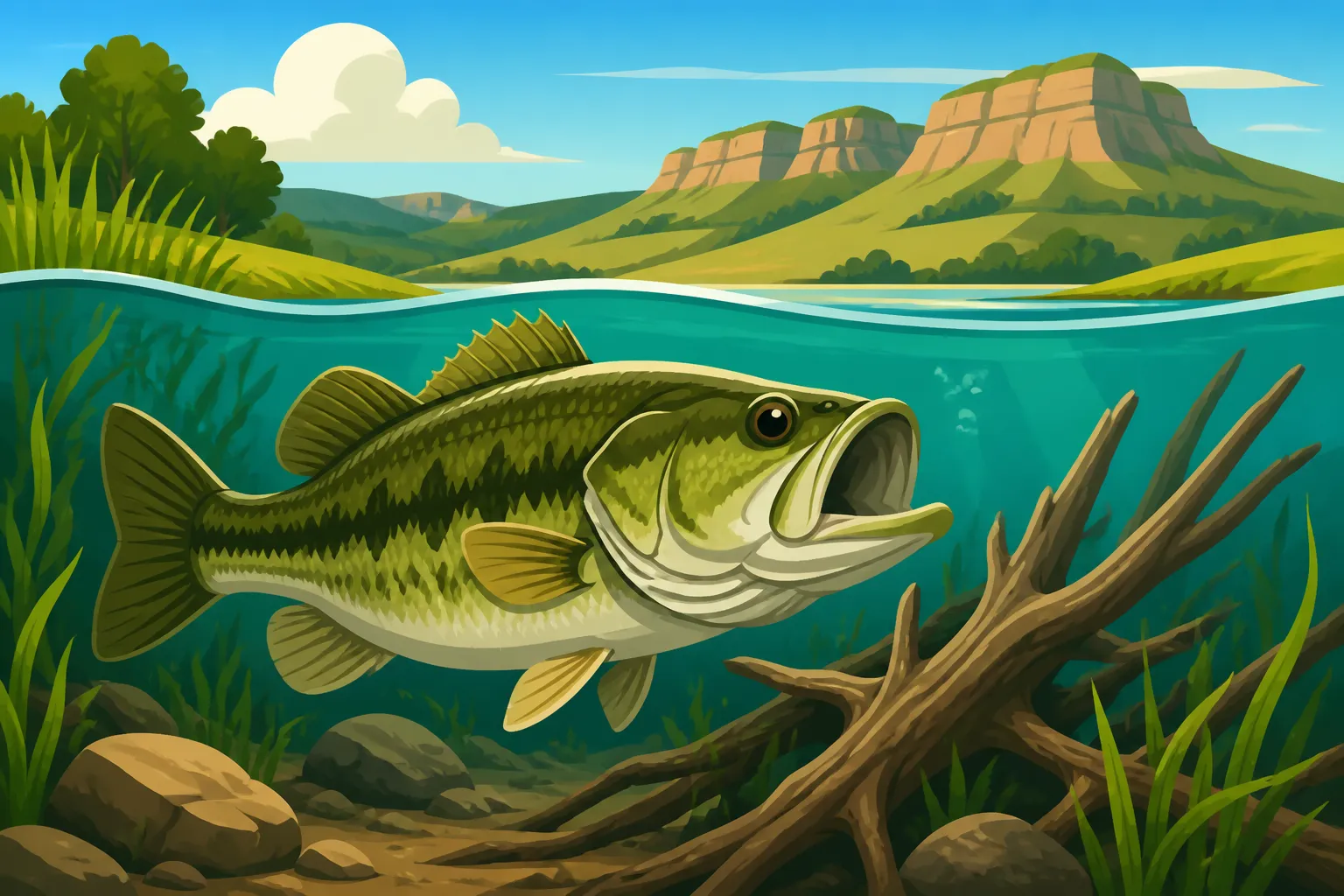
South Dakota Largemouth Bass Habitat
Ever spent a beautiful afternoon on a South Dakota lake, casting your heart out, only to wonder where all the largemouth bass went? It's a common frustration, especially when these ambush predators seem to vanish into thin air. The truth is, they're not gone; they're simply tucked away in their preferred hideouts, waiting for the perfect moment to strike. This guide is going to pull back the curtain on the secret lives of largemouth bass in South Dakota, showing you exactly what kind of places they call home and how understanding their habitat can dramatically improve your fishing success.
Understanding Largemouth Bass Preferences
Largemouth bass are fascinating creatures, and like us, they have certain "must-haves" for their living arrangements. They're not just looking for any old spot in the lake; they're actively seeking out specific conditions that offer them comfort, safety, and a steady supply of food. Think of it like choosing a home – you want good schools, easy access to groceries, and a safe neighborhood. Bass have a similar checklist, but theirs involves water temperature, cover, and a buffet of baitfish.
The more you understand these fundamental needs, the better you'll become at predicting where they'll be. It’s a bit like being a detective, looking for clues in the aquatic environment. Once you start noticing patterns, you'll spend less time casting blindly and more time hooking into some feisty South Dakota bucketmouths. It truly transforms your approach from random luck to strategic hunting, making every outing more rewarding.
Key Environmental Factors
When it comes to picking a place to hang out, largemouth bass are incredibly particular about their environment. Three big factors often dictate where you'll find them: water temperature, clarity, and oxygen levels. These aren't just minor preferences; they're critical for their survival, metabolism, and overall well-being. A slight change in any of these can send bass packing for a new location, which is why understanding them is so important for anglers.
For instance, bass are cold-blooded, meaning their body temperature mirrors the water around them. They thrive in warmer waters, generally preferring temperatures between 65 and 80 degrees Fahrenheit. If the water gets too hot, they'll seek out cooler, deeper areas or dense shade. Too cold, and their metabolism slows down, making them less active and harder to tempt with a lure. Water clarity also plays a huge role; bass are sight feeders, relying on their excellent vision to ambush prey. While they can tolerate somewhat turbid water, overly muddy conditions can scatter them or make them harder to catch. Finally, sufficient dissolved oxygen is a non-negotiable. Stagnant, warm water with heavy decomposition can have low oxygen, forcing bass to move to areas with better circulation, like near inlets or deeper sections of a lake.
Forage and Predation
Beyond the basic environmental needs, a largemouth bass's habitat choice is heavily influenced by two powerful instincts: eating and avoiding being eaten. They are apex predators in many South Dakota waters, but smaller bass are certainly on the menu for bigger fish, birds, or even otters. This delicate balance means they're always looking for places that offer a good ambush point for prey while simultaneously providing a safe retreat from danger.
Think about it from their perspective: a perfect home has easy access to a steady food supply – be it baitfish like shad, perch, or bluegill, or even crawfish and frogs – and plenty of cover to hide in. This cover allows them to dart out and surprise unsuspecting meals, giving them a significant advantage. It also offers protection from overhead predators like ospreys or eagles, and even from other larger fish. So, when you're scouting for bass habitat, keep an eye out for areas that scream "food source" and "hideout" simultaneously. That thick weed bed bordering a drop-off, or a submerged brush pile near a schooling baitfish pattern, is often a prime location because it satisfies both of these crucial survival needs.
Prime Largemouth Bass Habitats in South Dakota
South Dakota's diverse aquatic landscapes, from its glacial lakes to its winding rivers and countless farm ponds, offer a variety of habitats that largemouth bass absolutely love. While the specifics might change from one body of water to another, the underlying principles of what constitutes a prime bass habitat remain consistent. Bass are drawn to structure and cover, anything that breaks up the open water and gives them an advantage for hunting or a place to escape. Understanding these common habitat types is your next step in becoming a more effective bass angler in the Mount Rushmore State.
When you're out on the water, don't just look at the surface. Try to visualize what's beneath. Is there a sudden depth change? Are there hidden logs? Is that patch of lily pads thicker than it looks? These are the questions that lead you to the fish. The more you train your eye to spot potential bass cover, the more productive your fishing trips will be. Remember, bass are masters of camouflage and patience, so their favorite spots often require a keen eye and a bit of investigation to uncover.
Aquatic Vegetation
Aquatic vegetation is perhaps the most iconic largemouth bass habitat, and for good reason. It’s like a bustling city for bass, offering everything they need: food, shelter, and endless ambush points. In South Dakota's waters, you'll encounter various types, from thick mats of lily pads to submerged weed beds and stands of reeds along the shore. Each type presents unique challenges and opportunities for anglers, but all are magnets for bass. South Dakota Largemouth Bass Fishing Guide details how to approach these types of areas effectively.
Weed beds, especially those with varying heights and edges, are prime real estate. They provide shade, which is crucial on bright sunny days, and act as a filter, often leading to clearer water within their confines. More importantly, they harbor a plethora of baitfish and insects, creating a natural food pantry for bass. The denser the vegetation, the more likely a bass is using it for cover, but it can also make fishing more difficult. Look for lanes, pockets, or the outside edges of these weed lines where bass will patrol, waiting to ambush prey. Frog baits, weedless jigs, or Texas-rigged plastics are often the go-to choices for working these heavy cover areas.
Woody Cover
Beyond the green stuff, woody cover in all its forms is another absolute goldmine for largemouth bass in South Dakota. This includes fallen trees, brush piles, submerged logs, and even standing timber that remains in reservoirs. Woody cover offers a different kind of concealment than vegetation – it's often more permanent, provides deeper shade, and can create current breaks that bass love to exploit.
Think about a massive fallen tree extending from the bank into deeper water. The branches create a complex maze of shadows and obstacles, perfect for a bass to hide in, dart out, and then retreat. These areas also tend to attract baitfish, which seek shelter among the branches, inadvertently providing a meal for the bass lurking nearby. Man-made brush piles, often placed by anglers or wildlife agencies, are equally effective. When fishing woody cover, patience and precision are key. You'll want to get your lure right up against the wood, or even into the thickest parts, as bass will often hug these structures tightly. Heavy-duty tackle and weedless presentations, like a jig and pig or a Texas-rigged creature bait, are essential to pulling bass out of these snaggy situations.
Rock and Riprap
While vegetation and wood might get all the glory, don't overlook rocky areas and riprap when targeting largemouth bass in South Dakota. These hard structures provide a different, yet equally vital, habitat. Riprap, which is the rock lining found along causeways, bridges, and shorelines to prevent erosion, is an especially common and productive habitat. Natural rock outcroppings, gravel beds, and boulders also fall into this category.
The appeal of rock and riprap lies in several factors. First, rocks absorb and radiate heat, which can create warmer water pockets, especially in spring and fall, drawing in bass. Second, the crevices and spaces between rocks offer fantastic ambush points for bass, allowing them to hide and dart out at passing baitfish or crawfish. These areas are also magnets for crawfish, a favorite food source for largemouth. When you see riprap or a rocky point, think "crawfish buffet" and "ambush alley." Lures that mimic crawfish, like crankbaits or jigs with skirts, are highly effective here. Fishing along the face of the rocks, or casting to the ends of riprap points where current may concentrate bait, can be incredibly productive. Remember to pay attention to depth changes and any larger boulders that might offer a more significant piece of cover within the rocky expanse.
Specific South Dakota Water Body Examples
South Dakota is blessed with a diverse array of fishing environments, each with its own unique characteristics and, consequently, its own specific types of largemouth bass habitats. You'll find bass in everything from the expansive Missouri River reservoirs to the smaller, more intimate glacial lakes and countless private farm ponds. Understanding how bass adapt to these different settings is crucial for tailoring your approach and finding success. What works in a deep, clear glacial lake might be completely different from what you'd use in a shallow, murky pond.
The beauty of fishing in South Dakota is this variety. It challenges you to be versatile and observant. Don't assume that a technique that landed you a lunker on Lake Oahe will automatically work on Lake Poinsett. Instead, take a moment to assess the specific water body – its depth, clarity, dominant forage, and available cover – and then apply your habitat knowledge accordingly. This adaptive mindset is what separates consistent anglers from those who only catch fish by chance.
Glacial Lakes
Eastern South Dakota is home to a fantastic chain of glacial lakes, carved out by ancient ice sheets. These lakes, such as Lake Poinsett, Lake Kampeska, and Bitter Lake, often have different characteristics than the Missouri River reservoirs. They can vary widely in size, depth, and clarity, but many share common bass habitat features, which you can read more about in our South Dakota Glacial Lakes Fishing Guide.
In these waters, largemouth bass often gravitate towards the extensive shallow-water vegetation. Think expansive weed beds, lily pad fields, and cattail lines along the shores. The abundance of submerged coontail, sago pondweed, and milfoil creates perfect hiding and hunting grounds. These lakes also frequently feature soft, mucky bottoms in shallower areas, with scattered rocks or gravel where bass might spawn. When fishing these glacial lakes, focus on weed edges, pockets within the pads, and any isolated patches of emergent vegetation. Also, keep an eye out for docks and boat lifts, which often provide excellent artificial cover that bass will readily use, especially those that offer shade and proximity to deeper water.
Farm Ponds and Smaller Reservoirs
South Dakota is dotted with countless farm ponds and smaller, often privately managed, reservoirs. These more intimate bodies of water can be absolute hidden gems for largemouth bass, frequently holding surprisingly large fish. Their smaller size, however, means their habitat can be more concentrated and sometimes easier to identify.
In these smaller waters, habitat often boils down to a few key elements. Overhanging trees and brush along the banks are paramount, providing crucial shade and fallen woody debris. Any submerged timber, whether a single log or a brush pile, will be a major attractant. Pond weeds, cattails, and even algae blooms along the edges also provide important cover and food sources. Because these ponds often lack dramatic depth changes, any subtle contours, like a small hump, an old fence line, or even an underwater roadbed, become significant bass magnets. For these waters, a stealthy approach is often required, as bass in smaller ponds can be easily spooked. Simple presentations with soft plastics, spinnerbaits, or topwater frogs (especially around thick cover) can be incredibly effective. Sometimes, the best bass spot on an Amazon satellite view of a pond is simply the darkest blob of cover visible.
River Systems and Backwaters
While South Dakota is famous for its Missouri River reservoirs, the state also boasts numerous river systems, like the James River and Big Sioux River, that hold excellent largemouth bass populations, particularly in their backwater areas, oxbows, and slower-moving sections. These riverine habitats present their own unique challenges and opportunities.
In river systems, current is a major factor. Largemouth bass prefer areas with minimal current or distinct current breaks, allowing them to ambush prey without expending too much energy fighting the flow. This means targeting eddies, slack water behind islands or sandbars, and especially the calm backwater ponds and sloughs connected to the main channel. Here, you'll find classic bass cover: lily pads, emergent reeds, fallen trees, and brush piles that have been deposited by floods. These areas often warm up faster in spring and retain heat longer in fall, making them vital transitional habitats. The banks themselves, whether steep mud banks or those lined with woody debris, also provide structure. Look for any change in the river bank, a point, a bend, or a washout, as these often concentrate bass.
Seasonal Shifts in Largemouth Bass Habitat
One of the most crucial lessons for any South Dakota bass angler is that largemouth bass are not static creatures. Their preferred habitat changes dramatically with the seasons, driven by factors like water temperature, spawning cycles, and the availability of their primary food sources. What might be a hot spot in spring could be completely devoid of fish in summer, and vice-versa. It’s a dynamic dance, and understanding the rhythm of these seasonal movements is key to consistent success.
If you ignore these seasonal shifts, you'll spend a lot of time fishing empty water. It's like trying to find people at a ski resort in July – they've moved on! Bass behave similarly, adapting their location and behavior to optimize their chances of survival and reproduction throughout the year. Mastering this aspect of bass fishing truly elevates your game from simply knowing "where the fish are" to understanding "why the fish are there right now."
Springtime Migration
As the long South Dakota winter finally gives way to warmer temperatures, largemouth bass embark on their annual springtime migration. This period is a flurry of activity, driven by warming water and the impending spawn. They move from their deep wintering holes to shallower, sun-warmed areas, driven by an instinctive urge to feed heavily and reproduce. We cover specific South Dakota Spring Walleye Fishing Techniques, but the principles of seeking warmer water and food apply to bass too.
During early spring, or pre-spawn, bass will stage in secondary points, creek channel bends, and transitions between deep and shallow water, often near the entrances to bays and coves. These areas allow them to quickly move into shallower flats as the water warms and retreat to deeper water if a cold front pushes through. As water temperatures reach the upper 50s and low 60s, bass move onto the spawning flats themselves. Here, they'll seek out hard bottom, like gravel or sand, often near protective cover like submerged logs, weed clumps, or isolated stumps, where they'll fan out their nests. Post-spawn bass will often remain shallow for a week or two, recuperating and feeding aggressively on easy prey before dispersing to their summer patterns.
Summer Deep Water and Shade
South Dakota summers can bring scorching heat, and with it, warmer surface water temperatures. This pushes largemouth bass to adjust their habitat significantly, often seeking out cooler, more oxygenated water, or dense shade to escape the sun's intensity. If you're fishing shallow open flats in July, you're probably barking up the wrong tree.
During the dog days of summer, you'll typically find bass holding in deeper water, particularly along the thermocline (the layer where warm surface water meets cooler, deeper water) if one exists in the lake. Here, they can find stable temperatures and good oxygen. Key habitats include deep humps, main lake points, offshore brush piles, and river channel ledges. For bass that remain shallower, shade becomes paramount. Look for bass tucked under boat docks, beneath dense mats of lily pads or thick overhead canopy from trees lining the banks. They will also position themselves in the deepest, densest sections of weed beds. Targeting these deep structures or shaded shallow areas with presentations like Texas-rigged worms, deep-diving crankbaits, or topwater frogs (in the shade) can be incredibly effective during this season. For general strategies to target deeper fish, check out our Deep Water Summer Fishing Techniques article.
Fall Feeding Frenzy
As summer transitions into fall in South Dakota, water temperatures begin to cool, triggering another significant shift in largemouth bass behavior and habitat. This period is often characterized by a "feeding frenzy" as bass aggressively chase baitfish, fattening up for the lean winter months ahead. Understanding this pattern is crucial for successful fall fishing.
In early fall, bass will often move back to shallower water, particularly main lake points, shallow flats adjacent to deep water, and areas with abundant dying vegetation. The cooling water rejuvenates their metabolism, and they become highly active. They'll follow schools of baitfish, which are also moving shallower, concentrating in predictable areas. As fall progresses and water temperatures drop further, bass will start to relate more to deep-water structure closer to their wintering grounds. This could include steep breaks, channel swings, and deep humps. The key is to find the baitfish – where the bait goes, the bass will follow. Lures like crankbaits, spinnerbaits, and jerkbaits, which can cover a lot of water and mimic fleeing baitfish, are excellent choices during this period. For more details on targeting fish during this productive time, read our Fall Fishing in South Dakota guide.
Wintering Holes
When South Dakota's harsh winter finally sets in and ice begins to cover the lakes, largemouth bass seek out stable, deep-water refuges to survive the cold. Their metabolism slows dramatically, and they become much less active, preferring to conserve energy rather than aggressively hunt. This means finding their specific wintering holes is critical.
Bass will typically congregate in the deepest available water that still offers sufficient oxygen and some sort of structure. This could be main lake basins, deep creek channels, submerged roadbeds, or significant drop-offs. Any remaining deep woody cover, like standing timber or brush piles in these deeper areas, will be a major draw. While they are lethargic, they will still eat, but their strikes will be much more subtle. Anglers targeting winter bass, whether through the ice or during open-water periods on larger reservoirs, need to fish very slowly and precisely. Vertical presentations like small jigs, blade baits, or slow-fished spoons are often effective, presented right on the fish's nose. Patience is key, as bites can be few and far between, but the fish you do catch can often be larger, well-fed individuals.
Locating and Targeting Largemouth Bass in Their Habitat
Knowing what kind of habitat largemouth bass prefer is one thing, but actually finding and catching them in those spots is where the rubber meets the road. It involves a combination of preparation, observation, and skillful execution. Modern technology can certainly help, but nothing replaces time on the water and a keen understanding of bass behavior. This section will help bridge the gap between theoretical knowledge and practical application, getting you closer to hooking that trophy bass in South Dakota.
It's about developing a systematic approach. Instead of just randomly casting, you'll learn to break down a body of water, identify high-probability areas, and then present your lure in a way that maximizes your chances of a strike. This methodical approach not only increases your catch rate but also deepens your connection to the sport, turning every outing into a learning experience.
Interpreting Lake Maps and Sonar
Before you even launch your boat or step onto the bank, the process of finding largemouth bass in their preferred habitat begins with good old-fashioned map study. Lake maps, especially detailed contour maps, are invaluable tools for identifying potential bass hideouts. They reveal depth changes, creek channels, old roadbeds, humps, and points – all critical pieces of structure that bass relate to. Once you're on the water, sonar technology, often called fish finders, becomes your eyes below the surface. Many anglers also find Amazon to be a great place to research and purchase quality mapping and sonar units.
Start by looking for abrupt depth changes, like a sharp drop-off or the edge of an old river channel. Bass will often patrol these transition zones. Identify main lake points that extend into deeper water, as these can be bass highways. On sonar, learn to interpret what you're seeing: solid arches typically indicate fish, while dense clusters or irregular blobs can signal brush piles, submerged timber, or thick weed growth. Down imaging and side imaging technologies offer even more detailed views, allowing you to pinpoint individual logs or weed clumps where bass might be lurking. Cross-referencing what you see on your map with what your sonar is showing you in real-time is the fastest way to eliminate unproductive water and focus on prime habitat.
Choosing the Right Lures for Specific Habitats
Once you've identified a promising piece of largemouth bass habitat, the next critical step is selecting the right lure to present to them. This isn't just about color or brand; it's about matching the lure's action, size, and weedless capabilities to the specific cover you're targeting. A lure that's perfect for open water might be completely useless in a thick brush pile. Our general South Dakota Fishing Gear Checklist will help you get started with the basics.
| Habitat Type | Ideal Lure Types | Key Characteristics |
|---|---|---|
| Dense Vegetation | Weedless Jigs, Texas-rigged Plastics, Frogs, Punch Rigs | Snag-resistant, can penetrate heavy cover, imitate prey |
| Woody Cover | Jigs, Texas-rigged Plastics, Spinnerbaits (heavy) | Snag-resistant, able to fall through branches, strong hooks |
| Rock & Riprap | Crankbaits (diving), Jigs, Tube Baits, Crawfish Imitations | Dive to desired depth, deflect off rocks, mimic crawfish |
| Open Water (Deep) | Deep Diving Crankbaits, Carolina Rigs, Drop Shots, Spoons | Get to depth quickly, cover water, imitate baitfish |
| Open Water (Shallow) | Spinnerbaits, Chatterbaits, Swim Jigs, Topwater | Cover water quickly, create vibration/flash, elicit reaction |
| Docks & Shade | Jigs, Wacky Worms, Skipping Jigs | Compact, easy to skip under obstacles, subtle fall |
For instance, if you're fishing a dense mat of lily pads, a weedless frog or a heavy punch rig with a creature bait is your best bet. These lures can navigate the thick cover without snagging and present a tempting profile to bass hiding below. Conversely, for rocky riprap, a crankbait that dives to the appropriate depth and "grinds" along the rocks can be incredibly effective, mimicking a crawfish or a stunned baitfish. The key is to have a diverse tackle box and be willing to switch presentations until you find what the bass are reacting to in that particular habitat on that specific day.
Approach and Presentation
Finally, successfully targeting largemouth bass in their chosen habitat comes down to your approach and how you present your lure. Even with the perfect lure and spot, a clumsy cast or an unnatural retrieve can send bass fleeing. Bass are wary predators, and any unnatural disturbance can spook them, especially in shallower water or high-pressure situations.
Stealth is often paramount. If you're fishing from a boat, approach the desired cover slowly, using your trolling motor sparingly or, even better, anchoring upwind or upcurrent and making long casts. Avoid loud noises, like dropping tackle or slamming hatches. When it comes to presentation, think about what a bass expects to see. If you're pitching a jig into a brush pile, you want it to fall naturally, like a crawfish or injured baitfish. If you're working a frog over pads, you want it to walk or pop enticingly, like a frog struggling on the surface. Pay attention to the retrieve speed, pauses, and twitches that elicit strikes. Sometimes, a slow, methodical approach is best, allowing the bass to investigate. Other times, a fast, aggressive retrieve might trigger a reaction strike. The best anglers are those who can adapt their presentation not only to the habitat but also to the mood of the fish on any given day.
Disclaimer
This article is for general informational purposes only and does not constitute professional advice. Laws, prices and regulations vary by location and change over time. Consult a qualified professional for guidance on your specific situation.