Difference Between a Sunfish and a Bluegill
It's a common scenario, isn't it? You're out on a beautiful South Dakota lake or pond, reel in a feisty little panfish, and instantly wonder, "Is this a bluegill, or some other kind of sunfish?" The truth is, many anglers, even seasoned ones, get a little mixed up when it comes to identifying the subtle differences between bluegill and the broader sunfish family. This guide is here to clear up that confusion once and for all, helping you confidently identify your catch and better understand the diverse panfish population in our state.
Unpacking the "Sunfish" Family Tree in South Dakota
Let's start by getting one thing straight: when we talk about "sunfish," we're actually referring to a pretty big family of fish. Think of it like a human family – you have the whole family, and then you have individual members within it. In the fish world, the scientific family is called Centrarchidae, and it includes not just sunfish, but also basses like largemouth and smallmouth, and even crappie. However, when most people say "sunfish," they're usually referring to a group of smaller, disc-shaped fish that are often found in our lakes and ponds.
What Defines a True Sunfish?
Within the larger Centrarchidae family, the "true sunfish" are generally classified under the genus Lepomis. These are the guys you're most likely thinking of when you picture a sunfish: flat-bodied, with spiny dorsal fins, and typically vibrant colors, especially during spawning season. They're often found in relatively shallow, warm waters and are a blast to catch, making them a favorite for beginners and families alike. In South Dakota, our waters are teeming with various members of this Lepomis genus, each with their own subtle characteristics.
You'll find species like green sunfish, pumpkinseed, warmouth, and, of course, bluegill. They all share common traits like a generally aggressive bite for their size, making them excellent targets for light tackle. Their diets are also pretty similar, consisting of insects, small crustaceans, and sometimes even smaller fish. Knowing these overarching family traits helps you understand why they can sometimes be tricky to tell apart at a glance. It's like trying to tell two cousins apart when they share many similar features!
Common South Dakota Sunfish Species Beyond Bluegill
While bluegill might be the most famous "sunfish" in South Dakota, they're far from the only ones. We have several other species that are commonly caught and mistaken for bluegill.
The Green Sunfish is a prime example. These guys are tough, aggressive, and can thrive in less-than-ideal water conditions, making them prevalent in many smaller ponds and creeks. They have a larger mouth than a bluegill, often extending back past the front of the eye, and a more robust body. Their coloration can be quite varied, from greenish-brown to iridescent blue, with yellowish fin margins. You might also notice a dark spot on their gill cover, just like a bluegill, which adds to the confusion.
Then there's the Pumpkinseed, a real beauty with its distinctive orange spot on the opercular flap (the gill cover) and wavy, iridescent blue lines on its cheek. They have a smaller mouth compared to the green sunfish and are typically found in clearer, weedier waters. They’re a joy to catch and visually striking. Understanding these distinct sunfish helps you appreciate the diversity, even when you're just looking at a handful of species caught in a single afternoon. Sometimes, grabbing a good waterproof fish identification guide on Amazon can really help when you're on the water!
The Bluegill: A Star Among Sunfish
Now, let's talk about the bluegill, the undisputed king of panfish for many anglers. While it is indeed a member of the broader sunfish family, it possesses several key characteristics that allow it to stand out. Identifying a bluegill specifically, rather than just "a sunfish," can be really helpful for understanding local regulations and even for honing your fishing techniques.
Bluegill's Distinctive Markings and Features
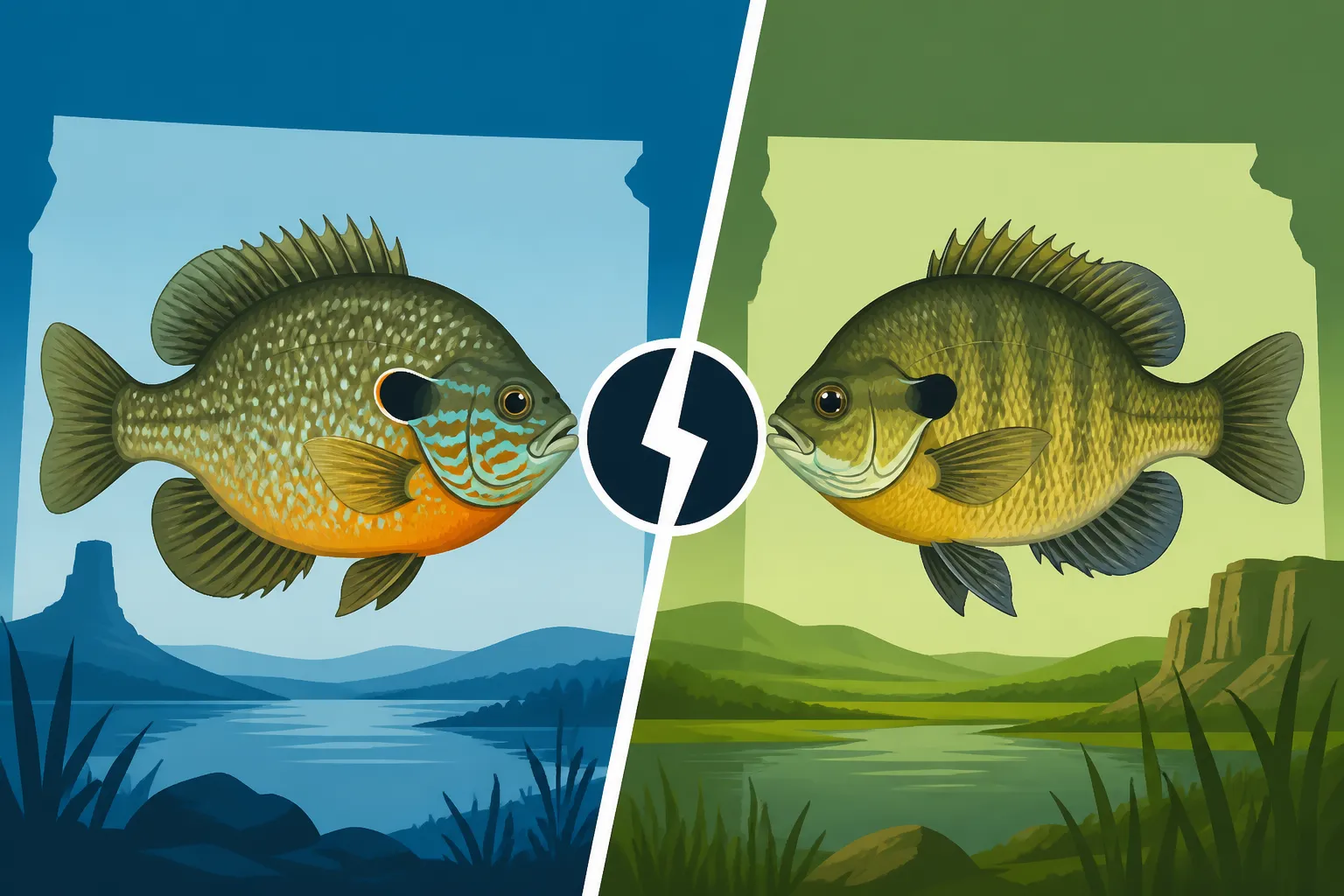
The bluegill (Lepomis macrochirus) gets its name from the brilliant blue-green iridescent edges on its gill cover, a truly striking feature in healthy specimens. But that's not the only giveaway. Look for a small, dark, flexible spot on the posterior margin of the gill flap, often called the "ear flap." This spot is entirely black, without any colored margin, which differentiates it from some other sunfish that might have a red or orange rim around their dark spot.
Their body is typically deeply compressed, giving them a very round, disc-like appearance. You'll often see several dark, vertical bars running down their sides, though these can fade or become more prominent depending on the fish's mood, habitat, and spawning activity. The bluegill's mouth is notably small, a crucial identifier, and it won't extend past the front of its eye. Their pectoral fins (the ones behind the gill covers) are long and pointed, another good characteristic to observe. The coloration can range from dark olive to greenish-blue on the back, fading to lighter shades on the sides, and a yellowish or orange belly, especially in males during spawning season. These visual cues are your best friends for quick identification.
Habitat and Behavior of Bluegill in South Dakota
Bluegill are incredibly adaptable and thrive in a wide variety of South Dakota waters, from small farm ponds to large reservoirs like Lake Sharpe and Lewis and Clark Lake. They prefer clear, warm water with plenty of aquatic vegetation, submerged brush, or other structures where they can hide from predators and ambush insects. You'll often find them schooling together, especially younger fish, in these sheltered areas.
During the warmer months, they are usually found in shallower waters, making them accessible to shore anglers. They are prolific spawners, creating circular nests in shallow areas, often in colonies. This makes them particularly vulnerable and fun to catch during their spawning periods when they are highly concentrated and aggressive. Their diet consists mainly of aquatic insects, larvae, small crustaceans, and even tiny snails. They're opportunistic feeders, which is why they readily take a variety of baits, from worms and crickets to small jigs and artificial flies. Understanding their preferred habitats and behaviors can significantly improve your chances of success, whether you're sight fishing for them in a clear pond or using a fish finder for ice fishing on one of our frozen lakes.
Key Differences: Bluegill vs. Other Sunfish
Now that we've looked at the broader sunfish family and the bluegill specifically, let's put it all together and highlight the critical distinctions. It's often the subtle details that make all the difference.
Visual Cues for Instant Identification
When you pull a panfish from the water, here are the immediate visual checks to make to determine if it's a bluegill or another type of sunfish:
- Gill Flap (Operculum) Spot: The bluegill has a distinct, solid black "ear flap" on the back of its gill cover. Other sunfish might have a dark spot, but it often has a colored margin (like the orange on a pumpkinseed) or might be less prominent. Green sunfish also have a dark spot, but it's typically larger and may have a faint, pale margin.
- Mouth Size: This is a big one. Bluegill have a very small mouth; the corner of their mouth will not extend past the front of their eye when closed. Green sunfish, in contrast, have a much larger mouth that extends well past the front of the eye. Pumpkinseeds have a medium-sized mouth, smaller than a green sunfish but perhaps slightly larger than a bluegill.
- Body Shape: Bluegill are typically very round and compressed laterally, almost like a dinner plate. Green sunfish tend to be more football-shaped or elongated, while pumpkinseeds are also disc-shaped but often slightly less round than a bluegill.
- Pectoral Fin: Bluegill have long, pointed pectoral fins that often reach or extend past the eye when flattened forward. Other sunfish often have shorter, more rounded pectoral fins.
- Coloration/Markings: While variable, bluegill often show those faint vertical bars on their sides and the iridescent blue on the gill plate. Pumpkinseeds are known for their iridescent wavy lines on the cheeks and that bright orange spot on the gill flap. Green sunfish have more irregular, sometimes mottled, green-to-brown patterns.
Here's a quick comparison table to help visualize these differences:
| Feature | Bluegill | Green Sunfish | Pumpkinseed |
|---|---|---|---|
| Gill Flap Spot | Solid black, no colored margin | Dark, often larger, sometimes faint pale margin | Dark spot with a distinct orange/red margin |
| Mouth Size | Small; doesn't extend past front of eye | Large; extends past front of eye | Medium; usually doesn't extend past eye |
| Body Shape | Very round, deeply compressed | More elongated, "football" shaped | Round to oval, moderately compressed |
| Pectoral Fin | Long, pointed | Shorter, more rounded | Shorter, rounded |
| Cheek Markings | Often plain, sometimes faint speckles | Often plain, sometimes dark spots | Iridescent blue, wavy lines |
| Common South Dakota Habitat | Clear, vegetated lakes & ponds | Diverse; ponds, creeks, even muddy areas | Clear, weedy lakes & ponds |
Why Correct Identification Enhances Your Fishing Experience
Understanding the exact species you've caught isn't just about showing off your fish identification skills (though that's certainly part of the fun!). It plays a practical role in how you approach fishing in South Dakota. For instance, knowing you've found a school of true bluegill might mean you can dial in your technique with smaller baits or fly fishing patterns, while a pond full of aggressive green sunfish might call for a slightly larger offering.
Moreover, different species often prefer slightly different environments. If you're consistently catching green sunfish in a particular spot, it might tell you something about the water quality or structure that bluegill might avoid. This knowledge empowers you to seek out the right habitats for the species you're targeting.
Why This Distinction Matters for South Dakota Anglers
Beyond simply identifying what's on the end of your line, understanding the difference between a bluegill and other sunfish has tangible benefits for South Dakota anglers. It affects everything from how you interpret regulations to your choice of bait and tackle, and even your understanding of the local aquatic ecosystem.
Navigating South Dakota Fishing Regulations and Limits
While many panfish species fall under general "panfish" limits in South Dakota, there can be nuances. Knowing your species helps ensure you're always compliant with the current rules, which can vary from lake to lake or even within specific water bodies. For instance, if you're trying to achieve a Crappie and Panfish Possession Limits goal, you need to be sure you're counting the right fish. While bluegill, green sunfish, and pumpkinseed are often lumped together for limits, being able to distinguish them is a mark of a responsible and knowledgeable angler.
Furthermore, a deep understanding of fish species can prevent misidentification that might lead to unknowingly violating specific rules. While it's less common for sunfish, certain game fish have very strict slot limits or size requirements. Developing good identification skills with simpler species like sunfish builds a strong foundation for accurately identifying all your catches, no matter the species. Always check the current South Dakota Game, Fish and Parks (GFP) fishing handbook for the most up-to-date regulations before you head out. You can often find digital copies online, or even physical copies at local bait shops or sporting goods stores, or on Amazon.
Tailoring Your Approach for Better Catch Rates
Fish behavior, even among closely related species, can differ. A bluegill's small mouth means it often prefers smaller baits, like a tiny piece of worm, a wax worm, or a small jig. A green sunfish, with its larger mouth and more aggressive nature, might readily strike at slightly larger offerings, like a small minnow or a bigger soft plastic. By accurately identifying the dominant sunfish species in a given area, you can adapt your bait, hook size, and even your presentation to be more effective.
For example, if you're targeting bluegill, you might opt for ultralight gear and micro-jigs, perhaps even fly fishing with small poppers or nymphs. If you're consistently hooking green sunfish, you might switch to a slightly heavier jig or a small spinnerbait. Knowing the preferred habitat – thick weeds for bluegill versus rockier, sometimes dirtier water for green sunfish – also guides your casting and retrieval strategies. It's all about matching the hatch, so to speak, but also matching your gear and technique to the particular fish you're trying to catch.
The Bigger Picture: Ecological Understanding
Finally, being able to tell a bluegill from a pumpkinseed or a green sunfish helps you understand the health and dynamics of the water you're fishing. For instance, an abundance of green sunfish can sometimes indicate a less-than-optimal environment for other species, as they are incredibly hardy and adaptable. Conversely, thriving populations of large bluegill and pumpkinseed often point to a healthy, balanced ecosystem with good water quality and ample food sources.
Understanding the specific species also contributes to your appreciation of the natural world. It moves beyond just "catching fish" to truly interacting with and observing the aquatic life around you. This deeper engagement enhances every trip to the water, whether you're at a popular spot like Lake Oahe Fishing Guide or exploring a quiet farm pond. For beginners, refining these identification skills is a critical step in becoming a more complete and observant angler. If you're looking for more general guidance on how to identify various aquatic species, consider searching for "Fish Identification for Beginners" resources online or on platforms like Amazon.
Disclaimer
This article is for general informational purposes only and does not constitute professional advice. Laws, prices and regulations vary by location and change over time. Consult a qualified professional for guidance on your specific situation.