Are There Endangered Fish Species in South Dakota?
It's natural to be curious, even concerned, about the health of our aquatic ecosystems, especially when you spend time on South Dakota's incredible waters. Many anglers wonder if their favorite fishing spots are home to species struggling to survive, or if certain fish they might encounter are protected by special status. The truth is, while South Dakota boasts robust populations of many prized game fish, there are indeed a few species facing significant challenges, and understanding their plight is crucial for all of us who love the outdoors. This guide will walk you through the current state of endangered and at-risk fish species in South Dakota, explaining what these classifications mean, focusing on the most notable example, and detailing how every angler can play a vital role in their protection and recovery.
Understanding Endangered Species in South Dakota
When we talk about endangered species, it's easy to picture exotic animals in far-off lands, but the reality is that vulnerability exists right here in our own backyards, or more accurately, in our rivers and lakes. The health of a fish population can tell us a lot about the overall well-being of its habitat, and unfortunately, some of our native fish are sending us a warning signal.
What "Endangered" Really Means in the Aquatic World
The term "endangered" isn't just a casual descriptor; it's a formal legal classification used by both federal and state governments. Federally, the U.S. Fish and Wildlife Service (USFWS) designates species under the Endangered Species Act (ESA). A species is considered endangered when it's in danger of extinction throughout all or a significant portion of its range. A "threatened" species is one that is likely to become endangered in the foreseeable future. These designations trigger a whole host of protections, management plans, and recovery efforts aimed at bringing the species back from the brink.
In South Dakota, the state also has its own classifications, though often mirroring federal ones for species that cross state lines or have broader implications. When a fish is classified as endangered, it means its numbers have plummeted to critically low levels, often due to habitat loss, pollution, overfishing (historically, not usually the case today with specific regulations), or the introduction of invasive species. For anglers, this classification means that catching, possessing, or harming such a fish is usually strictly prohibited, carrying severe penalties. It's not just about avoiding a fine; it's about protecting a unique part of our natural heritage that performs a vital function in the ecosystem.
The Role of the South Dakota Game, Fish and Parks GFP
The South Dakota Game, Fish and Parks (GFP) plays a pivotal role in monitoring, managing, and conserving all fish populations in the state, including those that are endangered or at risk. They're the boots-on-the-ground, so to speak, conducting surveys, managing habitats, enforcing regulations, and even running programs to raise and stock vulnerable species. Their work is multifaceted, ranging from habitat restoration projects on rivers like the Missouri to working with landowners to improve water quality in smaller streams.
For endangered fish, the GFP collaborates closely with federal agencies, academic institutions, and other states, especially for migratory species like the pallid sturgeon that traverse vast stretches of river. They develop specific recovery plans, which might involve altering river flows, creating fish passages, controlling invasive species, or reintroducing hatchery-raised fish into the wild. As anglers, we rely on the GFP's expertise and dedication to ensure that our fisheries remain healthy and sustainable for generations to come. South Dakota GFP Fishing Handbook Guide is an excellent resource they provide for understanding these efforts.
The Pallid Sturgeon: South Dakota's Most Famous Endangered Fish
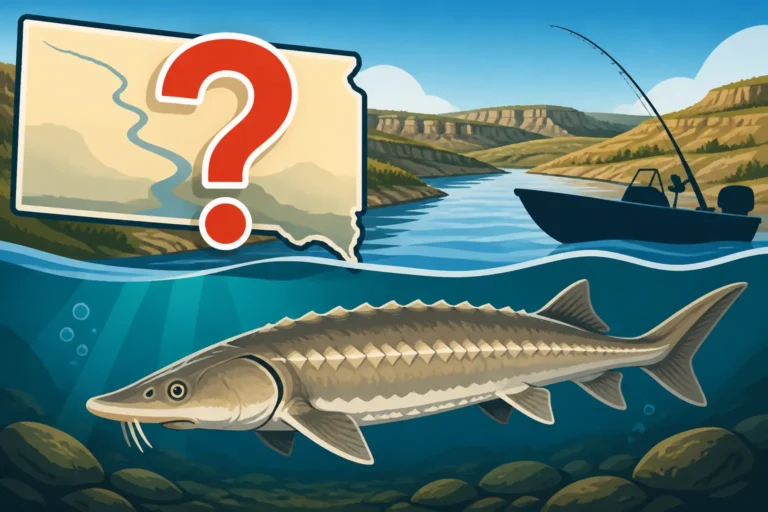
When discussing endangered fish in South Dakota, one species immediately comes to mind: the pallid sturgeon. This ancient, bottom-dwelling fish is a true survivor, having navigated the waters of the Missouri River for millions of years. Its presence in our waters is a testament to a wilder, untamed river, and its struggle is a stark reminder of the changes we've imposed on that mighty waterway.
Why the Pallid Sturgeon is in Trouble
The pallid sturgeon (scientific name: Scaphirhynchus albus) is a remarkable creature. It's a large, toothless fish, often growing over five feet long, with a shovel-shaped snout and bony plates (scutes) instead of scales. Historically, it thrived in the turbid, braided channels of the unchannelized Missouri River, feeding on small fish and aquatic insects. However, the transformation of the Missouri River system in the 20th century—primarily through the construction of dams, channelization for navigation, and flow regulation—decimated its habitat.
The key issues that led to its decline include:
- Habitat Fragmentation: Dams, like those forming Lake Oahe Fishing Guide and Lake Sharpe Fishing Guide, blocked the sturgeon's long-distance migration routes, essential for spawning. They can't move upstream past these structures.
- Loss of Spawning and Rearing Habitat: The alteration of the river's natural flow patterns eliminated the gravel bars and side channels the pallid sturgeon needed to spawn successfully. The natural silty, dynamic river bottom was replaced by stable, clear water or deep reservoirs.
- Reduced Turbidity: The clearer, colder water released from dams changed the river's ecosystem. Pallid sturgeon evolved to thrive in murky, warm water, and the clearer conditions also favor sight-feeding predators, making young sturgeon more vulnerable.
- Lack of Food: Changes in the invertebrate and small fish populations, combined with habitat loss, have likely reduced the availability of suitable food sources for the pallid sturgeon.
- Hybridization with Shovelnose Sturgeon: While not directly a cause of endangerment, increased hybridization with the more common shovelnose sturgeon further dilutes the genetic pool of the pure pallid sturgeon population, posing another challenge to recovery efforts.
These factors have led to a significant decline in natural reproduction, making the wild population heavily reliant on stocking efforts.
Efforts to Recover the Pallid Sturgeon
Recognizing the dire situation, the pallid sturgeon was listed as federally endangered in 1990. Since then, an extensive, multi-state and federal recovery program has been in full swing. The cornerstone of this effort involves hatchery propagation and stocking. Fish hatcheries, including facilities in South Dakota, raise pallid sturgeon from eggs collected from wild broodstock, and then release them into various sections of the Missouri River. These stocked fish are often tagged, allowing biologists to track their movements, growth, and survival rates. You can learn more about this by researching if Is the Pallid Sturgeon Found in South Dakota's Missouri River?.
Beyond stocking, significant efforts are focused on habitat restoration. This includes studying ways to mimic natural river flows, reconnecting historical side channels, and creating artificial spawning habitats. Researchers are also looking into fish passage solutions around dams, though the sheer size and design of the mainstem Missouri River dams make this an incredibly complex challenge. Understanding the intricacies of pallid sturgeon biology, from their diet to their preferred water temperatures, is also a continuous area of research.
The recovery of the pallid sturgeon is a monumental undertaking, requiring decades of sustained effort and cooperation. It's a slow process, as these fish are long-lived and take many years to reach reproductive maturity. While progress has been made in establishing populations through stocking, achieving self-sustaining wild populations remains the ultimate goal.
Other At-Risk Fish Species to Be Aware Of
While the pallid sturgeon holds the highest "endangered" status in South Dakota, it's not the only fish species facing concerns. There are other species that, while not federally endangered, are considered "species of special concern" or are experiencing localized declines that warrant monitoring and conservation efforts. These classifications are like an early warning system, prompting action before a species reaches the brink of extinction.
Species of Special Concern: A Step Before Endangered
A "species of special concern" is a classification often used by state agencies like the South Dakota GFP to identify species that are not yet endangered or threatened but are facing significant threats to their populations or habitats. These threats could include declining numbers, shrinking ranges, or particular vulnerabilities to environmental changes. This designation allows for proactive management and research without the full regulatory weight of an endangered listing. It's about getting ahead of the problem.
For example, native species like certain darter species or minnows might fall into this category. They might not be the charismatic trophy fish that anglers seek, but they are absolutely vital components of the ecosystem, often serving as forage for larger game fish. Their decline can signal broader ecological problems. Habitat degradation, such as siltation from agricultural runoff, changes in water temperature, or loss of specific stream features, can hit these smaller, less mobile species particularly hard. While you're unlikely to actively target these species, simply being aware of their existence and the health of the smaller fish in a waterway can provide insight into the overall ecological balance. For anglers, this means being mindful of disturbing delicate habitats and understanding the interconnectedness of all species in the water.
Recognizing Sensitive Species in Your Catch
As an angler, you're primarily focused on catching common game fish like walleye, bass, or trout. However, there's always a chance you might inadvertently catch a sensitive or even endangered species. It's crucial to be able to identify your catch quickly and accurately, especially if it looks unusual or unfamiliar. The pallid sturgeon, for instance, has unique features that distinguish it from the more common shovelnose sturgeon.
Here’s a quick comparison of the two sturgeon species:
| Feature | Pallid Sturgeon (Endangered) | Shovelnose Sturgeon (Common) |
|---|---|---|
| Size | Up to 60+ inches, 80 lbs+ | Up to 30 inches, 5 lbs |
| Color | Pale, grayish-white | Darker, olive-brown to tan |
| Snout | Long, flattened, shovel-like | Shorter, blunt, more rounded |
| Barbels | Inner barbels are about half as long as outer barbels, located in front of mouth | All four barbels are roughly equal in length, located slightly behind mouth |
| Belly Plates | Generally smooth, scaleless belly | Bony plates (scutes) present on belly between pectoral fins |
| Tail Fin | Upper lobe often longer than lower lobe, no filament | Upper and lower lobes usually similar in length, often has a filament |
| Habitat | Large, turbid rivers, deep channels | Rivers with moderate current, shallower gravel bars |
If you ever hook a fish that matches the description of a pallid sturgeon, or any other fish that you suspect might be endangered or protected, the protocol is simple:
- Do Not Remove it from the water if possible.
- Handle it as little as possible.
- Release it immediately and gently.
- If you can safely and quickly snap a photo for identification, that's helpful, but release is paramount.
- Report the sighting to the South Dakota GFP. They are keen to track these encounters.
Having a good fish identification guide, either a physical copy from a reputable publisher or a reliable app on your phone, can be incredibly helpful. You might even find some excellent field guides for sale on Amazon that are specific to Midwestern fish species. Always err on the side of caution. Fish Identification for Beginners can also provide some valuable pointers.
How Anglers Can Help Protect Vulnerable Fish Populations
As responsible stewards of our natural resources, anglers are uniquely positioned to contribute to the conservation of endangered and at-risk fish species. Our time on the water gives us a firsthand perspective on the health of aquatic environments, and our actions can make a real difference.
Practicing Catch and Release Effectively
For many endangered and sensitive species, catch and release is not just a suggestion; it's a legal and ethical imperative. Even for healthy populations of game fish, practicing proper catch and release techniques can reduce stress and mortality, ensuring more fish survive to spawn and grow larger. This is especially true when fishing areas known to harbor sensitive species or during certain times of the year when fish are more vulnerable.
Here are some best practices for effective catch and release:
- Use appropriate tackle: Select gear strong enough to land the fish quickly, minimizing its fight time and exhaustion. Light line or undersized rods can prolong the battle, stressing the fish unnecessarily.
- Barbless hooks: Consider using barbless hooks or pinching down the barbs on your hooks. They make removal much easier and cause less damage to the fish's mouth. You can find barbless hooks and tools to crimp barbs on Amazon or at any local bait shop.
- Minimize handling: Keep the fish in the water as much as possible. If you must lift it, support its body horizontally, especially larger fish, to avoid damaging internal organs or the spine. Avoid touching its gills or eyes.
- Wet hands: Always wet your hands before touching a fish. Dry hands can remove the protective slime coat, making the fish more susceptible to infection.
- Quick hook removal: Use needle-nose pliers or a hook-out tool to quickly and gently remove the hook. If the hook is deeply swallowed, it's often best to cut the line as close to the hook as possible rather than tearing at delicate tissues.
- Revive the fish: If the fish seems sluggish, hold it gently in the water, facing into a mild current, until it regains strength and can swim away on its own. Don't simply toss it back; ensure it's ready to go.
By following these simple steps, you significantly increase the chances of a released fish surviving and thriving, which is crucial for the recovery of any vulnerable population.
Understanding and Following Regulations
The regulations set by the South Dakota GFP are not arbitrary; they are carefully crafted based on scientific research to protect fish populations and their habitats. This includes specific rules for endangered species. It's every angler's responsibility to know and abide by these rules. South Dakota Fishing Regulations Explained can be found in the annual fishing handbook and on the GFP website.
Key regulations to pay attention to include:
- Identification: As mentioned, be able to identify what you've caught. Ignorance of the law is never an excuse.
- Size and Bag Limits: These are designed to allow fish to reach reproductive age and maintain healthy population numbers. South Dakota Fish Limits and Size Restrictions are clearly outlined for various species and bodies of water. For endangered species, the limit is always zero.
- Gear Restrictions: Certain areas or species might have restrictions on bait types (e.g., no live bait in some trout streams to prevent disease or invasive species spread) or the number of lines you can use.
- Seasonal Closures: Some areas might be closed to fishing during critical spawning periods to protect fish when they are most vulnerable.
- Habitat Protection: Be mindful of sensitive habitats. Avoid trampling vegetation along stream banks, don't leave trash, and be aware of potential impacts your boat or gear might have.
- Reporting: If you witness any suspicious activity that could harm endangered species or their habitats, report it to the GFP. They rely on citizens' eyes and ears to help them enforce regulations.
Being a compliant and informed angler is one of the most direct ways to support conservation efforts.
Reporting Unusual Sightings or Concerns
Beyond following regulations and practicing ethical angling, your observations on the water can be incredibly valuable to conservationists. You are often the first line of defense in spotting unusual occurrences or potential threats to aquatic life.
Consider reporting:
- Sightings of endangered species: If you positively identify a pallid sturgeon or any other unusual or protected fish species, noting the location, date, time, and any distinguishing features can help GFP track populations and movements. A clear photograph, if safely obtained, is always a bonus.
- Pollution: Oil slicks, unusual odors, strange colored water, or dead fish in large numbers should be reported immediately. These could indicate a localized pollution event that needs urgent attention.
- Invasive species: The presence of new, invasive aquatic plants or animals can quickly disrupt an ecosystem and threaten native species. If you see something new and unfamiliar, especially species like zebra mussels or Eurasian watermilfoil, report it. Are Zebra Mussels a Problem in South Dakota Lakes? is a question often on people's minds.
- Habitat damage: Erosion, unauthorized dredging, or other activities that appear to be damaging stream banks, wetlands, or river bottom habitats should be brought to the attention of the authorities.
- Poaching or illegal activities: If you see individuals violating fishing laws, especially those related to protected species or limits, contact the GFP. This helps protect the resource for everyone.
The GFP has contact information available on their website and in their fishing handbooks. Many agencies also have online reporting tools or dedicated phone lines. Your careful observations and willingness to report can provide critical data points for researchers and inform management decisions, ultimately contributing to the long-term health and biodiversity of South Dakota's waters.
Disclaimer
This article is for general informational purposes only and does not constitute professional advice. Laws, prices and regulations vary by location and change over time. Consult a qualified professional for guidance on your specific situation.