How to Transport a Kayak Without a Roof Rack
You've just invested in that perfect fishing kayak, envisioning calm mornings gliding across Lake Oahe or navigating a quiet stretch of the James River, only to realize the glaring problem: how in the world are you going to get it to the water without a roof rack? It's a common headache many anglers face, feeling stuck before they even get started. This guide will walk you through practical, safe, and often budget-friendly ways to transport your kayak to your favorite South Dakota fishing spots, even if a traditional roof rack isn't an option for your vehicle.
Understanding the Challenges of Kayak Transport Without a Roof Rack
Let's be honest, those sleek factory roof racks look great on commercials, but for many of us, they're either too expensive, not compatible with our vehicles, or just not something we've thought about until we're staring at a new kayak in the driveway. It's a very real frustration, particularly when you're itching to hit the water.
The Roof Rack Dilemma: Why Many Anglers Struggle
The ideal scenario often pictured is a sturdy roof rack, crossbars extending across your vehicle, ready to securely strap down your prized fishing vessel. But for a significant number of South Dakota anglers, that simply isn't their reality. Maybe you drive a sedan that wasn't designed for heavy loads, or perhaps your truck's cab is too short for a standard rack setup. Installing a permanent roof rack can be a significant investment, involving not just the rack itself but potentially installation costs, especially if you're not confident doing it yourself. Then there's the aesthetic factor – some people just don't want a permanent fixture on their car.
Beyond the cost and installation, there's also the practicality. If you only kayak occasionally, a permanent rack might feel like overkill. Or, if you primarily fish smaller, lighter kayaks, the sheer bulk and commitment of a full roof rack system can seem unnecessary. Many anglers are simply looking for a temporary, flexible solution that gets the job done without breaking the bank or altering their daily driver.
Common Misconceptions About Kayak Transportation
There are quite a few myths and misunderstandings floating around when it comes to getting your kayak from point A to point B, especially without a roof rack. One big one is that you absolutely need a dedicated roof rack system. While they offer the most secure and convenient option, they are not the only option. We're often led to believe that anything less than a full, expensive setup is unsafe or illegal, which simply isn't true if you know the proper techniques and regulations.
Another misconception is that all kayaks transport the same way. A 10-foot recreational kayak is a vastly different beast to move than a 14-foot fishing kayak loaded with gear rails and a pedal drive. The size, weight, and rigidity of your kayak play a huge role in determining the best transport method. Thinking all kayaks can be simply tossed in the back of a truck or strapped to a car roof is a recipe for disaster. This guide aims to clear up these misconceptions and provide realistic solutions.
Creative Solutions for Short-Distance Kayak Transport
You don't always need to go all-in on fancy equipment to move your kayak. Sometimes, a little creativity and understanding of what you already have can make all the difference, especially for those shorter trips to your local lake or river access point.
The Pick-up Truck Bed Method
For those lucky enough to own a pick-up truck, the bed often seems like the obvious solution. And it absolutely can be! However, it's not as simple as just tossing your kayak in. Most fishing kayaks are longer than the average truck bed, which means you'll have some overhang. The key here is proper securing and understanding overhang regulations.
First, position your kayak with the bow (front) towards the cab. If your kayak is short enough, you can just lay it flat. For longer kayaks, you'll want it extending out the back. A common trick is to use a bed extender (a metal bar that attaches to your hitch receiver and extends out, creating more support for the overhang). If you don't have one, make sure the kayak is firmly secured to the truck bed tie-downs, ideally with cam straps over the middle and bow of the kayak, pulling it snugly against the front of the bed and down. Never just rely on the tailgate to hold it in. Remember to tie a bright red or orange flag to the very end of your kayak if it extends more than four feet beyond the tailgate. This is crucial for visibility and safety on South Dakota roads.
| Method | Vehicle Type | Kayak Length (Approx.) | Pros | Cons |
|---|---|---|---|---|
| Truck Bed (Flat) | Pickup Truck | Up to 6-8 ft (short bed) | Easiest, most stable for short kayaks. | Limited to very short kayaks; uses up truck bed space. |
| Truck Bed (Overhang) | Pickup Truck | 8-12 ft (short bed), 10-16 ft (long bed) | Utilizes existing vehicle; can transport longer kayaks. | Requires bed extender or careful strapping; significant overhang; may obscure rearview. |
| Small Utility Trailer | Any with hitch | Any length | Extremely versatile; minimal heavy lifting; keeps kayak low. | Requires trailer storage and maintenance; additional registration/licensing potentially; can be tricky to maneuver. |
| Trunk/Hatchback | Sedan, SUV, Hatchback | Up to 8-9 ft (depending on vehicle) | No extra equipment needed for very short kayaks; protected from elements. | Limited to very short/small kayaks; blocks rear visibility; inconvenient for passengers. |
Using a Small Utility Trailer
This is perhaps one of the most underrated methods for kayak transport, especially if you have multiple kayaks or simply want to avoid lifting them onto a roof. A small utility trailer or a dedicated kayak trailer can be a game-changer. These trailers attach to a hitch on your vehicle, and because the kayak sits low, loading and unloading is significantly easier on your back.
You can buy purpose-built kayak trailers, which often have padded bunks or multiple racks for several kayaks, or adapt a small utility trailer that you might already own. Companies like Yakima and Thule even make compact, lightweight trailers specifically designed for outdoor gear, including kayaks. Even a simple 4×6 utility trailer from a local hardware store can be modified with some 2x4s and padding to create a perfect kayak hauler. Just make sure the kayak is secured with multiple cam straps, front and back, to prevent any shifting during transit. Remember that trailers also have their own set of rules regarding South Dakota Boat and Water Access Rules and potentially South Dakota Boat Registration Guide.
The beauty of a trailer is that it frees up your vehicle's interior and roof, allowing for more passengers, gear, or even bikes. It also makes for less wind resistance than a roof-mounted kayak, potentially saving you a bit on gas for those longer hauls to spots like Lake Oahe or Lake Sharpe. Just be mindful of increased turning radius and backing up with a trailer!
The Trunk/Hatchback Method for Smaller Kayaks
If you have a very short kayak – think recreational kayaks around 8-9 feet or some inflatable models – and a vehicle with a spacious trunk or hatchback (like an SUV or crossover), you might be able to slide it right in. This method is incredibly simple and requires no additional gear beyond some good tie-downs.
First, fold down your rear seats. Then, carefully slide the kayak into the trunk or hatchback, usually bow-first. You'll likely have the stern (back) of the kayak extending out of the open trunk or rear hatch. Again, this is where that bright red or orange safety flag comes in handy, attached to the protruding end of the kayak. You must secure the kayak from moving forward or side-to-side inside the vehicle. Use straps or bungee cords to tie it to interior anchor points, preventing it from shifting into the passenger compartment during a sudden stop. Make sure the trunk or hatch door is secured as much as possible, even if it can't fully close. Some vehicles have a secondary latch for this purpose, or you can use a bungee cord to hold it partially shut, ensuring it doesn't bounce open. This method is generally best for short distances and specific, smaller kayak models.
DIY & Budget-Friendly Alternatives to Traditional Roof Racks
Let's face it, fishing is already an investment, and not everyone wants to drop hundreds of dollars on a roof rack system right after buying a kayak. Thankfully, there are some clever, inexpensive alternatives that can safely get your kayak to the water.
Foam Blocks and Straps: A Simple Setup
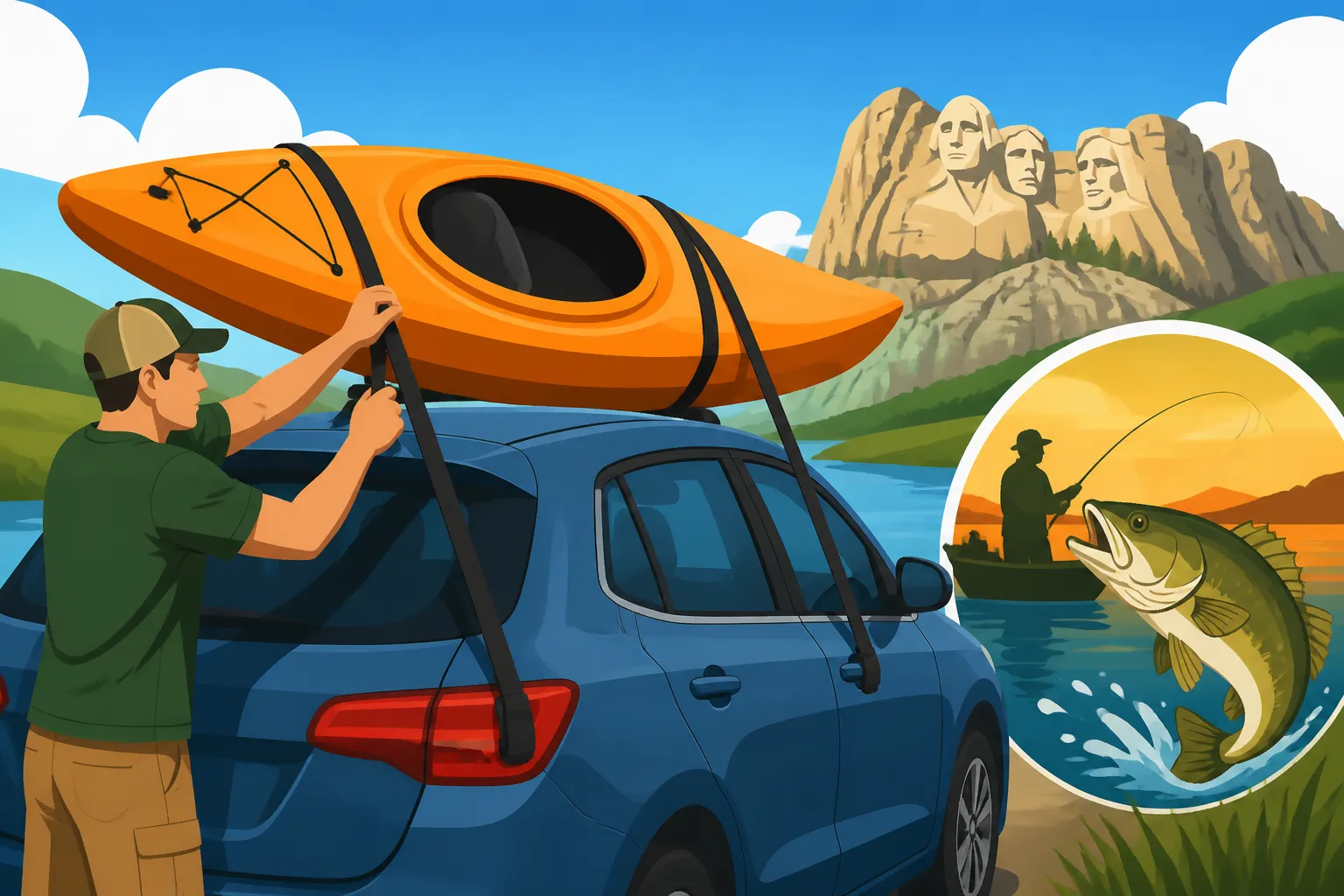
This is arguably the most popular and accessible alternative for transporting a kayak without a permanent roof rack. Foam blocks are essentially large, dense foam pads with grooves that cradle your kayak, protecting both the boat and your vehicle's roof. They sit directly on your car's roof, and the kayak rests on them.
To use them, you typically place two or three foam blocks directly on your roof, spaced appropriately to support the kayak. Then, you carefully lift your kayak onto the blocks. The next step is securing it using heavy-duty cam straps (not bungee cords, which can stretch and fail). These straps go over the kayak, through your car's open doors (or sometimes around the roof through the door jambs, depending on your car's design), and are cinched tightly on the inside. You'll also want bow and stern tie-downs – straps that go from the front of the kayak to a secure point under your hood (like a tow hook) and from the back of the kayak to a secure point under your trunk or bumper. These bow and stern lines prevent the kayak from shifting forward, backward, or lifting in the wind, which is especially important on South Dakota's often windy roads. You can find these foam block kits at most outdoor retailers like Bass Pro Shops or even general online stores like Amazon. They are fantastic for folks who don't want a permanent roof rack and only need to transport their kayak occasionally.
Inflatable Roof Racks: Convenience on Demand
For those who want a bit more structure than foam blocks but still crave portability and temporary use, inflatable roof racks are a brilliant invention. These systems consist of inflatable bladders that form a sturdy cradle for your kayak when inflated. They typically strap onto your vehicle's roof through the door frames, much like how soft racks or foam blocks secure.
The main advantage here is their compact storage. When deflated, they roll up into a small bag, easily storable in your trunk or garage. When you need them, you simply place them on your roof, inflate them with a hand pump (usually included), position your kayak, and strap it down securely with integrated or separate cam straps and bow/stern lines. They offer good cushioning and stability for your kayak, often mimicking the support of traditional crossbars. This is a great solution for occasional use or for traveling to a fishing destination and then removing the rack for daily driving. Just remember to check their weight capacity and ensure they are compatible with your specific kayak and vehicle.
DIY Kayak Carts and Dollies
While not a transport method for getting your kayak on your vehicle, a kayak cart or dolly is an indispensable tool for moving your kayak from your vehicle to the water, especially if you're parking a bit of a distance from the launch point. Think of it as bridging the gap between your car and the lake, allowing you to easily roll your kayak rather than dragging or carrying it.
These carts typically consist of a frame with two wheels and a strap system to secure the kayak. You simply flip your kayak on its side, slide the cart underneath, strap it on, and you're ready to roll. Many South Dakota boat launches have long stretches of asphalt or gravel, and a kayak cart can save your back and energy, allowing you to focus on the fishing. You can purchase these at sporting goods stores or easily build one yourself with PVC pipe, old bicycle wheels, and some creativity. If you plan on fishing remote spots or areas with limited vehicle access, a sturdy kayak cart becomes almost as essential as your paddle and PFD. It makes moving even a large Best Kayak Length for Fishing Big Reservoirs much more manageable.
Important Safety Considerations and Best Practices
No matter how you choose to transport your kayak, safety should always be your top priority. An unsecured kayak isn't just a risk to your gear; it's a hazard to everyone else on the road. Taking a few extra minutes to double-check your setup can prevent a lot of headaches, or worse, accidents.
Securing Your Kayak Properly
This cannot be stressed enough: always use cam straps, not bungee cords, for securing your kayak to your vehicle. Bungee cords are designed for light loads and have too much stretch to hold a kayak firmly against wind resistance and road bumps. Cam straps, when tightened correctly, create a rigid hold.
When strapping, aim for at least two primary straps over the body of the kayak (one near the front, one near the back). If using foam blocks or an inflatable rack, these straps go over the kayak and through your vehicle's interior (or around the roof edge). Then, always use bow and stern tie-downs. These lines (often made of rope or dedicated webbing straps) connect the very front and very back of your kayak to secure points on your vehicle's frame. They prevent the kayak from rocking, shifting, or becoming a kite at highway speeds. The bow and stern lines create a "triangle of tension" with the main straps, ensuring the kayak is stable in all directions. Make sure they are snug, but don't overtighten to the point of deforming your kayak's hull. A good rule of thumb is that there should be no noticeable play or wiggle in the kayak when you push and pull on it. For specific guidance on what gear to use, check out our South Dakota Kayak Fishing Gear Guide.
Visibility and Overhang Rules
South Dakota, like most states, has specific rules about how far an object can extend beyond your vehicle. Generally, if an item (like your kayak) extends more than four feet past the rear of your vehicle, you must attach a bright red or orange flag to the absolute furthest point. This is not just a suggestion; it's a legal requirement designed to alert other drivers to the extended load. Ignoring this can lead to fines and, more importantly, increase the risk of a rear-end collision.
Beyond the legal minimum, think about practical visibility. If your kayak is hanging out of a trunk or off the back of a truck, does it obscure your taillights or license plate? If so, you'll need to find a way to make them visible, perhaps with temporary auxiliary lights or by relocating your license plate. Always err on the side of caution when it comes to visibility; other drivers need to know exactly how much space your vehicle and its load are occupying on the road.
Driving Safely with a Kayak Without a Roof Rack
Transporting a kayak, regardless of the method, changes your vehicle's dynamics. Be prepared to adjust your driving habits. Here are a few tips:
- Reduce Speed: Especially if you're using foam blocks or a method with significant overhang, reduce your speed. High speeds can create immense wind uplift on the kayak, stressing your tie-downs and potentially causing the kayak to shift or become dislodged. Take it easy on the highway, particularly in South Dakota's open, windy stretches.
- Avoid Sudden Movements: Smooth acceleration, braking, and turning are key. Jerky movements can cause your kayak to shift, loosen straps, or even come free. Approach turns and stops gently.
- Check Straps Frequently: For longer trips, pull over periodically (every 50-100 miles) to recheck all your straps and tie-downs. Wind, vibrations, and road conditions can cause straps to loosen over time. It's much better to discover a loose strap at a gas station than on the interstate.
- Mind Clearance: If your kayak is on a truck bed extender or sticking far out of a hatchback, be mindful of your overall length, especially when backing up, parking, or maneuvering in tight spaces. Your vehicle is much longer than usual. Similarly, if your kayak is on the roof, remember the added height when going under low bridges, through drive-thrus, or into garages.
- Practice Makes Perfect: If you're new to transporting a kayak without a roof rack, do a short test drive around your neighborhood before embarking on a long journey to Lake Sharpe or Lewis and Clark Lake. This will give you confidence in your setup and allow you to identify any issues before they become problems on the open road. And don't forget, if you're still considering your first kayak, review options like Best Kayaks for South Dakota Reservoir Fishing to ensure you pick the right one for your transport capabilities.
By following these guidelines, you can safely and effectively transport your kayak, getting you to your favorite South Dakota fishing destinations without the need for an expensive, permanent roof rack. Happy paddling and tight lines!
Disclaimer
This article is for general informational purposes only and does not constitute professional advice. Laws, prices and regulations vary by location and change over time. Consult a qualified professional for guidance on your specific situation.