Best Boat Trailer Tires for Gravel Boat Ramps
There's nothing quite like the feeling of reeling in a beautiful walleye from Lake Oahe or a feisty smallmouth from Lake Francis Case. But that post-fishing high can quickly turn into a sinking feeling when you hear that dreaded thump-thump-thump as you pull your boat trailer up a gravel ramp, only to realize you've got a flat tire. South Dakota's fantastic fishing often means accessing pristine waters via those less-than-perfect gravel roads and ramps, and those conditions are brutal on standard boat trailer tires. This guide is here to walk you through exactly what makes a tire stand up to the unforgiving nature of gravel, helping you choose the best options and maintain them for worry-free trips to your favorite fishing holes.
The Unique Challenges Gravel Boat Ramps Pose to Trailer Tires
You've probably noticed that a gravel boat ramp isn't like your smooth paved driveway. It's a harsh environment that subjects your trailer tires to stresses they weren't always designed for, especially if you're using basic, entry-level tires. Understanding these challenges is the first step to choosing tires that can handle the abuse.
Abrasive Surfaces and Puncture Risks
Imagine sandpaper, but instead of fine grains, it's made of sharp, angular rocks. That's essentially what a gravel ramp is to your tires. As your trailer moves, the tires constantly grind against these abrasive surfaces. This friction causes the rubber to wear down much faster than it would on asphalt or concrete. More critically, those sharp edges are constantly probing for weak spots, leading to cuts, chips, and even outright punctures, particularly in the tread blocks and the vulnerable sidewall areas. A small, seemingly innocent rock can become a nail in your tire's coffin if it catches it just right, especially when the tire is under load.
Moreover, if you've ever had to back a trailer down a steep, loose gravel ramp, you know the tires can sometimes slip or spin a bit, especially if the trailer is heavily loaded. This momentary loss of traction acts like a grinder, stripping away rubber and further accelerating wear. It's a relentless assault on the integrity of your tires, far more demanding than highway cruising.
Heat Buildup from Friction and Load
Heat is the enemy of any tire, and gravel ramps are master generators of it. When you're pulling a heavy boat up a steep, gravel-covered incline, your tow vehicle and trailer tires are working overtime. The friction between the tire tread and the loose gravel creates significant heat. This isn't just external surface heat; the internal components of the tire also heat up as they flex and work harder to maintain grip and carry the load.
This heat buildup is exacerbated by a few factors. First, the weight of your boat and trailer means the tires are constantly flexing and deforming under pressure. Second, the lower speeds and constant effort on a ramp mean less airflow to cool the tires compared to highway speeds. Excessive heat can cause the rubber compounds to break down prematurely, leading to tread separation, weakening of the tire's structure, and ultimately, a blowout. It's a silent killer that slowly degrades your tires from the inside out, making them much more susceptible to failure on subsequent trips.
Uneven Terrain and Sidewall Stress
Very few gravel ramps are perfectly flat and smooth. Most have ruts, potholes, washboards, and uneven patches where gravel has shifted or washed away. When your trailer rolls over these uneven surfaces, the tires are subjected to twisting, pinching, and bending forces that can severely stress the sidewalls. Imagine driving over a curb with only one tire; that's the kind of strain we're talking about, but it happens repeatedly on a rough ramp.
The sidewall of a tire, while designed for flexibility, is also a critical structural component. Pinching or impact from sharp rocks on uneven terrain can cause bulges, internal cord damage, or even a sudden rupture. This is particularly problematic because many standard trailer tires have less robust sidewalls compared to passenger car or light truck tires. This vulnerability means that a seemingly minor bump can have major consequences, leading to a catastrophic failure that leaves you stranded with your prize catch still in the livewell. These constant, dynamic stresses are a huge reason why investing in tires with reinforced sidewalls is so critical for South Dakota's varied access points.
Essential Tire Features for Gravel Ramp Domination
When you're shopping for new tires, it's easy to get overwhelmed by all the options. But for tackling those tough South Dakota gravel ramps, you need to focus on a few key features that truly make a difference. It's not just about finding any trailer tire; it's about finding the right one.
Construction: Radial vs. Bias-Ply for Durability
The construction of a tire plays a massive role in its durability and performance, especially when facing gravel.
-
Bias-Ply Tires: These are the older style, where the plies (layers of cord fabric) run diagonally from bead to bead, crossing each other.
- Pros: They generally have very strong sidewalls, which can offer decent resistance against punctures and cuts in the immediate sidewall area. They are often less expensive. For very short, low-speed hauls over extremely rough ground, their rigid sidewalls can be advantageous.
- Cons: Bias-ply tires tend to generate a lot of heat due to more internal friction as the plies rub against each other. This makes them less suitable for highway speeds or longer distances, as heat buildup leads to faster wear and increased risk of blowouts. They also tend to provide a harsher ride, which can be tough on your trailer and its components over time.
- Gravel Performance: While their sidewalls can be tough, the increased heat generation on gravel can be a problem. They might resist some types of cuts better, but their overall resistance to wear from friction and heat makes them a less ideal choice for frequent gravel use, especially if you also travel long distances on the highway.
-
Radial Tires: In radial tires, the plies run directly across the tire from bead to bead, with additional layers of stabilizing belts under the tread.
- Pros: Radials run much cooler than bias-ply tires, which significantly extends their lifespan and reduces the risk of blowouts, particularly on long highway stretches. They offer a smoother ride, which is better for your boat and trailer suspension. The flexible sidewalls and stable tread make them excellent for highway performance.
- Cons: Historically, radial tire sidewalls were considered more flexible and thus potentially more vulnerable to sharp impacts or pinching than the rigid sidewalls of bias-ply tires. However, modern radial trailer tires, especially heavy-duty ones, have made significant strides in sidewall reinforcement.
- Gravel Performance: Despite the potential for sidewall vulnerability in standard radials, their ability to dissipate heat and absorb road shock makes heavy-duty radial trailer tires a strong contender for gravel ramps. You'll want to look for specific features like reinforced sidewalls and robust tread patterns to maximize their gravel durability. For most South Dakota anglers who travel both highways and gravel, a good quality radial is often the better compromise.
Load Range and Ply Rating: Over-spec for Peace of Mind
This is arguably the most critical factor for any trailer tire, and it becomes even more paramount when dealing with gravel. The load range (e.g., Load Range C, D, E, F) and corresponding ply rating indicate how much weight a tire can safely carry at a specified inflation pressure.
- Understanding Load Range: Each letter corresponds to a maximum load capacity. A Load Range C tire has a lower capacity than a Load Range D, and so on. Exceeding a tire's load capacity, even occasionally, drastically increases the risk of failure, especially on rough surfaces like gravel, where stress is magnified.
- The "Over-Spec" Rule: The golden rule for boat trailer tires, particularly those facing gravel, is to always over-spec the load capacity. Calculate the fully loaded weight of your boat, motor, fuel, gear, and trailer. Then, choose tires whose combined load capacity comfortably exceeds this total weight, preferably by a margin of 15-20%. For instance, if your loaded trailer weighs 6,000 lbs and has two axles (four tires), each tire needs to handle at least 1,500 lbs. Opting for tires rated for 1,800-2,000 lbs per tire would give you that crucial safety margin. This buffer means the tires aren't constantly operating at their absolute limit, reducing heat buildup and stress, which is vital on abrasive gravel.
- Why It Matters for Gravel: On gravel, the dynamic stresses are higher. A pothole or large rock can momentarily put excessive load on a single tire. If your tires are barely rated for the trailer's weight, these impacts are much more likely to cause internal damage or a blowout. Over-specifying provides resilience against these unpredictable forces.
Aggressive Tread Patterns and Sidewall Protection
While not as aggressive as off-road truck tires, a boat trailer tire that sees frequent gravel use benefits immensely from a more robust and purposeful tread design, along with specific sidewall features.
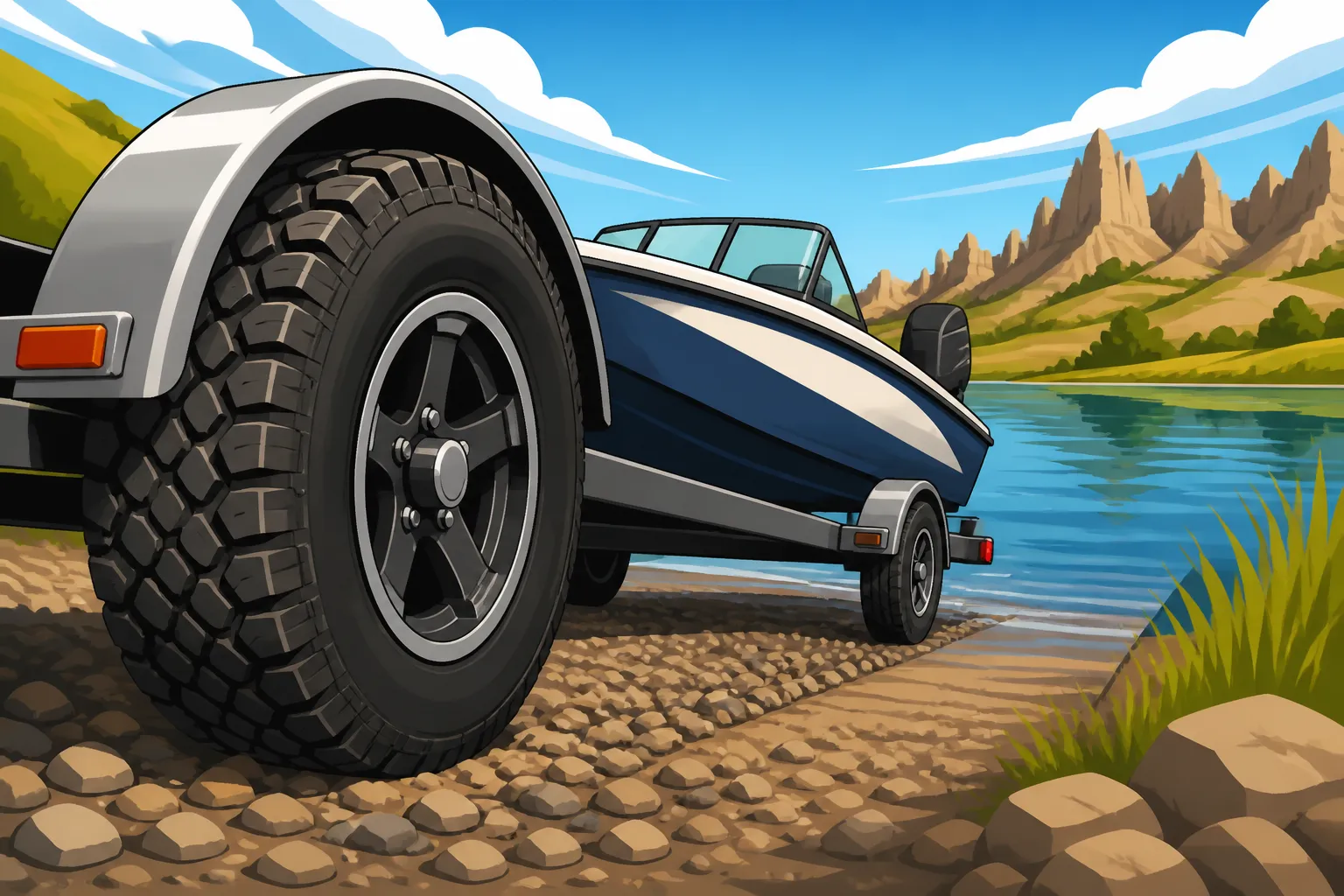
- Aggressive Tread Patterns: Look for tires with deeper, more open tread blocks. These features improve grip on loose gravel, helping your trailer track better and reducing the likelihood of slipping or spinning during launching and retrieval. They also help shed small rocks that might otherwise get wedged and cause damage. While you don't need a full-blown mud tire, a tread that looks a bit beefier than a standard highway trailer tire is a good sign.
- Shoulder Blocks and Sidewall Protection: The shoulder of a tire (where the tread meets the sidewall) and the sidewall itself are incredibly vulnerable to cuts and abrasions from sharp gravel and rocks. Many heavy-duty trailer tires now incorporate reinforced shoulder blocks or specific sidewall protection features. These might include thicker rubber compounds, extra layers of cord, or a textured design that makes the sidewall more resistant to impacts. Think of it as armor for the most exposed parts of your tire when you're maneuvering on a rocky ramp. When looking at options, especially from reputable brands, ask about or look for tires explicitly mentioning these features. You might find a wider selection of heavy-duty options at specialty marine retailers or online at sites like Bass Pro Shops or Amazon, where detailed product descriptions can often highlight these protective elements.
Top Tire Types to Consider for South Dakota's Gravel Ramps
Navigating the world of trailer tires can be a bit like trying to pick out the perfect lure for a new lake – lots of options, and you want the one that performs best! For South Dakota's gravel ramps, we're really looking at a few distinct categories, each with its own advantages and considerations.
ST (Special Trailer) Tires: The Standard Choice (and its limitations)
"ST" stands for Special Trailer, and these tires are specifically designed for trailers, not passenger vehicles. They have stronger sidewalls than typical car tires to handle heavy, static loads and resist swaying. For many years, and still for most casual users, ST tires have been the go-to.
However, the "ST" designation itself isn't a silver bullet for gravel. Many basic, entry-level ST tires, while fine for paved roads, simply aren't built to withstand the constant abrasion, impacts, and heat generated by frequent use on rough gravel ramps. They might have lower ply ratings or less robust rubber compounds that quickly succumb to the harsh conditions.
When ST tires can work for gravel:
If you primarily stick to paved roads and only occasionally encounter a short, well-maintained gravel access point, a high-quality, heavy-duty ST radial tire with a higher load range (e.g., Load Range D or E) and a robust tread design can certainly perform well. Brands like Goodyear Endurance or Carlisle Radial Trail HD are often cited as good options within the ST category because they are built with better materials and more reinforcement than generic ST tires. Always prioritize higher load ranges, even if it seems like overkill, and inspect them frequently for wear. These are widely available, including through online retailers like Amazon, where you can often compare features and read reviews from other boaters.
LT (Light Truck) Tires: An Increasingly Popular Alternative
This is where things get interesting for gravel warriors. "LT" stands for Light Truck, and these tires are designed for pickups, SUVs, and commercial vans. While they're not trailer-specific, many anglers are finding that certain LT tires offer superior durability and performance on gravel ramps compared to standard ST tires.
Why LT tires are gaining popularity for trailers:
- Robust Construction: LT tires are built to handle heavier loads, more aggressive driving, and tougher conditions than passenger car tires. They often feature stronger internal construction, thicker rubber compounds, and significantly more robust sidewalls to resist punctures and impacts.
- Aggressive Tread Patterns: Many LT tires, particularly "all-terrain" (A/T) or "mud-terrain" (M/T) designs, have deep, aggressive tread blocks that provide excellent grip on loose surfaces like gravel and dirt. This is a huge advantage when you're trying to pull a heavy boat up a slick ramp.
- Heat Dissipation: LT tires are generally designed to run cooler than many ST tires, especially those intended for basic utility trailers. This improved heat management is crucial for preventing blowouts when tires are working hard on an abrasive gravel surface.
Considerations for using LT tires on a trailer:
- Stiffer Ride: LT tires are designed for a heavier vehicle suspension, so they can sometimes provide a stiffer ride for a boat trailer, which might transmit more road shock to your boat. However, for heavier boats and trailers, this might not be a significant issue.
- Availability of Sizes: While many LT sizes are common, you need to ensure the overall diameter and width match your trailer's wheel wells and fender clearance.
- Finding Them: You can typically find a wide array of LT all-terrain tires at your local tire shops or through large online retailers like Bass Pro Shops or Amazon, often with detailed specifications that help you compare load ratings and tread designs.
Specific Recommendations and Where to Find Them
Instead of naming specific tire models (as these can change), let's focus on what to ask for and look for when you're ready to buy:
- For ST Tires (if you go this route): Ask for "heavy-duty radial trailer tires" with a high load range (D or E, sometimes even F depending on your trailer weight). Inquire about reinforced sidewalls or specific technologies designed for durability and heat dissipation. Some popular, well-regarded ST radial brands that often hold up better include Goodyear Endurance, Carlisle Radial Trail HD, and Maxxis M8008. You'll find these at many tire dealers and marine supply stores, as well as online.
- For LT Tires (the gravel champion): You're generally looking for an "all-terrain (A/T) light truck tire" with the appropriate load rating. These tires are built for trucks that go off-road, so they're designed to handle impacts and provide grip on loose surfaces. Look for brands known for their rugged construction. Ensure the load index and speed rating meet or exceed your trailer's requirements. You can source these from virtually any major tire retailer, and the selection on Bass Pro Shops or Amazon will give you plenty of options to compare specifications and pricing. Remember, the goal is robust construction and puncture resistance.
| Feature | Standard ST Tire | Heavy-Duty Radial ST Tire | LT All-Terrain Tire |
|---|---|---|---|
| Puncture Resist. | Basic | Good | Excellent |
| Sidewall Strength | Moderate | Good (reinforced) | Excellent (very robust) |
| Heat Dissipation | Moderate | Good | Very Good |
| Gravel Grip | Adequate | Good | Excellent (aggressive tread) |
| Load Capacity | Varies (C-E common) | Higher (D-F common) | Very High (E-F common) |
| Ride Quality | Average | Smoother | Stiffer |
| Cost | Lowest | Mid-range | Higher range |
| Best Use | Paved roads, occasional gravel | Frequent highway, moderate gravel | Frequent gravel, rough terrain |
When making your final decision, consider your budget, how often you'll be on gravel, and the overall weight of your boat and trailer. Don't cheap out on tires; they are the only thing connecting your valuable boat to the road! For more general information about maintaining your trailer, you might find our guide on Best Trailers for Fishing Boats helpful.
Maximizing Tire Life and Preventing Roadside Headaches
Even the best boat trailer tires can fail prematurely if not properly cared for. While you can't completely eliminate the risk of a flat when hitting South Dakota's gravel, you can significantly reduce it with proper maintenance and smart driving habits. Think of it as preventative medicine for your tires.
Proper Inflation is Non-Negotiable
This is perhaps the single most important factor in tire longevity and performance, especially on gravel. It's often overlooked, but incorrect tire pressure can wreak havoc.
- Under-inflation: When a tire is under-inflated, its sidewalls flex excessively, generating immense heat. On abrasive gravel, this heat combined with increased friction accelerates wear and significantly increases the risk of a blowout. It also makes the tire more susceptible to pinching and impact damage when hitting rocks, as there's less air cushion to absorb the force. Under-inflated tires also create more rolling resistance, making your tow vehicle work harder and consume more fuel.
- Over-inflation: While less common than under-inflation, over-inflating your tires makes them too rigid. This reduces the tire's contact patch with the road, leading to uneven wear (center wear) and making the tire more vulnerable to impact damage. A rock that a properly inflated tire might flex around could cause a rupture in an over-inflated, rigid tire.
- Checking Pressure: Always check your tire pressure when the tires are cold, before you've driven anywhere. Use a reliable tire gauge. Crucially, inflate to the pressure recommended by your trailer manufacturer, which is usually found on a sticker or plate on the trailer frame itself. This is often higher than the maximum pressure listed on the tire's sidewall. This manufacturer-recommended pressure is calibrated for the weight your trailer carries. For more specific guidelines on what to look for, checking your South Dakota Boat Safety Requirements might touch upon general trailer maintenance as well.
Regular Inspections and Maintenance
Your tires are constantly working, and they communicate their condition through visual cues. Make a habit of inspecting them before and after every trip, especially after navigating gravel.
- Visual Inspection: Look for any cuts, cracks, bulges, or signs of dry rot (small cracks in the rubber, especially on the sidewalls). Pay close attention to the area where the tread meets the sidewall, as this is a common spot for gravel damage. Check for foreign objects like nails, screws, or sharp rocks wedged in the tread. Remove any small stones from the tread grooves to prevent them from drilling deeper.
- Tread Wear: Monitor tread depth and look for uneven wear patterns. Uneven wear can indicate alignment issues with your trailer axle, which will further accelerate tire degradation.
- Rotation: While less common for single-axle trailers, if you have a tandem-axle trailer, rotating your tires can help ensure even wear and extend their overall life. Consult your tire professional for recommendations.
- Storage: When not in use, store your trailer in a cool, dark place if possible. UV rays from the sun and extreme temperatures can degrade rubber over time, leading to dry rot. If outdoor storage is unavoidable, consider using tire covers to protect them from the elements. This is also a good practice when you How to Winterize a Boat in South Dakota.
- Lug Nuts: Don't forget the lug nuts! Check them regularly to ensure they are properly tightened. Loose lug nuts can lead to wheel wobble, uneven tire wear, and even the loss of a wheel – a potentially catastrophic event.
Smart Driving on Gravel: Techniques for Longevity
How you drive on gravel can dramatically impact your tire's lifespan and your safety.
- Slow Down: This is the golden rule for gravel. Reducing your speed minimizes the impact forces when hitting rocks and greatly reduces the friction and heat generated between the tires and the surface. Slower speeds also give you more time to react and navigate around larger, sharper obstacles.
- Pick Your Line: Just like picking a fishing spot, picking your driving line on a gravel ramp is crucial. Try to steer around the biggest, sharpest rocks and avoid deep ruts that can pinch your tires. Look for smoother patches of gravel, even if it means slightly altering your path.
- Gentle Acceleration and Braking: Avoid sudden, aggressive acceleration that causes wheel spin. Wheel spin on gravel acts like a sander, quickly wearing down tread. Similarly, abrupt braking can cause tires to skid, again increasing wear and heat. Smooth, gradual inputs are always best.
- Avoid Sharp Turns: Tight turns on loose gravel, especially with a heavy trailer, can put immense twisting stress on your tires' sidewalls. Take turns wide and gently to reduce this strain.
- Check After Each Trip: Even if a gravel ramp seems mild, always give your tires a quick once-over after each use. A small cut or embedded rock caught early can save you from a major roadside headache later. Carrying a spare tire, a jack, and a lug wrench is non-negotiable for any South Dakota fishing trip, especially when venturing to remote Best Fishing Spots in South Dakota.
By combining the right tire choice with diligent maintenance and careful driving, you can significantly extend the life of your boat trailer tires and ensure your fishing adventures in South Dakota are smooth sailing – or rather, smooth rolling!
Disclaimer
This article is for general informational purposes only and does not constitute professional advice. Laws, prices and regulations vary by location and change over time. Consult a qualified professional for guidance on your specific situation.