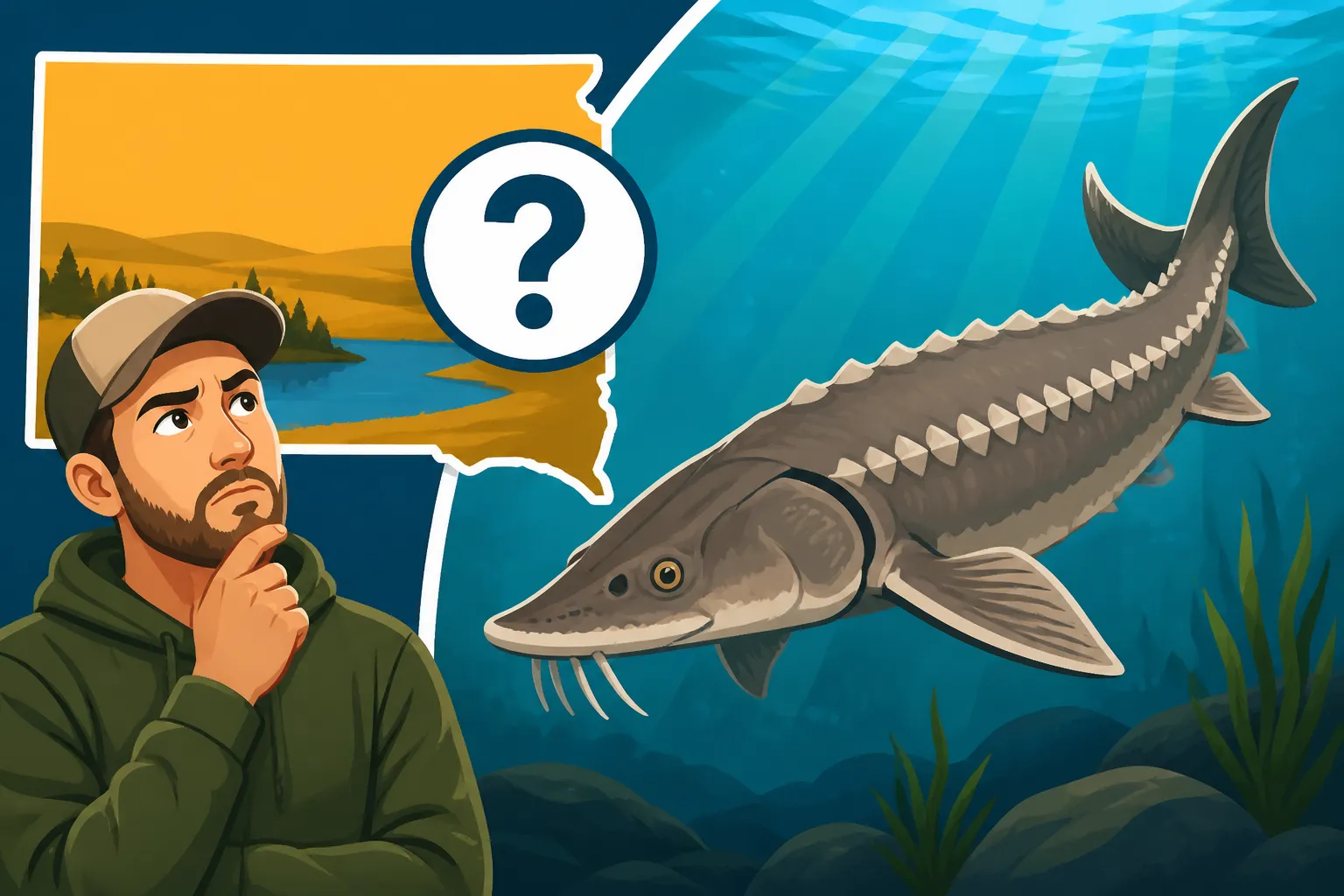
Do South Dakota Lakes Have Sturgeon?
For many anglers, the idea of hooking into something ancient and mysterious like a sturgeon is a captivating thought. There’s a natural wonder that comes with encountering such prehistoric fish, but also a lot of confusion about where they can be found and what to do if you’re lucky enough to catch one. If you've ever wondered if South Dakota's waters harbor these fascinating creatures, you're in the right place, as we'll dive deep into the presence of sturgeon in the state's lakes and rivers, and what you need to know about them.
The Sturgeon Presence in South Dakota Waters
It's true! South Dakota's larger river systems and reservoirs, primarily those connected to the Missouri River, are indeed home to sturgeon. However, it's not quite as simple as just "sturgeon." There are two main species you might encounter, and understanding the difference between them is absolutely crucial for any angler in the state. One is a true rarity, a federally endangered species, while the other, though still closely monitored, is a bit more common.
The thought of pulling in a massive, ancient fish can be exhilarating, but it's vital to remember that these aren't your typical walleye or bass. Sturgeon are living fossils, and their populations have faced significant challenges over the years. This means that while they exist in South Dakota, they come with very specific rules and a strong emphasis on conservation. It's not about targeting them for sport in most cases, but rather understanding that they are an important part of our aquatic ecosystem and deserving of careful treatment if encountered accidentally.
Identifying South Dakota's Sturgeon Species
Before you even think about fishing, knowing what you're looking for (or what you might accidentally catch) is paramount. South Dakota is primarily home to two species of sturgeon: the Shovelnose Sturgeon and the Pallid Sturgeon. They look similar at a glance, but their differences are critical, especially concerning their conservation status. Many anglers, even seasoned ones, can have trouble telling them apart, which is why education is so important.
Imagine you're out on Lake Sharpe or the main stem of the Missouri River. You feel a heavy thud on your line, and after a long fight, you bring in a fish unlike any you've seen. It has bony plates (scutes) instead of scales, a flattened snout, and barbels hanging near its mouth. This is undoubtedly a sturgeon. But which one? The answer determines your next steps and could even have legal implications if you don't know the rules. A good identification guide, perhaps one you can order from Amazon for your tackle box, is always a wise investment.
The Elusive Pallid Sturgeon
The Pallid Sturgeon (Scaphirhynchus albus) is the superstar of conservation efforts in the Missouri River basin. It's a truly magnificent fish, but also incredibly rare and listed as federally endangered. This means catching one is an honor, but also comes with strict responsibilities.
Characteristics and Habitat of the Pallid Sturgeon
Pallid sturgeon are long-lived fish, known for their pale, grayish-white coloration, which gives them their name. They can grow to impressive sizes, sometimes exceeding 5-6 feet in length and living for several decades. Unlike many fish, they are slow to mature, often not reproducing until they are 15-20 years old, which is a major factor in their slow recovery. They have a flattened, shovel-like snout, long, slender tail fin lobes, and four barbels (whiskers) located closer to the tip of their snout, all roughly equal in length and often lying in a straight line.
These ancient fish prefer the large, turbid, free-flowing sections of the Missouri River and its main stem reservoirs, like Lake Oahe and Lake Sharpe. They are bottom-dwellers, feeding on smaller fish and aquatic insects they find in the murky depths. Historically, they thrived in the river's braided channels and diverse habitats, which provided ample food and spawning grounds. However, changes to the river, particularly dam construction and channelization, have significantly altered their preferred environment, contributing to their endangered status. Knowing their habitat preferences can help anglers understand where they might be encountered.
Strict Regulations and Conservation Efforts
If you happen to catch a Pallid Sturgeon, the regulations are crystal clear: it must be immediately released unharmed. No exceptions. It's illegal to possess one, even briefly for a photo, unless you are part of an authorized scientific study. This is why quick and accurate identification is so crucial. Anglers are encouraged to cut the line as close to the mouth as possible if the fish is deeply hooked, rather than trying to remove the hook, to minimize handling stress.
State and federal agencies, like the South Dakota Game, Fish and Parks (GFP), are actively involved in recovery programs for Pallid Sturgeon. These efforts include habitat restoration, research into their life history, and stocking programs using hatchery-reared fish. Anglers play a critical role by adhering to regulations and reporting any sightings or accidental catches, which helps biologists monitor the population. You can find more detailed information on species-specific regulations in the South Dakota Fishing Regulations Explained handbook, often available digitally or in print.
The More Common Shovelnose Sturgeon
While still a unique catch, the Shovelnose Sturgeon (Scaphirhynchus platorynchus) is more widely distributed and less critically endangered than its pallid cousin. They share many similarities, but also have distinct characteristics that differentiate them.
Distinguishing Features and Preferred Waters
Shovelnose Sturgeon are generally smaller than Pallids, typically maxing out at about 3 feet in length and weighing a few pounds. Their coloration is usually a darker brown or olive, helping them blend into the river bottom. Key identifying features include a more pointed snout, and the outer pair of barbels are typically shorter than the inner pair, with the inner pair often located closer to the mouth, creating a slightly staggered appearance. Another important distinction is the presence of a completely scaled belly, whereas the Pallid Sturgeon has a mostly scaleless belly. These subtle differences are what really matter when you're trying to make a positive identification.
Like Pallid Sturgeon, Shovelnose Sturgeon are bottom-feeders that inhabit the Missouri River and its larger tributaries. They also prefer moving water and sandy or gravelly riverbeds. You're most likely to encounter them in areas with good current, deeper holes, and near structure that breaks the flow. Anglers targeting catfish in the Missouri River might occasionally hook into a Shovelnose, as they often inhabit similar environments and feed on similar prey, like aquatic insects, larvae, and small fish. Finding a reliable guide to Fish Identification for Beginners can be incredibly helpful for distinguishing these two species.
Fishing for Shovelnose Sturgeon: Regulations and Tips
Unlike the Pallid Sturgeon, there are usually specific seasons and regulations for harvesting Shovelnose Sturgeon in certain areas of South Dakota. These regulations can change, so always check the current South Dakota GFP Fishing Handbook Guide before heading out. Generally, any Shovelnose Sturgeon caught must be within a specific length slot limit, and there are daily and possession limits. If you catch one outside the slot limit or are not in a designated harvest season, it must be immediately released unharmed.
Anglers rarely target Shovelnose Sturgeon specifically, but they are often caught incidentally while fishing for other bottom-feeding species. Common baits for catfish, such as cut bait, worms, or even stink bait, can attract a Shovelnose. Using heavy tackle is advisable if you're fishing in strong current on the Missouri River, as these fish, though not huge, put up a respectable fight. Remember, always handle these fish with care to ensure their survival, whether you're keeping them or releasing them. Learning Missouri River Tailwater Fishing Techniques can also indirectly help you understand the areas where Shovelnose might be present.
Sturgeon Life Cycles and Their Importance
Sturgeon are an ancient lineage of fish, having evolved millions of years ago, making them true living fossils. Understanding their unique life cycle helps appreciate why conservation efforts are so vital and why encountering one is such a special event.
Slow Growth, Long Lives, and Spawning Habits
These fish are characterized by slow growth rates and incredibly long lifespans. Pallid Sturgeon, as mentioned, can live for 50-60 years or even more, taking over a decade to reach sexual maturity. Shovelnose Sturgeon also live for a respectable 10-20 years. This slow reproductive cycle means that their populations recover very slowly from declines, making them highly vulnerable to habitat degradation and overfishing.
Sturgeon are broadcast spawners, typically migrating upstream in rivers to release their eggs and milt over gravel or rocky substrates. Their eggs are adhesive, sticking to rocks and preventing them from washing downstream. After hatching, the young drift downstream, eventually settling into preferred nursery habitats. The success of their spawning is heavily reliant on natural river flows and access to undisturbed spawning areas, which have been significantly impacted by dams and other river modifications in the Missouri River system. This fragility of their spawning process is another reason for strict regulations.
Ecological Role and Conservation Imperative
Sturgeon play a vital ecological role in the river system. As bottom-feeders, they help to process detritus and consume smaller organisms, contributing to the overall health and nutrient cycling of the aquatic environment. Their presence is often an indicator of a relatively healthy river system, even if their populations are stressed.
The conservation imperative for both Pallid and Shovelnose Sturgeon cannot be overstated. The Pallid Sturgeon, being endangered, represents a unique piece of biodiversity that we are working hard to preserve. Even the Shovelnose, while more common, faces pressures from habitat loss and water quality issues. Anglers are truly on the front lines of conservation. By educating themselves, following regulations, and practicing careful catch-and-release, especially with accidental catches, we contribute directly to the survival of these magnificent creatures. Resources like those found on Amazon for local species identification can genuinely empower anglers to be better stewards of South Dakota's aquatic resources.
| Feature | Pallid Sturgeon | Shovelnose Sturgeon |
|---|---|---|
| Conservation Status | Federally Endangered (Strictly Protected) | State-regulated (Often harvestable with limits) |
| Average Size | 3-6 feet, up to 80 lbs or more | 1-3 feet, typically 2-5 lbs |
| Coloration | Pale gray to white, unpatterned | Darker brown or olive, often mottled |
| Snout Shape | Flattened, broad, shovel-like | More pointed, slightly conical |
| Barbels | All four roughly equal length, in a straight line, closer to snout tip | Outer pair shorter than inner, inner pair closer to mouth, slightly staggered |
| Belly | Mostly scaleless (smooth) | Fully scaled (rougher to the touch) |
| Habitat Preference | Large, turbid, free-flowing rivers, main stem reservoirs | Free-flowing rivers, larger tributaries, strong currents |
| Action if Caught | Immediately release unharmed, illegal to possess | Check local regulations; may be harvestable within slot/season |
What to Do If You Catch a Sturgeon in South Dakota
Encountering a sturgeon is a memorable experience, but knowing how to handle the situation responsibly is paramount. Your actions can directly impact the survival of these vulnerable fish.
Proper Handling and Release Techniques
Whether it's a Shovelnose or a Pallid, proper handling is crucial. Sturgeon are hardy fish, but they can be easily injured if not handled correctly. First and foremost, try to minimize the time the fish is out of the water. Wet your hands before touching the fish to protect its natural slime coat, which is vital for its health. If possible, keep the fish in the water while you remove the hook.
Use needle-nose pliers or a hook-remover to quickly and carefully extract the hook. If the fish is deeply hooked, especially in the gills or throat, it's best to cut the line as close to the hook as possible. Don't try to rip the hook out, as this can cause fatal damage. Avoid holding the fish by its gills or eyes. Support its body horizontally, ideally with one hand under its head and the other under its tail, if you absolutely must lift it for a quick photograph (only if legal for the species). Gently revive the fish by holding it upright in the current until it swims away under its own power. This gentle approach ensures that these long-lived creatures have the best chance of survival.
Reporting Accidental Catches
For Pallid Sturgeon, reporting an accidental catch, even if you released it, is highly encouraged. This helps state and federal agencies track their presence and assess the health of the population. While you won't be in trouble for accidentally catching and immediately releasing one, providing details like location, date, and approximate size can be invaluable data for biologists. You can usually find contact information for reporting on the South Dakota GFP website or in their official fishing handbook.
Even for Shovelnose Sturgeon, if you notice anything unusual or catch an exceptionally large one, sharing that information can contribute to scientific understanding. Participating in angler surveys or reporting unique observations is a fantastic way to contribute to the future of fishing in South Dakota.
Disclaimer
This article is for general informational purposes only and does not constitute professional advice. Laws, prices and regulations vary by location and change over time. Consult a qualified professional for guidance on your specific situation.