Where Crappie Go in Summer
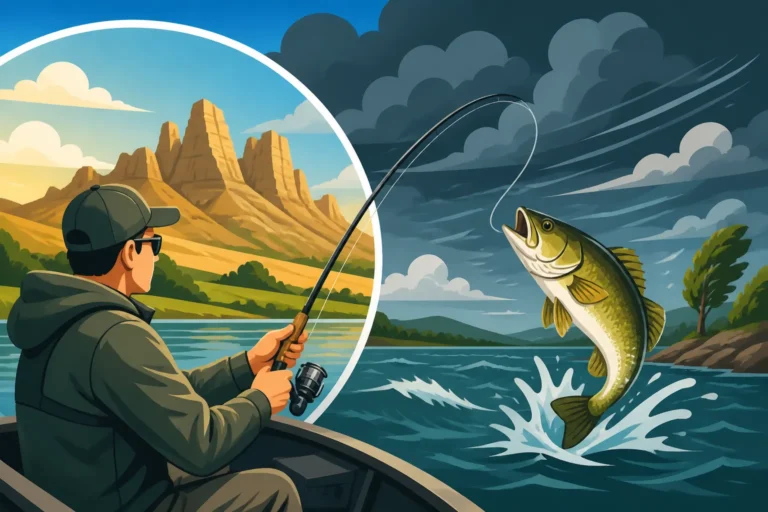
That amazing spring crappie bite, where you could fill a bucket by casting to shallow brush, can disappear faster than a prairie thunderstorm when summer rolls around. Suddenly, those familiar spots are barren, and you're left wondering, "Where did all the crappie go?" It's a common frustration, and if you've been scratching your head, you're not alone. This comprehensive guide is here to unravel the mystery of summer crappie movements in South Dakota, helping you understand their seasonal shifts and giving you the actionable strategies to put more slabs in your livewell, even when the sun is blazing.
Understanding the Summer Crappie Relocation
The dramatic shift in crappie behavior from spring to summer isn't just a whim; it's a survival strategy driven primarily by water temperature and the availability of their favorite food sources. As the water warms significantly, crappie, being cold-blooded creatures, seek out more comfortable thermal zones. This often means moving to deeper, cooler water.
Why Crappie Go Deep in Summer
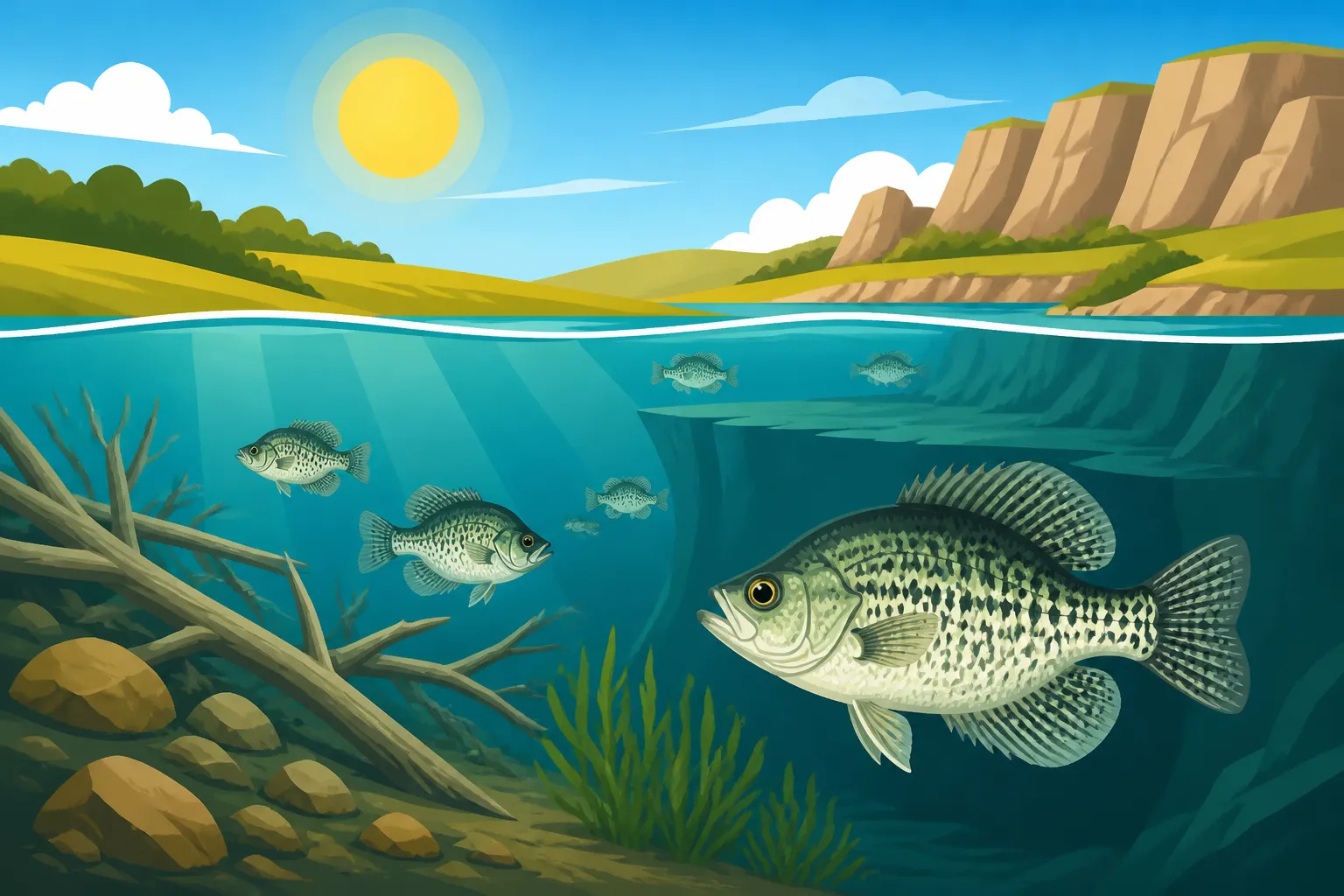
When South Dakota lakes and reservoirs bake under the summer sun, the shallow waters that were so productive in spring become too warm for crappie's comfort. Crappie prefer water temperatures typically ranging from the mid-60s to low-70s Fahrenheit. Once surface temperatures soar into the high 70s or even 80s, they'll head for the thermocline – that invisible layer where warm surface water meets cooler, deeper water. This thermocline offers them a consistent, comfortable temperature and often concentrates baitfish, creating a perfect summer hangout. They're not just looking for cooler water; they're also looking for dissolved oxygen, which tends to be more stable in these deeper zones, especially during hot spells.
This deep-water retreat can be a rude awakening for anglers accustomed to shallower presentations. It requires a complete rethink of your approach, from bait and lure choice to presentation style. Ignoring this fundamental shift in crappie behavior is why many anglers struggle to locate them from July through September.
Crappie's Food and Habitat Needs in Warmer Months
Beyond temperature, crappie are always on the hunt for food, and their forage patterns also change with the seasons. In summer, schools of baitfish, like shad or juvenile panfish, tend to suspend in open water or relate to deeper structures where they feel secure. Crappie will follow these baitfish, often suspending alongside them at specific depths. This means they aren't always glued to the bottom or thick cover. They might be holding 15-20 feet down over 30-foot depths, chasing schools of baitfish through the water column.
Additionally, summer vegetation growth can be rampant in certain areas. While shallow weeds might be too warm, crappie will often use the deep, submerged edges of weed beds as ambush points, especially if those beds extend into cooler water. Similarly, standing timber, brush piles, and rock piles in deeper water become prime real estate for summer crappie, offering both shade and protection, as well as attracting baitfish. Understanding these habitat preferences is key to narrowing down your search.
Key Structures and Depths for Summer Crappie
Finding summer crappie is all about understanding the subtle nuances of their deep-water habitats. They rarely just sit on a featureless bottom; they're looking for specific conditions that offer comfort, safety, and a buffet of baitfish.
Deeper Points, Humps, and Ledges
In larger South Dakota waters, especially the Missouri River reservoirs like Lake Oahe, Lake Sharpe, Lake Francis Case, and Lewis and Clark Lake, crappie will frequently congregate around deeper structural elements. Think about those main lake points that drop off quickly, underwater humps that rise off the basin, or sharp ledges that delineate old creek channels. These are natural congregation points for baitfish, which, in turn, attract crappie. The crappie might be sitting right on top of a deep hump in 20-25 feet of water, or they could be suspending along the edges of a steep breakline.
Using your electronics becomes absolutely crucial here. Look for bait balls, and then look for the tell-tale arcs of crappie suspending just below or within those baitfish schools. These structures offer crappie varied depths to move to if conditions change slightly, providing a perfect summer home base. Always remember that crappie will often position themselves on the windy side of these structures if there's a good current flow, as this often pushes baitfish towards them.
Submerged Timber, Brush Piles, and Artificial Structures
Crappie are masters of cover, and summer is no exception. While they move deeper, they still seek refuge. Submerged timber, whether it's standing dead trees in flooded reservoirs or sunken laydowns along river channels, offers excellent crappie habitat. Similarly, well-placed brush piles, whether natural or artificial, can hold huge numbers of fish. These structures provide shade, ambush points, and attract zooplankton and insects that form the base of the food chain, drawing in baitfish and then the crappie themselves.
Many anglers, and even some fisheries departments, have created artificial brush piles in various lakes. If you know of these locations, they are goldmines for summer crappie. If you don't, look for natural areas where trees might have fallen into deeper water or old fence lines that were submerged when a reservoir was filled. Again, your sonar is your best friend for identifying these hidden gems. You might find several schools of crappie stacked vertically within the branches of a single submerged tree.
Deep Main Lake Basins and Channels
Don't overlook the main lake basin or the deepest parts of river channels, especially in natural lakes or smaller reservoirs. Sometimes, crappie will simply suspend in open water over these deep areas, often following schools of baitfish. This can be the most challenging scenario to locate them, as there's no obvious structure to key on. However, if you can find baitfish suspending in the middle of a large bay or over a deep channel, the crappie are likely close by.
In these situations, the fish might be holding at a very specific depth, say 18 feet down over 40 feet of water. This is where precise depth control with your lures and constant monitoring of your fish finder are essential. They might not be on the bottom; they could be anywhere in the water column that offers the ideal combination of temperature and forage. This is often the case during midday heat or after a cold front.
| South Dakota Water Type | Typical Summer Crappie Locations | Target Depths (approx.) | Key Features to Look For |
|---|---|---|---|
| Missouri River Reservoirs | Main lake points, creek channel edges, humps, standing timber | 15-35 feet (often suspended) | Drop-offs, current breaks, old river bends, flooded timber |
| Glacial Lakes (Eastern SD) | Deep weed lines, offshore humps, rock piles, suspended over basin | 10-25 feet (often near cover) | Hard bottom transitions, submerged rock reefs, deeper vegetation |
| Black Hills Lakes | Deep edges of submerged timber, rocky drop-offs, dam faces | 15-40 feet (often relating to steep breaks) | Steep shorelines, dam structures, isolated deep brush |
Effective Summer Crappie Techniques
Once you have a good idea of where crappie are likely hiding, the next challenge is convincing them to bite. Summer crappie can be a bit finicky, especially if they're holding deep or in heavy cover. Your approach will need to be refined compared to the spring bite.
Vertical Jigging and Dropping Baits
When crappie are concentrated around deep structures like brush piles, standing timber, or a specific spot on a hump, vertical jigging is often the most effective method. This involves positioning your boat directly over the fish you see on your electronics and dropping a bait straight down to them. Small jigs, typically 1/16 to 1/8 ounce, tipped with a small plastic grub, tube, or a live minnow, work wonders. The key is to present the bait right at or just above the depth where the crappie are holding.
You'll need a sensitive rod to detect those subtle summer bites, and a good quality fluorocarbon line or a low-stretch braided line can help with sensitivity in deeper water. Using a heavier jig head than you might in spring helps you get down to the fish quickly and maintain vertical control, especially if there's any current or wind. Many anglers find great success with a tungsten jig head, which is denser and falls faster than lead. You can find a wide variety of these specialized jigs on Amazon, making it easy to stock up for your next trip.
Slow Trolling Deep Diving Crankbaits or Jigs
When crappie are more dispersed or suspending in open water over deeper basins or channels, slow trolling can be a highly efficient way to cover water and find active fish. This involves moving slowly, often with an electric trolling motor, while presenting your lures at a specific depth. For deeper crappie, you'll want lures that get down there. Small, deep-diving crankbaits that mimic baitfish are excellent choices, as are tandem jig rigs.
When trolling jigs, you might use multiple rods, each with a different weight or lure combination, until you pinpoint the crappie's preferred depth and profile. Some anglers also use a tactic called "spider rigging," where they deploy several long rods off the front of the boat, presenting baits at various depths and distances from the boat. This allows for maximum coverage and efficiency when crappie are scattered. This technique is particularly effective on the larger Missouri River reservoirs when fish are spread out. Learning how to properly set up a trolling spread can significantly improve your success rate for walleye, but the principles apply to crappie too.
Using Electronics for Precision Targeting
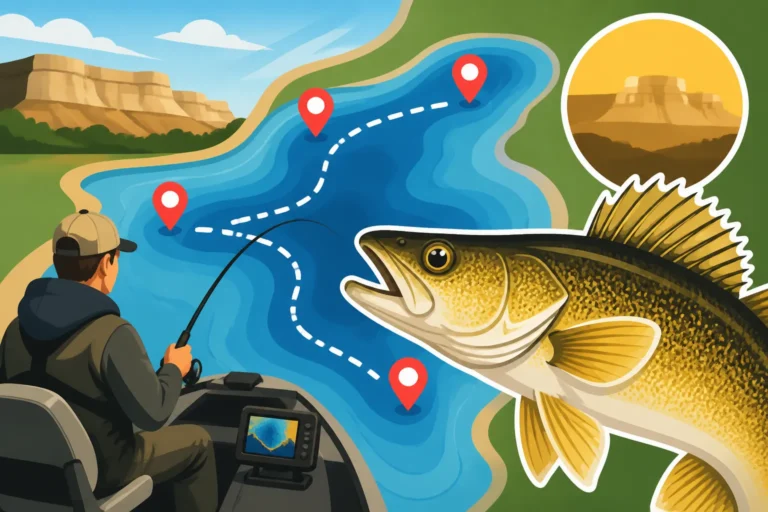
Modern fish finders are indispensable tools for summer crappie fishing. Side-imaging, down-imaging, and 2D sonar can help you locate submerged structures, identify schools of baitfish, and most importantly, mark individual crappie or crappie schools. Don't just look for fish on the bottom; scan the entire water column. Crappie often appear as distinct arcs, especially when suspending.
Once you mark fish, use your GPS to drop a waypoint. This allows you to return to that precise spot repeatedly. Pay close attention to the depth at which the fish are holding, and adjust your bait presentation accordingly. Without good electronics, trying to find summer crappie in South Dakota's vast lakes can feel like searching for a needle in a haystack. Investing in a good unit and learning to interpret its readings is one of the best things you can do for your summer crappie success. You can often find great deals on various models and accessories, like transducer mounts or mapping cards, on Amazon.
Adjusting to Water Clarity and Time of Day
Summer water clarity can vary dramatically across South Dakota, from crystal clear Black Hills lakes to the often-stained waters of the glacial lakes. This impacts your lure selection. In clear water, natural colors like greens, browns, and whites tend to work best, and you might need to use lighter lines and more subtle presentations. In stained or turbid water, brighter colors like chartreuse, orange, or hot pink can be more visible and provoke strikes.
The time of day also plays a role. Early mornings and late evenings, when the sun is lower and temperatures are slightly cooler, might find crappie moving shallower to feed briefly. However, during the intense midday heat, they will almost always retreat to their deepest, darkest hideouts. Night fishing can also be incredibly productive for summer crappie, as they often move to shallower depths or suspend higher in the water column under the cover of darkness. For those willing to brave the dark, techniques like night fishing can be adapted for crappie as well.
Adapting to Specific South Dakota Waters
South Dakota offers a diverse range of fishing environments, and while the general principles of summer crappie fishing remain consistent, adapting your approach to the specific body of water you're fishing will yield better results.
Missouri River Reservoirs (Oahe, Sharpe, Francis Case, Lewis and Clark)
These massive bodies of water present unique challenges and opportunities for summer crappie. The crappie here are often found in very deep water, sometimes 25-40 feet, and they can be highly migratory, moving with schools of shad. Focus on the main river channel edges, deep creek channel intersections, and significant underwater points or humps. Areas with standing timber that extend into deeper water, especially in the upper ends of the reservoirs, are prime.
Trolling with multiple lines, using lead core or snap weights to get baits down to specific depths, is a common and effective strategy here. Vertical jigging over known brush piles or submerged timber is also productive. Because of the sheer size of these lakes, you'll want to hone your Lake Oahe knowledge, or consult a Missouri River Fishing Guide for specific insights, and rely heavily on your fish finder to pinpoint schools of suspended crappie. Consider that the Chinook salmon regulations on Lake Oahe might overlap with crappie spots, so always be aware of what you're targeting.
Glacial Lakes and Eastern South Dakota Ponds
The glacial lakes of eastern South Dakota, like Lake Poinsett, Lake Kampeska, or Bitter Lake, present a different summer crappie scenario. While they might not be as deep as the Missouri River reservoirs, crappie still seek cooler water and cover. Look for crappie to relate to the deepest weed lines, especially where hard bottom transitions occur, or around deep rock piles and isolated humps. Many of these lakes have numerous submerged brush piles placed by anglers, which are fantastic summer crappie magnets.
In these waters, casting small jigs (1/32 to 1/16 ounce) under a slip bobber set to a precise depth can be very effective, especially around cover. Trolling might still work, but often slower speeds and smaller boats are the norm. Pay attention to how wind impacts these lakes; crappie will often move to the wind-blown side of a structure where baitfish are concentrated. The Glacial Lakes Fishing Guide is a great resource for understanding these unique fisheries.
Black Hills Area Lakes and Impoundments
The cooler, clearer waters of the Black Hills lakes, such as Pactola Reservoir or Sheridan Lake, can also hold good numbers of crappie, though they are often overshadowed by the trout fishing. Here, crappie will still move deep in summer, often relating to steep, rocky drop-offs, dam faces, and any submerged timber present. The clarity of these waters means presentation must be subtle, and light lines are often preferred.
Vertical jigging with tiny jigs or minnows is often the go-to technique, especially around known structures. Sometimes, crappie will suspend over very deep water near the thermocline. Pay attention to contour changes and isolated deep cover. While the Black Hills are renowned for Black Hills trout, don't discount the crappie that thrive in these same waters, particularly in the larger impoundments.
Final Thoughts on Summer Crappie Success
Successfully targeting crappie in summer requires a significant mental shift from the shallow-water excitement of spring. It's about being patient, methodical, and willing to adapt your techniques and locations based on what your electronics are telling you. Don't be afraid to experiment with different depths, lure colors, and retrieve speeds until you crack the code for that particular day and body of water.
Remember that crappie are schooling fish, so once you find one, you've likely found several. Mark that spot, work it thoroughly, and don't hesitate to circle back if the bite slows. With a bit of persistence, the right gear (and maybe some good deals from Amazon on those deep-diving baits), and an understanding of their summer habits, you can absolutely enjoy fantastic crappie fishing throughout the hottest months in South Dakota. Get out there, explore those deeper haunts, and enjoy the thrill of finding those elusive summer slabs!
Disclaimer
This article is for general informational purposes only and does not constitute professional advice. Laws, prices and regulations vary by location and change over time. Consult a qualified professional for guidance on your specific situation.