Jigging Techniques for Missouri River Walleye
There's nothing quite like the rush of feeling that tell-tale thump as a walleye hits your jig on the mighty Missouri River. But let's be honest, those currents can be intimidating, making it tough to feel that bite, let alone keep your presentation dialed in. This comprehensive guide is here to demystify jigging for walleye on South Dakota's stretch of the Missouri, giving you the confidence to tackle those tricky waters and bring home a cooler full of fish.
Understanding the Missouri River's Unique Challenges for Walleye Jigging
Fishing the Missouri River isn't like casting into a placid lake; it's a dynamic, ever-changing environment that demands a specific approach, especially when it comes to jigging for walleye. You're not just fighting the fish; you're also wrestling with nature's relentless push.
The Relentless Current and Its Impact
The Missouri River, particularly below the dams, is a constant flow of water, and this current is both your biggest challenge and your greatest asset. Walleye are ambush predators, and they'll often position themselves in seams and breaks where the current is disrupted, waiting for an easy meal to drift by. Your jig needs to mimic that natural drift, but the current makes maintaining control incredibly difficult. Too light a jig, and it's swept away; too heavy, and it's a dead weight, ignoring the nuances of the river bottom. The river's flow dictates everything from your jig weight to your boat positioning, often requiring quick adjustments.
Understanding the current also means understanding how it affects your line. The faster the current, the more "bow" you'll get in your line, making it harder to feel subtle bites. This is a common frustration for many anglers, as that faint tick that signifies a walleye can be lost in the pull of the water. Moreover, the current constantly reshapes the riverbed, creating new channels, scour holes, and sand dunes, meaning yesterday's hotspot might be today's barren flat. Adapting to these changes is key, and it all starts with respecting and understanding the river's flow.
Varied Structure and Depth
Beyond the current, the Missouri River offers an incredible diversity of structure and depth, all of which come into play when jigging for walleye. From the vast, open expanses of the main channel to intricate submerged islands, rock piles, and old creek beds, there's always something for a walleye to relate to. The river also boasts dramatic depth changes, with sudden drops from shallow flats into deep scour holes that can hold schools of fish. This can be especially true in areas like the Missouri River Tailwater Fishing Below Oahe Dam.
Jigging requires you to intimately "feel" the bottom, discerning between sand, gravel, rock, and even submerged wood. Each of these structures can hold fish, but they also demand different jigging approaches. A light jig might be perfect for delicately bouncing over a sandy flat, but it'll get snagged instantly in a rock pile. Conversely, a heavy jig might plow through soft bottom too quickly, missing fish. The challenge is matching your jig and technique not just to the current, but also to the specific piece of structure you're targeting at that precise depth. You'll often find yourself moving from 10 feet to 30 feet of water in a matter of minutes, requiring quick adjustments to your presentation.
Essential Gear for Successful Missouri River Walleye Jigging
Having the right tools for the job is absolutely critical when you're battling the Missouri River's currents and chasing those elusive walleye. Skimping on your setup here will lead to a lot of frustration and missed fish.
Rods and Reels for Precision and Power
For jigging on the Missouri, you're going to want a rod that offers a delicate balance of sensitivity and backbone. A good medium-light to medium power spinning rod, typically between 6'6" and 7'6" in length, is often ideal. Look for a fast or extra-fast action tip. This snappy tip allows you to feel those incredibly subtle bites that walleye are known for, even in current, and provides the necessary responsiveness for sharp jig movements. The stiffer mid-section and backbone are crucial for driving the hook home and fighting a strong walleye in the river's flow without feeling undergunned. Many anglers find specific "jigging" or "walleye" series rods from brands like St. Croix or Fenwick offer the perfect blend.
Pair that rod with a high-quality spinning reel in a 2500 or 3000 size. The key here is a smooth drag system and a solid retrieve. When a big walleye decides to run, you need a drag that pays out evenly without jerking or sticking, protecting your line and preventing break-offs. A good retrieve speed is also helpful for quickly taking up slack line, which is vital for maintaining contact with your jig and detecting bites. You can find excellent options on Amazon from reputable brands like Shimano or Daiwa that will stand up to the rigors of river fishing.
Line Selection and Leader Setup
Your fishing line is the direct connection between you and the fish, and on the Missouri River, it can make or break your day. Braided line is almost universally preferred for jigging because of its zero-stretch properties. This means maximum sensitivity, allowing you to feel every bump, scrape, and, most importantly, every bite, even in deep water or strong current. A 8-10 pound test braided main line is a good starting point. The thinner diameter of braid also cuts through the water more efficiently than monofilament, reducing line bow and helping your jig get down faster.
However, walleye can be line-shy, especially in clearer water. This is where a fluorocarbon leader comes into play. Fluorocarbon is nearly invisible underwater, extremely abrasion-resistant (great for fishing around rocks and timber), and provides a bit of stretch for shock absorption. Attach a 6-8 pound test fluorocarbon leader, typically 3-5 feet long, to your braided mainline using a reliable knot like a double uni knot or an FG knot. This leader provides the stealth and abrasion resistance you need while retaining the sensitivity of the braid. Regularly check your leader for nicks and abrasions, especially after fishing around rough structure, and re-tie as needed.
Jig Weights, Styles, and Colors
The variety of jigs available can be overwhelming, but for the Missouri River, focus on a few key types and a range of weights. The rule of thumb for jig weight is to use the lightest jig you can get away with while still maintaining bottom contact in the current. This typically means carrying jigs from 1/8 ounce all the way up to 1 ounce or even heavier in extreme current conditions.
Types of Jigs:
- Round Head Jigs: Versatile and good for most situations.
- Stand-Up Jigs: Designed to keep the hook upright when resting on the bottom, great for soft plastics or live bait presentations.
- Football Jigs: Excellent for fishing rocky bottoms, as their shape helps them "walk" over snags.
- Erie Jigs/Banana Jigs: Often used in strong current, their elongated shape helps them cut through the water and maintain a more vertical presentation.
Colors: While natural colors like browns, greens, and blacks are always reliable, don't shy away from brighter colors like chartreuse, orange, or pink, especially in stained or dirty water. Often, a combination of a natural head with a bright tail (e.g., a black jig head with a chartreuse soft plastic) can be deadly. Having a good variety is crucial because walleye preferences can change daily, or even hourly. Many excellent jig brands can be purchased conveniently on Amazon, offering a wide array of weights and colors to stock your tackle box for a trip to the Missouri.
Master the Art of Jigging Techniques for Missouri River Walleye
Jigging on the Missouri isn't just about dropping a lure in the water; it's a nuanced dance with the current and the fish. Mastering a few key techniques will significantly boost your success.
Vertical Jigging in Current
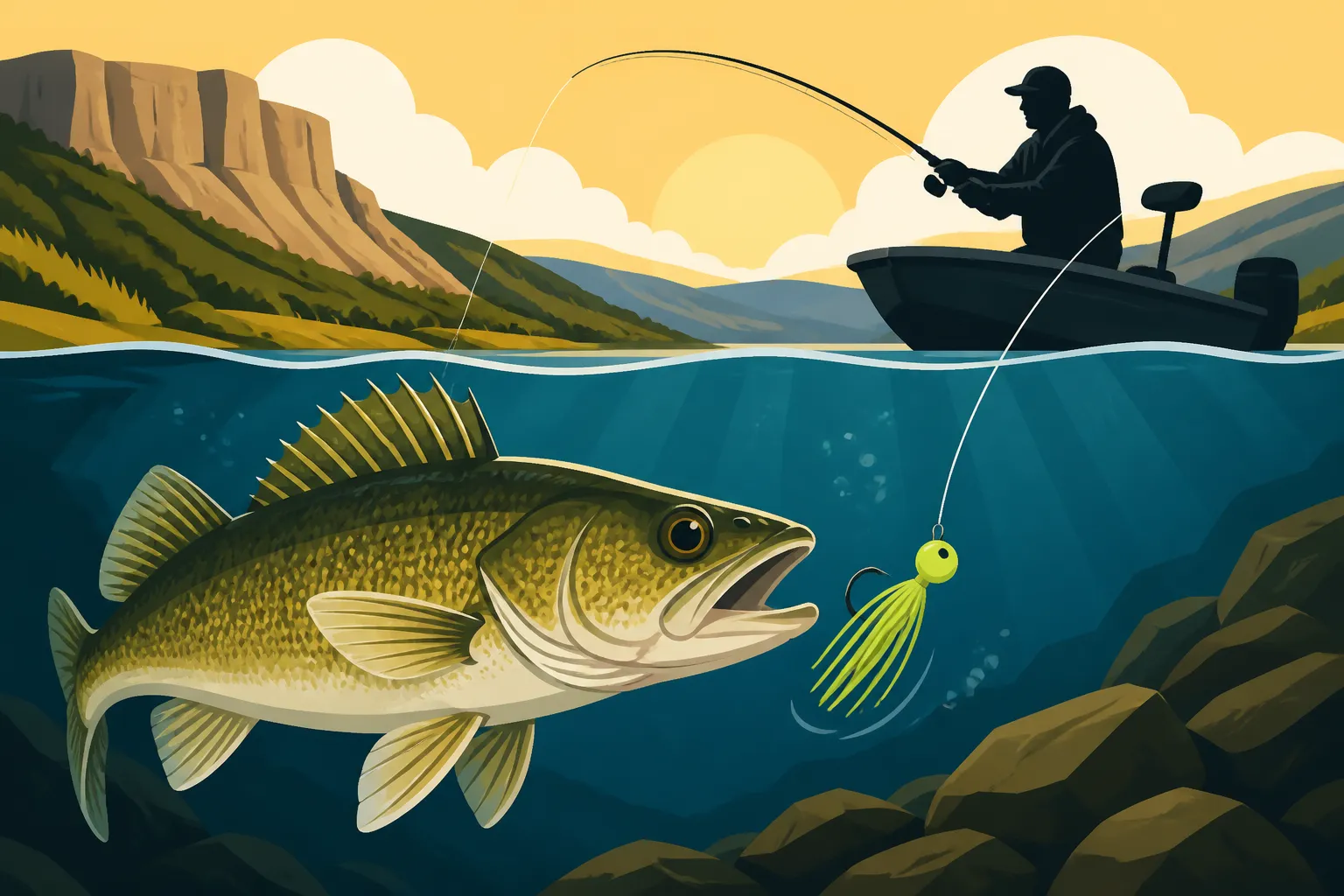
Vertical jigging is perhaps the most fundamental and effective technique for walleye on the Missouri River, especially when targeting specific pieces of structure or tight schools of fish. The goal is to keep your jig directly below your boat, minimizing line angle and maximizing feel. This allows for precise presentations and quick hooksets. To achieve this, boat control is absolutely paramount. You'll often use your trolling motor to slowly slip downstream, matching the current speed just enough to keep your line as vertical as possible. A good mapping system and GPS on your fish finder are invaluable here for identifying contours and holding your position.
Once you're positioned, let your jig fall to the bottom. The "jigging" action itself involves lifting your rod tip anywhere from 6 inches to 2 feet, then letting the jig fall back down on a semi-slack line. The fall is when most bites occur, as the walleye perceives the jig as a wounded baitfish. Pay close attention to your line as it falls; any hesitation, twitch, or sudden stop often indicates a bite. Some days a sharp, aggressive snap works best, while other days a subtle lift and gentle fall is the ticket. Experiment with different lift heights and fall speeds until you find what the fish are responding to. Remember to regularly hit the bottom to ensure you're in the strike zone. You can find more detail on how to Jig for Walleye in Current in our dedicated guide.
Pitching Jigs to Structure
While vertical jigging is great for directly underneath the boat, pitching jigs allows you to cover more water and target specific bankside cover, current seams, or isolated structure that your boat might spook if you drift directly over it. This technique involves casting your jig up-current or cross-current, letting it sink, and then allowing the current to sweep it downstream while you maintain contact.
After casting, let the jig hit bottom, then lift and drop your rod tip as the jig drifts. The key is to keep enough tension to feel the jig's action and any bites, but not so much that you're pulling it unnaturally against the current. It's a fine line between maintaining contact and letting the jig tumble naturally. As the jig swings downstream, it will often enter areas of slack water or current breaks where walleye are holding. Many anglers will "sweep" the rod sideways to keep the jig moving with the current, then drop the tip to let it fall. This technique is particularly effective when fishing riprap banks, points, or the edges of submerged weed beds.
Dragging Jigs and Plastics
Dragging jigs, often paired with soft plastics or live bait, is a subtly effective technique, especially when walleye are lethargic or spread out. Instead of actively lifting and dropping, this method involves slowly pulling your jig along the bottom, allowing your boat's movement or the current to do most of the work. You can do this by slowly drifting with the current, or by using your trolling motor to move at a snail's pace, just faster than the current.
The key to dragging is to use a jig heavy enough to maintain constant bottom contact, but light enough to not get bogged down. A stand-up jig or a football jig is often ideal for this, as they tend to snag less and keep the bait visible. As you drag, allow the jig to bounce and scrape along the bottom. Walleye will often pick up the jig without a dramatic strike, so you'll need to pay close attention to any changes in pressure or subtle "mushy" feeling on your line. When you feel something, sweep your rod forward to set the hook. This technique is excellent for covering large flats or following subtle depth contours, and it's a fantastic way to locate scattered fish. For more tips on overall river fishing, check out our South Dakota Missouri River Fishing Guide.
Reading the Water: Locating Walleye on the Missouri River
Finding walleye on a vast system like the Missouri River can feel like looking for a needle in a haystack. But by understanding where walleye prefer to hold and how to interpret the water, you can narrow down your search considerably.
Current Seams and Breaks
Walleye are masters of energy conservation. They won't fight a strong current if they don't have to. Instead, they'll position themselves in current seams and breaks where the water flow is disrupted, allowing them to rest while still having easy access to food washing by. Think of these as "drive-thru" lanes for predatory fish. A current seam is where two different speeds of current meet, creating a visible line on the water's surface. These can form behind islands, points, or even large submerged structures. Walleye will often sit in the slower water, darting out into the faster current to grab baitfish.
Breaks in current can also be created by anything that obstructs the flow. This includes bridge pilings, large boulders, submerged wing dams, or even subtle changes in the river bottom contour. Pay close attention to your electronics; areas where the bottom rises or falls abruptly can create these crucial current breaks. Fishing the upstream side of these obstructions, or just below them in the eddy, is often incredibly productive. Your job is to present your jig naturally in the slower water, making it an irresistible, easy meal for a waiting walleye.
Structure and Depth Transitions
As mentioned earlier, the Missouri River is teeming with varied structure, and walleye love to relate to it. Rock piles, gravel bars, submerged timber, and old creek channels all provide excellent ambush points. A prime location might be a rock pile at the edge of a deep channel, where walleye can quickly move between resting in the depths and feeding on the shallower structure. Similarly, look for transitions in bottom composition – where a sandy flat meets a gravel bar, or where clay banks give way to riprap. These transition zones often hold a higher concentration of forage, which in turn attracts walleye.
Depth transitions are equally important. Walleye frequently use breaks, ledges, and drop-offs. A classic scenario is a sharp break from a 15-foot flat down to a 30-foot channel. Walleye will patrol these edges, moving up and down the break depending on baitfish movement, light conditions, and current. Utilizing your fish finder to identify these contours and then "contour trolling" or drifting parallel to them can be a highly effective way to intercept active fish. Understanding how to Read a Fish Finder for Walleye is an essential skill for this type of fishing. Don't forget that deeper pools can also hold fish, especially during periods of bright sun or colder water, as discussed in our South Dakota Fishing Depth Charts by Season.
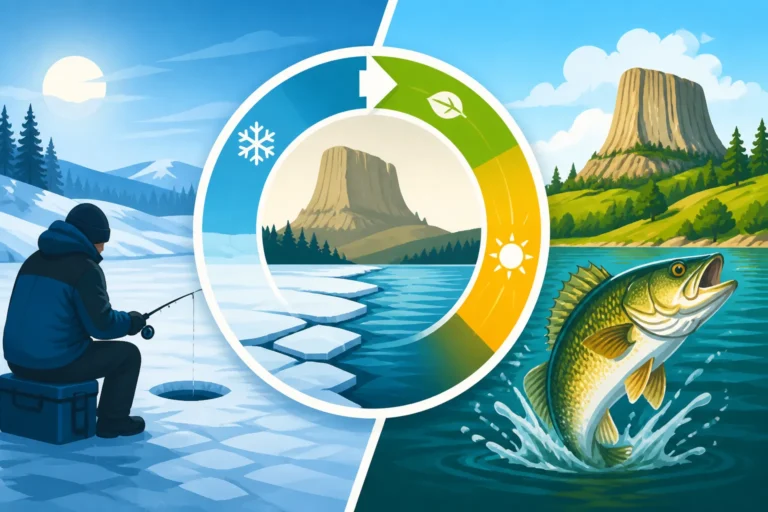
Seasonal Adjustments for Missouri River Walleye Jigging
The Missouri River's walleye fishing opportunities shift dramatically with the seasons. What works in spring won't necessarily be effective in the dead of winter. Adapting your jigging tactics to the time of year is crucial for consistent success.
Spring Aggression and Post-Spawn Patterns
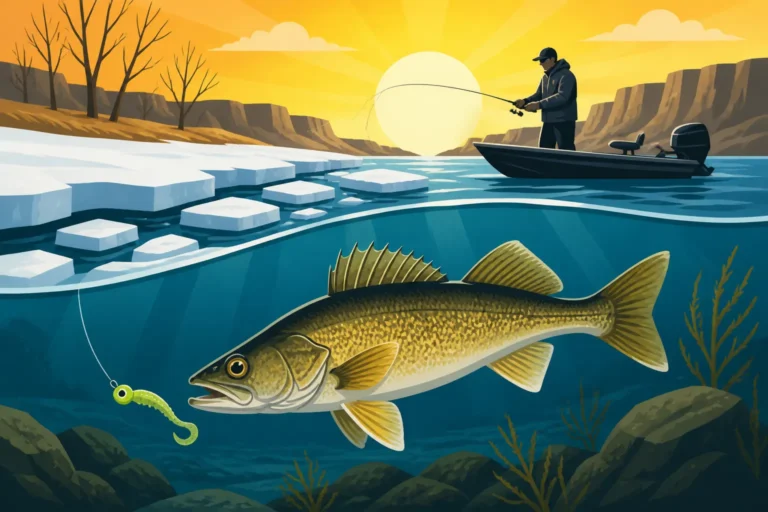
Spring on the Missouri River is a time of incredible opportunity, often coinciding with the walleye spawn. As the ice clears and water temperatures rise into the 40s and low 50s, walleye become very active. Pre-spawn walleye will be migrating upstream to traditional spawning areas, often concentrating in river channels, riprap banks, and rocky points with current. During this period, they are often aggressive, making them excellent targets for jigging.
After the spawn, which typically occurs in April or May, walleye can be a bit lethargic as they recover, but they quickly become hungry again. Post-spawn walleye will often move to shallower flats adjacent to deeper water, seeking out warmer temperatures and abundant baitfish. Your jigging approach might need to be a bit more subtle now, with slower lifts and drops, and perhaps a focus on live bait such as minnows or nightcrawlers tipped on your jig. Target areas where current isn't too strong, such as back eddies or shallower bays where baitfish are congregating. For a broader overview of seasonal changes, consult our South Dakota Fishing Seasons Explained.
Summer Deeper and Faster
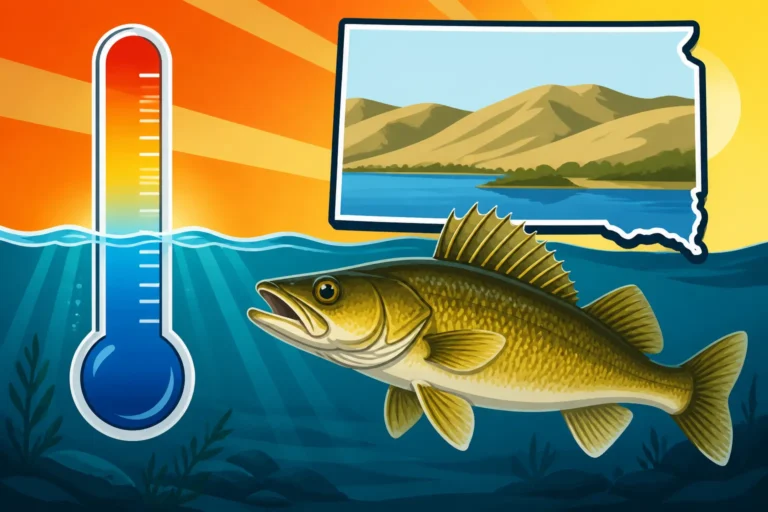
As summer heats up and water temperatures climb into the 60s and 70s, walleye on the Missouri River often move to deeper, cooler water. They'll relate strongly to main channel breaks, deep scour holes, and areas where there's still some current but with access to cooler depths. This is often when jigging with heavier jigs becomes necessary to reach the fish quickly and maintain bottom contact in deeper water.
During summer, walleye can be very active, but they might be holding tight to structure or in specific depth ranges. This is a great time for vertical jigging directly over identified schools of fish, or for dragging jigs slowly along deep contours. Don't be afraid to experiment with faster, more aggressive jigging motions if the fish are active. Additionally, low light conditions – early mornings, late evenings, or even night fishing – can be particularly productive as walleye move shallower to feed. This is also when you might find a larger class of fish willing to hit your jig.
Fall Feed and Winter Depths
Fall is a prime time for trophy walleye on the Missouri River as fish gorge themselves in preparation for winter. Water temperatures begin to drop, and walleye become increasingly active, often moving back shallower during low-light conditions to feed on baitfish that are also moving. Focus on areas with good current, deep points, and major channel swings. Jigging can be incredibly effective now, with fish often hitting jigs aggressively. Don't be afraid to use larger profile soft plastics or bigger minnows on your jigs to appeal to these hungry fish.
Once winter sets in and the river begins to freeze or becomes very cold, walleye activity slows down considerably. They will typically move to the deepest, most stable parts of the river, often congregating in large schools in deep holes, below dams, or in major channel bends. Your jigging approach will need to be much slower and more subtle. Tiny lifts and long pauses are often the ticket. Downsizing your jigs and using live bait can be highly effective during this cold-water period. If you're ice fishing, small spoon jigs or vertical jigs tipped with a minnow head can be deadly. You might also want to explore our South Dakota Ice Fishing Guide for more specific tactics during the colder months.
Common Mistakes and How to Avoid Them When Jigging the Missouri
Even experienced anglers can make mistakes on the Missouri River, especially when the conditions are challenging. Being aware of these common pitfalls can help you avoid frustration and improve your catch rate.
Poor Boat Control and Jig Presentation
Perhaps the most common and detrimental mistake when jigging the Missouri River is inadequate boat control. The current is constantly pushing you, and if you're not actively managing your boat's position and speed, your jig will quickly get swept downstream, creating a large line angle. A large line angle means your jig isn't truly vertical, making it difficult to maintain bottom contact, feel bites, and present the jig effectively. It also makes your jig rise higher in the water column than you intend. Many anglers end up just dragging a jig across the bottom, missing the subtle action that triggers bites.
To avoid this, invest in a quality trolling motor with GPS Spot-Lock capabilities. This technology is a game-changer for river anglers, allowing you to hold your boat precisely over a productive spot, even in strong current. If you don't have Spot-Lock, you'll need to manually "feather" your trolling motor, constantly adjusting speed and direction to match the current and keep your line as vertical as possible. Practice makes perfect here. Keep your eyes on your line and your electronics to ensure your jig stays in the strike zone. Remember, it's about making your jig look natural, not like it's fighting a treadmill.
Incorrect Jig Weight and Line Management
Another frequent error is using the wrong jig weight for the current and depth. Using a jig that's too light will result in it being swept away from the bottom and out of the strike zone, leading to zero bites. Conversely, using a jig that's too heavy will make it feel like a dead weight, providing no action, and potentially snagging constantly. The "feel" for the correct jig weight comes with experience, but as a starting point, always err on the side of slightly heavier to maintain contact, then try to go lighter if you're still feeling the bottom effectively.
Poor line management also contributes to lost fish. After your jig hits the bottom, you need to quickly reel in any slack line to maintain contact. Too much slack not only makes it impossible to feel a bite, but it also delays your hookset, giving the walleye time to spit the bait. Similarly, after lifting your jig, pay attention to the fall. If your line is completely slack, you won't feel the subtle "thump" or "tick" of a walleye inhaling your bait. Good line management means a constant, almost subconscious effort to keep just enough tension to feel the jig, but not so much that you impede its natural fall.
Missed Bites and Improper Hooksets
Walleye bites can be incredibly subtle, especially in cold water or strong current. Many anglers mistake a walleye bite for merely hitting bottom or snagging on debris. It might be a slight "tick," a spongy feeling, or even just a sudden added weight on your line. The mistake is often waiting for a dramatic pull or assuming it's a snag, rather than reacting instantly. If anything feels different, set the hook!
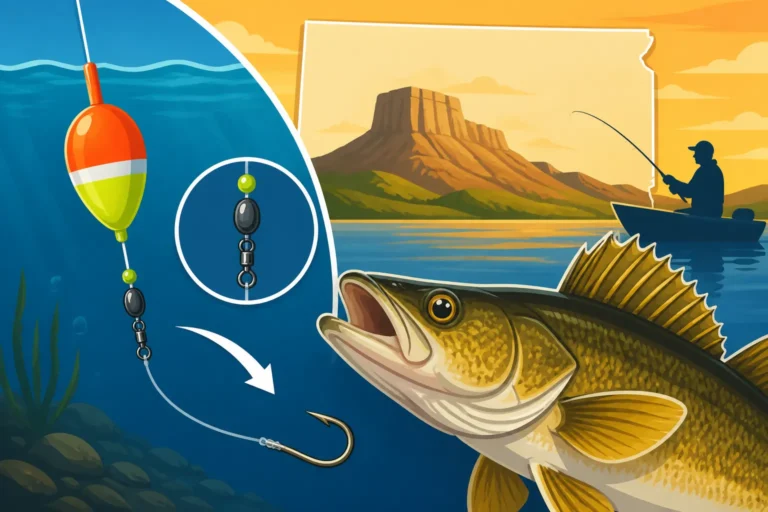
Speaking of hooksets, many beginners (and even some seasoned anglers) will try to set the hook with a gentle wrist flick or by simply reeling faster. This is often insufficient to drive the hook home, particularly with a jig, which can be easily pulled out of the fish's mouth. When you feel a bite, execute a firm, sweeping hookset by raising your rod tip sharply and strongly, pulling the rod straight up or to the side. Don't be afraid to put some power into it. This ensures the hook penetrates the tough mouth of a walleye. Once the hook is set, maintain steady pressure and let your rod and reel's drag do the work. Remember, the goal is to drive that hook in deep and keep it there. You might find some of the tips in our "How to Rig a Slip Bobber for Walleye" article helpful for understanding different presentations, even though jigging is a different technique.
| Jig Type | Ideal Conditions | Retrieve Style | Pros | Cons |
|---|---|---|---|---|
| Round Head Jig | All-around, moderate current, varied bottom | Vertical jigging, pitching, dragging | Versatile, common, good bait holder | Can snag on rocky bottom |
| Stand-Up Jig | Light current, soft bottom, still water | Dragging, subtle lifts | Keeps hook upright, good for plastics | Less effective in heavy current |
| Football Jig | Rocky bottom, moderate current | Dragging, slow bouncing | Snag-resistant, good "feel" for bottom | Can be too heavy for delicate presentation |
| Erie/Banana Jig | Strong current, deep water | Vertical jigging, quick drops | Cuts current well, maintains verticality | Less versatile for shallow, soft bottom |
Disclaimer
Fishing conditions and regulations in South Dakota can change. Always consult the latest South Dakota Game, Fish and Parks (GFP) regulations before heading out. This guide is for informational purposes only and does not constitute legal advice.