South Dakota Summer Walleye Fishing Techniques
Oh, summer walleye fishing in South Dakota. It sounds idyllic, doesn't it? Picture yourself out on the vast waters of the Missouri River reservoirs or one of our shimmering glacial lakes, the sun warming your face, anticipating that tell-tale tap on your line. But let's be real – summer can be one of the toughest times to consistently put walleye in the boat. The fish get finicky, they scatter, and finding them often feels like searching for a needle in a haystack. If you've ever felt that frustration of blanking on a gorgeous summer day, this guide is for you. We're going to dive deep into the specific techniques and strategies that actually work when the mercury climbs, helping you understand where walleye go and how to coax them into biting when the conditions are challenging.
Understanding Summer Walleye Behavior in South Dakota
As the long days of summer arrive and water temperatures steadily climb, walleye in South Dakota undergo a significant behavioral shift. They're no longer in their shallow, aggressive spring patterns, and their metabolism has accelerated, making them highly active but also more discerning. If you try to fish them like it's still May, you're going to have a bad time.
The Deep Dive: Why Walleye Go Deep
One of the most crucial changes in summer is the walleye's tendency to move to deeper, cooler water. This isn't just about comfort; it's a matter of survival. As the surface waters heat up, the oxygen levels decrease, and warm water stresses cold-blooded fish like walleye. They seek out the thermocline – that invisible boundary layer where warm surface water meets cooler, deeper water. This is often where they find their optimal temperature range (usually in the low to mid-60s Fahrenheit) and higher oxygen concentrations.
Furthermore, many of their primary forage species, like alewives, cisco, or even smaller perch and shad, also retreat to these cooler depths, drawing the walleye with them. You'll often find them congregating along deep breaks, submerged points, humps, and structural elements that offer both cooler water and proximity to food sources. This deep-water migration is especially pronounced on large impoundments like Lake Oahe and Lake Sharpe, where vast expanses of deep water are readily available.
The Summer Diet: What Walleye Are Eating
While their location changes, their predatory nature doesn't. Walleye in summer are still actively feeding, but their diet might become more specific. They are highly efficient sight feeders, and in the clear waters often found in deeper sections of our lakes, they're keying in on specific baitfish. On the Missouri River reservoirs, this often means rainbow smelt and gizzard shad. In our glacial lakes, they might be targeting yellow perch, cisco, or even larger minnows.
Understanding their current menu is critical. If you can "match the hatch" with your lures, you'll significantly increase your success. This could mean choosing crankbaits that mimic the size and coloration of smelt or selecting jigs and plastics that imitate the subtle movements of a perch. Keep an eye on your fish finder for bait balls; walleye are never far from their next meal.
Night Moves: Walleye Activity After Dark
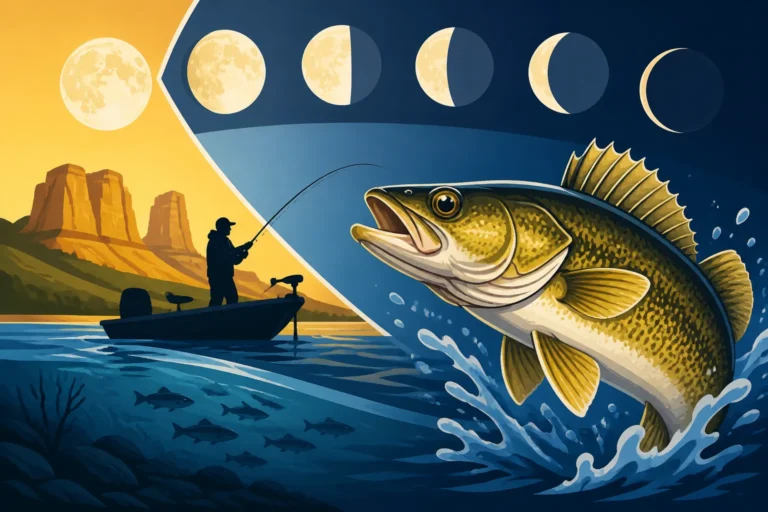
Don't underestimate the power of night fishing during the summer months. As the sun sets and the water cools even slightly, walleye often become far more active, moving shallower to feed under the cover of darkness. This can be especially true in lakes with heavy boat traffic during the day or those where the walleye are simply more nocturnal by nature.
During the day, intense sunlight can push walleye deep, but at night, they feel much more comfortable roaming shallow flats, weed edges, and even shoreline breaks to ambush baitfish. This change in behavior can offer a fantastic opportunity for anglers who are willing to embrace the darkness, using different techniques than those employed during the brightest hours.
Key Summer Walleye Fishing Locations
South Dakota offers an incredible variety of waters, and while walleye habits shift in summer, their core preferences for structure and forage remain. However, where you look for that structure changes significantly.
Main Lake Basins and Structural Elements
Our big reservoirs, like Lake Oahe, Lake Sharpe, Lake Francis Case, and Lewis and Clark Lake, are prime territory for summer walleye. But instead of focusing on the shallow bays and points of spring, you'll want to target deeper main lake structures. Think about fishing submerged humps that top out at 20-30 feet, or long, tapering points that extend far into the basin. Ledges where the lake bottom drops sharply from 15 to 40 feet are also gold mines.
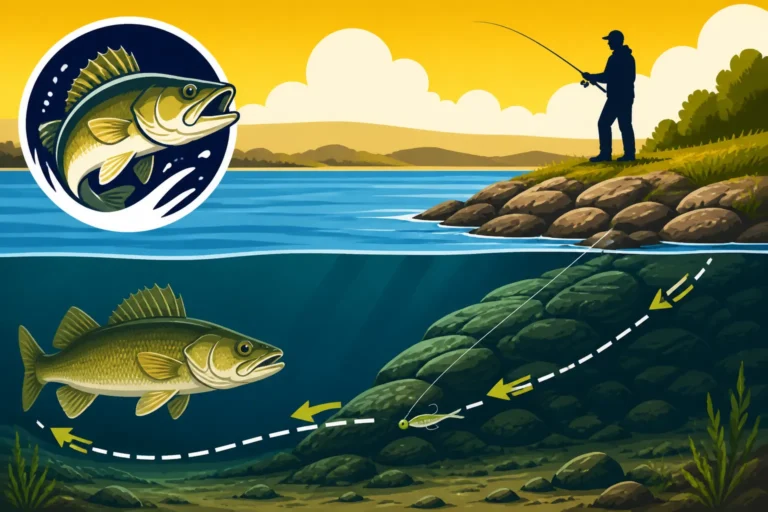
Walleye will often position themselves on the "down-current" side of these structures, waiting for baitfish to be swept past them. A good contour map is your best friend here, helping you identify these subtle but crucial depth changes. Consider the bends in old river channels or old roadbeds that are now submerged; these provide highways and ambush points for walleye. Often, you'll find schools of baitfish suspended over these deeper basins, and the walleye will be nearby, either below them or suspended within the schools themselves.
Missouri River System Dynamics
The mighty Missouri River system, which includes the four main reservoirs, presents unique challenges and opportunities. The constant current generated by the dams means walleye will often relate heavily to current breaks. Below Oahe Dam or Big Bend Dam, the tailwaters can hold massive schools of walleye throughout the summer, though specific regulations for these areas, like those covered in Missouri River Tailwater Fishing Techniques, are essential to know.
Further down the lakes, beyond the immediate influence of the dams, current is still a factor. Look for walleye behind islands, on the current-protected side of main lake points, or in calmer eddies. The deeper bends of the old river channel within the reservoirs themselves are also critical holding areas. Walleye will use the current to their advantage, conserving energy while waiting for prey. This means you need to adjust your boat positioning and lure presentation to account for the flow.
Glacial Lakes: Weeds and Open Water
Moving east, South Dakota's glacial lakes offer a different summer walleye experience. Lakes like Lake Kampeska, Lake Poinsett, and Bitter Lake are often shallower, with extensive weed beds. Here, walleye might not go as deep as their Missouri River counterparts. Instead, they'll often relate to the deepest available water, which could still be just 15-20 feet, or they'll patrol the outside edges of lush weed lines.
Healthy green weeds produce oxygen and provide cover for both walleye and their prey. Focus on the sharp breaks where weed edges meet open water or areas where weeds thin out into pockets. Walleye will use these edges to ambush baitfish that venture too close. In some of the larger, deeper glacial lakes, you might even find walleye suspended over open water, chasing schools of baitfish in classic "basin fishing" style. This often requires trolling open water and relying heavily on your electronics to locate suspended fish and bait.
Top Summer Walleye Fishing Techniques
Alright, we know where they are. Now, how do we catch them? Summer walleye fishing demands a variety of techniques, and often, combining methods is the most effective approach.
Trolling with Crankbaits and Crawler Harnesses
Trolling is arguably the most consistent summer walleye technique, especially on our larger reservoirs. It allows you to cover vast amounts of water, methodically searching for active fish.
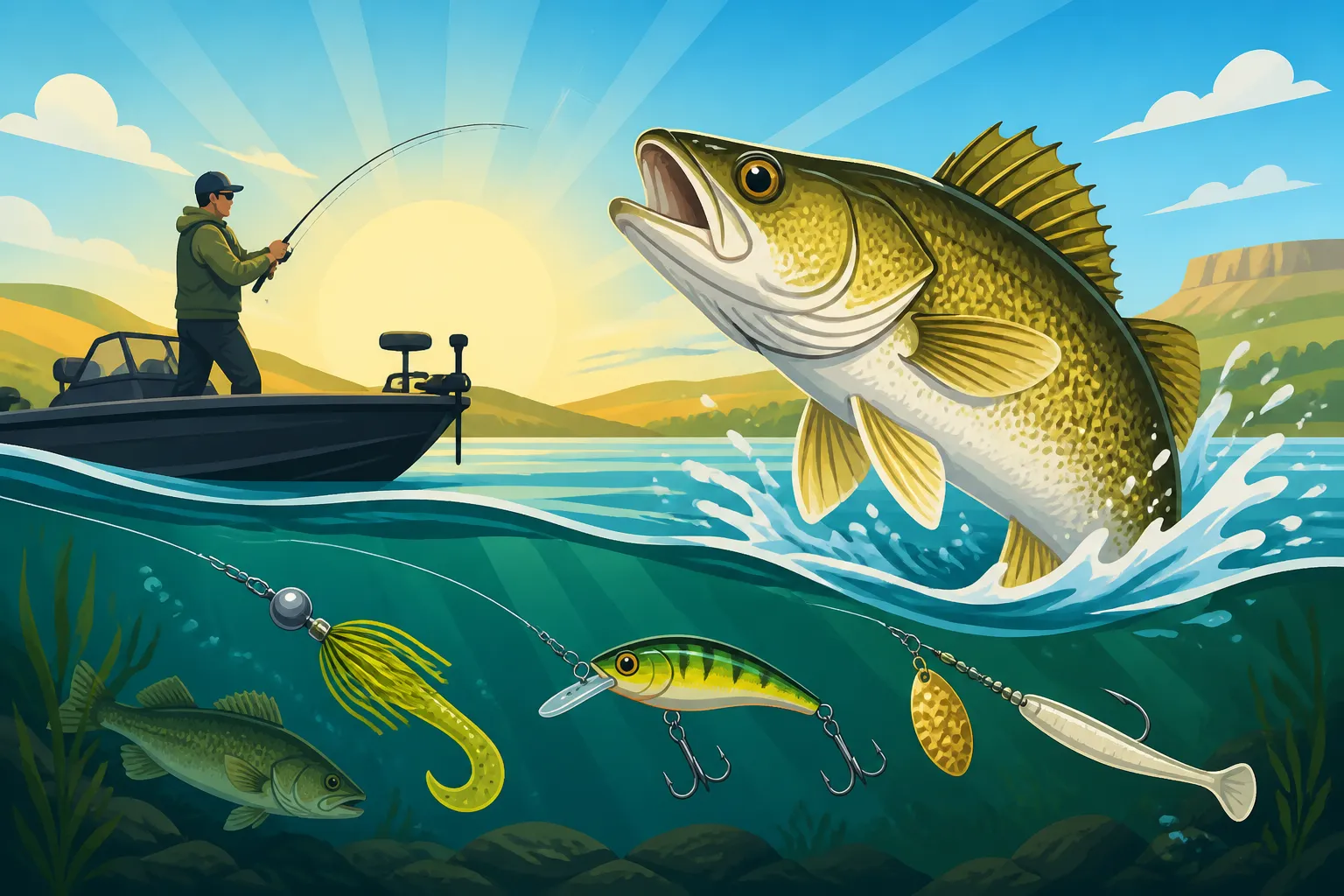
Crankbaits: When trolling crankbaits, speed and depth are paramount. Walleye are often chasing fast-moving prey in summer, so a slightly quicker troll (1.5-2.5 mph) can be effective. Popular choices for deeper water include Bandit Walleye Deep, Berkley Flicker Shad, or Rapala Deep Tail Dancers. You'll want a selection of colors, from natural baitfish patterns to brighter firetiger or purple for stained water. I often find a good selection of these on Amazon, making it easy to stock up before a trip. Your goal is to get your crankbait running just above the fish or ticking the tops of submerged structure. Using line counter reels is a game-changer for precise depth control, especially when you find that magic depth where fish are biting. Experiment with lead core line or snap weights to get your lures even deeper if necessary.
Crawler Harnesses: Also known as "bottom bouncers," these are incredibly effective for presenting live bait (usually nightcrawlers) near the bottom. A bottom bouncer rig consists of a lead weight designed to drag along the bottom, followed by a leader with a snelled hook and beads, often with a spinner blade. Troll these slowly (0.8-1.5 mph) just fast enough to get the blade spinning. The weight of your bottom bouncer should be chosen based on depth and current; a good rule of thumb is 1 ounce for every 10 feet of depth, increasing in heavier current. You'll want to feel it occasionally ticking the bottom. Vary your leader length (2-6 feet) and spinner blade sizes and colors. Sometimes a subtle silver blade is best, other times a bright chartreuse or orange is what they want.
Jigging and Drifting: Precision Approaches
While trolling covers water, sometimes you need a more precise approach to target specific structures or tightly schooled fish.
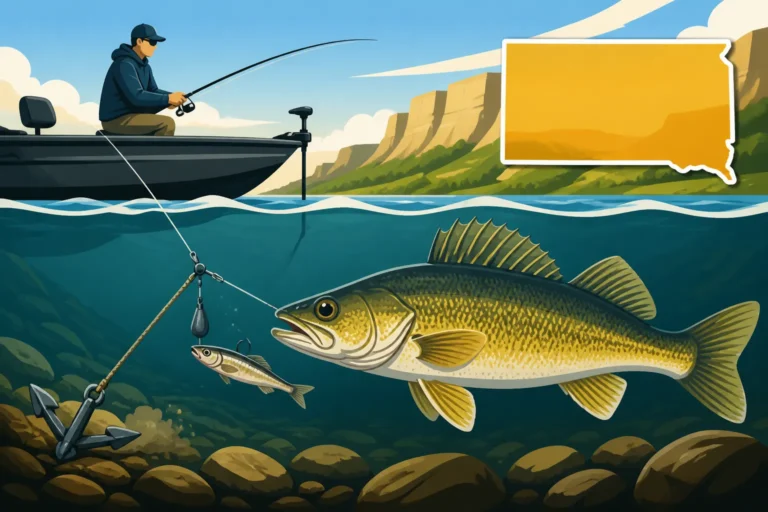
Vertical Jigging: This is a classic method that shines when walleye are stacked on a small hump, a sharp break, or at the base of a dam. Use a lead jig (like a Northland Tackle or Fuzion jig) tipped with a minnow, nightcrawler, or soft plastic (like a Berkley Gulp! Minnow). The key is to keep your jig vertical directly beneath your boat, using your electronics to stay on top of the fish. Lift and drop the jig with a cadence that entices a bite – sometimes aggressive, sometimes subtle. In areas with current, you might need heavier jigs to maintain that vertical presentation. This technique is particularly effective in the cooler waters below the Missouri River dams.
Drifting with Slip Bobbers: For smaller, shallower glacial lakes with distinct weed lines or rock piles, slip bobber fishing can be incredibly productive, especially during low light conditions or when walleye are suspended just above cover. Rig a slip bobber above a plain hook or a small jig, tipped with a live minnow or a leech. Set your depth so the bait is suspended right at the top of the weeds or just above a rock pile. The slip bobber allows for easy casting and depth adjustment. Let the wind or a very slow trolling motor push you along, covering the weed edges or structure. This allows for a very natural presentation and can be deadly for finicky walleye.
Night Fishing Strategies
As mentioned, night fishing opens up a whole new world for summer walleye.
Casting Stickbaits: When walleye move shallow at night, casting shallow-running stickbaits (like Rapala Husky Jerks, Smithwick Rogues, or Cotton Cordell Ripplin' Redfins) to points, shallow flats, and shorelines can be incredibly effective. Focus on areas that had deeper water nearby during the day. Retrieve them with a slow, erratic twitch-pause retrieve, mimicking an injured baitfish. The vibrations and silhouette in low light are often what triggers a strike.
Slow Trolling Shallow Crankbaits: If casting isn't covering enough water, slow trolling shallow-running crankbaits can be the ticket. Use your navigation lights and exercise extreme caution at night. Troll crankbaits that run 5-15 feet deep along main lake points, over submerged humps, or parallel to contours where you expect walleye to move up. Lighted bobbers or glow-in-the-dark lures can sometimes add an extra element of attraction. This is when knowing the exact depth of the structure is critical, as fish will often be hugging the top of it.
Essential Gear and Tackle for Summer Walleye
Having the right tools for the job can make a huge difference, especially when you're battling finicky summer walleye and challenging conditions.
Rods, Reels, and Line Selection
For summer walleye, versatility is key. You'll likely want a few different setups to handle various techniques.
- Trolling Rods: Medium-heavy power, moderate-fast action rods (7-9 feet) are ideal for trolling crankbaits and bottom bouncers. The moderate action helps absorb the shock of strikes and keeps fish pinned. Pair these with baitcasting reels featuring a line counter for precise depth control. For those who prefer spinning gear, look for a heavier spinning rod (7-foot, medium-heavy) with a smooth drag reel.
- Jigging/Casting Rods: A medium-light to medium power, fast action spinning rod (6'6"-7'6") is perfect for vertical jigging, casting jigs, or throwing stickbaits at night. The fast action provides sensitivity for detecting subtle bites and quick hook sets. Match these with a quality spinning reel in the 2500-3000 size range.
- Line: For most trolling, 10-14 lb monofilament or fluorocarbon is a good choice for its stretch and abrasion resistance. When precision and sensitivity are paramount, like with jigging, 8-10 lb braided line with a 6-10 lb fluorocarbon leader is a fantastic combination. The braid offers incredible sensitivity and hook-setting power, while the fluorocarbon leader provides invisibility in clear water. You can find excellent quality braided line and fluorocarbon leaders on Amazon, which often has a great selection and competitive pricing for bulk spools.
Lure and Bait Essentials
Your tackle box needs to be well-stocked with a variety of options to adapt to changing walleye preferences.
- Crankbaits: A wide array of deep-diving crankbaits in natural baitfish patterns (perch, shad, smelt) and brighter attractor colors (firetiger, hot pink, purple) are essential. Don't forget some shallow-running options for night fishing. Specific models like Rapala Shad Raps, Berkley Flicker Shads, Bandit Walleye Deep, and Reef Runner 800 Series are popular choices.
- Jigs: Keep an assortment of jig head weights (1/8 oz to 1 oz) and colors (chartreuse, white, black, brown). Pair these with soft plastic swimbaits, grubs, or scented baits like Berkley Gulp! Minnows.
- Crawler Harnesses: Have plenty of extra snelled hooks, different colored beads, and various spinner blades (Colorado, Indiana, Willowleaf) in sizes #3 to #5. Live nightcrawlers are, of course, a must-have for these rigs.
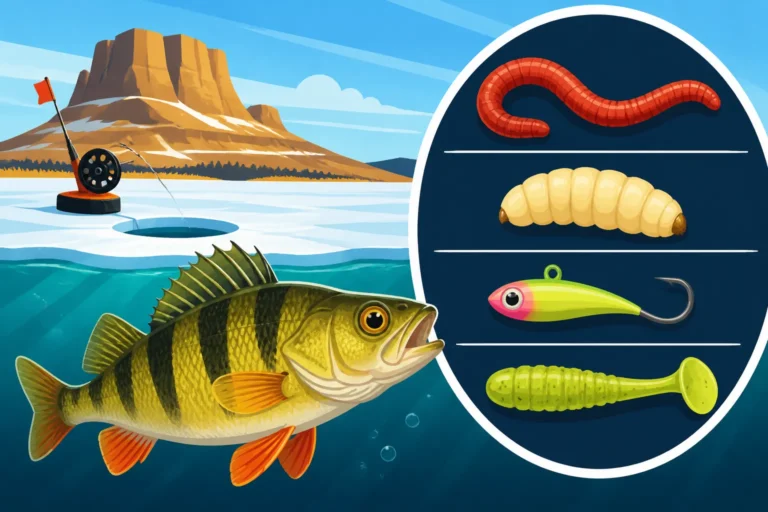
- Live Bait: Beyond crawlers, a good supply of lively minnows (shiners, fatheads, chubs) and leeches can be a lifesaver on tough days, especially for jigging or slip bobber presentations. Make sure to check South Dakota Fishing Regulations Explained for any bait restrictions in specific waters.
Electronics for Finding Fish and Structure
In summer, your electronics go from helpful to absolutely indispensable.
- Fish Finders with GPS and Mapping: A quality unit with clear sonar (2D, Down Imaging, Side Imaging) and detailed mapping is non-negotiable. Modern units from brands like Humminbird, Lowrance, and Garmin allow you to scan wide areas (Side Imaging) to locate structure and schools of baitfish, pinpoint fish arches (2D/Down Imaging), and mark waypoints on detailed contour maps. This is how you find those subtle humps and deep ledges that hold walleye.
- High-Definition Mapping: Look for units that come pre-loaded with high-definition lake maps (like Lakemaster or Navionics). These maps show contour lines down to 1-foot increments, revealing those crucial breaks and irregularities on the bottom that walleye relate to.
- Temperature Gauge: Many fish finders include a water temperature reading, which is vital for locating the thermocline and finding water in the walleye's preferred temperature range.
Reading the Water and Weather for Summer Success
Understanding environmental factors is crucial for predicting walleye behavior and making informed decisions on the water.
Water Temperature and Thermocline Impact
As previously discussed, water temperature dictates walleye depth in summer. Your fish finder's temperature gauge is invaluable here. Once surface temperatures hit the 70s, start looking for that thermocline. On many South Dakota reservoirs, it might set up anywhere from 15 to 30 feet, depending on the lake's depth and recent weather. Walleye will often be suspended right at or just above this thermocline, or they'll be on bottom structure that penetrates into this cooler water.
Pay attention to subtle temperature changes as you move across the lake. A 1 or 2-degree difference can sometimes concentrate fish. Use your fish finder to identify baitfish schools. If you find large concentrations of bait in a specific temperature range, the walleye are likely nearby. This is why tools like a Fish Finder are so critical, as detailed in Best Fish Finders for South Dakota Lakes.
Wind, Current, and Their Influence
Wind is a walleye angler's friend. A good chop on the water breaks up light penetration, makes walleye feel more secure, and helps concentrate baitfish along windblown shores or points. Walleye will often move shallower and become more active on windy days.
Current, especially on the Missouri River system, is another major factor. Walleye are ambush predators and use current breaks to their advantage. They'll sit on the slack water side of a point, hump, or submerged island, waiting for food to drift past. When trolling, understanding the current direction and speed is crucial for presenting your lure naturally. Sometimes, you need to troll into the current, other times with it, or even perpendicular to it, to achieve the desired action from your lure.
Weather Fronts and Barometric Pressure
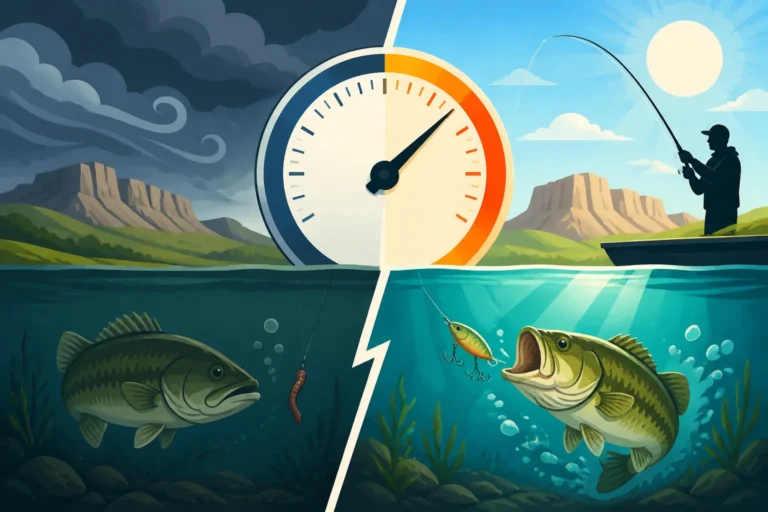
Weather fronts can drastically impact walleye fishing. Stable high-pressure systems after a front often mean clear skies and tough fishing as walleye can become lethargic and less willing to bite. During these periods, focus on deeper water, slower presentations, and subtle baits.
Conversely, approaching low-pressure systems (before a storm or cold front) can often trigger a feeding frenzy. Walleye seem to sense the change and feed aggressively. These are prime times for more active techniques like faster trolling or aggressive jigging. After a front passes and the system stabilizes, conditions usually return to being tough. Keep an eye on the forecast, and adjust your plans accordingly. This ability to adapt your approach based on conditions is key to summer success, as explored in Wind and Weather Fishing Tips.
Troubleshooting Common Summer Walleye Challenges
Even with the best techniques and gear, summer walleye can be a puzzle. Being able to adapt and troubleshoot on the fly is what separates the consistently successful anglers from those who struggle.
Dealing with a Tough Bite
We've all been there: the fish finder is lit up, but nothing is biting. This is when you need to start experimenting.
- Change Speeds: If trolling, try slowing down or speeding up by just 0.2 mph. This subtle change can alter the lure's action enough to trigger a strike.
- Change Depths: Walleye might be shallower or deeper than you think. Adjust your lead core length, snap weights, or bottom bouncer weight to present your lure a few feet higher or lower. They often suspend slightly above bait schools or just off the bottom.
- Change Lures/Colors: If natural colors aren't working, switch to something bright and flashy. If flashy isn't working, go subtle. Don't be afraid to try a completely different lure type, like switching from a crankbait to a crawler harness.
- Go Live Bait: When artificials fail, live bait often shines. A juicy nightcrawler on a slow-trolled harness or a lively minnow on a jig can be irresistible to finicky walleye.
- Try a Different Presentation: If trolling isn't working, anchor up and vertical jig, or try drifting with a slip bobber. Sometimes, a completely different presentation is all it takes.
- Wait for Low Light: If the day bite is nonexistent, consider shifting to a night fishing strategy. The evening bite can be phenomenal, as discussed in Best Time of Day to Catch Walleye in Summer.
Avoiding Undesirable Species
Summer can also bring in a lot of "trash fish" – particularly drum (sheepshead), catfish, and sometimes even aggressive northern pike. While these can be fun to catch, they're not always what you're targeting.
- Adjust Depth: Drum often feed on the very bottom. If you're consistently catching them, try raising your lure a few feet off the bottom, or focus on areas where walleye are suspended.
- Lure Size: Larger crankbaits and bigger spinner blades on crawler harnesses can sometimes deter smaller, more aggressive panfish or drum, though it won't stop a hungry pike.
- Location: Certain areas are just more prone to specific species. If you're getting bombarded by catfish in a muddy bay, consider moving to a rockier main lake point for walleye. However, remember that big channel catfish are often caught right alongside walleye, especially in the Missouri River system.
- Presentation: Faster trolling speeds can sometimes reduce unwanted bycatch, as slower, bottom-oriented presentations can attract more opportunistic feeders.
Safety Considerations for Hot Weather
Summer fishing means hot weather, and that brings important safety concerns.
- Hydration: Always bring plenty of water, and drink it frequently, even if you don't feel thirsty. Dehydration can sneak up on you quickly.
- Sun Protection: Sunscreen, wide-brimmed hats, and UV-protective clothing (long sleeves, neck gaiters) are essential to prevent sunburn and long-term skin damage. Don't forget polarized sunglasses to reduce glare and help you see into the water.
- Check Forecasts: Summer thunderstorms can pop up quickly. Always check the weather forecast before heading out and keep an eye on the sky. If you see dark clouds or hear thunder, head for shore immediately.
- Boat Safety: Ensure your boat is in good working order, with all required safety equipment, including enough life jackets for everyone on board. Have a fully charged phone and a VHF radio on larger waters. Always inform someone of your fishing plans and expected return time. More details on boat safety can be found in South Dakota Boat Safety Requirements.
By understanding the nuances of walleye behavior in summer and adapting your techniques accordingly, you can turn those frustrating summer days into memorable fishing trips on South Dakota's fantastic waters. It takes patience and willingness to experiment, but the reward of a fresh walleye dinner is well worth the effort!
Disclaimer
The information provided in this guide is for general informational purposes only and should not be considered legal advice. Fishing regulations and conditions can change rapidly. Always consult the latest South Dakota Game, Fish and Parks regulations handbook or website before engaging in any fishing activities. Ensure all safety precautions are taken when on the water.