Shadehill Reservoir Walleye Fishing Tips
Trying to dial in on walleye at Shadehill Reservoir can sometimes feel like you’re searching for a needle in a haystack, especially with its unique characteristics and the ever-changing moods of a prairie lake. It's easy to get frustrated when you're out there, rods bent, and still coming up empty-handed. But don't you worry, this comprehensive guide is designed to cut through the confusion, offering you actionable tips and proven strategies to increase your chances of hooking into those elusive walleye at Shadehill.
Understanding Shadehill Reservoir's Unique Walleye Dynamics
Shadehill Reservoir, located in Perkins County near Lemmon, South Dakota, isn't your typical sprawling Missouri River impoundment or deep Black Hills lake. It's a gem of the Grand River system, known for its productive waters, but it demands a specific approach if you want to consistently catch walleye. Understanding its makeup – from its average depths to its primary forage – is the first step to unlocking its walleye potential.
The Lay of the Land: Depths, Structure, and Habitat
Shadehill Reservoir is relatively shallow compared to some of South Dakota's larger bodies of water. Its average depth hovers around 15-20 feet, though some areas near the dam might drop to 30-40 feet when water levels are high. This shallower profile means water temperatures fluctuate more dramatically, influencing where walleye will hold throughout the seasons. The reservoir is characterized by a mix of submerged creek channels, points, humps, and sparse weed beds. The original Grand River channel, though not always distinct, often holds pockets of deeper water and can be a key highway for walleye movement.
One of the biggest challenges at Shadehill is navigating the ever-present wind, which can make boat control tricky and stir up the water, affecting clarity. However, this wind can also be your friend, pushing baitfish and, consequently, walleye, to specific areas. Look for structure that offers some protection or concentrates bait, like the lee side of points or submerged contours where current breaks. Additionally, the reservoir's banks can be quite muddy, especially after rains, impacting water clarity closer to shore. Understanding the bottom composition – from hard rock and gravel to soft mud – can help you select the right lures and presentations. Walleye often relate to harder bottoms, especially near transitions where different bottom types meet.
Forage Base and Walleye Behavior
The walleye in Shadehill Reservoir primarily feed on a diverse diet of baitfish, with common species including shad, various minnows, and sometimes even small panfish. The abundance and location of this forage directly dictate where the walleye will be. If you can locate the bait, you're halfway to locating the walleye. Shadehill's walleye are opportunistic feeders, responding well to presentations that mimic injured baitfish or provoke a reaction strike.
Their behavior is also heavily influenced by water temperature and light conditions. Like walleye everywhere, they tend to be more active during low-light periods – dawn, dusk, and overcast days. In the clearer waters often found in certain parts of Shadehill, especially away from strong inflows, bright sunny days can push walleye deeper or into denser cover. Conversely, on days with strong winds and chop, walleye may be less sensitive to light and feed more aggressively throughout the day as the wave action breaks up light penetration. Keeping an eye on these factors, along with a good understanding of the South Dakota Fishing Regulations Explained for walleye, will give you a significant advantage.
Prime Walleye Locations and Seasonal Strategies at Shadehill
Fishing Shadehill Reservoir successfully for walleye means adapting to the seasons and understanding the typical patterns they follow. Each season presents unique opportunities and challenges, and knowing where to focus your efforts is crucial.
Spring: Post-Spawn Recovery and Shallow Feeding
Springtime at Shadehill, typically from late April through May, can be absolutely fantastic for walleye. After the spawn, which usually occurs when water temperatures hit the mid-40s to low 50s Fahrenheit, walleye are often recuperating and looking for easy meals. They’ll migrate from their spawning grounds to shallower flats, points, and shoreline breaks where baitfish are congregating and the water is warming fastest.
Focus your efforts on areas with rocky or gravel bottoms, especially those adjacent to deeper water, as these spots warm quickly and provide cover. The creek arms and bays that feed into the main reservoir can be excellent in spring, as runoff brings nutrients and attracts bait. Trolling crankbaits that dive to 8-15 feet can be incredibly effective, covering water and appealing to actively feeding fish. Jigging with a minnow or a soft plastic on a jig head is another killer technique, particularly when probing those transition areas or along the old river channel. Remember to retrieve slowly, as post-spawn walleye might still be a bit lethargic. You might also find a lot of success with slip bobbers on wind-blown points, presenting a live minnow or leeches just off the bottom. If you're planning a trip, consider looking into a guide through a service like FishingBooker to help pinpoint these spring hotspots. For more general tactics, check out our guide on South Dakota Spring Walleye Fishing Techniques.
Summer: Deep Water and Low-Light Opportunities
As summer heats up, usually from June through August, Shadehill's walleye will generally move to deeper, cooler water. This doesn't mean they're impossible to catch, but your tactics need to shift. Look for them on main lake points that drop off quickly, humps, and especially along the main river channel where they can find thermal refuge and ambush baitfish.
Trolling is still a prime tactic in summer, but you'll need to use deeper diving crankbaits or incorporate planer boards and lead core line to get your lures down to the 15-30 foot range. Slow death rigs, where a crawler is threaded onto a specialized hook and trolled slowly, are incredibly effective on summer walleye in many South Dakota lakes, and Shadehill is no exception. Vertical jigging over humps and along the channel edges during the day can also produce, especially if you mark fish on your electronics. Early mornings and late evenings, or even night fishing, can be phenomenal as walleye move shallower to feed under the cover of darkness. Don't be afraid to experiment with different depths and speeds until you find what triggers a bite. Our article on South Dakota Summer Walleye Fishing Techniques offers even more detailed advice.
| Season | Primary Locations | Recommended Techniques | Key Forage | Water Temperature |
|---|---|---|---|---|
| Spring | Shallow flats, points, creek arms, rocky bottoms | Trolling crankbaits (8-15 ft), Jigging minnows/plastics, Slip bobber with live bait | Minnows, insect larvae | 45-60°F |
| Summer | Deeper main lake points, humps, river channel edges | Trolling deep crankbaits, Slow death rigs, Vertical jigging, Night fishing | Shad, minnows | 60-75°F |
| Fall | Transition areas, humps, channel edges, shallower feeding flats | Trolling crankbaits, Jigging minnows/plastics, Live bait rigging | Minnows (especially larger ones), shad | 50-65°F |
| Winter | Main lake basin, humps, river channel, deepest holes | Ice jigging with spoons/plastics, Tip-ups with live minnows | Minnows, small panfish | 32-40°F |
Fall: The Walleye Feeding Frenzy
Fall at Shadehill, typically September through November, is a favorite time for many walleye anglers, and for good reason. As water temperatures begin to drop, walleye sense the approaching winter and go on a serious feeding binge to fatten up. They can be found in a variety of depths, often transitioning between deeper summer haunts and shallower feeding flats, much like spring.
This is a fantastic time for trolling crankbaits, both shallow and deep, as walleye are actively chasing bait. Jigging spoons or larger soft plastics can also be deadly, particularly on schools of walleye found on humps or deeper points. Focus on areas where schools of baitfish are present – often marked on your fish finder. As the water cools further, live bait rigging with larger minnows becomes increasingly effective. This is often the time to target trophy-sized walleye as they put on weight. For a deeper dive into techniques, explore our guide on South Dakota Fall Walleye Fishing Techniques.
Winter: Ice Fishing for Shadehill Walleye
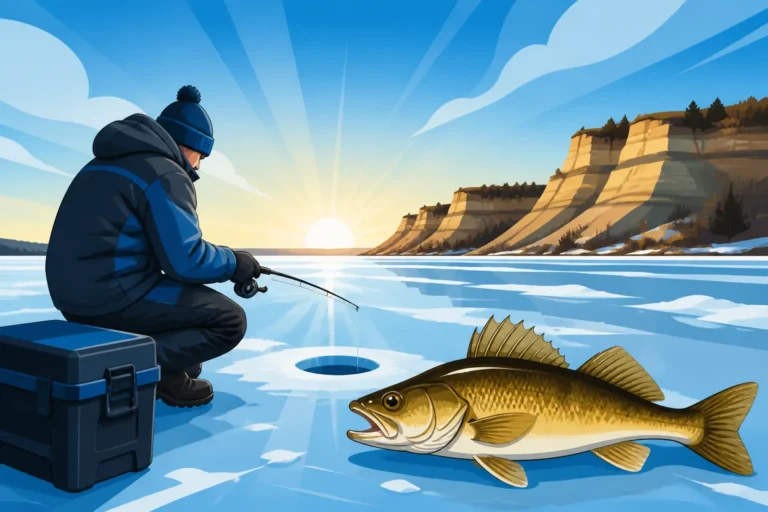
When the ice covers Shadehill Reservoir, a whole new world of walleye fishing opens up for ice anglers, usually from December through March. This can be one of the most productive times to target larger walleye, provided you dress warmly and exercise caution on the ice.
Walleye typically congregate in deeper sections of the lake during winter, especially along the main river channel, basin areas, and humps. Look for structure that breaks the current or provides an ambush point. Portable ice shelters and good electronics are key for staying mobile and finding these fish. Jigging with small spoons tipped with a minnow head or wax worm, or using a flashy lure like a Rapala Jigging Rap, can be very effective. Setting up tip-ups with live minnows on quick-strike rigs is another popular and successful method, allowing you to cover a wider area. Always check ice thickness before venturing out, and be aware of conditions. Our general South Dakota Ice Fishing Guide provides essential safety and technique tips.
Essential Gear and Techniques for Shadehill Walleye Success
Having the right tools and knowing how to use them effectively can make all the difference in your Shadehill walleye adventures. It's not just about what you use, but how you present it.
Rods, Reels, and Line Choices
For trolling, a medium-heavy action rod, around 7 to 8 feet long, paired with a line counter reel is ideal. This setup allows you to precisely control your lure's depth and distance, which is critical for replicating successful passes. Spool these with 10-12 pound monofilament or a superline like braided line with a fluorocarbon leader. Monofilament offers stretch that can be forgiving with aggressive strikes, while braid offers sensitivity and strength.
For jigging, whether it's vertical jigging or casting jigs from shore or boat, a medium-light to medium action spinning rod, 6'6" to 7 feet long, is versatile. Pair it with a 2500-sized spinning reel spooled with 6-8 pound fluorocarbon or braided line with a fluorocarbon leader for maximum sensitivity. This lighter setup allows for better feel and more precise lure control, especially when fishing subtle bites. When ice fishing, specialized ice fishing rods that are shorter and designed for sensitivity are a must, typically medium-light to medium power, around 28-36 inches long.
Top Lures and Baits for Shadehill Walleye
The best lures for Shadehill walleye largely depend on the season and prevailing conditions. However, a few staples consistently produce:
- Crankbaits: Shad Raps, Flicker Shads, Bandits, and Wally Divers are all excellent choices. Vary sizes and diving depths based on the season and where you're marking fish. Natural baitfish colors like silver, perch, or firetiger are always good starting points, but don't shy away from brighter colors on overcast days or in stained water.
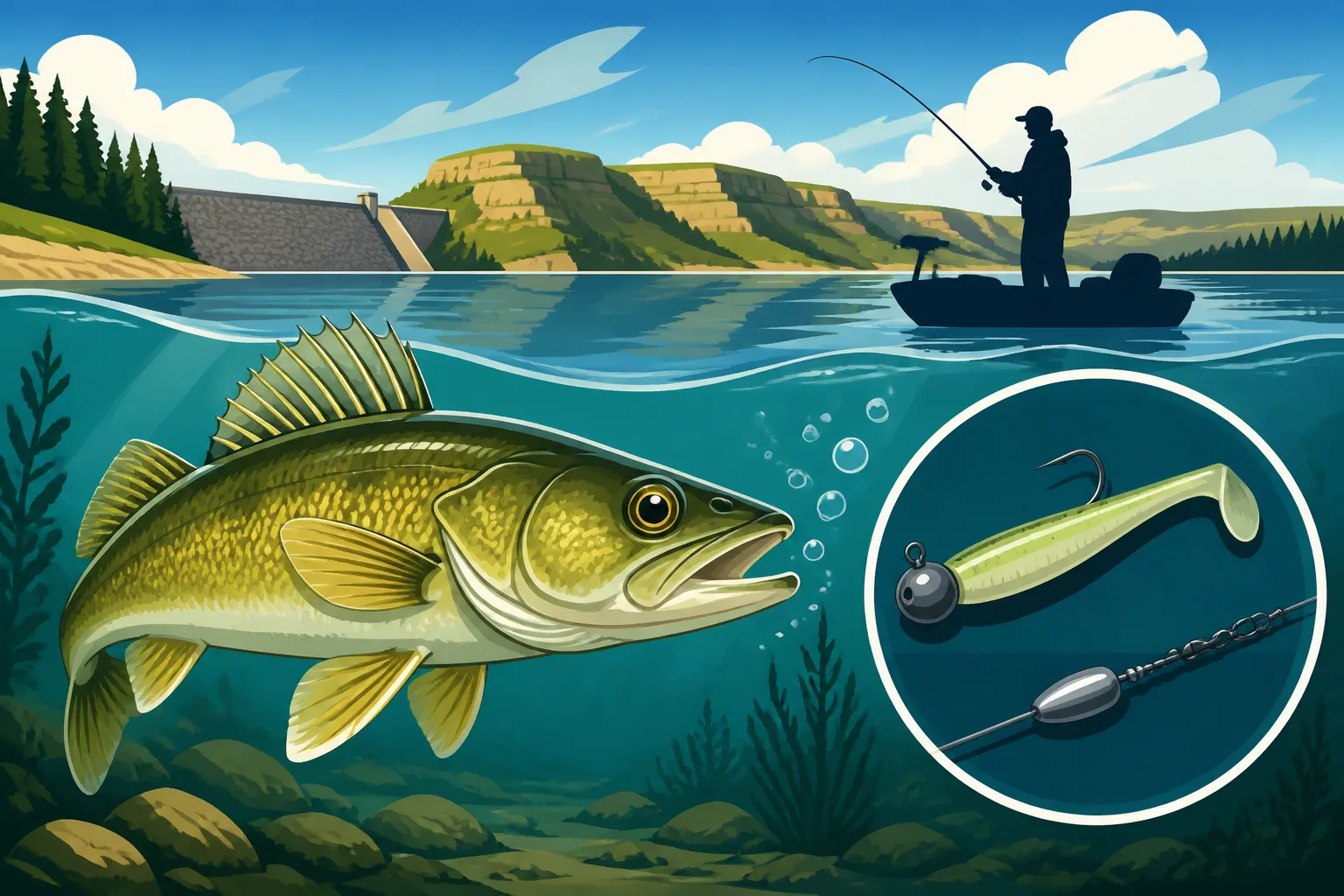
- Jigs: A variety of jig heads, from 1/8 to 1/2 ounce, paired with live minnows, plastic grubs (like a Berkley Gulp! minnow or paddle tail), or soft plastic worms (like a Ned rig for a subtle presentation) are incredibly versatile. Experiment with jig colors; chartreuse, white, and darker purples or browns can be very effective.
- Live Bait Rigs: A simple snell rig with a walking sinker, a swivel, a 3-5 foot fluorocarbon leader, and a hook (sizes 4-8) is a walleye killer. Tip it with live leeches, nightcrawlers (especially effective on a slow death rig), or fathead minnows. When it comes to Best Bait for South Dakota Catfish and walleye, live bait is often hard to beat.
- Spoons: For ice fishing, jigging spoons like Northland Forage Minnow or Clam Leech Flutter Spoons can imitate dying baitfish and trigger aggressive strikes. Tipping them with a minnow head adds scent and attraction.
For a comprehensive look at what works best, check out our Best Lures for South Dakota Walleye guide.
Reading the Water and Electronics
A good fish finder is an invaluable tool at Shadehill, helping you locate structure, identify baitfish schools, and even mark individual walleye. Pay attention to contour lines on your map, looking for breaks, humps, and the old river channel. When you mark fish or bait, note the depth and try to replicate the conditions on similar structures. Understanding how to interpret your fish finder display, including bottom hardness and fish arches, will significantly improve your success. We have a detailed guide on How to Read a Fish Finder for Walleye that can help sharpen your skills.
Wind is another critical factor. While strong winds can be challenging, they often create a "walleye chop" that helps break up light penetration, making walleye more active, especially in shallower water. Wind can also push baitfish into certain bays or against particular points, concentrating walleye. Conversely, calm, sunny days often require you to fish deeper or during low-light periods. Always observe the local conditions and adapt your strategy.
Beyond Walleye: Other Species and Important Considerations
While walleye might be the main attraction at Shadehill, the reservoir holds a healthy population of other popular sportfish that can offer exciting action, especially if the walleye bite is slow. Plus, being prepared and following regulations ensures a safe and enjoyable trip for everyone.
Other Fish Species You Might Encounter
- Northern Pike: Shadehill Reservoir is home to some respectable northern pike. These toothy predators often lurk in shallower bays with sparse weed growth or around submerged timber. They'll readily strike large crankbaits, spoons, and live minnows fished under a bobber. If you're specifically targeting pike, consider using a steel leader to prevent bite-offs.
- Catfish: Channel catfish are abundant in Shadehill, particularly in the warmer summer months. They prefer deeper holes, the main river channel, and areas with muddy bottoms. Cut bait, stink baits, and nightcrawlers fished on the bottom are highly effective for these hard-fighting fish.
- Smallmouth Bass: While not as prevalent as walleye, smallmouth bass can be found around rocky areas, riprap, and submerged timber. They'll hit crankbaits, jigs, and soft plastics.
- Panfish (Crappie, Perch, Bluegill): Shadehill can offer good panfish action, especially for crappie and yellow perch. Crappie often suspend over submerged brush or timber, hitting small jigs tipped with plastics or minnows. Perch tend to congregate in schools on flats and humps, responding well to small spoons and jigs.
Having a multi-species approach in mind can save a slow day and add variety to your catch. Remember that species-specific regulations and limits apply, so always consult the current South Dakota GFP Fishing Handbook Guide.
Respecting the Regulations and Local Etiquette
Before you head out, always make sure your South Dakota Fishing License Guide is current and that you understand the specific walleye limits for Shadehill Reservoir. While the statewide walleye limits generally apply, always double-check for any specific regulations or slot limits that might be in place for Shadehill. Knowing the difference between daily limits and possession limits is crucial.
Beyond regulations, good fishing etiquette goes a long way. This includes giving other anglers plenty of space, especially when trolling or drifting, and being mindful at boat ramps. Pack out everything you pack in, and dispose of any trash properly. Releasing fish carefully, especially those that are undersized or that you don't intend to keep, helps ensure a healthy fishery for future generations.
If you're unfamiliar with the area, or just want to maximize your chances, consider booking a trip with a local guide. Services like FishingBooker can connect you with experienced guides who know Shadehill like the back of their hand and can put you on fish quickly, saving you valuable time and increasing your knowledge. Exploring some of the Best Fishing Spots in South Dakota will also give you a broader understanding of fishing opportunities in the state.
Disclaimer
Fishing conditions and regulations in South Dakota can change. Always consult the latest South Dakota Game, Fish and Parks regulations handbook before planning your trip to ensure compliance and for the most up-to-date information. The advice provided here is for informational purposes only.