Do You Need a Deep V Hull for Lake Oahe?
When you're dreaming of a day out on the vast, beautiful waters of Lake Oahe, one question often weighs heavily on an angler's mind: "Is my boat up to the task?" More specifically, many wonder if a deep V hull is an absolute necessity for tackling South Dakota's largest reservoir. It’s a valid concern, as Oahe can be famously fickle, transforming from glass-smooth to a white-capped beast in mere minutes. This comprehensive guide will dive deep into the world of boat hulls, Lake Oahe's unique demands, and help you decide if a deep V is the right choice for your fishing adventures.
Understanding Lake Oahe's Unique Challenges for Anglers
Lake Oahe isn't just a big lake; it's a monumental stretch of water, carving its way through the heart of South Dakota and extending well into North Dakota. This sheer scale presents a set of challenges that smaller, calmer waters simply don't. Anglers often face conditions that demand a boat with specific capabilities to ensure both safety and a productive day on the water.
The Vastness and Open Water Conditions
Imagine heading out from a ramp near Pierre or Mobridge, and looking across miles and miles of open water. That's Lake Oahe. It's truly a freshwater inland sea. This immense size means there's a lot of surface area for wind to whip up, creating significant wave action. Unlike smaller lakes where you might quickly find shelter behind an island or a protected bay, on Oahe, those calm spots can be few and far between, especially when you're targeting fish in specific open-water areas.
When the wind starts to blow, even a moderate breeze can generate waves that are several feet high. These aren't just gentle rollers; they can be sharp, choppy waves that crash over the bow of smaller, flatter-bottomed boats, soaking you and your gear. Navigating these conditions comfortably, and safely, requires a boat designed to handle such an environment. The sheer distance you might need to cover, sometimes 20 or 30 miles in one direction to reach a hot bite, means you're exposed to these conditions for extended periods.
Unpredictable Weather and Wind
One of the truisms of fishing in South Dakota is "if you don't like the weather, wait five minutes." This adage holds particularly true for Lake Oahe. A calm, sunny morning can quickly give way to sudden thunderstorms, fierce winds, or even hail, especially during the spring and summer months. These abrupt shifts in weather create dangerous conditions for boats not equipped to handle them. The wind, in particular, is the biggest culprit for turning a pleasant fishing trip into a white-knuckle ride.
The expansive nature of the lake provides no real windbreak for miles, allowing gusts to build significant chop and swells. You might be trolling for walleye in relatively calm conditions, only to look up and see a wall of dark clouds and approaching whitecaps. At these times, having a boat that inspires confidence in rough water, and can get you back to the ramp safely and reasonably dry, is paramount. Many seasoned Oahe anglers will tell you stories of being caught off guard, and they'll often point to a stable, wave-cutting hull as their saving grace.
Diverse Fishing Styles and Depths
Lake Oahe isn't just about one type of fishing; it's incredibly diverse. You might be vertical jigging for walleye over deep structure at 40 feet, trolling crankbaits for big Chinook salmon in the middle of the lake, or casting for smallmouth bass along rocky shorelines. Each of these styles can dictate where you're positioned on the water and what conditions you're likely to encounter. Trolling for salmon often puts you far out in the main lake, completely exposed. Even walleye fishing can take you miles from shore, following schools of baitfish in open water.
The varied depths, from shallow bays to the main channel reaching over 200 feet, also play a role. When fishing deeper sections, you're often exposed to the full force of the wind. A boat that can comfortably traverse these varied environments, allowing you to focus on the fishing rather than constantly battling waves, is a significant advantage. This versatility is what many anglers seek when choosing a boat for a body of water as dynamic as Oahe. For a more detailed look at the fishing opportunities, check out our Lake Oahe Fishing Guide.
What Exactly is a Deep V Hull?
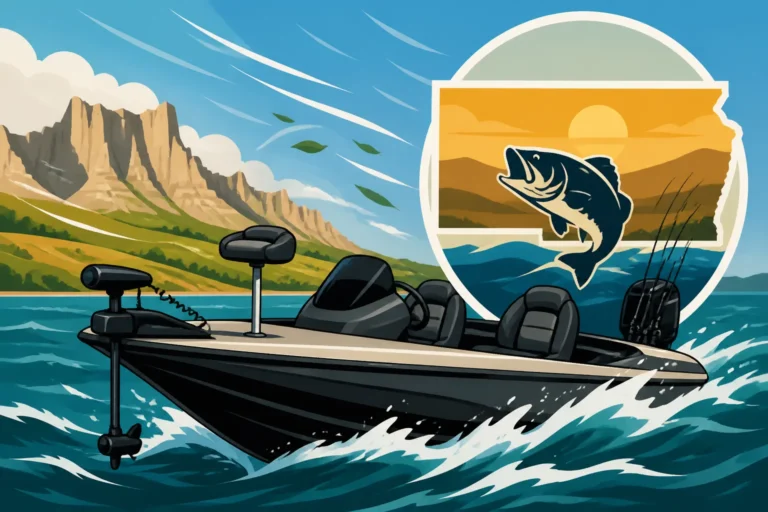
When we talk about boats, the hull is the very foundation, dictating how the vessel interacts with the water. A "deep V hull" is a specific design characterized by its pronounced V-shape extending from the bow (front) all the way to the stern (back) of the boat. This design isn't accidental; it's engineered with specific performance characteristics in mind, particularly for handling rough water.
Key Characteristics and Design Principles
The most defining feature of a deep V hull is its deadrise angle. Deadrise refers to the angle of the hull bottom as it rises from the keel (the center line) to the chine (the outer edge where the bottom meets the side). In a deep V hull, this angle is significant, typically 18 degrees or more at the transom (the very back of the boat). The bow section will have an even sharper V, sometimes 50-60 degrees, which then flattens out slightly towards the stern.
This sharp V-shape is designed to cut through waves rather than slap down on top of them. Think of a knife slicing through butter – that's the principle. Instead of presenting a broad, flat surface to an incoming wave, the sharp entry point of the V pierces the wave, providing a smoother ride. As the boat moves, the V-shape displaces water outward, reducing the impact and making for a less jarring experience for those on board. The higher the deadrise angle, generally the better it performs in rough water, though there are trade-offs.
The Advantages of a Deep V in Rough Water
The primary benefit of a deep V hull, especially on a body of water like Lake Oahe, is its superior ability to handle rough, choppy conditions. When those notorious Oahe winds kick up, a deep V hull will:
- Provide a Smoother Ride: Instead of pounding harshly on each wave, the sharp V-bottom cuts through the water, cushioning the impact. This means less jarring for your back, less fatigue for you and your passengers, and a more comfortable journey across choppy expanses.
- Keep You Drier: By deflecting spray outward and downward, the deep V design helps to minimize the amount of water coming over the bow and sides of the boat. While no boat is perfectly dry in truly rough conditions, a deep V significantly reduces the drenching you might experience in a flatter-bottomed boat.
- Offer Better Stability While Running: In rough water, a deep V tends to track straighter and feel more secure, reducing the tendency to "porpoise" (the bow bouncing up and down) or chine walk (the boat rocking from side to side). This makes for a more confident and safer ride when you're covering long distances or trying to get back to shore in deteriorating conditions.
- Enhance Safety: The improved stability and wave-cutting ability of a deep V hull contribute directly to safety on large, unpredictable waters. Knowing your boat can handle the unexpected gives you peace of mind, especially when you're miles from the nearest launch ramp. For crucial safety information, refer to our South Dakota Boat Safety Requirements.
Potential Downsides to Consider
While deep V hulls offer excellent rough-water performance, they aren't without their compromises. Understanding these trade-offs is crucial for making an informed decision:
- Less Stability at Rest: This is often the most noticeable drawback. When a deep V boat is stopped or moving slowly, its pronounced V-shape means less flat surface area in the water. This can lead to a "tippier" feeling, making it rock more when people move around inside, or when waves hit it broadside while anchored or drifting. For anglers who spend a lot of time stationary, this can be a real consideration.
- More Fuel Consumption: The deeper V requires more power to push through the water, especially at speed, because it creates more wetted surface and thus more drag. This translates to higher fuel consumption compared to a flatter-bottomed boat of similar size and weight. On a lake like Oahe where you might cover significant distances, those fuel costs can add up.
- Requires More Horsepower: To achieve comparable speeds, a deep V hull generally needs a more powerful outboard engine than a flatter-bottomed boat. This increases the initial purchase cost and potentially ongoing maintenance expenses.
- Shallower Draft Limitations: While deep V boats are great for cutting waves, their deeper draft (how much of the hull is submerged) can sometimes be a disadvantage in very shallow water. If you frequent extremely shallow fishing areas or operate in low-water conditions, this is something to keep in mind, although most of Oahe's prime fishing areas are plenty deep.
Ultimately, the choice comes down to prioritizing rough-water performance versus other characteristics.
Is a Deep V Hull Essential for Lake Oahe?
Now for the million-dollar question: Is a deep V hull absolutely essential for fishing on Lake Oahe? The short answer is: it depends on your definition of "essential" and how you plan to use your boat. While it offers significant advantages, especially for comfort and safety in rough conditions, other hull designs can still be successfully used on Oahe, albeit with more limitations.
When a Deep V Truly Shines on Oahe
There are definite scenarios where a deep V hull goes from a "nice-to-have" to a "thank-goodness-I-have-this" feature on Lake Oahe:
- Frequent Anglers and Long-Distance Runs: If you plan on fishing Oahe regularly, especially if you need to cover substantial distances to reach prime fishing grounds like the far reaches of the Cheyenne River Arm or up near Mobridge, a deep V hull will save your body from a lot of pounding. The comfort factor over a long day or multiple days of fishing is immense. It allows you to stay out longer and be less fatigued at the end of the day.
- Targeting Open Water Species: When you're specifically targeting walleye or salmon in the main lake basin, often following baitfish schools miles from shore, you are inherently exposed to the elements. These are the situations where Oahe's unpredictable nature can really test a boat. A deep V allows you to pursue these fish confidently, even when the forecast isn't perfectly calm. Our South Dakota Walleye Fishing Guide highlights many situations where a deep V is beneficial.
- Prioritizing Safety and Confidence: For many, the peace of mind that comes with knowing their boat can handle rough conditions is worth any trade-offs. If you fish with family, especially kids, a deep V can provide a much safer and more comfortable experience. Getting caught in a sudden squall on Oahe is no joke, and a boat that can punch through waves and shed water effectively is a huge confidence booster.
- Dealing with Consistent Wind: South Dakota is known for its wind. If you live in an area that gets a lot of prevailing westerly or northwesterly winds, you know Oahe will constantly have chop. A deep V is designed for precisely these types of conditions, ensuring you don't have to cancel every other trip due to wind.
Consider a scenario: you're trolling for walleye near the Big Bend Dam area, and a strong cold front suddenly rolls in, bringing 20-30 mph winds. In a deep V, you might get wet, but you'll likely feel relatively safe and comfortable making the run back to the ramp. In a shallower V or modified V boat, that same run could be a terrifying, back-breaking experience.
Alternatives and When They Might Suffice
While deep V hulls are ideal for many Oahe situations, they aren't the only option. Other hull designs can work, but they come with specific caveats and are best suited for particular styles of fishing or conditions:
- Modified V Hulls: These boats have a sharp V at the bow that gradually flattens out towards the stern, ending with a shallower deadrise angle (e.g., 10-15 degrees). They offer a compromise: better rough-water performance than a flat-bottom, but more stability at rest than a true deep V. They are often a good choice for anglers who split their time between large reservoirs and smaller lakes, or those who value at-rest stability for casting and still-fishing. However, in sustained heavy chop on Oahe, they will pound more and ride wetter than a deep V.
- Semi-V or Flat-Bottom (Jon Boats, etc.): While some brave (or foolhardy) anglers might take these on Oahe on perfectly calm days, they are generally not recommended for regular use on such a large, unpredictable body of water. They offer excellent stability at rest and are great for shallow water or smaller, protected rivers, but they will pound severely in any significant chop, soak everyone on board, and can quickly become unsafe in rough conditions. You'd be extremely limited in where and when you could safely fish on Oahe.
Ultimately, if you're only planning a few fair-weather trips a year, sticking close to launch ramps, and are willing to cancel if the wind picks up, a modified V might be acceptable. But for serious, consistent Oahe fishing, the advantages of a deep V are hard to ignore.
Balancing Safety, Comfort, and Fishing Functionality
The decision about your boat's hull type boils down to a personal balance of factors. Are you willing to sacrifice some stability at rest for a vastly superior ride in rough water? Are you comfortable with potentially higher fuel costs for enhanced safety and comfort?
| Hull Type | Rough Water Performance | Stability at Rest | Fuel Efficiency | Recommended Use on Oahe |
|---|---|---|---|---|
| Deep V | Excellent | Fair to Good | Moderate | Highly Recommended for frequent, open-water fishing, long runs, safety. |
| Modified V | Good | Good | Good | Acceptable for occasional use, closer to shore, fair weather. |
| Flat Bottom | Poor | Excellent | Excellent | Not Recommended except for very small, protected coves on calmest days. |
This table provides a general comparison; actual performance can vary based on boat length, weight, specific design, and engine power.
For many, the comfort and safety that a deep V provides on a lake like Oahe make it the clear winner. You can always adapt your fishing techniques for the slight decrease in at-rest stability, but you can't magically make a flatter-bottomed boat ride smoothly through 3-foot waves.
Making Your Boat Choice: Beyond Just the Hull
While the hull design is a foundational element, a boat's suitability for Lake Oahe involves a lot more than just its V-shape. Many other features, accessories, and considerations come into play to ensure you have a safe, productive, and enjoyable experience on the water.
Other Critical Boat Features for Oahe
Beyond the hull, several other features are absolutely vital for tackling Lake Oahe effectively:
- Length and Beam: Generally, a longer and wider boat will handle rough water better than a shorter, narrower one, regardless of hull type. The extra length helps bridge waves, and a wider beam (width) adds stability. For Oahe, boats in the 18-22 foot range are very common for serious anglers. They offer enough room for gear, passengers, and the mass needed to punch through waves.
- High Sides (Freeboard): This is crucial on a big, choppy lake. High sides act as a barrier, preventing waves from washing over the gunwales and into the boat. A deep V hull often goes hand-in-hand with higher sides, further enhancing dryness and safety.
- Powerful, Reliable Outboard Motor: You need enough horsepower to safely get up on plane, especially when fully loaded, and to make quick runs back to shore if weather turns. A reliable motor is non-negotiable on Oahe; breaking down miles from the nearest ramp is a serious situation. Make sure to have a well-maintained engine, and perhaps even a kicker motor for trolling and emergency backup.
- Adequate Fuel Capacity: With the vast distances you might cover, ample fuel capacity is essential. You don't want to be constantly worrying about running out of gas. Always calculate your fuel needs with a generous buffer.
- Electronics: A quality fish finder with GPS and mapping capabilities is almost a necessity on Oahe. You'll need it to navigate the sprawling lake, mark hotspots, find structure, and track baitfish. Devices from brands like Humminbird or Lowrance, often available through retailers like Bass Pro Shops or Amazon, can make a huge difference in your success. Learn more about choosing the right electronics in our Best Fish Finders for South Dakota Lakes guide.
- Trolling Motor: A bow-mount electric trolling motor with GPS Spot-Lock capabilities is a game-changer for precise boat control, especially when fishing structure or holding your position in wind or current. This allows you to focus on fishing instead of constantly correcting your drift. Find out more about these essential tools in our Best Trolling Motors for Walleye Fishing article.
- Livewell and Storage: Sufficient livewell capacity is important if you plan to keep your catch, and ample dry storage keeps your gear safe and protected from spray and elements.
Personal Fishing Style and Budget Considerations
Your individual fishing habits and financial situation will heavily influence your boat choice.
- How often do you fish Oahe? If it's your primary fishing destination and you go frequently, investing in a boat well-suited for its challenges (like a deep V) makes sense. If Oahe is an occasional treat, you might opt for a more versatile boat that also performs well on smaller waters.
- What species do you target? If you're solely focused on main-lake walleye or salmon, a deep V is highly advantageous. If you mostly stick to protected bays for panfish or shallower rivers, a modified V might be perfectly adequate. Our South Dakota Missouri River Fishing Techniques covers a wide range of approaches.
- Your budget: Deep V boats, especially in larger sizes with powerful motors and full electronics, can be a significant investment. You'll need to weigh the benefits against what you're willing and able to spend. Don't forget to factor in ongoing costs like fuel, maintenance, storage, and insurance.
- Comfort vs. Performance: Are you willing to tolerate a bumpier, wetter ride to save some money or gain a bit more stability at rest? Or is the comfort and safety of a smooth ride in rough water paramount to your enjoyment? This is a very personal decision.
Equipping Your Boat for Oahe Conditions
Once you've chosen your boat, equipping it properly for Lake Oahe's conditions is the next crucial step. This goes beyond just fishing tackle and includes safety gear, weather preparedness, and essential accessories.
- Safety Gear: Beyond mandatory life jackets (which should always be worn, especially in rough water), ensure you have a working VHF radio or satellite messenger for communication, flares, a sound-producing device, a throw cushion, a first-aid kit, and a functional anchor system with plenty of rope.
- Weather Monitoring: Always check the forecast before heading out, but also be prepared for sudden changes. A good marine weather app, or a weather band on your VHF radio, can provide real-time updates while on the water.
- Warm, Waterproof Clothing: Even on summer days, cold fronts can sweep in rapidly. Always pack layers and high-quality rain gear. You can find excellent options from outdoor retailers like Bass Pro Shops or online platforms such as Amazon.
- Appropriate Tackle: Make sure your rods, reels, and lures are suited for the big fish and deep water often found on Oahe. Heavy-duty trolling gear, strong lines, and a variety of jigging and casting baits will be necessary.
- Coolers and Fish Storage: Whether you're catching walleye or salmon, you'll want a quality cooler to keep your fish fresh throughout the day, especially during warmer months. Consider how to effectively store your catch until you can get it to the cleaning station. For more packing tips, see What to Pack for a Full Day on Lake Oahe.
By considering all these factors, not just the hull, you can confidently choose and equip a boat that will provide countless memorable (and safe!) days of fishing on the incredible waters of Lake Oahe.
Disclaimer
This article is for general informational purposes only and does not constitute professional advice. Laws, prices and regulations vary by location and change over time. Consult a qualified professional for guidance on your specific situation.