Best Flasher Unit for Ice Fishing Walleye
If you've ever spent a cold South Dakota winter day staring down a dark ice fishing hole, wondering if there's anything down there but empty water, you know the frustration. It's a classic ice fishing dilemma: how do you know if fish are even present, let alone interested in your jig? This guide is going to pull back that icy curtain, showing you exactly why a good flasher unit is an absolute game-changer for targeting walleye through the ice, and what to look for to make your next trip to Lake Oahe or Lake Sharpe a whole lot more productive.
Why a Flasher is Essential for South Dakota Ice Fishing Walleye
Let's be real, ice fishing can feel like a blind game of chance sometimes, especially when you're after those elusive South Dakota walleye. You're bundled up, the wind is biting, and all you have is your line disappearing into the depths. This is precisely where a flasher unit comes into its own, transforming your guessing game into a strategic hunt. It's not just a gadget; it's your eyes beneath the ice, giving you an immediate, real-time understanding of what's happening in the water column below your hole.
Understanding Walleye Behavior Under Ice
Walleye, particularly during the colder months, can be incredibly subtle in their movements and feeding patterns. They might hug the bottom, suspend just off a structure, or cruise slowly through an area, barely registering on traditional sonar if you're moving around a lot. Their strikes can be incredibly light, often feeling like nothing more than a slight weight on your line, easily missed if you're not paying absolute attention. Without knowing where they are, how they're reacting to your presentation, or even if they're there, you're essentially fishing in the dark. It's like trying to have a conversation with someone through a thick, soundproof wall – you know they're there, but you can't quite pick up on their cues.
This subtle behavior is why traditional fishing methods, while still effective at times, often leave ice anglers scratching their heads. You might drop a jig, wait five minutes, pull it up, and try again, never truly knowing if a walleye approached your bait and then swam off. Did you jig too aggressively? Not aggressively enough? Was your bait too high or too low? These are all questions a flasher answers in real-time, providing immediate visual feedback that lets you adapt your strategy on the fly. It's about taking the guesswork out of the equation and putting control back in your hands.
The Immediate Feedback Advantage
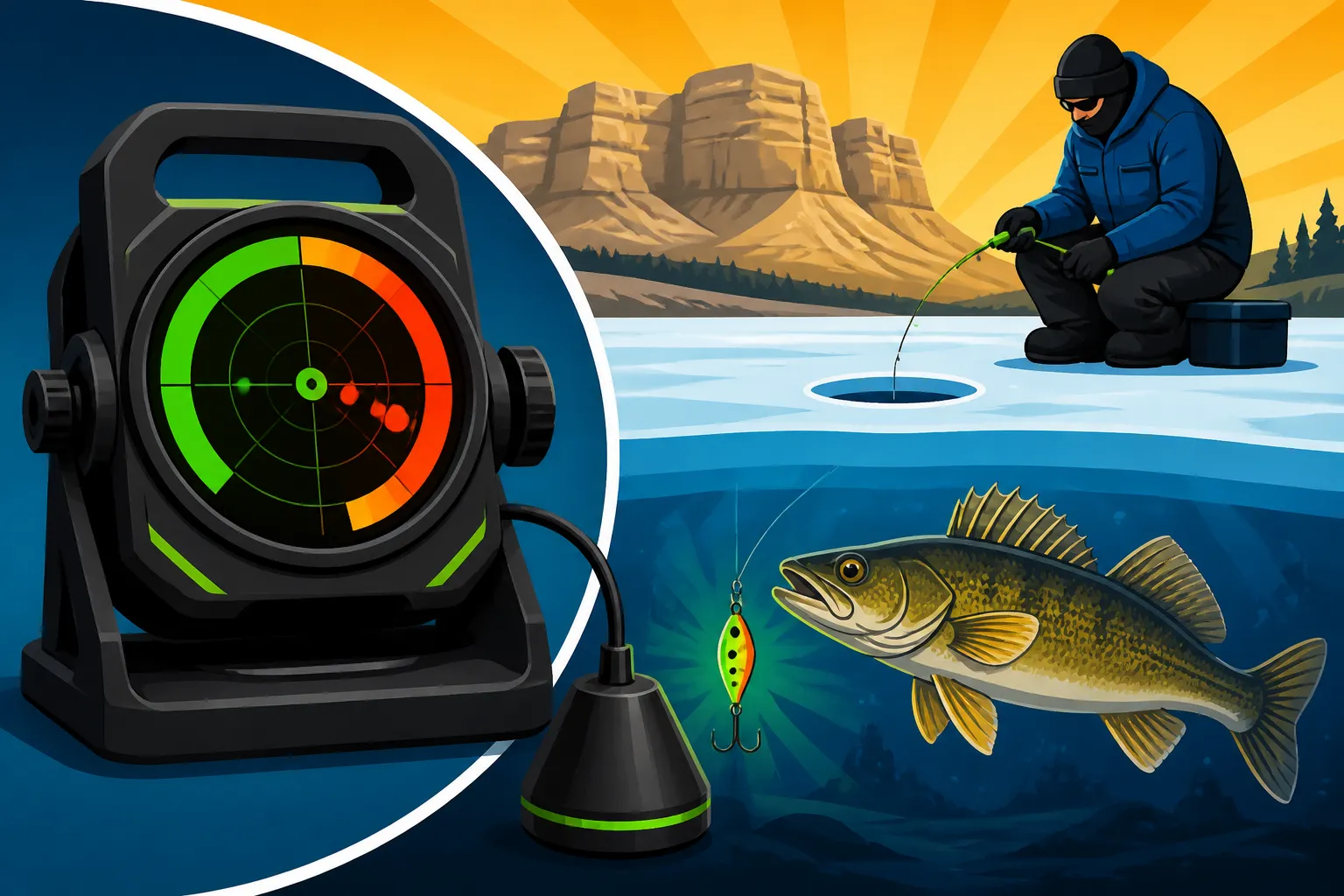
The true magic of a flasher unit for ice fishing walleye lies in its immediate, real-time display. Unlike some traditional graph-style sonars that show a history of what passed beneath the transducer, a flasher gives you a live, circular readout of everything happening at that exact moment. You'll see your jig descending, often as a distinct color or line, and then, crucially, you'll see fish approaching it. This isn't a historical record; it's happening right now.
Imagine this scenario: you're jigging for walleye on Lake Sharpe. You drop your tungsten jig down, watching its bright red signal descend on the flasher. Suddenly, a thicker green or yellow line appears from the bottom, rising steadily towards your bait. You see the walleye's ascent, its hesitation, maybe a slight bump as it inspects your offering. This allows you to react instantly – twitch your rod, hold it still, or slowly raise your bait to trigger a strike. It's an incredible advantage that lets you gauge the fish's mood and adjust your presentation second by second. This kind of immediate interaction is what transforms a slow day into a productive one, allowing you to react to non-committal bites or aggressive charges, leading to more hooked fish.
Key Features to Look for in a Walleye Ice Fishing Flasher
Choosing the right flasher for ice fishing walleye in South Dakota isn't just about grabbing the first one you see. There are several key features that can make a huge difference in your success, especially when you're battling the elements or trying to pinpoint those finicky walleye. It’s about investing in a tool that truly enhances your time on the ice, not just another piece of gear to haul around.
Display Clarity and Resolution
When you're out on a bright, sunny day with glare bouncing off the snow and ice, or hunkered down in a dark ice fishing shelter, a clear, high-resolution display is paramount. You need to be able to easily distinguish between your jig, a passing baitfish, and that big walleye you’re hoping to catch. Look for units with vibrant, multi-color displays that offer good contrast. The number of colors or segments on the display contributes to its resolution; more segments generally mean a finer, more detailed picture.
Another crucial aspect of display clarity is target separation. This refers to the flasher's ability to show two distinct objects that are very close together as separate entities. For walleye fishing, this is a huge deal. Walleye often hug the bottom, sometimes so tightly that they're almost indistinguishable from the lakebed itself on a lower-quality unit. Good target separation means you can clearly see your jig hovering just above a walleye that's sitting tight to the bottom, allowing for a more precise presentation and preventing you from jigging "into" the bottom unknowingly. This feature becomes even more critical when fish are suspended close to submerged timber or rock piles, allowing you to pick out the fish from the structure itself.
Power and Transducer Performance
The power of your flasher, measured in watts, directly impacts how well it can "see" through the water, especially in deeper or murkier conditions that you might encounter on the Missouri River reservoirs. Higher wattage generally means a stronger signal and better depth penetration. While most modern flashers have sufficient power for common ice fishing depths, if you plan on exploring deep ledges on Lake Oahe, opting for a more powerful unit can give you an edge.
The transducer, which sends and receives the sonar signals, is also vital. One key characteristic is its cone angle. A narrow cone angle (e.g., 9-12 degrees) provides a more focused view directly under your hole, which is excellent for precisely targeting walleye directly below you. It helps you avoid marking fish that are just outside your immediate fishing zone. A wider cone angle (e.g., 19-20 degrees or more) covers a larger area, which can be beneficial for scouting wider zones or when fish are scattered. Some high-end units even offer dual-beam transducers, allowing you to switch between narrow and wide angles, giving you the best of both worlds depending on the situation. For versatile South Dakota walleye fishing, having options with your cone angle can make a real difference in adapting to different water bodies and fish patterns.
Battery Life and Portability
Imagine this: you've finally found a hot walleye bite on a secluded glacial lake, but your flasher battery dies after just a few hours. Talk about a buzzkill! Ice fishing often means long hours out in the elements, sometimes far from a charging port. Therefore, robust battery life is non-negotiable. Look for units that boast extended run times, ideally 8-10 hours or more on a single charge, especially in cold conditions which can drain batteries faster. Many modern flashers come with efficient lithium-ion batteries, but always check the stated run time and consider carrying a spare battery pack if you plan on multi-day trips or particularly long sessions.
Portability is another major factor, particularly if you're a run-and-gun angler who likes to drill multiple holes and move frequently to find active walleye. Flashers can vary significantly in weight and bulk. Some come in compact, lightweight cases that are easy to carry in a backpack or pull along in a sled. Others are more robust and might be better suited for stationary fishing from a larger ice house. Consider how you typically fish: are you hopping from hole to hole across a vast expanse of ice, or do you prefer to set up in one spot for the day? A lightweight, easy-to-deploy unit will save your energy and allow you to stay mobile, covering more water and increasing your chances of finding those schools of walleye. When you're carrying an auger, a bucket, rods, and bait, every pound saved on your flasher makes a difference.
Interference Rejection and Zoom Features
When you're out on popular walleye lakes in South Dakota, like parts of Lake Kampeska or Lake Poinsett, you might find yourself in a "shanty town" where multiple anglers are clustered together, all running their own electronics. This can lead to signal interference, where your flasher picks up signals from neighboring units, making your screen a confusing mess of lines. High-quality flashers often feature advanced interference rejection (IR) systems that allow you to "tune out" these rogue signals, ensuring a clear, crisp display of your fishing hole. This is a must-have feature for any angler who frequents popular spots.
Zoom capabilities are equally crucial, especially for precise walleye targeting. Walleye often feed near the bottom or specific structures. A zoom feature allows you to magnify a specific segment of the water column, typically the bottom 5, 10, or 20 feet. This magnification makes it much easier to differentiate between your small jig and a walleye hugging the bottom, or to see subtle movements of fish that might otherwise appear as a faint, indistinguishable line on a full-screen display. If you're fishing a deep breakline and want to focus specifically on what's happening just above the lakebed, the zoom feature becomes an invaluable tool for pinpointing those finicky walleye.
Top Considerations for South Dakota Anglers
Fishing in South Dakota comes with its own unique set of challenges and opportunities. From the vastness of the Missouri River reservoirs to the bitter cold of a prairie winter, your gear needs to be up to the task. When it comes to flashers for walleye, keeping these local conditions in mind will help you choose wisely.
Navigating Varying Ice Depths
South Dakota's ice fishing scene is incredibly diverse, offering everything from relatively shallow glacial lakes with depths of 10-20 feet to the massive, deep waters of the Missouri River reservoirs like Lake Oahe and Lake Francis Case, where you might be fishing in 50-80 feet of water or more. Your flasher needs to perform reliably across this entire spectrum. For shallower lakes, almost any good flasher will do the job, providing excellent clarity and target separation. However, when you venture into those deeper reservoirs targeting walleye that might be holding on main lake structure, the power and sensitivity of your unit become much more critical.
A flasher with higher wattage and a sensitive transducer will be able to punch through deeper water more effectively, giving you a clear picture of what's happening way down there. It also helps to have adjustable gain settings, allowing you to fine-tune the sensitivity for optimal performance whether you're in 15 feet or 75 feet. Additionally, the cone angle flexibility we discussed earlier comes into play here. A wider cone might be useful for scouting large flats in shallower lakes, while a narrower cone becomes more precise and effective for pinpointing walleye suspended over deeper humps or along sharp drop-offs. South Dakota Fishing Depth Charts by Season can be incredibly helpful for understanding where walleye might be holding at various times of the year, informing your flasher's capabilities.
Battling South Dakota Winter Conditions
Let's face it, South Dakota winters are no joke. Temperatures can plummet, and the wind can create brutal wind chills. Your ice fishing gear, including your flasher, needs to be built to withstand these harsh conditions. Look for units that are ruggedly constructed, with durable casings that can handle accidental bumps and drops. The display itself should be able to operate in extreme cold without freezing or becoming sluggish. Some flashers come with cold-weather specific displays or protective screens.
Ease of use with gloves on is another practical consideration. Large, easy-to-grip knobs and buttons are far more user-friendly than tiny, fiddly controls when your fingers are numb. Think about the overall design – is it easy to set up and take down when your hands are cold? Does it fit securely in its carrying case, protecting it from snow, slush, and potential impact during transport? Many units are designed with protective soft-sided cases or hard-shell shuttles that not only carry the unit but also provide a stable base for operation, keeping it off the ice and out of the accumulating slush. This ensures your investment continues to perform season after season, rather than failing you when you need it most. How Cold It Gets Ice Fishing in South Dakota might give you an idea of the conditions you're up against!
Budgeting for Your Flasher Investment
Like any specialized piece of fishing gear, flasher units come in a range of prices, from entry-level options to high-end professional models. It's easy to get caught up in wanting all the bells and whistles, but it’s important to find a balance between features and what you're willing to invest. Consider how often you'll be ice fishing for walleye and what your specific needs are. If you're a casual angler who goes a few times a season, a solid mid-range unit might be perfectly adequate. If you're a dedicated walleye fanatic hitting the ice every weekend, investing in a top-tier model with advanced features could be worthwhile.
Generally, you'll find that entry-level flashers offer basic functionality, good clarity, and reliable performance in moderate depths. As you move up the price scale, you'll gain features like enhanced target separation, dual-beam transducers, superior interference rejection, larger displays, and longer-lasting batteries. It's a good idea to research models from reputable brands and compare their features. Many anglers find great value in shopping at outdoor retailers like Bass Pro Shops, where you can often see units in person and ask questions, or checking online marketplaces like Amazon for competitive pricing and user reviews. Don't forget to factor in the cost of any accessories you might need, like a specialized carrying case or a spare battery. Ultimately, the "best" flasher is the one that fits your fishing style, meets your needs on the ice, and respects your budget.
Setting Up and Maximizing Your Flasher for Walleye
Once you've chosen your trusty flasher unit, knowing how to properly set it up and interpret its display is key to transforming it from a mere gadget into a powerful walleye-finding tool. It’s not just about turning it on; it’s about understanding the language it speaks and using that information to your advantage.
Proper Transducer Placement
The transducer is the "eye" of your flasher, and its proper placement in the ice hole is crucial for getting a clear and accurate reading. First, ensure your hole is clear of ice shavings and slush. These can interfere with the sonar signal, creating "noise" on your screen. Drop the transducer gently into the water, making sure it hangs freely and vertically in the center of the hole. If it’s leaning against the side of the ice or has air bubbles clinging to its face, your readings will be compromised.
Many flashers come with a float and a stopper system that allows you to adjust the transducer's depth. Aim to position it just below the bottom of the ice, deep enough to avoid surface interference but not so deep that it gets tangled or picks up excessive noise from your jigging motion. Keeping the transducer level is also vital. If it's tilted, the cone angle will be skewed, and you won't get an accurate representation of the water directly beneath you. Some anglers use a small piece of string and a washer to ensure it hangs perfectly straight. Taking these few extra moments to properly position your transducer will ensure you're getting the best possible signal and the most accurate picture of what's happening under the ice.
Interpreting the Flasher Display
Understanding what you're seeing on your flasher's circular display takes a little practice, but it's incredibly rewarding. The most common displays use different colors to indicate signal strength, which often correlates to the size or hardness of the target. For instance, a thin green line might represent your small jig or a small baitfish, while a thicker yellow or red line could indicate a larger fish, like a walleye, or a hard bottom. The outer edge of the display is typically the shallowest depth, with the inner rings representing increasing depth, and the very center being the deepest point.
When you drop your jig, you'll see a line appear and move inward as it descends. When it hits bottom, you'll see a solid, often thicker, line indicating the lakebed. Walleye often appear as distinct lines or segments between your jig and the bottom. Pay attention to how these lines behave: do they move quickly, slowly, or hover? A fish that shoots up to meet your jig is often an aggressive, biting fish. One that slowly approaches, pauses, and then backs off might be a finicky eater, requiring a change in your jigging cadence or bait. Reading Water Temperature for Walleye can also influence how fish show up, as they might be more lethargic in colder water. This visual feedback is your secret weapon, telling you not just where the fish are, but how they're reacting to your presence.
| Flasher Display Indication | What it Means for Walleye Anglers | Action to Consider |
|---|---|---|
| Thin Green Line (Jig) | Your bait descending or a small fish | Keep jigging as planned; watch for reactions |
| Thicker Yellow/Orange Line (Fish) | Moderate-sized fish, likely walleye | Adjust jigging cadence; try to elicit a strike |
| Thick Red Line (Fish/Bottom) | Large fish, hard bottom, or very strong signal | Prepare for a strike if near bait; confirm bottom depth |
| Fish Rises to Meet Jig | Aggressive, actively feeding walleye | Hold bait steady, prepare to set the hook |
| Fish Approaches, then Drops | Finicky or curious walleye, not committing | Change jigging speed/style, switch bait, or raise/lower presentation |
| Fish Hugging Bottom | Walleye holding tight to structure or lakebed | Use zoom, present bait very close to bottom, subtly lift |
| Pulsing/Flickering Bottom | Soft bottom or weeds/muck | Try lifting bait slightly above the bottom to present clearly |
Integrating with Your Fishing Technique
Your flasher isn't just for finding fish; it's a dynamic tool that allows you to constantly refine your fishing technique. Once you've identified a walleye on the screen, the real work begins. If a fish approaches your jig, you can immediately react. Maybe it's a fast rise from the bottom – you might want to hold your jig perfectly still to mimic an injured baitfish, or slowly lift it to make it appear like it's trying to escape. If the fish is hesitant, try a subtle quiver, a small drop, or a completely different jigging motion. The flasher shows you whether your adjustment made the fish more interested or scared it away.
This real-time feedback loop is invaluable. You can experiment with different lures, bait combinations, jigging cadences, and depths, instantly seeing which presentations are most effective on a given day for the walleye in your specific hole. For example, if you're fishing a deep break on Lake Oahe and walleye are suspending 5 feet off the bottom, you can precisely position your bait at that exact depth, rather than guessing. If you notice fish reacting better to a slow, subtle lift compared to aggressive snaps, you can replicate that action. Many anglers find themselves fishing with their eyes glued to the flasher, using it as a direct communication line to the underwater world. It truly transforms the experience from passive waiting to active, informed angling. Knowing How to Fish a Jig and Minnow Combo and observing reactions on your flasher can lead to incredible results.
Disclaimer
This article is for general informational purposes only and does not constitute professional advice. Laws, prices and regulations vary by location and change over time. Consult a qualified professional for guidance on your specific situation.