Braided Line vs Monofilament for Walleye Fishing
Oh, the eternal debate in the angling world! If you've spent any time on the water in South Dakota chasing those elusive walleye, you've probably stood in the fishing aisle, staring at spools of line, wondering which one is truly going to make the difference between a great day and a frustrating one. The choice between braided line and monofilament for walleye fishing isn't just about personal preference; it's about understanding how each line performs in specific situations and how that impacts your success. This guide is going to dive deep into the nitty-gritty of both line types, helping you make an informed decision for your next South Dakota walleye adventure.
Understanding the Fundamentals of Fishing Line for Walleye
Before we pit these two contenders against each other, let's establish a baseline for what each type of line brings to the table. Every angler has their favorite, often rooted in years of experience or a particularly memorable catch, but knowing the core characteristics is key to adapting your setup.
The Classic Choice: Monofilament Fishing Line
Monofilament, or "mono," has been the backbone of fishing for generations, and for good reason. It's a single strand of nylon extruded into a line, hence the "mono" in its name. It's known for its stretch, which can be both a blessing and a curse, depending on what you're trying to achieve. Think of it like a shock absorber; that elasticity can forgive sudden lunges from a fish or absorb some of the impact when a crankbait slams into structure.
When you're fighting a feisty walleye, especially one that makes a surprising dash right at the boat, mono's stretch can prevent hooks from tearing out or light tackle from breaking. It also tends to be more forgiving for beginners when setting the hook, as its give can prevent you from pulling the lure away from a tentative bite. Many anglers also find mono easier to handle on a spinning reel, with less propensity for tangles or wind knots, which can be a real headache when you're trying to get a lure out to a distant weed line. Plus, it's generally more budget-friendly than other line types, making it a popular choice for those just getting started or outfitting multiple rods without breaking the bank.
However, that very stretch is also its biggest drawback for certain walleye techniques. Imagine trying to feel a subtle tap from a walleye in 30 feet of water on Lake Oahe with a stretchy line – it can be incredibly difficult to transmit that light bite back to your rod tip. The line's diameter for a given breaking strength is also typically thicker than braid, meaning it creates more drag in the water, which can affect lure depth and action, especially when trolling. Furthermore, mono can absorb water, degrade in UV light over time, and develop "memory," causing it to coil off the reel, especially after sitting spooled for a while.
The Modern Marvel: Braided Fishing Line
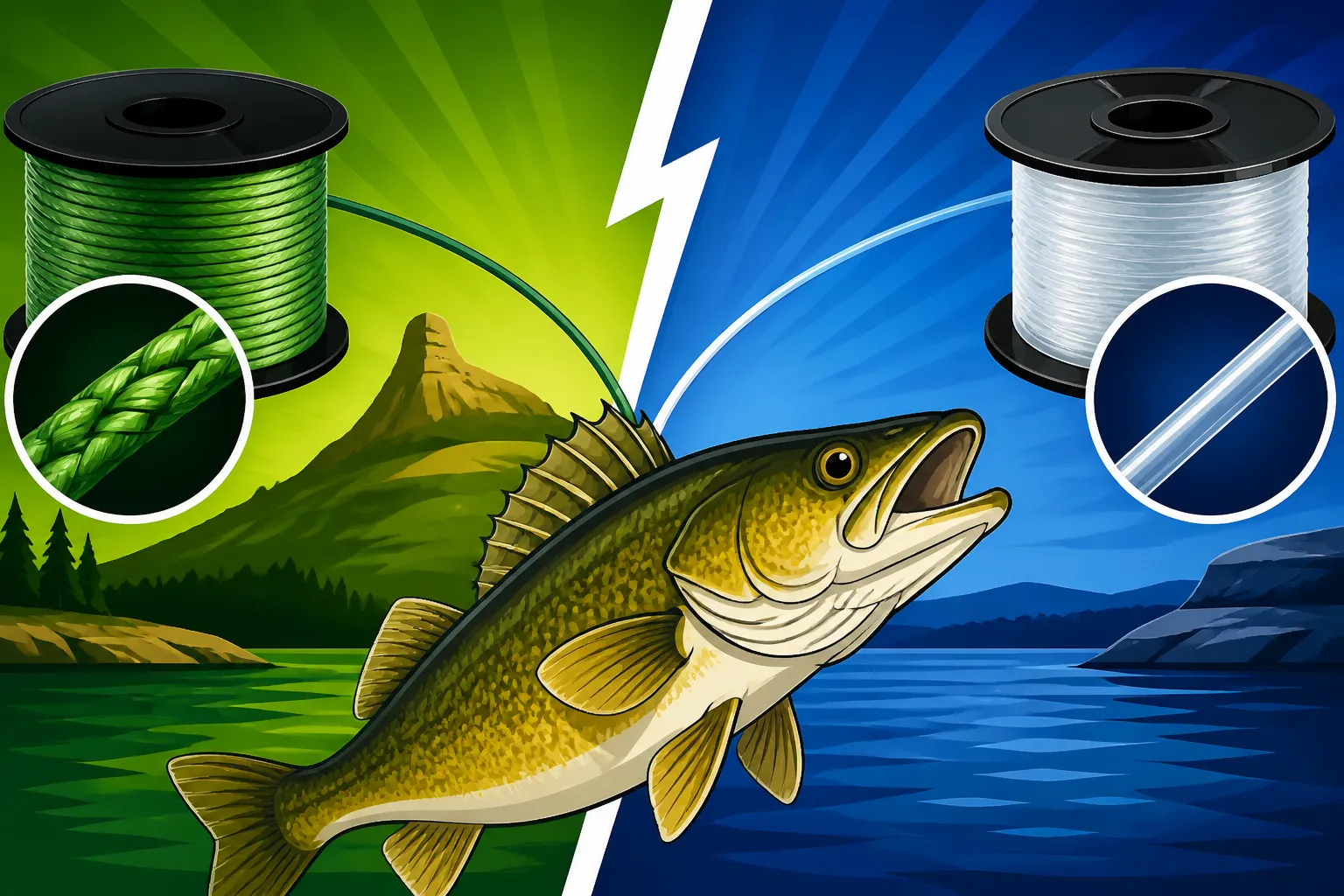
Braided line, often just called "braid," is a relative newcomer compared to monofilament, but it has revolutionized many aspects of fishing. Instead of a single strand, braid is made from multiple strands of synthetic fibers (like Spectra or Dyneema) woven together, much like a tiny rope. This construction gives it some truly unique characteristics that are highly advantageous for specific walleye applications.
The most defining characteristic of braided line is its near-zero stretch. This means that every bump, every weed tick, and every subtle walleye inhale is instantly transmitted up your line to your rod tip. For finesse techniques, deep water jigging, or when you need to drive a hook home over a long distance, this sensitivity is unparalleled. Braid also boasts an incredibly thin diameter for its breaking strength; a 10-pound test braided line might be the same diameter as a 4-pound mono. This thinner diameter means less water resistance, allowing your lures to dive deeper with less weight and offering superior casting distance. Best Rods and Reels for Walleye often specify setups that can handle braid.
Despite its many advantages, braid isn't a silver bullet. Its lack of stretch can be unforgiving if you set the hook too aggressively or if a large walleye makes a sudden powerful run, potentially tearing the hook out of its mouth. Knots can also be a bit trickier to tie correctly with braid, and some anglers find it can "dig in" on itself on the spool if not spooled tightly. Braid is also highly visible in most water conditions, meaning a clear fluorocarbon leader is often necessary, adding an extra knot and potential weak point to your setup. However, the benefits for specific situations, like fishing the deep structure of Lake Sharpe, often outweigh these considerations.
Key Differences and How They Impact Walleye Angling
When you're targeting walleye, those subtle differences between line types aren't just theoretical; they directly impact how well you can detect bites, fight fish, and present your lures. Let's dig into the crucial comparisons.
Sensitivity and Hooksets: Feeling the Light Bite
This is perhaps the biggest differentiator for walleye anglers. Walleye are notorious for their light, almost imperceptible bites, often feeling like nothing more than a slight increase in pressure or a tiny "tick." On a windy day, or when fishing deeper sections of a lake like Lewis and Clark Lake, this challenge is magnified.
With monofilament, that inherent stretch acts as a buffer. By the time a walleye's gentle inhale translates through 20, 30, or even 40 feet of stretchy line to your rod tip, the signal is significantly muted. You might feel a dull thud or simply notice your line going slack, but it's not the crisp, immediate feedback that can make all the difference. Hooksets, too, can be compromised. That stretch means you need a much longer, more powerful sweep of the rod to take up the slack and drive the hook home, especially when using a lot of line. For those light-biting walleye, this can mean missed opportunities.
Braided line, on the other hand, is like a direct neural connection to your lure. Its zero-stretch property means that even the most delicate "thump" or subtle change in resistance is instantly telegraphed to your hands. This allows you to react much faster, often before the walleye has a chance to drop the bait. When you set the hook with braid, the energy transfer is immediate and direct, resulting in much more solid hooksets, especially when vertical jigging or Jigging Techniques for Missouri River Walleye. This enhanced sensitivity can boost your confidence and your catch rate, particularly when the bite is tough.
Abrasion Resistance and Durability: Battling South Dakota Structure
South Dakota's walleye waters, especially the Missouri River reservoirs, are often characterized by diverse and sometimes unforgiving underwater structure. We're talking about rocky points, submerged timber, riprap shorelines, and even the pesky zebra mussels that can cover everything from dam faces to rock piles. How your line stands up to these hazards is critical for preventing break-offs and lost lures.
Monofilament generally has decent abrasion resistance, especially in thicker diameters. The smooth, somewhat softer surface of mono can sometimes slide over rough edges without instantly severing. However, repeated contact with sharp rocks or the razor-sharp shells of zebra mussels can quickly fray and weaken mono, leading to sudden break-offs. It's a good practice to regularly check the last few feet of your mono for nicks and re-tie as needed. Its durability against UV light and water absorption also means it degrades over time, so frequent line replacement is necessary, typically at least once a season, if not more for active anglers.
Braided line, while incredibly strong for its diameter, can be a mixed bag when it comes to abrasion resistance. High-quality braids are often coated, giving them a smoother, more durable exterior that can surprisingly withstand some friction. However, if a single strand of the weave gets cut or severely frayed, the integrity of the entire line can be compromised more quickly than mono. The biggest challenge with braid is its tendency to "saw" into itself on sharp edges under tension. A quick rub against a jagged rock or a patch of zebra mussels under the strain of a fighting walleye can sometimes cut braid more readily than you might expect, which is why a robust leader is almost always recommended when fishing around heavy cover or known abrasive structure.
Visibility and Stealth: The Walleye's Keen Eyesight
Walleye are known for being sight feeders, especially in clear water. While they're often associated with low light conditions, they can still be line-shy, and using an overly visible line can sometimes deter bites. This is where the visibility of your line becomes a significant factor.
Monofilament typically comes in a variety of colors, including clear, green, and low-vis green, which can blend into many water conditions quite well. The clear mono is often favored for its near invisibility, especially in waters with good clarity, like parts of the Black Hills trout streams (though we're talking walleye here!) or calmer sections of the Glacial Lakes. Because mono has some light-refracting properties similar to water, it can appear less obvious to a wary walleye, making it a viable option for direct tying to lures without a leader.
Braided line, by its very nature, is much more opaque and visible. It often comes in bright colors like green, yellow, or even high-vis orange, which are fantastic for anglers to see and track their line, but less so for camouflaging it from fish. Even the "low-vis" green braids are still far more visible than clear monofilament. This high visibility is a major reason why Best Fluorocarbon Leader for Clear Water Walleye is almost a non-negotiable accessory when fishing braid for walleye. The idea is to gain the benefits of braid's sensitivity and strength, but then connect a nearly invisible fluorocarbon leader directly to your lure, providing the stealth needed to trick those discerning walleye.
Casting Distance and Handling: User Experience on the Water
The practical aspects of how a line casts, how it behaves on your reel, and how easy it is to manage can greatly affect your overall fishing experience, especially during long days on the water.
Monofilament, with its inherent memory, can sometimes spring off the spool in coils, leading to tangles and shorter casts, particularly if it's been on the reel for a long time. However, it's generally softer and more pliable, making it easy to tie knots and less prone to digging into itself on the spool. For many anglers, particularly those using spinning gear for lighter lures or live bait rigs, mono provides a familiar and often forgiving casting experience. It handles well in a variety of conditions, though it can suffer from "wind knots" in extremely blustery weather, a common occurrence on South Dakota's wide-open reservoirs.
Braided line, with its slicker surface and much thinner diameter, typically casts like a dream. It sails through rod guides with minimal friction, allowing for significantly longer casts, which can be crucial for reaching distant structure or covering more water from shore. However, braid has its quirks. Its limpness can sometimes lead to tangles, especially if a loose loop comes off the spool during a cast (the dreaded "wind knot" or "braid nest"). It requires a consistently tight retrieve to prevent it from digging into itself on the spool, which can cause frustrating snags on subsequent casts. Tying knots with braid also requires a bit more care, as some knots can slip if not tied precisely and cinched down firmly. Despite these nuances, many experienced anglers prefer braid for its casting prowess, especially when using heavier lures or needing to throw a long distance on big water.
Practical Applications and When to Choose Which Line
Understanding the properties of mono and braid is one thing, but knowing when to choose which one for specific walleye fishing techniques in South Dakota is where the rubber meets the road.
Trolling for Walleye: Covering Water with Confidence
Trolling is a bread-and-butter technique for many South Dakota walleye anglers, especially on vast impoundments like Lake Oahe, Lake Sharpe, and Lake Francis Case. Whether you're pulling crankbaits, spinner rigs, or bottom bouncers, your line choice significantly impacts your presentation and success.
For trolling crankbaits, especially those designed to dive deep, braided line often reigns supreme. Its thin diameter and lack of stretch allow crankbaits to reach their maximum advertised depths with less line out. This means you can keep your lure in the strike zone longer and more precisely. The zero stretch also provides immediate feedback if your crankbait fouls with weeds or bumps bottom, allowing you to react quickly. Many anglers who troll for walleye on Lake Oahe swear by braid for its ability to transmit even the lightest "tick" of a walleye mouthing a lure, which on a long line of monofilament might feel like nothing at all. Trolling for Walleye on Lake Oahe is a technique where braid really shines for depth control.
Monofilament still has its place in trolling, particularly for live bait rigs or when a little "give" is desired. For example, if you're pulling bottom bouncers and spinner rigs, mono's stretch can absorb some of the shock when the bouncer occasionally hits rocks, preventing snags or snapping off your leader. It also provides a bit of cushion when a walleye strikes, reducing the chance of tearing the hook out of the fish's mouth during a hard turn or sudden surge. Some anglers prefer mono for shallower trolling with smaller crankbaits where extreme depth isn't the goal, valuing the shock absorption and easier handling.
Jigging and Live Bait Rigs: Feel and Presentation
Jigging is an art form for walleye, requiring exceptional feel and precise presentation. Whether you're vertical jigging with a minnow, snap jigging a plastic, or fishing a slip bobber with a leech, the line you choose will profoundly affect your ability to detect bites and effectively work your bait.
For vertical jigging, especially in deeper water or strong currents found on the Missouri River system, braided line is almost universally preferred. The sensitivity of braid allows you to feel the jig's contact with the bottom, subtle changes in current, and the incredibly light "thump" of a walleye inhaling your jig. This immediate feedback is crucial for capitalizing on those quick strikes. Paired with a sensitive rod, braid allows you to dissect structure with precision. When that walleye bites, the no-stretch line ensures a powerful, instantaneous hookset, even if you have a lot of line out. Jigging Techniques for Missouri River Walleye often rely on this direct connection.
Live bait rigs, such as Lindy Rigs or simple slip bobber setups, can be fished effectively with both mono and braid. For slip bobber fishing, where the visual cue of the bobber disappearing is your primary bite indicator, monofilament's lower cost and ease of knot tying (especially for bobber stops) can be appealing. The stretch of mono also allows for a bit of forgiveness if a walleye runs with the bait before you can set the hook. However, many serious live bait anglers still opt for braid, especially for bottom-contact rigs like Lindy Rigs. They value the ability to feel the sinker tick along the bottom and detect a fish picking up the bait more quickly. In these scenarios, a fluorocarbon leader is essential to keep the bait presentation natural and invisible.
Shore Fishing and Bank Access: Simplicity vs. Performance
Not everyone has a boat, and South Dakota offers fantastic opportunities for bank anglers, from the spillways of the Missouri River dams to state park ponds and accessible points on the larger reservoirs. For these situations, the practicalities of line choice take on a different nuance.
For the casual shore angler, or someone new to fishing, monofilament often provides a more forgiving and user-friendly experience. It's less prone to the tangle issues that can plague inexperienced braid users, and its stretch can help prevent break-offs when casting from static positions, particularly with heavier weights or when battling fish that might find snags near shore. You can often tie directly to your lure or rig without the complexity of adding a leader, simplifying your setup. When fishing popular spots like Lake Francis Case boat ramps or accessible areas near West Bend Recreation Area, mono can offer a straightforward and effective approach.
However, for the dedicated bank angler looking for maximum casting distance and sensitivity, especially when trying to reach deeper channels or far-off structure, braided line with a leader is tough to beat. The thin diameter and low friction of braid allow for truly impressive casts, giving you access to water that might be out of reach with mono. If you're using jigs or bottom rigs from shore, the sensitivity of braid will greatly increase your chances of detecting those light walleye bites that might otherwise go unnoticed. For power fishing from shore, such as casting large spoons or swimbaits, braid provides the backbone you need. Best Shore Fishing Spots on Lake Oahe often demand long casts, making braid a strong contender.
Ice Fishing for Walleye: Battling the Cold and the Bite
When the lakes freeze over and ice fishing takes center stage, the properties of your fishing line become even more critical, especially in the extreme cold and confined space of an ice fishing hole.
For ice fishing walleye, braided line has become incredibly popular, often paired with a short fluorocarbon leader. The no-stretch nature of braid is absolutely paramount when you're sight-fishing in clear water or trying to detect a subtle "lift" bite in 20 feet of water through a tiny hole. The sensitivity allows you to react instantly, which is vital when walleye are finicky and only barely mouthing the bait. Its thin diameter also means less line twist, and it cuts through the water with minimal resistance, allowing your small jigs and lures to drop quickly and effectively. Ice Fishing Gear Basics for Beginners often include a discussion about the merits of braid for its sensitivity in cold water.
However, braid does have a major drawback in extremely cold conditions: it can absorb water, which then freezes. This "ice up" can cause the line to stiffen, collect ice in your rod guides (if not using specific ice fishing rods with larger guides), and even cause your reel's drag to become erratic. While special ice fishing braids exist that are coated to resist water absorption, many anglers still prefer monofilament or fluorocarbon as their main line when temperatures plummet. Monofilament's stretch can also be helpful on lighter ice fishing rods, preventing small hooks from tearing out of a walleye's mouth, especially when you're pulling fish up through a narrow hole. Some still prefer the familiarity and ease of handling of mono in cold, gloved hands, particularly for panfish, but for walleye, many have embraced the sensitivity of braid.
The Hybrid Approach: Combining Braided Line with Leaders
For many seasoned South Dakota walleye anglers, the decision isn't "braid or mono," but rather "braid and fluorocarbon." This hybrid approach often provides the best of both worlds, leveraging the strengths of each line type while mitigating their weaknesses.
The Best of Both Worlds: Braid to Fluorocarbon Leaders
The strategy is simple yet highly effective: spool your main reel with braided line, then attach a length of fluorocarbon line as a leader. This setup allows you to take advantage of braid's incredible sensitivity, thin diameter, and direct hook-setting power, while benefiting from fluorocarbon's invisibility and superior abrasion resistance where it matters most – near your lure.
Imagine you're deep jigging for walleye on Lake Sharpe. You've got 50 feet of high-vis braided line on your reel, which allows you to feel every tiny tap and see your line move. But because you've tied a 6-foot fluorocarbon leader to the end of that braid, the walleye only sees the virtually invisible fluoro before it encounters your lure. If your lure bumps against a rocky bottom or a zebra mussel-encrusted log, the tough fluorocarbon leader is much more resistant to nicks and cuts than braid would be directly. This setup is particularly effective for any technique where line visibility and abrasion resistance near the bait are critical, which covers most walleye fishing scenarios. Best Fluorocarbon Leader for Clear Water Walleye goes into more detail about how to choose the right leader.
The key to this system's success, however, lies in the knot you use to connect the two lines. This connection is often the weakest point, so it must be strong and reliable. Popular choices include the FG knot, which is incredibly strong and slides smoothly through rod guides, or a double uni knot for those who find the FG knot too complex. Many anglers practice these knots repeatedly at home to ensure they can tie them quickly and correctly on the water. Reputable brands like Bass Pro Shops and Amazon offer a wide array of fluorocarbon leader materials, making it easy to experiment and find what works best for your specific needs.
Leader Material and Length Considerations
Choosing the right leader material and length is as important as choosing your main line. Fluorocarbon is the leader material of choice for walleye due to its low visibility, excellent abrasion resistance, and good knot strength. It's stiffer than monofilament, which can sometimes translate to a more natural presentation for certain lures, and it sinks faster than mono, helping your bait get down to the fish.
When it comes to leader strength, a good rule of thumb is to match or slightly exceed the breaking strength of your main braided line. For example, if you're using 10 lb braid, an 8-12 lb fluorocarbon leader is a common choice. If you're fishing in exceptionally clear water or facing very finicky fish, you might drop down to a lighter leader. Conversely, if you're in heavy cover or targeting larger walleye in known snaggy areas, a heavier leader might be warranted.
Leader length can vary depending on the technique and conditions. For situations where maximum stealth is needed, or if you're fishing in very clear water, a longer leader of 6-10 feet might be beneficial. This ensures that the highly visible braided main line is far away from the lure. For shorter presentations, like vertical jigging, a 2-4 foot leader might suffice. The balance is finding a leader length that provides adequate stealth and abrasion resistance without being so long that the knot connecting it to the braid repeatedly goes through your rod guides during casting and retrieving, which can cause wear and tear on both the line and your guides.
| Feature | Monofilament Line | Braided Line (often with fluoro leader) |
|---|---|---|
| Stretch | High (shock absorption) | Very Low / None (maximum sensitivity) |
| Sensitivity | Low (muffled bites) | High (immediate bite detection) |
| Visibility | Low (especially clear/green options) | High (needs fluorocarbon leader for stealth) |
| Abrasion Res. | Moderate (can fray on sharp objects, degrades over time) | Good (can be cut by sharp edges, but overall tough) |
| Diameter | Thicker for comparable breaking strength | Thinner for comparable breaking strength |
| Casting | Decent (can have memory, shorter casts) | Excellent (long casts, sails through guides) |
| Knot Tying | Easy, reliable for most knots | Can be tricky, specific knots needed (FG, double uni for leaders) |
| Cost | Generally more affordable | More expensive initially |
| Maintenance | Replace annually/bi-annually (UV degradation, memory) | Very durable, long lifespan (inspect leader frequently) |
| Best For | Beginners, trolling (shock absorption), light current, clear water direct tie | Deep water, strong current, jigging, long casts, structure fishing |
Disclaimer
This article is for general informational purposes only and does not constitute professional advice. Laws, prices and regulations vary by location and change over time. Consult a qualified professional for guidance on your specific situation.