Best Fluorocarbon Leader for Clear Water Walleye
There's nothing quite as frustrating as finding walleye on your fish finder, presenting what you think is the perfect bait, and still coming up empty. Often, the culprit in clear water isn't your bait or technique, but the visibility of your fishing line itself. This guide dives deep into why fluorocarbon leader is your secret weapon for tempting those wary South Dakota walleye in crystal-clear conditions, and how to choose and use it effectively.
Why Clear Water Makes Walleye Wary
Imagine yourself standing in a shallow, clear stream on a bright sunny day. You can see straight to the bottom, right? Fish, especially predators like walleye, have evolved incredible eyesight to hunt their prey in similar conditions. When the water is exceptionally clear, every little detail stands out, including your fishing line, and that can be enough to send a cautious walleye darting away.
The "Invisible Line" Advantage
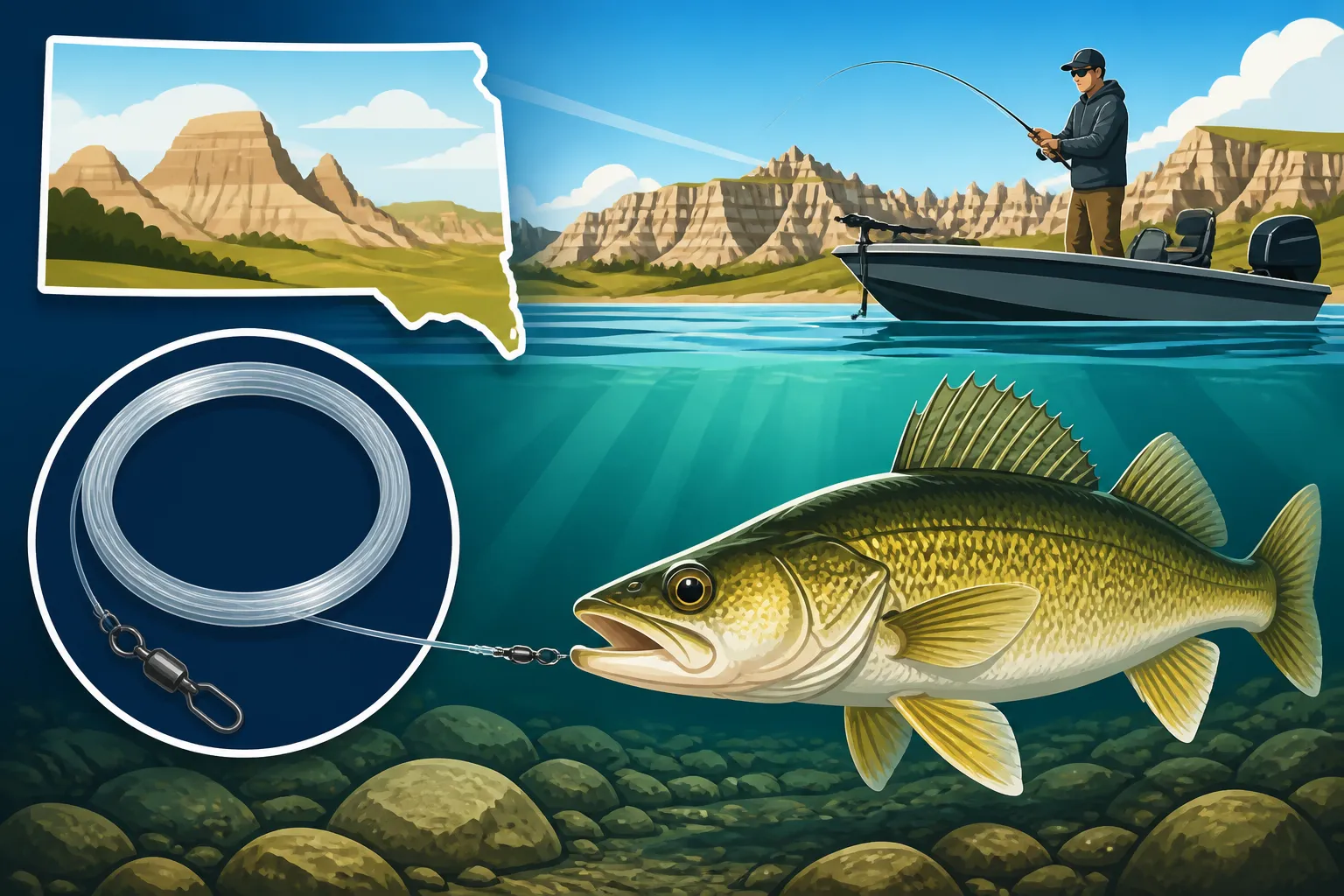
Walleye are sight feeders, particularly in clear water environments. If your main fishing line, whether it's braided or monofilament, is visible to them, they can become incredibly line-shy. They've seen enough hooks to know that a thick, opaque line connected to a bait usually means trouble. This is where fluorocarbon leaders truly shine. Unlike other lines, fluorocarbon has a refractive index very close to that of water, making it nearly invisible once submerged. It essentially disappears, presenting your bait or lure as naturally as possible, without the visual deterrent of a thick line leading to it. This "invisible line" characteristic gives you a significant advantage, allowing you to fool even the most educated fish into biting. It's not magic, but it feels pretty close when you start getting bites on days when others are struggling.
South Dakota's Clear Water Challenges
South Dakota boasts an incredible diversity of fishing waters, from the mighty Missouri River reservoirs to the serene Black Hills lakes and the fertile glacial lakes region. While many of these waters can be stained or murky at times, there are plenty of occasions and locations where the water clarity is exceptional, posing a real challenge for anglers. Think about the gin-clear waters of Pactola Reservoir or Sheridan Lake in the Black Hills, or even the cleaner sections of Lake Sharpe during calm, sunny periods. Even Lake Oahe, especially in certain bays or during extended dry spells, can become surprisingly clear.
In these conditions, sunlight penetrates deeper, making your line even more conspicuous. Walleye in these clear waters often exhibit heightened caution, spooking easily at shadows, boat noise, or an obvious line connection. They have more time to inspect your offering, and if something looks unnatural, they'll simply move on. This is particularly true for larger, older walleye that have survived many encounters with anglers. Using a standard, visible line in these conditions is like trying to hunt deer with a neon sign pointing at you. It dramatically reduces your chances. Mastering how to rig for these clear conditions, often detailed in a South Dakota Walleye Fishing Guide, is crucial for consistent success.
Understanding Fluorocarbon Leader Characteristics
Fluorocarbon isn't just "clear line"; it's a specific type of polymer with distinct properties that make it exceptionally well-suited for fishing in clear water. Understanding these characteristics is key to appreciating why it's such an essential tool in your tackle box, especially when targeting finicky walleye.
Key Properties of Fluorocarbon
One of the most talked-about benefits of fluorocarbon is its refractive index, which, as mentioned, is incredibly close to that of water. This is a scientific way of saying that light passes through it in a way that makes it almost imperceptible underwater. Unlike monofilament, which can refract light and create a visible "sheen" or "halo" effect, fluorocarbon essentially becomes part of the aquatic environment, helping your presentation look as natural as possible. This alone makes it invaluable for clear water situations.
Beyond its near invisibility, fluorocarbon is also renowned for its abrasion resistance. It's a much harder, denser material than monofilament, which means it stands up better to rubbing against rocks, timber, or even the sharp shell of a zebra mussel – a common concern in many South Dakota waters. This added toughness provides peace of mind, especially when fishing around structure where big walleye often lurk. Another significant advantage is its sensitivity. Being denser and having less stretch than monofilament, fluorocarbon transmits vibrations incredibly well. You'll feel subtle taps and pick-ups that might otherwise go unnoticed, allowing for quicker, more accurate hooksets. This low stretch also means a more direct connection to the fish, making those hooksets more powerful and effective.
Strength, Diameter, and Visibility: Finding the Balance
When choosing a fluorocarbon leader, it's a constant balancing act between strength, diameter, and visibility. While the goal is to be as invisible as possible, you also need enough strength to handle powerful walleye and the potential for snags. Generally, a thinner diameter line is less visible, but also less strong. So, how do you decide?
For most walleye applications, you'll be looking at fluorocarbon leader in the 6-pound to 20-pound test range. In truly crystal-clear water, on a calm, sunny day, you might opt for the lighter end of that spectrum, say 6 to 8-pound test, especially when using small jigs or light presentations. This reduces visibility to the absolute minimum. However, if you're fishing around heavy cover, targeting particularly large walleye, or trolling crankbaits where abrasion is a higher risk, stepping up to 12 or 15-pound test, or even 20-pound test, can be a wise choice. While slightly more visible, the added breaking strength and abrasion resistance might be worth the trade-off. Many anglers stock up on various pound tests from trusted brands, often finding a wide selection available at places like Bass Pro Shops or through online retailers like Amazon, ensuring they have the right tool for any condition.
Here's a quick reference to help you visualize the trade-offs:
| Leader Pound Test | Approximate Diameter (Relative) | Visibility (Relative) | Primary Use Case |
|---|---|---|---|
| 6 lb | Very Thin | Extremely Low | Finesse jigging, ultralight presentations |
| 8 lb | Thin | Very Low | General jigging, slip bobbers, cautious walleye |
| 10 lb | Medium-Thin | Low | All-around casting, light trolling, average walleye |
| 12 lb | Medium | Moderate | Trolling cranks, light bottom bouncing, larger walleye |
| 15 lb | Medium-Thick | Moderate-High | Heavy trolling, snaggy areas, trophy walleye |
| 20 lb | Thick | High | Extreme abrasion resistance, very large fish |
Keep in mind that the "relative" aspects depend on the specific brand and line formulation, but this table gives you a general idea of what to expect as you go up in pound test.
Choosing the Right Fluorocarbon Leader for Walleye
Selecting the perfect fluorocarbon leader isn't a one-size-fits-all situation. Your choice will largely depend on the specific fishing scenario, the size of walleye you're targeting, and the type of bait or lure you're presenting. It's about matching your gear to the conditions.
Pound Test Recommendations for Different Walleye Scenarios
For the subtle art of jigging in clear South Dakota waters, whether you're targeting early-season walleye on the Missouri River system or pitching plastics to structure in one of the glacial lakes, a lighter fluorocarbon leader is often preferred. Anglers commonly reach for 6 to 8-pound test when vertical jigging or casting lighter baits. This lighter leader offers maximum stealth, allowing your jig to fall naturally and without any noticeable line presence. It’s perfect for those finicky walleye that nip at a bait rather than aggressively striking it.
When you move to all-around casting with slightly heavier baits, or lighter trolling presentations with smaller crankbaits, stepping up to 10 to 12-pound test fluorocarbon leader provides a good balance. This range offers a bit more strength for bigger fish or unexpected snags, while still maintaining excellent invisibility in moderately clear water. This is a great choice for techniques like pulling a Lindy Rig or a simple snap jigging setup. If you're looking for Best Lures for South Dakota Walleye, remember that the right leader makes them even more effective.
For situations demanding greater strength, such as heavy trolling with large diving crankbaits in snag-prone areas, or bottom bouncing with heavier weights around rocky humps, a 15 to 20-pound test fluorocarbon leader comes into play. While it might be slightly more visible, the increased abrasion resistance and breaking strength are invaluable. This heavier leader prevents break-offs when a big walleye dives into submerged timber or rubs your line against sharp rocks. Anglers often find a good selection of these heavier leaders from reputable brands like Seaguar or Berkley Trilene at fishing specialty stores or online marketplaces such as Amazon, making it easy to prepare for any fishing condition.
Leader Length and Knotting Techniques
The length of your fluorocarbon leader can be surprisingly important. A good rule of thumb for most walleye applications is to start with a leader between 18 inches and 6 feet. If the water is exceptionally clear, the fish are extra spooky, or you're using a technique like slip bobber fishing where a longer, more natural drift is beneficial, leaning towards a longer leader (3-6 feet) can be advantageous. For aggressive fish or when fishing in slightly stained water, a shorter leader (18-36 inches) might suffice, as it's easier to cast and handle.
Connecting your fluorocarbon leader to your main line (often braided line for its sensitivity and strength) requires specific knots that can handle the slickness of both materials and the difference in their diameters. The FG knot is widely considered the strongest and most streamlined knot for this connection, passing through rod guides smoothly. However, it can be tricky to tie, especially for beginners. The Double Uni knot or the Albright knot are also excellent, easier-to-tie alternatives that offer good strength. Regardless of the knot you choose, practice is essential. A poorly tied knot is the weakest link in your entire setup and can cost you a trophy walleye. Always moisten your knots before tightening them fully to prevent friction damage, and trim tags close but not so close that the knot can unravel.
Integrating Fluorocarbon Leaders into Your South Dakota Walleye Rig
Now that we've covered the "why" and "what" of fluorocarbon leaders, let's talk about the "how." Incorporating this invisible line into your South Dakota walleye fishing strategy will significantly boost your success rate, especially when the conditions call for finesse.
When and Where to Use Fluorocarbon Leaders
Fluorocarbon leaders are not just a luxury; they're a necessity in specific situations across South Dakota's diverse waterways. Consider using them anytime you're faced with exceptionally clear water. This could be the case on sunny, calm days on the expansive Missouri River reservoirs like Lake Oahe or Lake Sharpe, where light penetration is high. It's also critical in many of the Black Hills lakes, known for their pristine, clear waters and sometimes finicky trout and walleye. Even some of the glacial lakes in eastern South Dakota can clear up significantly, making an invisible leader vital.
They are particularly effective when targeting finicky or highly pressured fish. Walleye that have seen a lot of fishing pressure, common in popular spots, develop a keen sense of caution. A visible line is often enough to send them packing. This is where a fluorocarbon leader truly shines. For techniques such as light jigging with soft plastics or live bait, a fluorocarbon leader ensures your presentation looks completely natural. When using slip bobbers over weed beds or rock piles, the leader allows your bait to suspend naturally without the visual distraction of the main line. Even with light trolling presentations using smaller crankbaits, a fluorocarbon leader can increase strikes from cautious walleye. Learning various South Dakota Missouri River Fishing Techniques will certainly involve understanding leader choices.
Common Mistakes and How to Avoid Them
Even with the best intentions, anglers can make mistakes when using fluorocarbon leaders that negate their benefits. One common error is using too heavy a line in clear water. While a heavier leader offers more abrasion resistance, it also becomes more visible. If the water is gin-clear, opting for a 15-pound test when an 8-pound test would suffice defeats the purpose of invisibility. Always try to use the lightest leader you can get away with for the conditions and target species.
Another major pitfall is poor knots that slip or break. As discussed, fluorocarbon is a bit stiffer and slicker than monofilament, requiring specific knots tied meticulously. Rushing a knot or using an incompatible one can lead to frustrating break-offs, often with your biggest fish of the day. Take your time, moisten the line, and cinch knots down slowly and firmly. If you are learning How to Jig for Walleye in Current, a strong knot is critical.
Not checking for abrasion frequently is another common oversight. While fluorocarbon is abrasion-resistant, it's not invincible. After fighting a fish, snagging on rocks, or even after a few hours of fishing, run your fingers down the last few feet of your leader. If it feels rough or nicked, cut off the damaged section and re-tie your lure. It's much better to lose a few inches of leader than a prized walleye. Finally, incorrectly storing leader material can impact its performance. Keep your fluorocarbon spools out of direct sunlight and away from extreme heat, as UV rays and high temperatures can degrade the line over time, making it brittle. Proper storage, just like understanding South Dakota Walleye Limits, ensures your gear is always ready for action.
Disclaimer
This article is for general informational purposes only and does not constitute professional advice. Laws, prices and regulations vary by location and change over time. Consult a qualified professional for guidance on your specific situation.