Best Fish Finders for South Dakota Lakes
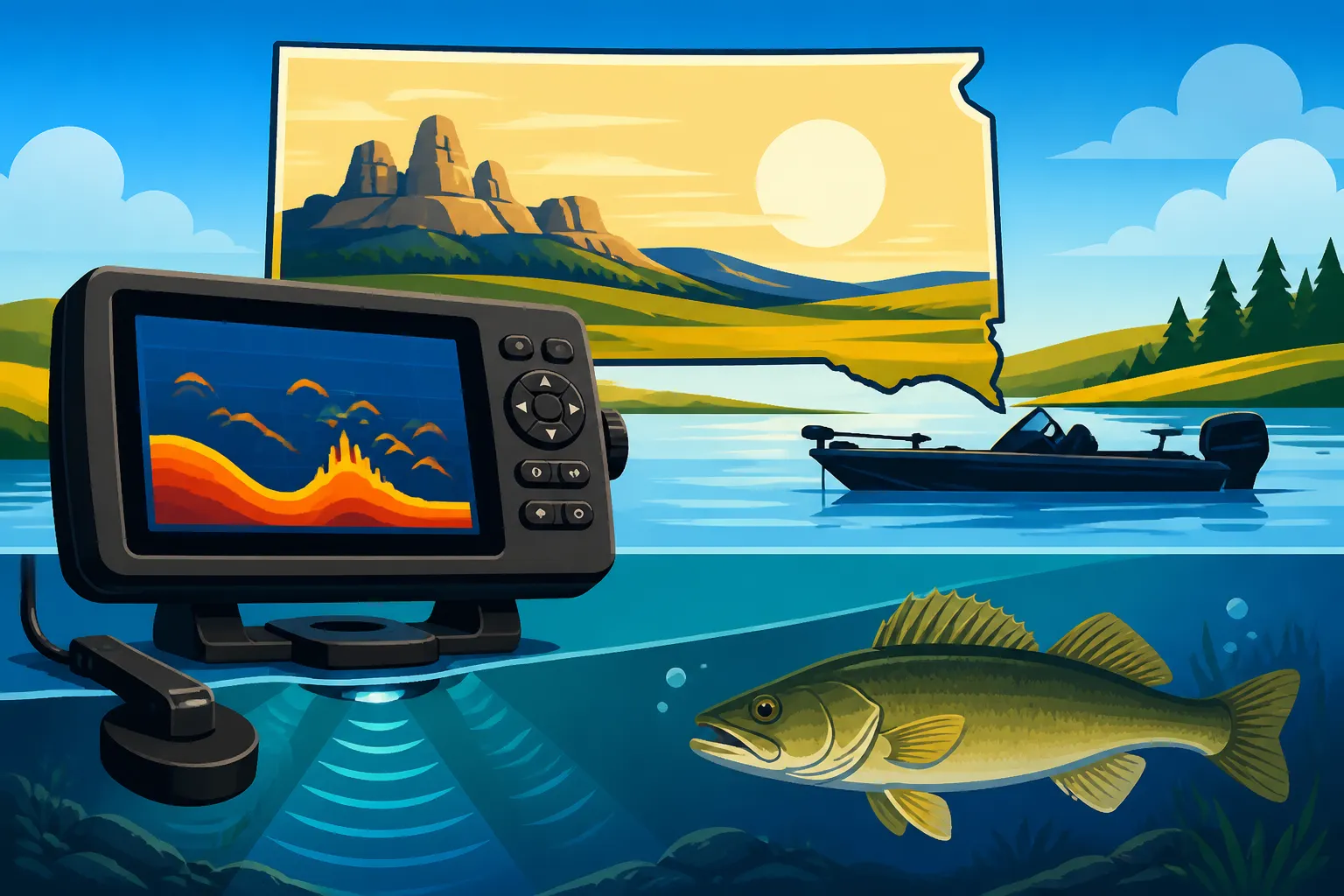
When you're out on the vast, beautiful waters of South Dakota, whether it's the sprawling expanse of Lake Oahe or the intricate glacial lakes of the east, there's nothing quite as frustrating as feeling like you're just blindly casting into the abyss. You know the fish are there, but finding them can feel like searching for a needle in a haystack. This comprehensive guide is here to unravel that mystery, diving deep into how modern fish finders can transform your South Dakota fishing experience, helping you locate structure, identify fish, and ultimately, put more bites in the boat.
Why a Fish Finder is Absolutely Essential for South Dakota Anglers
Let's be real, South Dakota's fishing landscape isn't your average farm pond. We're talking about massive river reservoirs, deep glacial lakes, and complex river systems. Relying solely on your intuition or local legend can leave you frustrated and empty-handed. A good fish finder isn't just a gadget; it's a vital piece of your fishing arsenal, acting as your eyes below the surface.
Navigating Vast Lakes and Reservoirs
Think about the sheer scale of places like Lake Oahe or Lake Sharpe on the Missouri River system. These are immense bodies of water, miles wide and hundreds of miles long, with depths that can plunge dramatically. Without a clear understanding of the underwater topography, you're essentially guessing where the fish might be holding. Is it a gradual slope? A steep drop-off? A hidden hump?
These massive reservoirs were once river valleys, meaning they have old river channels, submerged towns, and countless natural features now hidden beneath the surface. Covering these waters efficiently is impossible without some technological help. A fish finder with advanced mapping and sonar capabilities helps you quickly identify depth changes, follow contour lines, and understand the general layout of the lake bottom, saving you hours of unproductive searching and fuel. It's like having an underwater map that constantly updates itself in real-time, showing you the lay of the land, even when you're miles from shore.
Uncovering Hidden Structure and Cover
Fish, especially walleye, smallmouth bass, and crappie, are masters of relating to structure and cover. They don't just hang out randomly in open water; they use submerged humps, rock piles, old creek beds, standing timber, and weed lines for ambush points, protection, and feeding areas. The problem is, most of this prime real estate is completely invisible from the surface.
Imagine trolling across a seemingly flat stretch of Lake Francis Case, only to have your fish finder reveal a series of subtle depressions or a scattered rock field that's holding a school of walleye. Or perhaps you're on a glacial lake like Lake Kampeska, and your side imaging picks up a dense weed bed just outside your visible range, teeming with northern pike. These hidden gems are often overlooked by anglers without electronics, giving you a distinct advantage. A fish finder allows you to "see" these sanctuaries, identify the type of structure, and then target your casts or trolls precisely where the fish are hiding. This is critical for species like the elusive walleye, known for hugging tight to changes in bottom composition or subtle breaks.
Locating Fish in the Water Column
It's a common misconception that fish always hang tight to the bottom. While many species, especially walleye, do relate closely to the lake bed, others like crappie, white bass, and sometimes even schools of open-water walleye, can be suspended higher in the water column, chasing baitfish. If you're only looking at the bottom, you're missing a huge percentage of potential targets.
A modern fish finder allows you to interpret signals from various depths. You can see bait balls suspended at 15 feet over 40 feet of water, and often, larger fish marks cruising just below or through them. This ability to scan the entire water column is invaluable, especially when baitfish are schooling or when thermoclines form in deeper lakes during the summer. Knowing if fish are 10 feet down, 20 feet down, or hugging the bottom dramatically changes your approach, from adjusting your lure depth to altering your trolling speed or jigging technique. It’s all about putting your bait where the fish actually are, not where you hope they might be.
Understanding Fish Finder Technology: The Basics
Modern fish finders are marvels of technology, but the sheer number of acronyms and features can feel overwhelming. Let's break down the core technologies that make these units so powerful for South Dakota fishing.
2D Sonar: The Tried and True Workhorse
Traditional 2D sonar is the foundation of every fish finder, and it's been helping anglers for decades. It works by sending sound waves (pings) from a transducer mounted on your boat, typically on the transom or trolling motor. These sound waves travel down through the water, bounce off objects (fish, structure, bottom), and then return to the transducer. The unit interprets these echoes and displays them on your screen.
On your display, you'll see a history of these returns. The bottom will appear as a solid line, and fish often show up as "arches." The size and thickness of the arch can give you clues about the size of the fish. You'll also see baitfish as smaller marks or clouds, and underwater structure will be represented by various shapes and contours. 2D sonar is excellent for seeing what's directly below your boat and determining depth, making it indispensable for identifying drop-offs and bottom transitions. While newer technologies have emerged, 2D sonar remains incredibly reliable for quickly identifying fish and getting a general idea of the underwater landscape, even in deeper parts of the Missouri River reservoirs.
Down Imaging and Side Imaging: A Whole New Perspective
While 2D sonar is great, Down Imaging (often called DownScan, ClearVü, or MEGA Down Imaging depending on the brand) and Side Imaging (SideScan, StructureScan, or MEGA Side Imaging) revolutionized how anglers "see" underwater. These technologies use higher frequencies and thinner, fan-shaped beams to create incredibly detailed, photo-like images.
- Down Imaging provides a picture-perfect view of what's directly beneath your boat. Instead of arches, fish appear as distinct white dots or blobs, and structure like brush piles, individual rocks, or submerged trees are rendered with amazing clarity. You can easily differentiate a log from a rock or a fish from a piece of debris. This is incredibly helpful when you're trying to dissect a specific piece of cover you've found on your 2D sonar.
- Side Imaging is arguably the biggest game-changer for covering vast South Dakota waters. It sends sonar beams out to the sides of your boat, often up to hundreds of feet on either side, creating a panoramic view of the bottom and everything on it. This allows you to quickly scan large areas, pinpointing humps, old roadbeds, weed lines, or even schools of fish holding off to the side, without having to drive directly over them. Imagine trolling along a contour on Lake Sharpe and seeing a school of walleye tucked into a submerged point 50 feet to your left – Side Imaging makes it possible, saving you countless passes and helping you find productive areas much faster.
CHIRP Sonar: Clarity and Target Separation
CHIRP (Compressed High-Intensity Radiated Pulse) isn't a separate sonar type but an advanced way of processing traditional 2D and sometimes Down/Side Imaging. Instead of sending a single frequency ping, CHIRP transducers send a continuous sweep of frequencies (from low to high) over a period of time.
This broad band of frequencies provides much more data, which the fish finder then processes to create significantly clearer, more detailed images. What does this mean for you?
- Better Target Separation: You can distinguish individual fish even when they're tightly schooled or very close to structure. This is huge when trying to identify if those marks near a log are baitfish or trophy walleye.
- Reduced Noise and Interference: CHIRP technology does a better job of filtering out clutter and interference, giving you a cleaner image.
- Improved Depth Performance: CHIRP can penetrate deeper with better clarity, which is advantageous on the deeper sections of Lake Oahe or the main channels of the Missouri River.
- Clearer Readings at Speed: You get a more reliable bottom reading and fish detection even when you're on plane, which is useful for scouting.
Many modern units combine CHIRP with 2D, Down Imaging, and Side Imaging for the ultimate view of the underwater world.
Key Features to Look for in a South Dakota Fish Finder
When you're sifting through the options at Bass Pro Shops or browsing online at Amazon, certain features stand out as particularly important for tackling the diverse and challenging waters of South Dakota.
Screen Size and Resolution: Seeing the Details Clearly
This might seem obvious, but it's often underestimated. In South Dakota, you're dealing with big water and bright sun. A small, low-resolution screen can be incredibly frustrating.
- Screen Size: Larger screens (7 inches and up, but ideally 9-12 inches for serious anglers) make a huge difference, especially when you want to use split-screen views (e.g., 2D sonar, Side Imaging, and a map all at once). Trying to interpret tiny images and numbers while bouncing across waves is a recipe for a headache. The bigger the screen, the more detail you can comfortably see.
- Resolution: Resolution refers to the number of pixels on the screen. Higher resolution (e.g., 1024×600 pixels or higher) means a sharper, crisper image. This is crucial for distinguishing subtle details on Down or Side Imaging, like individual fish from structure, or the precise contour lines on your map. A high-resolution screen will reduce eye strain and make interpreting the data much easier, particularly under the harsh midday sun often found on the plains.
GPS and Mapping: Navigating and Marking Spots
For South Dakota's expansive and often featureless-looking waters, a robust GPS and mapping system is non-negotiable.
- Built-in GPS: This allows you to pinpoint your exact location, track your boat's movement, and navigate safely, especially in low light or fog. It's essential for getting back to that exact hot spot you found yesterday.
- Waypoint Management: The ability to mark waypoints (specific locations like a brush pile, a rock reef, or a fish school) and routes is invaluable. You can save your productive spots and return to them with precision, rather than trying to remember landmarks that all look the same.
- Pre-loaded Lake Maps/Charting: This is where many South Dakota anglers find immense value. High-quality mapping, often from companies like Navionics or LakeMaster (a favorite for its detailed contours of Missouri River reservoirs and glacial lakes), provides incredibly detailed contour lines, depth highlights, navigation markers, and points of interest. These maps show you underwater topography you can't see with sonar alone, making it easier to identify potential fishing areas. For example, knowing there's an old roadbed running through Lake Oahe at a specific depth can give you a major advantage. Always check if the unit comes with mapping for South Dakota or if you need to purchase a compatible card. South Dakota GFP Fishing Handbook Guide
Transducer Quality and Power Output
The transducer is the "eye" of your fish finder, sending and receiving the sonar signals. Its quality directly impacts the clarity and depth performance of your unit.
- Quality: A good quality transducer will provide a cleaner, stronger signal, leading to better images on your screen. Don't skimp here; a cheap transducer can cripple even the most expensive head unit.
- Power Output (RMS Wattage): Measured in RMS (Root Mean Square) wattage, higher power generally means better depth penetration and better performance in noisy or turbulent water. For deeper waters like parts of Lake Oahe or when fishing in strong currents on the Missouri River, a higher wattage transducer (e.g., 500W RMS or more) will give you more reliable readings.
- Transducer Types: You'll typically encounter transom-mount (most common, easy to install), thru-hull (drilled through the boat hull, best for high speeds, but complex install), and trolling motor mount (integrated into the trolling motor for clean setup and often great forward-looking sonar). Choose the one that best suits your boat and fishing style.
Different Types of Fish Finders for Various Angling Styles
Just like there are different types of fishing in South Dakota, there are different types of fish finders designed to meet those specific needs.
Console-Mounted Units: For Serious Boat Anglers
These are the big guns, typically found on bass boats, walleye boats, or larger multi-species vessels. Console-mounted units are designed for serious anglers who spend significant time on the water, especially on the large South Dakota reservoirs and lakes.
These units boast large, high-resolution screens (often 9 inches up to 16 inches or more), powerful processors, and the most advanced sonar technologies like MEGA Imaging, ActiveTarget, or LiveScope. They often feature networking capabilities, allowing you to link multiple units (one at the console, one at the bow), share transducer data, and even integrate with your trolling motor for features like "follow-the-contour" or "spot-lock." The advantages here are unparalleled power, crystal-clear imaging, and the ability to customize your setup for maximum efficiency. If you're chasing trophy walleye on Lake Oahe or competitive smallmouth on Lake Francis Case, a high-end console unit is almost a necessity. They offer the ability to run multiple sonar views simultaneously – a map on one side, Side Imaging on another, and perhaps 2D sonar or LiveScope on the third, providing a complete picture of your surroundings.
Portable Fish Finders: Great for Kayaks and Ice Fishing
Not everyone has a big boat, and that's perfectly fine! Portable fish finders are a fantastic solution for anglers using kayaks, canoes, small jon boats, or those who primarily focus on ice fishing during the long South Dakota winters.
These units are typically battery-operated, compact, and designed for easy transport and setup. Many come in a durable case with a small transducer that can be clamped to a boat transom or dropped through an ice hole. While they might have smaller screens and fewer advanced features than their console-mounted counterparts, modern portable units can still offer excellent 2D sonar, and some even include basic GPS and mapping. For kayak anglers navigating the smaller rivers or glacial lakes, a portable unit provides vital depth and fish location information without the hassle of a permanent installation. For ice anglers, dedicated ice fishing flasher/sonar units are designed to show real-time activity below your hole, crucial for jigging. South Dakota Ice Fishing Guide These units are lightweight, making it easy to move between holes, a common tactic for finding active perch or walleye through the ice.
Trolling Motor Integrated Systems
The integration of fish finders with electric trolling motors has been a game-changer for boat control and stealth. Many high-end trolling motors (like those from Minn Kota and Lowrance) now come with built-in transducers that directly connect to your fish finder head unit.
This offers several advantages:
- Clean Setup: No external transducer cables to snag or get in the way.
- Protected Transducer: The transducer is often protected within the trolling motor housing.
- Advanced Sonar Capabilities: Many of these integrated transducers support 2D sonar, Down Imaging, and even some offer forward-facing sonar straight from the trolling motor, giving you a view of what's ahead of your boat. This is incredibly useful for navigating shallow areas, finding submerged timber, or targeting fish you spot on the screen before you even get to them.
- Seamless Integration: When linked to a compatible fish finder, these systems allow for advanced features like "Spot-Lock" (which holds your boat precisely in one spot using GPS) or "follow-the-contour" (which automatically steers your boat along a specific depth line). These features free up your hands to focus entirely on fishing, a massive advantage when targeting specific structures on the Missouri River system.
Top Fish Finder Brands and Their Offerings for South Dakota
When you're ready to invest in a fish finder, you'll quickly notice a few dominant players in the market. Each has its strengths, and understanding them can help you choose the best fit for your South Dakota adventures. Many of these brands can be found at local outdoor retailers or on online platforms like Amazon and Bass Pro Shops.
Humminbird: Dominating with MEGA Imaging and LakeMaster
Humminbird has long been a favorite among walleye anglers, and for good reason. Their cutting-edge sonar technologies and mapping options make them incredibly popular on South Dakota's larger lakes and reservoirs.
Their flagship technology, MEGA Imaging (including MEGA Down Imaging and MEGA Side Imaging), offers unprecedented clarity and detail, allowing you to see individual branches on a submerged tree or clearly distinguish a rock from a fish at remarkable distances. This is a huge advantage when trying to pick apart subtle structure on Lake Oahe or identify schools of baitfish on Lake Sharpe. Humminbird also boasts LakeMaster mapping, which is particularly revered in the Midwest for its highly accurate contour lines, especially on many popular South Dakota lakes. LakeMaster maps often allow you to highlight specific depth ranges (e.g., all water between 15-20 feet), which is invaluable for targeting walleye or smallmouth bass at specific depths. Their units are also known for their intuitive user interfaces and robust build quality, capable of handling the demanding conditions often found on South Dakota waters. If you're serious about finding structure and fish with incredible detail, Humminbird is definitely a brand to consider.
Lowrance: Elite with ActiveTarget and C-MAP
Lowrance has been a pioneer in marine electronics for decades and continues to innovate with powerful sonar and user-friendly systems. They are another top choice for South Dakota anglers.
Lowrance's ActiveTarget Live Sonar is a major draw, allowing anglers to see fish and structure in real-time, similar to watching an underwater video. You can see your lure approach a fish, watch its reaction, and adjust your presentation instantly. This interactive technology is a game-changer for targeting specific fish or understanding how they relate to cover, especially useful for vertical jigging or casting for suspended fish. Their traditional sonar offerings, including StructureScan 3D and DownScan Imaging, also provide excellent clarity. For mapping, Lowrance units utilize C-MAP charting, which offers detailed cartography for a vast number of lakes and coastal areas, including many within South Dakota. Lowrance units are known for their bright, clear displays and often feature touch screen functionality, making navigation and customization quick and easy. Many anglers appreciate the user-friendliness of Lowrance interfaces.
Garmin: Innovative with LiveScope and Navionics
Garmin, a titan in GPS technology, has rapidly become a major player in the fish finder market, largely due to its revolutionary LiveScope system.
Garmin's LiveScope is another form of real-time, forward-facing sonar that has truly changed how many anglers fish. It provides incredibly clear, almost photographic live images of fish swimming, bait schools moving, and lures descending, all in front of, below, or to the sides of your boat. It's like having an underwater camera with a huge field of view and crystal-clear imagery, making it incredibly effective for targeting individual fish or understanding how schools are behaving. Imagine scanning a point on Lake Francis Case and seeing a smallmouth bass actively chasing bait, allowing you to cast directly to it. Garmin units also integrate with Navionics mapping, another highly detailed charting system popular across North America, offering excellent coverage for South Dakota lakes and rivers. Their units often boast vibrant, high-definition displays and a reputation for reliability and intuitive design.
Raymarine and Simrad: Other Strong Contenders
While Humminbird, Lowrance, and Garmin tend to dominate the recreational fishing market in South Dakota, brands like Raymarine and Simrad also offer high-quality, feature-rich fish finders that are certainly worth a look, especially for those seeking professional-grade marine electronics.
- Raymarine is known for its robust, reliable systems, often favored by saltwater anglers but equally capable on freshwater. Their Chirp DownVision and SideVision technologies provide excellent detail, and their LightHouse operating system is highly intuitive.
- Simrad offers advanced navigation and sonar systems, often seen on larger vessels. Their units feature powerful processors, high-resolution screens, and comprehensive networking capabilities. While perhaps less common on typical walleye boats in South Dakota, their quality and performance are top-tier for those who demand the best.
| Brand | Key Sonar Technology | Mapping Compatibility | Live Sonar Option | Common Strengths for SD Anglers |
|---|---|---|---|---|
| Humminbird | MEGA Imaging (Down/Side), CHIRP | LakeMaster, Navionics | No (Traditional) | Ultra-high detail imaging, exceptional LakeMaster mapping for SD. |
| Lowrance | Active Imaging, DownScan, SideScan | C-MAP, Navionics | ActiveTarget Live | Real-time sonar, user-friendly interface, strong mapping. |
| Garmin | ClearVü, SideVü, CHIRP | Navionics, Garmin Quickdraw | LiveScope | Industry-leading live sonar, excellent GPS, easy to use. |
Installation and Setup Tips for Optimal Performance
Even the most advanced fish finder won't perform optimally if it's not installed and set up correctly. This is where many anglers unknowingly hinder their unit's potential.
Transducer Placement: Getting a Clear Signal
The transducer is the most critical component for clear sonar returns. Its placement dictates everything.
- Avoid Obstructions: The transducer needs a clear, unobstructed "view" of the water below. Avoid placing it directly behind strakes, rivets, or other boat features that can create turbulent water or block the sonar beam. Turbulence generates air bubbles, which scatter the sound waves and create "noise" on your screen, resulting in a poor image.
- Mounting Options:
- Transom Mount: The most common and easiest to install. Ensure it's mounted low enough to be in clean water at all speeds, but not so low that it drags or is easily damaged. The bottom of the transducer should be slightly below the hull.
- Thru-Hull: Requires drilling a hole in the boat, but provides the cleanest water flow, ideal for high speeds and deeper water. Best left to a professional installer.
- In-Hull (Shoot-Through): Mounted inside the hull, shooting through fiberglass. No drag or risk of damage, but only works with certain hull types and sacrifices some power and detail.
- Trolling Motor Mount: Many transducers are designed to be mounted directly to the shaft or head of a trolling motor. This is excellent for slow trolling or spot-locked fishing, providing clear views away from the main motor's turbulence.
- Leveling: Ensure the transducer is perfectly level, both front-to-back and side-to-side. An unlevel transducer will skew your side imaging and provide inaccurate readings. Take your time with this step; it's worth it for clear, consistent readings on the vast waters of South Dakota.
Powering Your Unit: Battery and Wiring Best Practices
Your fish finder is a sensitive electronic device, and it needs clean, consistent power to perform its best.
- Dedicated Battery: Ideally, run your fish finder and other sensitive electronics off a separate deep-cycle battery from your starting motor. This prevents voltage drops from cranking your engine from affecting your electronics and ensures a stable power supply.
- Proper Gauge Wiring: Use appropriately sized (gauge) wires for the distance from the battery to your unit. Too thin a wire will cause voltage drop, leading to poor performance, especially under load. Consult your unit's manual for recommended wire gauge.
- Fuse Protection: Always include an inline fuse near the battery (within 7 inches of the positive terminal) to protect your unit from power surges. Use the fuse rating recommended by the manufacturer.
- Avoid Interference: Route power and transducer cables away from other electrical wires, especially those for your engine or trolling motor. Electrical interference can appear as streaks or lines on your screen. Keep transducer cables away from VHF radio antennae cables, as well. A clean power supply means a clean screen display.
Initial Settings and Customization
Out of the box, your fish finder will have default settings, but these are rarely optimized for South Dakota's varied conditions.
- Start with Auto: Begin by using the "Auto" or "Smart" settings for sensitivity and gain. This gives you a baseline.
- Adjust Sensitivity/Gain: Gradually adjust sensitivity (how much detail the unit picks up) and gain (how bright the returns are) up or down. If your screen is too noisy (lots of clutter), reduce sensitivity. If you're not seeing much, increase it. The goal is to see fish clearly without too much interference. This will vary depending on water clarity, depth, and bottom composition.
- Frequency Selection: Most units offer different frequencies (e.g., 83 kHz, 200 kHz, 455 kHz, 800 kHz, 1.2 MHz). Lower frequencies penetrate deeper and provide a wider cone, while higher frequencies offer more detail and better target separation in shallower water. Experiment with different frequencies for different depths and target species.
- Color Palettes: Experiment with different color palettes on your screen. Some anglers find certain color schemes make it easier to differentiate fish from structure or see subtle bottom changes, especially in varying light conditions. The goal is to find what works best for your eyes. Remember, what works for walleye in the Missouri River might be different for trout in the Black Hills. South Dakota Trout Fishing Guide
Advanced Fish Finder Techniques for South Dakota Success
Once you've got your fish finder installed and basic settings dialed in, it's time to learn how to really put it to work and unlock its full potential on South Dakota's diverse waterways.
Interpreting Your Screen: What Are You Really Seeing?
This is where experience comes into play. Learning to accurately interpret the kaleidoscope of colors and shapes on your screen is crucial.
- Fish Arches vs. Marks: On 2D sonar, a true fish will often appear as an arch. The thicker and more complete the arch, generally the larger the fish. If your boat passes directly over a fish, you'll get a full arch. If you pass to the side, it might be a partial arch or just a "hook." Isolated dots are often smaller fish or bait. With Down Imaging, fish usually appear as distinct white dots or blobs, separate from structure.
- Bottom Hardness: Pay attention to the thickness and color of the bottom return on your 2D sonar. A thicker, more intense return (often appearing brighter or a different color on some palettes) indicates a harder bottom (rock, gravel). A thinner, less intense return suggests a softer bottom (mud, silt). This is vital information, as different species prefer different bottom types. Walleye often relate to harder bottoms.
- Bait Balls: These appear as dense clouds or schools of small marks. Where there's bait, there are usually predators. If you see large arches or distinct marks on the edge or just below a bait ball, you're in a prime location.
- Structure Identification: Practice differentiating between different types of structure. A jagged, irregular bottom line might be rock. A series of vertical lines could be standing timber or brush. A distinct mound rising from the bottom is a hump. Side Imaging is particularly effective for mapping out these features over a wide area. How to Read Contour Lines on a Lake Map
Using Multiple Views Simultaneously
Modern fish finders allow you to split your screen into multiple panels, each displaying a different sonar view or map. Mastering this capability is incredibly powerful for South Dakota anglers.
- 2D Sonar + Side Imaging: This is a fantastic combination for scouting. Use Side Imaging to quickly scan a wide area for structure or schools of fish. Once you spot something interesting off to the side, use your 2D sonar (which provides more detail directly under the boat) to get a clearer picture as you pass over it.
- Map + Down Imaging: When navigating a new area, having your detailed lake map on one side and Down Imaging on the other is invaluable. You can see your position relative to contours and waypoints while simultaneously getting a clear, photo-like view of what's directly beneath your boat. This is excellent for pinpointing specific features on a map, such as a creek channel edge on Lake Francis Case, and seeing precisely what's there.
- Live Sonar + Map/2D: If you have a live sonar system like ActiveTarget or LiveScope, pairing it with your map or 2D sonar can provide a complete picture. Use the map to navigate to a likely spot, then switch to live sonar to actively scan for fish and watch how they react to your bait. This is a truly advanced technique for maximizing your fishing efficiency.
Spot-Lock and Follow-the-Contour Integration
For anglers using GPS-enabled trolling motors, integrating your fish finder takes boat control to an entirely new level.
- Spot-Lock: This incredible feature allows your trolling motor to use GPS to hold your boat precisely over a marked waypoint or a spot you've stopped on. Imagine finding a small rock pile holding walleye on Lake Sharpe. With Spot-Lock, you can anchor electronically, freeing you up to fish without constantly adjusting your position due to wind or current. This is a game-changer for precise presentations.
- Follow-the-Contour: Many systems can now link your fish finder's mapping (like LakeMaster or C-MAP) directly to your trolling motor. You can select a specific depth contour line on your map, and your trolling motor will automatically steer your boat along that exact line. This is incredibly effective for targeting walleye or smallmouth bass that are relating to a particular depth on a long break line. You can focus on fishing while your boat maintains perfect position. Trolling for Walleye on Lake Oahe This level of integration reduces fatigue and significantly increases your time with your lure in the strike zone.
Maintaining Your Fish Finder for Longevity
Your fish finder is an investment, and proper care will ensure it serves you well for many seasons on the water. South Dakota weather can be tough, so protecting your electronics is key.
Cleaning and Protection
Regular cleaning and protection are crucial, especially with the dust, water, and sun exposure common on South Dakota fishing trips.
- Screen Cleaning: Always use a clean, soft microfiber cloth and a dedicated screen cleaner (or just water) to wipe down your display. Avoid harsh chemicals or abrasive materials, which can damage the anti-glare coating. Always power off the unit before cleaning.
- Unit Protection: When not in use, cover your fish finder with its protective cover. This shields the screen from UV rays (which can degrade the display over time), dust, and accidental scratches during transport. If you keep your boat outdoors, consider removing the unit entirely and storing it indoors when not in use.
- Water Exposure: While units are designed to be water-resistant, avoid direct, prolonged exposure to heavy rain or splashing if possible. Ensure all cable connections are tight and sealed to prevent water intrusion.
Software Updates and Troubleshooting Common Issues
Just like your phone or computer, your fish finder runs on software, and manufacturers frequently release updates.
- Firmware Updates: Periodically check your manufacturer's website (Humminbird, Lowrance, Garmin, etc.) for firmware updates. These updates often improve performance, add new features, fix bugs, and enhance compatibility with accessories. They are usually free and can be easily downloaded to an SD card and installed on your unit.
- Common Issues & Troubleshooting:
- Loss of Depth Reading: This is often a transducer issue. Check for marine growth, damage, or air bubbles. Ensure the transducer is securely mounted and in clean water. Also check power connections.
- Interference/Noise on Screen: Can be caused by electrical interference (check wiring, separate power sources), other sonar units, or even boat speed creating turbulence around the transducer. Try adjusting frequency or sensitivity.
- GPS Inaccuracy: Ensure you have a clear view of the sky. Check for obstructions. Sometimes a simple reset or firmware update can resolve minor GPS glitches.
- Unit Not Powering On: Check battery connections, fuses, and power cables.
Storage and Winterization
As the South Dakota ice fishing season gives way to the open water, and eventually to winter, proper storage is essential.
- Remove Units: During the off-season, always remove your fish finder head units from the boat. Store them in a dry, temperature-controlled environment indoors. This protects them from extreme cold, moisture, and potential theft.
- Battery Care: Disconnect your marine batteries and store them in a cool, dry place. Charge them periodically throughout the winter to prevent sulfation and ensure they're ready to go for spring. How to Winterize a Boat in South Dakota
- Cable Inspection: Before each season, inspect all cables for cuts, cracks, or corrosion. Replace any damaged cables to prevent future issues.
- Transducer Inspection: Check your transducer for any signs of damage or wear. Clean off any built-up residue. Ensuring your transducer is in prime condition at the start of the season means clearer images all year long.
By following these tips, your fish finder will be a reliable partner in your South Dakota fishing adventures for many years to come.
Disclaimer
This article is for general informational purposes only and does not constitute professional advice. Laws, prices and regulations vary by location and change over time. Consult a qualified professional for guidance on your specific situation.