Best Black Hills Streams for Brook Trout
Catching a native brook trout in the pristine, cold waters of the Black Hills is a truly special experience, but knowing exactly where to find these vibrant, elusive fish can feel like searching for a needle in a haystack. This guide is designed to help you pinpoint the best streams, understand the unique challenges of Black Hills brook trout fishing, and equip you with the knowledge to enjoy a successful and responsible angling adventure in South Dakota's beautiful western mountains.
The Elusive Brook Trout of the Black Hills
The brook trout (Salvelinus fontinalis) might carry the name "trout," but they're actually a species of char, closely related to lake trout and Arctic char. In the Black Hills, these fish are celebrated for their striking beauty and the challenging, rewarding pursuit they offer. Understanding their unique characteristics and preferred habitats is your first step towards finding them.
Identifying Black Hills Brook Trout
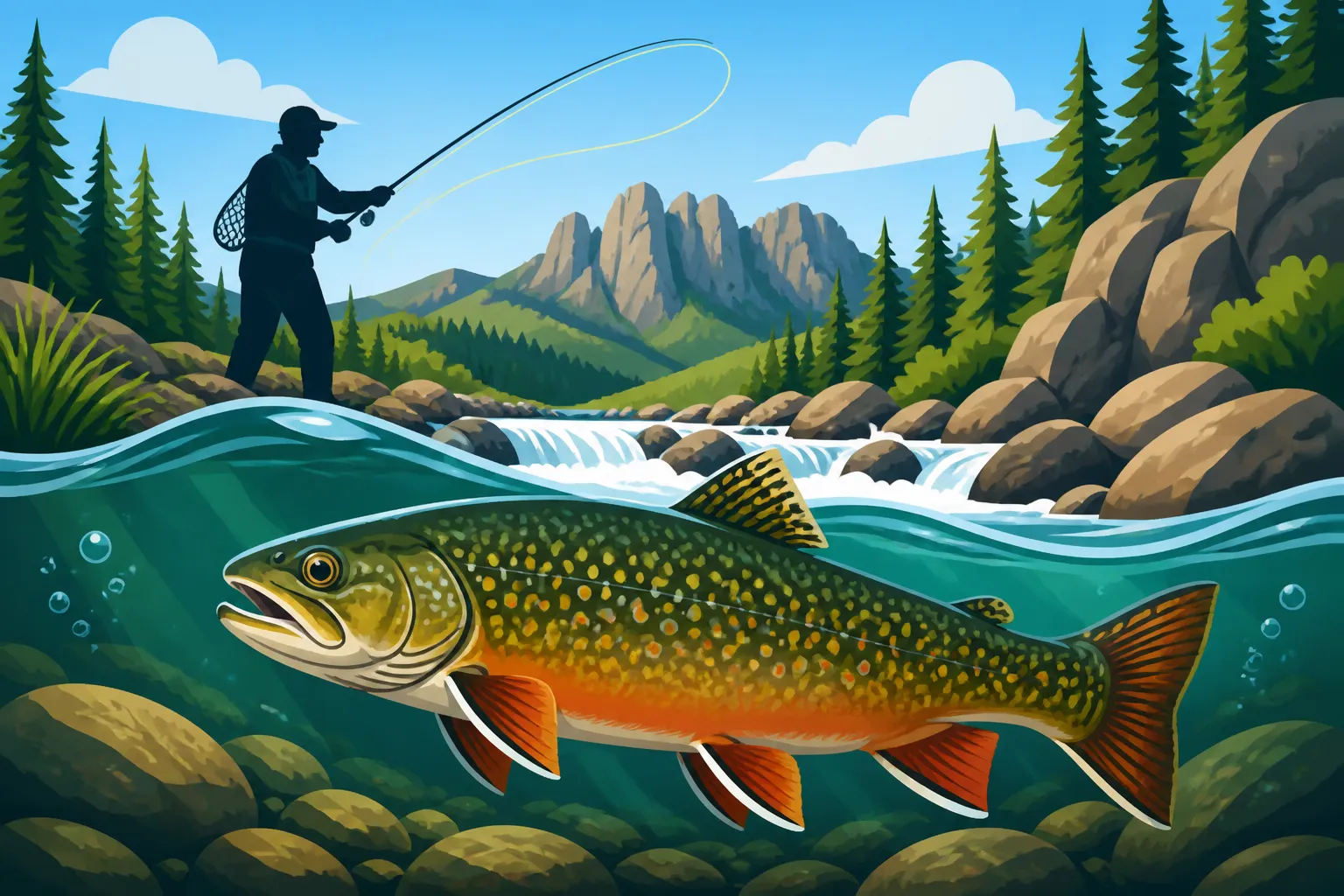
When you reel in a brook trout from a Black Hills stream, you'll immediately notice its distinct features. They are truly one of the most colorful freshwater fish. Look for the worm-like markings, known as "vermiculations," on their dark olive-green backs and dorsal fins. Their sides are typically darker with scattered light spots, often featuring vibrant red or orange spots surrounded by distinct blue halos—a characteristic often referred to as "halos" or "areolae." Their lower fins, especially the pectoral, pelvic, and anal fins, will have a noticeable white leading edge, often followed by a black stripe and then a reddish-orange hue. The belly can range from white to a deep orange or red, especially in spawning males. These fish typically run smaller in the Black Hills' headwater streams, with most catches being between 6 to 12 inches, though larger specimens are occasionally encountered.
Preferred Habitat and Forage
Brook trout are picky residents, preferring specific environmental conditions that are increasingly rare in many parts of their native range. In the Black Hills, you'll find them almost exclusively in the coldest, clearest, and most oxygenated headwater streams and their smaller tributaries. They thrive in waters with temperatures consistently below 68°F (20°C), often much colder. These streams are usually characterized by dense overhead canopy from trees and shrubs, which helps keep the water cool and provides ample cover.
Their ideal habitat also includes plenty of structure: fallen logs, undercut banks, large rocks, and deep pools created by natural stream features. These structures offer refuge from predators, strong currents, and a place to ambush prey. Brook trout are opportunistic feeders, primarily dining on aquatic insects like mayflies, caddisflies, and stoneflies in their larval and adult stages. They'll also readily consume terrestrial insects that fall into the water, such as ants, beetles, and grasshoppers, as well as small crustaceans and even tiny baitfish or salamanders when available. If you're exploring the broader region, you might also be interested in a general guide to Fish Species Found in Black Hills Streams.
A History of Stocking and Conservation
While brook trout are native to eastern North America, their presence in the Black Hills is primarily a result of extensive stocking efforts that began in the late 19th and early 20th centuries. These initial stockings were incredibly successful, leading to the establishment of numerous wild, reproducing populations throughout the region. Today, many of the brook trout you'll encounter in the Black Hills are descendants of these historical stockings and are considered naturalized.
The South Dakota Game, Fish and Parks (GFP) manages these fisheries carefully, recognizing their ecological and recreational value. Conservation efforts often focus on protecting and restoring their cold-water stream habitats, which are vulnerable to warming temperatures and habitat degradation. For anglers, this often means practicing catch and release, particularly for larger fish, to help sustain robust populations. The health of these wild brook trout populations is a testament to the ongoing conservation work and the resilience of these beautiful fish. You can learn more about specific angling requirements in the South Dakota Fishing Regulations Explained guide.
Premier Black Hills Streams for Brook Trout
The Black Hills offer a network of streams and creeks, but only a select few truly shine when it comes to consistently finding brook trout. These waters often require a bit more effort to access, but the rewards—solitude and stunning fish—are well worth it.
Spearfish Creek's Upper Reaches
Spearfish Creek is arguably the crown jewel of Black Hills trout fishing, particularly its upper sections above Spearfish Canyon. While the lower, more accessible parts of the creek are famous for their brown and rainbow trout, the headwaters and smaller tributaries feeding into it hold thriving populations of brook trout. As you move upstream from communities like Spearfish, the canyon narrows, the water gets colder, and the brook trout become more prevalent.
Access can be a bit challenging, often requiring some hiking along rough trails or through dense vegetation. Look for public access points within the Black Hills National Forest. The trick is to focus on the feeder streams and the very highest reaches of Spearfish Creek where the water is truly pristine and flows fast over a rocky bottom. These areas, typically above 4,500 feet elevation, provide the perfect cold-water environment that brookies love. If you're planning a trip to this specific area, a Black Hills Trout Stream Fishing Guide can offer more localized advice.
Rapid Creek's Headwaters and Tributaries
Similar to Spearfish Creek, Rapid Creek offers different angling experiences along its length. While the waters below Pactola Dam are renowned for their exceptional rainbow and brown trout fishing, the headwaters of Rapid Creek, upstream of Pactola and Sheridan lakes, are prime brook trout territory. These sections are typically smaller, colder, and more secluded, offering a true mountain stream experience.
Exploring the various tributaries that feed into Rapid Creek above the reservoirs is often where you'll find the highest concentrations of brook trout. These smaller channels might not be marked on every map, but they are crucial habitats for brookies. Access might involve navigating through private land, so always be mindful of property boundaries and seek permission if necessary. For those curious about other trout species in the region, you might check out the Best Black Hills Streams for Brown Trout.
Castle Creek and Its Tributaries
Castle Creek, flowing through the heart of the Black Hills near areas like Custer and Hill City, is another excellent destination for brook trout. While it’s also known for brown and rainbow trout in its middle and lower sections, venturing into its upper reaches and the numerous small feeder streams that contribute to it will significantly increase your chances of finding brookies. These areas are often less pressured than the more famous sections of Rapid or Spearfish creeks, offering a more tranquil fishing experience.
The terrain around Castle Creek can be rugged, featuring dense forests and steep canyons, which keeps angler pressure low in many spots. This wilder environment is exactly where brook trout thrive, utilizing the abundant cover and colder water temperatures. Don't be afraid to put in some legwork and hike away from easily accessible points; the payoff can be a string of feisty brook trout in an untouched setting.
Exploring Smaller, Unnamed Feeder Streams
Beyond the major named creeks, the Black Hills are crisscrossed by countless smaller, often unnamed, feeder streams and spring creeks. These hidden gems, though they may hold smaller fish, often contain some of the most vibrant and genetically pure brook trout populations. They are typically narrow, heavily canopied, and can be difficult to access, making them an adventurous pursuit for anglers seeking true solitude and a challenge.
These tiny streams are the lifelines for brook trout, acting as critical spawning grounds and nurseries. Many of them are spring-fed, ensuring a consistent supply of cold water even during the hottest parts of summer. Discovering these spots often involves consulting detailed topographical maps, looking for areas with dense forest cover and high elevations, and then doing some old-fashioned exploration. While the fish might not be trophy-sized, the experience of finding a wild, colorful brook trout in a stream you had to truly discover is immensely rewarding.
Essential Techniques for Black Hills Brookies
Brook trout in the Black Hills, especially in their preferred small stream environments, require a thoughtful approach. They are not typically shy, but their habitat often demands stealth and precision. Whether you prefer fly fishing or spin fishing, light tackle and a careful presentation are key.
Fly Fishing for Brook Trout
Fly fishing is arguably the most effective and enjoyable way to target brook trout in the Black Hills. Their diet primarily consists of insects, making fly patterns incredibly effective. Given the tight quarters of many brook trout streams, often with overhanging branches, a shorter fly rod (7' to 8' in length) in a 2 to 4-weight is ideal for accuracy and easier casting.
- Dry Flies: Brook trout are often eager to rise to a well-presented dry fly. Small, attractor patterns like a Parachute Adams, Elk Hair Caddis, Royal Wulff, or even a smaller Stimulator in sizes #14-20 are excellent choices. Terrestrial patterns such as small ant or beetle imitations can also be deadly, especially during late summer and early fall when naturals are abundant. Focus on precise casts to pockets, undercut banks, and the edges of riffles.
- Nymph Fishing: When fish aren't rising, nymphing is a reliable method. Small bead-head nymphs like a Pheasant Tail Nymph, Prince Nymph, Hare's Ear, or even a small Squirmy Wormy in sizes #14-20 can be very effective. Use a short leader and consider techniques like "tight-line nymphing" or "Euro nymphing" for maximum feel and minimal drag in swift currents. Remember to try different depths, as brookies might be holding close to the bottom or suspended in the water column. For more specific techniques, you can explore Nymph Fishing Techniques for Trout Streams.
- Streamers: Don't overlook small streamers, especially if you're targeting slightly larger fish or fishing deeper pools. Patterns like a small Woolly Bugger (black, olive, or brown) in sizes #10-14 can entice aggressive strikes. Strip them slowly through likely holding lies.
No matter the fly choice, stealth is paramount. Approach the stream slowly, stay low, and cast from a position where you won't cast your shadow over the water. For more in-depth knowledge on fly patterns and casting, consult a guide on South Dakota Fly Fishing for Black Hills Trout. If you're unsure where to start or prefer local expertise, consider booking a guided trip. Platforms like FishingBooker can connect you with experienced Black Hills trout guides who know these waters intimately.
Light Spin Fishing Tactics
For anglers who prefer spinning gear, you can still have excellent success with brook trout, provided you use the right equipment and techniques. The key is to go ultralight.
- Rod and Reel: An ultralight spinning rod (5' to 6'6" in length) with a fast action, paired with a small spinning reel spooled with 2-4 lb test monofilament or fluorocarbon line, is perfect. This setup allows for delicate presentations and maximizes the fighting fun of even smaller brook trout.
- Lures: Small inline spinners are brook trout magnets. Favorites include Mepps Aglia, Panther Martin, and Roostertail spinners in sizes #0 to #2, with silver, gold, black, or natural patterns. Small, brightly colored spoons (e.g., Kastmaster, Little Cleo) in 1/16 to 1/8 oz can also work well.
- Jigs and Plastics: Tiny marabou jigs or small soft plastic grubs (1-2 inches) on 1/32 to 1/16 oz jig heads can be incredibly effective, especially when tipped with a small piece of worm or scented bait. Cast these into pools and current seams, letting them drift naturally or retrieve with a slow, twitching motion.
- Bait Fishing: While artificial lures offer a sporting challenge, live bait can be irresistible to brook trout, especially for less experienced anglers or in challenging conditions. Small worms (red wigglers, pieces of nightcrawler) or natural grubs fished under a small bobber or tight-lined on a light hook (size #10-14) can be highly effective.
- Reading the Water and Approach: Just like with fly fishing, a stealthy approach is crucial. Brook trout are ambush predators and will often hold in spots with current breaks or overhead cover. Look for undercut banks, large rocks, fallen trees, and the tail-outs of pools. Cast upstream and allow your lure or bait to drift naturally downstream through these holding lies. Move slowly and quietly to avoid spooking fish. For those serious about learning the ropes or exploring more remote waters, a guided trip can be invaluable. You can find highly-rated Black Hills trout guides on FishingBooker who specialize in targeting brook trout with various techniques.
Protecting the Brook Trout Fishery
The privilege of fishing for brook trout in the Black Hills comes with a responsibility to protect these fragile ecosystems and ensure healthy populations for future generations. Responsible angling practices are crucial for the sustainability of this unique fishery.
Catch and Release Best Practices
Many of the Black Hills' brook trout streams, especially those with wild, reproducing populations, are managed with a strong emphasis on catch and release. This practice helps preserve the genetic integrity of the fish and sustains population numbers, particularly for larger, breeding-size fish. To maximize survival rates when practicing catch and release:
- Use Barbless Hooks: Pinching down the barbs on your hooks (or using barbless hooks) makes removal much easier and reduces tissue damage.
- Minimize Handling: Try to keep the fish in the water as much as possible. If you must handle it, do so with wet hands to protect its delicate slime coat, which is vital for disease resistance.
- Support the Fish: Cradle the fish gently, supporting its belly and tail. Avoid squeezing it, especially around the gills or belly.
- Quick Release: Remove the hook quickly and gently. If the hook is deeply set, cut the line as close to the hook as possible rather than tearing the fish's internal organs.
- Revive if Necessary: If the fish seems lethargic, hold it gently in the current, facing upstream, until it regains its strength and can swim away on its own. Avoid vigorously shaking or pushing it back and forth. For a deeper dive into these practices, refer to the Black Hills Catch-and-Release Trout Streams guide.
Understanding Regulations and Limits
While catch and release is highly encouraged, it's absolutely vital to be aware of and adhere to the current South Dakota Game, Fish and Parks regulations for the specific waters you are fishing. Regulations can vary significantly from one stream to another, covering aspects like daily limits, size restrictions, and bait restrictions. Some streams might have "artificial lures and flies only" rules, while others might allow live bait.
Always consult the most recent South Dakota Fishing Handbook or the GFP website before heading out. Ignorance of the law is no excuse, and violating regulations can result in fines and loss of fishing privileges. Pay close attention to any special regulations for particular streams, especially within national forests or state parks. More detailed information on limits can be found in South Dakota Trout Limits in the Black Hills.
Respecting Private Property and Stream Access
The Black Hills landscape is a mix of public and private lands, often in a checkerboard pattern. While many excellent brook trout streams flow through public lands managed by the Black Hills National Forest, some sections may cross private property. Always be aware of your location and respect private property boundaries.
Obtain permission before entering or fishing on private land. Many landowners are friendly and willing to grant access if you ask politely. Additionally, be mindful of stream access points, parking areas, and sensitive riparian zones. Leave no trace, pack out all your trash, and avoid damaging stream banks or vegetation. Preserving the beauty and accessibility of these streams for everyone is part of responsible angling. Even with excellent self-study, the nuances of stream etiquette and specific regulations are best learned on the water. Many guides listed on FishingBooker are passionate about conservation and will teach you how to fish responsibly.
Black Hills Brook Trout Streams at a Glance
To give you a quick overview of what to expect, here's a comparison of some characteristics for key brook trout areas.
| Stream Section | General Location | Accessibility | Brook Trout Prevalence | Difficulty | Recommended Gear |
|---|---|---|---|---|---|
| Upper Spearfish Creek | North-central Black Hills | Moderate to Challenging | High | Moderate | Light Fly Rod, Ultralight Spin |
| Upper Rapid Creek | Central Black Hills, above reservoirs | Moderate | High | Moderate | Light Fly Rod, Ultralight Spin |
| Castle Creek Tributaries | Southern Black Hills, near Custer | Challenging | High | Moderate | Light Fly Rod, Ultralight Spin |
| Unnamed Headwater Springs | Throughout Black Hills National Forest | Very Challenging | High (smaller fish) | High | Small Fly Rod, Ultralight Spin |
This table illustrates that while many areas hold brook trout, the best spots often require a bit more effort to reach. Remember that the "Average Trout Size in Sheridan Lake" might differ from the smaller, wild brookies you'll find in these streams, so adjust your expectations and approach accordingly.
Conclusion
Chasing brook trout in the Black Hills is an adventure that offers more than just the chance to catch fish; it's an opportunity to immerse yourself in the serene beauty of South Dakota's mountain streams. By understanding their unique habitat, employing the right techniques, and committing to responsible angling practices, you can enjoy incredibly rewarding experiences. Whether you go solo, armed with your ultralight gear and a map, or decide to hire a professional guide through services like FishingBooker, the Black Hills offers a truly special angling experience for those willing to seek out its vibrant, elusive brook trout. Enjoy the solitude, the challenge, and the unforgettable beauty of these hidden gems.
Disclaimer
Fishing regulations and conditions in South Dakota can change. Always consult the official South Dakota Game, Fish and Parks (GFP) website or their current fishing handbook for the most up-to-date information before planning your trip. This guide is for informational purposes only and should not replace official sources.