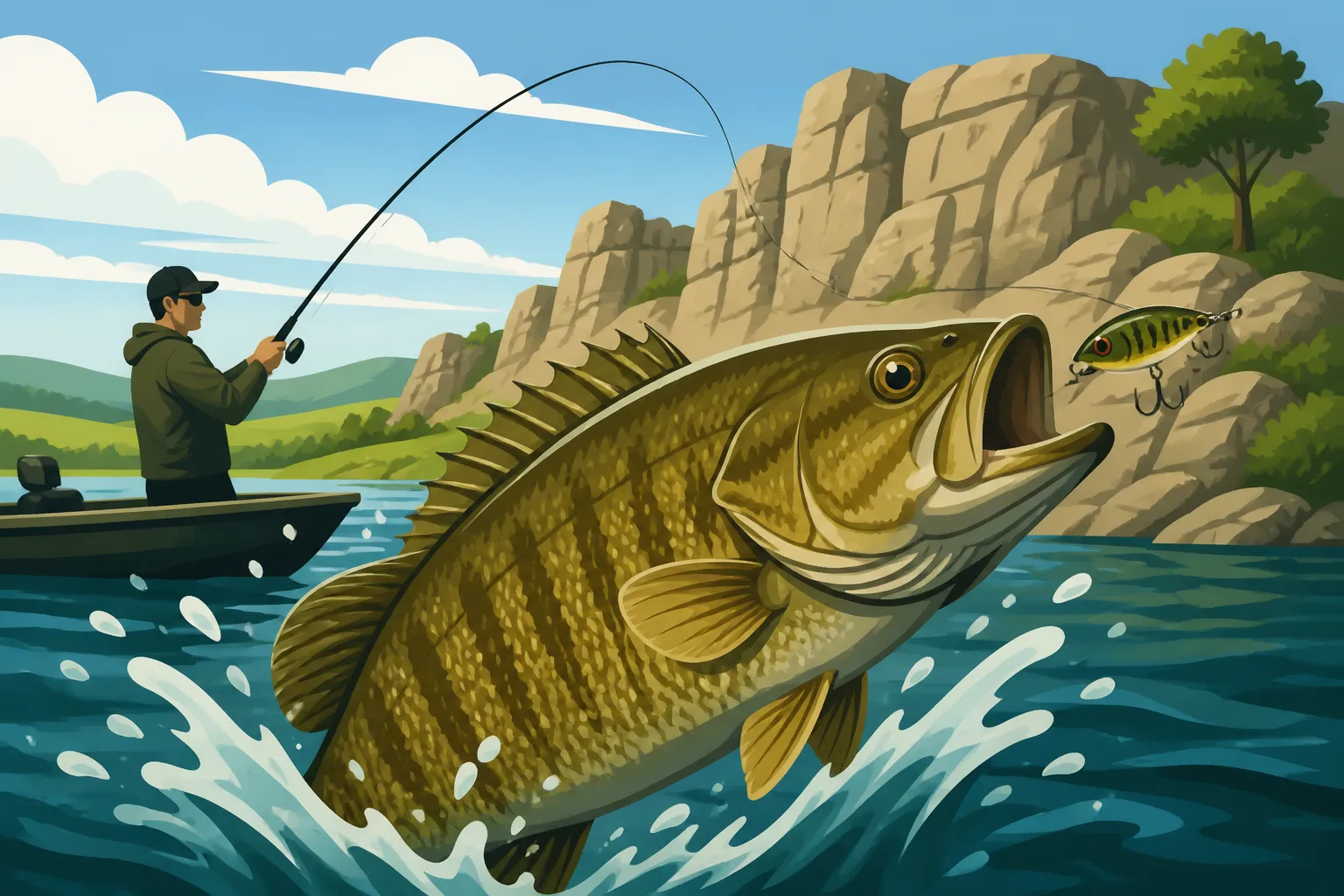
Lake Francis Case Smallmouth Bass Fishing in May
Figuring out the exact sweet spot for smallmouth bass on a vast lake like Francis Case in May can feel like searching for a needle in a haystack. The water is warming, the fish are transitioning, and knowing where to cast your line can truly make all the difference between a frustrating day and a fantastic one. This guide will cut through the guesswork, helping you pinpoint the best locations, techniques, and presentations to land those feisty bronze beauties on Lake Francis Case this spring.
Understanding Smallmouth Bass Behavior in May on Lake Francis Case
May is a truly dynamic month for smallmouth bass on Lake Francis Case, marking a significant shift in their behavior from their winter haunts to their spring and early summer patterns. Understanding these transitions is key to unlocking consistent success. The lake, being part of the mighty Missouri River system, has unique characteristics that influence fish movement and feeding, and smallmouth here are particularly responsive to changes in water temperature and forage availability.
Pre-Spawn and Early Spawn Dynamics
As May rolls in, the smallmouth bass on Lake Francis Case are primarily focused on two things: feeding heavily in preparation for spawning and then, for some, actively engaging in the spawn itself. Early May typically sees the tail end of the true pre-spawn, where fish are staging in slightly deeper water adjacent to shallower spawning flats or rocky points. They’re gorging themselves, building up energy reserves, and are generally quite aggressive. This is an excellent time to target them with reaction baits.
As the month progresses, and water temperatures climb into the high 50s and low 60s Fahrenheit, the early waves of smallmouth will begin moving onto their spawning beds. These beds are usually found in shallower, protected areas with a mix of rock and gravel. Males will clear out circular nests, guarding them aggressively. During this period, the males can be quite territorial, making them susceptible to sight fishing tactics if the water is clear enough. Keep an eye out for these "redds" – circular, lighter-colored spots on the bottom. While it's tempting to target bedding fish, many anglers practice catch-and-release to protect the spawn, ensuring future generations of these amazing fish. For a more general overview of these fish, check out our South Dakota Smallmouth Bass Fishing Guide.
Key Forage and Habitat Preferences
Smallmouth bass on Lake Francis Case are opportunistic predators, and their diet in May is heavily influenced by what’s readily available. Shad, various minnow species, and crayfish are primary food sources. The smallmouth will often follow these baitfish schools into shallower areas, especially around structural elements where they can ambush prey. Understanding this relationship is crucial: find the bait, and you'll likely find the bass.
Their preferred habitat during May is heavily structure-oriented. Think rocky shorelines, riprap banks, prominent main lake points that extend into deeper water, submerged rock piles, and even isolated patches of timber or brush. Smallmouth are less tolerant of heavy vegetation compared to largemouth bass, so focus your efforts on hard bottom areas. They use these structures for cover, ambush points, and as staging areas before and after spawning. The clearer waters in certain sections of Lake Francis Case also play into their preference for rocky environments, allowing them to utilize their keen eyesight to hunt.
Water Temperature and Its Influence
Water temperature is arguably the single most important factor dictating smallmouth bass behavior in May. At the start of the month, surface temperatures might hover in the low to mid-50s. This cooler water keeps many bass a bit deeper, often relating to primary points or channel swings where they can move up or down the water column easily. As temperatures climb into the upper 50s, more and more fish will push shallow to feed.
The magical range for spawning activity typically begins when water temperatures reach consistently above 58-60 degrees Fahrenheit. If a cold front pushes through, dropping the water temperature significantly, expect the fish to pull back to deeper, more stable water until conditions improve. Conversely, a prolonged warm spell will accelerate the spawn, pushing fish onto beds more rapidly. Keep a close eye on weather forecasts and water temperature readings – a good fish finder with a temperature gauge is invaluable. Understanding how to interpret these thermal shifts is critical for knowing where to find the active bite, similar to how anglers read water temperature for walleye. Our guide on Reading Water Temperature for Walleye offers insights that apply broadly to predator fish.
Top Fishing Spots for Smallmouth Bass in May on Lake Francis Case
Lake Francis Case is a massive reservoir, stretching over 100 miles, so breaking it down into manageable sections and knowing what types of structure to look for is essential. For smallmouth in May, you're primarily hunting for hard, rocky bottom with access to deeper water.
Prime Structural Elements
When you're out on Francis Case in May, these are the structures you absolutely want to be targeting:
- Rocky Points and Bluffs: These are quintessential smallmouth magnets. Points that extend out into the main lake, especially those with sharp drops or ledges, act as natural highways for bass moving to and from spawning areas. Bluffs with broken rock and chunk rock provide excellent cover and ambush points. Cast parallel to these structures, letting your bait fall along the contours. The section of the lake around Fort Randall Dam, with its prominent rock formations and current breaks, is particularly renowned for this type of habitat.
- Riprap Banks: The riprap along causeways, bridge abutments, and even some dam structures is a smallmouth haven. The rocks absorb and radiate heat, attracting baitfish and, consequently, bass. The crevices in the riprap offer protection and easy access to deeper water. Focus on areas where the riprap transitions into a natural bank or where current creates eddies. Areas around the towns of Pickstown and Fort Randall often have excellent riprap.
- Submerged Humps and Rock Piles: These offshore structures can be incredible, especially for pre-spawn fish that haven't fully committed to the shallows. Use your electronics to locate humps, especially those with scattered rock or gravel on top. Bass will stage on the edges of these humps, moving up to feed when conditions are right. These can be trickier to find without good sonar, but once you locate an active one, it can produce fish after fish.
- Secondary Points within Bays: While main lake points are great, don't overlook smaller, secondary points inside larger bays or coves. These areas often warm up faster and provide more protected spawning grounds. They can be particularly productive during the early spawn phase.
- Isolated Wood and Brush Piles: While not as prevalent for smallmouth as rock, don't ignore isolated patches of submerged timber or brush, especially if they are mixed with rock. These can hold big smallmouth, particularly if they are near a current break or drop-off.
Navigating Specific Lake Sections
Lake Francis Case can be broadly divided into three sections:
- Lower Lake (Near Fort Randall Dam to Wagner): This section generally has clearer water and more prominent rocky structure, making it a prime smallmouth fishery. The areas immediately below Fort Randall Dam are known for excellent smallmouth fishing due to the oxygenated water and current breaks. Look for the aforementioned rocky bluffs, riprap, and main lake points. Access points like North Point Recreation Area or Randall Creek Recreation Area provide good starting points.
- Mid-Lake Section (Wagner to Platte): This part of the lake can be a bit more varied, with some stretches having more mud or sand, but still offering excellent smallmouth opportunities, especially around significant creek mouths or structural changes. The area around Platte Creek often presents good current breaks and rocky transitions. Consider checking out the Lake Francis Case Boat Ramps and Access Points to plan your launch.
- Upper Lake Section (Platte to Big Bend Dam): As you move further up-lake, the water tends to get a bit murkier, and the bottom composition can shift to more sand and silt. However, smallmouth can still be found here, often concentrating around the remaining rocky areas or where the river channel comes close to the bank. Focus on hard breaks and any riprap you can find.
Remember, conditions change rapidly. What was hot last week might be cold this week due to weather or water level fluctuations. Staying adaptable and using your electronics to scout new areas is crucial. For anglers looking for a deeper dive into the smallmouth bass potential, our comprehensive Lake Francis Case Smallmouth Bass Fishing guide provides even more details.
Effective Techniques and Lures for May Smallmouth
May offers a fantastic variety of ways to catch smallmouth on Lake Francis Case, from aggressive reaction strikes to more subtle presentations. The key is to match your technique to the specific mood and location of the fish.
Topwater and Subsurface Presentation
- Topwater Baits (Late May): If water temperatures are consistently in the low to mid-60s, don't hesitate to throw topwater. Walking baits like a Heddon Super Spook or a Lucky Craft Sammy, or prop baits such as a Devil's Horse, can draw explosive strikes, especially during low light conditions or on calm days. Work them around rocky points, submerged humps, and isolated cover. The thrill of a smallmouth blowing up on a topwater is unmatched!
- Jerkbaits: Jerkbaits, particularly suspending models like a Rapala X-Rap or a Megabass Vision 110, are deadly in May. They mimic dying baitfish perfectly. Cast them parallel to riprap, rocky points, and bluffs, then retrieve with a series of sharp jerks followed by pauses. The length of the pause is critical and often depends on water temperature – longer pauses in cooler water, shorter in warmer water. This technique can be especially effective during the pre-spawn when fish are aggressive but might still be slightly deeper.
- Crankbaits: Medium-diving crankbaits (diving 6-12 feet) are excellent for covering water and finding active fish. Choose colors that mimic shad or crayfish. Bomb casts along rocky banks, points, and humps, letting the bait deflect off the bottom or cover. Brands like Strike King or Livingston Lures offer a wide range of effective crankbaits.
- Jigs and Soft Plastics: When smallmouth are on beds, or if they're a bit lethargic due to a cold front, slower presentations often excel.
- Tube Jigs: A favorite for smallmouth, tube jigs mimic crayfish or gobies. Drag them slowly along the bottom around rocky areas, or hop them near visible beds. Green pumpkin, brown, and watermelon are excellent colors.
- Ned Rigs: The Ned Rig is a finesse powerhouse. Its small profile and buoyant plastic stand up, making it irresistible to finicky bass. Fish it on light line (6-8 lb fluorocarbon) around subtle changes in bottom composition, isolated rocks, or edges of spawning flats.
- Drop Shots: For suspended fish or when you need a very precise presentation over structure, a drop shot rig is unbeatable. Rig a small minnow-imitating soft plastic (like a Strike King Dream Shot) a foot or two above a weight. This allows you to keep your bait in the strike zone longer.
- Swimbaits: Small swimbaits, either rigged on a jig head or as an Alabama rig component, can be fantastic for mimicking baitfish. They excel at covering water and triggering strikes from aggressive, cruising bass, especially on main lake points.
Stealth and Presentation Tips
Smallmouth bass, especially in clear water, can be surprisingly wary. A stealthy approach can make a huge difference.
- Boat Positioning: Try to keep your boat a comfortable casting distance from your target, avoiding directly driving over the areas you intend to fish. Use your trolling motor quietly to maintain position, or anchor up when you've found a productive spot.
- Casting Accuracy: Precision casting is paramount, especially when targeting specific rocks, current breaks, or visible beds. Practice pitching and skipping your lures under docks or overhanging branches.
- Line Choice: In clearer water, fluorocarbon line (8-12 lb test) is often preferred for its low visibility and sensitivity. If you're using braided line, consider a fluorocarbon leader. Our guide on Best Fluorocarbon Leader for Clear Water Walleye has principles that apply well here.
- Vary Your Retrieve: Don't get stuck in a rut. Experiment with different retrieve speeds, pause durations, and jigging actions until you figure out what the fish want on a given day. Sometimes they want it fast and erratic, other times a slow, deliberate crawl.
Here’s a quick reference table for May Smallmouth Bass Fishing:
| Lure Type | Best Conditions in May | Retrieve Style | Target Areas |
|---|---|---|---|
| Jerkbaits | Water temp 50-60°F, pre-spawn/early spawn | Jerk-jerk-pause (vary pause length) | Rocky points, riprap, bluff walls |
| Crankbaits | Water temp 55-65°F, searching/active fish | Steady retrieve with deflections | Rocky banks, main lake points, humps |
| Tube Jigs | Water temp 58-65°F, spawning/post-spawn | Dragging, hopping on bottom | Spawning flats, rock piles, ledges |
| Ned Rigs | All May conditions, especially finicky fish | Slow drag, subtle shake, short hops | Bottom transitions, subtle structure, gravel |
| Drop Shots | Suspended fish, precise presentation | Subtle shaking, holding in strike zone | Vertical structure, deep edges, humps |
| Topwater Baits | Water temp 60°F+, calm conditions, low light | Walk-the-dog, pop and pause | Shallow rocky points, sheltered coves |
| Swimbaits | Water temp 55-65°F, active cruising fish | Steady retrieve, slow roll, or jigging action | Main lake points, schooling baitfish areas |
Essential Gear and Local Considerations
Having the right gear and being prepared for the ever-changing South Dakota weather will undoubtedly improve your smallmouth bass fishing experience on Lake Francis Case.
Rod, Reel, and Line Selection
For the diverse tactics you'll employ in May, a versatile rod and reel setup is ideal.
- Spinning Rods: For finesse techniques like Ned rigs, drop shots, and lighter jerkbaits, a 6'6" to 7' medium-light to medium power spinning rod with a fast action is perfect. Pair this with a 2500 or 3000 series spinning reel spooled with 8-10 lb braided line and an 8 lb fluorocarbon leader.
- Casting Rods: For heavier baits like crankbaits, larger jerkbaits, swimbaits, and tube jigs, a 6'8" to 7'3" medium-heavy power casting rod with a fast action is recommended. Match this with a baitcasting reel with a gear ratio around 6.4:1 to 7.1:1, spooled with 10-14 lb fluorocarbon line. If you're specifically interested in baitcasting options, our guide on Best Baitcasting Reels for Smallmouth Bass offers excellent recommendations.
- Net: A good landing net is essential, especially for larger smallmouth or when fishing alone. Choose a rubberized net to protect the fish's slime coat if you plan to release them.
Weather and Water Conditions
May in South Dakota can be a mixed bag. You might experience glorious, sunny days with light breezes, or sudden cold fronts with strong winds and even rain or snow.
- Wind: Wind can be your friend or foe. A moderate chop can break up the water surface, making smallmouth less wary and often positioning them on the windy side of points where baitfish get pushed. However, strong winds (20+ mph) can make boat control challenging and fishing unpleasant or even dangerous. Always check the forecast before heading out. Lake Francis Case can get very rough, very quickly.
- Water Levels: The Missouri River reservoirs can experience fluctuating water levels. Pay attention to local reports from the South Dakota Game, Fish and Parks (GFP) or local bait shops. High water can push fish further into flooded cover, while low water can concentrate them on fewer available structures.
- Safety First: Always prioritize safety. Wear your life jacket, especially when running the boat or in rough water. Ensure you have all the necessary South Dakota Boat Safety Requirements on board, including a fire extinguisher, signaling devices, and extra flotation.
Working with Local Guides
If you're looking to maximize your time on Lake Francis Case or are new to the area, considering a local fishing guide can be an absolute game-changer. These professionals spend countless hours on the water, tracking fish movements, understanding current conditions, and knowing the subtle nuances that make a difference. They often have specialized equipment, including excellent electronics, and can teach you specific techniques tailored to the lake. Services like FishingBooker are a great resource for connecting with experienced local guides who specialize in smallmouth bass fishing on Lake Francis Case. A guide can help you quickly locate productive areas, understand the current bite, and improve your casting and presentation skills. They truly accelerate the learning curve, making your trip more productive and enjoyable, and they'll likely have the latest "Lake Francis Case Fishing Report" firsthand.
Disclaimer
The information provided in this guide is for general informational purposes only and is based on typical conditions and practices. Fishing success can vary greatly based on numerous factors including weather, water conditions, fish behavior, angler skill, and other unforeseen circumstances. Always consult the official South Dakota Game, Fish and Parks regulations handbook before fishing, as rules and limits can change. Practice responsible angling, respect wildlife, and prioritize safety on the water.