Best Sled for Hauling Ice Fishing Gear
There’s nothing quite like the feeling of hitting the ice for a day of fishing, but that excitement can quickly turn into dread when you look at the mountain of gear you need to haul. From augers and heaters to shelters, rods, and bait buckets, getting everything from your vehicle to your perfect spot on the ice can be an exhausting ordeal. This comprehensive guide is here to help you navigate the world of ice fishing sleds, so you can find the perfect one to make your South Dakota winter adventures much smoother and more enjoyable.
Why a Good Ice Fishing Sled is an Absolute Game-Changer
Let's be honest, we've all been there. You've got your thermos of coffee, your bait, and your enthusiasm, only to realize you have to make three or four trips back and forth, sinking knee-deep in snow, just to get set up. It's a real buzzkill, and frankly, it can wear you out before you even drop a line. A good ice fishing sled isn't just a luxury; it's an essential piece of equipment for anyone serious about enjoying the sport without the unnecessary strain.
The Frustration of Hauling Gear Without One
Think about the last time you tried to carry your pop-up shelter, an auger, a five-gallon bucket, and a couple of rod cases all at once. It's a precarious balancing act, often ending with something falling into a snowdrift or, worse, your back protesting loudly. Many anglers end up making multiple trips, trudging through heavy snow and slush, hands freezing as they try to juggle everything. This isn't just inefficient; it's genuinely unpleasant, especially when the biting South Dakota wind is whipping around you.
Beyond the sheer physical exertion, there's the issue of gear safety. A loose auger or an exposed tackle box can easily get damaged if dropped or snagged. Electronic devices, like fish finders, are particularly vulnerable to impacts or moisture if they're not properly secured. The cold itself can also be tough on gear, and trying to keep everything dry when you're wading through melting snow or slop becomes an endless battle. A robust sled solves these immediate, frustrating problems by providing a centralized, protected, and easy way to move your entire setup.
Beyond Just Carrying: Organization and Protection
A quality ice fishing sled offers much more than just a way to move your stuff from point A to point B. It becomes your mobile base camp, helping you keep everything organized and safe from the elements. Imagine having your auger strapped down securely, your tackle neatly tucked into compartments, and your flasher unit cushioned from bumps. This level of organization not only saves time but also reduces stress, allowing you to focus on the fishing itself.
Many modern sleds come with, or can be outfitted with, covers that protect your gear from snow, sleet, and freezing rain while you're traveling. This is crucial for sensitive items like depth finders, but also for keeping your gloves and extra layers dry. Furthermore, a sturdy sled can keep your bait buckets from tipping over, ensuring your minnows or leeches stay lively until they hit the water. It’s about creating a streamlined experience, so you arrive at your spot ready to fish, not exhausted and still searching for your pliers. You'll find that a well-chosen sled can dramatically improve your overall Ice Fishing Gear Basics for Beginners.
Key Features to Look for in an Ice Fishing Sled
When you start looking at ice fishing sleds, you'll quickly realize there's a huge variety out there. To make the best choice, it's helpful to break down the key features that truly matter. Thinking about what you typically carry, where you fish, and how you plan to transport your sled will guide you toward the perfect option. It's an investment, so you want to get it right.
Size and Capacity: Matching Your Haul
The first thing to consider is how much gear you realistically need to haul. Are you a minimalist angler who only carries a hand auger, a single rod, and a bucket? Or do you head out with a power auger, a large flip-over shelter, multiple rod cases, a portable heater, and a cooler full of snacks and drinks? Sleds come in various sizes, from compact models perfect for solo day trips to massive utility sleds designed for group outings or extended stays.
A smaller sled, roughly 30-40 inches long, might be ideal if you’re just carrying a Best Ice Augers for South Dakota Ice Fishing, a tackle box, and a couple of rods for a quick trip to a local pond. However, if you plan to hit larger bodies of water like Lake Oahe or Lake Sharpe, where you might be hauling a full Best Ice Fishing Shelters for South Dakota Winters, a portable grill, and plenty of provisions, you'll need something in the 60-inch range or even larger. Remember to think about not just the volume of your gear, but also its weight. A bigger sled can distribute the weight better, making it easier to pull through deep snow.
Durability and Construction Materials
Ice fishing sleds are put through the wringer. They're dragged over abrasive ice, through slush, over frozen ruts, and occasionally bumped into rocks or stumps hidden under the snow. Because of this, the material and construction are paramount. Most quality ice fishing sleds are made from heavy-duty polyethylene, a type of plastic known for its flexibility and impact resistance, even in extreme cold.
You'll often hear terms like "roto-molded" or "thermoformed." Roto-molded sleds are generally more expensive but offer superior durability, with a uniform wall thickness that can withstand serious abuse. Thermoformed sleds are also tough but might be slightly less resilient to extreme impacts. Look for sleds with reinforced bottoms or molded-in runners that help distribute wear and tear. Some anglers even add aftermarket runner kits, often made of durable plastic or even metal, to extend the life of their sled's bottom and improve glide. These small details can make a huge difference in how long your sled lasts through South Dakota's harsh winters.
Towing Options and Accessories
How you plan to pull your sled is another critical factor. If you're only walking a short distance from your vehicle, a simple rope handle might suffice. However, if you're venturing further out on expansive lakes or using an ATV or snowmobile, you’ll want more robust towing options. Many sleds come with heavy-duty ropes, but for motorized towing, a rigid tow bar is often recommended. This prevents the sled from swinging wildly or ramming into your machine when you stop.
Beyond basic towing, consider accessories that enhance your sled's functionality. A fitted cover is almost a must-have for protecting your gear from snow, moisture, and road grime during transport. Some sleds offer integrated seating options, which can be a game-changer when you're out on the ice. Compartments, dividers, or even external rod holders can help keep your gear organized and easily accessible. You can often find these accessories from the sled manufacturer or even through retailers like Bass Pro Shops or online at Amazon, allowing you to customize your setup perfectly.
Glide Performance on Snow and Ice
Pulling a heavy sled through deep, sticky snow or over rough, jagged ice can be incredibly taxing. The design of the sled's bottom greatly influences its glide performance. Sleds with smooth, wide bottoms tend to float better over soft snow, while those with molded-in runners track straighter and reduce friction on packed snow and ice. These runners also add structural rigidity and protect the bottom from excessive wear.
If you anticipate frequently dealing with deep snow or rough terrain, consider a sled that offers optional, removable runner kits. These kits typically bolt onto the bottom of the sled and can significantly improve glide, especially when paired with a tow bar. The better the glide, the less effort you'll expend, which means more energy for actually fishing! This is especially important for long treks on big frozen lakes like Lake Oahe, where you might be covering significant distances to find the fish.
Top Contenders: Popular Sled Types and What They Offer
When you start browsing for an ice fishing sled, you'll encounter a few main categories, each with its own set of advantages and disadvantages. Understanding these differences will help you pinpoint the best fit for your fishing style and the conditions you typically encounter on South Dakota's frozen waters.
Utility Sleds: The Workhorses
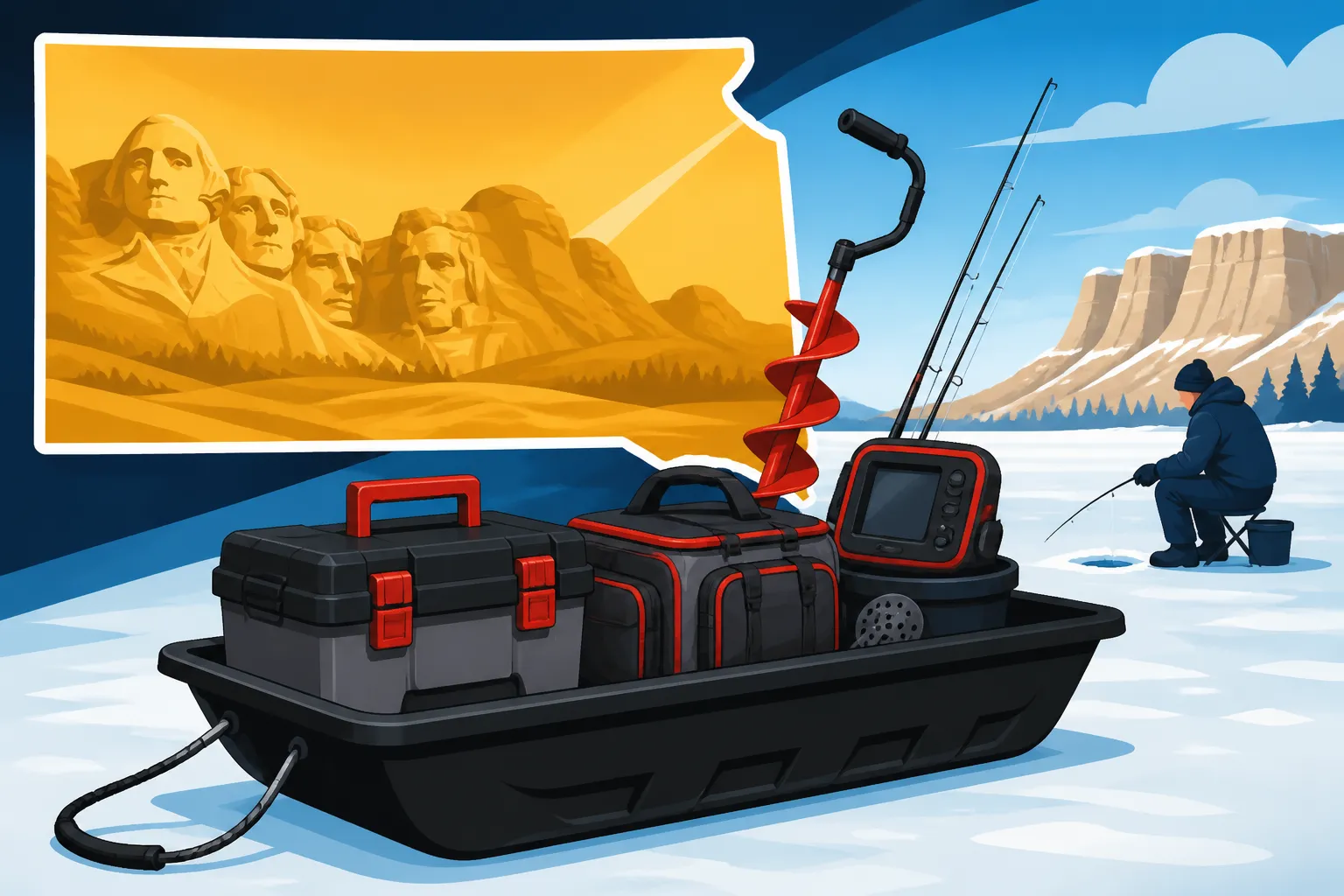
Utility sleds are perhaps the most common and versatile type of ice fishing sled. These are essentially large, durable plastic tubs designed to hold and transport your gear. They come in various sizes, from compact versions that fit easily in a car trunk to massive models that can be towed behind an ATV or snowmobile. Brands like Shappell, Clam, and Pelican are well-known for their robust utility sleds, which are often affectionately called "jet sleds" by anglers.
The biggest advantages of utility sleds are their simplicity, durability, and cost-effectiveness. They are built to take a beating and often last for many seasons. Many anglers appreciate their open design, which allows for easy loading and unloading of bulky items like shelters and augers. On the flip side, their open nature means your gear is exposed to the elements unless you purchase a separate cover. Organization can also be a challenge, requiring you to use milk crates, buckets, or bags to keep smaller items from shifting around. However, for many, the raw hauling power and straightforward design make them the go-to choice, especially for those who enjoy customizing their setup with bungee cords and makeshift dividers.
Integrated Shelter Sleds: All-in-One Convenience
For the angler who values speed and convenience, integrated shelter sleds are a fantastic option. These are typically flip-over style ice shelters where the base of the shelter is also the sled. You load your gear into the sled, pull it out onto the ice, flip the shelter over, and you're ready to fish in minutes. Brands like Clam, Eskimo, and Otter are leaders in this category, offering a range of sizes from one-person "shacks" to large models that comfortably fit two or three anglers.
The primary benefit here is the incredible ease and speed of setup. Your gear is already inside the shelter, protected from the elements, and ready to go. The sled portion is usually well-designed for towing, and many models include comfortable built-in seats. This makes them perfect for mobile anglers who like to move from spot to spot, or for those who simply want to maximize their fishing time. The downsides are that these units tend to be heavier and bulkier than standalone utility sleds, making them more challenging to transport in smaller vehicles. They also come at a higher price point, reflecting the dual functionality of shelter and sled. However, for a truly integrated and comfortable South Dakota Ice Fishing Guide experience, they are tough to beat.
Specialty Sleds and DIY Modifications
Beyond the standard utility and integrated shelter sleds, you'll find some more specialized options and a vibrant culture of DIY modifications. Some manufacturers offer extra-large cargo sleds, sometimes referred to as "freighter sleds," designed for extreme loads or very remote trips. These are typically wider and longer, offering immense capacity for multiple days of gear, firewood, or even game if you're combining your ice fishing trip with some winter hunting.
For those who love to tinker, even a basic utility sled can be transformed. Many anglers add custom wood or PVC dividers to create organized compartments for tackle boxes, bait containers, and electronics. Others will bolt on external rod holders or even a small cutting board. A popular modification for improving glide is to attach actual downhill skis to the bottom of a utility sled. This can dramatically reduce pulling effort in deep snow, making long hauls across a vast frozen lake much more manageable. The beauty of a simple utility sled is its adaptability, allowing you to tailor it exactly to your unique needs and preferences.
Choosing the Right Sled for South Dakota's Diverse Conditions
South Dakota's ice fishing scene is incredibly diverse, from the vast expanses of the Missouri River reservoirs to the smaller, snow-covered glacial lakes in the eastern part of the state. The "best" sled for you will ultimately depend on where and how you typically fish in these varied environments.
Glacial Lakes vs. Missouri River Ice
Fishing on South Dakota's glacial lakes, such as Lake Thompson or Lake Kampeska, often means dealing with significant snow cover. Here, a wider sled with a good, smooth bottom or added runners will help it float on top of the snow rather than sinking and becoming a plow. You might also encounter pressure ridges or drifts, so a durable, impact-resistant sled is a must. The ability to pull your sled by hand, or with a lightweight snowmobile, is key on these sometimes less accessible waters.
The Missouri River reservoirs – Lake Oahe, Lake Sharpe, Lake Francis Case, and Lewis and Clark Lake – present their own unique challenges. These massive bodies of water can feature anything from bare, wind-swept ice to large areas of slush and heavy snow. Wind can be a major factor, often sweeping snow into deep drifts. For these conditions, a sled designed for stable towing behind an ATV or snowmobile, perhaps with a rigid tow bar, is incredibly valuable for covering long distances quickly and safely. The sheer size of these lakes also means you might be carrying more gear for a full day of fishing, necessitating a larger capacity sled. Consider these unique factors when planning your South Dakota Missouri River Fishing Techniques.
Transporting Your Sled: Vehicle and Ice Machine Compatibility
Before you commit to a sled, give serious thought to how you'll get it to the lake and how you'll move it once you're on the ice. A huge, integrated flip-over shelter might be amazing on the ice, but if it doesn't fit in your truck bed or on your small trailer, it's going to be a headache. Measure your vehicle's cargo space or your trailer's dimensions to ensure a good fit. Some anglers even use rooftop carriers for smaller sleds.
Once at the lake, consider your mode of transport over the ice. Will you be walking? In that case, lighter sleds with good glide are paramount. Do you own an ATV or snowmobile? Then a heavier, more robust sled with a proper tow bar becomes a viable and often preferred option. Make sure your chosen sled is compatible with any motorized towing equipment you plan to use. Knowing how you'll manage your gear transport is just as important as the gear itself. Don't forget to review your Essential Gear Checklist for a South Dakota Ice Fishing Trip to ensure you have everything else covered.
Budgeting for Your Ice Fishing Sled Investment
Like any piece of specialized outdoor equipment, ice fishing sleds range widely in price. Simple utility sleds are generally the most affordable, making them a great entry point for new ice anglers or those on a tighter budget. You can often find good deals on these at local sporting goods stores, or even by browsing options on Amazon or at a Bass Pro Shops location.
Integrated shelter sleds represent a more significant investment, given their dual functionality and often more complex construction. While the initial cost might be higher, the convenience and comfort they provide can easily justify the expense for dedicated anglers. When budgeting, also factor in potential accessories like covers, tow bars, or runner kits, as these can add to the overall cost but significantly enhance the sled's performance and longevity. Think of your sled as a long-term investment in your winter fishing enjoyment; a well-chosen model will serve you reliably for many seasons to come.
| Sled Type | Pros | Cons | Ideal Use Case |
|---|---|---|---|
| Utility Sled | Affordable, highly durable, versatile, easy to customize | Open design (needs cover), less organized, no built-in seating | Budget-conscious anglers, those who prefer DIY organization, short hauls |
| Integrated Shelter | All-in-one convenience, fast setup, protected gear, built-in seating | Heavier, bulkier, higher price point, less customizable sled space | Mobile anglers, those seeking maximum comfort and speed of setup, longer trips |
| Specialty/Freighter | Immense capacity, extremely rugged | Very large, heavy, often requires motorized towing | Multi-day trips, group outings, remote locations, heavy loads |
Disclaimer
This article is for general informational purposes only and does not constitute professional advice. Laws, prices and regulations vary by location and change over time. Consult a qualified professional for guidance on your specific situation.